Retail News CRM

Tag: Investing

  • New Love Trend: Young Vietnamese Couples Investing in Homes Before Rings

    New Love Trend: Young Vietnamese Couples Investing in Homes Before Rings

    In a shift of convention, many young couples are prioritizing financial stability and homeownership over marriage. Rather than saving for a wedding, these couples are committing to mortgage contracts together, seeing this as the true foundation for their future.

    After a short dating period of only six months, Ngoc Ly and Huy Hoang, both 30 years old, decided to jointly purchase a 65-square-meter apartment on Tran Phu Street in Hanoi’s Ha Dong District, valued at USD135,000. The couple is not yet married, but they believe that owning a home lays a secure foundation, after which marriage can follow at any time.

    Hoang and Ly are both architecture graduates and began dating shortly before Lunar New Year festival of 2024. They had been working for six years before deciding to make a joint property purchase, both to grow their investments and to secure a place of their own.

    “In our assessment, we realized that no matter how hard we work, keeping pace with housing prices is almost impossible,” Hoang explains. “As people from other provinces, we’ve always dreamed of having our own place in Hanoi.”

    In May 2024, they jointly purchased the apartment in Ha Dong. A bank loan covered 60% of the property’s value. Another couple in Vung Tau, Le Hoai and Thien Nhi, both 26 years old, made a similar decision.

    The couple bought a two-story, 30-square-meter house for VND2 billion. Despite criticism and doubt from those around them, they believed purchasing a home should come before their wedding. To afford the house, they sold a homestay in Da Lat and borrowed more from relatives. In June 2024, they moved into their new house.

    A Shifting Paradigm

    The trend among young people to prioritize homeownership over marriage is growing. According to data from the Vietnam Association of Realtors Institute for Research and Evaluation, buyers aged 25–35 are now involved in over 40% of all transactions, and this figure can rise up to 70% in some housing projects.

    Truong Anh Tuan, head of the legal department at the Vietnam Real Estate Association, notes, “In recent years more young people have been pooling money to buy property together, especially in major cities. This reflects a shift in their perspective on ownership, which has become more flexible, pragmatic, and open to risk-taking.”

    Dr. La Linh Nga, director of the Center for Psychological and Educational Science Research and Application, adds that young people today approach love with practicality and independence. They plan carefully for each stage of their lives, from dating to marriage, from securing housing to starting a family.

    This trend highlights the harsh reality of homeownership dreams in the face of rising property prices and stagnant wages. As a result, the government has initiated programs like the “One Million Social Housing Units” and preferential credit packages to support young buyers.

    Questions & Answers

    What are the factors influencing young couples to prioritize homeownership before marriage?
    Rising property prices and stagnant wages are pushing young couples to prioritize homeownership. They are pooling resources to buy property together as they believe it provides a secure foundation for their future.

    What is the government doing to support young property buyers?
    The government has initiated several programs like the “One Million Social Housing Units” and preferential credit packages to assist young property buyers.

    What does this trend signify about the new generation’s perspective on homeownership?
    This trend reflects a shift in perspective among the new generation who are more pragmatic, flexible, and open to risk-taking. They are considering joint property ownership as a form of investment and a step towards financial stability.


  • Exploring Barriers to the Growth of Green Bonds in India’s Eco-Friendly Investment Landscape

    Exploring Barriers to the Growth of Green Bonds in India’s Eco-Friendly Investment Landscape

    The trajectory of India’s green bonds is expected to climb steadily as the nation pushes towards a low-carbon economy. However, a new analysis from the Institute of Energy Economics and Financial Analysis (IEEFA) unveils a constellation of challenges that could throw a wrench in this optimistic outlook.

    Obstacles Looming Over Green Financing

    In their latest briefing note, IEEFA identifies several hurdles that threaten to stifle the scalability of green bonds, which are vital for financing sustainable projects. Labanya Prakash Jena, a sustainable finance consultant at IEEFA and co-author of the analysis, emphasizes the need for robust monitoring and reporting mechanisms. Without these, greenwashing becomes more prevalent, potentially undermining the very purpose of green bonds.

    The landscape is further complicated by inconsistent definitions, verification processes, and reporting standards for green bonds in various jurisdictions. While frameworks like the Green Bond Principles from the International Capital Market Association and the Climate Bonds Standard aim to create consistency, Jena’s collaborator, Vandana Vuppuluri, noted that their interpretation can vary widely from one market to another.

    The Cost Conundrum

    Another significant barrier is the high cost associated with issuing green bonds. This financial burden has resulted in an uneven playing field, largely favoring well-resourced corporations and sovereign entities. “It’s crucial to recognize that the green bond market remains relatively small compared to the broader bond market,” Jena states. “This limitation restricts investment opportunities and casts a long shadow on transparency, as securing consistent post-issuance reports about environmental impacts can deter potential investors.”

    While green bonds are not a panacea for climate issues, Vuppuluri insists they hold essential value in financing a transition to a low-carbon future. “Success relies on how well market dynamics, regulatory frameworks, and stakeholder commitment coalesce around environmental objectives,” she asserts. And remember, as challenging as the road ahead may seem, a little creativity can often turn obstacles into stepping stones—just ask any aspiring entrepreneur navigating the bustling streets of Delhi!

    Questions & Answers

    What are the main challenges facing India’s green bond market?
    The key challenges include a lack of robust monitoring and reporting mechanisms, inconsistent definitions and regulations across jurisdictions, and the high cost of issuing green bonds, which limits participation to well-resourced entities.

    How do varying frameworks affect the green bond market?
    While frameworks like the Green Bond Principles and the Climate Bonds Standard exist to establish coherence, their interpretation can differ significantly across markets, leading to confusion and inconsistency in green bond issuance.

    What role do green bonds play in battling climate change?
    Although they are not a standalone solution, green bonds are critical for financing initiatives that support a transition to a low-carbon economy, with their success contingent on effective regulation and stakeholder commitment to environmental goals.

  • After 22 Years in Gold Investing, I Embrace Early Retirement

    After 22 Years in Gold Investing, I Embrace Early Retirement

    In a thriving local economy, a young professional reflects on a family tradition of prudent investments in gold and real estate, highlighting the power of strategic financial planning for future generations.

    The Smart Start to a Promising Career

    After graduating with a degree, I set my sights on landing a job with two promising companies: one based in Taiwan and the other in Japan. With limited practical experience, I was thrilled to receive production manager offers from both companies. The opportunity came with a supportive work environment and a salary that outpaced my fellow graduates, setting the stage for future financial growth.

    Building Wealth: The Family Tradition of Gold Investment

    With my first salary, I chose to invest in my family’s time-honored practice of buying gold. My mother managed the finances, using my earnings to purchase small amounts of gold each month—ranging from a few taels to a fraction of a tael (1 tael = 37.5 grams or 1.2 ounces) based on our budget.

    As savings grew, my mother seized the opportunity to buy a 300-square-meter plot of land on the outskirts of Ho Chi Minh City for just a few million dong (around US$384.62 at the time). She promised that this property would pave the way for my future when I eventually marry. Today, that land’s value has skyrocketed into the billions of dong, showcasing the immense potential of long-term investments.

    A Legacy of Financial Wisdom

    My parents often remind me of the saying, “Many a little makes a mickle,” reflecting their risk-averse nature. Over the years, they consistently turned to gold as a secure investment. Their approach was simple yet effective: while land appreciates, gold’s rarity makes it a stable asset.

    They adeptly navigated the real estate market, selling gold to buy homes and land when prices were favorable, and then converting those properties back into gold when the market suited them. Now, as gold prices soar, our family is well-positioned to reap the benefits of those decades of dedication. The freedom to sell gold when needed affords us options, whether it’s acquiring a new home, purchasing a vehicle, or traveling.

    Different Paths: A Tale of Choices

    In contrast to my family’s investment approach, a friend—earning a similar salary—spends freely on indulgences like alcohol and karaoke. This friend continues to live at home, while I find myself on the brink of early retirement, thanks to our family’s strategic decisions.

    Conclusion: The Ripple Effect in Retail and Real Estate

    The success seen in my family’s investment strategy echoes broader consumer trends in the retail sector. As more individuals lean towards conservative investments like gold and real estate, the potential for economic shifts builds. This growing inclination towards thoughtful financial planning not only benefits individuals but could lead to enhanced stability in the retail landscape, influencing how brands expand and connect with consumers.

    The opinions expressed are based on personal experiences and do not necessarily reflect the views of VnExpress.

  • Investing in Space Has Long-Term Potential

    Investing in Space Has Long-Term Potential

    We choose to go to the Moon in this decade and do the other things, not because they are easy, but because they are hard, exclaimed John Fitzgerald Kennedy in 1962.

    Today, despite the hardships and challenges, there are myriad private operators striking out to conquer New Space, Space 2.0. Pioneering companies are emerging in sectors as diverse as communications satellites, Earth observation by satellite imagery, and in-space manufacturing.

    Once the prerogative of national governments, space has indeed tipped into the private sector with the creation of numerous innovative start-ups and an acceleration in IPOs around the world. This radical transformation in the space ecosystem heralds a technological and economic revolution focusing on strategic issues and creating unprecedented investment opportunities.

    This boom is being helped along by reusable space assets and the plummeting cost of access to space. Satellites, once outsized and clunky, are now being replaced by mass-produced nanosatellites whose production costs are as much as one thousand times less than they were.

    The communications satellite industry is expected to grow by an estimated plus 9.2 percent per year between now and 20271. And the in-space garment industry is expected to grow by an estimated plus 7.5 percent per year between now and 20262.

    The other revolution going on is space data, the 21st century’s black gold, with exponential large-scale marketing. Space data is and will continue to be used in all sectors, from communications to precision agriculture, with operators like MAXAR TECHNOLOGIES, whose satellite images are used for mapping ports, airports, and sensitive sites and to aggregate multiple sources to detect changes using artificial intelligence.

    In the long term, this new private space industry seems to have prodigious potential. Currently valued at some $400 billion3, the space market is expected to swell to $2.7 trillion by 20454, creating a growth driver for the global economy.

    We believe that in the long term, exploration and use of the space ecosystem will benefit all of Earth’s inhabitants. It is this conviction of La Financière de l’Echiquier that launched Echiquier Space in 2021, the very first investment fund dedicated to space and its ecosystem.

    This solution invests in innovative and lasting space operators who are looking for ways to minimize the resources used, leverage the properties of hydrogen as a propulsion source, and adopt policies for managing space debris. Such resource optimization will, we believe, meet humanity’s most pressing challenges, from climate change to biodiversity protection to bridging the digital divide.

    Space 2.0 is designing new worlds, and we believe it will help improve living conditions on Earth by constantly pushing the boundaries on our planet.

  • Malaysia’s retail industry may grow by 6% this year

    Malaysia’s retail industry may grow by 6% this year

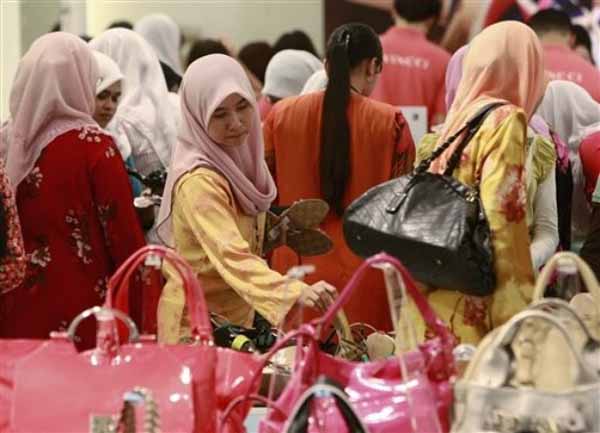
    Malaysia’s retail industry is expected to grow by 5.9% in the third quarter of this year, boosted by the timing of the Hari Raya holidays, according to Retail Group Malaysia (RGM) in the latest Malaysia Retail Industry Report.

    RGM said the projected growth would also be spurred by the Minimum Wages Order 2016 that was implemented on July 1.

    “For civil servants in Malaysia, the minimum wage increased to RM1,200 per month. This has raised the average purchasing power of the Malaysian working population to some extent,” RGM said.

    It added that the Pokemon Go app launched in Malaysia this month had also attracted more visitors to shopping centres and retail outlets throughout the country.

    “Nevertheless, it is not expected to contribute significantly to retail sales. Food and beverage outlets and grocery stores located near to Pokestops will benefit the most from this craze.”

    Mall operator Sunway Malls, in a recent statement, said Pokemon Go had resulted in a surge in traffic and sales numbers at its shopping centres locally.

    “To date, we have seen traffic increase by an average of 10% for Sunway Pyramid (pic), 8% for Sunway Giza, 6% for Sunway Putra Mall, and 4% for Sunway Carnival Mall,” said Sunway Malls chief operating officer Kevin Tan.

    “It is widely known that malls in general have high traffic during the festive period and school holidays, but the introduction of Pokémon Go has certainly spiked up the footfall for the non-peak season.”

    Meanwhile, RGM said retailers in the fashion and fashion accessories sector expected their business to slow down again, with a positive growth of only 0.2% during the third quarter of this year.

    “Retailers in the pharmacy and personal care sub-sector are expecting to maintain their recovery with a growth of 11.4% during the third quarter of 2016.”

    MIDF Research, in a report earlier this month, said it was optimistic that the launch of the new Perodua Bezza and Proton’s new batch of models, combined with the launching of new smart devices, will boost retail sales in the second half of 2016.

    Moving forward, RGM said the Malaysian retail industry’s fourth-quarter growth rate estimate remained at 5.5%, taking into consideration the growth of 1.3% achieved during the same period a year ago.

    “The projected retail sales growth rate of Malaysia’s retail industry in 2016 by RGM stays at 3.5% or RM99.5bil in values.”

    The Malaysian retail industry reported a lower-than-expected growth rate of 7.5% in the second quarter of this year compared with the same period last year.