Retail News CRM

Tag: iphone 7

  • Apple China sales slide further

    Apple China sales slide further

    Apple China sales have fallen for the fourth consecutive quarter, but the tech giant is putting on a brave face, buoyed by rising global revenue.

    Apple sold 78.29 million iPhones in the quarter ended December 31, up from 74.78 million last year, marking the first quarterly growth in iPhone sales in 12 months. It was as many as 2 million handsets more than analysts were predicting.

    But revenue in Greater China fell 11.6 per cent to US$16.23 billion as the iPhone came under heavy pressure from a raft of locally produced Android-based handsets with similar or higher specification and half the price.

    Apple executives put a positive spin on the China problem. “We were encouraged by our performance in China because it was clearly an improvement over the last couple of quarters,” CFO Luca Maestri said in a conference call. “In Mainland China in particular, our revenue was flat and actually grew in constant currency terms.”

    Neil Saunders, MD of GlobalData Retail, (formerly Conlumino), said both the new model iPhones and MacBook Pros helped deliver global growth for Apple: iPhone sales rose by 5 per cent in terms of units and revenues, and Mac sales were up by 7 per cent in revenue, and by 1 per cent in units.

    “In our view, the new MacBook Pros have a niche appeal, but the much higher price points helped to inflate sales. That said, given there is a more limited market for this fairly expensive kit, we question how much of a contribution to growth the new laptops will make over the remainder of this fiscal year.”

    Saunders said the first quarter results were a fairly positive note for the company, “finally pulling out of the tailspin of lower sales which have dogged it over the past year”.

    “However, the revenue uplifts have come off the back of fairly soft prior year comparatives, especially so in the North American market. Even so, the performance will come as a relief to Apple.”

    Services key to future

    Apple CEO Tim Cook said he expects revenue from services – which include the App Store, Apple Pay and iCloud – to double in the next four years after an 18 per cent improvement to to US$7.17 billion in the last quarter. Pokemon Go and subscription revenues had driven the growth.

    Saunders notes that in monetary terms services is now bigger than iPad sales and is almost as big as Mac sales.

    “Encouragingly, the division is nowhere near as mature as other parts of Apple’s business and we believe there is significant scope for future growth as Apple rolls out more content and services.”

    Despite these positives, Apple’s results do not provide the company with a completely clean bill of health, according to Saunders.

    “The iPad business, which was once a key driver of growth, is now firmly in decline with sales down 22 per cent over the prior year. And despite both product and operating system updates, sales of the Apple Watch continue to be anemic and it is clear that this product line is unlikely to be a significant winner.

    “The other major negative comes from the profit line where net income fell by 2.6 per cent. Admittedly this is much better than the circa-20 per cent declines that Apple has posted across the past three quarters. However, it underlines the fact that the top line is not moving ahead by enough to keep pace with the increased investment costs in store refreshes, product development, and research. Given that Apple remains extremely profitable, this is not a huge problem – but it does indicate that the days of heady bottom line growth are over, at least for this fiscal year.”

  • Apple’s iPhone 7 Sees Discounting as China Sales Fall

    Apple’s iPhone 7 Sees Discounting as China Sales Fall

    Jun Zhang today reiterates a Neutral rating, and a $102 price target, warning that sales of the iPhone in China, he estimates, are “still weaker than retail channels” as discounting of the phone has popped up across the country.

    iPhone sales, presumably in dollars, he doesn’t specify — fell by 6% in November, and are probably down “slightly” from November this month, as discounting takes hold outside of tight supplies at Apple’s online store:

    Overall iPhone sales in China were down 6% in November and slightly down MoM in November due to some pushes in “single day” sales. In our view, iPh- one 7 sales will continue trending down and many retailers in China have al- ready started discounting ($50) the iPhone 7 in November. iPhone 7 Plus sup- ply is catching up in November, and sales have grown MoM in November. iPh- one 6/6S sales continue to be weak. The 7 Plus model currently accounts for 60% of iPhone 7 sales in China. We started seeing some retailers discounting this model in November. In our view, there is a waitlist if ordered from Apple’s online store, but consumers can easily buy them from local stores and third party retail stores. Since the jet black mod- el has high return rate, Apple might try to control capacity. Overall, we believe iPhone sales in China are still weaker than retail channels expected.

    Zhang also cautions investors not to be mislead if they hear of component orders rising come the March quarter. In his view, “Some noise of Apple increasing orders might come from the iPad instead of the iPhone,” given he sees Apple refreshing the various iPad models in March.

  • Huge iPhone 7 sales reported in Vietnam

    Huge iPhone 7 sales reported in Vietnam

    Vien Thong A retailer said they would do their best to meet demands for 8,000 orders. FPT Shop in HCM City said they about 4,000 devices should be sold in the morning when the shop started the ceremony to transfer the pre-ordered phones.

    Doan Van Hieu Em, CEO of The Gioi Di Dong Store in District 1 also said they had seen a surge in customers. Em said they wouldn’t hold the transfer ceremony but make sure that the service is fast.

    “We’ll hold a product introduction and customer appreciation programme for buying the iPhone 7 tonight,” he said. “We expected to sell 10,000 devices today.”

    Meanwhile the atmosphere at smaller retail shops such as Hnam Mobile or CellPhoneS was quieter. Big retailers had hoarded most of the products so there’s not much left for them. Major mobile network operators are also selling the iPhone 7. Viettel said they would transfer 3,000 pre-ordered phones to customers on November 11.

    Most retailers confirmed the popularity of Apple products, especially iPhone 7 Plus this year. 70% of their orders are for iPhone 7 and iPhone 7 Plus. According to FPT Shop, the order for iPhone 7 Plus in the first day was four times higher than the iPhone 6 Plus.

    Retailers are reporting a shortage of iPhone 7 in jet black. Customers also favour matte black colour followed by gold and rose gold.

    It is predicted that by the end of November, nearly 100,000 iPhone 7 and iPhone 7 Plus would be sold in Vietnam.

  • iPhone7 hits Korean stores in Note 7’s absence

    iPhone7 hits Korean stores in Note 7’s absence

    The Apple iPhone 7 went on sale in South Korea on Friday, seeking to fill a void left by arch-rival Samsung on its home turf following a damaging recall fiasco over the Note 7 smartphone.

    The South Korean electronics giant discontinued the Note 7 — one of its key iPhone challengers — on October 11 following reports that replacements for combustible models were also catching fire.

    The decision is set to cost Samsung billions in lost profits, and there are already signs that Apple is reaping some of the benefits.

    An official at mobile carrier Korea Telecom (KT) said the first batch of 50,000 iPhone 7s they put up for pre-order a week ago sold out in 15 minutes.

    “I would attribute part of that to the Note 7 effect,” said the official, who declined to be identified because he was not authorised to talk to the media.

    Customer defection is one of Samsung’s biggest concerns, especially as the Note 7 was specifically aimed at taking on the iPhone in the premium handset market.

    In the hope of retaining customer loyalty, Samsung had offered Note 7 users a 70,000 won ($60) phone bill credit if they swapped their faulty phones with another Samsung handset.

    The half-dozen customers buying the new iPhone at a KT store in central Seoul on Friday were all long-time Apple users who had pre-ordered their handsets.

    Office worker Lee Kyung-Hee, 34, said she had moved fast when the pre-order service opened, fearing a surge of interest from unhappy Note 7 owners.

    “I set an alarm and was very quick,” Lee said.

    In South Korea, retail prices for the iPhone 7 and 7 Plus start from 869,000 won and 1.02 million won respectively, for their basic 32GB models.

  • LifeProof Announces FRE for iPhone 7, iPhone 7 Plus Available Now

    LifeProof Announces FRE for iPhone 7, iPhone 7 Plus Available Now

    Adventure calls, and for iPhone fans, LifeProof FRĒ has been there to answer, year after year. Take iPhone 7 and iPhone 7 Plus wherever the action leads in absolute confidence and bring back the living proof with incredible photos shot on iPhone’s best cameras yet. FRĒ for iPhone 7 and iPhone 7 Plus select color are available at LifeProof.asia now.

    LifeProof FRĒ for iPhone 7 and iPhone 7 Plus

    For those looking for the best in screenless waterproof technology, NÜÜD for iPhone 7 and iPhone 7 Plus are also coming soon.  

    “LifeProof helps you get the most out of your iPhone and our latest designs incorporate some exciting changes that make the user experience the best we’ve ever delivered,” said LifeProof CEO Jim Parke. “Apple has set the bar high with these iPhones, and we’re helping bring it to places you’ve never before thought possible.”

    LifeProof allows smartphone users to dive head-first into the action at a moment’s notice. The super slim designs are waterproof to 6.6 feet, drop proof to 6.6 feet, dirt proof and snow proof. FRĒ features a built-in screen protector, while NÜÜD leaves the screen uncovered for the truest touchscreen experience. Every device feature remains accessible and fully functional, making LifeProof cases a necessity when intentionally taking on water, drops, dirt or snow.

    Price listings as follow —


    LifeProof FRĒ

    LifeProof NÜÜD

    iPhone 7

    RM 329 (include GST)

    RM 359 (include GST)

    iPhone 7 Plus

    RM 359 (include GST)

    RM 399 (include GST)


    LifeProof FRĒ for iPhone 7 and iPhone 7 Plus in Black are available at selected retail, while NÜÜD for iPhone 7 and iPhone 7 Plus are coming soon. For more information and product availability, please visit www.lifeproof.asia

  • Why Apple China is struggling

    Why Apple China is struggling

    Apple’s sales decline is slowing – but there are several reasons why it is doing so badly in China…

    While the iPhone 7 has not been out long enough to have had a full impact on this quarter’s numbers, it has helped Apple to moderate the pace of revenue decline.

    Even so, global revenues are still down by 9 per cent over last year indicating that Apple is a long way off the steep growth trajectory it once enjoyed. With more investment going into stores, and with those store selling fewer products than they once did, it is not surprising that net income is on the slide. Indeed, Apple will be particularly disappointed with its rare full-year profit decline.

    China is an interesting, and worrying, example of some of these points. Across this quarter Apple saw revenues fall by 30 per cent in Greater China. In part this is down to the fact the market is more mature and ownership of iPhones is higher than it once was. But it is not the whole story: domestic brands like Huawei and Vivo have gained share thanks to the fact that they have, in design and technical terms, caught up with Apple and are now seen more favorably by consumers. In essence, in China and elsewhere, while Apple’s products are still seen favorably, the distance between Apple and its competitors is nowhere near as great as it once was.

    “No longer firing on all cylinders”

    Globally, the change in Apple’s fortunes is partly down to the fact that it is no longer firing on all cylinders. Previously, Apple was able to rely on strong sales of phones, tablets and computers to drive up revenue and profit across all geographies. This is no longer the case. Tablet sales are in decline. Growth from computers, which are long overdue a refresh, is weak. And consumers in some markets are saturated with product which makes growth much more difficult to attain. The latter is exacerbated by the fact that new releases, such as the iPhone 7, have been iterative rather than innovative.

    Unfortunately, Apple’s attempts to add new strings to its fiddle have not counteracted some of the strings that are now playing out of tune. In particular the Apple Watch, while a triumph of engineering, has simply not become a mass market product in the way that the iPhone, iPad, or iPod did. The one bright spot comes from service revenue, which includes streams of sales from Apple Pay, Apple Music and other services, and is up 24 per cent year-on-year. Over the longer term, this is a very lucrative part of Apple’s business and growth story, but it is not yet at the point where it is offsetting revenue declines in other areas.

    Despite this relatively gloomy view, it is important to note that Apple is being judged by its own incredibly high standards. Even with the dips in growth it remains a phenomenally successful business that is far from running out of steam.

    Complexity over simplicity

    That said, there is a complexity creeping into the firm that runs counter to Apple’s underlying philosophy of simplicity. The recent launch of the iPhone 7 in the US is a case in point: the buying process has been dreadful. The cumbersome system of placing orders via the website, where users have had to enter carrier information, has frustrated many customers. Meanwhile the vast array of different models, color options and payment and upgrade methods has contributed to a shortage of the right stock in the right place and has inevitably slowed sales.

    For a brand like Apple these things matter. As the company has always maintained, the experience of purchasing is almost as important as the product itself. While there is no doubt Apple continues to be committed to this mantra – especially with the store upgrades it is now rolling out – it needs to look more carefully at issues of stock availability and to make the purchase process simpler and easier.

    Looking ahead, Apple’s prospects give cause for optimism. In the next fiscal year the company will come up against softer comparatives which will flatter performance. However, the unveiling, later this week, of new computers will help to ease up Mac sales. And as the iPhone 7 becomes more widely available, Apple will receive a nice growth spurt over the holiday quarter.

    Longer term, the company will be helped by the natural replacement cycle of older iPhones as these break, are damaged, or become less attractive to their users. Furthermore, Apple will, at some point, come up with a new phone – or maybe another device – that represents a significant leap forward and puts it on a better growth footing.

    As such, this current period is a hiatus rather than representing a material change in Apple’s long term prospects.


    -Neil Saunders

  • iPhone 7 debut in South Korea hurts Samsung

    Apple Inc’s iPhone 7 went on sale in South Korea yesterday, seeking to fill a void left by archrival Samsung Electronics Co on its home turf following a damaging recall fiasco over the Note 7 smartphone.

    The South Korean electronics giant discontinued the Note 7 — one of its key iPhone challengers — on Tuesday last week following reports that replacements for combustible models were also catching fire.

    The decision is set to cost Samsung billions of US dollars in lost profits and there are already signs that Apple is reaping some of the benefits.

    Samsung shares fell nearly 2 percent yesterday as iPhone 7 hit stores across the nation.

    An official at mobile carrier Korea Telecom said the first batch of 50,000 iPhone 7s it put up for preorder a week ago sold out in 15 minutes.

    “I would attribute part of that to the Note 7 effect,” said the official, who declined to be identified because he was not authorized to talk to the media.

    Customer defection is one of Samsung’s biggest concerns, especially as the Note 7 was specifically aimed at taking on the iPhone in the premium handset market.

    In the hope of retaining customer loyalty, Samsung had offered Note 7 users a 70,000 won (US$60) phone bill credit if they swapped their faulty phones for another Samsung handset.

    The half-dozen customers buying the new iPhone at a Korea Telecom store in central Seoul yesterday were all long-time Apple users who had preordered their handsets.

    Office worker Lee Kyung-hee, 34, said she had moved fast when the preorder service opened, fearing a surge of interest from unhappy Note 7 owners.

    “I set an alarm and was very quick,” Lee said.

    In South Korea, retail prices for the iPhone 7 and 7 Plus start from 869,000 won and 1.02 million won respectively for the basic 32GB models.

  • IPhone 7 to officially launch in Thailand on Oct. 21

    IPhone 7 to officially launch in Thailand on Oct. 21

    Three major mobile operators in Thailand including AIS, DTAC and TRUE have announced will begin selling the iPhone 7 and iPhone 7 Plus on Oct. 21.

    While the pre-ordering will start early on Oct. 14 for all three companies, AIS and DTAC have opened a page for interested customers to register and guarantee the chance to pre-order the phones.

    Apple Watch Series 2, a product announced by Apple at the event in San Francisco on the same day as the new iPhone, will also launch in Thailand on Oct. 21.

    Apple has faced controversy by removing the headphone jack in the iPhone 7 in order to offer a waterproof handset. However, the new phone comes with a 12-megapixel camera and optical image stabilization, an impressive upgrade from the camera in iPhone 6s.

    The iPhone 7 comes in Silver, Gold and Rose Gold and the new colors Black and Jet Black.

  • Price of New iPhone 7 in Indonesia Will Be Among Highest Worldwide

    Price of New iPhone 7 in Indonesia Will Be Among Highest Worldwide

    Indonesia is predicted to be the country in Southeast Asia with the second-highest price for Apple’s new iPhone 7, according to a recent price study by iPrice Indonesia, local arm of online shopping startup the iPrice Group.

    The iPhone is manufactured in China, which neighbors Southeast Asia, but according to the iPrice Indonesia study, the iPhone 7 will be significantly more expensive in the region compared to the United States, due to shipment export costs, import duties and taxes, and other fees imposed by governments.

    According to iPrice, the iPhone in Indonesia will be one of the most expensive worldwide.

    “For countries where the iPhone 7 has not yet been officially launched, such as Thailand, Vietnam, Indonesia, Malaysia and the Philippines, the tech savvy have resorted to going abroad in the hope of being the first to own it,” iPrice said in a statement e-mailed to the Jakarta Globe by Andrew Prasatya, the company’s content marketing executive.

    “Unauthorized retailers are purchasing the iPhone 7 from Singapore and Hong Kong [where the iPhone 7 has already been launched] and selling them in their home countries at higher prices, which can go up to 14 percent in Vietnam and 49 percent in Thailand,” iPrice said in the statement.

    Apple has not yet announced the official release date for the iPhone 7 in Indonesia.

    How Expensive Can It Go?

    The study estimates that an iPhone 7 with 128 gigabytes of internal storage will cost about $1,268 when it arrives in Indonesia, making it nearly $500 more expensive than in the United States, from where it originates.

    As for neighboring countries, buyers in Thailand are expected to pay the most, where a new iPhone may cost up to $1,340.

    The cheapest is in Singapore at $897, where the iPhone 7 has been available since last month.

    The study said middle-income Indonesians, with an average salary of $1.80 (or Rp 23,900) per hour, have to work at least 87 days to afford an iPhone 7, assuming that the whole salary is spent on the phone.

    They may likely think twice before purchasing a 128 GB iPhone since the price is equivalent to the latest automatic scooter by Japanese manufacturer Honda. The price would also be equivalent to three-months’ rent of an apartment located in the heart of Jakarta, or 32 bags of rice at 50-kilograms per bag.

    Highly Anticipated

    Still, the iPhone 7 is eagerly awaited in Indonesia. And despite negative reaction around the replacement of audio jack with Apple AirPods, the latest model is in demand because of innovations such as increased storage, a new home button and water-resistance, according to reports from various local media and online tech-focused news portals.

    IPrice said regardless of its fairly high price, the iPhone generally remains popular in Indonesia.

    It referred to industry data showing that about 61.2 million units of the previous generation iPhone 6 and 6s were sold in the country during the first quarter of 2015.

    “In addition to the innovation of the iPhone 7, the iPhone is a status symbol in Indonesia where the owners are perceived as being rich, successful and living in luxury,” iPrice’s statement said.

  • Terry O’Connor courting omni-channel future for Courts

    Terry O’Connor courting omni-channel future for Courts

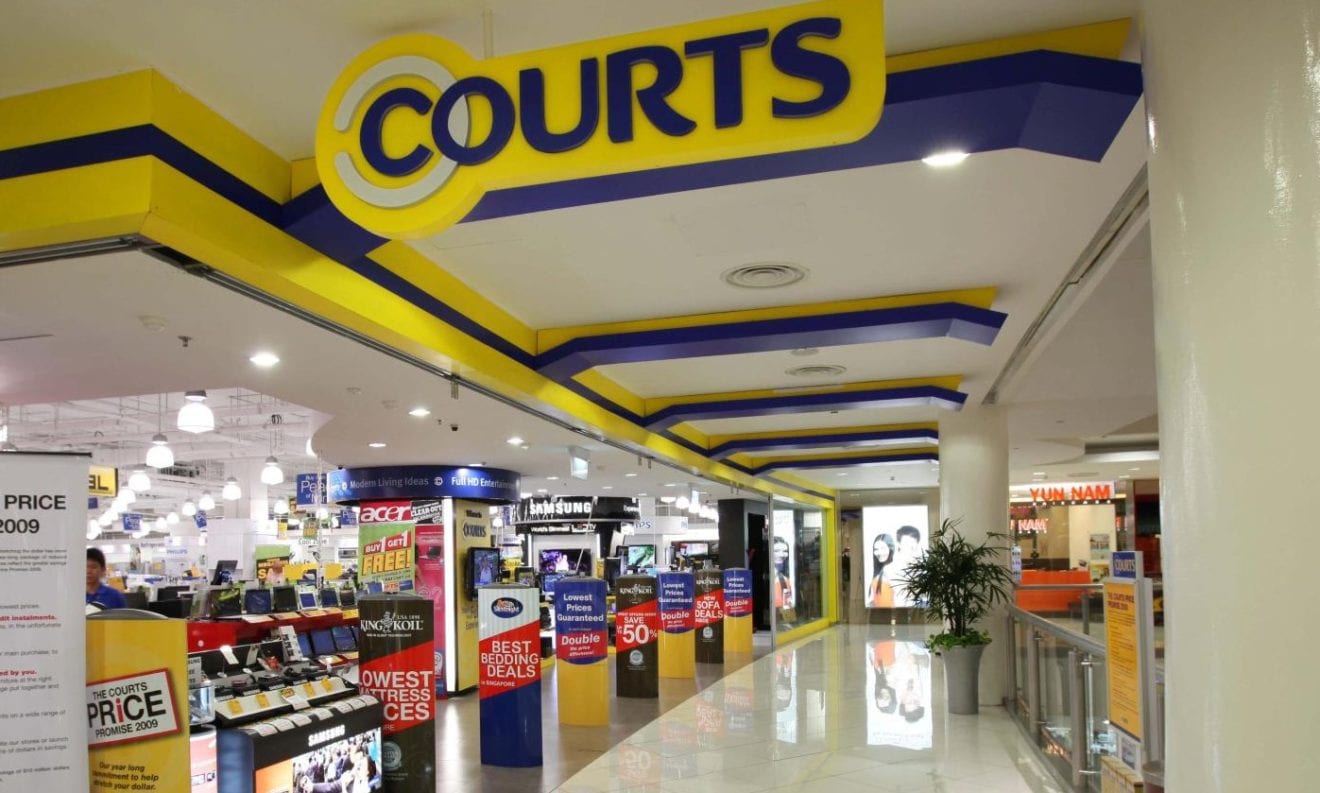
    Cashing In on the demand for Apple’s latest product, the iPhone7, retail giant Courts Asia recently announced that it would offer a competitive one-year service package that covers accidental damage and data recovery and a guaranteed 50 per cent trade-in value, if customers buy the phone from its shops.

    This is one example of efforts being made by the furniture-to-electronics departmental store to differentiate itself and be the “store of choice” for Singaporeans. It also fits into its long-term objective of transforming itself into an omni-channel retailer.

    Mainboard-listed Courts has a long relationship with Singapore, particularly in the heartlands. With roots as a furniture retailer in the UK, Courts was established here in 1974. It opened its first store in Malaysia in 1987 and recently started operations in Indonesia in 2014. In the three countries, Courts operates more than 80 stores in multiple store formats spanning over 1.6 million sq ft of retail space.

    In the first quarter which ended on June 30, 47.8 per cent of its revenue came from electrical products, which included major white goods, audio and small appliances. IT products, including computers, smartphones and cameras, made up 27.7 per cent of its sales while furniture accounted for 17.9 per cent. Services, such as warranty sales and telecommunication subscription plans, accounted for the remaining 6.6 per cent of its revenue, which was S$196.3 million for the quarter. The company’s last reported full year revenue was S$770.4 million, with two-thirds (S$505 million) of that coming from Singapore.

    Speaking to The Business Times, Terry O’Connor, Courts Asia’s executive director and group chief executive officer, says the departmental store looks to provide low prices, large ranges, full service and financial options “in terms of any way to pay from every credit card in the market to cash; to our own payment plans and an extensive loyalty programme which is being boosted with the NTUC link points partnership”.

    Giving an example of how Courts is trying to differentiate itself, Mr O’Connor cites the iPhone. He notes that buyers can choose to buy online or go to a exclusive Apple retailer if they are sure that’s the phone they want.

    At other times, buyers may not be sure whether the choice is the iPhone or a phone made by some other manufacturer, Mr O’Connor says. Maybe they want to compare the iPhone with Samsung’s offerings but at the same time they want a full customer experience in which an agent will show them how to use both phones and discuss the merits of both, he says.

    “An Apple store can do that for only Apple products but they don’t do that for Samsung products or the other brands in the market. We want to be that player in the market which can do that for all major brands,” Mr O’Connor says.

    He acknowledges the fact that many technology savvy Singaporean shoppers are shopping online and Courts needs to have a strong online presence as well.

    Courts Singapore relaunched its online store in 2012 with 7,000 product offerings, which has grown to more than 14,000 today. Both the online and physical stores are at the centre of Courts’ omni-channel retail offerings, which also include the deployment of tablets and digital kiosks on the shop floor, use of QR codes and “click and collect” counters in-store.

    Despite this, Mr O’Connor is sure that physical stores will still remain an important component of the shopping experience. “The overall shopping experience will have to be an omni-channel experience.”

    Noting that the mass middle income market is the core customer group for Courts, Mr O’Connor observes that shoppers feel “we are local and, therefore, there is a deeper relationship, maybe because of our history in the heartlands. We have been serving multi-generation of families and we reinvented ourselves just as Singapore has done so over the years.”

    This has ensured that Courts is more connected to customers than many of the international players, he adds. “We ourselves have been thought to be an international player but now headquarters is effectively here and we are listed here.”

    Mr O’Connor adds that the megastore’s approach is to “outrange” and “outprice” its competition. “I think that’s what kept us ahead of the pack. When I look back, I’ve been here for 23 years and virtually none of the competitors I started with exist anymore.

    “Many of them have changed hands, many have been subsumed in other organisations and others have gone out of business.

    “The point is retailers always have had to deal with disruption, generally it’s disruption from other retailers. Now pure plays are just another form of retail.” Pure play stores are those which only have an online presence with no physical brick and mortar outlets.

    Mr O’Connor adds that Courts will “move with the speed and agility” of a pure play online store. “At the same time, we want to develop our physical stores as experience centres.

    Mr O’Connor says that market factors are helping Courts’ push to reinvent itself.

    “We didn’t ask for the Funan Centre to close but it did. We didn’t ask the Sim Lim centre to get the reputation it did, but it got it. And so we think there is an opening in the market and we are pushing hard into services and the store experience.

    Mr O’Connor notes that many international retailers are seeing increased business online. “John Lewis (departmental store) in UK is doing 25 per cent of their business online but in Singapore it’s only 3-5 per cent. When you talk about shopping online it somehow conjures up an image of somebody sitting at home with a laptop on the coffee table. But fundamentally it’s not that. It’s increasingly people on their mobile devices. This is the first year mobile has overtaken computers as the online shopping platform of choice,” he notes.

    He is confident that the share of online sales in Singapore will go up significantly and Courts would be ready to cash in on that.

    Mr O’Connor notes that the Singapore online purchasing market is skewed by international purchase of apparel and products that are not sold in Singapore. “If you actually look at the goods that are bought online and shipped within Singapore, we are a market leader among regular stores. Citing a Bain report, he says that the top 10 online stores in Singapore by number of visits were all pure plays but Courts was number 11 on the list. This makes Courts the top omni-channel player in the Republic.

    Courts is also looking at upgrading its stores with digital features that help shoppers go online and make it easy to shop. “At the moment we have digital kiosks but I wouldn’t say they are popular; they have become a bigger phenomenon in other markets. I think in the future they will become more popular in the same way that people initially didn’t like to use digital checking counters at airports, but eventually got used to it.”

    He adds that one could envisage a situation where 100 per cent of the business is online. “Maybe 50 per cent was physically transacted in the store. I think what’s key is making sure that stores are still relevant. And I think that there are lots of changes coming in terms of disruption in the real estate sector. I think the real estate will be more disrupted than the retail sector.

    “So fundamentally in the future do we say I have a 20,000 sq ft store? Or do I go for 10,000 sq ft for my store, where I pay a retail rent and the other 10,000 sq ft is a fulfilment centre where I pay warehouse rent?”

    He adds that such shifts are already happening in the UK. “That’s going to happen here and that has implications for Reits; it has implications for how malls set themselves up. Do they have two-thirds of the mall as retail space and the rest as a combination of fulfilment centres? And POP (pick your own parcel) stations for the entire mall?

    “We have to be fluid and agile in our thinking and be led by the consumer.”
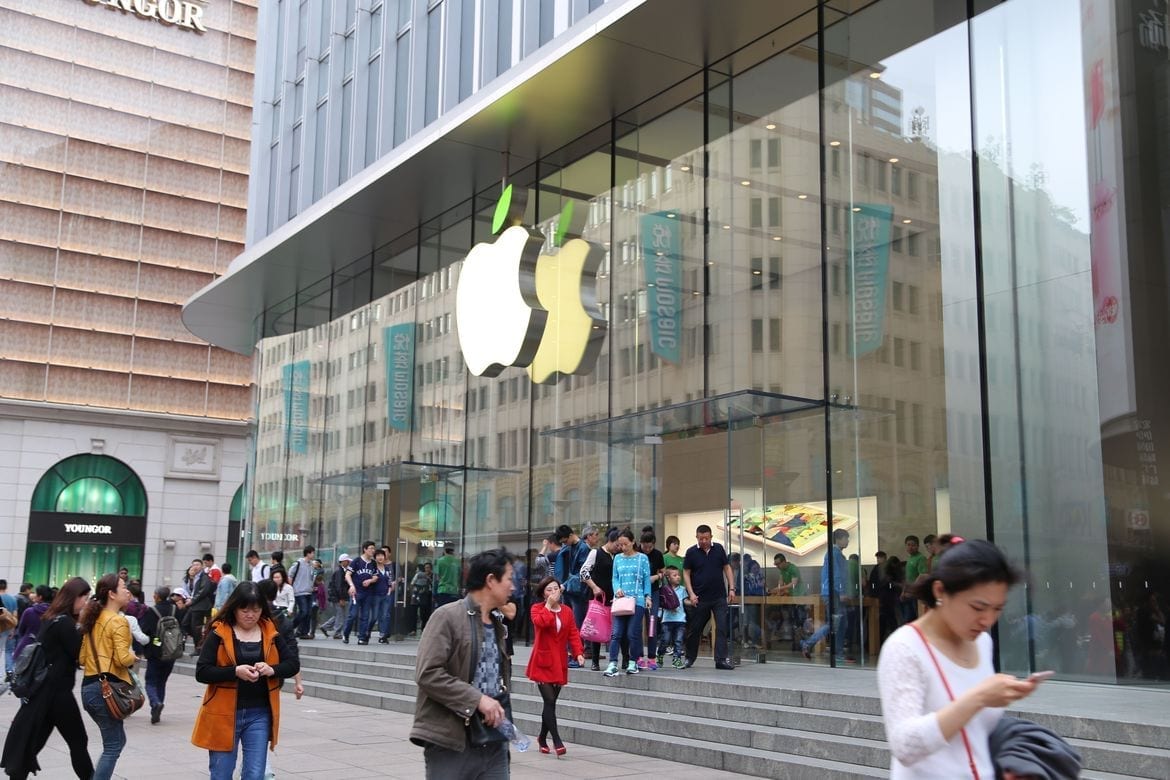
  • The iPhone 7 hits stores, some models are already sold out

    The iPhone 7 hits stores, some models are already sold out

    Starting bright and early on Friday, September 16, you can get your hands on a brand new iPhone 7 or iPhone 7 Plus.

    Apple fans are finally laying their hands on the brand new iPhone 7 and iPhone 7 Plus.

    Eager customers joined long lines in cities like Sydney, Hong Kong, London, New York, Boston and San Francisco on Friday as the new models went on sale, more than a week after they were unveiled.

    Apple is releasing the phones, which are water resistant and feature beefed-up cameras, in more than 25 countries around the world. But people who haven’t reserved one in advance won’t be able to be too picky about the color — or get the larger model. Apple said earlier this week that the iPhone 7 Plus is completely out of stock online.

    “During the online pre-order period, initial quantities of iPhone 7 Plus in all finishes and iPhone 7 in jet black sold out and will not be available for walk-in customers,” the company said in a statement.

    However, some consumers who thought carriers might have the larger model in stock were disappointed as the day progressed.

    “The iPhone 7 Plus is not available in stores this morning, so customers who wish to get iPhone 7 Plus should go [online] to place an order,” a Verizon spokeswoman said.

    Meanwhile, T-Mobile said its stores had “limited inventory at launch,” with shipping dates as far away as the end of November for black iPhone 7 Plus devices.

    Your best bet of finding an iPhone 7 Plus may be directly through Sprint. A spokesperson said “most of our retail stores have [the iPhone 7 Plus] going into [today].”

    An AT&T spokesperson has not yet responded to a request for comment.

    Many customers who couldn’t get a device aired their complaints on Twitter.

    If you’re not in a rush and don’t fancy spending your morning waiting on a sidewalk, you can order an iPhone 7 or 7 Plus online through Apple or a number of retailers.

    According to Apple’s website, the jet black version of the iPhone 7 Plus won’t ship until November in the U.S. All other colors, including matte black, will ship in two to three weeks if ordered online directly from Apple. Those wait times could change.

    The 4.7-inch iPhone 7 starts at $649 and the 5.5-inch iPhone 7 Plus starts at $769.

    Outside an Apple Store in Hong Kong, sports coach Kala Singh said he’d reserved his matte black iPhone 7 a week ago. “I always upgrade my phone when they change the number,” he said.

    Singh opted not to go for a jet black version because he said he’d heard it’s easy to get finger smudges on them.

    But at the same store, Tsang Yan-yee said she was “a little bit upset” that she’d had to settle for a rose gold iPhone 7 instead of a jet black one. She also said she was disappointed with Apple’s controversial decision to remove the phone’s headphone jack.

  • Vietnamese camp outside Singapore shops in wait of iPhone 7

    Vietnamese camp outside Singapore shops in wait of iPhone 7

    Demand among tech-geeks is soaring since Apple’s release of the iPhone 7 and 7 Plus last week, and unhinged Apple fans in Vietnam are no exception.

    Many are determined to be the first to buy the new device. However, Apple doesn’t have a direct retail presence in the country, so the eager fans have to go the extra mile to get their hands on a new phone.

    Vietnamese dealers and resellers have quickly spotted a lucrative business opportunity here and are willing to pay line-sitters who may have to camp outside outlets in Singapore for a couple of days leading up to the iPhone’s launch there this Friday.

    Some Vietnamese living in Singapore have posted ads on Facebook asking for VND2 million ($90) to camp out overnight to be the first in line for the new phone.

    “It seems long to wait in line for 24 hours. But you will stay occupied playing card games, shooting the breeze with your fellows and even shopping in the mall,” a Facebook account named Son Le said in an advertising status.

    Any time that Apple launches a new product, there is an influx of such requests posted in the online technology community, and this time Apple’s true aficionados in Vietnam are still impatient to get those phones.

    “We will handle paying the bills. All you have to do is to be the first in line. And more importantly, you can get paid much higher for an iPhone 7 Plus in the new color Jet Black,” Thang, a reseller in Hanoi, told VnExpress.

    Quang, a dealer in Ho Chi Minh City, said the interest in line-sitters has been growing in the weeks leading up to the launch this weekend. He said due to the whopping demand, people will ask to be paid much more than than they were last time and securing a spot in the line is important, so Quang decided to fly his staff to Singapore.

    “This time we will probably have to wait in line for a couple days,” said Quang. “The business is also quite risky. The price could slump heavily by a few million dong. There is a chance we could make a loss on this,” he said.

    vietnamese-apple-fans-pay-people-in-singapore-to-buy-iphone-7s

    A group of Vietnamese camp outside a reseller store in Singapore during an iPhone launch in 2015.

    As many have witnessed during the last couple of iPhone launches, a growing number of resellers in Vietnam have been hiring line-sitters in Singapore to sell the phones on the domestic market.

    A retailer in Hanoi, after careful consideration, chose to turn to Vietnamese students in Singapore who want to make some cash to cover their tuition fees.

    “It costs much more to fly from here to Singapore,” said a Hanoi-based re-seller, adding that it is about $100 cheaper to take a direct flight from Ho Chi Minh City to Singapore than it is from Hanoi.

    “We have no choice but pay people who are currently living on the island to queue up and send just one person from here over with the money,” he explained, adding that he has five Vietnamese students working for him.

    In addition to camping out for the new iPhone, there are other opportunities to earn some money for anyone who is about to travel from Singapore to Vietnam next week. They can make a quick buck of about $25 for a phone just by taking it back with them on board.

    Shops in Hanoi are charging consumers double the price quoted by Apple for an iPhone 7 Plus 256 GB, with a promise that buyers will be the first Vietnamese to get their hands on a new iPhone.

  • Chinese retail prices on the new iPhone 7 may drag down sales

    Chinese retail prices on the new iPhone 7 may drag down sales

    This is clearly a big change in the industry, and as big changes oftentimes go, people aren’t immediately excited about it. People also seem frustrated with Apple’s new wireless headphone option, the “AirPods”, which will retail for around $160. That’s even more impressive when you consider Apple Watch was only on sale for 8 months of the year. It means for all those who sit at their desks,charge the phone and plug in their headphones to listen to music, Apple’s latest smartphone isn’t going to cut the mustard -you simply can’t do both. Apart from having aLightning input at the rear of the dock, there is a 3.5mm output jack as well.

    We expect more third-party solutions to arrive in the next few weeks to make this less of a pain in the rear. This is only slightly more useful than the one port on the phone. AirPods auto-pair with all your iCloud-connected devices except Apple TV.

    Schiller mentioned that the Lightning adapter Apple includes with every iPhone 7 is a way the company is helping ease the transition from the 3.5 mm jack. Apple killed the 3.5mm audio port with the iPhone 7 and iPhone 7 Plus.

    Apple initially quoted shipping dates of two to three weeks after September 16, but the company quickly pushed ship dates back to four to six weeks for some versions of the black iPhone 7s. And, these standalone left/right AirPods only play music when they detect that they’re in your ear.

    They’re just standard Bluetooth, with a little bit of “secret sauce” for easy pairing with Appledevices. When Apple unveiled the iPhone 7, people took issue with its lack of a headphone jack.

    “Apple has a very long history of removing features we all thought were necessary, and then convincing us that we didn’t need them”, said Ask, noting that Apple paved the way in phasing out the use of floppy discs and optical drives in computers.

    The Bluetooth or Lightning allow for the transfer of audio signals to the headphones digitally.