Retail News CRM

Tag: Jeju Air

  • Jeju Air co-CEO plans to depart

    Jeju Air co-CEO plans to depart

    Jeju Air said on Wednesday that co-CEO Ahn Yong-chan has expressed his intent to step down from his post, leaving the company to operate under the sole leadership of current co-CEO Lee Seok-ju. Ahn leaves Jeju Air after working under the company’s parent Aekyung Group since 1987.

    The co-CEO served in numerous positions at Jeju Air’s group affiliates such as in Aekyung Petrochemical and Aekyung Industry.

    The company said that Ahn served as CEO at the group’s affiliate companies for 23 years, and that he felt it was right to leave the company at a time when it is performing well, along with his original plan to retire at 61-years-old.

    Jeju Air has become a sizeable contender in the low-cost carrier industry in Korea. It reported 349.5 billion won ($311.6 million) in revenue in the third quarter this year, a 31 percent increase from the previous year.

    Ahn is the son-in-law of Aekyung Group’s Chairwoman, Chang Young-shin.

  • Jeju Air inks $4.4 billion deal to purchase 40 new planes

    Jeju Air inks $4.4 billion deal to purchase 40 new planes

    Jeju Air, Korea’s biggest budget carrier by sales, said, on Tuesday, that it inked a $4.4 billion deal for 40 new planes, with the delivery set to begin in 2022. Jeju Air has decided to buy Boeing’s new B737 MAX passenger jets to strengthen its fleet, the company said in a statement.

    The low-cost carrier plans to assign the 189-seat B737 MAX on its mid and long-haul routes as they are more fuel efficient than the planes it currently operates, a company spokeswoman said over the phone.

    The new jets have a range of some 6,500 kilometers, 1,000 km more than the B737-800NG that the company currently operates.

    In the January-September period, net profit jumped 31 percent to 84.86 billion won ($75 million) from 64.61 billion won a year earlier. Operating profit climbed 14 percent to 95.82 billion won from 83.79 billion won during same period. Sales were up 28 percent to 941.93 billion won from 734.78 billion won.

    Jeju Air said it is on track to achieve sales of over 1 trillion won this year on the back of a strengthened fleet and profitable routes.

  • Jeju Air net profit falls 3.7% due to the high cost of oil

    Jeju Air net profit falls 3.7% due to the high cost of oil

    Jeju Air, Korea’s biggest low-cost carrier by sales, said Tuesday its third-quarter net profit fell 3.7 percent from a year earlier due to high oil prices. Net profit for the three-month period that ended on Sept. 30 reached 31 billion won ($27.6 million), compared with 32.3 billion won ($28.7 million) a year earlier, the company said in a regulatory filing.

    The budget airline said high oil prices are to blame for the decline in net profit.

    Jet fuel prices came to $87.3 per barrel in the third quarter, up 45 percent from a year earlier.

    Operating profit fell 6.5 percent to 37.7 billion won ($33.5 million) in the July-September period from 40.3 billion won ($35.8 million) a year ago. Sales were up 31.3 percent to 350 billion won ($311 million) from 266.5 billion won ($236.8 million) during the same period last year, it said.

  • Jeju Air net profit rises 10 percent in second quarter

    Jeju Air net profit rises 10 percent in second quarter

    Jeju Air, Korea’s biggest low-cost carrier by sales, said Tuesday its second-quarter net profit rose 10 percent from a year earlier, helped by oil and currency hedging plans.

    Net profit for the three-month period that ended in June climbed to 16.83 billion won ($15 million) from 15.27 billion won a year earlier, the company said in a regulatory filing.

    “The company has hedged on oil prices and major settlement currencies due to its heavy exposure to volatility. The move helped it secure a certain level of profitability in the past quarter,” the airline said in a statement.

    But operating profits fell 28 percent to 11.63 billion won in the April through June period from 16.18 billion won a year ago. Sales were up 24 percent to 283.26 billion won from 228 billion won during the same period last year, it said.

    An increase in jet fuel prices and a decreased number of holidays had an impact on the quarterly operating income, the statement said.

    For the first half of 2018, net profit jumped 66 percent to 53.77 billion won vis-a-vis 32.31 billion won in the previous year. Operating income climbed 34 percent to 58.06 billion won in the first half from 43.41 billion won a year ago. Sales rose 26 percent to a record 591.84 billion won from 468.2 billion won.

    Looking ahead, Jeju Air said it is on track to achieve sales of over 1 trillion won this year on the back of a strengthened fleet and profitable routes.

    The budget carrier plans to expand its fleet to 39 B737-800NG planes by the end of this year from the current 34.

  • Cabin crew for Jeju Air can ditch the high heels

    Cabin crew for Jeju Air can ditch the high heels

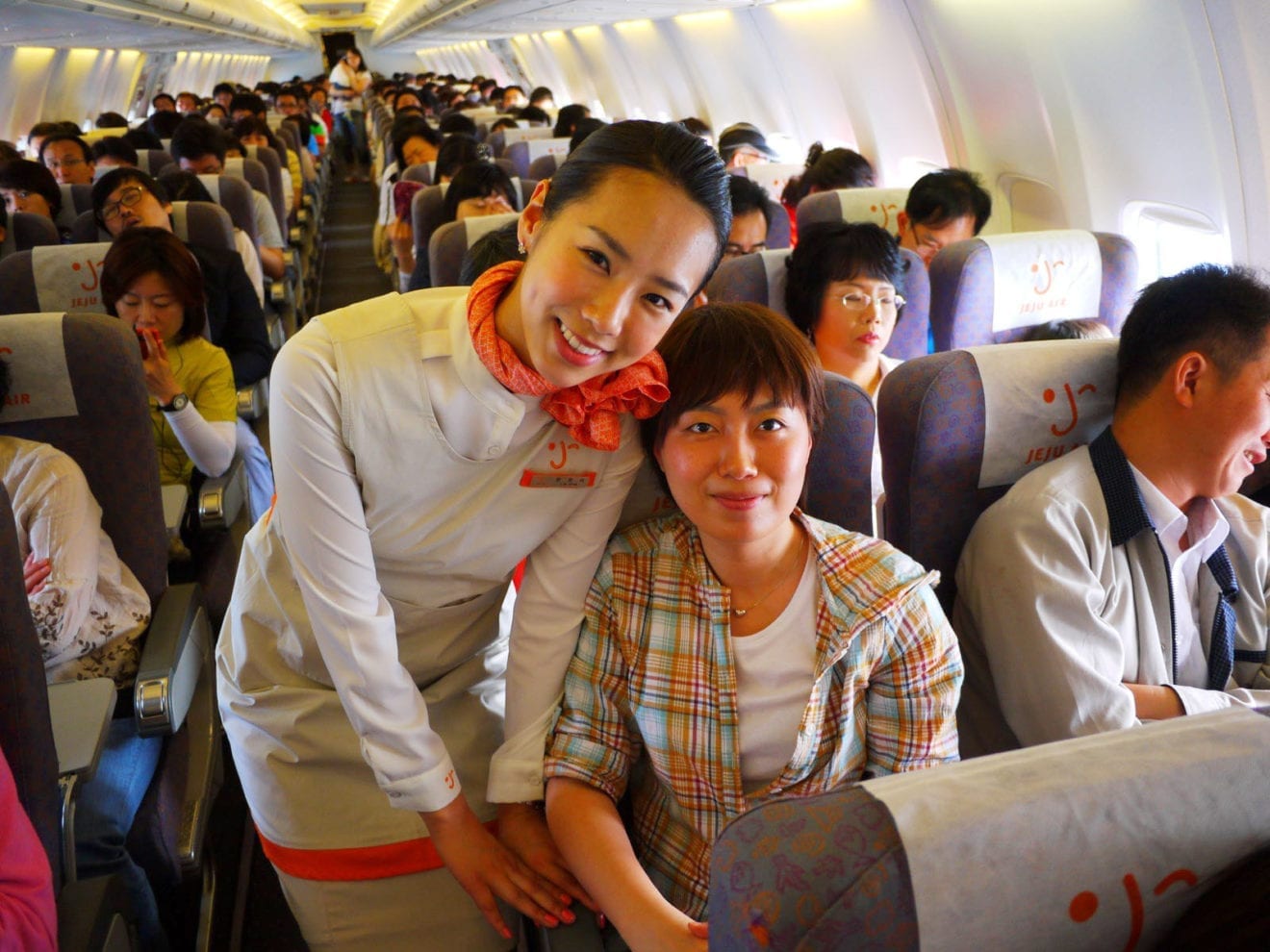
    Korea’s largest budget airline, Jeju Air, will now allow female flight attendants to wear shoes with lower heels when in uniform, the company announced on Thursday.

    Female attendants had to wear shoes with five to seven centimeter (1.9 to 2.7 inch) heels when they were working in uniform outside of planes.

    Once they boarded a plane, attendants wore shoes with low, three-centimeter heels for safety reasons.

    Jeju Air has now decided to let attendants choose between shoes with high heels or lower heels when wearing their uniforms outside of planes.

    The airline has been changing its service guidelines from earlier this year to reduce stress on flight attendants.

    From April, the airline has let flight attendants wear glasses and have painted nails while serving on board.

    While Jeju Air didn’t have official guidelines that prohibited attendants from wearing glasses, the industry norm was to wear contact lenses, so the airline decided to officially allow glasses.

    The airline previously only allowed nails to be painted with one color, but now flight attendants can decorate their nails with a variety of colors. However, additional textured nail decorations are still prohibited as they could scratch customers, the airline said.

    The uniform guidelines for flight attendants in Korea became a hot topic after employees of Korean Air’s budget airline Jin Air complained about their skinny jeans-based uniform.

    The idea of wearing jeans as uniform was reportedly introduced by Korean Air heiress Cho Hyun-min, who stepped down from all her positions at both Korean Air and Jin Air after throwing drinks at employees out of anger earlier this year. Jin Air is currently redesigning its uniforms.

  • Budget airlines fly high with huge first quarter

    Budget airlines fly high with huge first quarter

    Budget airlines flew high in the first quarter, with combined operating profits soaring to more than double the figure inked in the same quarter last year.

    Combined operating profits from Korea’s six low-cost carriers (LCC) – Jeju Air, Jin Air, T’way Air, Eastar Jet, Air Busan and Air Seoul – jumped by roughly 131 percent year-on-year to 186.1 billion won ($171.96 million) in the first quarter according to tentative performance reports from each company on Wednesday. Revenue grew by 34.2 percent to 1.18 trillion won.

    LCCs typically release a tentative earnings report before releasing their fixed figure as they do not vary much.

    The largest growth booster was the rapidly increasing demand for both international and domestic travel.

    According to data from the Ministry of Land, Infrastructure and Transport released last month, the number of passengers that traveled through Korean airports reached 9.58 million in March, increasing by 12.6 percent year-on-year. While March is not traditionally a high-season for international travel, the number of overseas travelers increased by 17 percent to 7.1 million in the same month, showing traveling is becoming a year-round event.

    The budget airlines’ efforts to diversify flight services to Japan and Southeast Asian destinations also paid off. After tension with China over the deployment of the U.S.-led terminal high-altitude area defense antimissile system stopped Chinese tourists from visiting Korea, LCCs specializing in short-haul overseas travel quickly sought out alternative destinations.

    Korea’s largest LCC Jeju Air said its focus on Japan and Southeast Asian destinations, favored by Korean travelers, was a big driver for growth. Jin Air also credited its growth to flight service diversification.

    Airlines are still in the process of expanding their travel routes. Eastar Jet will introduce a service to Da Nang, Vietnam, in June and Sapporo, Japan, in July. By the second half of the year, it will also start services to Kyushu and Nagoya in Japan.

    T’way Air diversified its routes by creating flight services that depart from various regional airports in Korea including Daegu, Busan and Jeju.

    “Airlines posted positive first quarter earnings despite soaring oil prices largely thanks to strong demand for overseas travel,” said Choi Go-woon, an analyst from Korea Investment & Securities. “Budget airlines, which had struggled in business in traditional low seasons, will see continuous performance growth now that people enjoy traveling abroad, especially to Japan and Southeast Asia, regardless of the season.”

    During the same period, the combined operating profits of full service carriers Korean Air and Asiana Airlines grew 14.2 percent to 241.1 billion won. Asiana’s operating profit soared 144 percent to 64.3 billion won in the last quarter, the highest quarterly profit in three years, however Korean Air posted negative 4.3 percent growth and posted 176.8 billion won in operating profit.

    Korea’s largest airline said one-time incentive payouts to employees, of about 53.4 billion won, and losses from unfavorable currency rates ate up its operating profit. Though the owner family scandal has tainted the airline’s brand image, it wasn’t until April that the “water rage” scandal involving Korean Air heiress Cho Hyun-min broke. Any effect from resultant boycotts will show in second quarter reports.

    Revenue growth of the two full service carriers was limited to 8.3 percent. The total earnings of 4.62 trillion won, however, remains an unbeatable sum for the six budget airlines combined.

    Full service carriers are trying to survive through a fierce battle in the aviation market by bolstering their long-haul flight services. According to a spokesperson from Asiana Airlines, it will make 60 percent of its services long-haul flights by 2022.
  • South Korea’s Jeju Air says China approves flights in sign of easing tension

    South Korea’s Jeju Air says China approves flights in sign of easing tension

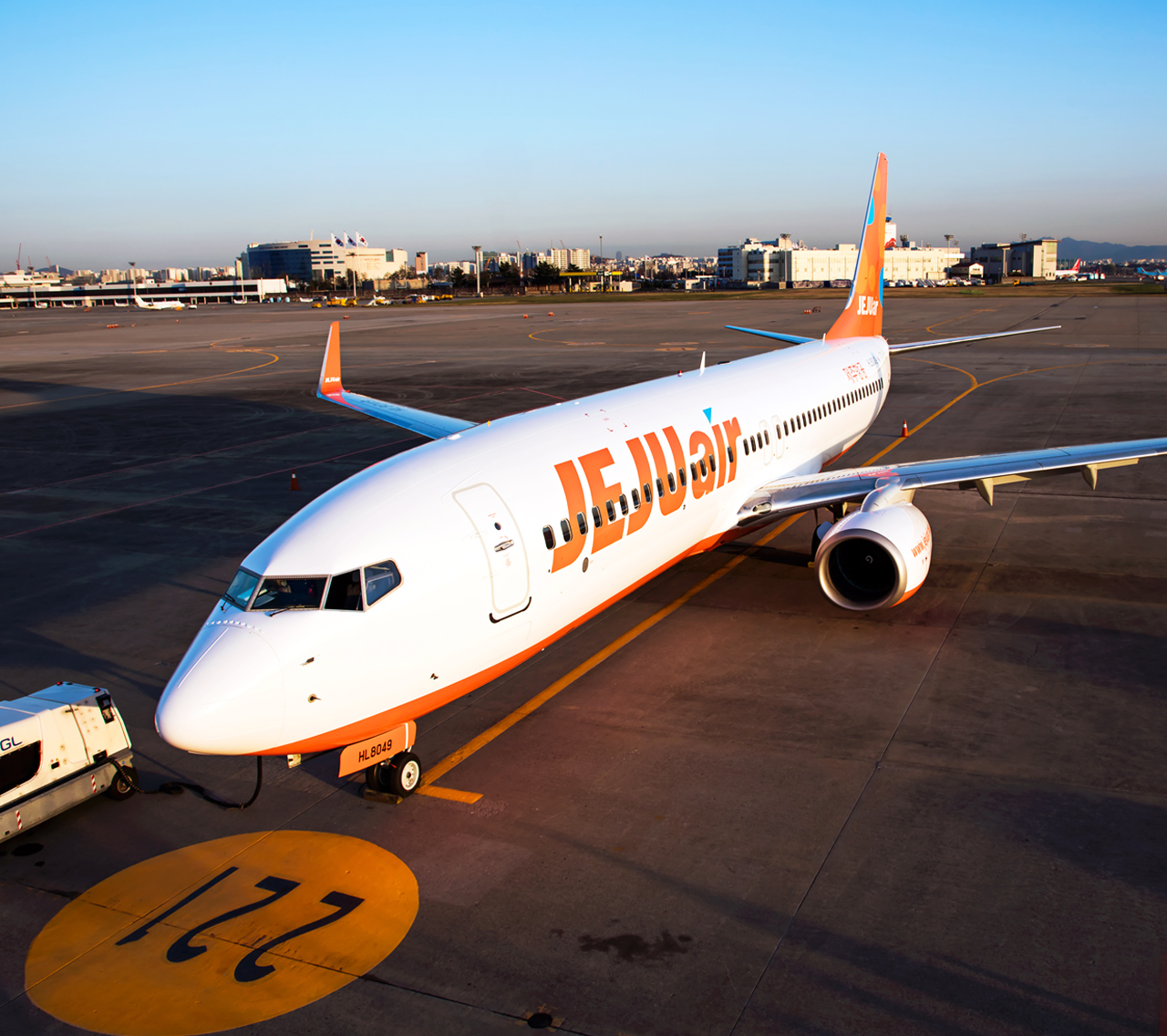
    South Korea’s Jeju Air said on Tuesday China has approved a plan to double its flights to the Chinese city of Weihai from June 2, boosting hopes of easing political tension between the two countries.

    Relations between China and South Korea have been strained for months by a South Korean decision to deploy a U.S. anti-missile system, but have taken on a more conciliatory tone with the election this month of President Moon Jae-in.

    Jeju Air, South Korea’s top low-cost carrier, said it first applied to increase its flights to Weihai, to 14 a week from 7, in early April, but China had not approved the plan because of the diplomatic row.

    “The political tension has had a far-reaching impact on flights between the two countries including new flights, added flights and charter flights,” said a Jeju Air spokesman, Park Jung-Jun.

    “The latest move raises hopes that the tension is easing,” he said.

    However, he said China has not approved a request from his airline to resume charter flights between the two countries.

    South Korean firms from airlines to automakers and retailers has suffered from China’s backlash to the decision last year to deploy the U.S. Terminal High Altitude Area Defense (THAAD) anti-missile system.

    China says the system’s powerful radar can penetrate deep into its territory and undermine its security. South Korea and the United States have said the deployment is aimed purely at defence against North Korea.

    Moon has pledged to seek a parliamentary review of the THAAD system, and sent his representative, Lee Hae-chan, to China to meet President Xi Jinping this month.

    Xi told Lee that China wanted to put ties with South Korea back on a “normal track”, but he also urged it to respect China’s concerns and resolve tension over the THAAD deployment.

    China’s tourism ministry has also instructed tour operators to stop selling trips to South Korea from March 15. An official at South Korean tour agency Mode Tour told Reuters it hoped the ban may be lifted as early as the second week of June.

    Lotte Group has closed 74 of 99 retail stores in China after the group in late February approved a land swap outside Seoul to allowed South Korea to install the THAAD system. A Lotte Group official said on Tuesday that no stores had reopened yet.