Retail News CRM

Tag: JPMorgan

  • J.P. Morgan Expands Its Footprint in Switzerland, Enhancing Global Retail Opportunities

    J.P. Morgan Expands Its Footprint in Switzerland, Enhancing Global Retail Opportunities

    J.P. Morgan Reshapes Corporate Banking Landscape in Switzerland

    In a bold move that underscores its ambitions in Europe, J.P. Morgan is repositioning its Corporate Banking operations within the DACH region. Effective July 1, Lutz Karl, who has been at the helm of serving large corporate clients across the region, will make his way to Zurich. There, he will spearhead coverage for both Large and Mid Caps in Switzerland.

    This strategic shift was disclosed in an internal memo co-signed by Marcus Hiseman and Stefan Povaly, Co-Heads of Global Corporate Banking (GCB) for Europe, the Middle East, and Africa (EMEA). The details were later confirmed by J.P. Morgan, signaling a clear intent to strengthen its foothold in the Swiss financial landscape.

    Ambitious Growth Endeavors in Investment Banking

    The creation of this new leadership role in Switzerland emphasizes J.P. Morgan’s determination to bolster its corporate and investment banking capabilities—a narrative that has been echoed in previous reports by finews.com. With the goal of attracting an array of clients, from multinational giants to burgeoning mid-tier firms, the bank is clearly casting a wider net.

    Meanwhile, Bernhard Brinker, who has successfully navigated the Mid Cap segment in Germany and Austria, will expand his purview to also include oversight of the Large Cap segment along with other GCB functions. It seems that J.P. Morgan is ready to shake things up in a market ripe for competition.

    As the financial landscape evolves, echoes of opportunity ripple through banks such as J.P. Morgan, reminding industry players that change is often just the first step in a game that blends strategy with good fortune.

    Questions & Answers

    What is the significance of Lutz Karl’s relocation to Zurich?
    Lutz Karl’s move to Zurich reflects J.P. Morgan’s strategic shift to reinforce its Corporate Banking operations in Switzerland, aiming to enhance its presence in the region’s financial landscape.

    How does this repositioning align with J.P. Morgan’s broader goals?
    This reorganization aligns with J.P. Morgan’s aspirations to grow its corporate and investment banking sectors, allowing it to cater to a wider range of clients, from large corporations to mid-sized firms.

    Who will oversee the Large Cap segment in Germany and Austria?
    Bernhard Brinker, who has been leading the Mid Cap segment, will now expand his responsibilities to include the Large Cap segment and additional GCB business areas, further solidifying the bank’s leadership in the region.

  • JPMorgan South & Southeast Asia CEO to retire

    JPMorgan South & Southeast Asia CEO to retire

    The Chairman and CEO of South & Southeast Asia for JPMorgan, Kalpana Morparia is reportedly planning on stepping down from her role in Q1 2021.

    Morparia first joined the firm in 2008, and in addition to her regional roles acts as the Senior Country Officer for JPMorgan in India, based in Mumbai. Speaking of the offer to join the firm, Morparia said: “Out of the blue, I received this offer from JPMorgan. This was again one of the great turns of fate that I joined a great organization like JPMorgan. Despite all the negative clouds you see today in the country, I believe in the great growth story of India. JPMorgan is extremely focused on serving its clients in India.

    Prior to joining the American firm, she was affiliated with ICICI Bank, an Indian multinational banking and financial services company, for over three decades.

    She first joined ICICI in 1975, beginning in the bank’s legal department, as she pursued a Law degree following her science-focused studies. In 1991, Morparia traveled to the USA to study capital markets at Davis Polk & Wardwell. Subsequently, she enacted the listing of ICICI Bank in 1999 on the New York Stock Exchange and is credited with the 2002 merger of ICICI Bank and ICICI.

    Morparia will be succeeded by Madhav Kalyan as Senior Country Officer for JPMorgan India, who currently serves as Managing Director and CEO for the India operation, entering the role in Q4 2009, according to his LinkedIn.

    Leo Puri is reportedly going to be appointed as Chairman of South & Southeast Asia, joining JPMorgan in Q1 2021, and Murli Maiya will take up the reins as CEO. Both will report to JPMorgan’s CEO for Asia Pacific, Filippo Gori.

    In a statement, JPMorgan said: “Kalpana Morparia, Chairman, South and Southeast Asia, informed the firm of her desire to retire. She has agreed to stay with the firm until Q1 2021, and help lead the firm’s efforts in South and Southeast Asia as we and our clients adapt to the new economic and work environment.”

    “Leo is a very senior and experienced finance professional who will bring a wealth of industry knowledge and depth of relationships. He will be dedicated to covering our critical external stakeholders, including key clients, regulators and industry bodies,” the company statement continued.

  • JPMorgan lashing by Indonesia signals global threat to analysts

    JPMorgan lashing by Indonesia signals global threat to analysts

    The world is getting more hazardous for skeptical analysts, the banks that employ them and investors who rely on their published research.

    Even by the rough-and-tumble standards of emerging markets, Indonesia’s punishment of JPMorgan Chase & Co this week for a bearish analysis of the nation’s stock market stands out. The country’s finance ministry cut business ties with America’s biggest bank, telling reporters on Tuesday that the firm’s November research note wasn’t “accurate or credible.”

    Official attempts to deter such research are nothing new in developing economies, but rarely do governments retaliate against a Wall Street powerhouse for publishing opinions that contradict official views. The move builds on a trend: In July, Turkey’s banking regulator issued an industry-wide warning to avoid negative reports. In 2014, Brazil President Dilma Rousseff chastised an analyst for suggesting her election would hurt the economy.

    “It’s definitely been getting more aggressive recently,” said Paul McNamara, a London-based emerging markets fund manager at GAM Ltd, which oversees client assets of about US$65bil.

    As money managers around the world pull capital from developing economies on concerns over rising US interest rates and a stronger dollar, policymakers are becoming especially sensitive to critical analyst opinions, according to Medley Global Advisors. The risk for Indonesian authorities is that their actions backfire by undermining investor confidence in the country’s market research.

    “Published research is already a diluted view, but these kinds of actions will make it even more bland,” McNamara said. “Retail investors will have no idea what analysts are really thinking because the written reports won’t say anything real.”

    JPMorgan downgraded Indonesia’s equity market by two notches to underweight from overweight in a Nov 13 report, calling it a “tactical response” to Donald Trump’s election win. The bank also cut its rating on Brazil, while noting that both countries may provide a “better buying opportunity” later.

    Indonesia’s finance ministry said on Tuesday it would stop using JPMorgan as a primary dealer and as an underwriter of its sovereign bonds. While Finance Minister Sri Mulyani Indrawati said the government is open to improvement and respects the assessments of research providers, she said banks should take responsibility for economic reports that “could influence fundamentals and psychology.”

    “The finance ministry and the government are very open to criticism, but JPMorgan’s research result was pretty weird and unfair,” Sofjan Wanandi, head of the experts team at the vice-president’s office, said in an interview on Wednesday.

    JPMorgan’s business in Indonesia continues to operate as normal, the bank said in an e-mailed statement on Tuesday. “The impact on our clients is minimal and we continue to work with the Ministry of Finance to resolve the matter,” the bank said. On Wednesday, the finance ministry clarified that it won’t stop JPMorgan from conducting private-sector business in the country.

    Government retaliation for negative research can have a chilling effect on market analysis.

    Some investment banks in Turkey scaled back commentary on sensitive political subjects after the banking regulator warned brokerages last July against publishing “reports that would turn expectations and the atmosphere negative.”

    That same month, the head of research at one of Turkey’s largest brokerages was stripped of his professional license and charged criminally over a report analysing the impact of a failed July 15 coup targeting President Recep Tayyip Erdogan. The criminal charge was later dropped, but an investigation started by the capital markets regulator is still ongoing. An official for the Ankara-based market regulator SPK, who asked not to be named citing the institution’s policy, declined to comment on the investigation.

    In 2014, Rousseff publicly shamed an analyst at Banco Santander Brasil SA for forecasting a deterioration in the country’s currency and stock markets if she were re-elected. The firm later said it fired the analyst, disowning the remarks as that person’s opinion, not necessarily reflecting the company’s view. The episode spooked other analysts, according to Klaus Spielkamp, head of fixed-income sales at Bulltick LLC. “If anybody had anything bad to say about Brazil at the time, they wouldn’t say it,” he said. “Everybody was afraid.”

    Rousseff’s campaign press office declined to comment at the time, as did the nation’s banking association, Febraban. Rousseff was replaced as president last year after being impeached for breaking budget laws.

    Other governments’ moves also have stoked concerns among research analysts. China’s crackdown on hedge funds and broker-dealers for alleged trading abuses during its 2015 stock market rout was seen by some as targeting negative financial views. And in Italy prosecutors accused Fitch in 2012 of mismanaging its analysis of the eurozone debt crisis. The firm disputed the claim, and the case against it was later dismissed.

    While governments usually go after negative research during political or economic turbulence at home, the biggest concern for emerging markets today is capital outflows tied to the prospect of faster interest rate increases under a Trump presidency. International investors pulled US$23bil from developing-nation funds from the start of October through mid-December, according to the Institute of International Finance.

    “Governments are sensitive to criticism, especially in countries where there are large capital inflows that can quickly turn into outflows and prompt a currency sell-off,” said Nigel Rendell, London-based senior analyst at Medley Global Advisors.

    Yet even the most developed market isn’t immune to concerns that free speech is being stifled. S&P Global Ratings initially claimed that the US government’s 2013 lawsuit against the firm for allegedly inflating ratings on subprime-mortgage bonds was in retaliation for S&P’s downgrade of America’s sovereign credit rating. The firm dropped that accusation when settling the government’s case in 2015, acknowledging in a statement of facts that it hadn’t found evidence to support the claim. The company didn’t admit wrongdoing in agreeing to pay US$1.375bil to federal and state authorities.

    Still, Indonesia relies on international securities firms to market its sovereign bonds to overseas investors, who accounted for about 40% of local government debt holdings as of September, according to the Asian Development Bank. If policymakers were to alienate more banks with similar spats, they might undermine the government’s ability to finance its spending plans.

    “JPMorgan has been in the country for a very long time,” said Christopher Wheeler, an analyst at Atlantic Equities in London. “It will blow over them, but probably do more harm to Indonesia.”
  • Hong Kong Suffers for Its Devotion to the Peg

    Hong Kong Suffers for Its Devotion to the Peg

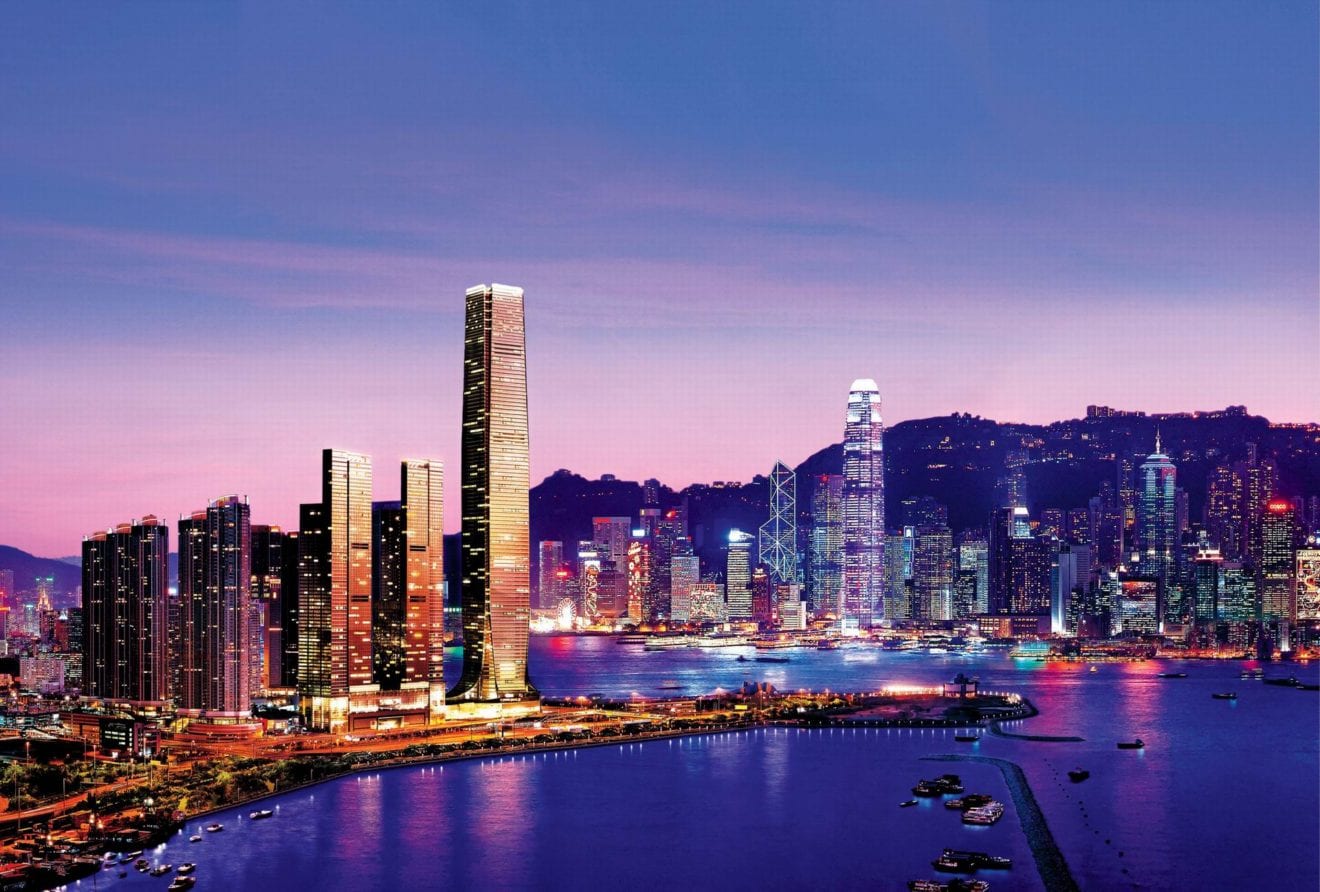
    Hong Kong has pegged the value of its dollar to the greenback since 1983. The peg was meant to ensure financial stability as the city embarked on the long process of re-integrating with China. Since then its currency has been one of the most stable in the region. To lock the HK ­dollar’s trading range against the greenback into a narrow band, about 7.75 to the US dollar, the Hong Kong Monetary Authority (HKMA) buys and sells the two currencies. Whenever the Federal Reserve raises or lowers interest rates, Hong Kong follows suit.

    That means Hong Kong is caught between tightening monetary policy in the US and the economic slump of its main trading partner, China. If the Fed moves on the rate soon, Hong Kong will have to raise interest rates even as the mainland’s slowdown puts pressure on the city’s wages and property prices. “It’s a double whammy,” says BNP Paribas economist Mole Hau.

    “Nobody was in the mood to buy an apartment”

    China’s surprise devaluation of the yuan last month helped trigger currency declines worldwide and increased speculation about Hong Kong’s willingness to keep putting up with such pain. In the options market, bets on an end to the peg jumped to their highest in more than a decade. On his blog in late August, Hong Kong Financial Secretary John Tsang warned that the economy may slow from the 2.6 per cent growth rate it managed in the first half of the year. “Hong Kong still needs to face the challenges brought by the fluctuating financial markets, weak foreign trade, and slower tourism,” he wrote.

    Hurt by the Chinese devaluation as well as low prices for oil and other commodities, regional currencies have declined an average 6.4 per cent against the US dollar in the past six months. That’s making the prices at the city’s stores more expensive for visitors, including the Chinese.

    As tourist arrivals from China fell 9.8 per cent in July compared with a year earlier, the Hong Kong retail industry’s sales for the month fell 2.8 per cent to HK$37.6 billion ($4.85 billion). That was the fifth consecutive month of declines, and much worse than the 1.2 per cent contraction economists surveyed by Bloomberg had predicted.

    Home prices in Hong Kong have increased 60 per cent since 2010, fuelled by strong demand from the mainland and low interest rates. But Hong Kong in August had the weakest home sales in 17 months. With the stock market plummeting, “nobody was in the mood to buy an apartment,” says Louis Chan, chief executive officer of the residential unit of Centaline Property Agency, one of the city’s two largest brokers. Home prices may start falling as much as 10 per cent a year starting in 2016, says Cusson Leung, an analyst with JPMorgan Chase.

    Investors and economists have been talking about the peg’s demise since China regained control of the city in 1997. There’s always the possibility of the HKMA pegging the HK dollar to the yuan instead of the greenback. Zhang Yichen, chairman and CEO of Citic Capital, the Chinese investment bank, says that won’t occur soon. Speaking at the World Economic Forum in the Chinese city of Dalian on 9 September, Zhang said the Hong Kong government will be hard-pressed to end the peg until the yuan becomes a truly convertible currency, meaning that it must be exchangeable for foreign currencies in unlimited amounts.