
Retail News CRM

Tag: Kalimantan

  • Airasia Launches Direct Routes From Malaysia To Indonesia, Boosting Regional Connectivity And Economic Growth

    Airasia Launches Direct Routes From Malaysia To Indonesia, Boosting Regional Connectivity And Economic Growth

    AirAsia, signified by the flight code AK, has expanded its offerings, introducing two direct air routes from the Malaysian cities of Kuala Lumpur and Kuching to Pontianak, Indonesia. This development furthers its reputation as the airline with the most extensive network connecting these two countries. It also upholds AirAsia’s dedication to enhancing regional connectivity and fostering economic growth throughout the region.

    Celebratory Reception

    Upon its return, flight AK1782 from Pontianak received a warm reception at Kuching International Airport. The occasion was celebrated with cultural performances and attending guests from Pontianak were welcomed by dignitaries, including Deputy Minister for Tourism, Creative Industry and Performing Arts Sarawak, YB Datuk Snowdan Lawan, and AirAsia Malaysia CEO, Dato’ Captain Fareh Mazputra. Representatives from various Malaysia Airports, government departments and private hospitals in Kuching also attended the event.

    In Kuala Lumpur International Airport Terminal 2, passengers on the inaugural flight AK491 from Pontianak were greeted by Tourism Malaysia and members of the AirAsia Management.

    First International Services at Supadio Airport

    These flights are the first international services to take place at Pontianak’s Supadio Airport since it regained its international status in June 2025. This significant event involved a special welcoming ceremony for dignitaries, headed by the Governor of West Kalimantan, Drs Ria Norsan, and the Malaysian Consul in Pontianak, En Azizul Zekri Abdul Rahim.

    Minister for Transport Sarawak, YB Dato’ Sri Lee Kim Shin, expressed his delight regarding the reinstatement of the Kuching-Pontianak route after a five-year pause. He emphasised the positive impact of this move, which will substantially reduce travel times, boost tourism, and strengthen connections between Sarawak and West Kalimantan.

    AirAsia’s Expansion

    AirAsia is proud of its recent route expansions, with Indonesia remaining a key market for the airline. CEO of AirAsia Malaysia, Dato’ Captain Fareh Mazputra, highlighted the significance of reintroducing the Pontianak route, which will increase convenience for passengers and open up new opportunities for tourism and business between Malaysia and Indonesia.

    CEO of Sarawak Tourism Board, Mdm Sharzede Salleh Askor, expressed her excitement over the reinstatement of direct air connectivity between Kuching and Pontianak. This development will make travel more convenient for those in West Kalimantan, strengthen Sarawak’s role as the gateway to Borneo, and attract more visitors from Pontianak and beyond.

    Currently, AirAsia Malaysia serves 18 destinations in Indonesia from Kuala Lumpur, with a new route to Banjarmasin set to commence on 20 October 2025.

    Questions & Answers

    What is the significance of the new AirAsia routes?
    These routes not only improve travel convenience but also open up new opportunities for tourism and business between Malaysia and Indonesia.

    What other Indonesian cities does AirAsia Malaysia connect with?
    AirAsia Malaysia currently connects with 18 Indonesian cities, including Jakarta, Bali (Denpasar), Medan, Yogyakarta, and more.

    What’s the impact of reinstating the Kuching-Pontianak route?
    This development will reduce travel times, boost tourism, and strengthen connections between Sarawak and West Kalimantan.

  • Indonesia en route to popularize tropical fruit

    Indonesia en route to popularize tropical fruit

    Thousands of farmers under East Kalimantan farmers group Gapoktan find it unfortunate that people outside Indonesia are missing out on their home-grown fresh and juicy mini papayas, bananas and dragon fruits.

    So far, most of their fresh fruit products are only consumed by locals buying from nearby markets due to a lack of infrastructure, making it expensive to deliver fruit across the country, let alone export them.

    Indonesian fruit exporter EK Prima Ekspor Indonesia, a subsidiary of the United Arab Emirates’ retail giant LuLu Group International, knows firsthand how selling prices at the consumer level end up depending more on transportation costs than on production costs.

    “Transportation — from farmers to warehouses to airports and finally to the destination country — is very expensive. If our unique fruit doesn’t appeal to consumers, we could lose out to other countries, especially if they can produce similar fruit for cheaper prices,” said Irawan Santoso, head of the fruit and vegetable division of EK Prima.

    Indonesia also has mangosteens, rambutans, snake fruits, jackfruits, soursops, breadfruits, guavas and starfruits that grow in the tropical country, but they are not frequently consumed globally or even domestically.

    The government aims to boost tropical fruit production by expanding land for fruit plantations while also improving infrastructure and transportation systems to decrease high distribution costs, as part of efforts to be the biggest tropical fruit producer in Southeast Asia by 2025 and in the world by 2045.

    President Joko “Jokowi” Widodo acknowledges that this is no easy task, especially with farmers’ preferences to use land for high-yielding commodities, such as palm oil, rather than fruit, which takes time to return on investment. Poor infrastructure has also driven up logistics costs for years.

    “If we can have 14 million hectares of oil palm plantations, we should also be able to have that much land for fruit,” Jokowi said during the opening ceremony of the four-day Fruit Indonesia Festival 2016 in the Jakarta Convention Center parking lot on Thursday. The President handed out various tropical fruits to children to remind people of the “love local fruit” movement.

    “If you see a lack of supporting infrastructure that could hamper distribution, please let us know,” he told the audience consisting of scientists, fruit planters as well as local and international trade delegates.

    To expand plantations, provincial administrations have been instructed to provide local farmers with 5 to 50 ha of land for fruit planting per business unit, as part of the bigger goal to provide 400,000 ha of land in Java, Kalimantan, Sulawesi and Sumatra.

    The program started with 100,000 ha in cooperation with state-owned companies. State plantation firms under PTPN also asked to start cultivating their under-utilized land for fruit production.

    “The state firms have been very enthusiastic to give sections of land for fruit plantations. They are used to producing palm oil, rubber, tea and other commodities but not fruit. So, a new management specializing in horticulture needs to be formed,” Bogor Agriculture Institute (IPB) rector Herry Suhardiyanto said.

    IPB is now studying a possibility to form another state company to develop horticulture based on the State-Owned Enterprises Ministry’s request.

    The business community is hopeful that the vision of becoming the world’s largest tropical fruit producer will be honored over time.

    “Let us not change the policy and vision every time we change presidents,” said Karen Tambayong, head of horticulture development with the Indonesian Chamber of Commerce and Industry.

  • Matahari expands to “Chinatown” of Indonesia’s Kalimantan

    Matahari expands to “Chinatown” of Indonesia’s Kalimantan

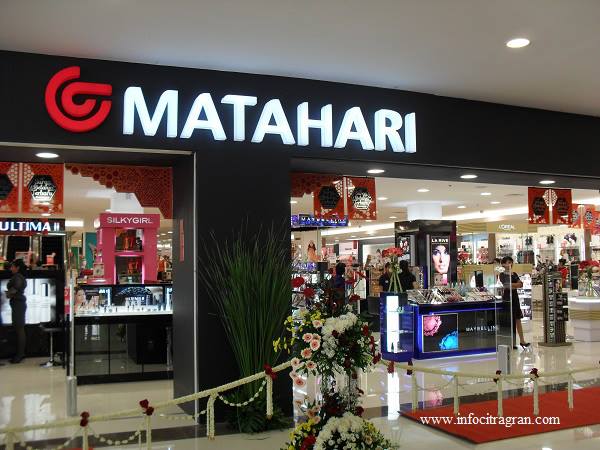
    Matahari Department Store (MDS) opened a new store in Indonesia’s Singkawang, West Kalimantan, to tap the economy prospects in the region, the publicly-listed company said in a statement on Thursday.

    The store, called Matahari Singkawang Grand Mall – MDS’s 13th store in Kalimantan – has a total area of 6,300 square metres. The store is the first new location MDS has opened this year.

    “The presence of Matahari at Singkawang Grand Mall is expected to benefit citizens in its surrounding area, hiring 322 employees, the majority of whom are locals,” Matahari human resources director Andre Rumantir said.