Retail News CRM

Tag: Kathmandu

  • Kathmandu, Cactus Outdoor team up for newly launched NZ Made Day

    Kathmandu, Cactus Outdoor team up for newly launched NZ Made Day

    Kiwi brands Kathmandu and Cactus Outdoor have created a new line of apparel made in New Zealand to celebrate the inaugural NZ Made Day.

    Launching today, NZ Made Day is a new annual event dedicated to celebrating products made by New Zealanders.

    Ryan Jennings, Buy NZ Made’s executive director, said the day will encourage New Zealanders to buy at least one locally made item from retailers or direct from the manufacturer.

    To celebrate the launch, Kathmandu and Cactus Outdoor have teamed up to create the Merino Tee, made by Albion Clothing, a manufacturer purchased by Cactus Outdoor earlier this year. The tee will be sold under Kathmandu’s branding.

    The merino tee has been designed, cut, sewn and packaged in New Zealand with the use of wool farmed in high county stations on the South Island.

    Kathmandu will start selling the tee today in all its New Zealand stores.

    “Brands like Cactus Outdoor and Kathmandu are stronger than ever because they have found their edge with customers by guaranteeing product longevity and customization over generic fast fashion,” Jennings said.

    According to Jennings, in the face of international consumer choice, manufacturers are building direct-to-consumer offerings that complement their retail channels to market.

    “Manufacturers that create direct relationships with consumers can offer customized products or simply pass on the retail savings, something that ‘stack ’em high’ big box retailers importing from overseas may struggle to match,” he said.

    Consumers who purchase any NZ Made products displaying the Kiwi trademark, including two new NZ Made caps released for NZ Made Day, can win one of five $1000 giveaways by texting 313 with the details of the purchase.

  • Kathmandu raises $96 million for Rip Curl acquisition

    Kathmandu raises $96 million for Rip Curl acquisition

    Kathmandu has raised nearly $96 million from institutional investors via a fully underwritten 1 for 4 pro rata accelerated entitlement offer to help fund its acquisition of Rip Curl.

    Eligible institutional shareholders took up 88 per cent of their entitlements, and 92 per cent of eligible institutional shareholders took up their entitlements in full, signaling strong investor support for the $368 million acquisition, which Kathmandu said will expand and diversify the business.

    Kathmandu is looking to raise a total of $145 million under the entitlement offer, which allows eligible shareholders to subscribe for one new ordinary share for every four existing shares held as at 5pm on October 3, 2019.

    The retail component of the entitlement offer opens on Friday, October 4, and closes on Monday, October 21, with eligible shareholders able to subscribe at an application price of NZ$2.55 per new share ($2.37 for Australian shareholders).

    This reflects a 14.4 percent discount to the volume-weighted average price of Kathmandu’s shares traded on the NZX for the last five trading days prior to October 1, 2019.

  • Kathmandu posts record profit

    Kathmandu posts record profit

    Strong sales growth in Kathmandu’s Australian business and North American wholesale operations drove another year of record profit for the outdoor apparel and equipment retailer.

    Just days after announcing it has become the biggest B Corp in ANZ, the retailer on Wednesday reported a 9.7 percent increase in total sales to NZ$545.6 million ($505 million).

    Gross profit was up 5.4 per cent to NZ$332.5 million ($307.8 million), and earnings before interest, tax, depreciation, and amortization increased 10.9 per cent to NZ$99.6 million ($92.2 million). Net profit after tax was up 13.6 per cent to NZ$57.6 million ($53.3 million).

    Excluding Oboz, the North American hiking boot brand that Kathmandu acquired in April 2018, sales were up 2.1 percent at constant exchange rates in FY19.

    In Australia, Kathmandu’s largest market, total sales were up 4.5 percent year on year and same-store sales were up 2.7 percent. Total sales fell 3.1 percent and same-store sales dropped 3.9 per cen in New Zealand, where the brand was founded in 1987.

    Oboz saw a 30 per cent sales increase on a pro forma basis to US$44.6 million ($65.1 million), as Kathmandu expanded its wholesale operations in North America. Earnings before interest and tax increased 38.6 per cent of US$7.9 million ($11.5 million) on a pro forma basis.

    “We’re really happy with those numbers,” Xavier Simonet, Kathmandu CEO, said on a media call on Wednesday.

    Simonet said the retailer had maintained its momentum in the first seven weeks of FY20, with 6.1 percent growth in same-store sales, though the crucial trading period in the first half is yet to come.

    Kathmandu would continue to focus on driving sales and profit growth in its core markets of Australia and New Zealand, Simonet said, and on enhancing the customer experience through digital.

    The retailer reported online sales growth of 9.2 percent at constant exchange rates. E-commerce now accounts for 10.1 percent of direct-to-consumer sales, up slightly from FY18, when online accounted for 9.4 percent of sales.

    Kathmandu had 2.2 million members in its Summit Club loyalty program as at June 30, 2019, a 12.4 percent increase on the previous corresponding period. Simonet called the program an “immensely powerful tool”, with members spending 29 percent more per transaction than non-members.

    Total operating expenses increased 3.7 percent to NZ$234 million ($216.6 million) in FY19, including an NZ$11.8 million ($10.9 million) incremental increase related to the first full-year inclusion of Oboz and the establishment costs for Oboz North America. As a percentage of sales, however, operating expenses fell 2.5 percent to 42.9 percent, reflecting the benefits of diversification into wholesale.

    The retailer spent NZ$15.7 million ($14.3 million) on new stores and refurbishments and paid down NZ$14 million ($13 million) of net debt in FY19. Kathmandu had NZ$19.3 million in net debt as at July 31, 2019.

    Kathmandu declared a final dividend of NZ$0.12 ($0.11) per share, taking the full-year dividend to a record NZ$0.16 ($0.15) per share.The final dividend will be fully imputed for New Zealand shareholders and fully franked for Australian shareholders.

  • Kathmandu Australia joins B Corp movement

    Kathmandu Australia joins B Corp movement

    Kathmandu on Tuesday announced it has become a certified B Corporation, making it the biggest B Corp in Australia and New Zealand.

    B Corps are for-profit businesses that meet the highest standards of social and environmental performance, public transparency and legal accountability.

    Started in the US in 2006 as a way to raise awareness of purpose-driven businesses by giving them a recognizable seal of approval, there are now more than 3000 B Corps worldwide, and more than 300 in Australia and New Zealand, which is the fastest-growing region per capita for B Corps.

    Local retailers with B Corp certification include Outland Denim, Etiko, Koala, GlamCorner, Bellroy, Flora & Fauna, KeepCup, Good Day Girl, Koskela, Arndsorf and Kester Black.

    The addition of Kathmandu to this list reflects a shift in the way many large companies view sustainability – no longer as a niche topic confined to the CSR team, but rather a core value that permeates every part of the business.

    “Sustainability is part of Kathmandu’s DNA  and is integral to our entire operation, from our supply chain to our materials and products and our operational footprint,” Xavier Simonet, Kathmandu’s CEO, said in a statement.

    To receive B Corp certification, organizations need to earn a certain number of points on the B Impact Assessment, an online tool that asks around 200 questions in five key areas: governance, workers, community, environment, and customers.

    The tool is administered by B Lab, a nonprofit with locations in 26 countries, which sets the global standards, awards B Corp certification and advocates for the adoption of ‘benefit company’ status at a state level.

    In the US and other countries, businesses can register as a ‘benefit company’, which means they are legally required to consider the impact of their decisions on all stakeholders, such as employees, suppliers and the planet, not just shareholders. This locks in their purpose, no matter who owns or runs the company.

    Benefit companies currently have no legal status in Australia, though B Lab Australia and New Zealand is actively campaigning for an opt-in legal form to be introduced through a minor amendment to the Corporations Act.

    This issue will become more critical as publicly listed companies like Kathmandu join the B Corp movement.

    T2, which is owned by Unilever, is also in the process of becoming a B Corp, and B Lab Australia and New Zealand is taking the opportunity to encourage other big businesses to get on board.

    “Kathmandu’s announcement as New Zealand’s first B Corp-certified multinational retail business, and Australasia’s biggest B Corp, is a significant milestone for Australia, New Zealand and the wider B Corp movement,” Andrew Davies, CEO of B Lab Australia and New Zealand, said in a statement.

    “Certification is open to all sizes of business, and we are seeing increasing interest from large corporations across the world, Kathmandu’s certification sends an important signal for other big businesses to follow in their lead.”

  • Kathmandu lifts same-store sales in FY19

    Kathmandu lifts same-store sales in FY19

    Kathmandu has reported a 2.7 percent year-on-year increase in same-store sales in Australia in FY19, and a 3.9 percent decline in same-store sales in New Zealand year on year.

    Overall, group same-store sales grew 0.6 percent year on year in FY19, the outdoor retailer said in a trading update on its unaudited full-year results on Thursday.

    Total sales across the business grew 9.6 percent to $520 million (NZ$545 million) compared to the year prior, with Kathmandu seeing strong performance in Australia during the second half of the financial year.

    According to Kathmandu managing director and chief executive Xavier Simonet, this was due to strong winter sales in Australia, as well as the continued performance of footwear brand Oboz.

    US-based footwear brand Oboz, acquired in April 2018, is expected to see continued growth in FY20 and beyond, according to Simonet.

    The business expects to see net profit of between $52.9 million (NZ$55.5 million) and $54.3 million (NZ$57 million), based off of an EBIT of between $78.7 million (NZ$82.5 million) and $80.1 million (NZ$84 million).

    This is compared to last year’s net profit of $48.1 million (NZ$50.5 million) and $71.1 million (NZ$74.6 million).

    Kathmandu expects to release its audited full-year results in late September.

    Simonet has previously stated international growth remains a priority moving forward.

    Kathmandu appointed Amy Beck as president of its North American business in January of this year as part of this international push.

    “Kathmandu is on a journey of transformation,” Simonet said, noting that profit growth in the core Australasian business would be used to fund investment into future growth.

    “While we are focused on driving growth for our core Kathmandu business in Australia and New Zealand, we are also step by step diversifying our channels, brand and markets, particularly through Oboz which has delivered strong growth.”

  • Outdoor Retailers Fighting for Market Share

    Outdoor Retailers Fighting for Market Share

    Outdoor retailers Kathmandu and Decathlon are vying for a piece of Australia’s ski and snowboard market this winter.

    Both businesses are launching inaugural snow collections, despite the fact that less than a million Australians regularly or occasionally ski or snowboard, according to 2018 data from Roy Morgan.

    On Thursday, Kathmandu launched its inaugural snow collection called Styper, which includes ski jackets and pants for adults and kids, as well as goggles and snow luggage.

    “Designed to suit beginner and intermediate levels, as well as the more sophisticated skiers, the pieces connect seamlessly together to keep warmth in and snow out, and are made with sustainable, state of the art ngx2 fabric technology that is waterproof, wind-proof and breathable,” the retailer said in a statement.

    The launch comes on the heels of Decathlon’s announcement that it is introducing more than 100 ski and snowboard-specific product lines from its Wed’ze brand available in Australia this year.

    The European discount retailer described its offer as an affordable option for people who want a trusted brand and good advice. The range will include adult ski jackets and pants for under $100, adult ski gloves for less than $40, kids’ ski gloves for less than $20, neck warmers and beanies for $10 and ski and binding packages for under $500.

    The price point is considerably lower than Kathmandu, which starts at $199.98 for kids and $349.98 for adults.

    Kathmandu’s collection is available in-store in Australia and New Zealand, while Decathlon’s collection is available in-store and online in Australia.

    Fashion brand SuperDry has been selling its snow range in Australia and New Zealand for the past three years.

  • Kiwis less likely to be brand “fans” than Aussies

    Kiwis less likely to be brand “fans” than Aussies

    Customers in New Zealand are less likely to be “fans” of brands, and are more likely to be “disappointed” by their shopping experience than customers in Australia.

    This is the finding of a recent comparison of New Zealand and Australian customer insights by TruRating, a customer feedback provider that launched in New Zealand this week.

    The company found that 64 per cent of Australian customers were “fans” of a brand after shopping with them. This means they gave the brand a rating of 8 or 9, which is correlated with loyalty and higher spending.

    But based on data from its nine-month soft launch in New Zealand with several local retailers, including Kathmandu and Bendon, only 54 per cent of Kiwis were “fans”.

    When it came to bad experiences, 18 per cent of Australian customers said they were “disappointed” and gave a business a rating of 0-3. This could impact average transaction value, TruRating said.

    In comparison, 24 per cent of customers in New Zealand gave a brand such a poor rating.

    The feedback company also noted a key difference in what drives customers to spend in New Zealand compared to Australia. While “overall in-store experience” was the most important factor in both countries, “product range” was the second-most important factor in New Zealand, while “service” was second-most important in Australia.

    “In Australia, customers are happiest on weekday mornings, and in New Zealand, Wednesday is the happiest day for shoppers,” TruRating said.

    “In general, New Zealand customers are least happy with their experience on Sundays, which is unfortunate as they are likely to spend more on this day.”

  • Oboz delivers profit growth for Kathmandu

    Oboz delivers profit growth for Kathmandu

    Kathmandu saw strong sales and profit growth in its recently acquired footwear business, Oboz, in the first half of FY19.

    The US-based footwear brand, which the outdoor retailer acquired in April 2018, generated NZ$29.2 million (A$28.4 million) in sales in the six months to January 31, 2019, a 38.6 per cent increase on the previous corresponding period. This led to a 77.1 per cent increase in earnings before interest and tax to NZ$4.7 million (A$4.6 million).

    In a statement about its first-half earnings, Kathmandu said Oboz was the fastest growing footwear brand in its stores and the fastest growing major hike footwear brand at REI, the biggest outdoor retail chain in the US.

    The Christchurch-based retailer reported NZ$3.7 million (A$3.6 million) in group EBIT from its North American business for the first half of FY19, after accounting for consolidation adjustments and Kathmandu’s initial wholesale costs.

    “[We] are beginning to build international Kathmandu brand equity through authentic outdoor wholesale channels,” Kathmandu’s chief executive Xavier Simonet, said in a statement.

    “International growth remains a very important priority.”

    Across the group, the retailer reported a 13 per cent increase in sales in the period to NZ$232 million (A$225.5 million), and a 9.4 per cent increase in gross profit to NZ$141.9 million (A$137.9 million).

    Excluding NZ$1.1 million abnormal income relating to the GST treatment of reword vouchers, normalised EBIT increased 10 per cent on the previous corresponding period to NZ$19.8 million (A$19.2 million), and net profit after tax increased 7.3 per cent to NZ$13.2 million (A$12.8 million).

    While Kathmandu saw strong same-store sales at the start of FY19, it experienced softer trading conditions in Australia and New Zealand over the Christmas and Boxing Day period.

    However, a focus on less promotional discounting, resulted in an increase in gross profit margin from 63.4 per cent in the first half of FY18, to 64.2 per cent in the first half of FY19.

    “Despite sales being below expectation, it was pleasing to see an improvement in retail gross margin,” Simonet said.

    The outdoor retailer  saw operating expenses increase 4.3 per cent at constant exchange rates in the half, with incremental expenses arising from Oboz and Kathmandu’s North American business totalling NZ$7.3 million (A$7.1 million).

    Kathmandu had NZ$130.1 million ($126.5 million) in inventory at January 31, 2019, which includes NZ$6 million  (A$5.8 million) to support its international business and early deliveries of core styles for the Autumn and Winter seasons. Clearance stock is in line with last year.

    Simonet noted that the full-year result is dependent on the key promotions to come, referencing the retailer’s successful second half last year.

    “Kathmandu is on a journey of transformation,” he said, adding that the company aims to shift from being a  leading Australasian retailer to a brand-led, global, multi-channel business.

    Profit growth in the core Australasian business will be used to fund investment for future growth.

    “While we are focused on driving growth for our core Kathmandu business in Australia and New Zealand, we are also step by step diversifying our channels, brand and markets, particularly through Oboz which has delivered strong growth,” Simonet said.

  • Kathmandu suffers a data breach, customers potentially exposed

    Kathmandu suffers a data breach, customers potentially exposed

    An unidentified third-party has breached Kathmandu’s website and potentially accessed customers’ personal information and payment details, the outdoor retailer revealed on Wednesday.

    The business was alerted to the breach, which took place between January 8 and February 12, 2019, through bank fraud monitoring.

    A Kathmandu spokesperson told that the business is currently investigating how many customers are affected by the breach, but that it remains an ongoing process.

    “Whilst the independent forensic investigation is ongoing, we are notifying customers and relevant authorities as soon as practicable,” Kathmandu chief executive Xavier Simonet said.

    “As a company, Kathmandu takes the privacy of customer data extremely seriously and we unreservedly apologise to any customers who many have been impacted.”

    The business has enlisted the help of external IT and cyber security experts to assist in investigating the circumstances, and to confirm which customers have been impacted.

    While the financial impact of the incident is still unclear, the dual-listed retailer saw its stock price fall to $2.31 per share after the announcement, though rebounded to $2.37 by the end of trade.

  • Kutchina opens second store in Nepal

    Kutchina opens second store in Nepal

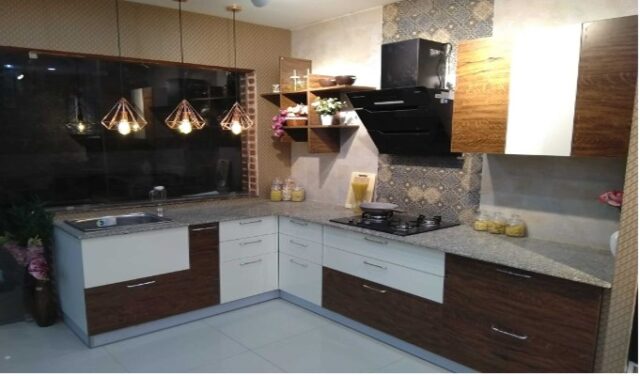
    Kutchina has opened its second store in Kathmandu spanning across 500 sq.ft. Targeting middle and higher income group customers, the store offers complete kitchen solutions including entire range of big appliances and modular kitchen. Look and feel of the store is a mixture of Kutchina’s modern concept with a traditional touch of Nepal’s rich culture. The walls of the store are given a look of Brick Mounting which resembles traditional houses of Nepal and adds that wow factor to the store.

    Designed by in-house designers, the store highlights all the elements of the products with the use of LED and Track lights. At present, the brand has 20 stores in India and 2 in Nepal.

  • Kathmandu Australia drops expectations after slow holiday sales

    Kathmandu Australia drops expectations after slow holiday sales

    Outdoor retailer Kathmandu has seen sales fall over the first 15 weeks of the 2019 fiscal year after sales during the December Summer Sale failed to reach expectations, deflating the retailer’s projections for 1H2019. Same store sales for the 22 weeks ending 30 December fell 1 per cent year on year, falling 0.2 per cent in Australia and 2.4 per cent in New Zealand.

    “Following strong same store sales growth in Q1, we are disappointed in trading results in Australia and New Zealand over the Christmas and Boxing Day period,” Kathmandu chief executive Xavier Simonet said.

    “Despite sales being below expectation it is pleasing to see the improvement in retail gross margin and continuing strong growth from the recently acquired Oboz business.”

    Gross margin improved to roughly 64 per cent over the period, partially offsetting the lower than expected sales to date for the 2019 year.

    First half sales in US footwear brand Oboz are now projected to grow 35 per cent to approximately $23.5 million (NZ$27.5 million), and see a gross margin of 40 per cent.

    Total group profits are expected to reach approximately 4 – 8 per cent above 1H2018, assuming current trends continue.

  • Kathmandu raises $50 million

    Kathmandu raises $50 million

    Kathmandu Holdings will take up the full oversubscription in a share purchase plan, raising $50 million to help fund its purchase of US footwear supplier Oboz Footwear.

    The Christchurch-based company on Wednesday said it accepted $2 million in oversubscriptions for its share purchase plan, taking total subscriptions to $10m.

    That’s on top of $40m raised from institutional investors in a placement.

    Shares were sold in both offers at $2.16 apiece, a 10 per cent discount to where the shares traded before the announcement.

    The shares fell 0.4 per cent to $2.55 today.

    “We are delighted with the extent of support, both for our institutional placement last month and for the share purchase plan, and the affirmation by our shareholders of our growth plans for the business,” chair David Kirk said in a statement.

    “The board would like to thank all those shareholders who participated in the SPP for their continuing support of Kathmandu.”

    The capital injection will be used to help pay for the US$60m upfront purchase of Oboz, which Kathmandu pursued to expand its presence in the North American outdoor market.

    If the acquisition meets certain earnings targets in calendar 2018, Kathmandu will pay up to US$15m more.

    Some 1516 Kathmandu shareholders of its 3514 investors sought to participate in the share purchase plan, offering $14.5m, meaning their offers will be scaled.

    Briscoe Group, which made a failed takeover bid in 2015 when it built up a 19.8 per cent stake, participated in both the institutional placement and share purchase plan.

  • Kathmandu smashes sustainability targets

    Kathmandu smashes sustainability targets

    Travel and outdoor apparel retailer Kathmandu has exceeded several sustainability targets in its latest report, also calling for industry-wide change in the adoption of driving sustainable innovations.

    In 2017 alone, Kathmandu recycled 3.9 million plastic bottles into gear, a three-fold increase on 2016 and outperforming its own 2017 target by 1.4 million. It also increased its use of sustainable cotton from 59 per cent in 2016, to 74 per cent in 2017, and is on track to achieve 100 per cent sourcing of sustainable cotton within three years.

    Kathmandu said its top priority in sustainability has been aligning with the Fair Labor Association to ensure global best practice in monitoring and improving worker’s rights in the supply chain. This work was acknowledged in 2017 with a B+ rating in the Ethical Fashion Report released in April, one of the highest rankings for a New Zealand based business.

    At a manufacturing level, Kathmandu has reduced fresh water usage by 4.25 million litres in 2017 by introducing Recycolor cotton to its fabric mix. Made from cotton scraps gathered from factory floors and cutting tables, Recycolor cotton uses 70 per cent less water than traditional cotton.

    Tim Loftus, marketing manager global brand at Kathmandu told that sustainability is about driving innovation, efficiency, team member engagement and customer loyalty.

    “Certainly cost savings come from striving to become a more efficient business, but more importantly there is unprecedented value created by challenging the status quo and addressing the social, economic and environmental issues of our industry,” he said.

    Loftus said collaboration is key when it comes to trying to realising sustainability objectives.

    “The large scale challenges associated with becoming a more sustainable business are shared by all businesses across the industry,” he said.

    “Industry-wide collaboration is an unstoppable force, working together with competitors and suppliers we have a far more substantial impact. We need our industry to throw their collective support around sustainability to drive real and lasting change.”

    Kathmandu’s sustainability work now spans across all functions of the business, including managing working conditions in factories, sourcing sustainable and ethically produced materials, eliminating restricted chemicals, reducing waste, and educating our staff at all levels.

    “Sustainability is not a department in our business, it is in the DNA of our business and is central to our brand,” affirmed Loftus.

    Kathmandu has also signed a partnership agreement with Bluesign®, an independent chemical auditor which helps factories select chemicals which are safe to use, eliminate ‘black’ chemicals which are unsafe, and put in place best practice management strategies for those rated ‘silver’, or classified as usable with good management.

    In distribution, Kathmandu opened a new custom built 5 Green Star, 25,000 square metre distribution centre in Melbourne, Australia this year, which is the company’s third 5 Green Star Rated building and has been future-proofed with innovations in water use, energy and emissions.

    Kathmandu continued its ‘war on waste’ in-store by increasing its recycling rate to 72.8 per cent, and is working more closely with landlords to increase recycling of soft plastics in shopping centres.

  • Kathmandu lifts full year profit

    Kathmandu lifts full year profit

    Adventure gear retailer Kathmandu has posted a 13.5 per cent increase in full-year profit to NZ$38.04 million (A$34.8 million), helped by strong winter sales and improvements in promotions.

    Revenue for the 12 months to July 31 was up 4.6 per cent to NZ$445.35 million, the company stated.

    Earnings before interest and tax (EBIT) increased from NZ$50.9 million to NZ$57.0 million for the same period. A final dividend of NZ 9.0 cents per share will be paid, bringing the full year payout to a record NZ 13.0 cents per share.

    “We were pleased to achieve strong same store sales growth driven by innovative new products and inspiring digital content,” said chief executive Xavier Simonet. “In addition to top line growth, continued cost control and working capital efficiency delivered very solid profit growth.”

    Simonet said the company’s financial position continued to strengthen during FY2017, and they ended the year with lower inventory and record low net debt.

    According to Simonet, sales grew strongly in their two largest markets, Australia and New Zealand.

    Online sales now comprise 7.5 per cent of group sales.

    “We have now delivered two successive years of strong profit growth and four successive quarters of same store sales growth,” Simonet said. “As a product and brand led business, we are focused on engaging our customers by creating distinctive, sustainable, quality products and by promoting our brand authenticity.”

    Simonet said in the year ahead, it is their aim to continue to grow in their core markets, with gross margin and operating efficiency a key management focus.

    “As we look forward, I am excited about the wholesale trials we are conducting in Europe, and remain committed to developing new international channels for the Kathmandu brand,” he said.

  • Kathmandu’s two for two director swap

    Kathmandu’s two for two director swap

    Christine Cross and John Holland will retire from the board of outdoor apparel retailer Kathmandu, with the Kiwi-based retailer announcing replacement directors following an extensive international search.

    Holland has been a director of Kathmandu since the company’s Initial Public Offering in 2009 while Christine Cross has served as a director since 2012.

    The two new directors joining the board are Philip Bowman and Brent Scrimshaw.

    Bowman is an Australian who has worked for many years in the UK and USA and is relocating to New Zealand towards the end of this year. He has experience in retail and other sectors including roles as CFO of Bass, CEO of Bass Taverns, executive chairman of Liberty PLC, CEO of Allied Domecq, chairman of Coral Eurobet, CEO of Scottish Power and CEO of Smiths Group. He has also held office as an independent director of BSkyB, Scottish & Newcastle and Berry Bros. & Rudd. He currently sits on the boards of luxury goods business Burberry Group, Spanish infrastructure group Ferrovial SA, and is chairman of Dubai based Majid al Futtaim Properties and housebuilder The Miller Homes Group (UK).

    Scrimshaw, also Australian, had an 18-year career with Nike Inc across marketing, commerce and general management. He led marketing across Nike Pacific, was the regional GM for Nike Nth America, was the chief marketing officer for Nike EMEA, and also served as vice president and chief executive of Nike Western Europe. He retired from Nike in 2012 and is currently the CEO and Co-Founder of Unscriptd.com and is a non-executive director of ASX listed Rhinomed (RNO) and Catapult International Limited (CAT).

    David Kirk, chairman of Kathmandu, said both directiors “bring absolutely first class understanding of retail, brand development and international markets” and are a “great fit for the next stage of Kathmandu’s journey.”