Retail News CRM

Tag: KDDI

  • KDDI to Offer Starlink to Enterprise and Civil Government Clients

    KDDI to Offer Starlink to Enterprise and Civil Government Clients

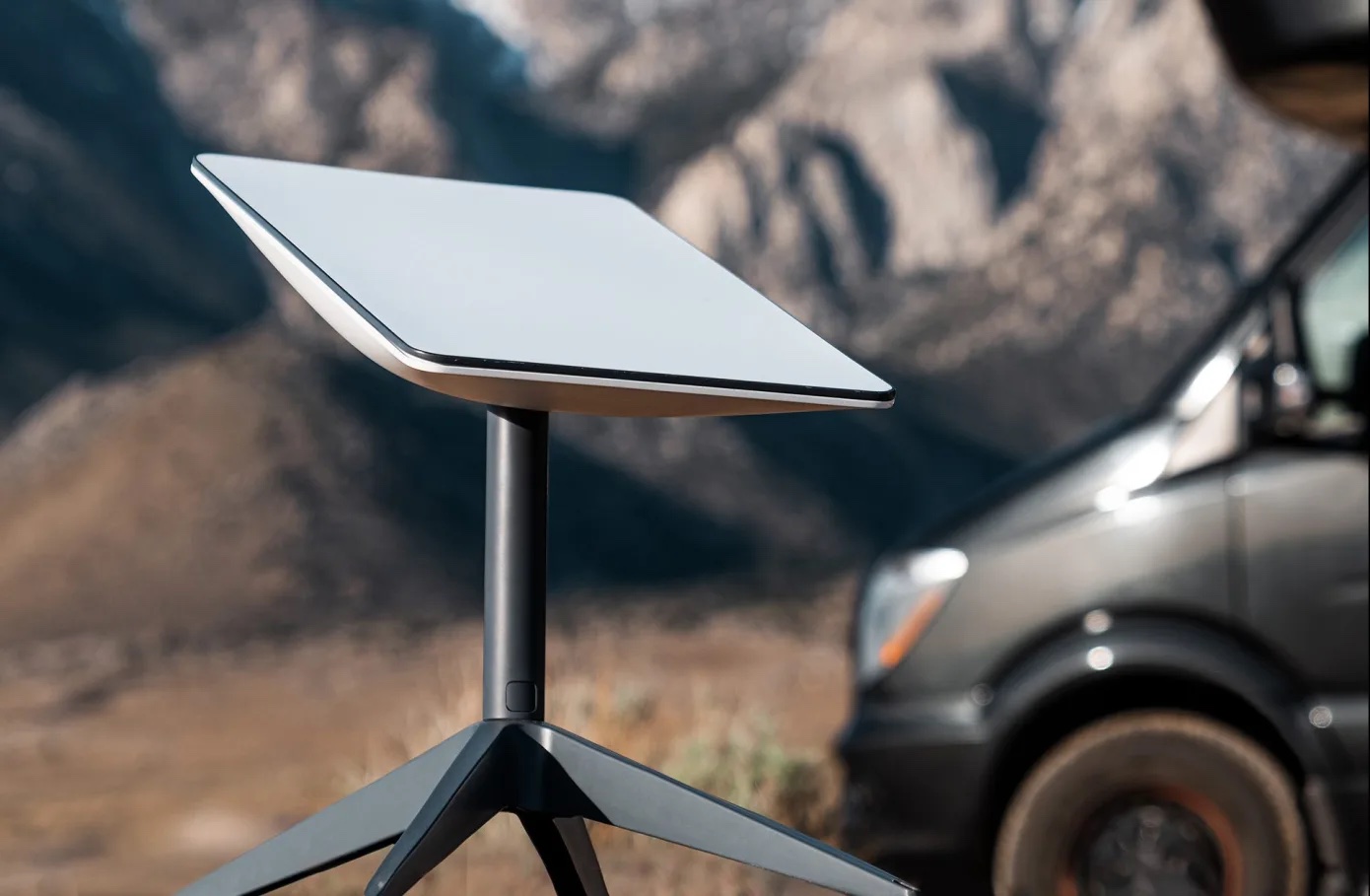
    KDDI announced it will begin offering Starlink connectivity to its enterprise and civil government customers later this year as part of a deal recently completed.

    Starlink began offering service two years ago, and this summer it introduced its maritime service, which provides high-speed, low-latency internet while at sea.

    Under the agreement, the Japanese telecom giant will act as “authorized Starlink integrator,” enhancing the company’s ability to deliver best-in-class network service to its customers who require stable, reliable connectivity in rural and remote areas, even during events such as natural disasters.

    KDDI has been conducting technical demonstrations of Starlink in Japan since 2021, which have proven the service’s quality and performance, including for use in mobile backhaul.

    “Starlink’s unmatched performance is a great fit for our persistent endeavor to bring the urban mobile experience to rural customers,” said Makoto Takahashi, president of KDDI. “With Japan having more than 16,000 mountains and 6,000 islands, Starlink’s industry-leading satellite constellation is uniquely suited to provide Japanese enterprises with reliable, sustainable internet connectivity, even in times of natural disaster.”

    “We’re excited to provide a new dimension of connectivity to KDDI’s customers that require reliable, high-speed, low-latency internet on land and at sea,” said SpaceX Vice President of Starlink Sales, Jonathan Hofeller. “Having recently launched Starlink in the country, we look forward to offering a powerful solution that we’ve seen provide critical connectivity in the over 40 countries Starlink is available in.”

  • Nokia to power KDDI’s 5G networks with standalone core and monetization solutions

    Nokia to power KDDI’s 5G networks with standalone core and monetization solutions

    Nokia has announced that Japanese operator KDDI has selected Nokia’s 5G Core and Converged Charging software to support its transition to a fully automated, cloud-native 5G Core architecture.

    Nokia’s cloud-native 5G Core’s near zero-touch automation capabilities help operators drive greater scale and reliability. Following the evolution of KDDI’s networks to 5G standalone core, subscribers will experience lower latency, increased bandwidth and higher capacity.

    Nokia’s open 5G Core architecture gives KDDI the flexibility to be responsive to market demands while controlling costs by streamlining operations and unlocking crucial capabilities, such as network slicing. Developed around DevOps principles, Nokia’s 5G Core will automate the lifecycle management of KDDI’s networks, as well as enable continuous software delivery and integration.

    Nokia will also deploy 5G monetization and data management software solutions including cloud-native Converged Charging, Signaling, Policy Controller, Mediation and Registers to capture new 5G revenue opportunities, enhance business velocity and agility, and streamline the operator’s network operations.

    With Nokia’s monetization solutions, KDDI will be able to monetize new opportunities within the 5G economy. This includes 5G network slicing and network as a service offering, IoT and new business models for B2B2X services through a containerized, microservices-based solution that enables services-based integrations with new 5G network functions meeting standards requirements for 5G convergent charging systems.

    Other products in the deal include Nokia’s Digital Operations software, Cloud Operations Manager, NetAct network management system and Archive Cloud to automate the backup and storage of network data. Solutions will be deployed across Nokia cloud infrastructure, a cloud-native solution that integrates multi-vendor and multi-technology environments.

    Tatsuo Sato, Vice President and Managing Officer, Technology Planning, KDDI, said: “The deployment of Nokia’s solutions marks a key milestone in the evolution of our 5G architecture. The evolution of our 5G architecture will enable us to fully automate and provide better services to our customers. We are pleased to be continuing our strong relationship with Nokia.”

    John Lancaster-Lennox, Head of Market Unit Japan at Nokia, said: “We look forward to expanding our 25-year relationship with KDDI with the deployment of our standalone 5G Core solutions. With crucial monetization and operations functions, such as network slicing, KDDI will unlock key revenue opportunities and benefit from increased operational efficiencies as well.”

  • KDDI, Sumitomo to enter Myanmar mobile game market

    KDDI, Sumitomo to enter Myanmar mobile game market

    Japanese operator KDDI and conglomerate Sumitomo have revealed plans to jointly enter Myanmar’s mobile game industry through newly created joint venture Funcreate Myanmar.

    Funcreate Myanmar, a subsidiary of the companies’ Singapore-based joint venture Funcreate, will localize and distribute mobile games from Japan and other countries throughout Myanmar.

    Funcreate was established in November last year and has been a joint venture since April. It is 51% owned by KDDI and 49% owned by Sumitomo.

    The companies aim to attract more than 1 million downloads for each game title offered. Myanmar’s mobile games market is projected to grow at a CAGR of 52% due to the nation’s rapidly developing mobile phone market.

    KDDI has meanwhile established a strategic partnership with Singapore-based mobile game service provider goGame to take advantage of the latter’s expertise in game procurement, development, operation and marketing for the Asian market.

    Sumitomo, which launched a mobile game sales operation in North America in 2018, will meanwhile provide strategic marketing proposals for the new mobile game business operation, tailored to the Myanmar market.

    KDDI and Sumitomo were selected in 2014 to partner with state-owned Myanmar Posts and Telecom to operate a joint venture providing fixed and mobile services in the rapidly developing local telecoms market.

  • KDDI, Terra Drone launch drone asset inspection service

    KDDI, Terra Drone launch drone asset inspection service

    Japan’s KDDI and industrial drone solutions provider Terra Drone have jointly launched a new drone inspection services for industrial infrastructure.

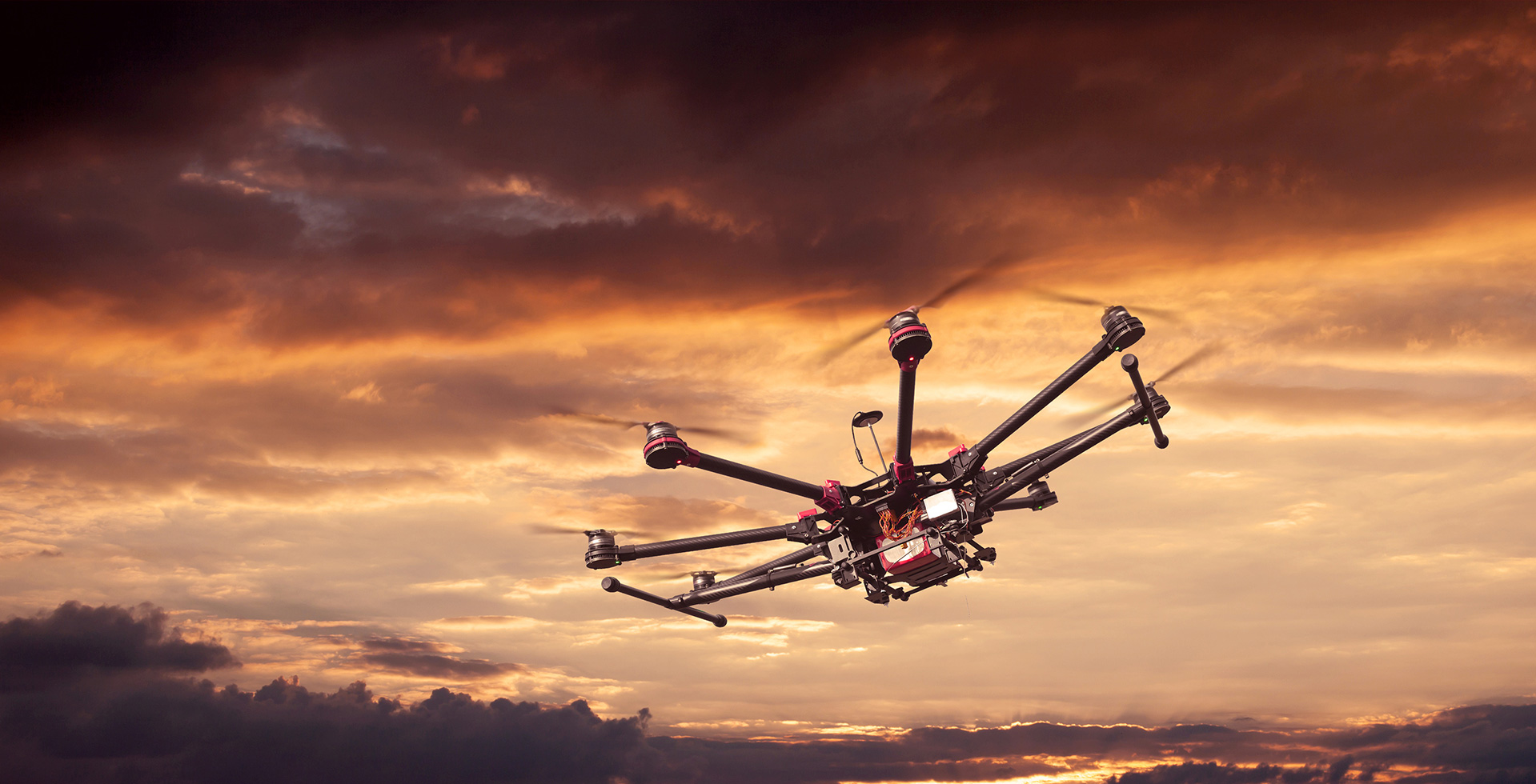
    The jointly developed solution involves using a drone to generate a 3D, high resolution model of heavy industrial assets such as wind turbines, telecom and transmission steel towers, smokestacks, and bridges.

    The drone will use the model to determine which components should be inspected, allowing the drone to shoot the inspection points from optimal angles and range designated by the Terra Inspection software.

    It uses mobile networks to transmit data back to inspection crews and to allow operators to remotely plan flight paths based on weather databases and maps.

    The solution also has potential applications in areas beyond asset inspection, such as large area surveillance, land surveying or precision farming.

    KDDI and Terra Drone jointly developed the underlying Smart Drone platform, and have developed a number of solutions based on the platform since 2016.

  • Japanese telcos assigned 5G spectrum

    Japanese telcos assigned 5G spectrum

    Japan’s telecom ministry has allocated 5G mobile spectrum to incumbent operators NTT Docomo, KDDI, and Softbank, as well as local e-commerce giant Rakuten.

    The Ministry of Internal Affairs and Communications has approved the allocation of spectrum after determining that the companies’ applications met the conditions of the allocation.

    The four companies plan to invest heavily in 5G, spending a combined 1.6 trillion yen ($14.4 billion) over the next five years. Docomo is planning the largest spend, with goals to invest at least 795 billion yen in 5G over this time.

    The four plan to commence commercial 5G services in 2020, with KDDI and SoftBank planning to commence advertising for its services in March.

    Rakuten Mobile, Japan’s upcoming newest market entrant, meanwhile plans to commence 4G services in October 2019 and 5G services in June 2020.

    The conditions for the allocation of spectrum included commitments to commence services in every prefecture of the nation within two years, and set up 5G base stations in at least half the country within five years.

    According to the report, Docomo and KDDI are each targeting more than 90% 5G population coverage by the end of the five years, while SoftBank is targeting 64% coverage while Rakuten is aiming for 56%.

  • Japan’s KDDI sets sights on extended reality

    Japan’s KDDI sets sights on extended reality

    KDDI is branching out into the emerging world of extended reality (XR) – which includes virtual reality, augmented reality and mixed reality – by forging partnership with US-based Osterhout Design Group (ODG) to jointly plan and develop XR-based smartglasses for the Japanese market.

    The Japanese operator is also teaming with various partners to conduct business trials and create XR services as the company moves toward developing new business operations using virtual characters and other XR technologies to create new business models for the coming era of widespread 5G use.

    The partnership with ODG, announced last week, will see KDDI help with the development of domestic Japanese products using the R-9 smartglasses developed by ODG. The operator will help optimize the potential of smartglasses for the Japanese domestic market through practical testing.

    According to KDDI, the R-9 smartglasses to be used in future verification tests are equipped with the Qualcomm’s Snapdragon 835 chipset and compatible with an AR/VR app that enables stand-alone position tracking for users.

    The R-9 smartglasses will feature a wide 50° viewing angle, and will be compatible with wide-screen displays using 22:9 and 16:9 aspect ratios. The R-9 smartglasses will also include dual stereo cameras; front camera with 13-megapixel resolution; and simultaneous Localization and Mapping (SLAM) compatibility.

    KDDI and ODG also plan to work with Qualcomm toward equipping future models with a modem function to bring cellular communications capability to smartglasses in addition to existing Wi-Fi functionality.

    KDDI and various partner companies, such as Japan Airlines, plan to begin practical testing of smartglasses in Japan in June.

    Collaborating with partners to create virtual characters and XR services

    In a separate announcement, KDDI said it is planning to start conducting business trials on the XR technologies with various partner companies beginning this month.

    Through business trials with various partner firms and applications of this technology, KDDI aims to create worlds in which people and virtual characters can communicate interactively.

    So far KDDI has worked with Crypton Future Media for the development of the Miku☆Sampo AR application. Moving forward, the operator plans to expand the AR presentation developed through Miku☆Sampo to enable users to communicate more naturally with the character.

    This will be accomplished through virtual character development capabilities unique to AI, which enable the character to recognize and understand objects and sounds, etc., in the surrounding environment, KDDI said.

    In addition, this project will include a real-time image recognition engine provided by Couger. Couger will also cooperate with virtual character AI-related technology.

    KDDI’s announcements signal the increased interests from telecoms operators in VR/AR. According to GlobalData, telecoms operators – who have a key role in enabling VR/AR services as providers of broadband and mobile network services – are exploring  revenue opportunities in VR/AR that are beyond 5G data and connectivity.
  • KDDI, Nokia trial eMBMS for connected vehicles

    KDDI, Nokia trial eMBMS for connected vehicles

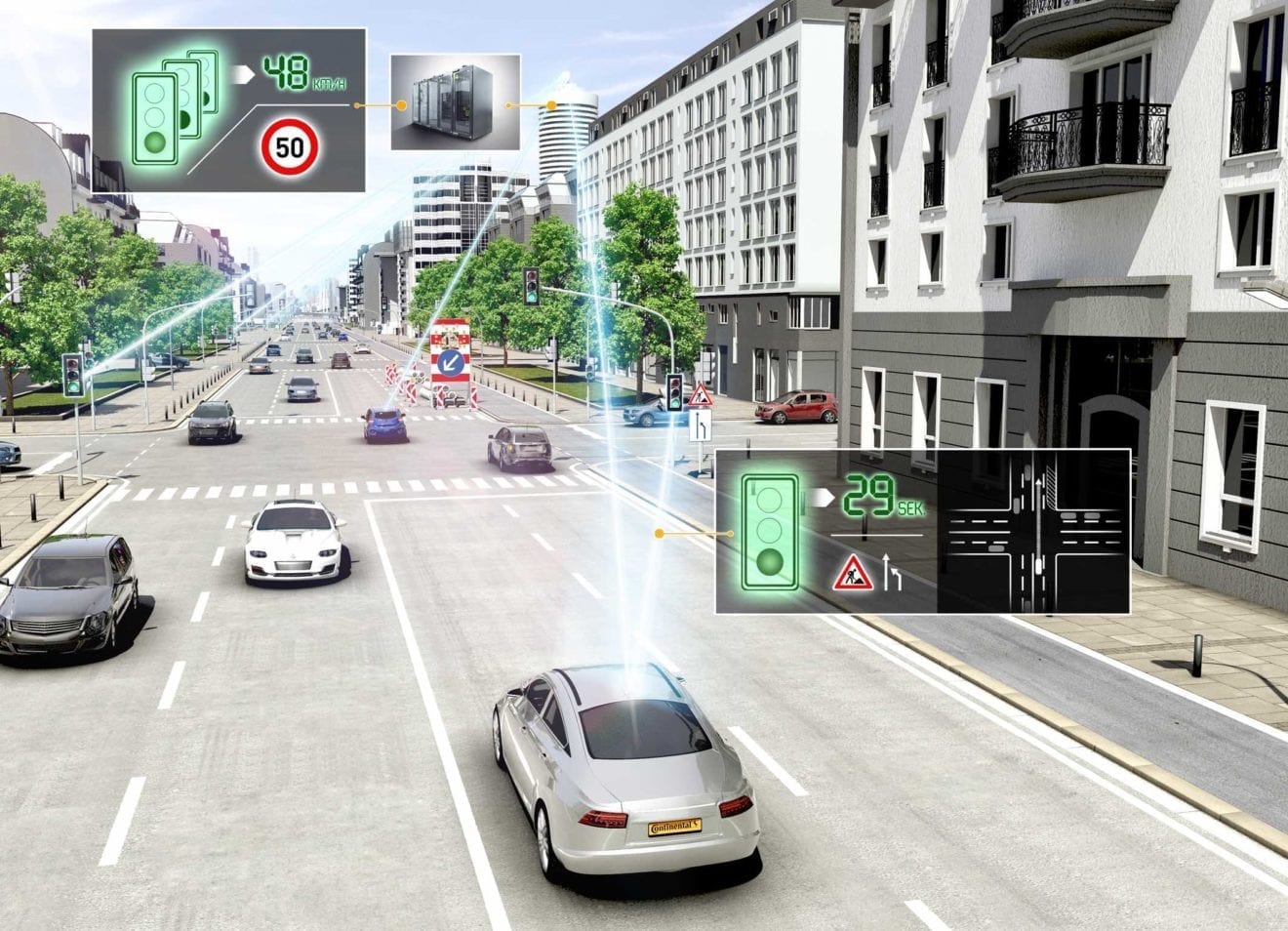
    Japan’s KDDI and Nokia have completed trials of LTE connected vehicle applications including the first vehicle based LTE broadcast trial.

    During a trial on the island of Hokkaido, the companies implemented evolved multimedia broadcast multicast service (eMBMS) technology for two in-vehicle applications.

    These included vehicle-to-network-to-vehicle connectivity, allowing cars to stay in constant contact with a Nokia-based multi-access edge computing (MEC) platform, sending real-time location, direction and speed data to roadside sensors.

    The proof of concept allows drivers to alert the application and allow information to be distributed to other vehicles using eMBMS.

    In addition, eMBMS was applied in a network real-time kinematic (network RTK) trial of LTE for enhance fully automated in-vehicle navigation, demonstrating how eMBMS could more cost-efficiently use existing geo-location systems to communicate to many vehicles in real-time.

    The companies said the trials are a step towards preparing the car industry for the introduction of 5G-based automated vehicles.

    “We are pleased to work with Nokia to demonstrate our leadership in the delivery of mobile networks for IoT and connected car communications,” added Munefumi Tsurusawa, general manager of the connected vehicle technology department and KDDI’s technical planning division.

    “This is an important trial showing how the automotive industry can leverage cellular technology to enhance safety of connect vehicles on the roads.”

  • KDDI sets up fund to boost 5G capabilities

    KDDI sets up fund to boost 5G capabilities

    Japan’s KDDI has teamed up with venture capital firm Global Brian to establish a new fund to support startups which can boost the operator’s capabilities in 5G and other technologies.

    The Japanese telco plans to invest 20 billion yen ($186 million) over the next five years via KDDI Open Innovation Fund 3 (KOIF3) in startups in areas such as AI, IoT and big data, which KDDI says will grow ever more crucial in the 5G era.

    The new fund will operate for 10 years and be managed by Global Brian, targeting startups “that hold promise for generating synergy with KDDI group companies in the coming 5G era,” KDDI says.

    The formation of the new fund, KDDI adds, is “in anticipation of the changes that will be brought about as 5G technology comes into widespread use”.

    KDDI and its group companies will use their networks, experience and knowledge to seek out promising venture firms in fields such as AI and IoT, the operator said, adding that there are already three programs being launched around AI, IoT and data marketing technologies.

    “The investment programs will also make it possible not just for KDDI but also for its group companies to proactively undertake joint development efforts with venture firms,” KDDI noted.

  • KDDI, Toyota develop app to reduce road accidents

    KDDI, Toyota develop app to reduce road accidents

    Toyota Motor, Komeda and KDDI in September have jointly developed a smartphone application called Driving Barista, aimed at reducing the number of traffic accidents in Aichi Prefecture caused by drivers using their smartphones while driving.

    This is the first traffic safety initiative in Japan involving a smartphone application, which is to be carried out and jointly promoted by an automobile company, a communication company, and a food and beverage company.

    For thirteen consecutive years, Aichi Prefecture has had the highest rate of traffic fatalities in Japan. Furthermore, there were also 50,101 arrests involving the use of smartphones while driving, and the increase in violations of this nature has also intensified the problem.

    Toyota, Komeda, and KDDI will promote traffic safety in Aichi Prefecture through an educational initiative where participation is accessible for all, and can lead to a reduction in traffic accidents.

    The Driving Barista application can only be used within Aichi Prefecture. By using the gyro sensor to sense the tilt of the smartphone body, and the GPS to determine the distance driven, this application measures the distance the driver has driven while leaving the smartphone face down. When the cumulative distance reaches 100 km, the driver can receive a coupon for a cup of blended or iced coffee at a Komeda Coffee Shop.

    According to one survey, approximately 60% of respondents said they use their smartphones while driving, with approximately half of these respondents keeping only one hand on the steering wheel. Therefore, the companies hope that the new application will raise drivers’ awareness about not using smartphones while driving.

    “We have already been carrying out educational activities to prevent the use of smartphones while driving, and we hope that this initiative between the three companies will help solve the problem facing Aichi prefecture,” said Akira Dobashi, director in charge of CSR and environment at KDDI.

    “We developed the Driving Barista smartphone application as a fun way to help prevent traffic accidents,” said Dobashi. “We hope to contribute to accident prevention by providing a new experience for drivers.”

  • KDDI taps Gemalto for connected cars and IoT

    KDDI taps Gemalto for connected cars and IoT

    Japan’s KDDI has selected Gemalto to provide the platform to enable secure connectivity for connected cars and IoT applications worldwide.

    Gemalto will provide its LinqUs On-Demand Connectivity (ODC) subscription management solution and embedded SIMs (eSIMs) to the operator.

    As a result, KDDI can expect to provision any requested operator’s profile on connected cars equipped with pre-embedded eSIM.

    Motorists can access optimized real-time information about traffic and nearby amenities, navigation, vehicle diagnostics, and emergency services, anytime, anywhere.

    Gartner forecasts that by 2020, there will be around 250 million vehicles on the road with some form of wireless connectivity, making connected cars a major element of the Internet of Things. The lack of flexible and interoperable remote subscription management is a major challenge in deploying IoT.

    Gemalto’s solution, based on global GSMA specifications, is designed to simplify logistics for OEMs.

    “Gemalto’s solution is based on interoperable GSMA standards, and will provide a common and consistent way to connect devices in the future,” said Keiichi Mori, executive officer and general manager of KDDI’s IoT business development division.

    “With long-lasting relationships with over 500 mobile operators worldwide and a strong local presence, they can help us expand our services to other IoT applications, to obtain rapid growth in the connected world.”

    Michael Au, Gemalto president for South Asia and Japan, said IoT is increasingly turning connected cars into powerful hubs for value-added services such as infotainment, real-time vehicle telematics, and usage-based insurance, offering plenty of opportunities to OEMs and service providers.