Retail News CRM

Tag: landlord

  • Retail landlords and tenants should prepare for a ‘new era’

    Retail landlords and tenants should prepare for a ‘new era’

    The relationship between retail landlords and tenants is set to change forever after the Covid-19 pandemic, according to Thai real estate executive Jariya Thumtrongkitkul.

    “Retail landlords and tenants’ co-operation will become more crucial than ever before,” says Thumtrongkitkul, who is head of advisory and transaction services – retail at CBRE Thailand.

    “Both sides will now consider more realistic rents and flexible leasing terms and conditions depending on retail business and sizes. Partnership rents and percentage revenue sharing are preferred options of this co-operation rather than fixed rent.

    “Even though this will make the retail market more sophisticated, it is the most realistic approach going forward in the new normal era,” she says.

    The sudden arrival of Covid-19 has highlighted the drawbacks of fixed-rent lease agreements, where tenants do not disclose their transactional data to landlords: while the latter could always predict their income from one month to the next, tenants were exposed to uncertainties of income due to uncontrollable circumstances, which could include anything from social unrest, pandemics or factors seriously impacting either tourist or local consumption patterns.

    Thumtrongkitkul says developers face a new challenge in restoring customer confidence in safety, engagement and appetite when visiting shopping centres. This may force changes in the way retail space is used, she argues.

    “As social distancing becomes the new normal, shopping centers will likely to provide more semi indoor-outdoor areas where customers can enjoy fresh air, various temporary spaces for pop-up stores or unique retail formats and additional recreation areas like green space, outdoor seating, pet-friendly areas, auditorium space, rooftop space and jogging lanes.

    “These new landmark and other signature areas of the shopping malls will flourish as additional points to boost customers’ engagement and confidence in safety, and create positive and unique shopping experiences in those malls. CBRE believes hygiene and cleanliness will also be one of the retail design principles and touchless technologies that reduce direct surface contact such as automatic toilets, entrance door sensors, and automated parking will be heavily introduced as a result of social distancing.”

    Among retailers, some brands might be forced to permanently shut down their unprofitable branches, and others will become more selective in choosing a suitable location and rental price, says Thumtrongkitkul.

    “Shorter lease terms and less security deposit are expected for more liquidity. More importantly, businesses are strategically adjusting their operating space as less service area is required on the storefront.

    “We are seeing retailers, especially F&B, fashion, cosmetics and personal-care businesses shifting their focus heavily towards the e-commerce territory. The fastest adapters like the fast-food chains will downsize their seating areas to have bigger operating kitchen and delivery pick-up areas. A big casual dining restaurant, for example, will now scale down their space. “Retailers’ rental space requirement may be reduced by 20 to 40 per cent from its original size pre-Covid-19.”

    Thumtrongkitkul says that as health-and-wellness concerns drive more consumers to seek indulgences online during time of social distancing, retailers will redeploy resources. They will pour the money saved from operating expenses – such as lower rents or network or store-size reduction – into expanding an always-on presence to equip their business in “the cut-throat competition of digital platforms”.

    “Enhancing online users’ positive experiences will become their main digital strategy.

    “Consumers should now brace themselves for a new breed of retail businesses that are already thriving off the ‘lazy economy’ consumer pattern occurring in major cities around the world,“ she adds.

    “With online shopping, at-home-fitness classes, and home cinema apps like Netflix to ready-to-eat food deliveries, people will fill their households with comfort products and wellness-maintenance upgrades such as lounging furniture, gym equipment and electronics for remote working which is becoming the most widespread working trend nowadays. Therefore, both retail landlords and tenants must strive to create ‘positive shopping experience’ for these health-conscious and convenience-centric consumers.

    “CBRE Thailand believes that long term, in the ‘new-normal’ era, the Thai retail market will inevitably undergo major readjustment of retail space for wellness purposes and relationships among all the market’s stakeholders as well,” Thumtrongkitkul concludes.


  • Singapore retailers call for ‘unprecedented rental relief’

    Singapore retailers call for ‘unprecedented rental relief’

    “Unprecedented rental relief measures” are needed from landlords to help retailers overcome the coronavirus crisis, according to the Singapore Retailers Association.  In an open letter to landlords, the association has urged landlords to implement a rental payment structure for six months capped at no more than 15 percent gross turnover or a 50-per-cent base rent reduction, whichever is lower. It also asks landlords to allow retail businesses who cannot sustain their businesses to exit before their lease expiration without losing security deposits or risking punitive legal action.

    “We fully realize and appreciate that both mall operators and tenants have been working very hard over the past two months to minimize the business losses from the drastic drop in footfalls,” read the letter signed by Singapore Retailers Association president R Dhinakaran, on behalf of its 400 members.

    “However with the government advice of safe distancing and stay at home (heading to malls for essentials like food only) … the sales of the majority of retail stores will be equivalent to zero sales, similar to a lockdown situation.”

    The letter asks landlords to exercise the requested measures to avoid massive permanent store closures and loss of jobs within the next three months.

  • Many Hong Kong retail landlords rally to rent reduction call

    Many Hong Kong retail landlords rally to rent reduction call

    Landlords in premium Hong Kong retail areas are proving flexible on rents as retailers experience an unprecedented drop in sales of between 50–80 percent during the first financial quarter this year.

    Figures from real estate firm Savills show multiple mall landlords are offering temporary rent relief of 30 to 60 percent to beleaguered tenants who have faced numerous crises over the past year, of which the coronavirus outbreak is the latest. However, some shopping-center landlords are proving reluctant to relieve rents despite growing tenant vacancies.

    Retail rents in the region fell 14 percent quarter on quarter and by an average 43 percent year on year.

    “A hardening local situation combined with a lack of visibility is giving rise to a wide range of reactions to the current crisis from landlords and tenants,” said Savills research & consultancy senior director Simon Smith. “But on a more positive note, the lower rental costs will attract newcomers to the Hong Kong market, which for too long has changed the world’s highest occupational costs.”

    “As far as we can see, vacancies are expected to rise over the next six to 12 months,” said Savills MD Nick Bradstreet, “which will put more pressure on rents over the rest of the year.”

  • Sa Sa in rent discussions with landlords

    Sa Sa in rent discussions with landlords

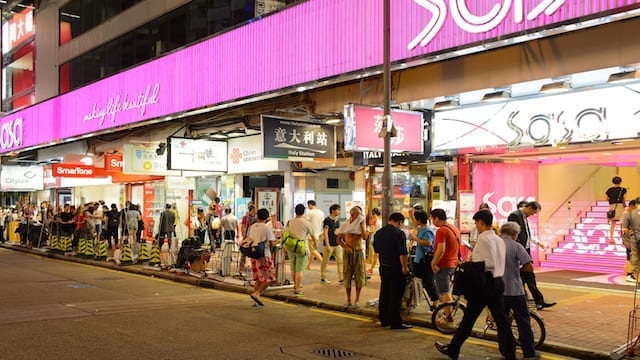
    Hong Kong beauty retailer Sa Sa is in discussion with landlords over rent reductions and will reduce staff as it tries to address falling sales.

    In a profit warning, Sa Sa chairman and CEO Simon Kwok said August was its weakest month, with sales down by 32 per cent in Hong Kong and Macau. That was the month when more than 1000 flights were cancelled after protestors crowded Hong Kong International Airport. Subsequent international publicity led to many inbound travellers cancelling their flights, resulting in 851,000 fewer passengers passing through the airport during August.

    Kwok said the group’s sales performance remained “very weak” in September with turnover from September 1 to 15 down by about 14 per cent month on month, and by 29 per cent on a year-on-year basis.

    Sales in Hong Kong for the five months to August 31 declined by about 15 per cent and in Macau by 17 per cent.

    Kwok said that while the group has sufficient cash on hand to meet current business needs at this point, it was adopting a prudent finance management approach with proactive implementation of a number of cost-control initiatives, including negotiating for rental reduction with landlords.

    Other measures include reducing operational expenses such as staffing and general administration overheads.

    “The group has also been launching more promotional campaigns with attractive discounts to boost sales and lower the inventory level to reduce holding costs and preserve cash,” he said in the profit warning.

    “At the same time, the group continues to review market conditions and close down low-efficiency stores to optimise the store network and adjust product mix and promotion strategies to stimulate sales.”

    The group is preparing to launch a WeChat mini-program to enable frontline salespersons to continuously interact with customers and sell products via the online platform without the need for the customers to visit physical stores.

    In the six months to September last year, Sa Sa reported a profit of HK$202.9 million. This year’s interim results will be released on November 30.

    “The group believes that its agility will retain its core competency, lead the group through this difficult time and lay a solid foundation for the development of new retail model in the future,” Kwok said.

    The protests, now into the 16th week, did not get all the blame for the declining sales.

    “The main reason for the group’s performance decline is the weak sales performance in its core markets in Hong Kong,” he said. “The sales performance was hit by the decline of visitor arrivals from Mainland China to Hong Kong, as well as weaker consumer sentiment, caused by continuous social incidents in Hong Kong, increasing tension of Sino-US trade war and the Renminbi depreciation.”