Retail News CRM

Tag: Mall

  • Mitsui Fudosan planning big Malaysian mall

    Mitsui Fudosan planning big Malaysian mall

    Mitsui Fudosan will develop a nine-story, 45 billion yen ($397 million) mall in Malaysia with local partners as part of an effort to solidify its overseas earnings base for the future.

    Costlier than the company’s outlet malls in Taiwan and the Chinese city of Ningbo, this will likely mark the biggest project for a commercial facility abroad by a Japanese real estate developer. The plan is to open a LaLaport mall like those of Japan in Kuala Lumpur in 2021.

    Working with Eco World Development Group and two other local partners, Mitsui Fudosan will set up a special-purpose company as early as this year.

    The mall will sit on the 78,500-sq.-meter premises of the Bukit Bintang City Centre, a project co-led by Eco World that includes residential and office space.

    The mall will boast five above-ground floors and four underground floors. Construction will begin in 2017. Retail space will likely total 80,000 sq. meters — close to the 102,000 sq. meters of a major LaLaport mall in Chiba Prefecture. The plan is to draw about 300 businesses to the new facility, among them restaurants, household goods stores and fashion retailers. Tenants focusing on middle-income consumers, including Japanese businesses gaining popularity in Malaysia, will be solicited. Annual sales are targeted at 42 billion yen.

    Mitsui Fudosan intends to apply Japanese know-how to running the mall through such steps as training store managers and introducing a system to track daily sales of each store. In this way, it seeks to distinguish the facility from the competition.

    Malaysia has enjoyed relatively high real gross domestic product growth among members of the Association of Southeast Asian Nations. With the ranks of the middle class seen continuing to expand, the Japanese company expects demand to stay strong.

    Mitsui Fudosan opened an outlet mall near an international airport in Malaysia last year. Tenants catering to middle-income consumers are faring well, and sales have beaten initial expectations. An expansion is now planned, driven by popular demand.

    Mitsui Fudosan’s wide-ranging business domains include commercial facilities, housing, office buildings and hotels. In Japan, the shrinking population limits prospects for demand growth in housing and office buildings. The company is thus strengthening commercial establishments, such as outlet malls, in Asia. And in the London area, it is working on mixed-use facilities.

    The company plans to invest 550 billion yen overseas from fiscal 2015 to fiscal 2017 and to spend about as much on office building and other projects in Japan. Mitsui Fudosan hopes to generate about 12% of its overall operating profit abroad in fiscal 2017, up from just 6.4% in fiscal 2014.

  • Gokongwei retires as chair of Robinsons Retail

    Gokongwei retires as chair of Robinsons Retail

    Taipan John Gokongwei Jr., the country’s second richest man according to Forbes,  has stepped down as chairman and CEO of Robinsons Retail Holdings Inc. (RRHI), which is in charge of the family’s retail business which include supermarkets and household brands Toys “R” Us, True Value, and Mini Stop.

    His only son Lance Gokongwei, 49, took his place on March 18, while his brother James Go remains as vice chairman.  Go is the chairman and CEO of JG Summit Holdings as of March 21.

    Gokongwei, who will turn 90 years old on Aug. 11, has promised to retire when he reaches 90 and just focus on his philantrophic work.

    In a rare chat with reporters in December last year, Gokongwei said Lance was doing a good job running the family-owned business empire.

    The elder Gokongwei, however, will remain chairman of the Gokongwei Brothers Foundation, which was launched in 1992 with his three brothers. It has helped schools such as Ateneo, La Salle and soon the University of the Philippines.

    Gokongwei, who was born in China to Filipino parents,  arrived in Cebu as a one year old toddler. He then built his multi-billion dollar empire in Cebu by trading goods off on a bicycle and on board a small boat off the pier of the province.

    For someone turning 90, Gokongwei said the only thing he could ask for himself is good health.

    RRHI reported a net income of P3.12 billion in the first nine months of 2015, up 18.8 percent year on year as net sales rose 12.7 percent to P63.3 billion.

    As of the end of September last year, RRHI had a total of 1,466 stores with the addition of  208 new stores. This translated to a 10.7 percent increase in gross floor area to approximately 939,00 square meters over a year ago.

  • Can CapitaLand Mall Trust survive 2016’s volatile equity market?

    Can CapitaLand Mall Trust survive 2016’s volatile equity market?

    CapitaLand Mall Trust (CMT) is poised to dominate the retail REIT scene in 2016, with positive rental reversions and increased tourist arrivals playing to its favour.

    According to a report by RHB, CMT is likely to enjoy mid single-digit (about 5%) positive rental reversion in 2016 as encouraging trends are expected in CMT’s tenant sales (psf/month) and traffic flow at its malls.

    “In the recent reported quarter, the retail REIT reported an upward trend in tenant sales, a 5.3% YoY increase for FY15. With this, we think that the retail landlord is in a better position to command higher rental rates this year,” asserts RHB.

    Moreover, an anticipated pick-up in tourist arrivals is seen to spur consumer spending in malls. This bodes well for CMT, as its malls are located near tourist attractions such as Plaza Singapura, Bugis Junction and Clark Quay.

    RHB also thinks that the expected recovery of Singapore tourism could be boosted by positive catalysts like lower airfares, a busier year for events, and an anticipated climb in Chinese tourists visiting Singapore.

    Further, there’s still room for CMT to exercise a capital recycling strategy given that it currently owns non-core assets such as JCube and Sembawang Shopping Centre.

    RHB further notes that on top of this, CMT handles its portfolio favourably. For instance, CMT recently parted ways with its non-core asset Rivervale Mall, which was estimated to be divested at a attractive cap rate of about 3.4%. Compared to the average cap rates for retail assets, independent real estate company CBRE estimated 4Q15 average cap rates to range from 4.75% to 5.25%.

    “In addition, we advise investors to take up CMT as it is highly liquid, which may be especially advantageous in the current volatile equity market,” states RHB.

  • Bangkok retail market to increase more than 1 million sq.m.

    Bangkok retail market to increase more than 1 million sq.m.

    The entry of new local and international retailers, combined with a challenging economic outlook and weak consumer sentiment is all adding up to the mix.
    Despite a slowdown in retail sales, there is currently 1.1 million sq.m. of retail space under construction in Bangkok, which will bring the total completed supply in 2017 close to 8 million sq.m.
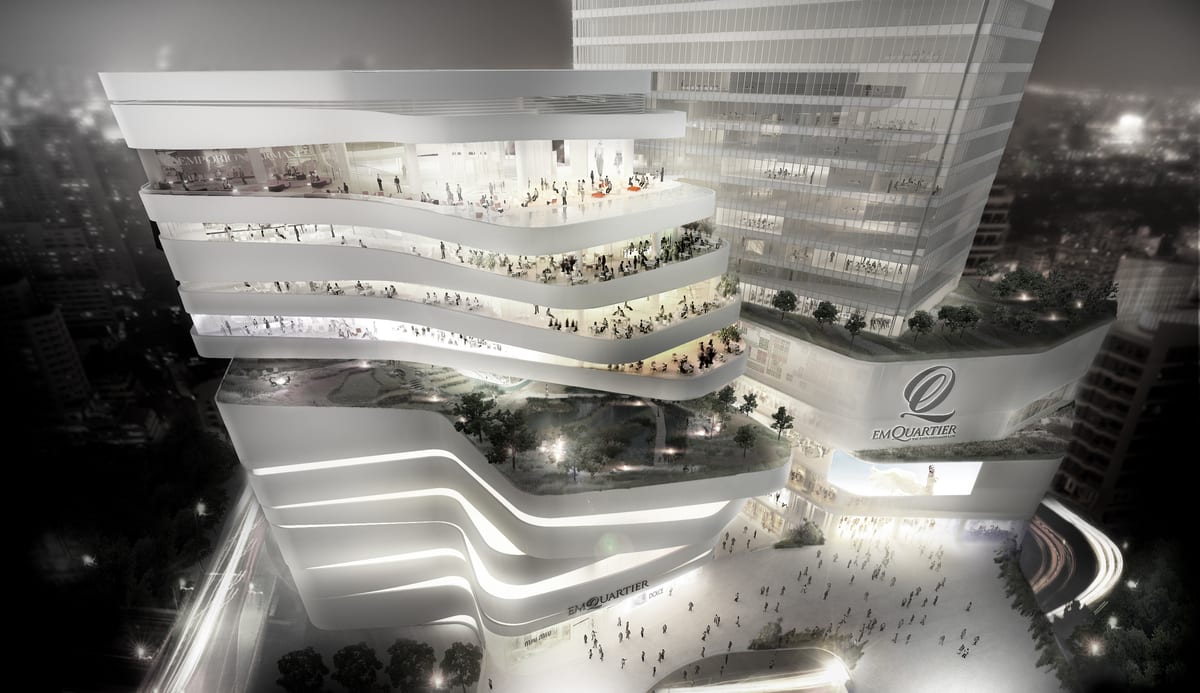
    Within the CBD, the latest major retail developments to open are EmQuartier and Central Embassy, intensifying competition for existing malls such as Siam Paragon, Gaysorn and CentralWorld.

    In addition, big developers continue to renovate their downtown retail centres such as Siam Discovery and MBK.

    Bangkok retail market, EmQuatier
    As the major retail centres are chasing after the same group of consumers, retail events and promotions have become ubiquitous

    As the major retail centres are chasing after the same group of consumers, retail events and promotions have  become ubiquitous leading to a cut-throat competition and heighted promotion campaigns, particularly gearing up to the festive season where consumer spending typically peaks.

    The expansion by major retail developers to suburban areas may also in part draw consumers away from CBD malls, although the impact may be limited.

    Bangkok’s suburban areas today are well served by quality retail centres, reducing the need for consumers to travel into the CBD.

    To the North, Zpell@Future Park has just opened on 27th November. Opened on the same day in Eastern Bangkok on Ekamai-Ram Intra is Central EastVille, adding competition to existing malls in the area such as Crystal Park and Crystal Design Centre.

    The Mall Group is also currently planning The Bangkok Mall on Bangna-Trad which is expected to be completed in 2017. To the West, CentralPlaza WestGate recently opened in August in the Bang Yai area, adding a major retail centre to an area where there have been limited retail developments.

    The Riverside will also get its own luxury shopping complex in 2017 with the opening of IconSiam which will comprise a 500,000 sq.m. retail and entertainment complex, part of which includes a 36,000 sq.m. 7-floor Takashimaya department store from Japan which will be Thailand’s first.Amidst this competition, the segment that will find most challenging is community malls.

    Community malls will be forced to adjust their strategies and have clear unique selling points and propositions to draw in consumers; otherwise they are likely to be overshadowed by major retail developments that have a bigger events and promotions budget.

    It is essential for community mall developers to understand their target consumers’ needs and retain anchor tenants in order to compete in the long-term.

    The plus side of the retail expansion is that it will create room for both domestic and international retailers to expand to suburban areas.

    International fashion brands such as H&M, Uniqlo, Aldo and Charles & Keith have already expanded to CentralPlaza WestGate.

  • MatahariMall Introduces Cash-Less Transactions

    MatahariMall Introduces Cash-Less Transactions

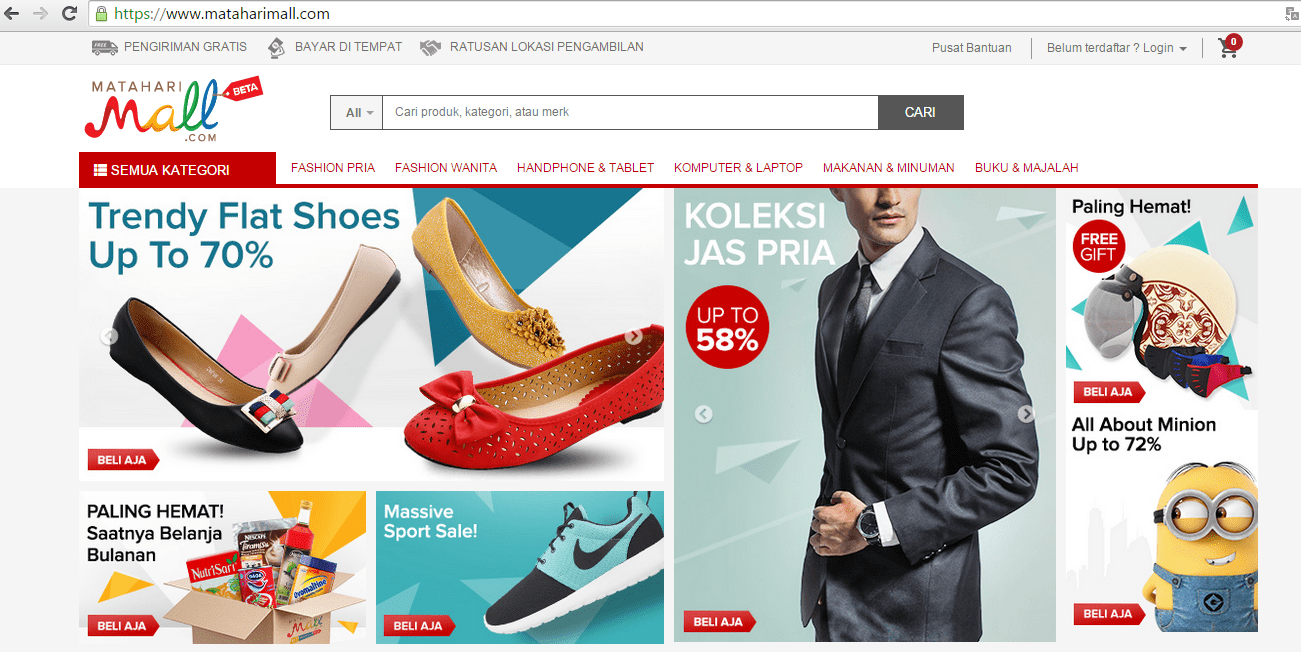
    Newly launched online shopping hub MatahariMall.com has teamed up with a number of companies to provide customers with seamless transactions to make shopping online even easier.

    State lender Bank Mandiri, Dana Pensiun Pertamina, the state energy company’s pension fund, and electronic payment provider Digital Artha Media will join forces to to provide non-cash purchasing solutions for customers.

    Under the deal, members of Dana Pensiun Pertamina can use Mandiri e-cash to receive pension benefits. The e-cash can be used to MatahariMall.com, an e-commerce platform from Indonesian conglomerate the Lippo Group, with which the Jakarta Globe is affiliated.

    “With the O2O networks of MatahariMall.com that are spread all over Indonesia, we hope to give unique shopping experiences for all customers,” said Hadi Wenas, the chief executive of Solusi Ecommerce Global, operator of MatahariMall.com.

    O2O refers to the concept of Online-to-Offline, which allows customers to order goods online and collect them at a nearby Matahari department store or an outlet of Hypermart.

    Hadi has said previously that the e-commerce site, which provides hundreds of thousands of items ranging from fashion, beauty items and household products, has already garnered nearly 200,000 customers for its 1,200 vendors.

    Budi Gunadi Sadikin, the president director of Bank Mandiri, said the lender introduced Mandiri e-cash to make life easier for customers of Dana Pensiun Pertamina.

    The service is aimed to ease transactions and help promote cashless transactions in the country, as people can purchase mobile phone credit, electricity vouchers and make transactions at retail outlets or online.

    Users of Mandiri e-cash can also make cash withdrawals without using ATMs and make transfers to their Mandiri account.

    Digital Artha Media is the provider of electronic money services for Mandiri e-cash.

  • Lippo Malls to purchase two Indonesian centres

    Lippo Malls to purchase two Indonesian centres

    Singapore-headquartered Lippo Malls Indonesia Retail Belief is to purchase two purchasing centres in  Indonesia.

    The properties are Palembang Icon and Lippo Plaza Batu, collectively value $83.33 million (or Rp1.06 trillion).

    The Batu Metropolis mall is a small centre with 12,324 sqm internet lettable space however consists of the suitable to construct a further 6500 sqm of area on the rooftop. Batu Metropolis is in Malang province in East Java with a inhabitants of 190,000.

    Palembang Icon is a five-storey 35,797 sqm retail mall outfitted with a sports activities centre, situated in Palembang Metropolis in South Sumatera.

    LMTR says the retail malls will probably be purchased at costs lower than unbiased valuations they usually have secure tenants.

  • Dutch purchase into China mall proprietor

    Dutch purchase into China mall proprietor

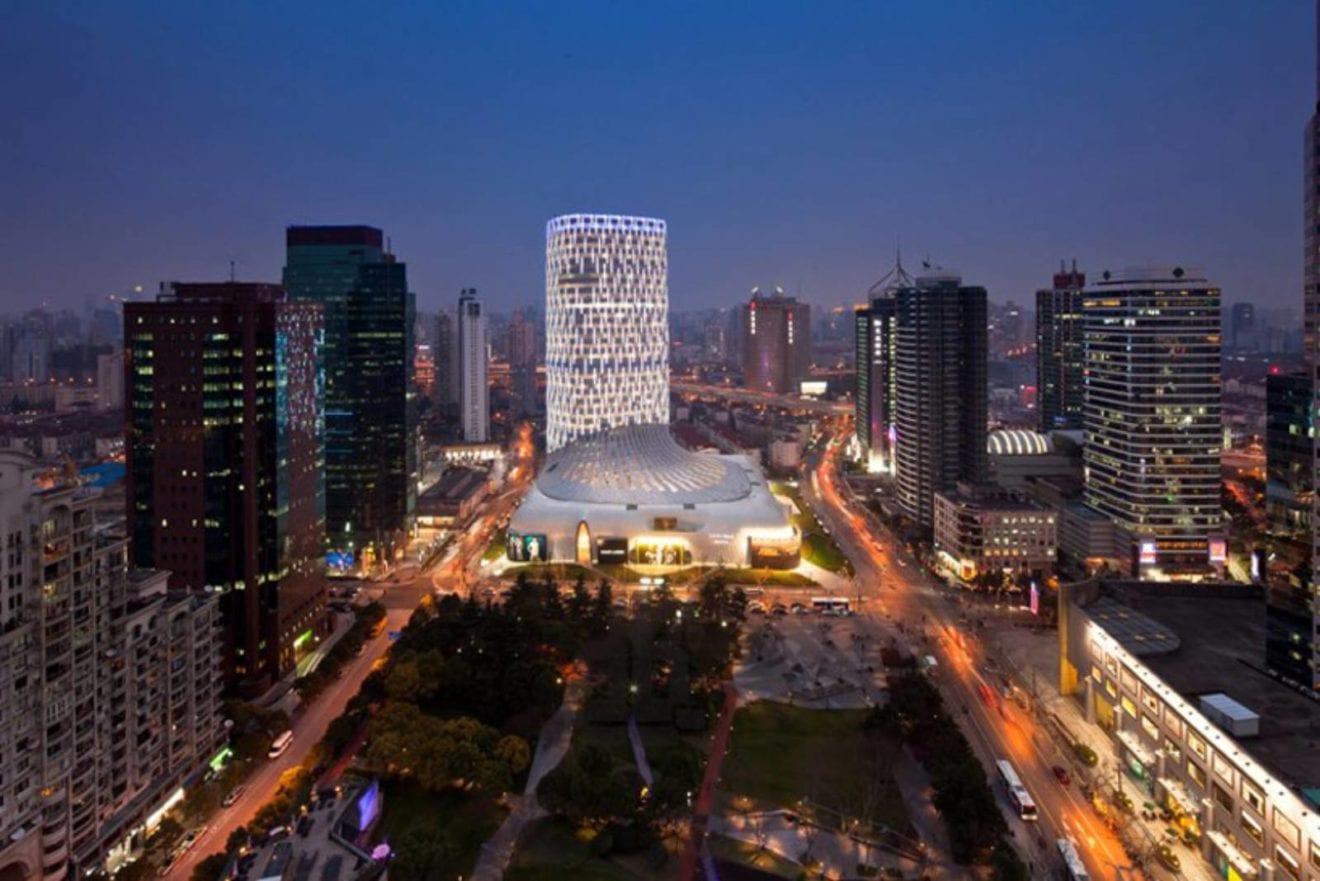
    Dutch civil service pension fund subsidiary APG has invested euro 311 million in Chinese language mall proprietor and operator Chongbang.

    Canadian property investor Ivanhoe Cambridge has taken a euro 445 million stake within the Chinese language enterprise on the similar time. The 2 corporations will be a part of Singapore sovereign wealth fund GIC on the shareholder register.

    APG’s head of personal actual property investments in Asia-Pacific area, Sachin Doshi, stated the funding fitted with the fund’s technique of investing in “city-specific platforms in key gateway city centres around the globe” and dealing with locally-based companions with native market experience.

    “Speedy urbanisation, rising disposable incomes and continued rebalancing in the direction of home consumption are recurring themes in China, and Shanghai will lead this consumption story,” he stated.

    “We like Chongbang’s deep understanding of shopper preferences and the robust way of life themed retail complexes they’ve constructed and operated efficiently underneath the Life Hub model.”

    Chongbang, based mostly in Shanghai, was based in 2003 by a gaggle of Hong Kong and Singapore buyers led by Henry Cheng, the corporate’s CEO, and Stephen Wong. The corporate now owns 428,000 sqm of combined use retail and residential belongings and business area in Shanghai. It was an extra 417,000 sqm underneath improvement.

    Cheng says Chongbang goals to greater than double its portfolio in coming years, cementing its place as a most popular landlord for top grade retail and way of life tenants in Shanghai.

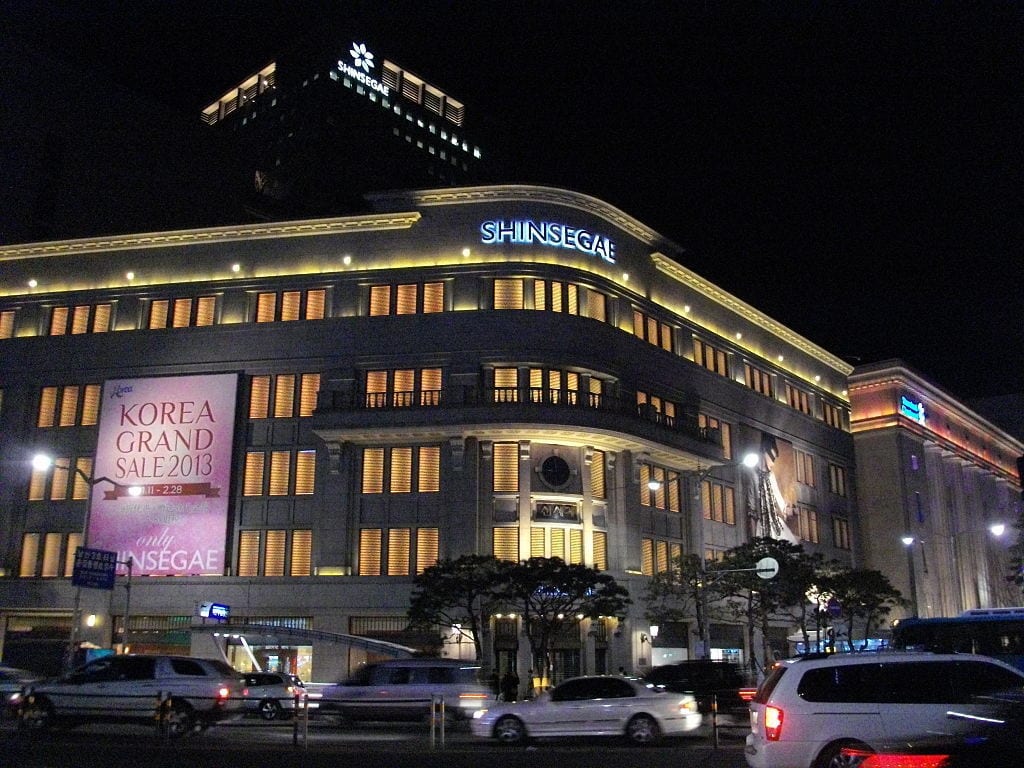
  • Shinsegae opens big mall

    Shinsegae opens big mall

    Korea’s Shinsegae Group is about to open an enormous purchasing centre northwest of Seoul which it hopes will take the battle to Ikea for homewares buying.

    Shinsegae, one of many nation’s largest division retailer operators, will open E-Mart City on June 18, on a website adjoining to the Kintex conference centre in Ilsan, within the Gyeonggi province.

    The corporate is banking on Seoul residents heading out to the centre for a day’s buying, eating and leisure – a serious drawcard being carparking, which shoppers should queue for in downtown locations.

    E-Mart City, stated to be the dimensions of about 10 soccer fields, will inventory furnishings, house home equipment, homewares, groceries and meals. It can function an E-Mart grocery store and a wholesale warehouse.

    Shinsegae believes three branded retail areas will create some extent of distinction from its rivals: an upmarket foodcourt referred to as Peacock Kitchen that includes 14 meals manufacturers and seating for 300 individuals; residence furnishing retailer The Life providing some 5000 merchandise; and multi-brand equipment retailer Electro Mart.

    “We’ve got put all our assets into the mall as a way to set a brand new development in retail enterprise,” stated Shinsegae vice chairman Chung Yong-jin in a press release.

    “The E-Mart City is a cluster of trend-setting shops and good eating places. Individuals will be capable of have a high-quality one-stop purchasing expertise within the city.”

    Ilan is about to be a battlefield for main retailers, with Ikea planning to open its second Korea retailer there in 2017, and Shinsegae’s rivals Lotte, Tesco Residence Plus, Lotte Massive Market, Costco and Hyundai Division Retailer all inside a brief drive.

  • China’s mall growth

    China’s mall growth

    Over the subsequent three years, a staggering 40 million sqm of shopping center improvement is predicted throughout China.

    Of this, 55 new malls will probably be in Shanghai – a metropolis whose retail business has been turned on its head, actually, by the emergence of a mega metro system. Road degree shops nonetheless command the highest rents, however sub-terrain area is now extremely fascinating, particularly among the many footfall hungry fast-fashion manufacturers.

    “Shanghai metro has grown amazingly shortly, newly developed malls are popping up above or near the stations,” stated Rebecca Tibbott, head of retail leasing, JLL Shanghai.

    “Some manufacturers, Uniqlo for instance, can command prime degree one area however they’ll take basement one if there’s direct metro entry.”

    Till just lately, probably the most outstanding shops in any Chinese language mall have been the protect of the posh manufacturers however the luxurious market has grow to be saturated and that is, partially, answerable for a sizeable shift within the buying habits of the nation.

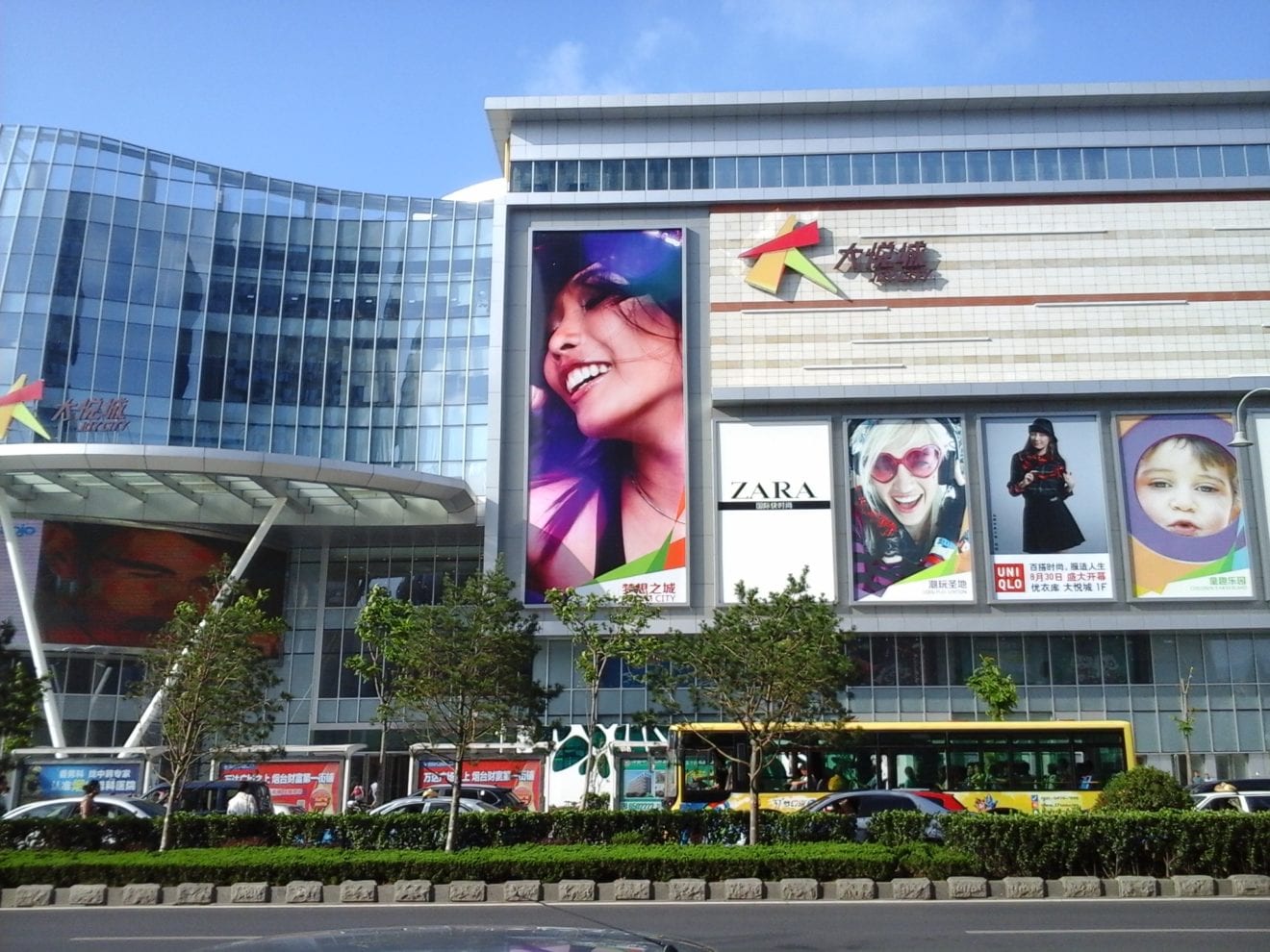
    Because the worthwhile millennial demographic demand extra selection at decrease costs, worldwide quick trend manufacturers are gaining a foothold. Zara, H&M and Perpetually 21 are a number of the western retail stalwarts giving prime tier luxurious names a run for his or her cash.

    “Quick style retailers are nonetheless very aggressive in China,” stated Tibbott. They’re all in search of prime excessive road area.

    “H&M has round 250 shops in China and it’s actively looking for area for 80 new shops this yr; Zara has its sights set on 60 new shops and Uniqlo plans one other 100, having already opened 100 final yr,” she added.

    New manufacturers are additionally rising. US-based Perpetually 21 has opened 9 shops and has plans for an extra 50, Hole has opened 32 shops since 2013 and Banana Republic is planning to enter the market in 2016, all contributing to China’s mall growth.

    “To get visitors into malls now, landlords want quick trend. In some instances they’re [landlords] asking quick style manufacturers and luxurious retailers to take a seat aspect by aspect.”

    Retail’s supporting position

    The place standalone buying facilities stood as beacons of Chinese language consumerism, ‘mixed-use developments’ at the moment are inspired with malls being only one element half. In future malls, retail will complement way of life, F&B and leisure.

    “Chinese language malls historically common at 80,000-100,000 sqm however, for instance, in Shanghai, the typical retail allocation is down to only 70,000-80,000 sqm,” stated Colin Dowall, head of retail asset administration, China.

    “Now when a improvement is proposed the Chinese language authorities needs to monetize it and more and more this requires making a improvement mixed-use and financially sustainable,” he added.

    “On the sale of land the federal government asks ‘what number of jobs will the event create?’”

    Authorities affect, it appears, is altering retail area in additional methods than one. A clamp down on ‘gifting’ – the follow of providing extravagant company favors – has curtailed luxurious purchases and prime tier retailers are struggling the fallout.

    “There’s been an enormous knock on impact on watches and jewelry particularly,” stated Tibbott.

    Meals and beverage is affected, too, as lavish lengthy lunches turn out to be a factor of the previous. “Earlier than the brand new guidelines, a Chinese language restaurant might have occupied a big 2000 sqm area, however they will’t justify that today,” she added.

    This altering shopper conduct has inspired landlords to put higher emphasis on expertise and idea shops. Additionally newly developed malls are dedicating more room to F&B and fewer to unbranded trend (as this phase has swiftly moved on-line). Landlords look internationally for solutions to offer higher buying environments and undertake know-how as a way of scrutinizing shopper habits. In lots of instances they discover themselves main the best way on this regard.

    With cellular penetration in China among the many highest on the earth, landlords are engaging smartphone savvy consumers via progressive promotions. In lots of malls, provides are projected on to screens and buyers are inspired to play video games to win prizes, which they will then redeem instore.

    This know-how adoption is spreading via e-commerce adoption. Current figures present on-line gross sales now account for 11 % of complete retail gross sales in China. Cellular know-how can also be serving to some landlords to measure footfall and document what clients are shopping for by means of their cellular pockets knowledge. Retailers may also profit from this knowledge as a way of monitoring inventory or they will use it to tailor promotions consistent with fashionable gadgets.

    Invaluable knowledge insights

    Knowledge wealthy insights similar to these are key, in accordance with Dowall.

    “Understanding the market is extra essential than ever. Once I first arrived I met a purchaser and a designer for H&M who had been right here 5 years simply making an attempt to know the market. Some manufacturers have entered too quick and located it onerous to adapt or have failed.”

    The event pipeline is encouraging for the way forward for the bodily retailer, regardless of competitors from growing on-line gross sales. Nevertheless, the query is what the Chinese language malls will present to outlive and what is going to they seem like in years to return?

    “Giant enclosed malls will develop into much less widespread and the price of operating these malls will form improvement; there will probably be some however the taste of the month is decentralisation that locations quick style alongside premium manufacturers.

    “Neighborhood purchasing facilities that replicate Western improvement cycles are arising and outlet malls on the peripheries are proving common.”

    Within the brief time period the most important change in Chinese language retail is the ever-increasing competitors between the landlords and tenants: “I all the time ask, ‘is it a landlord or a tenant market’, once we enter a brand new undertaking as a result of the technique will differ relying on the product they’re promoting.”

    Retailers undoubtedly have their work minimize out however landlords have to be smarter than ever about their tenant combine and purchasing expertise.

  • Pleasure Metropolis opens indoor road in China mall

    Pleasure Metropolis opens indoor road in China mall

    Pleasure Metropolis Property has launched China’s first cultural and artistic industry-themed indoor pedestrian road in Tianjin  Pleasure Metropolis’s Cheer Market.

    The road can also be the primary of its sort within the nation to have been situated inside a buying centre. The distinctive and ‘avant-garde fashion’, Cheer Market has been held up as a mannequin that different purchasing malls have been following in recent times in an try and buck the development of homogeneity and the affect of e-commerce in addition to to shoulder the company social duty actively.

    Pleasure Metropolis’s goal clients, aged between 18 and 35, are able to creating and appreciating artworks, together with these designs that are above the mass market’s style. Particularly, Cheer Market caters for the preferences and needs of the ‘yuppies’.

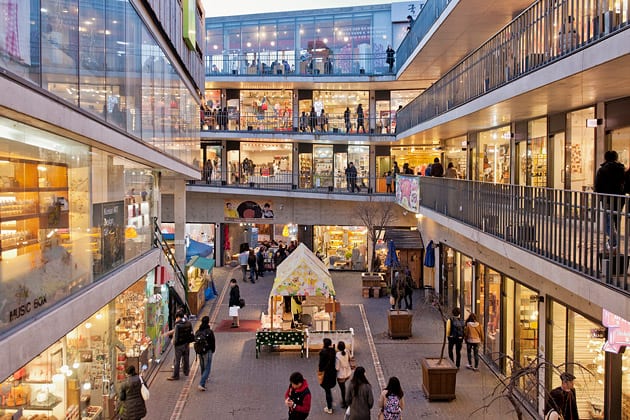
    Positioned as “an artwork road in a purchasing centre”, Cheer Market consists of delivery containers during which entrepreneurs arrange outlets and are free to train their creativity and originality of their inside ornament and design.

    As well as, the low lease and enormous share of revenues loved by the companies in Cheer Market and the place’s distinctive inventive atmosphere have attracted numerous artistic younger individuals to make their marks there. The freewheeling environment has given delivery to such creative zones as “Shen Shou Si” (Temple of Auspicious Animals) and “Secret Publish Workplace” which have turn out to be magnets for patrons.

    “Younger individuals are imbued with many unique concepts, however often can’t put them into follow as they face many various sorts of constraints, together with a scarcity of capital”, stated a graduate who’s a younger entrepreneur.

    “Nevertheless, they will realise their goals in Cheer Market, which is a seedbed for brand spanking new companies began by the younger due to its beneficial circumstances.”

    Tianjin Pleasure Metropolis’s GM Wu Jing says: “A purchasing centre ought to be energetic as an alternative of being mundane.”

    Situated on the fifth flooring of Tianjin Pleasure Metropolis, Cheer Market has now turned what was as soon as an inaccessible quiet nook with a big space into an indoor business road with a robust character and the very best income generated per sq. metre.

    The business property challenge distinguishes itself from Nanluoguxiang (South Lane of Gongs and Drums) of Beijing and Tianzifang, which is an arts and crafts enclave of Shanghai, by recreating outside streets inside a constructing.

    The identify “Cheer Market” was impressed by the youngsters’s e-book Nils Holgersson’s fantastic journey throughout Sweden of the Nobel Prize-winning author Selma Lagerlöf. The novel illustrates the protagonist’s private improvement by means of a collection of fantasy adventures, and evokes individuals with a ardour for all times to be happy to reside out their goals.

    Says Wu: “The importance of Cheer Market lies in its functionality to set off individuals’s want for creativity with freedom. Their hands-on expertise with the fascinating actions on the outlets there result in consumption. Cheer Market will assist appeal to clients to Pleasure Metropolis. It has blazed a path within the industry by bringing outside streets indoor and by providing clients a stimulating buying setting.”

    Pleasure Metropolis Property’s government director and GM Han Shi says Pleasure Metropolis Property aspires to develop into an organization that may thrive for greater than a century, and innovation would be the key to that.” 

    “Pleasure Metropolis is far more than a purchasing centre. It’s a vibrant and stylish place for spreading tradition. Pleasure Metropolis will set the development for the younger individuals’s way of life. It is going to endeavor to realize this goal via fixed innovation and by main the industry in enterprise administration.”

    Hong Kong listed Pleasure Metropolis Property is a business property itemizing firm underneath COFCO Company, enterprise of which overlaying business property, residential property, lodge, tourism property and regional complete improvement.

  • DoubleDragon eyes 100 Filipino malls

    DoubleDragon eyes 100 Filipino malls

    A Philippines property developer has raised US$112 million to assist fund the formidable improvement plan for 100 purchasing malls throughout the nation.

    DoubleDragon Properties Corp plans to roll out the 100 CityMalls-branded centres by 2020 – the primary 25 by the top of this yr.

    The compact group malls will comprise between 5000 and 10,000 sqm of leasable area every, with the corporate projecting it’s going to have 1 million sqm of leasable area by 2020.

    DoubleDragon chief info officer Joselito Barerra Jr stated successfuly elevating the money – in seven yr company notes – demonstrates robust investor confidence in technique.

    The publicly listed property firm is collectively owned by the founding father of quick meals big Jollibee Meals, Tony Tan Caktiong, and restaurateur Edga Sia Jr. Unsurprisingly, the department stores will prominently function Jollibee eating places.

  • KL Pavilion endures slowdown

    KL Pavilion endures slowdown

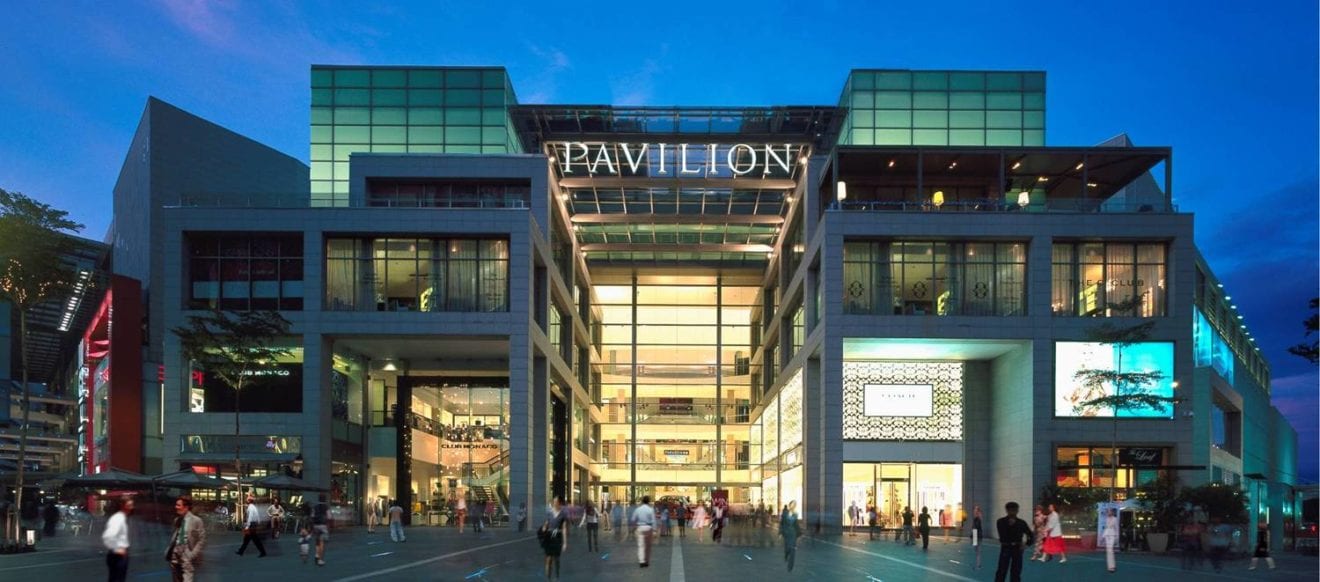
    Kuala Lumpur’s showcase Pavilion mall says it has weathered the sluggish retail market, posting increased earnings this quarter.

    Gross revenue for the first quarter of the current calendar and financial year was RM105.1 million (US$29.6 million) which translated into a net profit of RM60.5 million ($17 million).

    Revenue rose by four per cent year-on-year after renovations were completed last year, and due to an increase in service charges.

    The mall’s occupancy rates were stable and this year just 15 per cent of tenants leases are scheduled to expire. Pavilion mall management expects only a slight relocation and revision of the current tenant mix.

    Renovations are planned of restrooms, parts of level one in the foodcourt area and enhancements of the air conditioning system to reduce power consumption and air flow.

    Pavilion management reports tenants sales were stable through the quarter, but warned April sales are down due to the introduction of GST on April 1.

    In a research note, Hong Leong IB said it expected the slowdown will only be temporary.

    “Consumers will adjust their spending habits after a while.”

  • Hong Kong border mall delayed

    Hong Kong border mall delayed

    Planning requirements – not this week’s visa clampdown – will delay the proposed Hong Kong border mall.

    Secretary for Commerce and Economic Development, Gregory So, said the government still supports the concept – which would see 300 trading stores opened on a site close to the Shenzhen border in prefabricated buildings.

    But the development has been delayed due to the need for zoning changes and may not now be trading before Christmas.

    So said the newly introduced once a week visit limit on mainland residents with multiple entry visas would not affect the plan.

    “The “one trip per week” measure is really to deal with parallel trading. I think what Mr Wong (Ting-kwong) and the proponent of this project are looking at is to increase the capacity to receive tourists, and also to enhance the facilities in terms of providing shopping opportunities,” So told a reporter after the Legislative Council met.

    “It is really business opportunities for both the businesses as well as for the tourists to enjoy these facilities. So, I believe the proponent is still very optimistic about this project.”

    So described the current plan as “a good pilot project” and said he encouraged projects of similar nature if this one is proven to be successful.

    “Perhaps this mode of operation could be extended to other places and thereby increasing our tourist capacity.”

    Answering a follow-up question, So said the centre’s location near the border would ensure its success, “because it will be a lot more accessible to tourists across the border”.

    “That is the business model as I understand.”

  • Taiwan’s first outlet mall to open this year

    Taiwan’s first outlet mall to open this year

    Taiwan will see its first international outlet mall in Taoyuan in August, and 100 stores will open their doors in the first stage of the project.