Retail News CRM

Tag: Manilla

  • SM Group Launches Thrilling Expansion of Beauty and Wellness Network with 1,000+ Brands

    SM Group Launches Thrilling Expansion of Beauty and Wellness Network with 1,000+ Brands

    The Philippines’ SM Group is quickly transforming its beauty and wellness portfolio in response to a surging demand from consumers across the nation. With an ambitious aim to be at the forefront of this booming sector, SM Beauty has introduced over 1,000 beauty brands across its 77 locations, showcasing esteemed labels like YSL, Lancôme, and Calvin Klein.

    Beauty Hubs for Experiential Retail

    In a bid to elevate the shopping experience, SM Beauty has unveiled dedicated beauty hubs in select stores. Here, customers can indulge not just in retail therapy, but also in services such as hair coloring and makeovers, all guided by an expanding team of professional beauty advisers. It’s the kind of pampering that might make even your morning coffee jealous.

    Wellness Economy on the Rise

    The Global Wellness Institute has forecasted that the global wellness economy will soar to nearly $9 trillion by 2028, highlighting a paradigm shift towards health and self-care. In the Philippines, this trend is blossoming; in 2023, the nation ranked 13th out of 218 economies worldwide in the personal care and beauty sector. Much of this momentum is fueled by a youthful, wellness-oriented population eager to invest in self-improvement.

    Holistic Growth with Watsons

    Another key player in SM Group’s expansion is Watsons Philippines, which is bolstering its offerings with exclusive skincare lines and health services, while incorporating sustainability-focused innovations into its stores. This dual approach not only nods to environmental consciousness but also resonates with today’s socially aware consumers.

    Commitment to Filipino Consumers

    Looking ahead, SM Group is determined to broaden access to beauty and wellness products, creating a diverse array of choices and enriching experiences designed specifically for Filipino consumers. With its strategic investments and a finger firmly on the pulse of local trends, the company is set to become a titan in the beauty and wellness arena.

    Questions & Answers

    How is SM Beauty adapting to consumer demands in the Philippines?
    SM Beauty is expanding its portfolio by offering over 1,000 beauty brands at its locations and launching dedicated beauty hubs to provide personalized services like hair coloring and makeovers.

    What does the future hold for the global wellness economy?
    The Global Wellness Institute projects that the global wellness economy is expected to reach nearly $9 trillion by 2028, indicating significant growth in health and wellness sectors globally.

    What role does Watsons play in SM Group’s strategy?
    Watsons Philippines is enhancing its presence by launching exclusive skincare lines and health services, while also focusing on sustainability to attract eco-conscious consumers.

  • PLDT and Globe Launch Exciting Laser Internet Pilots, Connecting Remote Areas with Cable-Free Access

    PLDT and Globe Launch Exciting Laser Internet Pilots, Connecting Remote Areas with Cable-Free Access

    The Philippines is witnessing an exciting technological leap as leading telecommunications operators PLDT and Globe Telecom embark on trials and initial deployments of Taara, a cutting-edge laser internet system developed by Google’s ambitious X Moonshot Factory. Launched as an independent Alphabet company in March 2025, Taara leverages free-space optical communication (FSO) to transmit data using invisible light beams, bypassing the hefty costs and logistical hurdles associated with traditional underground fiber cables.

    Redefining Connectivity with Laser Internet

    Often dubbed “fiber without the cables,” laser internet employs concentrated beams of light as “light bridges” to relay data between terminals. Each terminal can connect over a distance of up to 20 kilometers, with extended links achievable by sequentially placing additional terminals. Taara’s innovative Lightbridge system incorporates mirrors, sensors, and precision optics, all governed by smart software that tracks and locks onto light paths. Once aligned, this technology can deliver impressive speeds of up to 20 Gbit/s—providing a fiber-like performance that turns the traditional challenges of installing cables across rivers and rugged terrains into a problem of the past. Of course, if it starts raining cats and dogs, users will have to wait a while for the connection to clear up.

    Strategic Deployments Across the Archipelago

    PLDT is leading the charge with the activation of three strategic Taara sites: Talim Island in Rizal, Dipaluda in Isabela, and Bagong Pag-asa in Quezon City. The link on Talim Island stretches an impressive 11.8 kilometers across the waters of Laguna de Bay, directly connecting the island to the mainland. In Isabela, the system covers a mountainous 13-km stretch, where conventional fiber installation would be prohibitively expensive. Meanwhile, the deployment in Quezon City aims to mitigate single-point-of-failure (SPOF) risks within its metro network, ensuring a more resilient connectivity infrastructure.

    Butch Jimenez, PLDT’s Chief Operating Officer and Head of Network, expressed the significance of the project: “This is a game changer for us in connecting remote areas. It simplifies the process of providing fiber-like internet to new locations. We’re excited for the residents of Talim Island and Dipaluda to experience the benefits of fiber-to-the-home connectivity.”

    Erick Santiago, who heads Network Strategy at PLDT-Smart, emphasized the company’s proactive stance: “We’ve evaluated this technology for over a year. I’m proud of our network team, who made it viable for us to launch it while others are still in the testing phase.”

    Pioneering Technology in Action

    On the other hand, Globe Telecom is also making strides through its subsidiary, Fiber Infrastructure and Network Services Inc. (FINSI). The company recently reported promising results from a pilot run of the Taara system over Laguna Lake. The trial spanned 11 kilometers, with approximately 80% of the connection floating across open water, achieving wireless optical connectivity of 10 Gbit/s. The trials adhered to the Enhanced RFC 2544 test suite for throughput, latency, jitter, and frame loss, alongside a rigorous 24-hour bit error rate test (BERT), all of which met Globe’s stringent technical standards. In short, the future of internet in the Philippines is looking abundantly bright, if not a little sparkly!

    Questions & Answers

    What is Taara and how does it work?
    Taara is a laser internet system that transmits data using invisible light beams, bypassing the need for traditional underground fiber cables. It uses “light bridges” to connect terminals over distances of up to 20 kilometers, delivering speeds comparable to fiber-optic systems.

    What areas in the Philippines are benefiting from Taara’s deployment?
    PLDT is activating Taara in Talim Island, Dipaluda, and Quezon City, targeting remote areas that struggle with conventional fiber internet installation.

    How has Globe Telecom tested the Taara system?
    Globe successfully completed a pilot run across Laguna Lake, covering 11 kilometers with 80% of that distance over open water, achieving connectivity speeds of 10 Gbit/s while meeting technical performance standards.

  • Manila’s Hotel Scene Set to Expand with 3,000 New Rooms Coming in Late 2025

    Manila’s Hotel Scene Set to Expand with 3,000 New Rooms Coming in Late 2025

    The hospitality landscape in Metro Manila is brimming with potential as the market anticipates the addition of approximately 3,000 new hotel rooms by the end of 2025. According to a recent report from JLL, hotel occupancy rates are currently strong, yet this incoming wave of accommodations may briefly impact occupancy levels.

    Sturdy Foundations in Metro Manila’s Hotel Sector

    Despite the expected influx of new inventory, Metro Manila’s hotel market shows remarkable resilience, with RevPAR reflecting a positive year-over-year trend. This statistic is a clear signal of robust demand and an upsurge in traveler confidence, suggesting that visitors are keen on experiencing the vibrant hospitality options the area offers.

    In the second quarter of 2025, hotel occupancy hit 78.3%, marking an impressive year-over-year increase of 143.4 basis points. The luxury and upscale segments are leading the charge, demonstrating their enduring allure. What’s more, average room rates have edged up just slightly, from PHP 7,916 in Q2 2024 to PHP 7,917 in Q2 2025—a testament to the market’s stability amid expansion.

    Preparing for Growth Amid New Challenges

    As the holiday season draws near, optimism fills the air in the Philippine tourism sector. The VAT refund program is gaining traction, and combined with strategic tourism marketing efforts, authorities are aiming to reach an annual target of 7.7 million visitors. Even with the new hotel openings, which may disrupt occupancy rates in the short term, the solid fundamentals of tourism and increasing international interest are expected to bolster demand for hotel stays.

    With Manila positioning itself as a compelling destination, it seems the real excitement lies not just in the influx of these new hotel rooms—but also in how they will redefine the competitive landscape for hospitality in the region. After all, having options is never a bad thing, right?

    Questions & Answers

    What is the expected impact of the new hotel inventory on occupancy rates?
    While the addition of approximately 3,000 new hotel rooms could create temporary pressure on occupancy rates, the stable demand driven by tourism fundamentals and market interest is expected to alleviate this shortly.

    How is the hotel market currently performing in Metro Manila?
    The hotel market is performing well, with an occupancy rate of 78.3% in Q2 2025, reflecting a significant year-over-year growth and positive trends in RevPAR, indicating strong demand and visitor confidence.

    What initiatives are anticipated to support tourism growth in Metro Manila?
    Key initiatives include the VAT refund program and targeted tourism marketing efforts, which aim to boost visitor arrivals and help meet the annual target of 7.7 million tourists.

  • SM Investments Elevates Entertainment Offerings to Captivate the Next Generation of Shoppers

    SM Investments Elevates Entertainment Offerings to Captivate the Next Generation of Shoppers

    SM Investments Corporation (SMIC) is on a mission to reshape the retail landscape in the Philippines by transforming malls into vibrant experience hubs. With millennials and Gen Z leading the charge for prioritizing experiential engagement, SMIC is ramping up its entertainment offerings across various sectors, including shopping malls, arenas, logistics, and banking.

    The company has notably invested in Klook, an Asia-based experiences platform, while its 2GO shipping service features innovative karaoke lounges and arcades, proving that who said you can’t sing on the high seas? In addition, BDO Unibank and China Bank are enhancing their lifestyle rewards programs to cater to this experience-hungry demographic. These initiatives strategically position SMIC to tap into the booming ₱1.94-trillion Philippine creative economy, which saw a robust growth of 8.7% in 2024.

    SM is elevating the concept of malls, convention centers, and arenas into immersive experience centers. Today’s consumers are increasingly seeking inclusivity, community, and interactive engagements, prompting a shift from traditional retail spaces to dynamic entertainment venues. Joaquin San Agustin, EVP for marketing at SM Supermalls, emphasizes that this evolution caters to a diverse audience, from gamers to food enthusiasts and pop culture aficionados.

    The Mall of Asia Arena continues to attract global talents and is set to be complemented by an even larger arena in Cebu. Meanwhile, the SMX Convention Center is witnessing a surge in bookings for events such as fan meets, gaming expos, and pop culture conventions, reflecting the growing appetite for interactive experiences.

    By focusing on entertainment, SM not only drives foot traffic but also cultivates valuable partnerships and creates leisure spaces throughout its venues, including a FIFA-grade football pitch at SM MOA Sky.

    Questions & Answers

    What is SMIC’s main strategy in enhancing its retail offerings?
    SMIC is focusing on developing entertainment options throughout its businesses, transforming malls into experience hubs to cater to the growing demand for immersive and interactive experiences among younger consumers.

    How does SMIC’s investment in Klook fit into its broader strategy?
    The investment in Klook aligns with SMIC’s goal of tapping into the creative economy by providing diverse experiential offerings, which appeal particularly to millennials and Gen Z consumers seeking unique adventures.

    What types of events are gaining popularity at SM venues?
    Events like gaming expos, fan meets, and various pop culture gatherings are seeing increased attendance at SM venues, reflecting a shift toward community-focused and interactive experiences.

  • Jollibee Foods targets 10,000 global restaurants this year

    Jollibee Foods targets 10,000 global restaurants this year

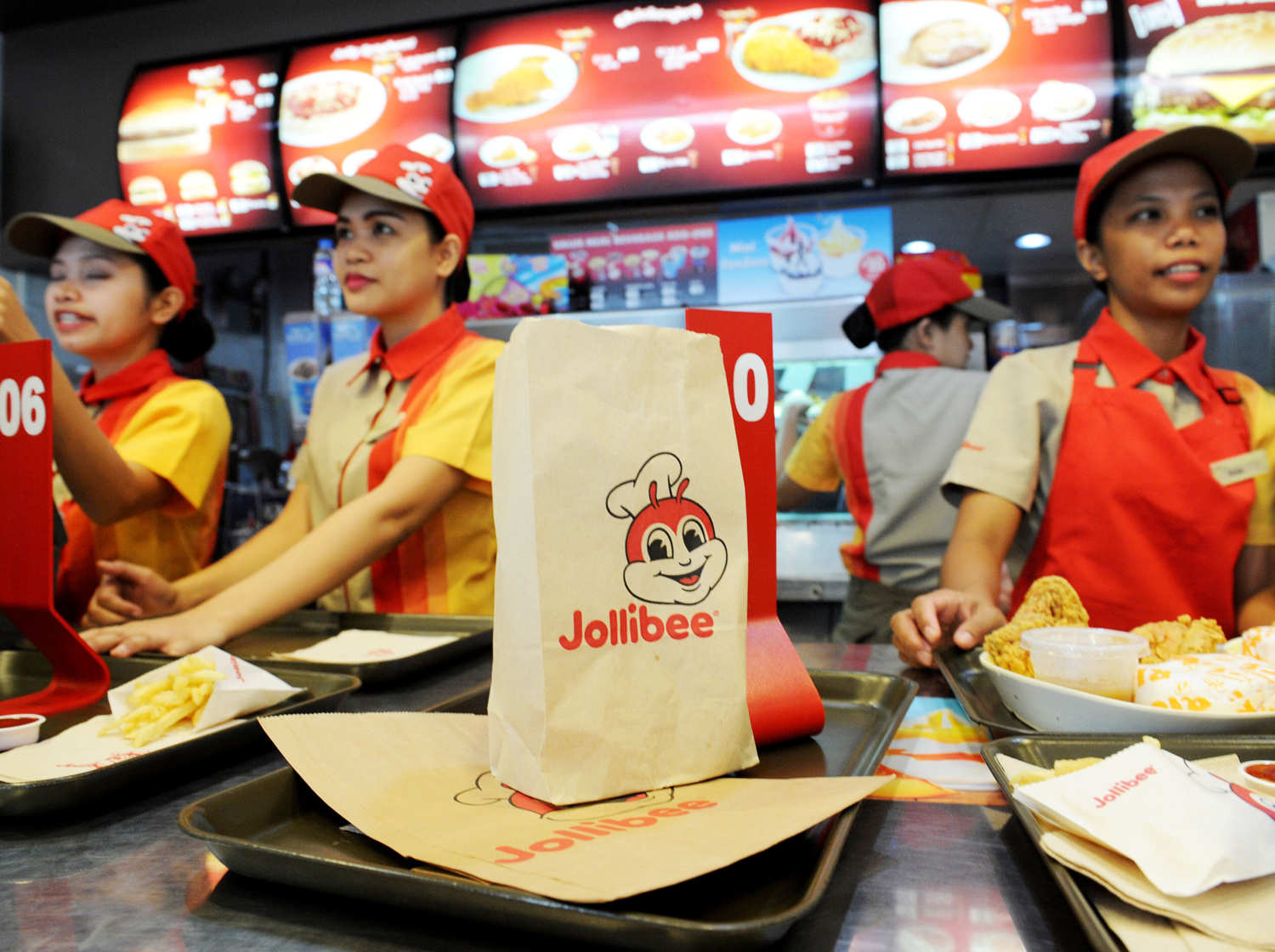
    The Philippines-headquartered restaurant group Jollibee Foods plans to have 10,000 eateries globally this year, with a focus on North America.

    The company, known for its fried chicken Jollibee chain, eyes to invest PHP18-21 billion (US$312-364 million) to open up to 800 new stores this year.

    Last year it had 9,766 outlets.

    “We’re not in all 50 states [in the U.S.]. We’re in only maybe 15 states,” Richard Shin, the company’s chief financial and risk officer, told reporters on Tuesday, as reported by Nikkei Asia.

    Jollibee launched its first U.S. location in California in 1998, and expanded its presence in the country and Canada to 103 by the end of last year. It also has 266 stores under other brands in North America.

    The company plans to use the franchising model to launch more regional stores.

    In 2024, Jollibee’s net profit rose 17.7% to PHP10.3 billion, driven by double-digit revenue growth from new stores and acquisitions. The company forecasts 8% to 12% growth in system-wide sales for 2025 – covering both company-owned and franchised locations – and targets up to 8% growth in its store network.

    Jollibee has also pursued an aggressive acquisition strategy, recently purchasing South Korea’s Compose Coffee, fully acquiring Hong Kong’s Tim Ho Wan, and adding Taiwan’s Moon Moon to its portfolio.

    It also holds stakes in China’s Yonghe King and U.S. brands Smashburger and The Coffee Bean & Tea Leaf.

  • Dickey’s Barbecue Pit debuts in Manila

    Dickey’s Barbecue Pit debuts in Manila

    has opened its first location in the Philippines at Manila’s Parqal Mall.

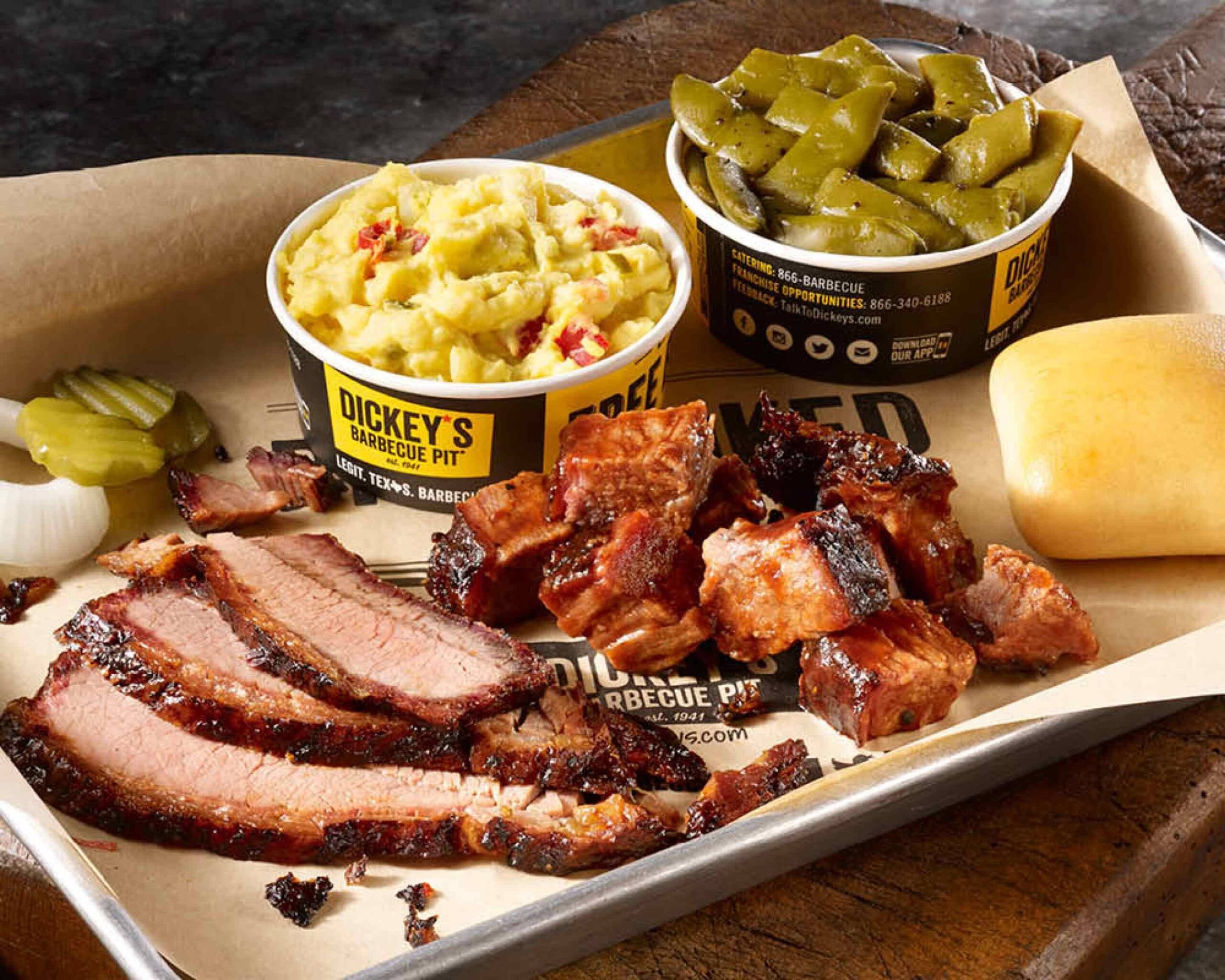
    The two-story restaurant seats 90 guests and features a full bar and table service, blending Texas-style barbecue with Filipino flavours.

    The menu includes Dickey’s signature slow-smoked brisket, ribs, sausage, and locally inspired dishes such as pork belly, rice, and regional appetisers.

    Beyond Manila, the American barbecue chain is eyeing further expansion, with a second location planned for Clark, a former US Air Force base.

    “This is more than barbecue – it’s about sharing Texas culture and creating a gathering place for families and friends,” said Laura Rea Dickey, CEO of Dickey’s Barbecue Pit.

    “Barbecue is about bringing people together,” added the CEO. “We’re proud to share a true taste of Texas with the world – and Manila is just the start of something even bigger.”

    The Manila opening is part of Dickey’s broader expansion in Southeast Asia, following recent launches in Singapore, Japan, and Pakistan. Additional locations in Metro Manila are also in the pipeline.

    Since its launch in 1941, Dickey’s Barbecue Pit has expanded to more than 866 locations across the US and globally.

  • Jollibee secures approval to lift foreign ownership limit

    Jollibee secures approval to lift foreign ownership limit

    F&B giant Jollibee Foods Corporation (JFC) has received approval from the Philippine Stock Exchange (PSE) to remove its 40 percent foreign ownership limit.

    The decision follows the company’s amendment request to its articles of incorporation, which also includes removing its ability to own, acquire, mortgage, pledge, or encumber land.

    Article 12 of the Philippine Constitution restricts foreign ownership of land and certain businesses to 40 per cent, with the remaining 60 per cent reserved for Filipino citizens or corporations.

    Following the change, JFC is now positioned to accommodate more foreign investors.

    AP Securities research analyst Jose Cipres said the move allows the company to raise additional capital for expansion through a sale-leaseback transaction.

    “They could use the proceeds from the sale of land to expand their current store portfolio, translating to higher earnings,” explained Cipres.

    Meanwhile, Unicapital equity research analyst Jeri Alfonso said removing the foreign ownership limit is a good catalyst for JFC.

    “Given this current market condition, this will provide a big boost to the company in terms of trading volume,” Alfonso added.

  • Jollibee re-enters Guam with new Restaurants

    Jollibee re-enters Guam with new Restaurants

    Jollibee, the largest and most popular fast food chain in the Philippines, is re-entering the Guam market with the ongoing $2 million construction of a restaurant within the Micronesia Mall compound in Dededo. The restaurant is expected to open by early 2019.

    The restaurant is being built within the parking area of Micronesia Mall, by the corner of Marine Corps Drive and Army Corps Drive. Construction began in March.

    Construction cost is $2 million and the permit fee is $12,820, based on copies of the Department of Public Works building permit posted on a barrier wall at the construction site.

    Construction of a Guam branch of Jollibee, the most popular fast food chain in the Philippines, is ongoing within the vicinity of Micronesia Mall in Dededo.
    Haidee Eugenio/PDN

    Isagani Baluyut, owner of Isagani Baluyut Construction, on Monday said his company has a one-year contract to build the Jollibee restaurant. Baluyut said he is not privy to the restaurant’s actual opening date but his company’s construction contract ends in April 2019.

    Jollibee started as an ice cream parlor

    Jollibee, known for its Chickenjoy, hamburgers and sweet-tasting spaghetti and its iconic red bumble bee mascot, used to have restaurants on Guam and Saipan but declining sales forced the branches to close.

    An international Jollibee franchise applicant is required to have a minimum net worth of $5 million, according to Jollibee’s corporate website.

    Jollibee started in 1975 as an ice cream parlor that evolved into a burger chain, and has become the largest fast food chain in the Philippines. It has also embarked on an aggressive international expansion plan in the United States, Vietnam, Hong Kong, Saudi Arabia, Qatar and Brunei.

  • Stars launched a third Milky & Sunny Restaurant

    Stars launched a third Milky & Sunny Restaurant

    Celebrity siblings Maxene and Elmo Magalona have opened a Milky & Sunny restaurant near their home network ABS-CBN in Quezon City.

    “This is actually our third branch,” says Elmo. “The first one was in Kapitolyo and the other in Pangalawa near Greenbelt.”

    Maxene says it was their mother’s idea that they invest in something worthwhile they love. “We love going out to eat as a family.”

    A breakfast and brunch restaurant, Milky & Sunny is on the ground floor of The Ignacia Place in Mother Ignacia. It also serves lunches, dinners and coffee.

  • New Deal Means a New Majority Owner for Smashburger

    New Deal Means a New Majority Owner for Smashburger

    In $100 million deal, Jollibee Foods Corp. will acquire an additional 45 percent of Smashburger, the Denver-based burger franchise that has more than 360 restaurants. The companies announced the deal Tuesday and it’s one that increases Jollibee’s ownership stake in the chain to 85 percent. The Philippines-based restaurant company first bought a 40 percent stake in Smashburger in October 2015 for $100 million, a deal which then valued the chain at $335 million.

    Tom Ryan, co-founder and CEO of Smashburger, called Jollibee an “invaluable strategic partner.”

    “Our momentum in 2017 around improved guest experience, iconic and record-setting product launches, and innovative marketing provide JFC a tremendously strong brand to enter the North American market,” said Ryan in a statement. “Our entire team couldn’t be more excited to grow the Smashburger brand and share the great tastes of Smashburger with the world.”

    Ryan took over as CEO in December 2016 following the exit of Mike Nolan after just nine months. Nolan had replaced Scott Crane, who stepped down in April 2016.

    Since Ryan’s move to chief executive, Smashburger has focused on developing new menu items, such as its Triple Double Burger, and expanded its marketing efforts. The company in 2017 also launched Smash Pass, a subscription-model consumer frequency program.

    With the expanded Jollibee partnership, Smashburger CFO Bradford Reynolds said growth in Southeast Asia is a focus.

    “This reinforced strategic partnership with JFC will allow Smashburger to continue to focus on growth in both existing and new markets including the opportunity to bring our great tasting burgers, fries and hand-spun shakes to Southeast Asia,” said Reynolds. “We look forward to building upon our successful relationship to further bolster the brand as an international leader in the better burger segment.”

    Smashburger’s footprint extends to 38 states and nine countries. Jollibee Foods operates the largest foodservice network in the Philippines, with 2,875 restaurants in the country as of December 31, 2017. In addition to its 1,062 units of the Jollibee brand, it has Chowking, Greenwich, Red Ribbon, Mang Inasal and is a Burger King franchisee with 93 units. It also operates restaurants in Australia, Bahrain, Brunei, Canada, China, Hong Kong, Indonesia, Korea, Kuwait, Macau, Oman, Qatar, Saudi Arabia, Singapore, the United States and Vietnam.

  • Jollibee Foods knocking on door in UK

    Jollibee Foods knocking on door in UK

    Jollibee Foods may open its first store in the UK by next year, says British Ambassador to the Philippines Daniel Pruce.

    This followed him visiting Jollibee’s 1000th branch in a “show of support” for plans by the Philippines’ largest fast-food company to expand to the UK, where tens of thousands of Filipinos are living.

    The Philippine company has already sealed a deal with Singapore’s Blackbird Holdings which will see it enter continental Europe, starting with Italy.

    Jollibee is also reportedly in talks to acquire a stake in British-based sandwich and coffee chain Pret-A-Manger.

  • Cebu Pacific dominates Manila-Sydney route

    Cebu Pacific dominates Manila-Sydney route

    he Philippines’ leading airline, Cebu Pacific (CEB) continues to soar high, capturing the lion’s share for both passenger and cargo traffic between Manila and Sydney in the first quarter of 2017. Data from the Bureau of Infrastructure, Transport and Regional Economics (BITRE) of Australia showed that CEB carried over 43,512 passengers, representing 42% passenger market share on the Manila-Sydney route, the highest among the three carriers covering this route.

    The BITRE report noted that from January to March 2017, passenger traffic between Manila and Sydney totalled 104,446, up seven percent (7%) versus the same period last year.  The growth in passenger traffic was dominated by CEB, which carried 16% more passengers from the 37,640 reported in the first quarter of 2016. Load factor for CEB for the Manila-Sydney route was at an average 78% for the first three months of 2017.

    “We are very pleased to see that the Cebu Pacific effect continues across one of our strongest international markets. Our goal is to make flights affordable, accessible and available to a greater number of travellers. These numbers do not only showcase the Philippines as a flourishing destination, but it also shows our strong commitment to remain and further stimulate our key market in Australia,” said Candice Iyog, Vice President for Marketing and Distribution of Cebu Pacific.

    Aside from the growth in passenger volume, Cebu Pacific also reinforced its leadership in the Manila-Sydney airline cargo service. CEB flew 1,131 tons of cargo between Manila and Sydney in the first three months of 2017, covering 49% of the total 2,325 tons carried by the three carriers.

    The growth in CEB’s cargo service tracked the increase in total volumes, from 1,567 tons carried in the comparable quarter last year.

    BITRE, an agency under the Department of Infrastructure and Regional Development of the Australian government, “provides economic analysis, research and statistics on infrastructure, transport and regional development issues,” according to its official website. The bureau holds data and statistics on the aviation industry.

    Cebu Pacific offers the most number of seats between Manila and Sydney, covering close to 40% of the route’s total capacity.

  • Jollibee to continue stinging McDonald’s despite labor issues

    Jollibee to continue stinging McDonald’s despite labor issues

    Jollibee Foods Corporation’s largest brand has been experiencing some financial challenges since July 2016 due to the rising cost of raw materials and contractualization issues in the Philippines. But despite these, the homegrown fast-food chain expects to maintain its lead against rival McDonald’s Philippines, driven by its network expansion and product innovation.

    Jollibee, known for its Chickenjoy fried chicken and sweet spaghetti, told the Philippine Stock Exchange that the brand expects to maintain a “significant lead” over its key competitor in the coming years.

    This was despite two price increases last year due to higher raw material costs and the Philippines’ new regulations on contractualization, which resulted to increased labor expenses.

    “These price increases did not adversely affect consumer purchase volume regardless of income class. Over the past years, the pricing of Jollibee had been at parity with key competitors,” Ysmael Baysa, chief finance officer and corporate information officer of Jollibee, told the local bourse on Wednesday, March 29.

    Baysa said this in reaction to an analyst report from Macquarie, saying that McDonald’s has been closing in on Jollibee in terms of preference and that the new labor rules could affect its leading position in the Philippine market.

    Baysa said Jollibee has been incurring the costs of those steps since the 3rd quarter of 2016.

    Because of this, Jollibee said the cost of labor will be higher in the first half of 2017 versus the same period in 2016. However, the labor cost increase in the 2nd half of 2017 over the same period of 2016 will be at a normal rate.

    At present, Jollibee already has 978 stores nationwide, while McDonald’s has 521 stores.

    David and Goliath

    McDonald’s had said that it plans to open 45 stores this year, while Jollibee said it continues to enjoy higher sales in the Philippines based on its latest financial report.

    Jollibee’s same store sales growth in the Philippines in 2016 stood at 8.3%, driven by higher customer traffic and higher amount of purchases per visit per customer compared with a year ago.

    Moving forward, Jollibee said the growth in its brand in the Philippines will continue at a strong pace, at least sustaining the number of new store openings in the past two years.

    “The Jollibee Group of Companies had faced many challenges in the past. It had emerged stronger from these challenges and its profit recovered quickly. It has one of the most consistent sales and profit growth track records among all public companies in the Philippines, while sustaining one of the highest returns on equity (ROE) at 18% to 22% annually over different economic cycles,” Baysa told the local bourse.

    Overall, Baysa said Jollibee’s share in burgers, fried chicken, and spaghetti “actually increased in 2016 from its key competitor,” which is McDonald’s.

  • Cebu Pacific opens office in Seoul

    Cebu Pacific opens office in Seoul

    Local carrier Cebu Pacific opened Tuesday its regional office in South Korea as part of its regional promotion and expansion.

    In a statement, CEB said its office is located at 7th floor, Section B, Sesomunro 106, Jung-Gu, Seoul, Korea.

    CEB’s Korea branch office will provide tickets sales, reservations services and customer support. It will aid in boosting the airline’s promotion and marketing strategies in Korea.

    “CEB continuously looks for opportunities to expand services and target markets in the most convenient way. With the opening of CEB’s Korea branch office, we make ticket purchase and reservations more accessible to travelers while cultivating Cebu Pacific’s operations in the region. We remain committed to offering the most affordable air fares between the Philippines and Korea, and to contributing to the trade and tourism agendas of the communities we cater to,” said Michael Szucs, CEB Chief Executive Adviser.

    Currently, CEB operates daily to and from Incheon-Manila/Kalibo/Cebu, and twice weekly to and from Busan-Manila utilizing 180-seater Airbus A320 aircraft. The A320 is a proven and reliable aircraft with low operating costs, which means lower fares for our customers.

    CEB flew over 250,000 passengers between the Philippines and Korea from January and September 2016. Passengers from Korea can use CEB’s extensive network to visit the Philippines’ popular domestic destinations such as Boracay, Coron, Davao and Puerto Princesa via easy flight connections through Manila.

    CEB currently offers flights to a total of 36 domestic and 30 international destinations, operating an extensive network across Asia, Australia, the Middle East, and USA. Its 57-strong fleet is comprised of six Airbus A319, 36 Airbus A320, six Airbus A330, eight ATR 72-500, and one ATR 72-600 aircraft. Between 2016 and 2021, CEB expects delivery of 32 Airbus A321neo, two Airbus A330, and 15 ATR 72-600 aircraft

  • Globe, PLDT cleared to consolidate SMC case

    Globe, PLDT cleared to consolidate SMC case

    The Philippines’ Court of Appeals has approved an application from the nation’s two major operators to consolidate their legal challenge against the Philippine Competition Commission (PCC) over their acquisition of the telecoms assets of conglomerate San Miguel Corporation.

    Both Globe and PLDT have petitioned the court to compel the PCC declare the San Miguel transaction as “deemed approved.”

    The PCC is conducting a comprehensive review of the potential impact of the acquisition, which includes large allocations of spectrum, on competition and the public benefit.

    The regulatory body had been opposing efforts by the two operators to consolidate their petition into a single case.

    Globe general counsel Froilan Castelo said the court’s decision contradicts the PCC’s claim that the operators have been engaged in forum shopping.

    “Globe has followed the rules, and that motion to consolidate is just in accordance with Rule 31 of the Rules of Court,” he said.

    “This is only but fitting as all Globe’s actions on this matter are well within the bounds of the rules…  We are disappointed that it is the PCC itself that does not follow the rules – the rules of court when it opposes the consolidation of the cases; and their own rules.”

    Castelo also disputed the PCC’s claim that the operators have been uncooperative during the investigation process. He said Globe has cooperated fully with the government body, providing more information than required.

    “These submissions were done in good faith and went beyond what the PCC actually requires by their own rules.  In addition to these, Globe even sought a dialogue with the PCC to explain its position and answer any concern the PCC may have regarding the transaction,” he said.