Retail News CRM

Tag: marketplace

  • CapitaLand kicked new e-commerce platforms off in Singapore

    CapitaLand kicked new e-commerce platforms off in Singapore

    CapitaLand has launched new e-commerce and food ordering platforms in Singapore.

    The new eCapitaMall and Capita3Eats services are aiming to drive sales for retailers at its shopping malls during Singapore’s Phase 1 safe reopening protocol, as the country starts pulling itself out of the coronavirus lockdown. Both platforms will be accessible via the firm’s CapitaStar app and mall websites from June 1.

    “The circuit breaker has brought to the fore the importance of an omnichannel, 24/7 strategy for Singapore’s retailers,” said CapitaLand Singapore MD Chris Chong. “As the operator of Singapore’s largest mall network, we want to help our retailers reach out to more consumers and online business opportunities by using the strong brand awareness of CapitaLand and the digital capabilities we have built up over the years. Retailers on our eCapitaMall and Capita3Eats platforms will get a leg up in the digital space by tapping the more than 1 million CapitaStar members in Singapore and marketing reach through our physical network.”

    Customers using the app will be able to buy goods from (predominantly) retail tenants at CapitaLand malls, opting for home delivery or in-store collection. The food app is Singapore’s first mall-operated food ordering platform offering consumers three ways to fulfil their food orders – by delivery, takeaway or dine-in.

  • Facebook Shops enabling retailers to sell directly to consumers

    Facebook Shops enabling retailers to sell directly to consumers

    Social commerce is about to get a whole lot more social, with Facebook announcing the launch of its business-to-consumer marketplace offering Facebook Shops.

    The new platform began rolling out in New Zealand yesterday and will be progressively rolled out across international markets during the coming months.

    Shops will leverage the co-owned ecosystem of Facebook, Instagram, and WhatsApp to make it easy for customers to find the products they want, wherever they are, and be able to get in contact with the business selling if they need more information.

    Businesses will be able to set up a partly-customizable storefront within Facebook, which can be accessed through Facebook, Instagram, or through stories or ads.

    In the US, customers will be able to check out directly within Facebook – though this feature has yet to make it to Australia and New Zealand.

    “Over the past three months businesses of all sizes have been forced to change their business models and adapt to selling online,” Facebook Australia and New Zealand MD Will Easton said.

    “We’ve accelerated our development of new products, giving businesses better means of connecting with consumers, and helping businesses who don’t have an online presence to drive sales online.”

    Facebook founder Mark Zuckerberg says Shops will be free for businesses to access.

    “Our business model here is ads, so rather than charge businesses for Shops, we know that Shops are valuable for businesses. They’re going to – in general – bid more for ads and we’ll eventually make money that way.”

    And later this year the business will expand Shops into its live-streaming features, in which a business can tag products that will be on display before starting a stream to make them purchasable when going live.

    Facebook is already working in collaboration with e-commerce partners such as Shopify, BigCommerce and WooCommerce to enable businesses an easier time getting their Facebook Shop up and running.

    Shops is the latest push by the social media giant into the world of commerce, building off the strengths of its customer-to-customer Marketplace offering.

    And according to industry firm UBS the drive toward online shopping will only become more important for businesses in a post-Covid-19 world.

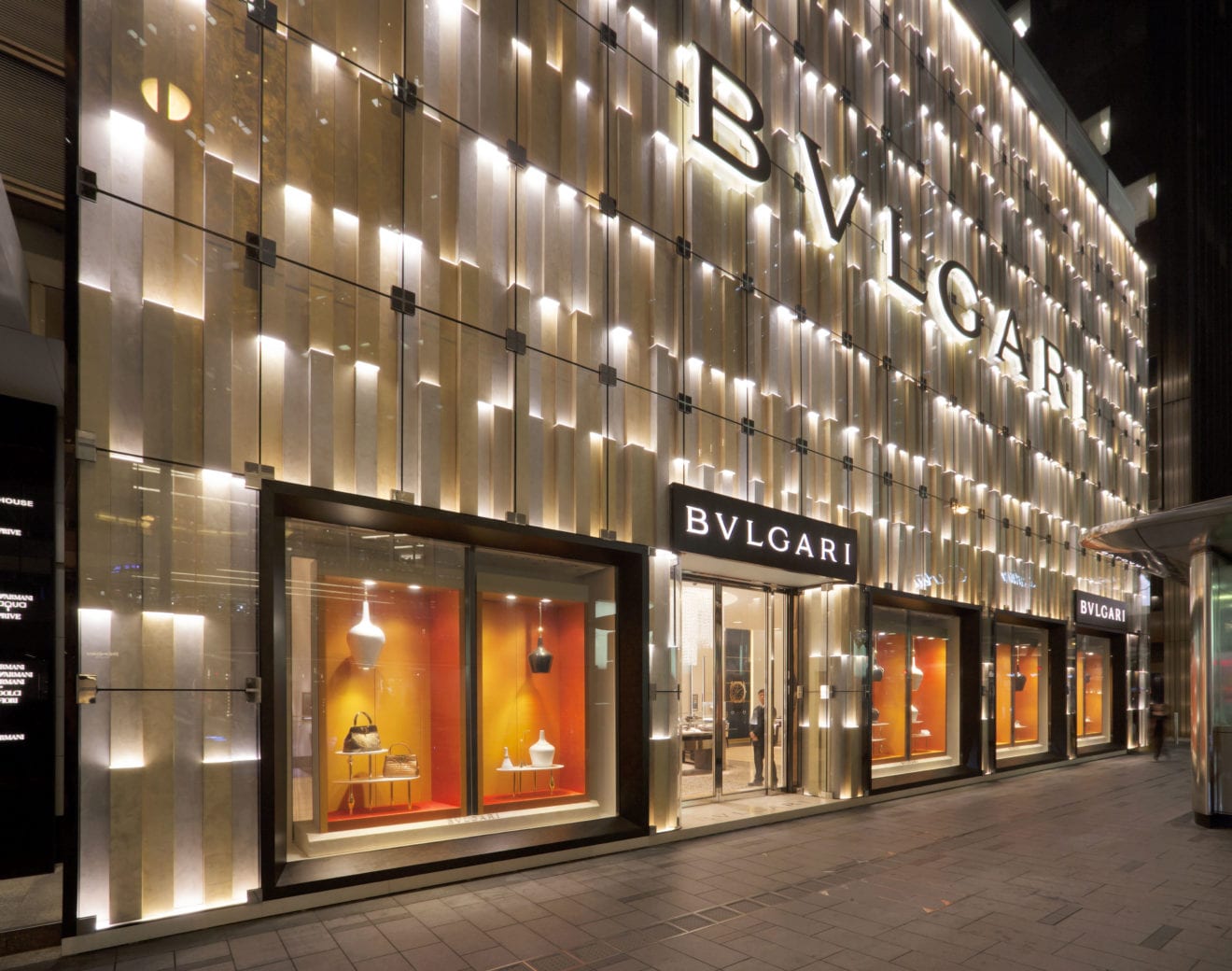
  • Bulgari E-commerce platform launched in Singapore

    Bulgari E-commerce platform launched in Singapore

    Italian jewelry firm Bulgari has launched an e-commerce platform in Singapore prior to opening online services in its home territory. Korea will soon follow.

    The luxury brand is accelerating its digital program following the effect of the coronavirus pandemic on the industry, placing restrictions on the ability of shoppers to visit physical stores. It is planning to launch new online boutiques in seven countries over the next 90 days, beginning with the Singapore shop going live yesterday.

    The store features an AR function allowing shoppers to view products as they would appear in the real-world environment, as well as e-concierges and home delivery services.

    “E-commerce must be an engaging and exclusive 360-degree experience, offering the same service of excellence delivered in a Bulgari boutique,” said Bulgari CEO Jean-Christophe Babin.

    “Not to mention the complementarity of the website with the boutiques in terms of content and information.

    “With Covid-19, our e-shop has become our number-one store worldwide with a growth exceeding 100 percent and we believe it will reinforce its leading position after Covid-19, as it has been an accelerating factor.”

    Bulgari’s next e-shops are expected to launch in the UAE, Italy, France, Korea, Mexico and Brazil.

  • Telenor, Carousell merger will elevate the marketplace to the next level

    Telenor, Carousell merger will elevate the marketplace to the next level

    701Search owns leading general classifieds sites Mudah in Malaysia, Chotot in Vietnam and OneKyat in Myanmar. Johan Rostoft, Head of Online Classifieds at Telenor Group, said “We have built a profitable and high-growth marketplace business serving millions of users every single day. This transaction presents an attractive opportunity for us to take the next step in our marketplace journey, and it also simplifies Telenor’s portfolio. We believe that Carousell is the best partner for our online classifieds business in Southeast Asia.”

    “We are thrilled to partner with Telenor Group to cement our classifieds leadership across eight markets in Southeast Asia, Hong Kong and Taiwan,” shared Quek Siu Rui, Co-founder and CEO of Carousell, and continued, “With Telenor Group’s extensive experience in each local market, coupled with Carousell’s relentless focus to use technology to make selling and buying easy and frictionless, we are confident that together we will create an even more vibrant marketplace for the community across Malaysia, Myanmar and Vietnam. In the next few months, we look forward to working with our new teammates to learn about the dynamics of these local markets, create opportunities that are mutually beneficial for our community of users, and inspire even more people to start selling and buying.”

    Carousell is one of the most prominent start-ups in Southeast Asia, with dominant positions in Singapore and Hong Kong. The majority of its employees are based in Singapore. Following the merger, 701Search’s Singapore-based regional team will be fully integrated into Carousell. Mudah, Chotot and OneKyat will retain their individual brands and platforms, continuing operations in Malaysia, Vietnam and Myanmar respectively. The businesses will report into Carousell’s Group CEO Quek Siu Rui.

    The deal does not require regulatory approval and is closed immediately.

  • Chinese E-commerce retailer rejects Australian daigou buyers

    Chinese E-commerce retailer rejects Australian daigou buyers

    Daigou buyers from Australia – individuals and groups who buy infant formula and other consumables in offshore retail outlets, selling them at huge mark-up prices in China – have been locked out of one China’s fastest-growing online malls.

    Aomaijia, which boasts more than 30 million registered customers, will not allow individuals or unauthorized distributors to set up online stores selling Australian products. The company instead offers a high level of back-end services to its suppliers, which it says is a far more sustainable business model.

    “Daigou have filled a market need in China,” said Aomaijia Group CEO Maggie Liu; “while they actively promote Australian brands, in reality they operate a rather unsophisticated and inefficient distribution network. The Aomaijia platform was created to give suppliers, like those in Australia, better control of their branding in China but also control over supply chain, distribution, sales volumes and ultimately their profits.”

    The company’s global chief was in Sydney for the official opening of its Australasian procurement and supply chain office. It is the fifth such international office, with other procurement centres in Paris, Los Angeles, Seoul and Tokyo.

    Five Australian consumer product companies – Sukin, Kids Smart, Nestle Australia, B.box and Tasman Ugg – were at the Sydney event, where they signed supply agreements with Aomaijia. They will join a dozen other leading Australian brands, headed by Swisse and Blackmores, which are already available across the e-commerce platform.

    In total Aomaijia sells more than 100,000 product lines across 3,000 individual brands mainly from the US, Europe, Japan, South Korea and Australia.

    Aomaijia connects with its customers across three platforms – a mobile phone app, an online retail site (www.aomygod.com), and a mini sales program operated on the WeChat social media app, which has more than 1 billion users. The company has 14 physical stores in key locations across all of China’s major first-tier cities, with plans to open 100 more over the next year.

    The physical stores give customers the chance to test products, reassuring them of authenticity – a key selling point in China where consumers are increasingly wary of fake products, particularly in supplements, vitamins and infant formulas where Australian and New Zealand brands are very highly regarded.

    “Aomaijia does not just offer product displays,” said Nestle Australia’s head of cross border development Matthiew-Nicolas Quentin. “Chinese consumers are highly demanding, they want to know everything about our products and that’s the role this platform plays.”

  • Goxip expands into Singapore as APAC push gains pace

    Goxip expands into Singapore as APAC push gains pace

    Hong Kong and Malaysian mobile fashion-and-beauty marketplace Goxip will launch in Singapore on August 19. The service has more than 600,000 active monthly users in Hong Kong alone and counts luxury retailers such as Net-a-Porter, Farfetch, and Asos as well as brands like Nike, Alexander McQueen and Topshop among its partners and advertisers.

    As part of the launch, Goxip will invest in offline/online media and influencer marketing, leveraging its RewardSnap KOL monetization network.

    The launch will follow a whole redesign of the website and app’s look and feel in order to appeal even more to Singaporean consumers. It aims at educating Singaporeans on how Goxip is used to search, compare and shop products from global retailers in a few clicks.

    “I believe Singapore to be an extremely good opportunity for Goxip to expand its user base and sales,” said Goxip co-founder and CEO Juliette Gimenez.

    “We reached over 15 million in sales in Hong Kong in the last two years, with over 600,000 monthly active users and close to 1 million downloads of our app globally. Singaporeans and Hong Kongers are very similar in terms of purchasing behavior, expat demographics, and internationalization. This tops our confidence to scale further and reach new heights in Singapore!”

    The expansion is part of Goxip’s strategy to penetrate more APAC countries on top of its home base of Hong Kong. Goxip gained significant traction in Hong Kong since its launch in 2017 and plans to expand to further areas such as the Middle East and Oceania. Goxip’s team is also increasing in size to allow its business to grow and launch new features for its website and app.

    “We are building a strong team in Hong Kong to support Goxip expansion and improve performance further,” said Goxip’s VP marketing Michele Tardelli. “Our brand is well-known in Hong Kong and our track record proves that product/market fit is there. Now it’s time to get Singaporeans to know us, engage with our website/app and shop. We have a holistic marketing plan to make this happen.”

  • Vestiaire Collective raises €40 million additional funding to provide technology solutions for the fashion ecosystem

    Vestiaire Collective raises €40 million additional funding to provide technology solutions for the fashion ecosystem

    Vestiaire Collective, the global community for luxury and premium pre-owned fashion, announced today the completion of a €40 million round of financing led by Bpifrance and new CEO, Max Bittner. The new round will facilitate the launch new technology solutions for the fashion ecosystem, empower its community through the lens of its platform and fuel continued international growth, and beyond.

    Under the guidance of CEO, Max Bittner, Vestiaire Collective has huge ambitions to revolutionize the industry and will soon be launching innovative tech and data driven solutions to empower its global community, as well the brands and retailers alike in driving the adoption of sustainable and circular consumption. Resale is holding a pivotal role in driving the fashion ecosystem towards a more sustainable behaviour.

    This new round of funding confirms investors’ belief in the large global opportunity for Vestiaire Collective’s business model and will allow for further acceleration of its international business beyond the countries where the company’s community is already well established. Currently, 79% of the French headquartered company’s transactions are already generated cross-border.

    The investment will sustain Asian growth momentum where Vestiaire Collective sees a 140% GMV growth in Q2 2019, as well as the recent launch of numerous new markets including Taiwan, Thailand, Indonesia, India, Malaysia, UAE, Saudi Arabia, Israel, Brazil and Mexico.

    With the funding, Vestiaire Collective plans to expand its international recruitment drive. Since the arrival of Max Bittner, the company has successfully recruited 120 new talents from more than 20 nationalities across six offices, with a specific emphasis on growing the tech and data teams.

  • E-commerce platform Shopline Arrives in Malaysia

    E-commerce platform Shopline Arrives in Malaysia

    Hong Kong-based e-commerce hub Shopline has established a Kuala Lumpur office as a first move into the Malaysian market.

    Malaysia is Shopline’s second Southeast Asian market following Vietnam, where it already has a Ho Chi Minh City base and where 98 per cent of internet users reportedly made online purchases in the past year. Malaysia’s internet penetration stands at 78.3 per cent, heading off Indonesia and the Philippines, and will hit an e-commerce market value of $3.91 billion next year.

    The firm, which has more than 150,000 registered users with online stores trading on its platform, shipped merchandise to more than 200 million customers last year. It has successfully raised US$2 million in funding from CDIB Capital Group and Alibaba Hong Kong Entrepreneurs Fund.

    Shopline will bring cross-channel O2O solutions to the Malaysian market, and offers several targeted features to extend retailer’s reach as well as an analytics dashboard and a cloud-based point-of-sale payment system.

  • Tokopedia expands delivery promise Same Day Delivery

    Tokopedia expands delivery promise Same Day Delivery

    Indonesian e-commerce company Tokopedia is expanding its one-day delivery guarantee to almost all of its products as it prepares to battle Amazon and other foreign rivals.

    Backed by Alibaba Group and SoftBank, Tokopedia’s greatest strength might lie in the fact it is a 100-per-cent Indonesian focused company, unlike its rivals – and shareholder – which are simultaneously trying to build share in many different markets simultaneously.

    “We focus on Indonesia,” Tokopedia founder and CEO William Tanuwijaya said in an interview in Tokyo. “Our mission is really to solve the Indonesian customer problem. And we see the room for growth is still tremendous.”

    Online shopping in Indonesia is expected to grow by more than 400 percent within the next five or so years, to US$53 billion. That sort of growth is attracting Amazon, which opened in Singapore two years ago and subsequently launched in Australia, along with existing Indonesian rivals including Alibaba-backed Lazada and Shopee.

    Tokopedia already offers same-day or one-day delivery for about 65 percent of the products it sells. Expanding that to almost its entire catalog would be made possible by alliances with 11 logistics companies covering the most populous of the country’s 17,000 islands.

    The company is a marketplace, linking more than 5 million sellers with the nation’s largest database of online shoppers. It has no inventory of its own.

    Tanuwijaya admitted getting more than 90 per cent of goods delivered within 24 hours was a goal that might take two years or more to achieve.

  • AllGoods marketplace reaches 1 million listings

    AllGoods marketplace reaches 1 million listings

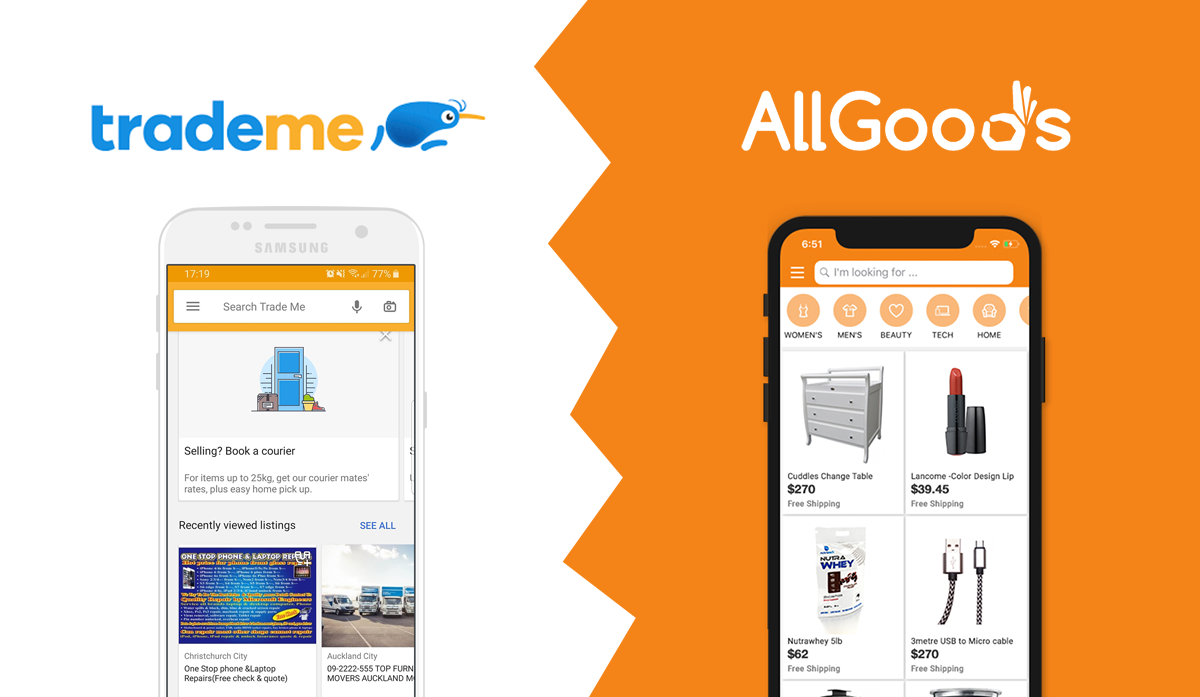
    AllGoods, a free marketplace for Kiwi buyers and sellers, has announced it has reached its one-millionth listing, 12 months after launching.

    The TradeMe competitor said it has maintained steady growth over the past few months. Its app has also become the top New Zealand shopping app since it was released late last year, it said.

    “We’ve worked extremely hard over the past year to get where we are today,” said Levi Fawcett, AllGoods CEO. “We’ve talked with thousands of our users to make sure the platform provides a truly amazing buying and selling experience. Plus, it’s free.”

    The Christchurch-based startup said it already supports over 700 New Zealand businesses who sell through the online website and app. The company said it is their vision to use e-commerce as a sustainable means to support local businesses and give back to the community.

    “We’re offering a fresh spin on the classic online marketplace and while we have only just begun this journey, we look forward to the years to come,” Fawcett said.

    With Trade Me’s recent sale to British equity firm Apax Partners, AllGoods is now considered the largest Kiwi-owned marketplace in New Zealand.

    In October last year, AllGoods launched a new app for iOS and Android mobile devices.

    Features of the new app include easy listings and browsing, allowing users to post items in less than 30 seconds, and a built-in chat tab to get faster answers to questions on the site.

    “The team has tried to keep the platform as easy to use as possible, for both the everyday Kiwi and the average New Zealand business,” Fawcett said. “I think this has been fundamental to our success.”

  • H&M and Indian marketplaces Collaboration

    H&M and Indian marketplaces Collaboration

    Swedish fast-fashion label H&M is partnering with Indian marketplaces Jabong and Myntra to sell online.

    The association with the two local partners is structured to meet Indian regulations forbidding marketplaces from forming exclusive associations with brands, despite both Flipkart-owned e-commerce firms owning full online rights to eight global fashion brands.

    The Swedish retailer has been trading online in the country for around one year. The new Indian deal – the brand’s second territory permitting online trade on an external platform after China – will allow Jabong and Myntra exclusive access to the brand’s online sales for a period of six years.

    H&M items are expected to begin trading on the Jabong and Myntra Indian marketplaces within three to four months, while the brand makes preparations to open physical stores within India.

  • UOB Launches Comparison Website for Utilities

    UOB Launches Comparison Website for Utilities

    United Overseas Bank on Monday launched Singapore’s first online utility marketplace by a bank, as part of the Open Electricity Market initiative. United Overseas Bank (UOB)’s utility marketplace will add to an existing array of comparison websites under Singapore’s Open Electricity Market initiative by the Energy Market Authority. Featuring 10 utility providers on a single website, customers can now search and sign up for the best deals for electricity, gas, water, broadband and TV services.

    With utility bills making up an average of about 10 percent of monthly household expenses, we want to help people stretch their household budget, said Jacquelyn Tan, UOB’s head of personal financial services Singapore in a media statement.

    With more than 50 different plans offered by electricity retailers under the Open Electricity Market rollout, Singapore consumers could find it time-consuming to find the right electricity plan.

    The UOB Utility Marketplace aims to make it easy for consumers to compare providers and plans through its Electricity Price Plan Recommender. Users simply need to indicate if they prefer a fixed price or discounted price plan, their preferred subscription tenure, and their monthly electricity bill budget.

    A list of suitable electricity plans and potential savings will then be generated based on their selection. Consumers are then directed to the electricity partner’s website to sign up for their plan of choice. In all, the process takes less than 10 minutes to complete, the bank said.

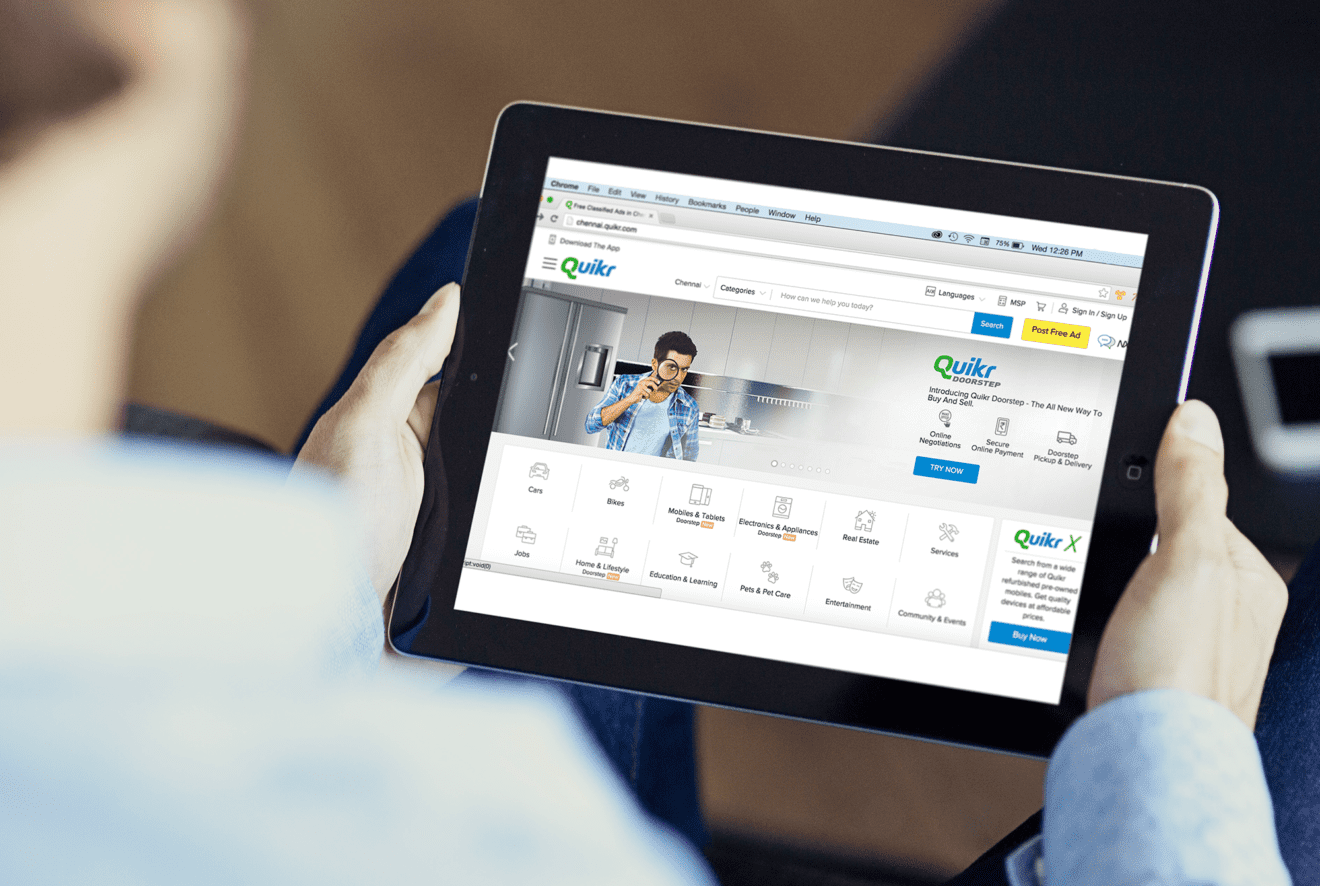
  • India’s Quikr Acquires Zefo marketplace

    India’s Quikr Acquires Zefo marketplace

    Indian online classifieds site Quikr has bought refurbished goods marketplace Zefo, headquartered in Bangalore.

    The acquisition allows an exit strategy for Zefo’s current investors, including Sequoia Capital, and gives Quikr a pathway to expand and strengthen its pre-owned product range.

    Zefo, has a portfolio of more than 10,000 products in four cities, including Bengaluru, Mysore, Delhi NCR and Mumbai.

    “With Quikr and Zefo as a combined entity, we will be able to offer a broader selection of products at even more competitive prices along with as strong a focus on quality,” said Quikr founder and CEO Pranay Chulet.

    “With this transaction, the capabilities we have built and the offerings we have honed can now be offered to Quikr’s large customer base,” said Zefo CEO Rohit Ramasubramanian.

  • Food brands team up on Tmall in New Zealand

    Food brands team up on Tmall in New Zealand

    Some of New Zealand’s most popular food and beverage brands now have direct access to Chinese customers through a new flagship on the online marketplace, Tmall.

    The online flagship, which opened last week, is the result of a joint venture between Tmall Fresh and New Zealand Food Basket Ltd, a consortium of 18 food and beverage brands.

    “It will significantly improve our reach and shorten the supply chain in a way that each brand couldn’t achieve alone,” Nicola O’Rourke, chairperson of the consortium, said.

    Nine brands were available for sale at launch – Babich, Vogel’s, Rockit, Future Cuisine, Pāmu, Zealong, Fiordland Lobster and Oha Honey – while the remaining nine brands are set to begin selling on the marketplace in June.

    They include Zespri, Sanford, Lewis Road Creamery, Kāpiti, Sealord, Alliance, Shott Beverages, Wild Catch and Cherri.

    Tmall is owned and operated by Alibaba, China’s biggest e-commerce company, with nearly 700 million monthly active users.

    The flagship store is expected to boost awareness of the brands in a market where demand for New Zealand products is high, but it can be difficult for even big companies to get cut-through.

    “Together, we want to help these brands deepen their engagement with the Chinese consumer, so shoppers in China can gain a greater appreciation of the premium high-quality products that New Zealand offers,” Maggie Zhou, Alibaba’s managing director for Australia and New Zealand, said at the signing ceremony in Shanghai last week.

    According to New Zealand’s official data agency, Stats NZ, in 2018, China was the country’s single-biggest export market, accounting for around one in every five dollars of sales of goods and services.

    At $16.6 billion, New Zealand’s export to China for the year ended September 30, 2018, was $2.6 billion more than Australia and nearly double the sales to the US.

  • Carousell raises US$56 million from Naspers

    Carousell raises US$56 million from Naspers

    Singaporean m-commerce platform Carousell has raised US$56 million from Naspers, the parent company of the Philippines’ online marketplace OLX.

    As part of the deal, Carousell will also acquire OLX Philippines, with the transaction due to be completed by the second half of this year.

    OLX Group will own a 10 per cent stake in Carousell, and values the company at “over US$550 million,” the firm says.

    The merger will give Carousell a boost in the Philippines and across Southeast Asia.

    Currently featuring 196 million listings Carousell has sold some 71 million items since it was founded in 2012. The company says it wants to continue improving predictive features like smart listings, personalised browsing, chat experiences and price-suggestion functions.

    The firm has raised approximately $170 million to date, and expects a valuation of $1 billion, in the near future.

    Carousell operates in Malaysia, Indonesia, the Philippines, Hong Kong, and Taiwan.