Retail News CRM

Tag: merge

  • Yamada and Edion Set to Merge, Establishing Japans Largest Electronics Retail Empire

    Yamada and Edion Set to Merge, Establishing Japans Largest Electronics Retail Empire

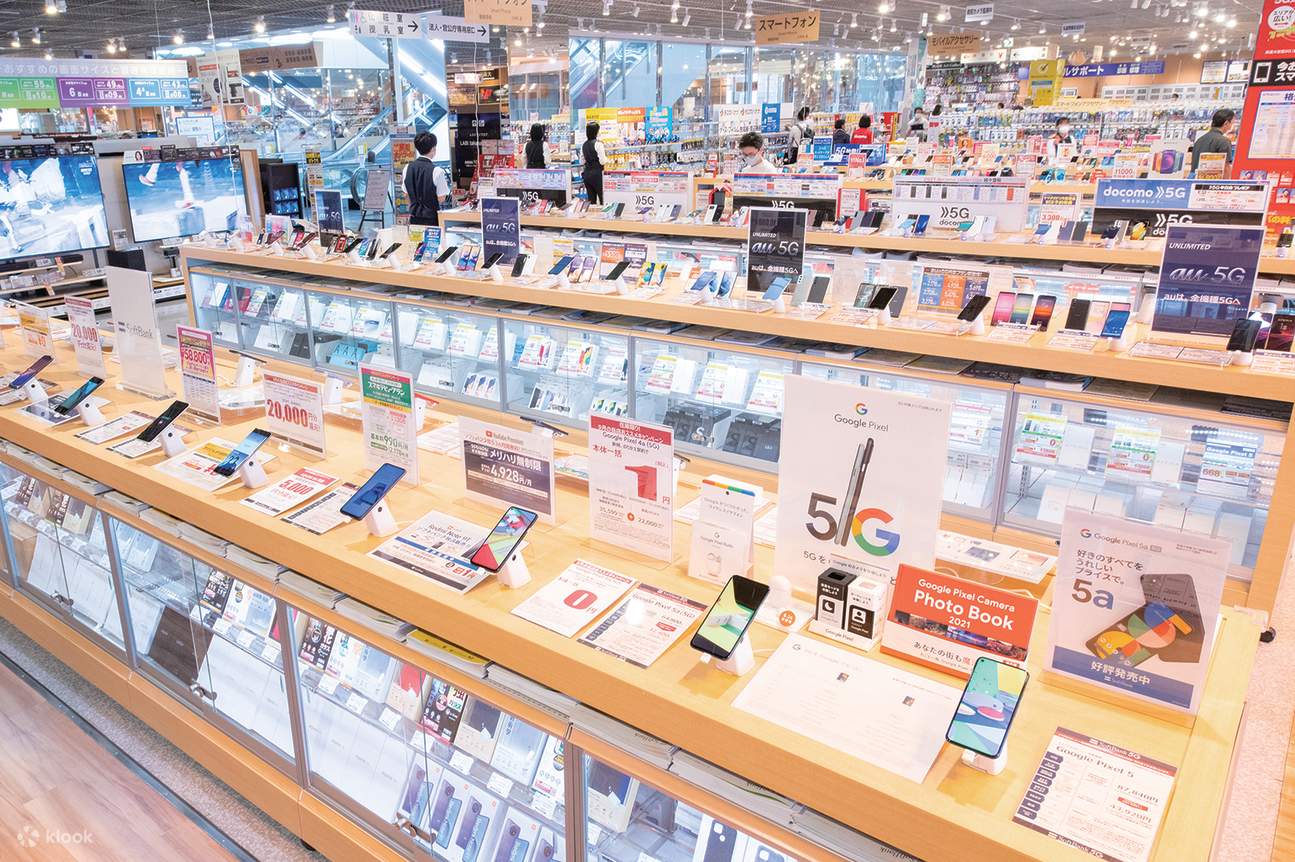
    Yamada Holdings, Japan’s premier consumer electronics retailer, is scheduled to merge with its competitor, Edion. This amalgamation is set to form Japan’s most extensive electronics retail conglomerate with an estimated annual turnover reaching 2.5 trillion yen (equivalent to roughly US$16 billion).

    The companies are due to formalize an initial agreement in the imminent week. The integration is projected to be orchestrated through a holding company, which will enable both retailers to maintain operations under their established brand names.

    Market Consolidation

    The merger would offer a combined sales volume more than twice that of their competitor, Bic Camera. This is a significant move towards further consolidation in a market experiencing slowed growth amidst escalating competition.

    During the fiscal year that concluded in March, Yamada reported sales of approximately 1.69 trillion yen (about US$10.5 billion), while Edion’s revenue was 793.7 billion yen (almost US$5 billion). United, these retailers would be listed among Japan’s most significant retail groups, trailing only Aeon, Seven & I Holdings, and Fast Retailing.

    The anticipated merger is intended to enhance scale, procurement capabilities, and product development abilities. In a bid to differentiate themselves, retailers are increasingly focusing on exclusive products and private-label offerings rather than merely competitive pricing.

    Expansion of Private-label Offerings

    Both companies have been broadening their private-brand product ranges. Yamada has unveiled an expanding range of private-label appliances, including an attractively priced front-loading washing machine that debuted last year.

    Simultaneously, Edion has made private-label products a strategic priority, introducing home appliances with unique designs aimed at the younger demographic.

    In 2012, Yamada Denki invested 10 billion yen to secure a controlling interest in competitor Best Denki.

    Questions & Answers

    What is the primary goal of the proposed merger between Yamada Holdings and Edion?
    The merger aims to boost scale, increase purchasing power, and enhance product development capabilities, with a focus on exclusive merchandise and private-label offerings.

    How will the merger impact the existing brands of both companies?
    The merger is expected to be structured through a holding company, allowing both Yamada Holdings and Edion to continue operating under their pre-existing brand names.

    How have Yamada Holdings and Edion been expanding their product ranges?
    Both companies have been focusing on expanding their range of private-label products. Yamada has introduced a variety of such appliances, while Edion has been producing uniquely designed home appliances targeted at younger consumers.
  • Tigerair and SilkAir were merged into Scoot and Singapore Airlines

    Tigerair and SilkAir were merged into Scoot and Singapore Airlines

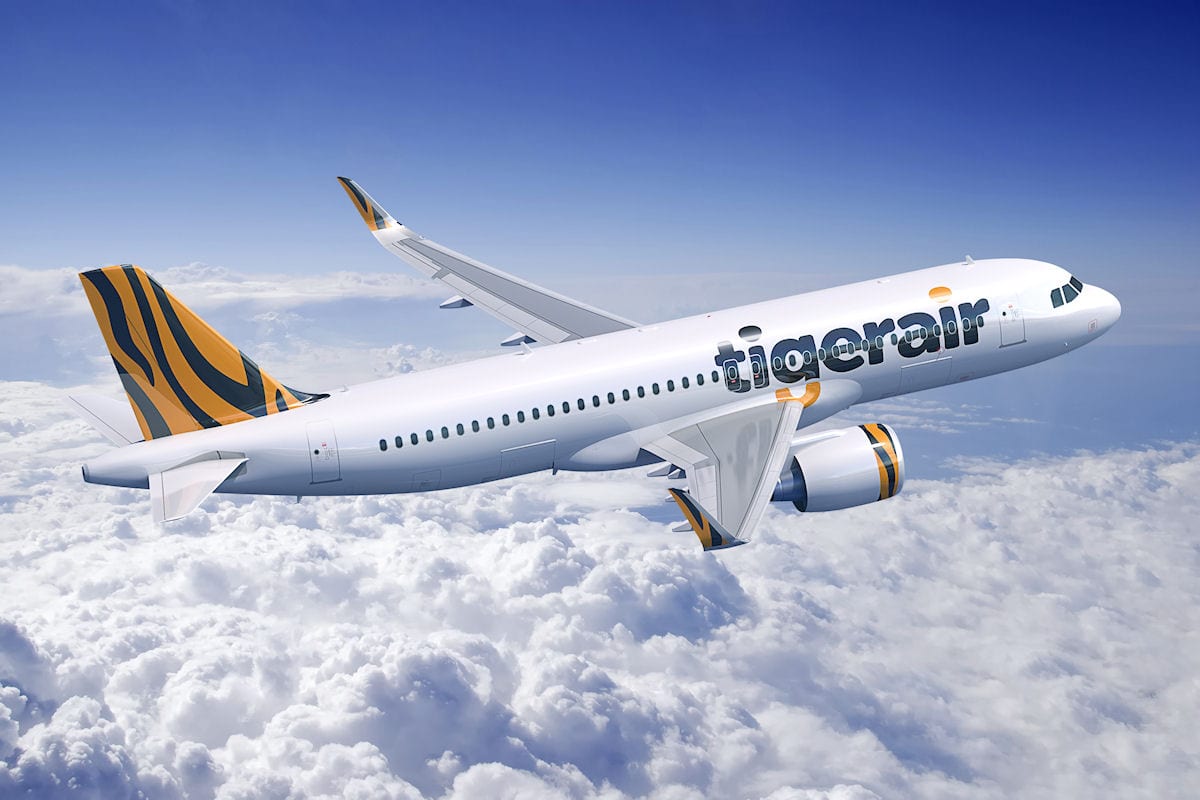
    Creating a more simple model was the main motivation behind Singapore Airlines whittling the number of its brands from four – Scoot, Tigerair, SilkAir and Singapore Airlines to just two: Scoot and Singapore Airlines.Singapore Airlines CEO Goh Choon Phong spoke about the reasons driving the consolidation of its brands during a session discussing the portfolio strategy of the airline at the first Skift Forum Asia.

    In response to a question from Skift airline weekly editor Madhu Unnikrishnan on the decision to wind down SilkAir, Goh pointed to the fact that SIA at one stage had four airline brands – two low-cost carriers (Tigerair and Scoot) and two full-service airlines (Singapore Airlines and SilkAir) across short, medium and long haul routes. He said, “It was not the most efficient way to address connectivity.”

    And so the decision to merge Tigerair into Scoot and SilkAir into Singapore Airlines to “simplify the model”, said Goh.

    Asked whether SIA was contemplating a more premium offering under the Scoot brand, Goh said: “Our model is to keep things pure. Singapore Airlines and Scoot offer two ends of the spectrum. We can compete and win in those segments.

    “Anyone in between will have a hard time.”

    Goh also addressed why SIA first opted to start a low-cost offering. He said: “10 years ago, we realized low-cost carriers were a structural and not a cyclical change.

    “We decided to be involved for two key reasons: without a low-cost carrier, we could not participate in that growth.

    “Also, they made it difficult for us to operate as a short-haul carrier. There were many hugely successful examples of full-service airlines setting up low-cost options. Most of these were done to serve smaller cities.”

    Given Singapore’s city-state status, this was not an option, said Goh, who added that Scoot was created to work as seamlessly as possible with the main brand. It was the right decision on hindsight. Goh pointed out that low-cost carriers now accounted for over 50% of traffic in the region.

  • US DOJ likely to reject T-Mobile and Sprint merger

    US DOJ likely to reject T-Mobile and Sprint merger

    One year after US operators T-Mobile and Sprint finally finished the preliminaries and announced a merger, the proposed deal is under fire. Few ever thought the deal would get through regulators unscathed, but now we’re finally getting to the details.

    DOJ has told the two carriers that it is ‘unlikely’ to approve the deal as currently structured, or at least people at the DOJ involved in the approval did, as this doesn’t appear to be a formal thing. The news adds to a growing list of regulatory objections from the states and from the FCC.

    T-Mobile CEO John Legere is disputing the reports, and there is certainly sufficient motivation to adjust the deal enough to push it through. However, there is enough doubt right now that the markets didn’t take it well and sent the stock of both companies falling.

    Perhaps like AT&T did for the Time Warner deal they will at some point take things to the courts.

  • Amazon mulls taking over Toys R Us

    Amazon mulls taking over Toys R Us

    Bloomberg reports the bankrupt toy retailer is in talks with the e-commerce giant over the future of an unspecified number of stores which could be converted to Amazon’s growing portfolio of offline retail spaces. The company recently acquired grocery chain Whole Foods, which has 450 sites, and has been opening physical book stores in selected US markets.

    Toys R Us US is closing down more than 700 stores, many of which have moderate- to large-sized footprints suited to bulky goods or grocery retailing.

    Bloomberg’s sources said Amazon is not interested in the Toys R Us brand but sees opportunities to use physical stores to deliver online purchases faster. It may possibly use the sites to demonstrate its Alexa voice-activated technology.

    Amazon has previously negotiated taking over Radio Shack stores after that chain collapse, but no deal was reached.

  • CCI clears Vodafone-Idea merger

    CCI clears Vodafone-Idea merger

    The Competition Commission of India has approved the proposed merger between Indian operators Vodafone India and Idea Cellular, which would create the market’s largest mobile operator by subscribers.

    The regulator has cleared a proposal that would see Vodafone initially holding a 50% stake in the combined company, Idea’s major shareholder the Aditya Birla Group holding 21.1% and public shareholders owning 28.9%, the Economic Timesreported.

    Under the plan, Vodafone would then sell a 4.9% stake in the combined operator to the Aditya Birla Group for 39 billion rupees ($605.8 million) in cash upon completion of the merger.

    But both companies still require approval from the Securities and Exchange Board of India, which is investigating whether the deal would trigger an open offer under India’s takeover regulations.

    These rules require entities acquiring at least 25% of a listed company to make an open offer for an additional 26% from public shareholders.

    The proposed $23 billion merger between Vodafone and Idea Cellular was first announced in March. The combined company will have nearly 400 million subscribers and a revenue market share of around 40%, dethroning Bharti Airtel as the current market leader.

    High debts accumulated from spectrum purchases and the entry of Reliance Jio Infocomm into the market with its deep pockets and disruptive pricing have triggered a wave of consolidation in India’s telecoms sector. Reliance Communications and Aircel are also pursuing a merger, while Bharti Airtel  last month secured required approvals to acquire Telenor India.

  • Vodafone India, Idea to merge into India’s top cellco

    Vodafone India, Idea to merge into India’s top cellco

    India’s second and third ranked mobile operators, Vodafone India and Idea Cellular, have revealed plans to merge to create the India’s largest operator by market share.

    The companies have announced that Vodafone will combine its Vodafone India subsidiary with Idea Cellular in a deal worth around $23 billion.

    The combined company will have around nearly 400 million subscribers and is expected to have a revenue market share of around 40%, propelling it ahead of current market leader Bharti Airtel.

    Under the terms of the agreement, Vodafone will take a 45.1% stake in the combined company while the owner of the Idea brand – the Aditya Birla Group – will have about 26%.

    Vodafone will transfer a stake of around 4.9% of the company for around 39 billion rupees ($579 million) as part of this transaction, and there will be a mechanism in place designed to equalise the shareholdings within four to nine years. Until this takes place, the voting rights will be equalised.

    The marger excludes Vodafone’s 42% stake in Indus Towers, the joint venture established between the Bharti Group, Vodafone India and Idea Cellular to manage the operators’ tower infrastructure.

    “The combination of Vodafone India and Idea will create a new champion of Digital India founded with a long-term commitment and vision to bring world-class 4G networks to villages, towns and cities across India,” Vodafone Group CEO Vittorio Colao commented.

    “The combined company will have the scale required to ensure sustainable consumer choice in a competitive market and to expand new technologies – such as mobile money services – that have the potential to transform daily life for every Indian. We look forward to working with the Aditya Birla Group to create value for all stakeholders.”

    Meanwhile fellow Indian operators Reliance Communications (RCom) and Aircel are one step closer to executing their planned merger.

    RCom announced in a regulatory filing that it has secured approval from the Competition Commission of India for the proposed merger, which was announced in September last year.

    The companies have already secured approval from the Securities and Exchange Board of India as well as the BSE and NSE stock exchanges, but still requires the go-ahead from the National Company Law Tribunal.

    Under the terms of the planned merger, RCom and Aircel parent Maxis Communications will each hold 50% of the combined company.

  • India’s RCom to merge with Aircel

    India’s RCom to merge with Aircel

    India’s Reliance Communications has arranged to merge its mobile business with rival Aircel to create one of India’s top four operators by customers and revenue.

    The deal is expected to be the largest ever consolidation in the Indian telecoms sector, RCom said in a stock exchange statement.

    Under the arrangement, RCom and Aircel’s parent company, Malaysia’s Maxis Communications, will combine their Indian mobile assets to form a 50:50 joint venture. Both RCom and Maxis will have equal board representation.

    The transaction is expected to take place in 2017. Through the deal RCom expects to reduce its overall debt by around $3 billion, or over 40% of its total, while Aircel expects to cut its debt by $600 million.

    The merged company will have the second largest spectrum holding among all Indian operators, with 448 MHz aggregated across the 850-MHz, 900-MHz, 1800-MHz and 2100-MHz bands. It will be a top three operator in 12 key cities.

    “We are delighted to have taken the lead in consolidation of the Indian telecom sector, first with RCom’s acquisition of the wireless business of SSTL, and now, with the combination of our business with Aircel in a 50:50 Joint Venture with [Maxis],” Reliance Group chairman Anil Ambani said.

    Maxis commented that the company has invested over $5.2 billion in Aircel since acquiring the company in 2006, marking one of the largest foreign investments in India.

    RCom’s data center, fiber and related infrastructure operations will remain separate following the merger. The deal still requires shareholder and regulatory approvals.