Retail News CRM

Tag: metro Cash & Carry

  • Keppel in joint venture for first commercial development in India

    Keppel in joint venture for first commercial development in India

    Keppel Land, the property subsidiary of Singaporean conglomerate Keppel Corporation, is in a partnership to develop its first commercial property in India.

    The group has acquired a well-located 3.09ha site from Metro Cash & Carry India in Yeshwanthpur through a majority 51:49 joint venture with Indian property developer Puravankara.

    The total consideration of INR 4.05 billion (US$81 million) includes the cost of $16 million for the construction of a 160,000sqft retail/office complex. The total development cost, including the land, is $207.4 million.

    Yeshwanthpur is 5km northwest of central Bangalore, one of the primary hubs for the technology industry in India. The area is among the largest and fastest-growing office markets in the country.

  • Metro Cash & Carry India to open smaller stores to expand quickly

    Metro Cash & Carry India to open smaller stores to expand quickly

    The German discount wholesaler is about to open its 27th store in the market which will be just 40,000sqft in size, far smaller than the 75,000-100,000sqft format of most existing stores.

    The new compact store in Ghaziabad follows another of similar size in Nasik.

    Arvind Mediratta, CEO and MD of Metro Cash and Carry India, says going forward new stores will be between 40,000sqft  and 50,000 sqft. “We are doing away with bigger stores in the range of 75,000-100,000sqft,” he said.

    The smaller footprint has also been necessitated by a lack of development sites: a 100,000sqft store requires about eight acres of land, an area not easy to find in cities.

    “The store format of 40,000sqft is easy to scale up,” Mediratta said in an interview. “A lot of people think more space means more sales. Customers don’t come to you more often because you have a bigger store.”

    Metro Cash and Carry India is targeting 50 stores by 2020, but given the move to smaller outlets, that number may be surpassed, said Mediratta.

    “[But] we don’t want to get into reckless expansion. In our business, to make money the cost of real estate has to be right. It is not just about the availability of the real estate but it has also to be at the right price,” he said.

  • Metro China changes track

    Metro China changes track

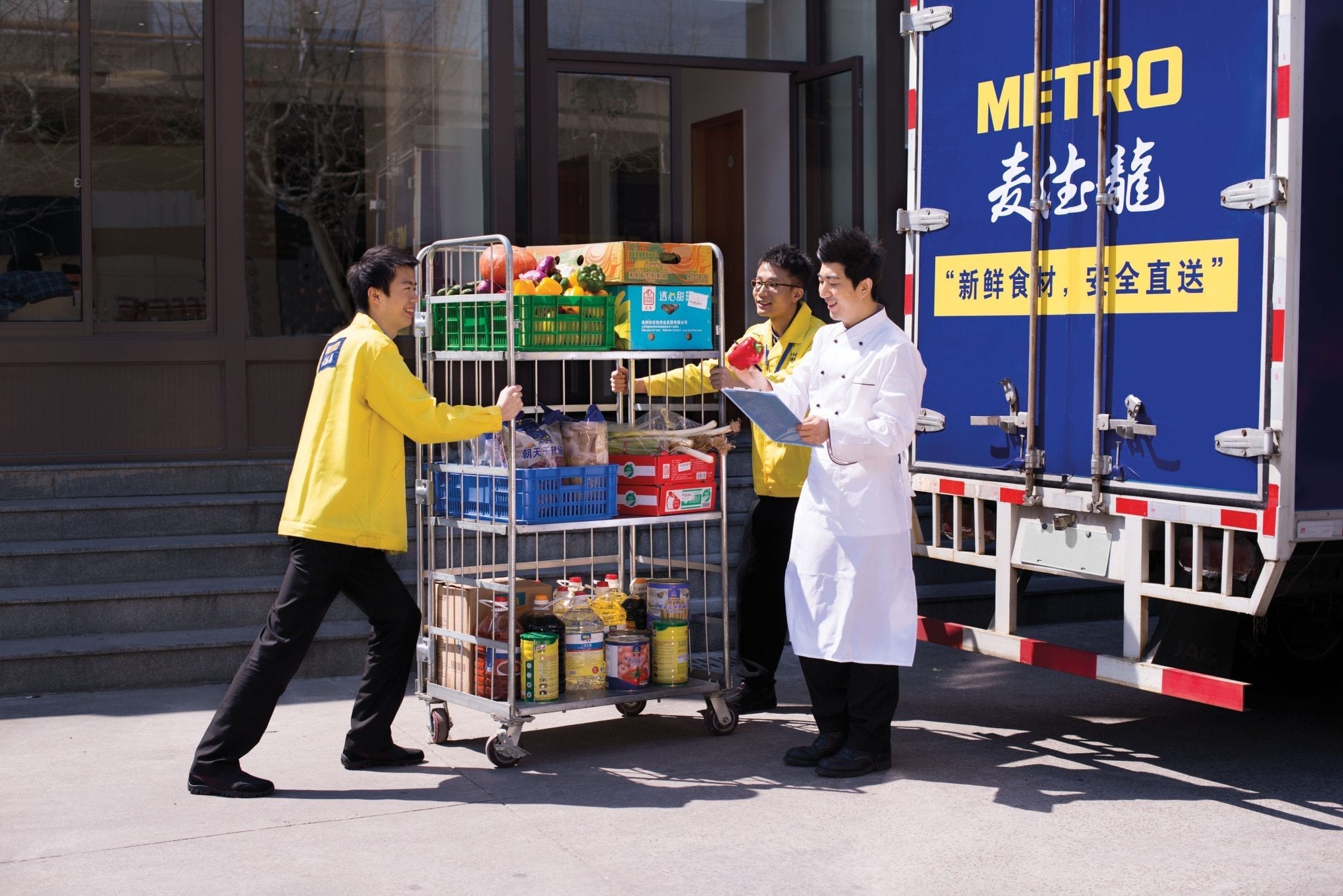
    Surging property costs and a changing consumer landscape have forced German retail giant Metro Group to change its approach to the market in China.

    In the 20 years since it opened its first Metro China wholesale store in Shanghai, the retailer has had a rigid policy of building its Metro Cash & Carry stores rather than renting.

    Now, in Wuhan, the capital of central China’s Hubei province, Metro is trying to redevelop one of its stores into its first shopping complex.

    “We are partly turning to asset-light from asset-heavy,” says expansion director and head of project development for China Geoffrey Guo. Metro Jinjiang Cash & Carry, a JV with Shanghai-based Jinjiang Group, has partnered with a local developer to build the Wuhan project, and has transferred property ownership to the developer. The plan is to expand the outlet into a 167,000 sqm German-themed town comprising a mall, office buildings and apartments.

    The complex will include a smaller cash-and-carry shop, and Metro will buy back the store ownership. Meanwhile, it will participate in running the complex and try to introduce German brands through tenant leasing.

    “Some of our land used to be in remote areas, but after a decade or two it became the city centre,” says Guo, “so we need to negotiate with local governments and change our plan.”

    City plans

    As well as Wuhan, Metro China is considering redeveloping some of its stores in Shanghai and other cities into five-star hotels, office buildings or neighbourhood centres.

    Metro has grown slowly in China compared to its peers, opening 86 stores in 58 cities so far, about two-thirds of them owned by the company. In comparison, US-based Walmart has 423 stores in China.

    With the rise of eCommerce, the German retailer has started renting more stores in the past few years to enable quicker expansion. It also launched its first two My Mart convenience stores in Shanghai this year.

    “The demand for supermarkets is not so strong in places like Shanghai, where convenience stores are thriving,” says Guo.

    My Mart offers Metro’s exclusive imported products, private-label lines and fresh fruits, as well as about 100 ready-to-eat items. Metro plans to roll out the concept to other cities in China through franchise.

    While Guo says Metro’s focus will always be its wholesale stores, the company is seeking to open more stores in western Chinese cities such as Xi’an and Zhengzhou.

    Metro’s sales in China climbed 17.4 per cent to €2.662 billion (US$2.8 billion) in the year to September 2015.
  • Vietnam’s retail lures foreign capital because of urban population growth

    Vietnam’s retail lures foreign capital because of urban population growth

    JLL released a brief report on Asian and European retailers ready to penetrate the market of more than 90 million people.The report pointed out evidence of the expansion of foreign retailers in Vietnam’s market.

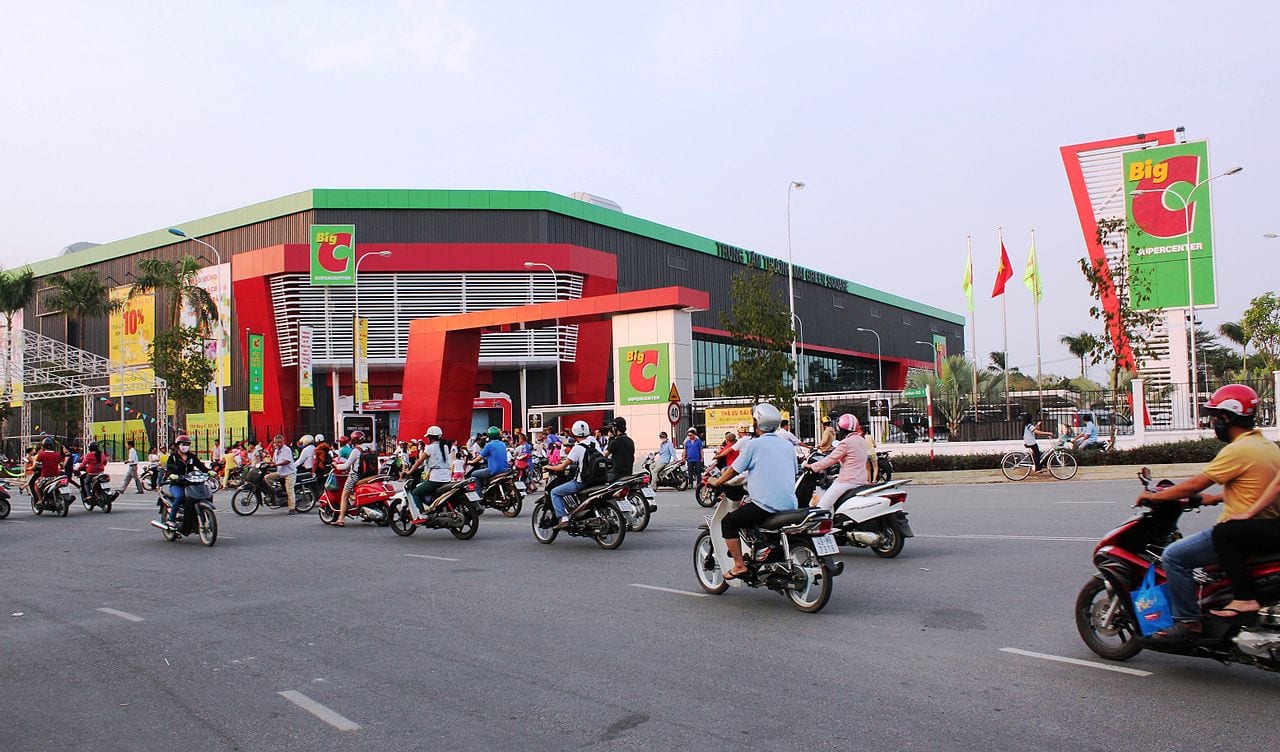
    At the end of 2014, Berli Jucker Plc (BJC) acquired Metro Cash & Carry Vietnam at the cost of 655 million euros, the largest ever M&A deal at that time, which signaled the penetration into Vietnam’s retail market of Thai groups.

    Shortly after, another giant from Thailand – the Central Group – acquired Nguyen Kim – one of the leading electronics retailers in Vietnam and then Big C.

    In October 2015, Emart – Korean leading retailer – inaugurated a $60 million shopping mall in north Saigon, where another Korean retailer – Lotte Mart – has been successful with 11 supermarkets and expects to increase the number to 60 stores by 2020.

    Most Japanese investors see the success of Aeon in Vietnam as a positive sign for foreign projects. Aeon has opened four trade centers in Vietnam and aims to increase the number to 20 in 2020. By July 2016, another retail giant from Japan –  Takashimaya – opened at Saigon Centre.

    Simply Mart openedthree more stores in Saigon; AuchanSuper – the retail brand from France – also plans to launch another 17 supermarkets by the end of next year in HCM City and 20 stores by 2020 in the north.

    Major fashion brands like Gap, Mango, and Topshop have become the first choice of many young people in Vietnam. In early September this year, Zara opened its first flagship store in HCM City. At the same time, H&M is completing procedures to open its first store in Vietnam early next year.

    According to JLL, a young demographic and high growth potential are the factors attracting foreign investors to Vietnam’s retail market.

    With a population of over 90 million people and 70% of people aged from 15 to 64 and the anticipated annual growth rate of urban population of 2.6% in 2015 – 2020 period, the highest growth rate in Southeast Asia, Vietnam’s retail market is very attractive to foreign investors.

    Increasing disposable income, urbanization rate and living standards have made Vietnam one of the most most dynamic emerging economies in Southeast Asia.

    According to Boston Consulting Group, the upper and middle class in Vietnam are growing at the fastest pace in the region and this number is expected to double from 12 million in 2014 to 33 million in 2020. With income of VND15 million ($700)/month, the consumers of these classes are potential customers for retailers.

    In addition, Vietnam’s e-commerce boom has also contributed to the growth of the retail market.

    A Nielsen report said that that 9 out of 10 consumers in Vietnam (91%) owned smartphones, compared to 82% in 2014.

    Na Son