Retail News CRM

Tag: music

  • The music streaming competition just got Started

    The music streaming competition just got Started

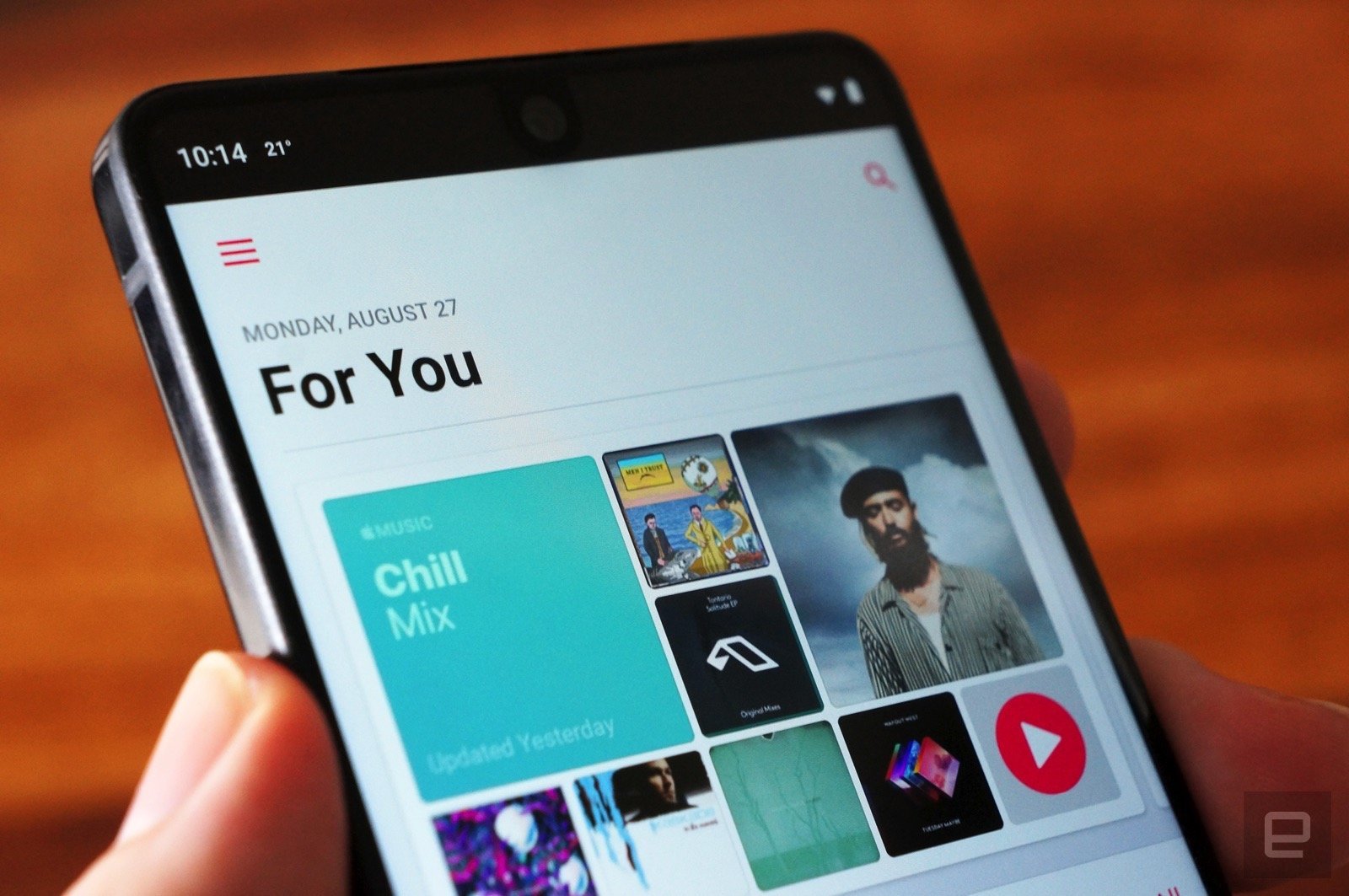
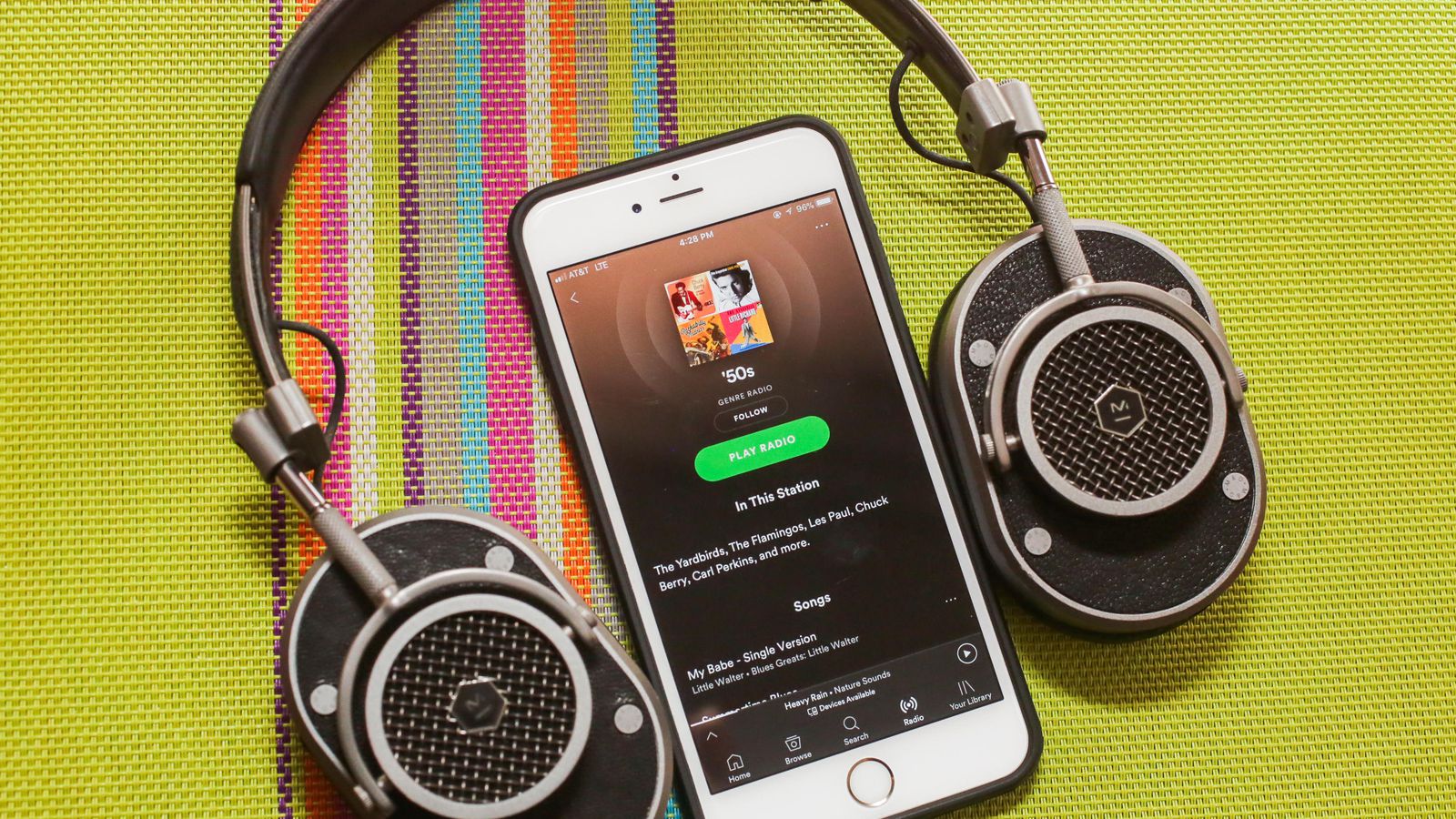
    There is no shortage of players in the music streaming space and the metrics used to determine success are also pretty complex, but from one metric Apple Music just passed Spotify, but it’s too early to say for sure what this means for either company. Even so, it appears to cement Apple Music as a major player in the music streaming space.

    Apparently, in the month of February, Apple Music passed Spotify in terms of paid U.S. users for the first time ever. Apple Music counted 28 million paid subscribers in the U.S. while Spotify had just 26 million, and Apple Music had a faster growth rate than Spotify. That seems good, but for full context there are a few things to keep in mind. First and foremost, Apple Music doesn’t even have a free tier for subscribers, so that 28 million is essentially the entire U.S. user base for Apple Music (not counting anyone on a free trial.) Spotify does have a free/ad-supported version and taking that into account, Spotify does have more users in the U.S. than Apple. The ad-supported tier doesn’t generate as much money for Spotify but it does add up.

    Beyond all that, we’re sorry to say but the U.S. is only one country in the world and Spotify has almost twice as many paid subscribers globally as Apple Music does (98 million to 50 million as of December). And, that gap gets considerably bigger once you include the ad-supported tier which bumps Spotify’s user base to more than 200 million.

    Of course, music streaming is Spotify’s entire business, whereas Apple Music is one service offered by the behemoth. Any paid subscribers Apple gets is just gravy, whereas that’s the lifeblood of Spotify. Still, it’s something to keep an eye on going forward.

  • Adidas and Beyonce Relaunch in Ivy Park

    Adidas and Beyonce Relaunch in Ivy Park

    Adidas and Beyonce are teaming up to relaunch the superstar’s Ivy Park label.

    The sportswear firm has announced a multi-layered partnership with the performer to “inspire and empower the next generation of creators; drive positive change in the world through sport; and identify new business opportunities”.

    “This is the partnership of a lifetime for me,” said Beyonce. “Adidas has had tremendous success in pushing creative boundaries. We share a philosophy that puts creativity, growth and social responsibility at the forefront of business. I look forward to re-launching and expanding Ivy Park on a truly global scale with a proven, dynamic leader.”

    The partnership will result in the co-creation of new products – from performance to lifestyle – and a unique purpose-driven program focused on empowering and enabling the next generation of athletes, creators and leaders.

    According to a joint statement, meaningful and rich storytelling will be the foundation for both Beyonce’s collection with Adidas as well as the re-launch of her Ivy Park brand.

    “As the creator sports brand, Adidas challenges the status quo and pushes the limits of creativity through its open source approach,” said executive board member – global brands Adidas Eric Liedtke.

    “Beyonce is an iconic creator but also a proven business leader, and together we have the ability to inspire change and empower the next generation of creators.”

  • Spotify and Apple Music were very important to the music industry Last Year

    Spotify and Apple Music were very important to the music industry Last Year

    It’s okay to dance now that the 2019 IFPI Global Music Report is out. The report from The International Federation of the Phonographic Industry shows that a 32.9% increase in paid streaming revenues helped drive a similar increase in total streaming revenue last year. Streaming now accounts for 46.9% of the music industry. Overall, the global music market increased its top line by 9.7% last year to $19.1 billion and revenue from streaming music came to $8.9 billion, up from $6.7 billion in 2017. Streaming was obviously very important to the music industry during 2018. That is especially true since last year music downloads and physical music sales declined 21.2% and 10.1%, respectively.

    As 2018 came to an end, there were 255 million people around the world paying monthly for streaming music. The leading provider globally was Spotify, with 87 million paying subscribers. Apple Music came in second. In the U.S., growth in streaming music revenue came to 33.4% last year, while sales of physical music (records, CDs) declined 22.1%. In the states, the fastest growth came from the paid streaming segment.

    “Streaming revenues, particularly from paid subscriptions, continued to grow in 2018, with all regions posting growth in this area. Overall, growth trends were more diverse across different markets.”-IFPI

    The top two music streamers in the world, Spotify and Apple, are at odds over the 30% that Apple charges Spotify subscribers who pay monthly through the App Store. As we told you last month, Spotify has filed a complaint with the European Commission over this so-called “Apple Tax.” This is why individual Spotify subscriptions cost $12.99 on the App Store as opposed to the usual $9.99 price. With Apple Music available from the iOS app storefront for only $9.99 a month, Spotify claims Apple is giving its own music streaming app a major advantage.

  • Rimowa x Bang & Olufsen crossover link between Adventure and Sound

    Rimowa x Bang & Olufsen crossover link between Adventure and Sound

    Rimowa has announced its first collaboration with luxury audio and lifestyle brand Bang & Olufsen.

    In their first Rimowa x Bang & Olufsen crossover, the two firms have created a pair of limited-edition Beoplay H9i headphones designed to characterise the brands unique approach to style, fashion and functionality.

    “Rimowa and Bang & Olufsen share a passionate approach to purposeful and elegant design,” said Rimowa CEO Alexandre Arnault. “Both of them celebrate aluminium in their products. To strengthen the natural relationship between sound and travel, we have proudly partnered to create the Rimowa x Bang & Olufsen Beoplay H9i headphones.”

    “For more than 90 years, Bang & Olufsen has striven to be more than an audio company, a brand that stimulates people’s lives through a passion for sound, design and craftsmanship,” said Bang & Olufsen executive VP, brand and markets, John Mollanger.

    “With Rimowa being much more than a luggage company – a brand that makes travel an art and that disrupts its own marketplace – we are honoured and proud to have an ideal partner. The first materialisation of our collaboration, the Rimowa edition of our flagship Beoplay H9i headphones and exclusive Rimowa carrying case, will make the world travel at the speed of sound.”

    The limited edition headphones will be available at HKD7250 (US$923.50) starting April 15 in select Rimowa and Bang & Olufsen stores as well as online at bang-olufsen.com.

  • YouTube Music update brings option to download music to your phone

    YouTube Music update brings option to download music to your phone

    YouTube Music can’t compete with music players with complex, yet easy-to-access, library management when it comes to local playback, but it’s always nice to know that you have more options.

    Up until recently, you wouldn’t have that choice with YouTube Music, Google’s music streaming service. However, Google released several updates that at some point added a new feature that would allow users to play music files from their phones.

    You’ll be able to play just about any type of file that Google Play Music supported, including MP3, Ogg, WAV, M4A, and FLAC. Using YouTube Music to play music files directly from your smartphone is quite easy. Simply use a file manager to get to where your music is stored and choose YouTube Music as the default music player, or opt to open the file with this app “Just once.”

    It’s unclear whether this is the real deal or just a test since the changes don’t appear in any of the app’s change logs in the Google Play Store, but feel free to check it out. Also, don’t forget to give YouTube Music permission to access photos, media, and files on your device when asked.

  • Spotify is going after couples with Duo plan

    Spotify is going after couples with Duo plan

    Spotify and Apple are engaged in a fierce battle over the domination of the thriving global music streaming market, with many other companies, including Google, Amazon, Pandora, Tidal, and Deezer fighting for scraps and trying to find ways to differentiate themselves in order to rise through the ranks. But at the end of the day, all of these services offer essentially the same features and capabilities with extremely similar pricing structures.

    One great way to stand out is to join forces with other tech giants on sweet bundle deals, either temporarily or indefinitely, thus providing more value than the competition for the user’s money. Or you can simply expand your plans to include something rivals haven’t thought of just yet. Enter Spotify Premium Duo, a new service tier currently available only in Colombia, Chile, Denmark, Ireland, and Poland, according to The Verge, which is likely to spread the love around the world soon if these regional “tests” are deemed successful.

    As the name suggests, Premium Duo mainly targets couples that want to save a few bucks compared to both the prices of two individual subscriptions and a family plan. A single Spotify Premium user can get an account at $9.99 a month in the US right now, while Premium for Family costs $14.99, allowing up to six people to stream music without limits, ads, or interruptions.

    Naturally, Spotify Premium Duo sits between the two globally available options, at a €12.49 monthly fee in Ireland that’s likely to equate to $12.49 stateside if this ever becomes a worldwide thing. Like family plans, Duo licenses will allow users on a shared account to keep their playlists separate, as well as get recommendations tailored to their individual tastes.

    Then again, if you’re one of those couples that likes to do everything together, a new Duo Mix playlist will be regularly updated with music you can both enjoy. Just keep in mind the Spotify Premium Duo plan requires two users to share a home address before gaining access, which the service will verify. That shouldn’t come as a big surprise, as Spotify doesn’t like family plan members to live at different addresses either.

  • Apple Music is rapidly growing in popularity on Android

    Apple Music is rapidly growing in popularity on Android

    Apple unveiled a ton of interesting stuff at a (Hollywood) star-studded event yesterday, but much to the disappointment of iPod Touch fans and potential AirPower buyers, not a single hardware announcement was made on stage in the Steve Jobs Theater during this “Show Time” shindig. While Apple’s focus on the so-called “services” business has sharply increased over the past year or so, it’s safe to assume the company’s TV+, News+, and Arcade platforms wouldn’t have happened were it not for the success of Apple Music.

    Released back in 2015 in more than 100 countries around the world, the music streaming service quickly emerged as the primary challenger to Spotify’s throne. Almost four years later, the global subscriber gap between the two remains pretty large, but Apple Music continues to make great strides in the US, as well as on other platforms apart from iOS.
    After expanding its support to Alexa-powered smart speakers, the service recently crossed an interesting milestone on Android, according to Sensor Tower estimates. Even though the app isn’t exactly well-reviewed in Google’s Play Store, with a mediocre 3.5-star average score based on over 280,000 ratings, a whopping 40 million Android users in total have reportedly tried out Apple Music since its 2015 debut. That’s not bad for something that’s only gained Android tablet compatibility a couple of months back.
    What’s perhaps even more impressive is that quarterly Android installs have apparently begun to surge again after a temporary but steep decline in late 2017 and early 2018. In fact, Q1 2019 could be Apple Music’s best-ever three-month period in terms of Google Play downloads, which are expected to reach 3.8 million by the end of March. That would represent an increase of half a million downloads from the final quarter of last year and an incredible 1.5 million more installs than back in Q2 2018.
    Obviously, it’s unclear how many of these downloads typically end up converting into long-term paid subscriptions, but that figure is also up, so there’s definitely a correlation between the two, even when not taking iOS usage and install numbers into consideration.
  • Apple Music for Android update brings a slight redesign

    Apple Music for Android update brings a slight redesign

    Judging by the reviews left by Android users on Apple Music’s page in the Google Play Store, the app isn’t on par with the iOS version. However, it looks like Apple is making efforts to make the users experience as satisfying as possible.

    The latest update released today brings a slight redesign of the Browse tab and support for more devices. The update adds a new Browse tab that was initially made available on the iOS version of Apple Music.

    The Browse tab contains more editorial highlights which are supposed to make it easier for Apple Music users to find playlists and new music they might like. With the new tab, starting to play music becomes a breeze as it removes a few clicks previously needed.

    The second major change included in the update is support for Chromebooks. If you own one, you’ll now be able to access Apple Music from Chrome OS. Last but not least, Apple mentions that it squashed some bugs as well, so expect fewer issues with the app after you download the update.

  • Apple Music wants to expand your musical knowledge

    Apple Music wants to expand your musical knowledge

    Apple Music doesn’t get a ton of attention compared to services like Spotify, but the service quietly has racked up a ton of subscribers simply due to the fact of Apple’s massive hardware install base. Those subscribers are a diverse set of people from around the globe and now Apple wants to highlight some of that diversity with a new playlist.
    The new Apple Music playlist will be called “Suave” and it will be built around R&B songs in English, Spanish, and Portuguese. The plan is to have a multi-lingual, globally inspired playlist and apparently Apple Music execs were inspired to make the playlist because of the song “Fresh Air” by Melii, which is a pretty catchy tune if you haven’t heard it. The Suave playlist is launching today and will be available worldwide tomorrow.
    Alaysia Sierra, R&B and Hip Hop Programmer for Apple Music, told that the idea was to have the Suave playlist “be the intersection of culture where the music comes first,” because Apple enjoys when music breaks down barriers.
    The plan is to update the playlist with new music weekly with music from artists like by Paloma Mami and Rosalia. Obviously, you’ll need to be an Apple Music subscriber to get the playlist, but the smart money says someone will copy the playlist to Spotify pretty quickly (though we obviously can’t endorse that sort of thing.)
  • Spotify says Apple Music has unfair advantages

    Spotify says Apple Music has unfair advantages

    The founder and CEO of Spotify, Daniel Ek, announced today in a blog post that Spotify has filed a complaint against Apple with the European Commission (EC). The executive says that when it comes to Apple Music and the App Store, the company gives itself an unfair advantage, violating EC antitrust regulations. Ek says that Apple does this through the “Apple Tax.” That is the 30% of monthly subscription fees that Apple takes on subscriptions made through its payment system.

    Ek says that because Spotify is forced to pay the “Apple Tax,” it has to raise its price in the App Store above that of Apple Music. Right now, both music streaming platforms have the same prices. That would be $9.99 a month for individuals, $14.99 a month for families with up to six members, and $4.99 a month for verified students. However, if you choose to pay your subscription fee through Apple (an in-app payment), Spotify charges $12.99 a month for individuals, $16.99 a month for families and $7.99 a month for verified students.

    Apple has released a statement criticizing Spotify for using the App Store to help it grow over the years without making any contributions to that marketplace.” The company refutes some of Spotify’s claims. For example, Apple says that it has allowed Spotify to update the app over 200 times. Apple says it rejected updates when Spotify didn’t follow the App Store rules. Apple also points out that 84% of the apps in the marketplace don’t pay it a dime, and accuses Spotify of wanting all the benefits of a free app without being free.”

    Additionally, the executive says that if it bypasses Apple’s payment system, Apple will limit Spotify’s communications with its subscribers. For example, Ek says that in some cases Apple won’t let it send emails to Spotify users who use the service on an Apple device. He states that “Apple also routinely blocks our experience-enhancing upgrades. Over time, this has included locking Spotify and other competitors out of Apple services such as Siri, HomePod, and Apple Watch.”

    “It’s why, after careful consideration, Spotify has filed a complaint against Apple with the European Commission (EC), the regulatory body responsible for keeping competition fair and nondiscriminatory. In recent years, Apple has introduced rules to the App Store that purposely limit choice and stifle innovation at the expense of the user experience—essentially acting as both a player and referee to deliberately disadvantage other app developers. After trying unsuccessfully to resolve the issues directly with Apple, we’re now requesting that the EC take action to ensure fair competition.”-Daniel Ek, founder, CEO, Spotify

    All Spotify wants, says its founder, is to be treated the same as apps that don’t pay the 30% tax such as Uber or Deliveroo. The executive says that all apps should be able to compete fairly, and Apple Music shouldn’t get an advantage because Apple owns the App Store. He adds that all App Store users should have a choice of payment systems, and not be locked into using Apple’s platform. And Ek says that all app stores should not be allowed to control communications, including marketing and promotions, between services like Spotify and its customers.

    If Apple is eventually found to have violated anti-trust regulations in the EU, it can be slapped with a fine and be forced to make some changes to the App Store.

  • Free Spotify premium service for Samsung Galaxy S10 buyers

    Free Spotify premium service for Samsung Galaxy S10 buyers

    With the Samsung Galaxy S10e, Galaxy S10 and Galaxy S10+ all officially launching today, music streamer Spotify has announced that its Android app will be pre-installed on all three models in the U.S. Additionally, the Spotify app will come loaded out of the box on the Samsung Galaxy Fold, and certain Galaxy A units in the states as well. The latter are mid-range phones offered by Sammy.

    Besides pre-installing the Spotify app on these Samsung Galaxy handsets, state-side users will receive a free six-month subscription to Spotify’s premium U.S. service as long as they are not a current subscriber to the music streamer. While Spotify does offer a free ad-supported tier of service, it does not come with certain features available to premium members. Those features include unlimited skips, and the ability to download music that can be played offline. Premium members can also play any track in Spotify’s library, and songs are streamed in High Quality.

    Spotify normally offers a free 30-day free trial to its premium tier, after which pricing is $9.99 per month. Families with up to six members can pay $14.99 monthly, and students with a verified .edu email address are charged only $4.99 a month.

    Last August, Samsung and Spotify teamed up to take on Apple Music. Spotify became Samsung’s new “go-to music service provider” as it tries to keep its lead over Apple Music world-wide. Launched in October 2008, Spotify has yet to turn a profit and has embarked on a campaign to transition subscribers from its free tier of service to a subscription plan.

  • HMV saved by Sunrise Records, but some stores will close

    HMV saved by Sunrise Records, but some stores will close

    Canadian firm Sunrise Records has emerged as the buyer of collapsed music chain HMV, beating competition including Sports Direct owner Mike Ashley. The firm will buy 100 stores out of administration, securing 1,487 jobs. But 27 stores will close, resulting in 455 redundancies. Sunrise Records chief executive Doug Putman said he was “delighted to acquire the most iconic music and entertainment business in the UK.”

    No price was given.

    Canadian entrepreneur Mr Putman, 34, bought the retail chain Sunrise Records in 2014. He previously bought HMV’s Canadian business in 2017, expanding his small chain into a national operation with 80 outlets.

    Mr Putman is also President of Everest Toys, the largest toys and games distribution company in North America. He said that HMV was a “fantastic, heritage brand”. He also said the chain would be looking to stock more vinyl records, in response to customer demand.

    HMV owner Hilco, which took the company out of its first administration in 2013, has blamed a “tsunami” of retail challenges for the latest collapse.

    These include business rate levels and the increasing use of streaming services to deliver music and movies.

    HMV sold 31% of all physical music in the UK in 2018 and 23% of all DVDs, with its market share growing month by month throughout the year.

    However, the music industry expects physical entertainment sales to shrink by another 17% this year.

    Will Wright, partner at KPMG and joint administrator said: “We are pleased to confirm this sale which, after a complex process, secures the continued trading of the majority of the business.

    “Our immediate concern is now to support those employees that have unfortunately been made redundant.”

  • Love Yourself a BTS-themed coca cola

    Love Yourself a BTS-themed coca cola

    Coca-Cola launched BTS-themed bottles as part of its “Share a Coke” campaign on Monday. The bottles come in seven different designs – each one representing a member of the K-pop boy group – with inspirational messages referencing the group’s song titles. This year, the special Coke bottle labels read in Korean “Your spring day is today,” “I’m fine if it’s you,” “Run like yourself,” “You’re really dope,” “You are my idol,” “Go instead of worry” and “This year is blazing fire.”

    Bottles are also decorated with images of the members’ faces and vivid colors like pink, yellow and green.

    The BTS-themed drinks are available in grocery stores and convenience stores across Korea. They come in 350-milliliter (12-ounce) aluminum cans and 500-milliliter, 1.5-liter and 1.8-liter bottles.

    Coca-Cola in Korea has been launching special edition Coke bottles as part of its Share a Coke storytelling campaign since 2014. The campaign’s goal is to help consumers share hopeful messages with friends and family by exchanging the drinks with one another.

  • HMV Hong Kong collapses

    HMV Hong Kong collapses

    The HMV Hong Kong business has collapsed, with the chain’s owner appointing liquidators. In a statement, HMV Digital China Group chairman Stephen Shiu Jnr said the company was “unable to escape from the crushing force of the wheel of history” as live-streaming services like Spotify and Netflix made CDs and DVDs redundant.

    The company is believed to have debts of HK$40 million and assets – mainly stock – of just $9 million. All seven stores have been closed and 80 staff laid off.

    “The company is under negotiation with the landlords of the settlement plans. HMV Retail has not been generating sufficient revenue to cover its own operating expenses and there is no reasonable prospect of making any significant improvement on its financial performance or operations in the foreseeable future.”

    As reported last week, HMV was facing three legal suits over unpaid rents on stores, totalling $5 million. One of those related to its four-story Causeway Bay flagship.

    After the chain last went into administration in 2013, private equity company AID Partners converted the business into more of a lifestyle destination, stocking headphones, bicycles, backpacks and other curated products. That met with some success, and AID sold the business to Shiu’s company in 2016 for $408 million. Yesterday, Shiu cited Apple’s AirPods for eroding demand for earphones, which had become a core category.

    “[We have] faced numerous struggles and ups and downs, witnessing the rise of the record industry and the heyday of CD, VCD and DVD home entertainment systems, but as time changes, the global development of information and economic climate have also changed”, the company said Shiu.

    The HMV Hong Kong business achieved a profit of $1.85 million in the September quarter last year – but during the same period this year, retail sales fell 41 per cent to $31.55 million and the business lost $18.81 million.

    The liquidators, Wong Sun-keung and Janice Tsui Mei-yuk of Vision AS will try to find new investors to refinance HMV Retail’s operations, although clearly any solution would involve adopting an entirely new business model.

  • BTS adds 4 trillion won to the Korean economy

    BTS adds 4 trillion won to the Korean economy

    Popular boy band BTS’s annual economic value is estimated at over 4 trillion won ($3.5 billion), making it more lucrative than a medium-sized company. The group’s annual production inducement effect, which refers to the value generated in related industries, is estimated at around 4.1 trillion won, according to a report by Hyundai Research Institute (HRI) released Monday.

    “BTS was the first Korean artist to place at No. 10 on the Billboard Hot 100 and reach No. 1 on the Billboard 200,” read the report. “The group’s rising fame and popularity can be observed in the explosively growing number of Google searches and YouTube video counts after 2017.”

    “Expecting such growth in popularity to have a positive effect on the Korean economy, we wanted to estimate the impact of BTS’s popularity on the domestic economy by assessing foreign tourists and consumer exports.”

    Research findings revealed that the HRI’s assumptions were correct. According to the report, BTS is responsible for attracting at least 796,000 foreign tourists annually to Korea since their debut in 2013. The report also credits the group for increasing sales of related exports by $1.1 billion every year, including $233.98 million worth of clothing, $426.64 million worth of cosmetics and $456.49 million worth of foodstuffs.

    BTS’s estimated annual economic value of 4.1 trillion won is 26 times larger than the average medium-sized company in Korea, which earned just 159 billion won in 2016 according to the report.

    The HRI report also discussed the factors believed to be behind the success of the group.

    “All BTS members participate in the songwriting and composing, often writing from their own perspective the concerns of young adults in their teens and twenties, and listeners are able to sympathize with them regardless of their nationality,“ read the report. “BTS’s albums and concerts are also structured in a way that has a narrative, which helps attract the attention of fans and raise their expectations for upcoming albums and concerts as well.”

    Other factors mentioned include active communication with BTS fans – known as ARMY – through social media and the fans’ strong support.

    BTS is expected to produce an accumulated total of 41.8 trillion won in economic value between 2014 and 2023 if it maintains its average popularity level of the last five years.

    “In order to maximize the economic impact of Hallyu [Korean wave], it’s necessary to develop and promote domestic tourism through dramas, movies and videos and raise demand from foreign tourists,” the report concluded.