Retail News CRM

Tag: nordstrom

  • Nordstrom opens in New York, and Burberry takes prime position

    Nordstrom opens in New York, and Burberry takes prime position

    US department store Nordstrom has opened a 320,000sqft store in the world’s tallest residential building, Central Park Tower in New York.

    The five-storey store was designed by the firm in collaboration with James Carpenter Design Associates with two underground levels and a curving glass facade. The interior featured LED lighting, glass walls and a chainmail curtain, which is used as a divider between the luxury brands featured in store.

    Luxury house Burberry has become the first brand to take over the store’s concept space with an immersive installation that spans five rooms, which will run through December.

    The installation is an industrial space with cardboard building blocks contrasted against silver and gold mirror cubes. Visitors are welcome to decorate the concept store’s blank windows.

    The temporary space also features a cafe inspired by Burberry’s all-day London cafe Thomas’s.

  • Kikki.K to accelerate global growth

    Kikki.K to accelerate global growth

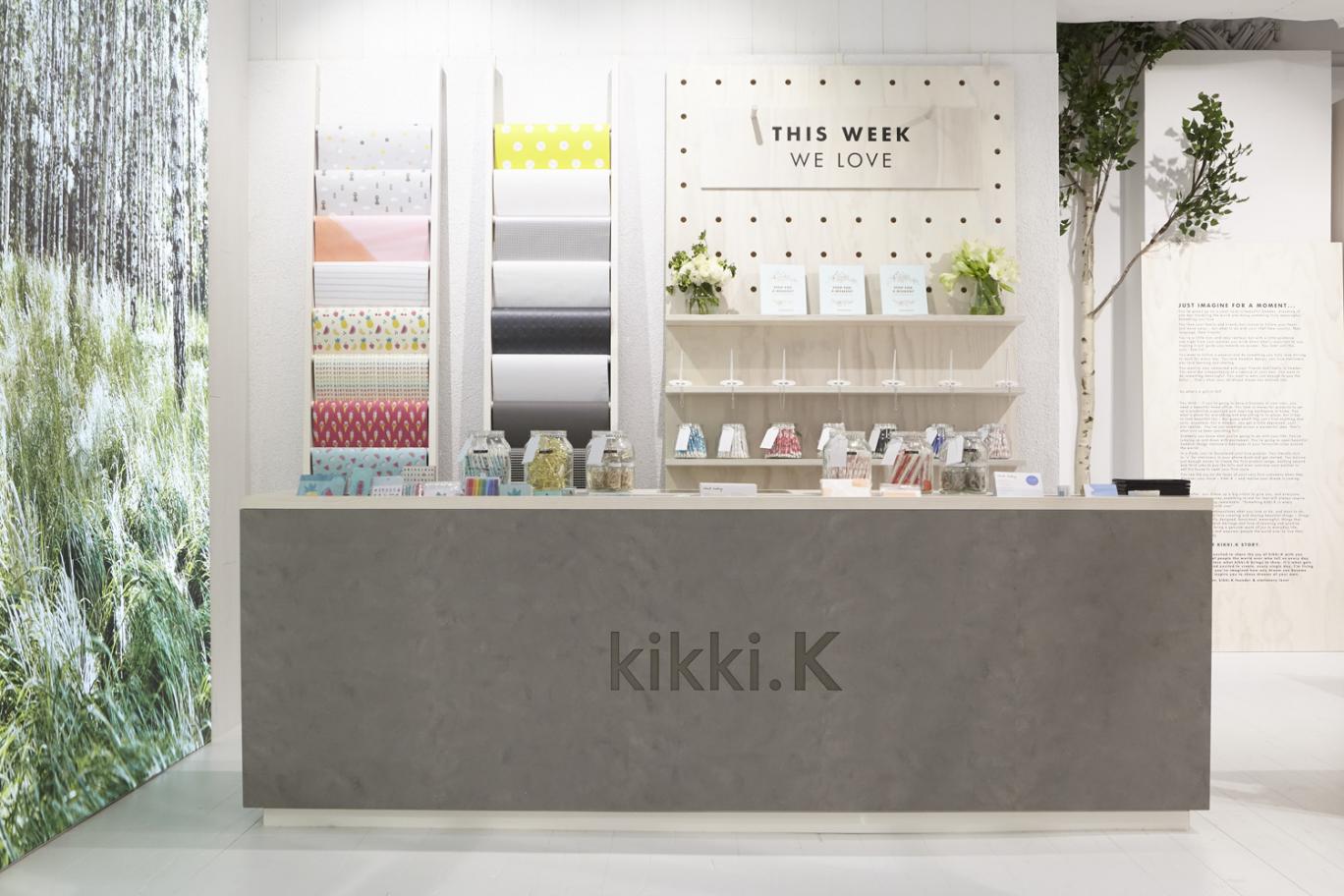
    Australian stationery brand Kikki.K has partnered with product development and design industry leader, Gartner Studios, to accelerate its growth across the USA and Canada.

    The retailer is currently housed at 78 Nordstrom stores in the USA and 81 Indigo stores in Canada, with the deal with Gartner to fuel its ambitions of opening an additional 400 wholesale doors across the globe by the end of 2018 and over 3000 wholesale doors over the coming years.

    Kikki.K’s partnership with Gartner will ‘simplify and systemise the USA and Canadian product offering and distribution’ for both wholesale and direct to consumer e-commerce fulfilment.

    “I’ve dreamt of seeing kikki.K products in the lives of people across the USA & Canada since the very beginning,” said the stationery firm’s founder Kristina Karlsson.

    “We made that dream a reality with our online store and then our launch in Nordstrom and Indigo in 2017. I’m so excited we’ve now partnered with Gartner Studios to help introduce our brand to even more of the USA and Canada.”

  • Elliatt launches first brand store in China

    Elliatt launches first brand store in China

    Six-year-old Melbourne design brand Elliatt has opened its first-ever own-brand store – not in Australia, not in an established market of the West, but in China.

    However, it did use its home city’s most famous sporting event, the Melbourne Spring Racing Carnival, to promote its arrival in Shanghai with the first of 16 stores for an initial roll-out.

    It invited Chinese actress Zhang Meng (“Lemon”) to socialise in the celebrity “birdcage” area at the race course for two days, showing off a range of Elliatt styles and, of course, sending out images and comments to her 7.6 million Weibo followers in China.

    “Iconic sporting events like this provide a great opportunity for local brands and designers to launch themselves on to the world stage and break into new markets, especially in China,” says executive director for trade Gonul Serbest of Trade Victoria, a government department that connects state brands with international partners. “The races have always been a place for Melbourne to flaunt its reputation as Australia’s fashion capital.”

    Elliatt’s target niche is consumers between 25 and 35 years old who want well-cut clothing with special details such as lace, embroidery and prints, and high-quality materials at a price point within the accessible luxury segment.

    Global boutiques

    Its fashions are stocked in more than 1200 boutiques globally, including Bloomingdale’s and Nordstrom, and the brand has distribution networks spanning Asia, Australia, New Zealand, Europe and the US. The brand has turnover of about US$5.3 million annually.

    “China is our biggest growth market,” says Elliatt founder/designer Katie Pratt. “My business partner is Chinese and knows the market quite well. We are seeing more rapid growth with our brand in China in a shorter period than anywhere else.”

    It was this that prompted Elliatt to finally launch an own-brand store, but not at home.

    Pratt believes consumers in China identify strongly with the brand. “We’re quite quirky, we’re colourful, we’re detailed and quite feminine, and that is resonating really well with Chinese consumers. Also, in the areas of the market we are pitching at, there is less competition in China.”
  • Nordstrom privatisation moves closer

    Nordstrom privatisation moves closer

    The planned Nordstrom privatisation has taken a step forward with the US department store’s founding family appointing private-equity firm Leonard Green & Partners to help manage the process.

    According to US news reports the Nordstrom family is working with Leonard Green on a formal bid that could be submitted to shareholders within the next few weeks.

    The Nordstrom family revealed in June they were considering delisting.

    According to news agency reports at the time, delisting the business would make it easier to undergo a comprehensive remodelling of the business to help it weather the US-wide slowdown in department store sales, fuelled by rising online shopping. The downside is that it would require raising significant debt to buy out shareholders.

    The department store operator is valued at $8.21 billion based on Tuesday’s stock price. Family members control 31.2 per cent of its shares.

    Nordstrom has 356 stores in 40 states, including 121 full-line stores in the US, Canada and Puerto Rico; 224 Nordstrom Rack stores; two Jeffrey boutiques; and two clearance stores.

    According to CNBC, Leonard Green would provide the Nordstrom family with about $1 billion in equity to help fund an offer. Talks are taking place with banks to raise raise sufficient to buy out existing shareholders.

  • Uniqlo Canada takes it slowly

    Uniqlo Canada takes it slowly

    After the Japanese apparel retailer decided to open its first shop in Canada, Uniqlo Canada COO Yasuhiro Hayashi visited Toronto every month for nearly a year.

    During each visit he would spend the week taking notes on what people were wearing.

    “I didn’t expect that everyone was so unique and multicultural,” says Hayashi, who previously helped launch Uniqlo in Singapore and Indonesia. “That was very surprising in a very positive way. We don’t have a specific target customer – that’s our uniqueness. We say we are made for all.”

    Finally, the company is opening its first store in Canada on Friday, a 28,000-sqft (27,989 sqm) space in the Toronto Eaton Centre, between fast-fashion rival H&M and the newly arrived luxury retailer Nordstrom. A second store opening is planned at Yorkdale Shopping Centre in north Toronto on October 20.

    Even with more than 1000 stores worldwide, Hayashi says Uniqlo may not have the same name recognition in Canada as some of its international rivals before they entered the country. It is a challenges that needs to be overcome if it wants to continue expanding in Canada, but Hayashi says there is no rush.

    “We want to be very cautious,” he says. “Of course, I don’t want to give a name, but some other brands have had ambitious plans that didn’t work out. We want to make sure we serve the customers well and fine-tune the merchandise mix as well.”

    US retailer Target last year abruptly announced it was shutting down all its 133 Canadian stores only two years after arriving. Since then, several international retailers such as Muji, Nordstrom and Saks Fifth Avenue have taken a slower approach to opening locations in Canada.

    Hayashi says Uniqlo’s Toronto stores will largely be the same as its other locations, with a few nuanced differences for Canadian shoppers. Customers can expect more than usual plaid and flannel shirts. Most sizing will be for a North American fit, but there will also be some smaller sizes to reflect Toronto’s multicultural population.

    Uniqlo will also sell house slippers, commonplace in its stores in Asia.

  • Ralph Lauren sales tumble

    After a slight uptick in performance at the close of last year, Ralph Lauren sales have tumbled.

    Compared to 2015 – when total revenues declined by 5 per cent, wholesale by 9 per cent, and retail by 3 per cent – the latest sales figures are decidedly weak.

    In the first quarter of the new fiscal year, net revenues fell for a fifth straight quarter, dropping 4 per cent to US$1.6 billion

    The wholesale numbers are wholly understandable and are thanks, in large part, to the car-crash that is the American department store channel. While Ralph Lauren has representation in stores like Macy’s the fact that its sales areas look like a flea-market do nothing to help the brand or its revenues. This is further exacerbated by the generally weak customer traffic at department stores across the past few months.

    The retail numbers are much more of a disappointment, and a concern given that this division delivers the largest chunk of revenue. Ralph Lauren has been keen to emphasise its Way Forward Plan, which it says is changing the operational structure of the business so that it can deliver growth. As much as many of the actions are prudent, it feels like the company has been turning itself around in perpetuity. At some point, these actions need to deliver growth – something they are currently failing to do at either the sales level, or on the bottom line where the company posted a $31 million operating loss for the quarter.

    Decisive action is needed to put the brand on the right track. This includes withdrawing from department stores like Macy’s which are now actively damaging the Ralph Lauren brand, and focusing only on more upscale department stores like Nordstrom and Neiman Marcus as sales channels.

    A proper brand review is also needed as Ralph Lauren has become muddled and confused and is simply not competing effectively against brands like Vineyard Vines, which have good traction with younger, high spending consumers. Some action has already been taken to simplify the brand structure but much more clarity is needed in communicating the various parts of the offer to consumers. At present the various parts of Ralph Lauren are too hit and miss.

    Reconnecting with younger consumers is also a priority. Rather like Tiffany, Ralph Lauren is seen as an older, established brand that, while not actively disliked, is less relevant than it was a generation ago. Spin-offs like Club Monaco and RRL have helped to remedy this, but the company needs to put more energy and effort around extending and expanding their reach.

    That said, current plans should deliver some cost savings over the course of this fiscal as operations are streamlined. However, expect the plan’s impact on revenue to be negative across at least the next quarter.

    • Håkon Helgesen is a retail analyst at Conlumino.
  • Uniqlo Canada stores about to launch

    Uniqlo Canada stores about to launch

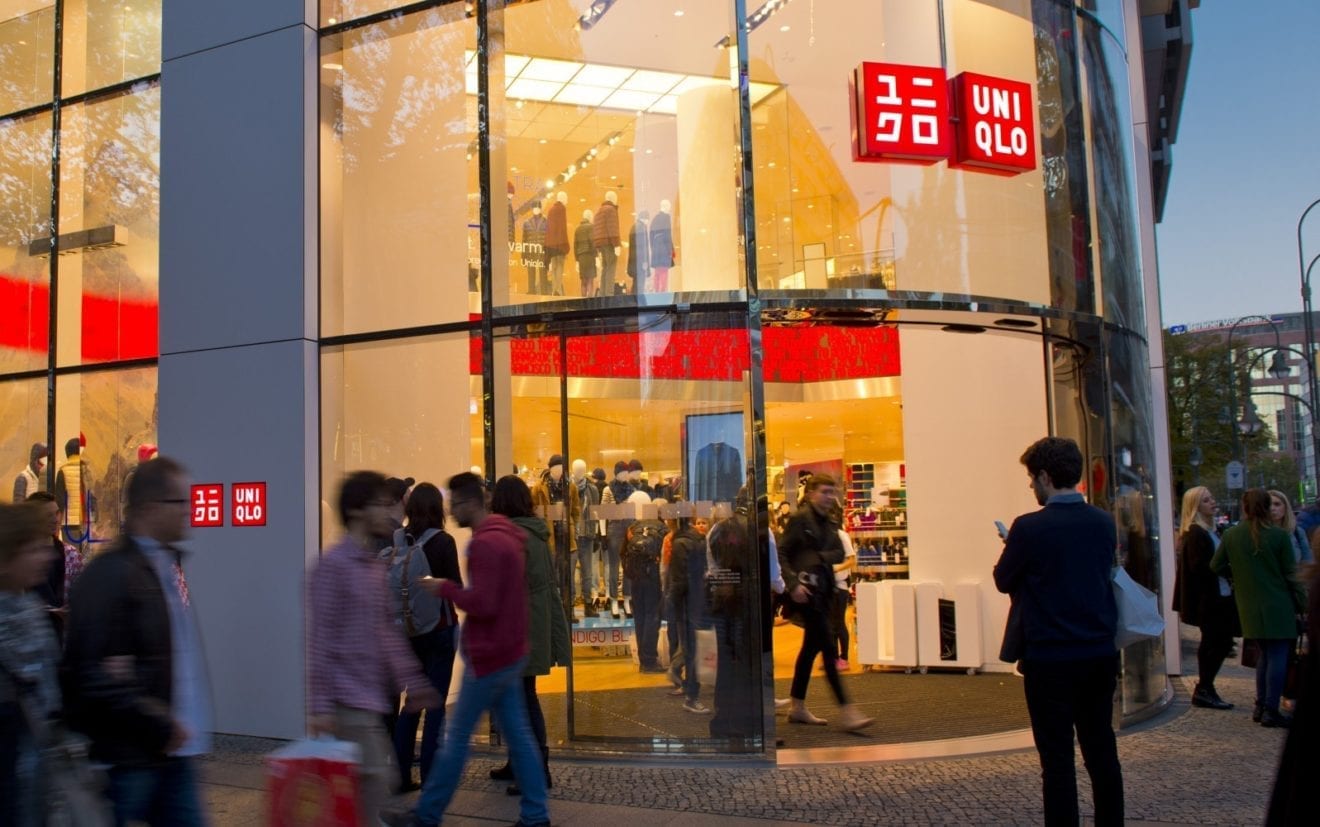
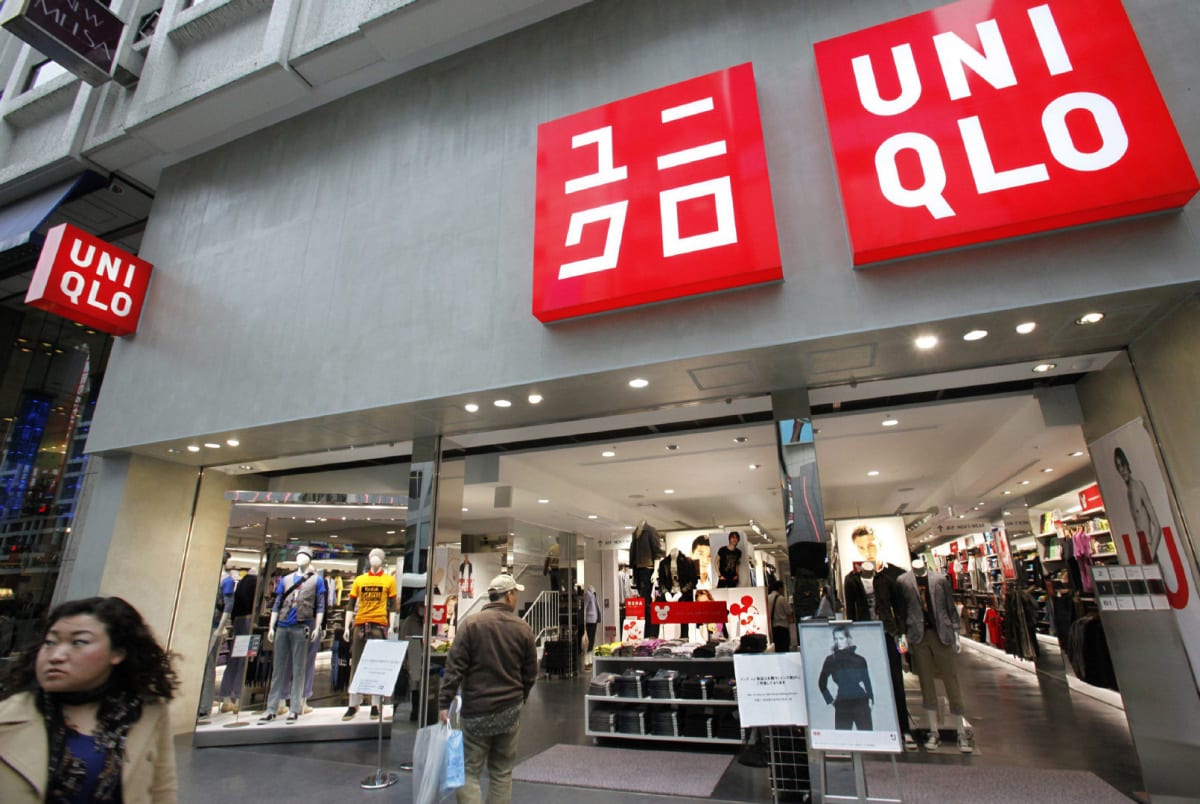
    Japanese lifestyle retailer Uniqlo Canada is close to opening its first two stores, in Toronto.

    Uniqlo Canada COO Yasuhiro Hayashi says the autumn collection to feature at the stores has special technology to provide warmth in Canada’s icy winter. The brand’s Heattech innerwear features moisture-wicking fabric that retains heat, and also has anti-odour properties.

    Women’s and men’s collections range from casual to dressy, including a variety of cashmere sweaters as well as lightweight down jackets and vests.

    Uniqlo’s first Canadian store will open in late September or early October at CF Toronto Eaton Centre. Between fashion retailers Nordstrom (opening on September 16) and H&M, which has had a major expansion, the Uniqlo store will cover about 28,000 sqft (2600 sqm) over two levels.

    Uniqlo’s second Canadian store will open at Yorkdale Shopping Centre in October, in a new $331 million 300,000 sqft wing anchored by Nordstrom. Uniqlo will occupy about 24,000 sqft over two levels and be a neighbour with fellow Japanese lifestyle retailer Muji.

    Hayashi says Uniqlo’s Canadian store expansion will be gradual, with the company seeking to create brand recognition before moving into new markets.

    Uniqlo’s Canadian broker, Jeff Berkowitz of Aurora Realty Consultants, says Toronto was picked as the brand’s introductory market, and he is now looking real-estate opportunities in western Canada.

    Retail consultancy HRD Advisory president Farla Efros says she thinks Uniqlo will be a big success in Canada as it fills a void in the retail landscape between upscale boutiques and fast-fashion.

    Meanwhile in Japan, Uniqlo’s same-store sales last month increased by 4.5 per cent year-on-year while own-store sales grew 4.7 per cent. Total sales, including online, rose 6 per cent. The company attributes the increases to higher temperatures this year.

  • Nordstrom sells bank card enterprise

    Nordstrom sells bank card enterprise

    Luxurious division retailer Nordstrom has agreed to promote its bank card portfolio to Canada’s Toronto-Dominion Financial institution.

    The deal covers Nordstrom’s branded Visa bank card and personal label bank card portfolios within the US. The financial institution may even grow to be Nordstrom’s unique shopper credit score companion.

    Toronto-Dominion Financial institution is Canada’s second-largest lender by belongings, and the deal provides it an elevated footprint within the neighbouring US shopper credit score market.

    In a press release, the 2 corporations stated the portfolio included US$2.2 billion in receivables.

    In March 2013, Toronto-Dominion Financial institution purchased the $5.7 billion receivables of Goal Corp in one other deal.

    “We discovered TD to be a robust cultural match, sharing our customer-focused strategy and offering capabilities to assist us additional improve the client expertise,” Nordstrom co-president Blake Nordstrom, stated within the assertion.