Retail News CRM

Tag: output

  • Domestic Demand Dwindles in China Despite Soaring Industrial Output

    Domestic Demand Dwindles in China Despite Soaring Industrial Output

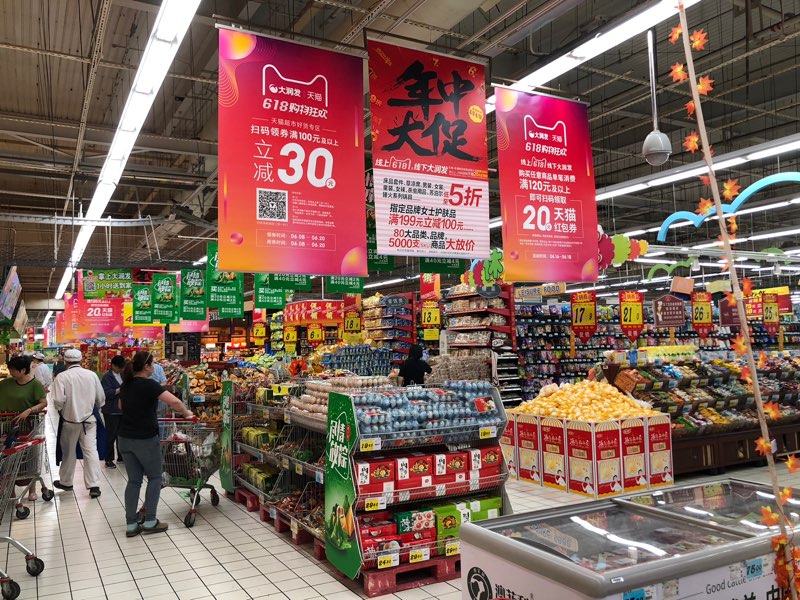
    The second-largest economy in the world is currently experiencing a dual-speed growth pattern. While factories are flourishing due to robust exports, domestic demand is on a downward trajectory due to an ongoing slump in the property market.

    In May, retail sales, which serve as a critical measure of consumption, decreased by 0.6%, a significant drop from April’s 0.2% rise, and below the predicted 0.0%. This decline in retail sales marks the first reduction since December 2022. Even the extended Labour Day holiday was unable to boost consumer morale, and the government’s consumer goods trade-in initiative is gradually losing its effectiveness. An inflated base from the previous year’s May further added to this downturn.

    According to Zhiwei Zhang, chief economist at Pinpoint Asset Management, the disappointing retail sales data puts increased pressure on the government to contemplate policy measures aimed at stabilizing consumption. “Policy ‘fine tuning’ is anticipated around July, following the release of the second quarter GDP data,” Zhang added.

    On the other hand, data from the National Bureau of Statistics (NBS) revealed that industrial output in May grew by 4.5% compared to the previous year, an increase from the 4.1% growth recorded in April. This rise surpassed the projected 4.3% increase.

    Divides in the Economy

    A boom in global AI investment and related tech demand has allowed the world’s largest manufacturer to counterbalance the anticipated export blow from the Iran war. However, a 19.4% increase in exports has yet to positively impact domestic consumption.

    The economic weakness was particularly noticeable in the automotive sector, as domestic car sales suffered a decline for the eighth consecutive month in May. This trend hints at a diminishing demand in the world’s biggest car market, a pressure that is expected to linger throughout the year.

    Senior economist at the Economist Intelligence Unit, Xu Tianchen, identified several divisions in the May economy. “The divide between domestic and external demand, the divide between AI and traditional industries, and the divide between goods retail and services consumption,” he mentioned.

    He expects the second quarter’s economic growth to slow down to 4.5% from the first quarter’s 5%.

    Growing investment weakness and ongoing property drag

    Investment figures were also significantly weaker than expected. Fixed-asset investment dropped by 4.1% in the first five months of 2025, a fall from the 1.6% decrease recorded from January to April. Economists had anticipated a 2% decline.

    According to NBS spokesperson Fu Linghui, this fall is partially due to extreme weather conditions in several regions, as well as the shift from old to new growth drivers. Fu added that China still has substantial room for future investment, with urbanisation, rural revitalisation, the development of new quality productive forces, and public service improvements all requiring support.

    Questions & Answers

    What contributed to the decline in retail sales in May?
    Several factors contributed to the decline in retail sales in May, including a lack of consumer confidence, the waning effectiveness of the government’s trade-in scheme, and a high base from the same period last year.

    How are the car sales in China currently?
    Car sales within China have been on the decline, with May marking the eighth consecutive month of decreasing sales. This is indicative of a softened demand in the world’s largest auto market.

    What are the expectations for China’s economic growth?
    It’s anticipated that China’s economic growth may slow in the second quarter, dropping to 4.5% from 5% in the first quarter. While it might not be difficult to achieve a full-year growth target of 4.5-5%, the sluggish domestic demand may necessitate policy intervention in the second half of the year.


  • China’s Economic Troubles Deepen: Factory Output, Retail Sales Experience Record Lows

    China’s Economic Troubles Deepen: Factory Output, Retail Sales Experience Record Lows

    In October, China’s factory output and retail sales experienced their slowest growth in over a year, which is placing increasing pressure on policy makers to overhaul the $19 trillion export-driven economy. This comes as the country faces growing supply and demand challenges that threaten to further hamper growth.

    China’s Economy Dilemma

    For several decades, the officials responsible for maintaining China’s bustling economy, the world’s second largest, have had the option to stimulate its extensive industrial sector to increase exports if domestic consumer spending slackens. Alternatively, they could dip into public funds to finance infrastructure projects to boost the country’s GDP.

    However, the ongoing tariff war initiated by former U.S President Donald Trump has underscored China’s dependence on the world’s largest consumer market. It emphasizes that even an economy as large as China’s can only derive limited growth from developing more industrial parks, power substations, and dams.

    Recent economic indicators offer little promise of a swift recovery. The more the economic data deteriorates month by month, the more urgent the need for reform becomes.

    Slowing Industrial Output and Retail Sales

    According to data from the National Bureau of Statistics (NBS), industrial output in October grew by only 4.9% year-on-year, marking the slowest annual pace since August 2024. This is lower than the 6.5% growth seen in September and falls short of the 5.5% increase forecasted by economists.

    Retail sales, an indicator of consumption, rose by a mere 2.9% last month, also marking their slowest pace since August of the previous year. This is a decrease from the 3.0% growth in September, although it surpassed the forecasted growth of 2.8%.

    Challenges and Potential Reforms

    Policy makers are acknowledging the need for changes to rectify historical supply-demand imbalances, enhance household consumption and address the massive local government debt. This debt is preventing provinces, many of which have economies as large as those of nations, from becoming self-sufficient.

    However, they also understand that structural reform will be painful and politically risky, particularly at a time when trade tensions have increased pressure on the economy.

    Another surprise was China’s auto sales, which despite expectations of a surge ahead of the phase-out of various tax breaks and government incentives, ended an eight-month growth streak.

    Economy Undermined by Structural Issues

    Fixed asset investment contracted by 1.7% in the first 10 months of the year compared to the same period in the previous year. This decrease was far more significant than the anticipated 0.8% drop.

    Furthermore, a prolonged downturn in the country’s vital property sector, a significant repository of household wealth, showed no signs of letting up, with new home prices falling at their most rapid monthly rate in a year.

    Despite these challenges, the ruling Communist Party of China has pledged to considerably increase household consumption’s share of GDP, while also emphasizing the need to strengthen its vast industrial base.

    Questions & Answers

    What is the status of China’s factory output and retail sales?
    In October, China experienced the slowest growth in factory output and retail sales in more than a year, which is placing increased pressure on the economy.

    Has China’s dependence on the world’s largest consumer market been highlighted recently?
    Yes, the ongoing tariff war initiated by former U.S. President Donald Trump has underscored China’s dependence on the world’s largest consumer market.

    What challenges is China’s economy currently facing?
    China’s economy is facing numerous challenges, including a slowdown in industrial output and retail sales, a prolonged downturn in the property sector, and the need for structural reform to rectify historical supply-demand imbalances.

  • Coconut Oil Prices Skyrocket In Asia: Exploring The Causes And Impact On Global Market

    Coconut Oil Prices Skyrocket In Asia: Exploring The Causes And Impact On Global Market

    Coconut oil prices are soaring in Asia, spearheaded by India—the largest consumer of the product—which has witnessed a tripling in prices within two years. This is attributable to a combination of supply shortages and burgeoning demand for the nutrient-filled water found within the coconut, elevating this common kitchen ingredient to a luxury commodity.

    Consumer Adjustments

    The escalating prices have put coconut oil beyond the reach of many budget-conscious consumers. As such, those who were once fond of its unique flavor, deeply entrenched in regional cuisines, are now exploring alternatives. For instance, Leelamma Cherian, a resident of Kerala in southern India, has stated intentions to switch to the more affordable refined sunflower oil for day-to-day cooking, reserving coconut oil for dishes where its flavor is critical.

    Price Surge Contributions

    The price increase, which began in the second half of 2024, was further propelled by production interruptions across many of the main producer nations, from India to Southeast Asia. These interruptions were due to seasons marked by decreased rainfall, extended heat, and increased damage from pests and diseases. Prices in India have nearly tripled in less than two years, reaching a record high of 423,000 rupees (US $4840) per metric ton, while global prices have swelled to an unprecedented $2990 per ton over the same period.

    Predictions by the International Coconut Community

    The International Coconut Community (ICC), a consortium of producer nations, predicts that the increasing demand amid production restrictions will maintain second-half global prices within the US $2500 to $2700 range, far exceeding the 2023 figure of approximately $1000.

    Effects of Price Surge

    This price surge is also impacting green coconuts harvested for their electrolyte-rich water, and other products such as copra, milk, and powder. It is putting pressure on manufacturers of shampoo and skincare items, who value the oil for its high lauric acid content.

    Challenges to Coconut Oil Production

    Worldwide, coconut oil production is declining as trees age, replanting efforts fall short, and plantations struggle with a scarcity of superior seed varieties. Weather conditions veering from hot, dry spells to sudden heavy rainfall are also disrupting coconut production. Additionally, the neglect of plantations and unfavorable weather in recent years are likely to hinder a broader production recovery, especially when supplies of other similar lauric oils are limited.

    Global Demand

    While coconut oil is a favorite among Asian consumers, other coconut products such as copra, coconut cream, and milk, are in high demand in Britain, China, Europe, Malaysia, the United States, and the United Arab Emirates. To seize the opportunity presented by this burgeoning demand, Indonesian farmers are increasingly exporting whole coconuts instead of processing them for their oil.

    Questions & Answers

    What has been the impact of the coconut oil price surge?
    The price surge has affected a range of related products, including green coconuts harvested for water, copra, milk, and powder. It has also put pressure on manufacturers of hair and skincare products, who value the oil for its high lauric acid content.

    Why is coconut oil popular in the market?
    Coconut oil is popular for its unique flavor, deeply embedded in regional cuisines, and its high content of lauric acid, which is prized by the hair and skincare industry.

    What measures are being taken to stabilize the price of coconut oil?
    To stabilize prices, the Association in Indonesia has urged for a suspension of coconut exports for six to 12 months. In India, the Solvent Extractors’ Association has appealed to New Delhi to permit imports of coconut oil and copra.

  • Unprecedented Heatwave Hits Matcha Production: Global Demand Soars Amid Price Surge

    Unprecedented Heatwave Hits Matcha Production: Global Demand Soars Amid Price Surge

    Devotees of the highly coveted matcha green tea may need to dig a little deeper into their pockets as a result of unprecedented temperatures in Japan causing a considerable decrease in matcha production. This comes amid a worldwide surge in demand for the popular drink, resulting in significant supply strain and skyrocketing prices, according to farmers and industry insiders.

    Impact of Climate on Matcha Production

    The Kyoto region, a major contributor to Japan’s matcha production, experienced severe heatwaves last summer. The region accounted for roughly one-fourth of Japan’s total production of tencha – the tea leaves used in the production of matcha – which faced crippling damage due to the extreme heat. The poor yield from the recent April-May harvest is a direct result of Japan’s hottest year on record.

    Masahiro Yoshida, who belongs to a family of farmers that has been in the tea business for six generations, reported a significant decrease in his yield. This year, he was only able to harvest 1.5 tons of tencha, a reduction of 25% compared to his usual harvest of two tons.

    “The heatwave last year was so severe that it damaged the tea bushes, significantly reducing the number of tea leaves we could harvest,” Yoshida stated.

    Global Demand for Matcha

    Global interest in matcha has seen a sharp increase in recent years, fueled by health-conscious millennials and Gen Z consumers. Trendy cafes worldwide now offer matcha-infused products ranging from lattes and smoothies to desserts.

    The finely ground tea is highly favored for its rich antioxidant content and higher caffeine levels compared to other green teas. Its popularity received a significant boost last fall due to increased social media attention, resulting in purchase limits being imposed by some wholesalers.

    Tealife, a Singapore-based wholesaler, founder Yuki Ishii confirmed that matcha demand from his customers increased tenfold last year and continues to rise, despite dwindling supplies from Japan.

    The Future of Matcha Production

    Japan’s tencha production reached 5336 tons in 2024, reflecting an increase of almost 2.7 times over the previous decade as more farmers shifted their production towards this crop. However, the Japanese Tea Production Association anticipates a decrease in matcha output this year.

    Marc Falzon, who sources tea from Uji farmers for his New Jersey-based milling company, expressed disappointment with the current situation. He noted that while many hoped for a more abundant harvest this year to alleviate some of the shortages, it doesn’t seem likely.

    Despite a 25% increase in the export value of Japan’s green tea, including matcha, which amounted to 36.4 billion yen (US$252 million) in 2024, the shortfall continues. Tencha prices have escalated to record highs, with a May auction in Kyoto reaching 8235 yen per kilogram, a 170% increase from the previous year.

    While Japanese producers are making efforts to increase matcha production, the newly planted fields will not be ready for harvest for another five years, according to Falzon. As such, he anticipates even more significant price increases in the near future.

    Questions & Answers

    Why has there been a decrease in matcha production?
    Record temperatures and severe heatwaves in Japan, particularly in the Kyoto region, have significantly impacted matcha production, leading to weak yields.

    What factors have contributed to the surge in global demand for matcha?
    The global demand for matcha has increased due to health-conscious millennials and Gen Z buyers. Also, increased social media attention and the introduction of matcha-infused products in cafes worldwide have contributed to its popularity.

    What are the implications of the current matcha shortage?
    The shortage of matcha has led to record-high prices and imposed purchase limits by some wholesalers. Despite attempts to increase production, the issue is unlikely to be resolved in the near future, given that newly planted fields require five years to harvest.

  • Tesla’s China Output Was Halted For Days In August Due To Chip Shortage

    Tesla’s China Output Was Halted For Days In August Due To Chip Shortage

    Tesla temporarily halted some operations at its Shanghai factory last month as the global shortage of semiconductors hit the electric car maker, Bloomberg News reported on Thursday, citing people familiar with the matter.

    Part of a production line at the China plant was halted for about four days in August because of a lack of key chips, the report said.

    Shortages with the availability of electronic control units caused output delays mainly for Tesla’s Model Y sports utility vehicle crossover, according to the report.

    Production at the Chinese factory is now back to normal.

    Tesla did not immediately respond to a query on the report.

    Last month, world’s largest automaker Toyota Motor Corp said it would slash global production for September by 40% from its previous plan following car makers worldwide in cutting production due to the months-long chip shortage.