Retail News CRM

Tag: Pepper

  • Irvins Salted Egg expands into the US via DTC route

    Irvins Salted Egg expands into the US via DTC route

    Singaporean cult snack brand Irvins Salted Egg has expanded online in the US and launching at several Asian specialty stores including 99 Ranch, Seafood City and H Mart.

    The popular brand, which has a cult following in Singapore and Hong Kong, especially, has pop-up style brick-and-mortar stores and sell-through in nine Asian countries. By going online it has taken a direct-to-consumer approach to competing with American snack brands.

    In Australia, it is sold through the e-commerce site Snack Affair.

    “We are ecstatic about our expanded availability in the US. Irvins Salted Egg products bring a distinctive flavor and premium quality to the American snack food market, and we look forward to earning a place in the conversation as more people can try our product,” said Yosuke Yazawa, Irvins chips business development manager of North America.

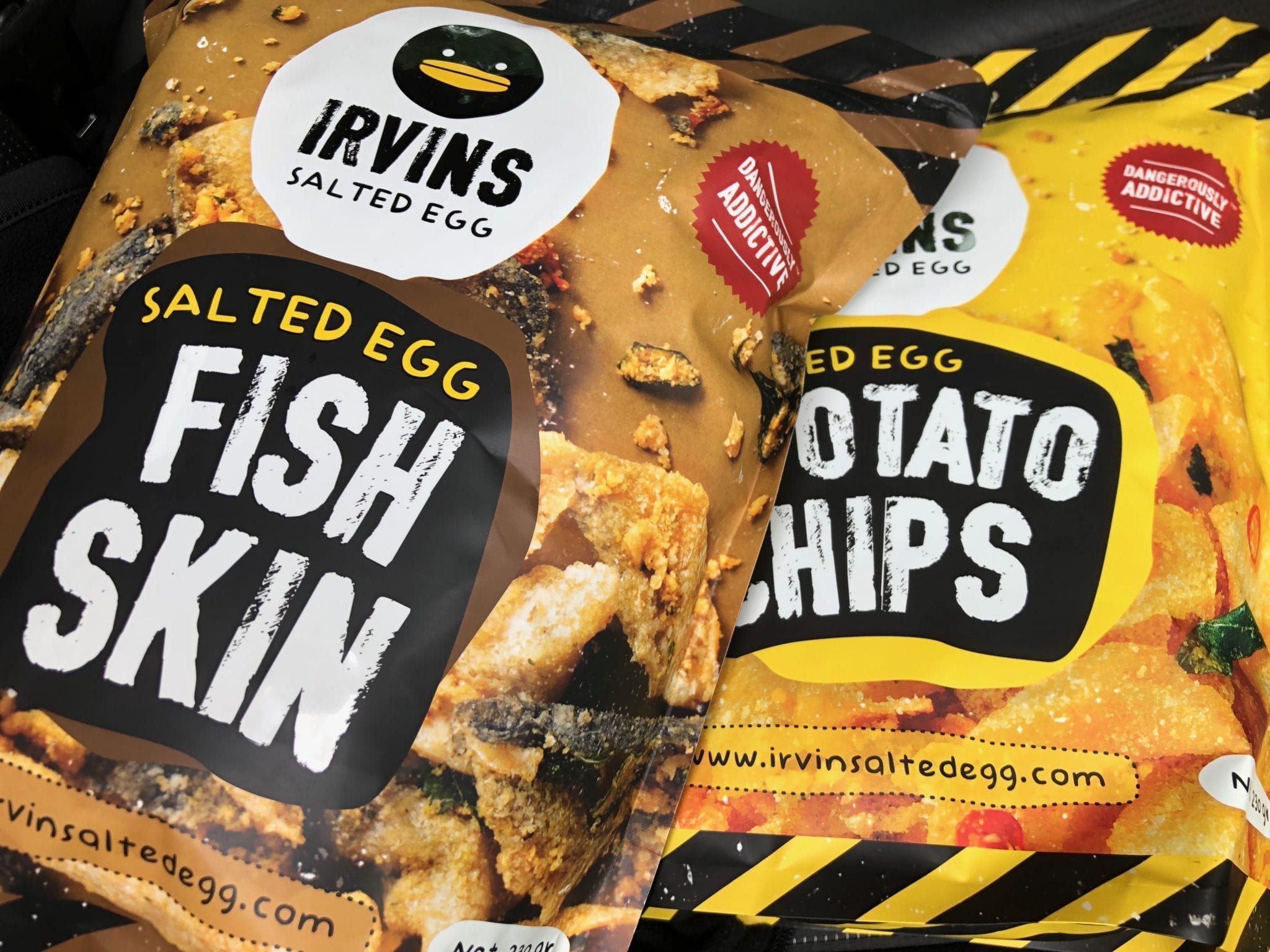
    Irvins will offer flavors online such as Salted Egg Potato Chips, Spicy Salted Egg Potato Chips, Salted Egg Cassava Chips, Spicy Salted Egg Cassava Chips and Salted Egg Crunchy Roll.

    The salted-egg flavored chips are made in Singapore using Asian flavors such as the salted duck egg yolk, curry leaves, and red chilli pepper without preservatives.

  • Pricerite shows how it embraces robotic technology

    Pricerite shows how it embraces robotic technology

    A lot of Hong Kong retailers are talking about technology right now, but before they even started, Pricerite founder and chairman Bankee Kwan was already embracing it. Now home to the first Pepper robot on customer service duty in a Hong Kong store and leading-edge online apps allowing shoppers to virtually place furniture in their home, Pricerite’s technology journey started way back in 1999.

    The furniture retailer is part of Celestial Asia Securities Holdings (Cash Group) which was the first Hong Kong company to launch an online brokerage in 1999. Nowadays, trading shares online is an indispensable part of any brokerage business. Five years later, Cash Group was the first to introduce mobile trading for brokerages.

    The company began developing a broader New Retail Concept back in 2012 and in 2014 became the first home furnishings retailer to launch an omnichannel business model.

    “So we have always had the mindset to embrace technology to help the business become more competitive and to serve the customers better,” Kwan said.

    “That’s why during the Sars epidemic (2003), Pricerite was the first company to introduce online shopping so that our customers could purchase necessities and have them delivered to them. That was 13 years ago, and now online shopping has become popular and common place for housewives to purchase goods.

    “So I can actually say we go back a little bit regarding our group philosophy on technology. We always treat our customers’ concerns and feelings as our number one priority.

    “New retail concepts will become much more popular. That’s why were are moving ahead with Pepper, with Augmented Reality (AR) and Virtual Reality (VR) to create an impact.”

    Concept store

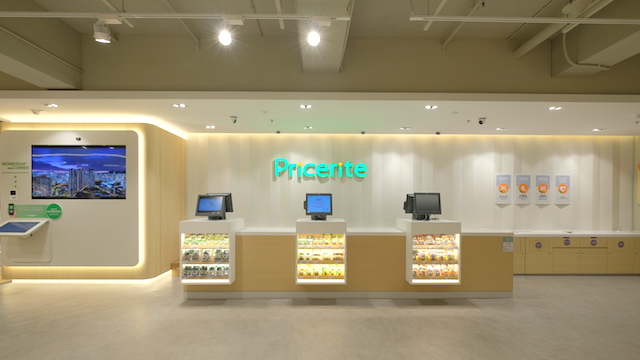
    Pricerite’s two-story 20,000sqft New Retail Concept Store in Mong Kok’s Chong Hing Square has been trading for about a year now, a testbed for apps and in-store technology that is constantly being revised, enhanced and added to.

    Pepper, the smiling robot with the female Cantonese voice, is probably the most visible execution Pricerite’s customer-centric digital transformation journey. To the delight of children it can dance on request and answer customer questions about the company’s loyalty program from its workspace outside the membership counter.

    But it is the less visible execution of Pricerite’s digital strategy that is the most breathtaking: an innovative app which allows you to place furniture items in your own apartment virtually – and order direct from your phone or tablet, from in store or home. It is a great solution for Hongkongers facing shrinking apartment footprints, which make planning a layout that suits one’s lifestyle a challenging task.

    The made-to-order zone on the Mong Kok concept store’s level B2 is equipped with a large display screen for app users to preview their selected product from all angles. Using VR technology, the system also provides customised furnishing solutions for medium and small-sized apartments. Guests can take a virtual tour of homes to gain an accurate glimpse of products in situ and see a product’s intelligent functions in action – for example, tables that convert to sleeping spaces and furniture with storage space built in. The AR mode uses cutting-edge mobile 3D Space-Tracking technology, including Apple’s iOS ARKit, which cuts out the hassle of product scanning while generating an “actual” 1:1 preview of an item, allowing simple and easy mix-and-matching for different home styles.

    “Technology advances have transformed consumer behaviour and shopping patterns while e-commerce has changed the consumption value chain, creating a complementary retail channel to bricks-and-mortar stores,” observes Kwan.

    “Using leading-edge retail technologies to combine online and offline shopping experiences, coupled with a modern supply chain, and big data and artificial intelligence innovations, we have created a pioneering all-round omnichannel retail network for home furnishing.”

    The concept store also features multiple digital kiosks and touch-screens around the store augmenting the customer service roles of floor staff by suggesting alternative or complementary products, and providing specifications. AR features in several innovations in store, including creating 3D images of items in the company’s catalogue.

    Centres of experience

    Kwan says the company’s long-term investment in new technologies has been driven by asking how the company can serve its customers better in terms of information and engagement.

    “It’s my experience that the physical store remains the centre of experiences and engagement.” Technology, he says, can make purchasing decisions easier.

    “Many traditional retailers are still unsure about whether the innovations will take on, whether they should invest in the technology. But it is essential if we are to remain competitive, especially when we look at millennials and how they shop and interact online.”

    Kwan believes that despite the slow uptake of online shopping in Hong Kong, online and mobile shopping will be significant in the future. He cites the Hong Kong government’s Smart City initiative to boost wi-fi connectivity and encourage e-payments as a major driver in years to come.

    “With all those facilities established and enabled, fast retailing through mobile is the trend. It is gaining momentum in Hong Kong and we have everything quite well developed, but the market will dictate the change and if you do not accept that [as a retailer], you will fade out and become history.

    “So I say, wait another three years and you’ll see the landscape of the retail market will change a lot. I was at a retail summit in Hong Kong recently where we had Facebook and Google and online marketers joining. We were all coming to roughly the same conclusion: technology is a must to keep you competitive.”

    Kwan can only guess what percentage of Pricerite’s sales are online versus in-store now – and for good reason. So many transactions begin online and end offline – or the other way around – that it is no longer possible to attribute a sale to either channel. Perhaps retailers who do are missing the whole point of omnichannel. If pushed to nominate a figure he’d say 20 per cent online, 80 per cent offline and he expects that ratio to change to 40/60 within a year or two.

    Pricerite’s customers do not make a distinction between online or offline, so it stands to reason the company should not do so either.

    “This is whole model is an O2O model, so our customer can shop online, understand we have a promotion, understand the product meets their requirements and then they will come down to the store for the physical experience and to touch the products, then maybe go back home and place an order. So you cannot say this is offline or online,” says Kwan.

    “But I believe application of technology to enhance the customer’s experience and engagement, is definitely the road to go and to develop together with more applications and technology, just like Pepper so as to reduce the customer service burden on store staff.”

    Kwan stresses Pepper and any other technology implemented at Pricerite must integrate with human staff, not replace them, what he describes as “a balanced fusion of technology and people”.

    “Pepper I believe will become popular to provide instant information and master data about product features, etc. That will allow our people to migrate into higher added-value areas.” Kwan says customer response to the AR and VR technology to date has been “really good” and it is driving sales of goods after people look at them either online or instore. “It boosts their confidence buying because they have seen on a screen how a sofa will look in one part of a room and a rug in another.

    “The technology is constantly improving and getting much easier to use. I understand our competitors also shop at our stores on and off and they are now also developing the same sort of technology. That, together with efforts by the Hong Kong Government to encourage startups working to develop technology for the service and retail sectors will help drive its adoption in years to come.”

    Pricerite’s technology quest is ongoing. The apps will continue to be refined and upgraded with more features and made as user-friendly as possible. Other initiatives are under development but not yet ready to be revealed publicly just yet. And more Peppers are on order, with expanded functions – most of them will speak English, too.

    View the gallery below for full images (5 images) :

  • Vietnam to cut black pepper farm area

    Vietnam to cut black pepper farm area

    The surge in world pepper prices in the 2013-2015 period led local growers to expand their farms uncontrollably. Vietnam plans to slash its black pepper growing area by 26.7 percent in response to falling global prices, the chairman of the country’s pepper association said Tuesday.

    Vietnam is the world’s largest black pepper exporter, accounting for 60-65 percent of global trade, and nearly half of global output.

    “We will cut the area to 110,000 hectares from 150,000 hectares over the coming years by encouraging local farmers to grow other crops and remove pepper farms with poor quality,” said Vietnam Pepper Association Chairman Nguyen Nam Hai.

    Hai said the surge in world pepper prices in the 2013-2015 period led local growers to expand their farms uncontrollably, from 50,000 hectares in 2013 to the current of 150,000 hectares.

    “Now with the increased output, prices have fallen and we need to cut the area,” Hai said.

    Vietnam’s black pepper exports in the first quarter rose 17.5 percent from a year earlier to 60,033 tons, but export revenue in the period fell 31.4 percent to $221 million, according to official customs data.

    Hai said exports for the entire 2018 are forecast to stay flat from last year at around 215,000 tonnes.

    Vietnam’s key markets for the spices include the United States, India, China and Europe.

  • Vietnam’s pepper export revenue loses spice due to oversupply

    Vietnam’s pepper export revenue loses spice due to oversupply

    With supply exceeding demand, farmers are being told to hold on to their stocks and wait for prices to rise. Vietnam’s pepper shipments are forecast to reach around 101,000 tons for the first six months of 2017, up 13 percent on-year, but revenue is likely to fall 13 percent, according to Vietnam Pepper Association (VPA)’s chairman Do Ha Nam.

    “When supply exceeds demand, importers try to pull prices down. Vietnam, which provides some 60 percent of the global pepper output, will be heavily affected,” Nam told.

    In the peak harvest season, farmers need to sell large volumes of pepper to cover expenses, causing prices to fall. Local farmers are stuck in a dilemma: the more pepper they sell, the sharper prices decline.

    Domestic pepper prices have been falling throughout May and June, so the VPA is urging local farmers to hang on to their stocks and wait for prices to recover.

    “If farmers can hold on for the next 1-2 months, prices will rise again,” Nam said.

    The VPA has attributed falling prices to a 15 percent increase in pepper output in for this crop and the 20,000 tons of Cambodian pepper Vietnam has shipped in.

    However, the greatest problem facing the sector is the expanding pepper plantations.

    If the plantations continue to expand at their current rate, pepper prices will suffer as supply exceeds demand in the future.

    To reduce these risks, the VPA has advised farmers to stop growing pepper in unsuitable soil and switch to alternative crops to provide an additional income.

    Despite these warnings, farmers are continuing to expand their pepper plantations.

    The reason is that a hectare of pepper can earn farmers at least VND240 million ($10,600), while the same area of coffee will make them only VND100-150 million.

    In addition to this, Vietnam’s pepper industry also faces food hygiene and safety concerns in foreign markets.

    For example, in order to export 40,000 tons of pepper to the European Union, Vietnamese firms need to import 22,000 tons of clean pepper from Cambodia, Malaysia or Indonesia to process and export.

    Similarly, in order to ship the product to Japan, local companies must import raw pepper to process first.

    This is because in the past, Vietnamese pepper has been found to contain excessive chemical residue.
    To address the issue, Vietnamese and foreign firms are working with farmers to clean up the plantations.

    According to experts, organic pepper is slowly catching on, which may mean lower productivity but should ensure higher prices in a more stable market.

  • Vietnam’s pepper farmers urged to keep calm and carry on

    Vietnam’s pepper farmers urged to keep calm and carry on

    Industry leaders have called on distraught and anxious pepper farmers to remain calm and refrain from selling their produce at low prices, saying the current price plunge is most likely a fleeting phenomenon.

    Do Ha Nam, Chairman of the Vietnam Pepper Association, said farmers should break their impulse to “mass sell” their produce immediately after harvest.

    “Vietnamese pepper exports now account for nearly 50% of global output, so we are actually in a position to control the market. Farmers should be calm and not sell at lower price, and the market will revert to its equilibrium,” Nam said.

    In the Central Highlands, the price for whole peppercorns on the domestic market has dropped from VND180,000 (US$8.04) since last August to around VND80,000 (US$3.57) per kilogramme as of May 28 to reach the lowest point in seven years, and many pepper farmers are in dire straits, with some pushed to the point of having to sell their land to settle debts.

    Authorities, meanwhile, are struggling to manage what they say is the consequence of unplanned farming and poor quality crops, which is dragging the whole industry down.

    According to the Standing Committee of the Tay Nguyen Steering Board, farmers were “misled” by pepper price surges in recent years to plant the crop on a large scale, ignoring warnings from local authorities. Subsequently, gluts have led to the sharp decline in prices, the committee has said.

    Nguyen Thi Do, a pepper farmer in Dak Nong Province, said her family had taken a bank loan of VND4 billion (US$178,770) to plant pepper on a 10ha plot. At her initial calculation of VND200,000 (US$8.93) per kilogramme of whole pepper, profits were certain, but the drastic drop in prices could force her to sell her land to repay the bank.

    Pepper rush

    Originally, Central Highlands provinces like Dak Lak, Dak Nong and Gia Lai had planned to expand the farming area for pepper to a maximum of 6,000ha by 2020. But all these provinces have surpassed this limit by far. Dak Lak has nearly 28,000ha of pepper farms, Dak Nong, 25,000ha, and Gia Lai, over 15,000ha.

    The national total is about 150,000ha, set to produce about 300,000 tonnes of pepper in the next two to three years, so, going by supply and demand function alone, prices could drop as long as supply exceeds demand, said Hoang Phuoc Binh, Deputy Chairman of the Chu Se District Pepper Growers’ Association in Gia Lai Province.

    To compound matters, even with farming on such a large scale, many farmers have experienced crop failures due to poor preparation and misuse of chemical inputs.

    Huynh Van Lan of Gia Lai Province, along with his peers, is increasingly worried about drops in both production and prices as his crop nears harvesting. Of more than 2,000 vines on his farm, 250 have died while the rest are producing just half their normal yield.

    Bad habits

    Tay Nguyen authorities have recorded a common practice among local pepper farmers of planting a new crop directly on malnourished, acidic and depressed soil without taking any step to replenish the soil with nutrients. This is causing slow growth and increased vulnerability to diseases.

    To make matters worse, a number of farmers have been using seeds of dubious quality, affecting the rest of the harvest. The use of toxic pesticides and growth accelerators has further exacerbated the situation.

    As if all this weren’t enough, the irregular drizzling since February 2017 has continued to dampen the pepper vines’ roots, exposing them to pests and affecting production.

    Experts say that the combination of market glut and poor quality crop threatens sustainable development of the domestic pepper industry, most particularly its export potential.

    High non tariff barriers are another challenge for Vietnamese pepper, which has to contend with markets already familiar with exports from Indonesia, Malaysia and India, they say.

    Sustainable solutions                                

    To prevent “spontaneous” and inefficient farming, the Tay Nguyen Steering Board has asked provincial authorities to adjust and firmly implement their provincial pepper cultivation plans.

    They should also organise comprehensive training programmes for local farmers in order to synchronise production in the region, the board has said.

    It has noted that the need for sustainability stretches across all crops and agricultural products, requiring farmers to work closely with other stakeholders in the supply chain to obtain technical support and suitable farming inputs.

    In Chu Puh District, Gia Lai Province, a key pepper producing area, a farming model that saves water, uses organic fertilisers and pesticides is showing encouraging results.

    More importantly, farmers are being advised to plant exclusively on suitable soils with high drainage to allow maximum growth and minimum soil damage.

    So far, the district has implemented this model on more than 100ha, and aim to expand this to 500ha by 2020.

    The Steering Board also advised local governments to focus on brand building and vertical integration to promote exports.  Clean, ecologically sound cropping is the ideal long term solution to the problems faced by the domestic pepper industry, experts agree.

    The rosier side

    Do Huong Duong, vice chairman of the Phu Nhuan Service Joint Stock, notes that despite the ongoing problems in quality, output and prices, export turnover has continued to rise.

    According to the Ministry of Agricultural and Rural Development, Vietnam exported about 75,000 tonnes of pepper worth US$456 million in the first four months of 2017.

    Vietnamese pepper has been a stable import in the US, United Arab Emirates, Pakistan, Indian and German markets in the first three months. There are signs of improvement in other markets like Thailand, where import of Vietnamese pepper has registered a year-on-year increase of 49.6%.

    These numbers prove that Vietnamese pepper is able to meet quality criteria in the strictest markets in the world, Nam said. Farmers have to be encouraged and helped to focus on improving their produce while the Government keeps an eye on mass production and quality control, he said, adding that that this would ensure market stability as well as sustained profits from this key crop.
  • Indonesia Falls Behind Vietnam in Pepper Production

    Indonesia Falls Behind Vietnam in Pepper Production

    Indonesia is the world’s second largest pepper producer. In 2013, Indonesia’s pepper production reached 88,700 tons, or an 18.8 percent worldwide market share. Indonesia has the world’s largest pepper production area with 178,000 hectares.

    However, the productivity of Indonesia’s pepper production area is only at 0.5 tons per hectare. “The productivity is low despite having the world’s largest pepper production area,” the head of Trade Study and Development Board, Trade Ministry, Tjahja Widayanti said.

    Whereas Vietnam is the world’s largest pepper producer, boasting a market share of 34.5 percent of world’s total pepper production. Vietnam’s pepper production in 2013 was 163,000 tons, having a “mere” 51,000 hectares of pepper production area.

    Vietnam’s pepper production area is smaller than that of Indonesia and India. “It shows that the productivity of Vietnam’s pepper production area is very high, i.e. 3.2 tons per hectare,” Tjahja said.

    Aside from Vietnam, other countries which have a high productivity of pepper production area are Rwanda at 3.9 tons per hectare, Thailand at 3.4 tons per hectare, Malaysia at 2.5 tons per hectare and Brazil at 2.3 tons per hectare.

    According to the International Pepper Community (IPC), world pepper production this year is expected to fall by 1.75 percent compared to last year’s realization of 403,213 tons. Some 87.22 percent of which, or 351,710 tons, were contributed by IPC member states. In 2017, pepper production is projected to recover, reaching 425,100 tons. “Global pepper industry is still facing challenges of climate change which adversely affects pepper production and quality,” Tjahja said.

    World import of pepper has been increasing. In 2015, the total world import of pepper reached US$3.3 billion with an average annual increase of 15.6 percent throughout 2012-2015. The United States is the world’s largest pepper importer with a 22.8 percent share of the import market. Singapore and India’s pepper imports have significantly increased by 40.7 percent and 27.4 percent, respectively.

  • Domestic white pepper prices sink

    Domestic white pepper prices sink

    Domestic white pepper prices have fallen sharply in recent weeks, losing a hefty RM12,000 per tonne or 24% year-to-date after sustaining at an all-time high level of RM50,000 per tonne for months.

    Kuching Grade 1 white pepper dropped to RM38,000 per tonne on Friday (Sept 2) based on Malaysian Pepper Board (MPB) published price. The slide was particularly steep in the past two months, from RM48,500 per tonne in early July.

    For Kuching Grade 1 black pepper,its price has retreated to RM25,000 per tonne from a record high of RM30,000 per tonne or a drop of nearly 17%.

    The white and black pepper soared to RM50,000 and RM30,000 per tonne respectively in September, last year in a spectacular six-year rally, the longest in history, riding on the growing global demand for the spice that outpace supply. The run-up began in 2009 when the white and black pepper were hovering around RM11,300 and RM6,500 per tonne levels respectively.

    And what has caused the recent pullback in the prices?

    The correction in domestic pepper prices, according to a MPB senior official, comes ahead of the harvesting of new crop in Indonesia,the world’s second largest producer.

    “Indonesia has begun to harvest the new crop which will enter the market soon. Indonesia is a key producer of white pepper,” the official told.

    Last year,Indonesia produced some 71,500 tonnes of the golden crop against Vietnam’s (world’s No 1 producer) 130,000 tonnes. Other key producing countries,which are International Pepper Community (IPC) members, are India (65,000 tonnes), Brazil (41,500 tonnes) and Malaysia (28,000 tonnes).

    Due to the recent El Nino weather phenomenon,the market has anticipated Indonesia’s new crop output to be affected.

    The official said another reason for the drop in domestic white pepper prices was due to an anticipated increase in white pepper output during the traditional September-October period. Sarawak, which contributes some 95% of the country’s pepper production, is currently into the tail-end of harvesting the new crop,which normally begins in May.

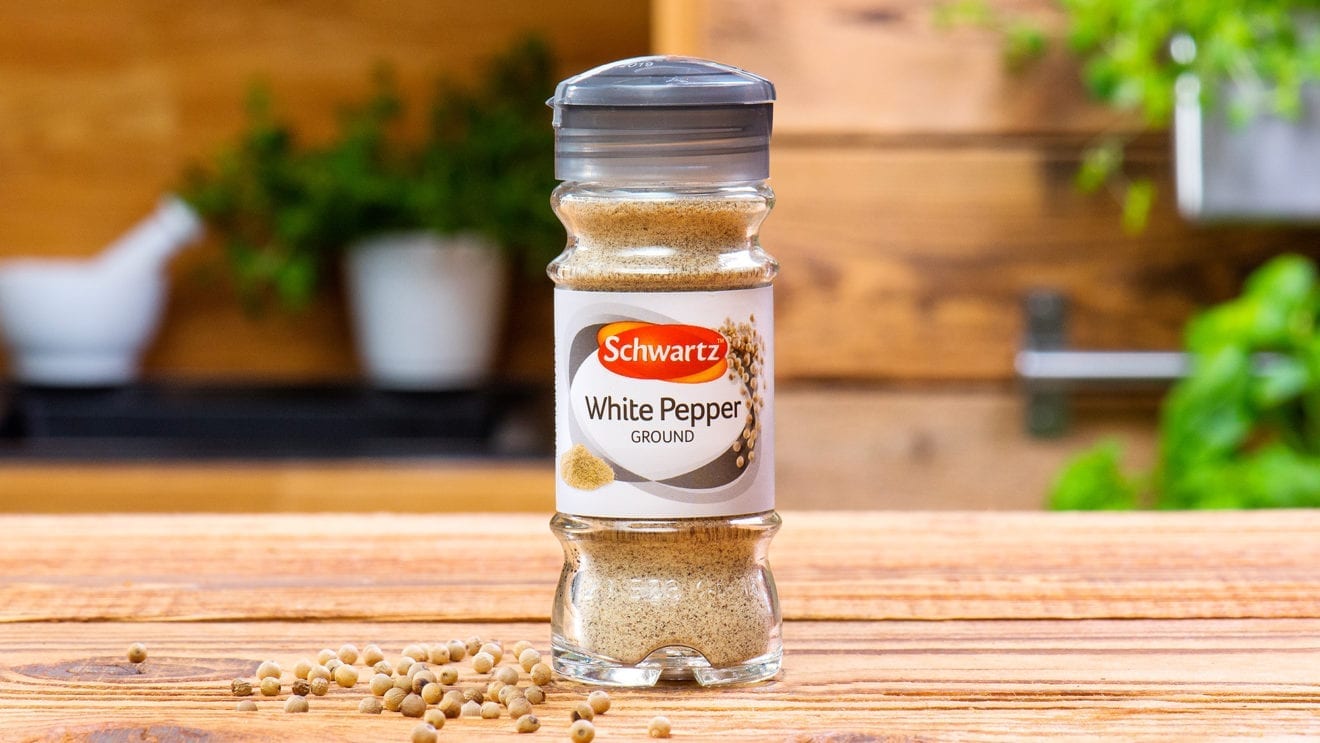
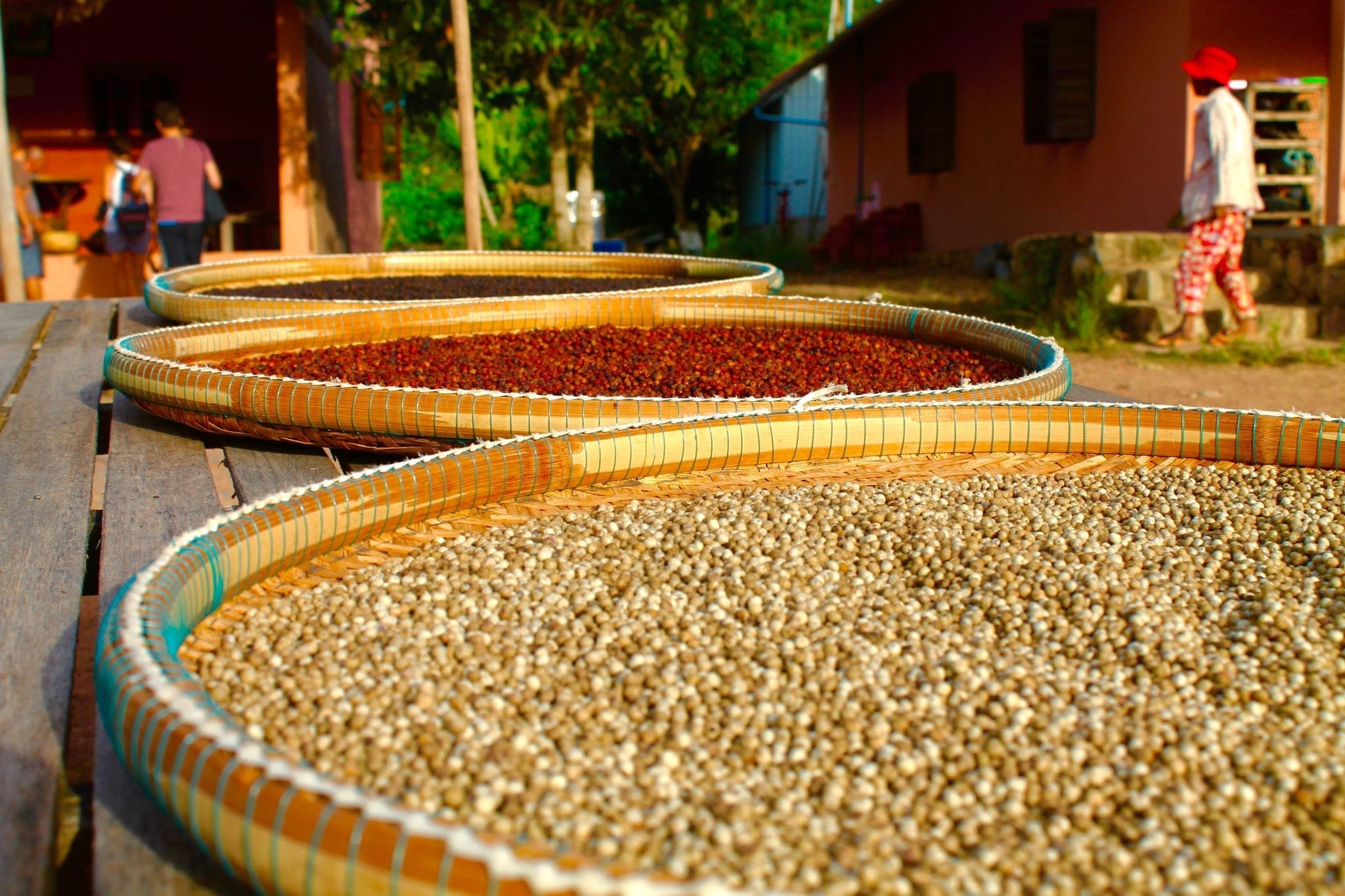
    (Black and white pepper are processed differently. Pepper berries are harvested when ripe and after sun-dried,the outer layer will turn black and become black pepper. White pepper is the result of the outer layer being removed, normally after soaking in clean water in the river and then dried, leaving only the inner seed.)

    Due to the tedious processing procedures for white pepper,most farmers prefer to produce black pepper. Only some 20% of Malaysia’s pepper production are in white pepper.

    The official said despite the softening of pepper prices of late,there is no cause for alarm.

    According to IPC weekly price bulletin (August 22-26),with the exception of Malaysia,pepper prices at source markets remained stable,even increased in Sri Lanka. In India,local price of Malabar black increased almost daily during the week.

    The bulletin said a marginal decrease of local price in dollar terms seen in Bangka and Lampung Indonesia was due to the weakening of local currency against the US dollar.

    “The domestic white and black pepper prices are still firm at current levels even though they have come down quite a bit. The drop is temporarily and the prices will recover,” added the official,whose reason is that global supply remains tight and is unlikely to increase significantly in the near future.

    Based on IPC’s 2016 projections,global consumption for the year is about 463,000 tonnes against production of 414,000 tonnes,resulting in a supply deficit of 49,000 tonnes. Of the forecast production,only 312,000 tonnes are available for export against the export market’s requirement of 320,000 tonnes.

    In 2015,,global consumption was estimated at 439,282 tonnes against production of 407,158 tonnes. World demand for the spice grows at around 4% per annum against production increase of merely 0.7% per annum.

  • Pizza Hut Asia to test Pepper the robot

    Pizza Hut Asia to test Pepper the robot

    Pizza Hut Asia and MasterCard have partnered to bring Pepper, SoftBank Robotic’s humanoid robot, to restaurants by the end of this year to enhance in-store customer service.

    Pizza Hut Asia will be piloting Pepper for order-taking and what MasterCard describes as “personalised engagement”. This marks the first commercial application for Pepper, according to MasterCard.

    Pepper, which was unveiled on Tuesday, will be powered by MasterPass, the global digital payment service from MasterCard that connects consumers with merchants, enabling them to make digital payments across channels and devices.

    MasterPass extends the robot’s ability to integrate customer service, access to information and sales into a seamless and consistent user experience.

    “Consumers have come to expect personalised service, customised offers and simple and seamless processes both in-store and online,” said Tobias Puehse, vice president, Innovation Management, Digital Payments and Labs, Asia/Pacific, MasterCard. “The app’s goal is to provide consumers with more memorable and personalised shopping experience beyond today’s self-serve machines and kiosks, by combining Pepper’s intelligence with a secure digital payment experience via MasterPass,” Puehse said.

    Pepper robot Pizza Hut

    A consumer will be able to initiate an engagement by simply greeting Pepper and pairing the consumer’s MasterPass account by either tapping the Pepper icon within the wallet or by scanning a QR code on the tablet that the robot holds. After pairing with MasterPass, Pepper will be able to assist cardholders by providing personalised recommendations and offers, additional information on products, and assistance in checking out and paying for items. Pepper will be able to initiate, approve and complete a transaction by connecting to MasterPass via a Wi-Fi connection and the entire transaction happens within the wallet.

    “We are excited to welcome Pepper to the Pizza Hut family,” said Vipul Chawla, managing director of Pizza Hut Restaurants Asia. “Core to our digital transformation journey is the ability to make it easier for customers to engage, connect and transact with Pizza Hut. With an order-and-payment-enabled Pepper, customers can now come to expect personalized ordering at our stores, reduce wait time for carryout, and have a fun, frictionless user experience,” Chawla said.

    The app was built by the MasterCard Labs team in Singapore, one of the company’s eight research and development centers across the globe. The Pepper application adds to ongoing MasterCard programs that bring payments to any consumer gadget, accessory or wearable – from fitness bands to refrigerators and now robots. The integration with Pepper, MasterCard stated, has the potential to open up opportunities in the world of retail such as personalised shopping and concierge services, in-aisle checkout and the ability to buy in store but get the goods delivered at home. The same capability would also be applicable to other consumer engagement locations such as hotels, banks, airports, and other customer service industries.

    The app is being showcased at the Pepper Partners Europe event hosted by SoftBank Robotics Europe (a SoftBank Robotics Holdings group company) in Paris until May 26.