Retail News CRM

Tag: ride-hailing services

  • Indonesia’s Go-Jek Starts Trial Launch in Singapore, Challenges Grab

    Indonesia’s Go-Jek Starts Trial Launch in Singapore, Challenges Grab

    Indonesian ride-hailing firm Go-Jek kicked off a trial launch in parts of Singapore on Thursday and plans to roll out an array of services through its app in early 2019, challenging dominant player Grab in the small city-state. Both Go-Jek and Grab are raising billions of dollars and investing aggressively in the race to corner a bigger share of Southeast Asia, as more of the region’s 640 million consumers go online and use smartphones to shop, commute and make payments.

    Go-Jek, backed by the likes of Tencent Holdings, Alphabet Inc’s Google and Singapore state investor Temasek Holdings, is initially launching ride-hailing service in parts of Singapore after forming a partnership with DBS Group Holdings, the region’s biggest bank.

    “As this is a new product, we will obviously give promotions, but at the end of the day, it shouldn’t only be pricing that differentiates our services,” Go-Jek’s president, Andre Soelistyo said on Thursday.

    Grab, backed by Japan’s SoftBank and Chinese ride-hailing firm Didi Chuxing, bought Uber Technologies’ loss-making Southeast Asian business this year, marking the first big consolidation in the region.

    Following this, Singapore’s anti-trust watchdog slapped Grab and Uber with fines and imposed measures to open up the local market to competitors after concluding that their merger had driven up prices.

    Go-Jek’s executives declined to give any details on how many drivers it had signed up or a target for market share in Singapore but said payment services would be launched later.

    Started in 2011 in Jakarta, Go-Jek has evolved from a ride-hailing service to a one-stop app through which its customers can make online payments and order everything from food, groceries to massages.

  • Hyundai, Kia invest big in Grab

    Hyundai, Kia invest big in Grab

    Hyundai Motor and Kia Motors will jointly invest $250 million into the world’s third-largest ride-hailing operator Grab, eyeing shared mobility services as a way to overcome faltering car sales, the companies said Wednesday.  Hyundai has already injected $25 million into Grab in January, so total investment on the Singapore-based company adds up to $275 million. This is the largest investment made in a single company by the two sister automakers under Hyundai Motor Group, the group said.

    Grab, which has operations in 235 cities in eight countries in Southeast Asia, is the largest ride-hailing service provider in the region, though it is smaller than China’s Didi Chuxing and U.S. company Uber, which have larger operations elsewhere.

    The big bet in Grab comes as the largest auto group in Korea seeks fresh business models for growth. The group said it will make the two carmakers core players in an era where shared mobility is becoming ever more important.

    The three companies will start their collaboration by deploying Hyundai and Kia-made electric cars in Grab’s Singapore business. Hyundai will first supply 200 electric vehicles to the ride-hailing company by early next year. Kia is mulling whether to follow suit soon after.

    The vehicles will be rented out to Grab drivers. This way, Hyundai can introduce its electric cars to Singapore and other Southeast Asian markets once the pilot test in Singapore proves successful.

    “Targeting emerging markets based on strong partnerships with local companies like Grab could be a sustainable way of making profits,” Hyundai said in statement.

    If more people use ride-sharing services and other apps rather than driving their own cars, these large mobility service companies could become the major customers for carmakers in the future, and automakers are already aware of this.

    The three companies will also work on developing car maintenance and repair services as well as car financing services specialized for Grab drivers using the electric cars.

    Going further, they plan to launch electric car models customized for ride-hailing services.

    “Grab is the best partner there is to expand [our] electric car supplies in the Southeast Asian market,” said Chi Young-cho, chief innovation officer at Hyundai Motor Group.

    The latest investment is in line with Hyundai’s aggressive preparation to enter the shared mobility business. It is a relatively late mover into the future mobility business compared to competitors like Germany’s Daimler, which launched its own car-sharing brand Car2Go in 2008.

    The automaker landed a partnership with Sydney-based car sharing start-up Car Next Door with the aim of launching a new app-based mobility service in Australia by 2020. It also holds partnerships with India-based car-sharing company Revv, U.S. mobility service company Migo as well as local last-mile delivery service provider Mesh Korea. In Netherlands, it started its own car-sharing business with 100 Ioniq EVs last month.

  • Grab: becoming a taxi company a step back from Industry 4.0

    Grab: becoming a taxi company a step back from Industry 4.0

    Ride-hailing firm Grab says giving in to traditional taxi companies’ demands is akin to bowing before “angry workers threatening to smash machinery.” Grab has written to Prime Minister Nguyen Xuan Phuc expressing concern over the latest draft of a decree prepared by the Ministry of Transport under which transport firms offering services with under 9-seater cars should be registered as taxi firms before they can apply ride-hailing technologies.

    This means that Grab and other ride-hailing firms would have to register their services again as taxi businesses and comply with corresponding legal responsibilities regarding their operating licenses, drivers’ profiles and tax duties.

    “The regulation not only goes against the policy and guidelines of the Government on the application of science and technology, and on reform of administrative procedures, but also completely denies the clear benefits achieved by the pilot scheme for ride-hailing services,” the company said.

    It said that the pilot scheme has sped up development of the transportation market, helped state agencies find effective management solutions using technology, and inspired the advance of Industry 4.0 in Vietnam.

    The company is providing an essential service to 20 percent of Vietnam’s population every day, providing work for 175,000 drivers and has contributed VND270 billion ($11.5 million) to the state exchequer in taxes in the first 9 months of this year.

    It said many taxi companies have “awakened” to the revolution and are currently cooperating very well with it, as well as other ride-haling firms.

    However, there remain “traditional taxi businesses who fear innovation, losing market dominance, and competition,” the company said.

    Bad precedent

    Grab said that this (treating ride-hailing firms as taxi firms) would set a bad precedent for the whole legal system and send discouraging signals to the start-up environment in Vietnam.

    “We have to emphasize that the approval of this draft, to appease the subjective will of some traditional taxi companies, would be to oppose the benefits and advances so important to society and the economy. This will be a step backwards from Industry 4.0, to bow before ‘angry workers threatening to smash machinery,” wrote Lim Yen Hock, CEO of Grab Co. Ltd.

    On Wednesday, a standing working group of the Government announced the results of the review of the draft submitted by the Ministry of Transport, saying that based on road traffic law, transport vehicles using ride-hailing technology like Grab or Uber are in essence taxis.

    These vehicles have to be subject to regulations as taxis, and cannot be classified as ‘electronic contract-based vehicles’ to circumvent the law, evade tax, avoid costs and receive incentives that do not apply to traditional taxis, the working group said.

    The debate over Grab’s status as transportation company is not new in Vietnam.

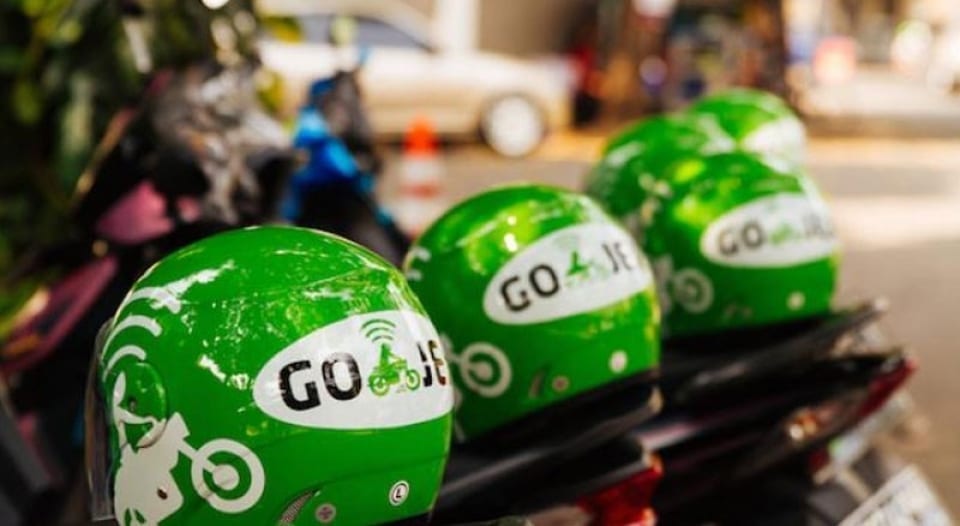
    Vietnam’s top taxi company Vinasun has sued Grab for $1.84 million in losses, citing “unhealthy competition.”

    The ride-hailing market in Vietnam has seen new entrants after the departure of Uber, which sold its Southeast Asia operations to Grab. The newcomers include Fastgo and GoViet, the last mentioned being an affiliate of Indonesia’s Gojek.

    Current market dominator Grab has expanded its services to include GrabFood, a food delivery service, and GrabCar Business, targeting the corporate sector.

    These moves pose further challenges for long-standing taxi firms like Mai Linh, Taxi Group and Vinasun.
  • Vietnamese taxi firm to get support in lawsuit against Grab

    Vietnamese taxi firm to get support in lawsuit against Grab

    Prosecutors have argued in a trial in HCMC that Grab must pay Vinasun compensation for losses it caused through “unhealthy competition.” At a hearing Tuesday the city People’s Procuracy rejected ride-hailing firm Grab’s argument that the court had no jurisdiction over the case, saying it does since it is a commercial dispute.

    Prosecutors also asked the judges to deny Grab’s request to summon representatives of Vietnam’s Ministry of Transport, other companies participating in the ministry’s pilot scheme for ride-hailing services and the company responsible for estimating Vinasun’s losses.

    As for Grab’s claim it is a tech firm and not a taxi company, they said since the firm directly assigns drivers, sets fares, sets regulations for drivers, and offers promotions, there is enough reason to dismiss this too.

    “Vinasun’s demand for compensation for reduced profits is well founded since Grab was dishonest in its business declaration and ran promotions in contravention of regulations, causing over 70 percent of Vinasun’s customers to switch to Grab due to lower fares.”

    Vinasun’s after-tax profit was nearly VND320 billion ($13.7 million) in 2015 and VND295 billion ($12.63 million) in 2016, but dropped to VND53 billion ($2.27 million) in the first half of 2017, by which time over 8,000 drivers had quit and hundreds of cars had stopped running due to a lack of drivers.

    Prosecutors asked the court to accept Vinasun’s petition for compensation of VND42 billion (nearly $1.8 million) in one payment.

    Grab continued to insist the case did not come under the court’s jurisdiction and that it is a tech firm.

    Dismissing the claim it had caused losses to Vinasun, Grab cited market research purporting Vinasun has been losing customers due to other reasons such as driver’s attitude, long waiting time and declining car quality.

    Vinasun filed the suit against Grab at the HCMC People’s Court in June last year accusing the Malaysia-based firm of abusing the Ministry of Transport’s pilot scheme and committing violations.

    Claiming Grab’s illegal activities had caused damages to it, Vinasun claimed to have suffered losses of nearly VND76 billion ($3.25 million) in 2016 and the first half of 2017, of which nearly VND42 billion (nearly $1.8 million) was caused by Grab.

    The trial began last February, but was first adjourned a month later due to the need for more evidence and again last month when Grab protested against the evaluation of Vinasun’s losses and refused to attend.

    The court is scheduled to hand down its verdict next Monday.

  • Taxi or not? Vietnam debate rages over Grab status

    Taxi or not? Vietnam debate rages over Grab status

    Transport authorities and taxi associations have reiterated that ride-hailing firm Grab should be treated as a taxi service, but experts disagree. Nguyen Cong Hung, vice chairman of the Vietnam Automobile Transportation Association (VATA), said at a recent meeting that it was incorrect to identify Grab as an electronic contract service firm.

    Hung said that legal experts have affirmed that Grab and other ride-hailing services are taxi services, and ordering a car service via a phone call or a phone app are only superficially different modalities.

    While some people believe that calling Grab a taxi service will hinder the development of technology, Hung disagreed.

    “Identifying a car service as traditional taxi or technology taxi will guarantee authorities management power and fairness in terms of their responsibilities. Whichever service applies technology will have higher profits,” he added.

    Echoing Hung, chairman of the Ho Chi Minh City Taxi Association, Ta Long Hy, said that any service which sets transport fees collects money and spends a large amount of money on discounts is a transportation service, and not merely a software company.

    Hy said that all car services that are 9-seaters or lower are taxi services in nature. “The Ministry of Transport should not create an exclusive playing field for a service that is basically a taxi service.”

    He proposed that 9-seater or lower car services, whether Grab or traditional taxis, be identified by a mark on their license plates or a larger registration label on the car’s windshield.

    Earlier this month, the Transport Ministry released the latest draft of a transportation management decree under which under 9-seater car services be registered as taxi firms before they can apply ride-hailing technologies.

    This means that Grab and other ride-hailing firms would have to register their services again as a taxi business and comply with corresponding legal responsibilities regarding their operating licenses, drivers’ profiles and tax duties.

    Should the decree be passed, Grab and other ride-hailing cars will have to put a sticker labeled “taxi” on their windshields and carry a taxi legend on the top.

    The draft goes against many experts’ requests to treat ride-healing services as a new business model that is different from traditional taxi service.

    Nguyen Dinh Cung, director of the Central Institute of Economic Management (CIEM), had said earlier that firms that primarily used software cannot be called a transportation business.

    Cung said that the government should encourage new investment forms or business models with an open and fair environment in keeping with Industry 4.0 trends.

    Lawyer Truong Thanh Duc said that the Ministry of Transport has been making changes with recent drafts without having a consistent viewpoint.

    The fact the ministry wants to identify ride-hailing services as taxi firms is against the government’s policy of prioritizing technology development in the Fourth Industrial Revolution, he said.

    Marketing expert Do Hoa said that Grab and other ride-hailing services should be managed under a new law specifically written for technological services.

    Traditional regulations related to taxi firms are not appropriate for Grab, as it is not a transport company, he said.

    The heated debates and struggles between ride-hailing cars and traditional taxis have not cooled after the exit of Uber from the Southeast Asian market in March. Taxi firms have continued to complain about the unfair competition they are facing.

    They have also joined hands to fight the market onslaught of ride-hailing firms.

    Grab has consistently been denying that it is a taxi firm, saying it only provides technological solutions to transport services.

    The debate over Grab’s status as transport company is hardly new in Vietnam. Vietnam’s top taxi company Vinasun sued Grab for $1.84 million in losses, citing “unhealthy competition”.

    In Vietnam, local cab firms like Mai Linh and Vinasun have to pay value added tax (VAT) of 10 percent and corporate income tax of 20 percent, while Grab only have to pay some 3 percent.

    The ride-hailing market in Vietnam has seen new entrants after Uber’s departure, including Fastgo and GoViet, which is an affiliate of Indonesia’s Gojek.

    Current market dominator Grab has expanded its services to include GrabFood, a food delivery service, and GrabCar Business, targeting the corporate sector.

    These moves pose further challenges for long-standing taxi firms like Mai Linh, Taxi Group and Vinasun.

  • Smart Solutions Can Improve Lives in Southeast Asian Cities: McKinsey

    Smart Solutions Can Improve Lives in Southeast Asian Cities: McKinsey

    Solutions such as ride-hailing services, data-driven transit planning, intelligent traffic systems, data-driven disaster risk assessments and smart energy meters, could save lives, add jobs, reduce living costs and curb emissions in cities across Southeast Asia, according to a recent study by McKinsey Global Institute, the research arm of the global consulting firm.

    In the study’s findings, released earlier this month, McKinsey said combined smart solutions in mobility, crime prevention and emergency response can prevent the loss of 5,000 lives to traffic accidents, fires and homicides each year.

    Almost 1.5 million additional jobs could also be created by creating a better hiring environment through digital applications, while citizens could save $16 billion through the implementation of smart-home solutions that lower energy bills and provide better housing alternatives.

    Moreover, these solutions could cut greenhouse gas emissions by 270,000 kilotons annually, or equal to the Laos’s total emissions per year, McKinsey said.

    Some private companies in Southeast Asia have found a foothold in advancing these solutions in the region. Smart mobility applications, such as those implemented by Indonesia’s Go-Jek and Singapore-based Grab, could create up to $70 billion in value across Southeast Asia, McKinsey said.

    Still, a thorough implementation of smart solutions would need government and the private sector complementing each other.

    “Smart solutions include an integrated mix of hardware, software and changes to the physical infrastructure,” said Mukund Sridhar, a McKinsey partner and co-leader of infrastructure practice in Southeast Asia.

    “Neither the public nor the private sector can build and run smart cities by themselves. Most infrastructure systems and critical services are public goods of which the public sector is the natural owner,” Sridhar said.

    Public goods, such as roads, can benefit from private-sector solutions. These include real-time road navigation apps such as Google Maps and Waze, which enable road users to avoid congested areas and accidents, saving them time.

    But roads can reach a point when it cannot accommodate more traffic, and that is when smart regulations are necessary. These include dynamic congestion pricing, which charges road usage fees adjusted dynamically based on road conditions and road speeds with higher fees charged during peak hours to reduce the number of private vehicles on the road, Sridhar said.

    “An example of this is Singapore’s electronic road pricing, or ERP, which has kept road speeds within ‘optimal’ range despite growth in the vehicle population,” he said.

    Sridhar said for countries like Indonesia to benefit from smart solutions and use it to overcome urban challenges, the government must lay out a clear roadmap on the role of the private and public sectors and implement it consistently.

    “It makes sense to identify those areas where city agencies can step back and make room for other players, including private-sector companies, state-owned utilities, universities, foundations and nonprofits,” he said.