
Retail News CRM

Tag: risks

  • Revolutionizing IT Stability: How 24/7 Monitoring Shields Japanese Firms from Downtime Risks

    Revolutionizing IT Stability: How 24/7 Monitoring Shields Japanese Firms from Downtime Risks

    The necessity for constant system monitoring is gaining traction among Japanese businesses, as it plays a crucial role in ensuring IT operations run smoothly and minimizes the chances of service disruptions. As dependence on digital infrastructures grows, it’s essential to maintain consistent system performance. This rings true for a variety of sectors, from e-commerce platforms to manufacturing systems and financial services, all of which demand nearly uninterrupted availability.

    24/7 Monitoring: The New Norm

    To cater to this demand, organizations are opting for round-the-clock monitoring strategies aimed at fostering stable, secure, and responsive systems. Continuous monitoring enables the early detection of potential problems, which can help to decrease service interruptions and uphold performance standards.

    Enterprise systems these days are often spread across intricate environments that mesh cloud infrastructure, databases, applications, and integrated services. In such landscapes, even minor unresolved issues can escalate into significant operational problems if not attended to promptly.

    A 24/7 monitoring setup offers real-time insights into system health and performance, fostering speedy detection and response to arising issues. Advantages of this approach commonly include early problem detection, less downtime, and enhanced system performance. These factors can facilitate smoother operations as businesses expand their digital services.

    The Digital Transformation Wave

    As the digital transformation journey advances, Japanese businesses are growing more reliant on robust IT systems. Reports predict that Japan’s expenditure on digital transformation will surpass US$73 billion by 2027, mirroring the increasing demand for stable and efficiently managed infrastructure.

    The rise in real-time platforms and hybrid cloud environments usage has led to monitoring solutions becoming a core part of IT operations.

    The Impact of System Downtime

    System downtime can have operational and financial repercussions. In sectors like finance, e-commerce, and manufacturing, even minor disruptions can influence transactions, delay processes, and affect user experience.

    Industry estimates point out that downtime cost for large corporations can be substantial, depending on the scale of the system and business model. Beyond direct financial damage, downtime can interrupt revenue streams, impede productivity, damage reputation, disappoint customers, and necessitate additional recovery efforts.

    For corporations managing environments that mix legacy systems with modern cloud platforms, minimizing disruption risks is an ongoing concern.

    Continuous Monitoring: A Risk Management Strategy

    Continuous monitoring is a strategy embraced to manage these risks. Monitoring systems typically offer real-time data and trigger alerts when irregular activity is detected, allowing technical teams to respond promptly.

    Typical practices include performance tracking, automated alerts, predictive analysis, and incident response mechanisms. Collectively, these functions reinforce system reliability and help manage operational risks.

    An all-encompassing monitoring strategy may encompass infrastructure, applications, security, and incident management. These elements are often merged to support overall system availability.

    Certain businesses collaborate with external service providers to oversee monitoring and related operations.

    Questions & Answers

    What is the role of continuous monitoring in modern businesses?
    Continuous monitoring plays a crucial role in modern businesses, enabling early detection of potential issues which can reduce service interruptions and maintain performance standards.

    What is the predicted expenditure of Japan on digital transformation by 2027?
    Japan’s expenditure on digital transformation is projected to exceed US$73 billion by 2027.

    What are the implications of system downtime?
    System downtime can have significant operational and financial implications, including interrupted transactions, delayed processes, poor user experience, revenue losses, reduced productivity, reputational damage, and additional recovery efforts.

  • HSBC’s Hang Seng Deal Bets on Long-Term Gains Beating CRE Risks

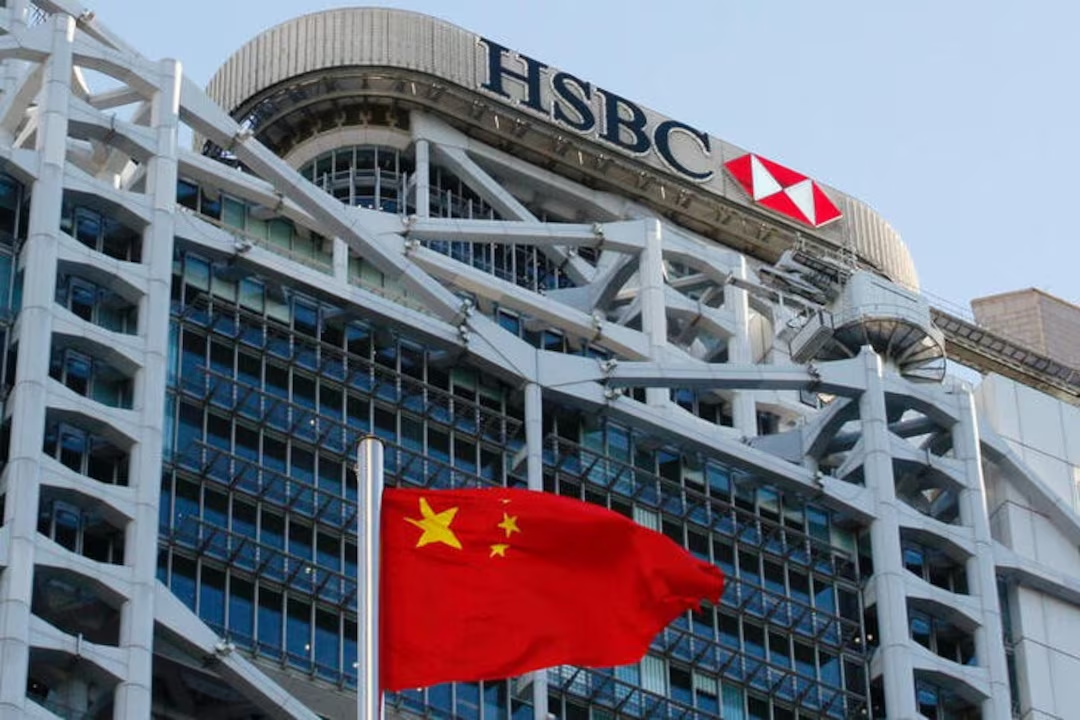
    HSBC’s Hang Seng Deal Bets on Long-Term Gains Beating CRE Risks

    HSBC’s recent proposal to purchase Hang Seng has raised questions due to the potential commercial real estate risk in Hong Kong. However, some experts believe that possible long-term advantages such as cost synergies may offset these concerns.

    Deal Details

    HSBC last week proposed to take over its Hong Kong-based subsidiary, Hang Seng Bank, by purchasing the remaining 37% stake currently held by minority shareholders for HK$106 billion ($13.6 billion). This transaction values Hang Seng at $155 per share, representing approximately a 30% premium at the time of the announcement. Hang Seng is expected to maintain its individual brand, banking license, and board.

    The acquisition will be entirely financed by HSBC, which plans to restore its CET1 ratio to its target operating range of 14-14.5% by generating capital organically and pausing any further buybacks for three quarters.

    Post-announcement, Hang Seng’s share price saw an increase of approximately 26%, while HSBC’s shares dropped by nearly 8%.

    Potential Bailout Concerns

    One of the most significant concerns surrounding the deal is Hang Seng’s exposure to Hong Kong’s commercial real estate (CRE) sector, which has been experiencing a sustained decline due in part to reduced rental demand and enduring vacancies. Close to half of HSBC’s Hong Kong CRE exposure is linked to Hang Seng, which reported HK$25 billion of impaired loans in the sector as of the first half of 2025.

    Reports indicate that Hang Seng was in the initial stages of selling more than $3 billion worth of property-backed loan portfolios following HSBC’s directive to its London-based global chief corporate credit officer and the head of its special credit unit to initiate such a process three months prior. Additionally, HSBC’s Hong Kong CEO Luanne Lim was appointed as Hang Seng CEO in September, replacing Diana Cesar who was promoted to Hong Kong vice chair at HSBC.

    However, HSBC CEO Georges Elhedery maintains that the deal aims to stimulate growth. He has stated that the Hang Seng transaction was not motivated by pressure to rescue the local lender and added that the British firm would consider further acquisitions in Hong Kong, with transaction banking and wealth identified as priority growth areas.

    Analysts’ Take

    The business community has offered mixed reactions to the deal, which is yet to receive approval.

    According to a UBS report, benefits could arise from increased exposure to the high return on tangible equity (ROTE) market in Hong Kong and simplified operations. However, concerns about provisions for CRE loans persist. Jefferies downgraded HSBC from a “buy” to a “hold” status after the planned $8.5 billion share buyback plan was scrapped, noting that the Hang Seng deal would have a neutral impact on earnings per share before synergies.

    Michael Makdad, a senior equity analyst at Morningstar, stated that “parent-subsidiary double listings are inherently problematic in terms of governance and in this sense, it’s a positive and long-overdue move. Of course, HSBC will need to pay a premium so it likely wouldn’t be positive in terms of my fair-value estimate for HSBC but there should be some opportunities for cost synergies.”

    Questions & Answers

    Q: What is the potential impact of the HSBC and Hang Seng deal?
    A: While increased exposure to the high ROTE market of Hong Kong and reduced operational complexity are expected benefits, there are concerns about provisions for CRE loans.

    Q: Has HSBC’s stock been affected by the announcement to buy Hang Seng?
    A: Yes, the announcement has led to an approximately 8% drop in HSBC’s share price.

    Q: Is there a risk of a bailout related to the HSBC and Hang Seng deal?
    A: There have been speculations about a potential bailout due to Hang Seng’s significant exposure to Hong Kong’s declining commercial real estate sector. HSBC’s CEO, however, maintains that the purchase is aimed at driving growth.

  • Ultra-Rich Seek Safe Haven: Singapore’s Gold Storage Becomes Hot Commodity Amid Rising Global Risks

    Ultra-Rich Seek Safe Haven: Singapore’s Gold Storage Becomes Hot Commodity Amid Rising Global Risks

    Located near Singapore’s bustling airport, a remarkable six-story structure known as “The Reserve” holds gold and silver bars valued at an astounding US$1.5 billion. This extraordinary facility features numerous private vaults and an impressive storage chamber filled with thousands of safe deposit boxes, soaring three stories high.

    Record Surge in Precious Metal Storage

    In the first four months of this year, The Reserve reported an astonishing 88% increase in orders for gold and silver storage compared to the same period in 2024, according to its founder, Gregor Gregersen. Even more striking, the facility experienced a 200% year-on-year rise in sales of precious metals bars during this timeframe.

    “A lot of very high net-worth clients are looking at tariffs, the changing world, and the potential for geopolitical instabilities,” Gregersen shared with CNBC. “The idea of placing physical metal in a safe jurisdiction like Singapore with trustworthy partners is becoming an undeniable trend.” Interestingly, 90% of the new orders come from clients based outside Singapore.

    Gold Prices on the Rise

    With gold prices skyrocketing to consecutive record highs this year, driven in part by its status as a safe haven amid tumultuous U.S.-China trade tensions, the allure of physical gold has tantalized investors. Currently, spot gold is trading at around $3,300 and is projected to climb to $3,400 in the near term, according to Tim Waterer, chief market analyst at KCM Trade. Furthermore, JP Morgan anticipates bullion could reach $4,000 per ounce next year.

    Gregersen highlighted that wealthy investors are increasingly opting for tangible gold bars over paper investments to mitigate counterparty and geopolitical risks. “Previous crises have amplified the demand for physically owning gold rather than relying on paper assets or pooled reserves, which may become precarious if a bank fails,” noted Nicky Shiels, head of research and metals strategy at MKS Pamp, a distinguished refining and trading firm for precious metals.

    Singapore’s Spotlight Role

    Given the current economic uncertainties, Singapore has emerged as a premier hub for gold reserves. “Singapore is regarded as the ‘Geneva of the East’; it boasts a reputation for political and economic stability,” Shiels remarked to CNBC.

    This major transit hub not only serves as a safe space for storing wealth but also offers ease of access. According to Shiels, “You can bank and store your gold there, and it’s easy to pick up and transport, making it a competitive advantage over Switzerland.”

    As The Reserve continues to flourish in Singapore, it’s clear that the allure of physical gold won’t be fading away anytime soon.

    Questions & Answers

    What significant increase did The Reserve see in storage orders?
    The Reserve experienced an impressively high 88% surge in orders for gold and silver storage in the first four months of this year.

    What are the current trends in gold pricing?
    Spot gold is currently trading around $3,300, with predictions suggesting it may rise to $3,400 soon, and JP Morgan estimates it could reach $4,000 per ounce next year.

    Why is Singapore viewed as a favorable location for gold storage?
    Singapore is considered a legitimate “Geneva of the East” due to its political stability, economic security, and convenience as a major transit hub, making it an attractive option for wealth storage.

  • Indonesia’s antitrust body looking into risks from reported Grab-GoTo merger

    Indonesia’s antitrust body looking into risks from reported Grab-GoTo merger

    The Indonesian competition authority has initiated an investigation to identify potential risks associated with a potential merger between tech behemoths Grab and GoTo, according to the head of the agency.

    Muhammad Fanshurullah Asa, the head of the agency, stated that a comprehensive review could be carried out once the merger occurs and both firms officially notify them of their actions.

    Although there is no official confirmation from either company about the speculated merger, recent months have seen an increase in speculation about this potential merger.

    It was suggested by individuals familiar with the situation last week that the two companies were aiming to finalize a deal within the second quarter of this year.

    Questions & Answers

    What is the nature of the investigation being conducted by the Indonesian competition authority?
    The investigation is designed to identify any potential risks that could arise from a possible merger between tech giants Grab and GoTo.

    Have Grab and GoTo confirmed their plans for a merger?
    No, both companies have yet to officially confirm their plans for a merger, though speculation has been rife in recent months.

    When are the two companies expected to finalize their deal?
    Sources familiar with the matter suggested that the companies are aiming to finalize the deal in the second quarter of this year.

  • Vietnam Weighs ‘Red Alert’ Label to Tackle Toxicity Risks in Durian Farming

    Vietnam Weighs ‘Red Alert’ Label to Tackle Toxicity Risks in Durian Farming

    A comprehensive examination of durian cultivation areas and packaging facilities is essential to pinpoint those using prohibited substances, asserted Vu Duc Con, chairman of the Dak Lak Durian Association, in a letter to the Ministry of Agriculture and Environment. He emphasized the necessity of assigning a “red alert” label to facilities found in violation, urging the government to establish a recovery plan that encourages the adoption of safe and sustainable farming practices.

    This proposal comes on the heels of multiple warnings from Chinese customs, which have heightened scrutiny since late 2024 regarding cadmium levels in Vietnamese durians—a toxic heavy metal. Moreover, some samples were reported to contain auramine O, a banned additive with potential cancer risks.

    The impact on Vietnam’s agricultural sector is stark, with durian exports to China plummeting by 74% year-on-year during the first four months of 2025, totaling just $130 million, according to the agriculture ministry. In response, China has begun testing all shipments for cadmium and auramine O, enforcing strict penalties such as the suspension of codes for related growing areas and packing facilities.

    To combat these challenges, the Dak Lak Durian Association is collaborating with official agencies to conduct extensive sampling to detect chemical residues and trace their origins. In a bid to secure its standing in the Chinese market, this prominent durian-growing region in the Central Highlands aims to establish its own quality control standards for the fruit.

    Furthermore, the association has called on the government to develop technical standards and adopt rapid on-site testing technologies to ensure food safety prior to exports. In cases of serious safety violations, they advocated for the destruction of contaminated shipments rather than rerouting them to domestic markets, protecting public health and the industry’s reputation in the process.

    Currently, Vietnam boasts over 150,000 hectares dedicated to durian cultivation; however, only 20% are certified for export. Many of these farms fall short of regulatory standards regarding pesticides and quality, which hampers their global competitiveness. With China being the largest market for Vietnamese durians—contributing to $3.2 billion in exports last year—maintaining high standards is crucial for the industry’s future success.

    As the saying goes, “If you can’t stand the heat, get out of the durian kitchen!”

    Questions & Answers

    **What prompted the review of durian farming practices in Vietnam?** The review was prompted by repeated warnings from Chinese customs regarding the presence of cadmium in Vietnamese durians and other unsafe additives.

    How much have Vietnamese durian exports to China decreased recently? Exports plunged by 74% year-on-year in the first four months of 2025, totaling just $130 million.

    What measures is the Dak Lak Durian Association advocating for? The association is urging for the establishment of technical standards, rapid testing technologies, and strict penalties for safety violations to enhance the safety and quality of durian exports.

  • EU could start enforcing Digital Markets Act rules on Apple, Google, Meta in Spring 2023

    EU could start enforcing Digital Markets Act rules on Apple, Google, Meta in Spring 2023

    You may have heard so far that the European Union has been preparing to have a say in how big tech companies like Apple, Google, and Meta operate. We are talking about a legislation dubbed the DMA (Digital Markets Act) which the European Commission has been rigorously preparing for a while. The European Commission’s

    executive vice president Margrethe Vestager has set her eyes on controlling (or at least, fining if uncontrollable) tech giants such as Apple, Google, Amazon, Meta, and others with the DMA. Previously, she expected the battle to begin in October, but it seems we are more likely to see some action in the Spring of next year.

    The waiting game depends on when the DMA will get implemented. The legislation is currently waiting for approval from the Council and Parliament.

    The EU is, however, gearing up for enforcement of the new laws. The legislation focuses on the so-called gatekeeper companies, that, if you’ve been attentive so far in this article, you might presume refers to those big tech companies we mentioned earlier.

    And you would be correct. If you’re curious, here’s the definition of what companies are considered gatekeepers: the company needs to have a market capitalization (a fancy way of saying the total of its stocks value) of over €75 billion ($82 billion) and own a social platform or app with at least 45 million monthly users.

    These companies could face fines of up to 10 percent of their total worldwide turnover (for the preceding year) if they fail to comply with the legislation. For the repeated offenders, the fine can grow to 20 percent, which could help the EU drive its point home.

    So, big tech companies will have three months to declare their status to the Commission, and then they’ll have to wait for up to two months to receive confirmation from the EU. Indeed, it seems like it could take quite a while for the giant mechanism to start working (you can’t expect tech giants and government commissions to fight a fierce Marvel-like battle that’s so quick it’s hard to see).

    And as you might imagine, the EU has a lot more work it needs to do beforehand. Hiring heroes (we mean, staff), preparing the hundreds of monitors and computers to analyze data (and possibly, the 007 coffee for the employees that are working there)… joking aside, it will indeed take some tremendous work to prepare such legislation to be executed. Vestager also mentions that they will need to prepare legal text on various procedures.

    However, when the DMA passes, it will possibly mark an end of an era. In case you haven’t heard of it yet, this is the legislation that could force Apple to allow users to download apps from outside the App Store (a possibility that freaks Tim Cook out and has him worried about the iPhone security), as well as require WhatsApp and iMessage to become interoperable with smaller chat apps.

    Sideloading (the process of downloading apps on iPhone from outside the App Store) is arguably the biggest change the DMA will force for Apple. Previously, Apple has raised concerns that this will weaken the iPhone’s security. By the way, Android users have been able to sideload apps for quite a while now.

    On the other hand, an even bigger cause of headache for Apple is that the DMA would make Cupertino allow App Store customers to make in-app payments through alternative payment platforms (you may have heard about the infamous Apple Tax, 30% cut, which Apple takes from developers when payments are made via the App Store).

    With all this being said, it will be quite interesting to see the DMA in action and what changes will big tech giants have to implement (and whether they will comply).