Retail News CRM

Tag: Robotics

  • Velocity Ventures invests in automated Pizza store

    Velocity Ventures invests in automated Pizza store

    Velocity Ventures, Southeast Asia’s leading venture capital firm focused on helping travel and hospitality solve industry challenges will be the anchor investor for Hyper Food Robotics (Hyper), an Israel-based firm that will debut its first fully autonomous  robotic  pizza kitchens in 2023.

    With Hyper’s autonomous robotic kitchens, it takes 8 mins to cook a pizza for the end-to end process and the kitchen can produce up to 120 pizzas per hour. An unmanned kitchen can operate three times more efficiently as compared to a human-staffed kitchen by reducing overheads for labour and rental costs, and also minimising food waste. The modular units are easy to transport ensuring ease of scalability. Using AI technology, the robotic kitchen is able to ensure consistency in food quality and safety standards.

    Hyper is the brainchild of Udi Shamai, Yariv Reches and Harel Shafran. CEO Udi is a well-known entrepreneur and owner of Pizza Hut Israel with over thirty years of managing fast food restaurants. Faced with rising labour costs and challenges to recruit kitchen crew, Shamai decided to explore how robotics and automation could alleviate the persistent problems of manpower shortage. He decided to bring together a team of experts in the fields of food, robotics, and mechanics to design a fully autonomous store that can increase efficiency and reduce reliance on a human workforce in the food services industry.

    The goal is to design a self-contained total solutions robotic box kitchen for fast food restaurants which will replace an entire restaurant kitchen and automate the entire process from food preparation to cooking and even packing the food for delivery without the need for any kitchen crew to be involved. With modular autonomous kitchens, clients can essentially operate off-premises food services using a “plug and play” boxed kitchen, ensuring ease of scalability while maintaining manufacturing costs are kept economical. Shamai is also committed to ensure that quality assurance and food quality is not compromised.

    Nicholas Cocks, Managing Partner of Velocity Ventures said: “We are excited to be investing in the Future Restaurant Kitchen as we know that restaurants all around the world are facing a manpower crisis. Our strategic roadmap at Velocity Venture is to identify and propel startups that will solve problems faced by businesses in the hospitality and travel industry. Hyper’s robotic kitchen will be tomorrow’s disruptive technology for the food services industry as labour shortage challenges escalate because more people now shun back-of-house operations jobs. Automation and robotics can help companies achieve lower labour costs and improve productivity by taking over repetitive tasks in the kitchen, allowing restaurants to redeploy their employees to other parts of the business that will improve the customer experience.”

    Udi Shamai , CEO and Co-founder of Hyper Food Robotics “Having Velocity Ventures come onboard as our anchor investor is a major milestone for the team at Hyper. We debuted our pilot store in October 2021 in Israel with Pizza Hut introducing a robotic kitchen that can prepare and cook pizzas and side dishes. We envision exciting times ahead as we grow and scale globally with the right partners. We aim to launch Hyper “robotic box kitchens” internationally by next year which will be a gamechanger for any food services operator wanting to deploy a cloud kitchen in which all automated technology and production zones are packed within a self-cleaning shipping-container-like unit.”

    Velocity Ventures is the most proactive investor in the travel and hospitality tech space in Southeast Asia and including Hyper, has seven portfolio companies. The firm also aims to make ten additional investments in the sector by Q4 2023.
  • GreyOrange to showcase new modular sortation system at ProMat 2019

    GreyOrange to showcase new modular sortation system at ProMat 2019

    Robotics and warehouse automation company GreyOrange will showcase its new FlexoTM modular sortation system and demonstrate upgraded versions of its Butler and PickPal on April 8-11, at ProMat 2019, the leading trade show for supply chain and logistics.

    Today’s modern supply chains are under immense pressure to improve productivity as businesses grapple with unpredictable demand and labor shortages to handle omnichannel distribution. The intelligent robotics solutions from GreyOrange address these challenges head on with high-level flexibility in terms of design that helps businesses adapt easily to changes in customer demand and market strategies while controlling costs.

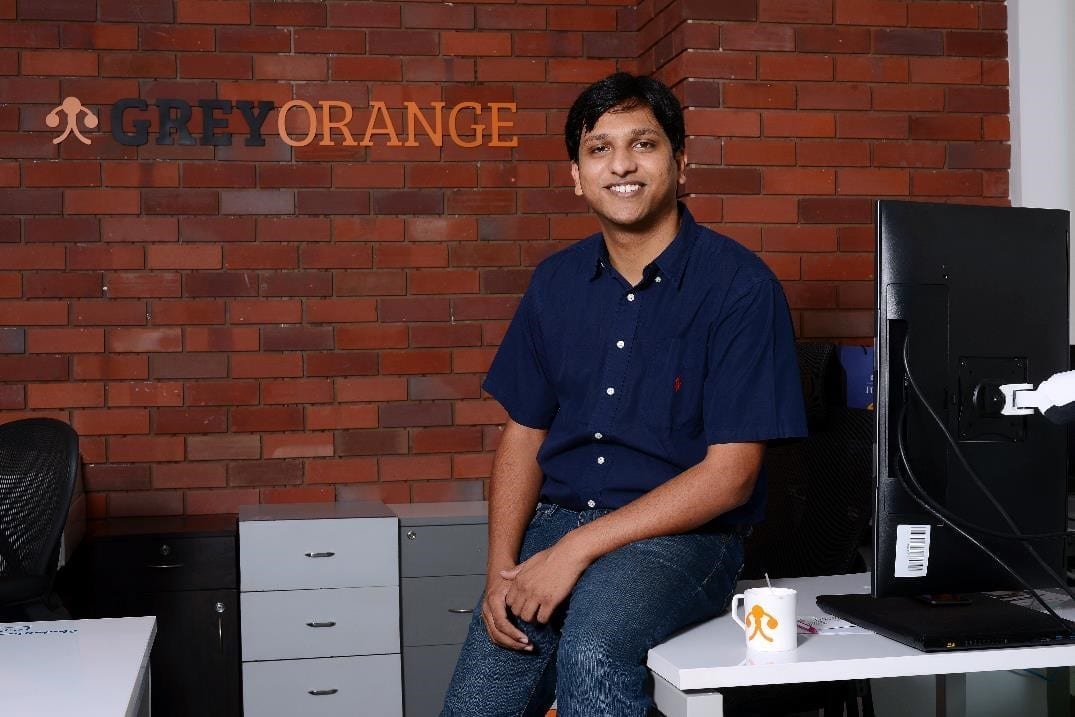
    GreyOrange Co-founder and Group CEO Samay Kohli will speak on April 10 at 11:30 am at The Chief Robotics Officer Summit, organized by RoboBusiness. He will discuss how a new generation of robotics for warehousing that optimizes machine learning and AI, delivers the Flexible Automation that modern distribution centers need to maintain a competitive edge. The robotics systems from GreyOrange have the agility to deploy quickly, adapt on the fly to evolving operational demands and unlock new levels of productivity for applications in omnichannel Retail, ecommerce, 3PL and fast-moving consumer goods(FMCG).

    At Automate 2019, GreyOrange Boston R&D Labs Director and Head, Andreas G Hofmann will present a session on “Intelligent Robotics for Flexible Supply Chain Automation” on April 10 at 3:30 pm. He will highlight new robotic technologies that address challenging problems in warehouse automation that provide flexibility with a limited set of product morphologies. This allows for addressing rapidly changing warehouse needs while managing product customization costs. Automate is a leading automation solutions event by the Association for Advancing Automation, and is co-located with ProMat 2019.

    See the new GreyOrange FlexoTM modular sortation system at ProMat. Flexo enables destination sortation; inbound and outbound, in fulfilment, distribution and logistics centers.  Designed for flexibility, Flexo adapts to existing layouts, can easily scale and handle versatile payloads without constraints to future growth. Flexo is easy to deploy and is portable across facilities. Capable of operating 24/7, this system reduces cost per shipment and dependency on additional labor during peaks. Flexo components are designed to allow for fast implementation in as short as 15 days due to its modularity and standardization, and can be easily scaled to handle large peaks.

  • Hyundai brings wearable robotics to factories

    Hyundai brings wearable robotics to factories

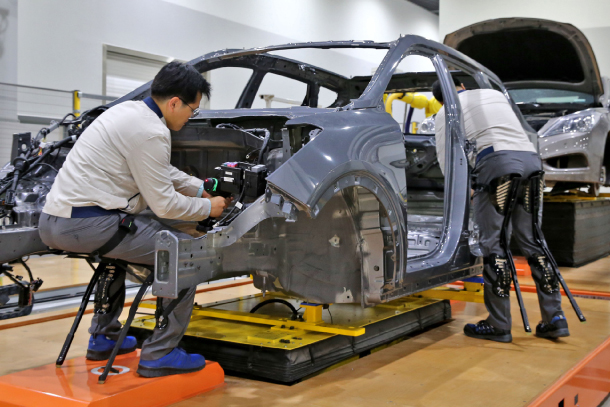
    The Hyundai Motor Group will expand the use of wearable robots at its facilities as it works to make robotics a major source of revenue, the company said Monday. Since September, Korea’s largest automaker has been testing the Hyundai Chairless Exoskeleton (H-CEX) at its North American factory. The H-CEX is an assistive robot for workers who have to stay in a seated position throughout the day. By the end of this year, the carmaker will introduce the Hyundai Vest Exoskeleton (H-VEX) at the same facility.

    The H-CEX, the first wearable developed by Hyundai for use at production sites, reduces the use of waist and lower body muscles by 80 percent, reducing the fatigue that results from being in the same seated position for a long period of time, Hyundai said in statement. The soon-to-be introduced H-VEX exoskeleton is for workers in jobs that require a lot of arm lifting. The machine vest will support the upper body and protect neck and shoulder muscles.

    “By expanding test applications, we hope to prove the technological effectiveness of our wearable robots,” Hyundai said in statement.

    The two exoskeletons were developed by Hyundai’s robotics team, established in May after the company named robotics as one of its five pillars for the future.

    The team is preparing to launch other robots focusing on three main areas: wearables, service robots and mobility robots.

    Hyundai is gearing up to test a hotel robot capable of providing room service and guiding guests. It will be introduced at the Haevichi Hotel & Resort on Jeju Island and at the Rolling Hills Hotel in Hwaseong, Gyeonggi, from the end of this year.

    A car-selling robot with natural language conversation capabilities and artificial intelligence will be prototyped by early next year. By 2020, the automaker plans to introduce a robot that can autonomously charge electric vehicles at charging stations.

    “We believe that robotics could be a solution not only for mobility but also for production in areas suffering from population decline,” a spokesperson for Hyundai said. “We plan to make notable achievements in robotics using technological data we have accumulated while developing autonomous cars.”

    Hyundai is not the only automobile maker bringing exoskeletons to assembly lines. U.S. automaker Ford has tested EksoVest, an upper-body assisting wearable jointly developed with Ekso Bionics. It was introduced at two U.S. factories in November last year. Ford announced in August a plan to bring the robot to 15 plants globally.

    German automakers BMW and Audi are also developing wearable aids for factory workers.

    According to market tracker BIS, the world’s wearable robot market is due to grow by 50 times from $96 million in 2016 to $4.65 billion by 2026.

  • Honda to focus on self-driving cars, robotics, EVs through 2030

    Honda to focus on self-driving cars, robotics, EVs through 2030

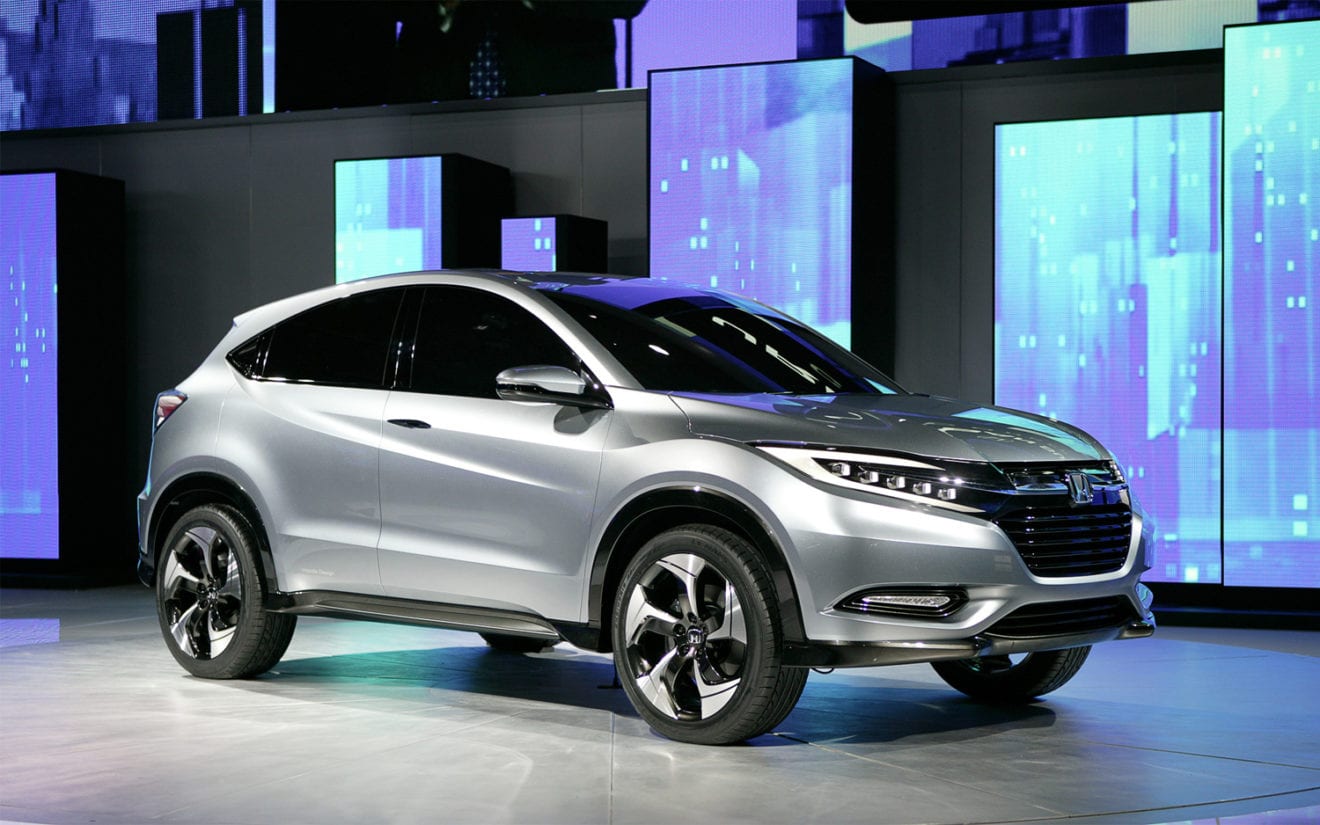
    Japanese carmaker Honda Motor on Thursday spelled out for the first time its plans to develop autonomous cars which can drive on city streets by 2025, building on its strategy to take on rivals in the auto market of the future.

    Unveiling its mid-term Vision 2030 strategy plan, Honda said it would boost coordination between R&D, procurement and manufacturing to tame development costs as it acknowledged it must look beyond conventional vehicles to survive in an industry which is moving rapidly into electric and self-driving cars.

    Honda has already spelled out plans to market a vehicle which can drive itself on highways by 2020, and the new target for city-capable self-driving cars puts its progress slightly behind rivals like BMW.

    “We’re going to place utmost priority on electrification and advanced safety technologies going forward,” Honda CEO Takahiro Hachigo said.

    Developing new driving technologies, robotics- and artificial intelligence-driven services and new energy solutions also would be key priorities for Honda in the years ahead, the company said.

    LEVELING UP

    Honda established a division late last year to develop electric vehicles (EVs) as part of its long-held goal for lower-emission gasoline hybrids, plug-in hybrids, EVs and hydrogen fuel cell vehicles (FCVs) to account for two-thirds of its line-up by 2030, from about 5 percent now.

    By 2025, Honda plans to come up with cars with “level 4” standard automated driving functions, meaning they can drive themselves on highways and city roads under most situations.

    Achieving such capabilities will require artificial intelligence to detect traffic movements, along with a battery of cameras and sensors to help avoid accidents.

    BMW has said it would launch a fully autonomous car by 2021, while Ford Motor has said it will introduce a vehicle with similar capabilities for ride-sharing purposes in the same year. Nissan Motor is planning to launch a car which can drive automatically on city streets by 2020.

    Honda has been ramping up R&D spending, earmarking a record 750 billion yen ($6.84 billion) for the year to March.

  • Robotics roll into Indonesian retail with launch of Sphero in Jakarta

    Robotics roll into Indonesian retail with launch of Sphero in Jakarta

    Global robotics firm Sphero has signed a distribution agreement with Halo Robotics to distribute Sphero’s full range of robotic gaming systems in Indonesia.

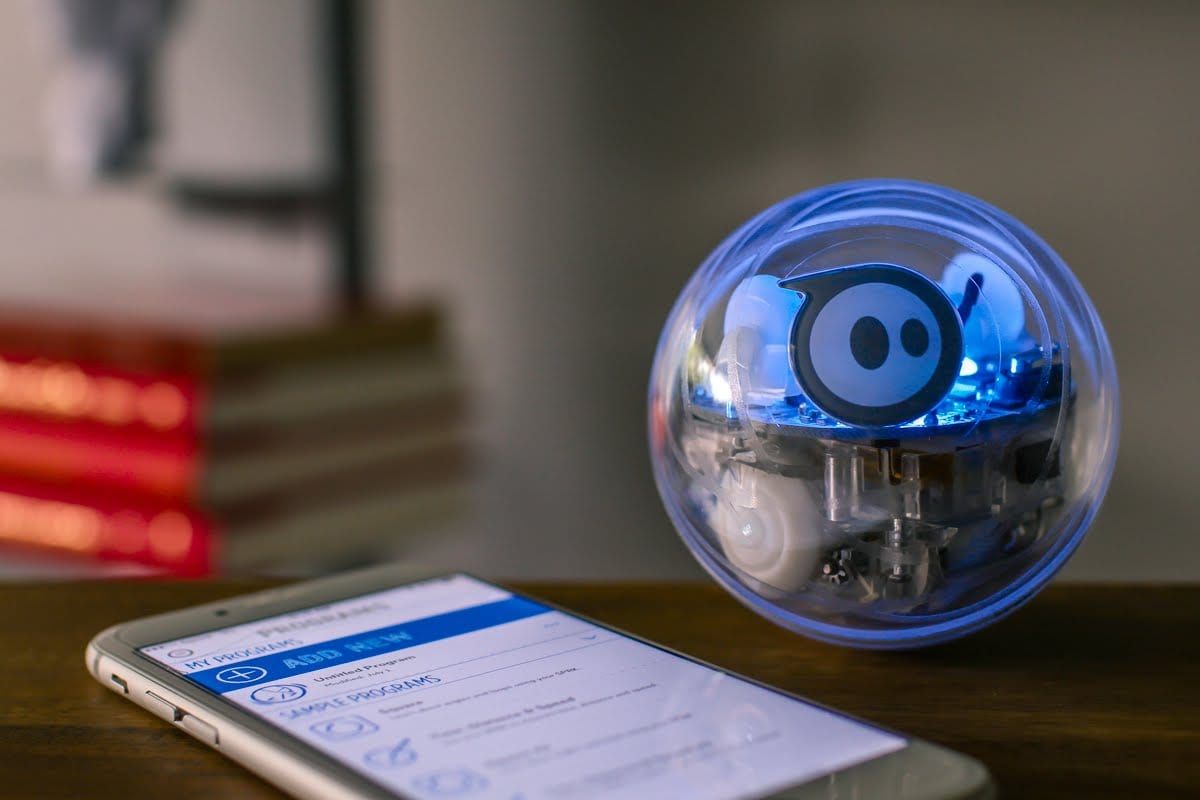
    Sphero is the creator of intuitive smartphone-controlled robots such as the BB-8 app-enabled Droid popularized in Star Wars, whose enormous popularity has defined a new product category, “connected play.”

    Sphero’s  engaging robotic toys roll and jump in response to voice and app controls, and that constantly improve with regular software updates.

    New products and apps, include Ollie, a rebellious, cylindrical robot that rolls at speeds of up to 15 mph; and SPRK, a clear shelled Sphero, that when coupled with the Lightning Lab app, teaches foundational programming through STEM activities.

    “This is an exciting time for Sphero, and we are excited to celebrate the launch of our long-term connection with Indonesia,” said Aurelien Joly, Sphero’s APAC Channel Director.

    Halo Robotics said the connected play toy market has grown dramatically over the last several years and appeals to a full range of consumer audiences.

    Nearly half of Indonesia’s population of 249.9 million are under the age of 30, with among the world’s fastest-growing consumer demographics for Sphero products. Famously tech-savvy, over 100 million Indonesians will be smartphone users by 2017, laying a strong foundation for app-controlled robots.