Retail News CRM

Tag: running

  • Musinsa in Race for Hoka’s South Korean Distribution Rights Amid High Competition and Growing Market Demand

    Musinsa in Race for Hoka’s South Korean Distribution Rights Amid High Competition and Growing Market Demand

    South Korean fashion and lifestyle company, Musinsa, is said to be currently in discussions to obtain the local distribution rights for Hoka, a well-known performance footwear brand. The talks are reportedly taking place with Deckers Outdoor Corporation, the American parent company of Hoka, as Musinsa seeks to handle the brand’s import and distribution within South Korea.

    Interest From Major Fashion Groups

    Musinsa is not alone in its interest in the brand. Other notable fashion companies, such as Shinsegae International and LF Corp, are also rumored to be considering placing their bids. This interest underscores the intense competition for the distribution rights of Hoka within the domestic market.

    Scrutiny Over Hoka’s Current Distribution

    Hoka’s current distribution within Korea has fallen under public scrutiny due to allegations of misconduct by the CEO of its current local partner, Joyworks & Co. This has resulted in significant public backlash. Whilst Deckers has not formally announced any changes or terminations to its current distribution arrangement, these developments have led to speculation that the company might be reconsidering its local strategy.

    Increasing Demand for Hoka in South Korea

    Hoka’s footwear has been experiencing growing demand amidst a surge in participation in outdoor activities and running in South Korea. The brand’s shoes have been gaining popularity amongst consumers focused on performance and lifestyle shoppers alike.

    Musinsa’s Expansion Strategy

    Musinsa’s interest in Hoka fits perfectly into its wider expansion strategy. Last year, Musinsa established a presence in the Chinese market through a joint venture with Anta Sports, leading to the creation of Musinsa China. This move was aimed at supporting growth across both online and offline retail channels.

    Questions & Answers

    What is the current status of Hoka’s distribution within South Korea?
    Hoka’s current distribution within South Korea, managed by Joyworks & Co, has recently come under public scrutiny due to allegations of misconduct by Joyworks & Co’s CEO.

    Who is interested in obtaining the domestic distribution rights for Hoka?
    South Korean fashion and lifestyle company Musinsa, along with other major fashion groups such as Shinsegae International and LF Corp, have expressed interest in acquiring the distribution rights.

    What is driving the growing demand for Hoka in South Korea?
    The increasing participation in outdoor activities and running in South Korea is driving the growing demand for Hoka’s footwear. The brand’s shoes are gaining popularity amongst performance-focused consumers and lifestyle shoppers.
  • Hanoi-HCMC Soars High: World’s 4th Busiest Flight Route for Second Year Running

    Hanoi-HCMC Soars High: World’s 4th Busiest Flight Route for Second Year Running

    The flight route between Hanoi and Ho Chi Minh City (HCMC) once again ranked as the fourth busiest worldwide in 2025, boasting a seat capacity of 11.07 million, according to data from an aviation intelligence firm. The route saw a 4% increase in seat numbers from the previous year.

    Consistent Top Contender

    The Hanoi-HCMC route has consistently held a position in the top ten busiest flight routes over the past eight years. Notably, this was its fourth consecutive year in the fourth position.

    The average cost of a one-way flight along this route decreased by 11% in 2025, with the current average ticket price sitting at $67. This is highly competitive due to the presence of six carriers operating the route in 2025.

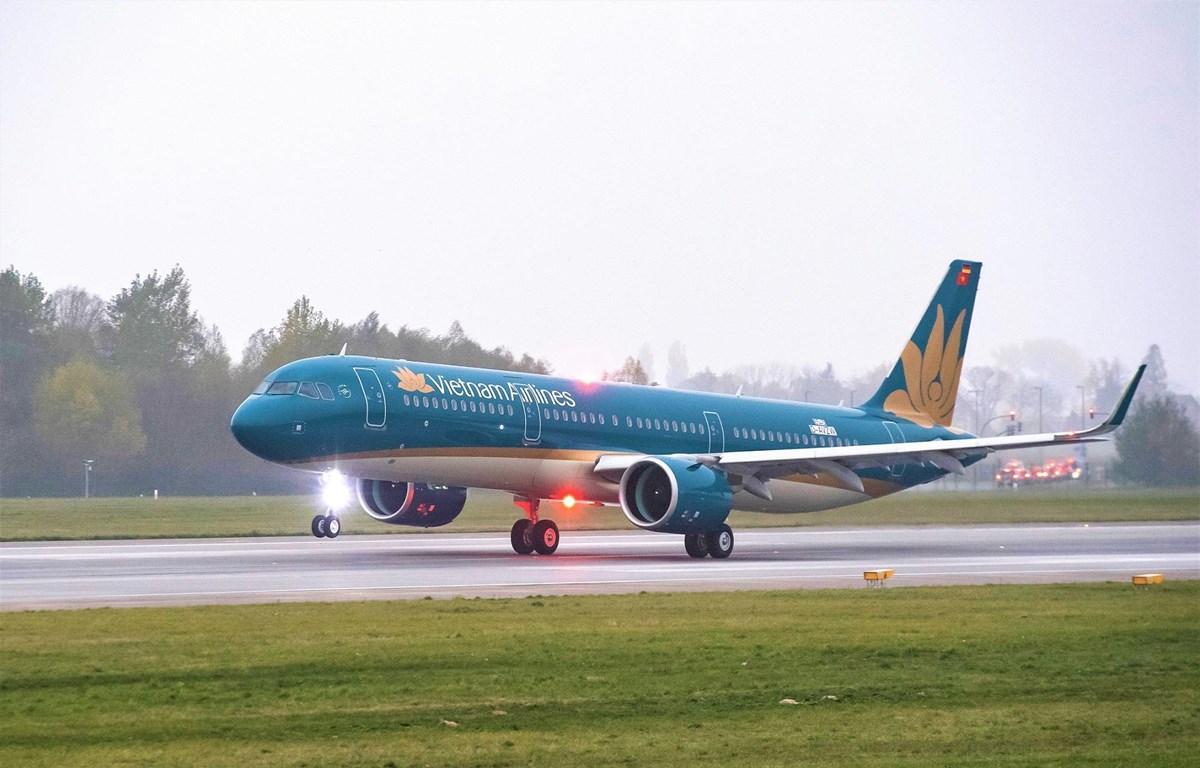
    Vietnam Airlines and Vietjet are the main operators on this 1,000-km route, providing several daily flights. The recent addition of Sun PhuQuoc Airways in the last quarter has added to the competition on this route. Other service providers on this sector include Bamboo Airways, Pacific Airlines, and Vietravel Airlines.

    Global Ranking: Top Five Busiest Flight Routes in 2025

    When it comes to the world’s busiest flight routes in 2025, the top five remain largely unchanged from the previous year. South Korea’s Jeju International-Seoul Gimpo route takes the lead with 14.38 million seats, followed by Japan’s Sapporo New Chitose-Tokyo Haneda with 12 million seats and Fukuoka-Tokyo Haneda with 11.5 million seats.

    Saudi Arabia’s Jeddah-Riyadh route, with a seat capacity of 9.8 million, has dethroned Australia’s Melbourne-Sydney route (8.9 million seats) to claim the fifth spot. Interestingly, the Jeddah-Riyadh route also reported the fastest growth, with a 13% increase in seat capacity. It is also the only non-Asia-Pacific route in the top ten.

    Questions & Answers

    What was the fourth busiest flight route in 2025?
    The flight route between Hanoi and Ho Chi Minh City ranked as the fourth busiest flight route in 2025.

    Which flight routes were the busiest in 2025?
    The busiest flight routes were South Korea’s Jeju International-Seoul Gimpo, Japan’s Sapporo New Chitose-Tokyo Haneda, Fukuoka-Tokyo Haneda, Vietnam’s Hanoi-HCMC, and Saudi Arabia’s Jeddah-Riyadh.

    Which route showed the fastest growth in 2025?
    Saudi Arabia’s Jeddah-Riyadh route reported the fastest growth, with a 13% increase in seat capacity.

  • Panic withdrawals hit Cambodia’s Prince Bank after owner Chen Zhi accused of running Southeast Asian cybercrime empire

    Panic withdrawals hit Cambodia’s Prince Bank after owner Chen Zhi accused of running Southeast Asian cybercrime empire

    Following allegations of operating a multinational scam and money laundering network, Prince Bank owner Chen Zhi has elicited panic among customers in Cambodia. There has been a significant surge in account holders rushing to withdraw their funds from the embattled bank.

    Mass Withdrawals and Public Discontent

    On Saturday morning, throngs of account holders crowded outside Prince Bank’s main branch in Phnom Penh to retrieve their savings. Transactions were temporarily suspended at several other branches due to inadequate funds. Increasing public frustration was evident when customers found themselves unable to access Prince Bank’s website and mobile application.

    Hoping to assuage their customers’ fears, the bank issued a statement encouraging patience, assuring that their services were functioning normally despite facing a barrage of public complaints.

    The bank statement read, “The measures from the U.S. Treasury’s Office of Foreign Assets Control will not impact the bank’s operational ability. We continue to manage all our customer relationships with sincerity and transparency.”

    International Sanctions Trigger Panic

    The catalyst for the wave of withdrawals was an announcement on October 14 stating that sanctions had been imposed on Prince Holding Group (the parent company of Prince Bank) and its founder and chairman, Chen Zhi. These sanctions were implemented by the U.S. Department of Justice, the U.S. Department of the Treasury, and the British government.

    Chen has been charged with fraud and money laundering by the U.S. government, which resulted in seizing more than US$15 billion in Bitcoin, allegedly laundered by Chen and Prince Holding Group. This is a landmark case, representing the largest asset forfeiture in the history of the Department of Justice. If Chen is found guilty, he could face a prison sentence of up to 40 years.

    Additionally, the U.K. government imposed sanctions on Golden Fortune Resort World, which operates the Prince Compound near Phnom Penh. It also added the Jinbei Group, which is linked to Prince Holding Group via its hotels and casinos, and the digital currency platform Byex Exchange to its sanctions list.

    Both governments have accused Chen of leading a transnational criminal network, swindling victims worldwide, and exploiting trafficked workers across Southeast Asia.

    National Bank of Cambodia Reassures Depositors

    In an effort to alleviate depositor anxiety, the National Bank of Cambodia assured that customer accounts are functioning normally and remain secure. It emphasized that banks are legally mandated to maintain sufficient liquidity to meet depositors’ demands.

    Questions & Answers

    What prompted the rush to withdraw money from Prince Bank?
    The rush was triggered by allegations against the bank’s owner, Chen Zhi, accusing him of running a transnational scam and money laundering network.

    What actions have been taken against Chen Zhi and Prince Holding Group?
    The U.S. and U.K. governments have imposed sanctions on Prince Holding Group and its founder, Chen Zhi. The U.S. government has also charged him with fraud and money laundering, seizing over US$15 billion in Bitcoin that Chen and Prince Holding Group allegedly laundered.

    How has the National Bank of Cambodia responded to the situation?
    The National Bank of Cambodia has reassured depositors that customer accounts are functioning normally and remain secure. It also emphasized that banks are legally obligated to maintain sufficient liquidity to meet depositors’ demands.

  • Puma plans job cuts as US demand weakens, outlook dims

    Puma plans job cuts as US demand weakens, outlook dims

    Puma on Wednesday announced job cuts and warned of uncertain US consumer demand. The German sportswear group’s shares slumped 23 percent in the wake of disappointing quarterly and annual forecasts issued a day earlier.

    The grim outlook, which follows weak quarterly sales and annual profit announced in January, has raised concerns over Puma’s ability to compete with bigger rivals Adidas and Nike while fending off newer, fast-growing brands such as On Running and Hoka.

    Chief executive Arne Freundt said Puma’s target consumers in the United States were not spending due to economic uncertainty.

    “February was bad. March has started off a bit better,” he said at a press conference.

    Chief financial officer Markus Neubrand announced plans to cut 500 jobs worldwide and close some unprofitable stores as part of a cost-cutting plan.

    When asked about the potential impact of US import tariffs, Puma’s management confirmed that Chinese production made up about 10 percent of shoe imports into the United States, down from 30 percent in the past.

    The company was urging suppliers to diversify production away from China to countries including Indonesia, they said.

    Late on Tuesday, Puma forecast currency-adjusted sales for the current quarter to grow in a low single-digit percentage, below last year’s level, with “significantly” lower operating earnings for the same period.

    It said its annual currency-adjusted sales would grow in a low– to mid-single-digit percentage rate, compared with 4.4 per cent growth to 8.82 billion euros (US$9.62 billion) in 2024.

    It had previously expected 2025 growth to be stronger than in 2024.

    The group forecast adjusted earnings before interest and taxes (EBIT) of $566.5 million to $653.7 million euros for 2025, before a one-time charge of up to 75 million related to its cost-cutting programme.

    “While expectations have lowered recently, we still think this guidance is below the most conservative estimates and raises more questions,” Barclays analysts wrote in a note to investors.

    Puma shares slumped 23 percent to $23.86 at 1246 GMT, a level not seen since November 2016.

    Puma’s larger peer Adidas, meanwhile, recorded a solid performance in 2024 and adopted a cautious stance for 2025.

    “The stark contrast in regional performance and sell-through versus Adidas, in our view, underscores the importance of brand momentum in driving demand, but also orchestrating operational leverage amid a volatile retail environment,” said Felix Dennl, an analyst at Metzler in Frankfurt.

    Sales of popular retro shoe models helped boost sales of brands including Puma and Adidas last year.

    Puma said it still aims to sell 4 million to 6 million pairs of its relaunched motor racing-inspired “Speedcat” sneaker, though Freundt said an expected uptick in sales was taking longer than expected to materialise.

  • Puma to launch compostable shoes after a two-year pilot project

    Puma to launch compostable shoes after a two-year pilot project

    After two years of testing, sports giant Puma is ready to launch its compostable shoes dubbed Re:suede 2.0.

    Puma will create 500 pairs of the commercial version of the sneaker, which went online available for purchase on puma.com/eu and Zalando Plus this week. The commercial version was created to reflect the experiment’s findings and the volunteers’ feedback.

    Puma produced 500 special pairs of its Suede trainers using materials such as Zeology-tanned Suede – chosen for their propensity to degrade – as part of the project, which was completed late last year.

    Volunteers wore the Re:suede trainers for six months before returning them to Puma, where they were transformed into compost at Puma’s composting partner’s specially equipped industrial composting facility.

    “Re:suede 2.0 is an important step towards finding viable end-of-life solutions for our footwear,” said Anne-Laure Descours, Puma’s chief sourcing officer.

    “While we are excited about this progress, we will continue to innovate with our partners to determine the infrastructure needed for a scalable long-term solution, essential for achieving meaningful impact in waste reduction.”

    The Re:suede project and the polyester recycling programme Re:fibre were developed as part of Puma’s “Circular Lab,” an innovation hub directed by the company’s innovation and design professionals that aims to shape the company’s circularity programs for the future.

  • Nike E-commerce sales soar during coronavirus crisis

    Nike E-commerce sales soar during coronavirus crisis

    Nike online sales soared 36 percent in the February quarter, compensating in part for a slump in sales across Mainland China which was in lockdown for much of January and February due to the coronavirus outbreak.

    The strength of online sales gave the retail giant a buffer from stalling brick-and-mortar sales, but it is not just in China that the effect is obvious.

    In an earnings call, Nike EVP and CFO Andy Campion said online sales in every global market grew in excess of 30 percent for both its core brand and sister brand Converse in the three months to February 28. That fuelled growth in both quarterly sales and earnings greater than the company expected.

    “From a digital capability perspective, the investments we’ve made to-date are now proving to be the foundation for our resilience amid challenges and they will be strengths as we emerge,” said Campion.

    “We are still in the early innings of Nike’s digital transformation, but the capabilities we’ve already been building for the future are proving to be the strongest pillars within our business today.

    “These are times in which strong brands get stronger and we’re confident that Nike will come back stronger than ever.”

    Campion told analysts that following its China experience, the company is now seeing similar trends play out in other markets where government lockdowns are resulting in shopping malls and stores being closed to help stem the spread of the virus. Now, consumers are shopping online instead.

    Nike is responding to the digital uptake by using tools that dynamically model demand, planning, allocation and pricing and using its app and membership program to reach out to consumers and encourage them to be active at home, while in lockdown. Those mediums are also offering products and services specifically targeted to various groups of consumers or individuals.

  • Yue Yuen to move more production into SE Asia as trade war continues

    Yue Yuen to move more production into SE Asia as trade war continues

    Hong Kong-listed footwear manufacturer Yue Yuen Industries says it expects to move more of its manufacturing from China to other Southeast Asia countries as the US-China trade conflict shows no sign of abating.

    “The US government’s plans to implement a 10-per-cent tariff on US$300 billion of exports from the PRC, which will include footwear, could further accelerate the pace of capacity migration from the PRC to Southeast Asia,” said chairman Chu Chin Lu in the management review of the company’s half-year results.

    Vietnam accounted for 45 percent of Yue Yuen’s shipments in the first half of this year and Indonesia for 38 percent. Mainland China accounts for 13 percent

    “The group will continue to migrate its manufacturing capacity from the PRC to Southeast Asia, while being mindful of the labor supply situation in countries where we operate, especially in Vietnam,” said Lu, who is also worried that continued uncertainty surrounding both the US and China’s future trade policies may impact on consumer sentiment.

    The group’s manufacturing business produced 163.2 million pairs of shoes in the six months to June 30, an increase of 2.7 percent year on year.

    The average selling price per pair was US$16.49, up by 2.2 percent.

    Sales through the company’s listed subsidiary Pou Sheng, increased by 12.3 percent returning 1.968 billion to Yue Yuen. In RMB terms (Pou Sheng’s reporting currency), revenue during the first half of increased by 19.4 percent.

    Yue Yuen reported group revenue to $5.071 billion for the half-year, up by 6.3 percent with profit attributable to shareholders up by 10.5 percent to US$165.9 million. Non-recurring profit was boosted by $19.1 million from the disposal of Texas Clothing Holding Corp.

    Lu said the group faced several headwinds during the half other than the trade war.

    “The group continued to face operational disruptions and challenges resulting from brand customers’ demands for more flexible procurement approaches and changing consumer preferences. This resulted in more volatile monthly sales orders, uneven capacity utilization, and lower production efficiency, alongside the increased complexity and versatility of product portfolios during the period,” he said.

    “To address these challenges and sustain our long-term position, we have continued to ramp-up the implementation of automated production and enhance our operating efficiency through process re-engineering to provide differentiated value-added and one-stop OEM/ODM services to customers with whom we have maintained long-term relationships. We also furthered our efforts to foster environmental sustainability, eyeing at the long-term growth viability of our business.”

    The group’s athletic footwear category outperformed all other categories as a result of the global athleisure trend, accounting for 78.1 percent of footwear manufacturing revenue in the first half of the year. Casual and outdoor shoes accounted for 19.7 percent of footwear manufacturing revenue.

  • Brooks Running moves China footwear production to Vietnam

    Brooks Running moves China footwear production to Vietnam

    The chief executive of Brooks Running, part of Warren Buffett’s Berkshire Hathaway Inc, said his company will shed much of its presence in China by moving running shoe production to Vietnam, a result of the trade dispute between China and the US.

    Jim Weber, who has run Brooks since 2001, said in an interview that Brooks made the decision in January when US President Donald Trump was threatening to boost tariffs on the shoes to 45 percent from 20 percent.

    Weber said the tariff threat weighed “massively” because Brooks cannot simply raise prices on its shoes, which typically retail for US$100 to $160 a pair, and though trade tensions have cooled, the company could not wait for a resolution.

    “We’re going to pull most of our production out of China,” he said. “We’ve had to make a long-term decision on this picture. It’s disruptive, but the reality. So we’ll be predominantly in Việt Nam by the end of the year.”

    About 8,000 jobs will also move to Vietnam from China, Weber added.

    Việt Nam is emerging as a preferred destination for companies looking to move production because of tariff concerns.

    The country generates about 55 percent of Brooks’ running shoe production, with China accounting for the remainder. Brooks shoes are sold in 56 countries and account for the bulk of the Seattle-based company’s annual revenue, which grew 26 percent last year to $644 million.

    Revenue from January to April is up 22 percent in 2019, and Weber is targeting full-year revenue of just under $750 million. He hopes revenue will reach $1 billion by 2021. Brooks also sells apparel.

    Weber said Brooks may start shoe production in a third, yet-to-be-determined country next year. The eventual breakdown could be 65 percent from Việt Nam, 10 percent from China and 25 percent from the third country, he said.

    Brooks plans to continue research and development, as well as small production runs of shoes, in China.

    Weber also said Brooks hoped to “prototype small, custom personalized shoe runs” in the US within the next several years, but much of the company’s technical know-how and automation is in Asia. “Volume is a long ways away,” he said.

    Brooks became part of Berkshire in 2006 when Berkshire’s Fruit of the Loom unit bought its parent at the time, Russell Corp. Berkshire spun out Brooks as a standalone unit in 2012.

    Weber began reporting last year to Berkshire Vice Chairman Greg Abel, after previously reporting to Buffett.

  • Reebok to launch Aztrek pop-up in Singapore

    Reebok to launch Aztrek pop-up in Singapore

    Reebok will launch a Aztrek pop-up store at Suntec City next month.

    Set to open from May 1 to 7, the pop up brings the retro Aztrek line back with ‘90s-inspired colours and designs, along with cult-classic arcade games and Instagram-worthy corners.

    Visitors will get free token to play arcade games such as Tetris, Mario Kart, Mortal Kombat, Space Invaders, Pacman and Street Fighters, with every purchase.

    Other Reebok Classic favorites such as the Instapump Fury, Club C, Classic Nylon, Pyro and Classic Leather Alter The Icons will also be available at the pop up.

    There will be a photo contest for participants to share their pictures on their Instagram stories with the hashtags #Aztrek, #ReebokClassic and #ReebokSG and tag Reebok’s Instagram handle @Reebok_Sg.

    Originally launched as an all-terrain shoe in 1993, the Aztrek is designed for wearing on mountains.

    This year, the Aztrek returns with three silhouettes including a collaboration with supermodel, Gigi Hadid, called Aztrek Double x Gigi Hadid.

  • JD Sports not looking at Aussie expansion

    JD Sports not looking at Aussie expansion

    The openings will bring the international entrant’s Australian store count to 9 with more to come as the business steps up its plans after being received positively by local shoppers.

    “The success of our first five Australian stores in 2017 has highlighted the consumer demand for JD exclusive product. We have been able to achieve great results by presenting the customer with the best product and by leveraging the retail theatre that JD is known for globally,” JD Australia chairman Hilton Seskin said in a media statement.

    JD launched a new 665sqm store in Macquarie yesterday and will open another 454sqm store in Penrith by the end of the month.

    It follows the opening of a 460sqm store in Doncaster in late March, with an additional store in Warringah, NSW slated tp open sometime in May.

    The new stores will be stocked with over 50 new product styles that will launch on opening day and more than 100 exclusive footwear and apparel products already available to JD customers.

    “The way we present product from a visual merchandising and digital perspective, along with our global partnerships with heavy hitters including Nike and adidas means that we also have access to the best releases to ensure we are the first port of call for customers wanting the latest and greatest product,” Seskin said.

    The business will roll out street dancers, an in-store DJ and a “win trainers for a year” promotion to celebrate the new store openings.

    The expansion stands to ratchet up the pressure on existing local players such as Super Retail Group owned Rebel, which recently incorporated its former sister brand Amart Sports in a bid to better position it to deal with competitive threats.

    JD appears to be focusing its attention in Victoria and NSW so far, but does have a store on the Gold Coast as well.

  • Reebok to accelerate China expansion with 500 new stores by 2020

    Reebok to accelerate China expansion with 500 new stores by 2020

    Global fitness and lifestyle brand Reebok has unveiled plans to open 500 FitHub stores in China by 2020 as part of a major push to become the region’s leading fitness brand.
    The label, owned by Adidas, aims to expand its physical presence in China where it says the market for fitness is growing fast.

    The FitHub concept is an extension of the brand’s new positioning as a fitness-focused label and offers customers an integrated store experience with in-store classes, events and a team of product experts who can provide advice on the right gear for every workout.

    Reebok has already opened seven FitHub stores in China in the last few months, including locations in Wuhan, Qingdao, Hangzhou and Beijing.

    And 50 further stores are scheduled to open this year to meet the target of 500 FitHubs in China by 2020, according to local media reports. Reebok is collaborating with its retail partner Belle International Holdings Ltd to drive the rollout.

    “For a fitness brand, there is no better country to invest in right now than China,” said Chad Wittman, general manager of Reebok Greater China to China Daily.

    “We’ve spent a lot of time and energy putting together a China strategy that meets the specific needs of Chinese consumers in terms of product, messaging and experiences.”

    Wittman said the strategy of offering events in stores will resonate in China, where consumers “want to do fitness activities to be more healthy and more successful. There are lots of opportunities to offer Chinese consumers a better life through fitness activities.”

    In addition to its global range of fitness apparel, footwear and equipment, the brand will be working with teams based in China to design and manufacture products that meet the specific needs of Chinese shoppers.

    Reebok, a 120-year-old brand, has been shifting away from celebrity athletes and repositioning itself as a brand for fitness lovers in the past few years. It is currently focusing on three key categories: running, training and classics, and this year running will be a key category according to Wittman.

  • Adidas China to open 2,000 new stores by 2020

    Adidas China to open 2,000 new stores by 2020

    Adidas AG plans to open 2,000 new stores in China by 2020, after the sports group’s business in the Asian nation grew nearly 30% last year, making it the second-largest market in the world after Western Europe.

    According to local media reports, Adidas AG – which covers Reebok, TaylorMade and Reebok-CCM Hockey, as well as the its namesake Adidas – is eyeing 12,000 stores in China by 2020, adding to the 10,000 stores it already has there.

    Adidas’s Reebok brand also plans to open 500 new stores in China by 2020, as per reports.

    In 2016, Adidas recorded sales of 3 billion euros ($3.26 billion) in China on the back of updated products, new stores (Adidas opened 1,000 stores in the country), and the development of e-commerce.

    Colin Currie, managing director of Adidas in China told China Daily that round 50% of the group’s revenue comes from 23 major cities in China. Adidas is present in more than 1,000 cities, and in therefore, wants to open stores across 2,000 cities in China.

    “We believe smaller cities will give us 50% of our growth in the coming years,” Currie said.

    Moving forward, Adidas CEO Kasper Rorsted also said on a recent visit to China in late April that e-commerce would be a huge driver for its business going forward in China.

    “China has one of the most sophisticated e-commerce and digital landscapes in the world, which we plan to make extensive use of,” said Rorsted.
    Adidas sold 43 million euros worth of product over China’s Singles Day last year. Rorsted said Adidas is intent on learning how to connect its physical locations to digital channels, for a smoother customer experience.

  • One of SEA’s leading banks teams up with Powerman for two duathlon events

    One of SEA’s leading banks teams up with Powerman for two duathlon events

    Maybank, South East Asia’s fourth largest bank, and Powerman Philippines, the Philippine affiliate of the International Powerman Association (IPA), are hosting two duathlon race events in the Philippines this year.

    The first race, which was held last November 20, 2016 at the SM Mall of Asia by the Bay, Anytime Fitness Powerman Philippines Asian Invitational was co-presented by Maybank. Professional duathletes Jason Loh and Su Teoh from Malaysia and Airi Sawada from Japan flew in to be part of the race’s Elite Category.

    Maybank is also the title presentor of the Powerman Philippines World Series which will be held on December 3 and 4 at the Clark Freeport Zone in Pampanga. Ten professional duathletes including Powerman World from all over the globe including the two-time Powerman World Champion and Powerman Philippines Ambassador Gael Le Bellec three-time and defending Powerman World Champion Emma, and defending Powerman World Champion Seppe Odeyn will fly to the Philippines for this race.

    Aside from having a Powerman Short, this event will also feature the Powerman Classic (10 km run– 60 km bike –10 km run), the Powerkids (for kids ages 6-12) and the Powerteens (for teens aged 13-19).

    The Maybank Powerman Philippines World Series is also a qualifying event for the Powerman Duathlon World Championships to be held in Zofingen, Switzerland in 2017. The event attracts a host of professional and highly competitive age-group athletes, seasoned multi-sport athletes who want to take on a different challenge, and athletes who have just started in the multi-sport category.

    “Maybank welcomes this partnership with Powerman Philippines,” according to Richard C. Lim, Executive Vice President and Head of the Retail Business Group of Maybank Philippines, Inc. “Maybank prides itself in being at the heart of the communities we are present in. Being associated with this important sporting event, with almost 3,000 participants in both races, and leveraging on this type of sports sponsorship platform can definitely help elevate our brand in the Philippines. We are excited by the fact that the biggest event, the Powerman Philippines World Series, will be held in Clark where Maybank has one of its largest branches in North Luzon, an area where we have a strong branch network, the largest of any foreign bank in the country.”

    Mr. Lim added, “Endurance sports are gaining popularity in the country and Maybank wants to capitalize on this and become associated with the positive values that sporting events promote.”

    “The inclusion of Maybank definitely adds prestige to both Powerman events this year,” says Owen Gan, President of Powerman Philippines. “Being one of the largest banks in South East Asia, Maybank will definitely help Powerman in gaining popularity in the Philippines, and eventually in the region, especially now that there are more Powerman events lined up for 2017.”

    Part of the proceeds of Powerman will go towards buying bicycles and other gear for the Batang Tri Grassroots program that supports young individuals who do not have the financial means to enter the world of multi-sports.