Retail News CRM

Tag: sap

  • Suning, SAP partner over smart retail

    Suning, SAP partner over smart retail

    Chinese e-commerce giant Suning has signed a memorandum of strategic cooperation with German software company SAP to conduct technology cooperation in retail, logistics and sports sectors.

    The two parties will conduct joint research in artificial intelligence, Internet of Things, big data, cloud computing and other frontier technologies to promote the development of the digital economy, according to a statement released by Suning.

    They plan to build a smart retail service platform to empower China’s retail sector as well as a logistics platform to improve operational efficiency and user experience.

    The two companies also aim to establish a digitalized platform for Chinese football clubs and youth training systems to support the development of the sport in China.

    The Chinese e-commerce platform saw sales of German brands reach 1.5 billion euros last year. It now has about 1,000 types of German products on its overseas shopping platform.

  • Huawei releases SAP HANA TDI solution

    Huawei releases SAP HANA TDI solution

    Huawei has launched a tailored data center integration (TDI) solution for SAP HANA designed to meet the data center and business consolidation needs of large enterprises.

    The HANA TDI solution is based on Huawei’s all-flash high performance storage platforms, and has been designed to support up to 200 SAP HANA nodes, each expandable to 32TB.

    The solution is designed to allow SAP HANA databases to be seamlessly integrated into existing data enter infrastructure to improve flexibility, reliability, management and maintenance and allow for the reuse of existing data center IT investments.

    Dedicated management plugins allow the solution to work with the SAP Landscape Management platform.

    The solution is also capable of automatically manage SAP applications, databases, networks and IT infrastructures, and uses Huawei storage snapshots to greatly improve setup speeds.

    “Huawei’s all-flash storage meets the storage requirements of enterprise-class applications such as databases, virtual desktops, and server virtualization. This allows it to effectively meet solid-reliability and high-performance standards in SAP HANA scenarios,” Huawei president of storage products Meng Guangbin said.

    “This allows it to effectively meet solid-reliability and high-performance standards in SAP HANA scenarios. Huawei will work with SAP to build a high-performance data processing platform that helps enterprises accelerate core data processing.”

  • SAP expands innovation footprint in APJ with the launch of SAP Leonardo Center Singapore

    SAP expands innovation footprint in APJ with the launch of SAP Leonardo Center Singapore

    SAP  today announced the launch of the SAP Leonardo Center Singapore, established to help customers, partners and the broader ecosystem of universities and start-ups across the Asia Pacific Japan (APJ) region to deliver faster innovation with less risk. This launch expands SAP’s innovation footprint in the region, adding to the three Innovation Centers and four SAP Labs in APJ. Globally, SAP spent €3,352 M on Research and Development in 2017.

    According to World Economic Forum, Singapore is the most competitive economy in Asia Pacific and third globally. The SAP Leonardo Center Singapore is the fifth in the global network of SAP Leonardo Centers. It is designed to serve as the “front-end” for APJ customers and partners to accelerate their digital innovation journeys using the capabilities of SAP Leonardo and Design Thinking. SAP Leonardo brings together Internet of Things (IoT), Machine Learning, Blockchain, Big Data, Analytics and Data Intelligence on SAP Cloud Platform. It also applies SAP’s leading technology capabilities and deep knowledge of 25 industries, in a live technology-delivery environment to deliver the Intelligent Enterprise for every customer.

    “The SAP Leonardo Center in Singapore will showcase the art of the possible in digital innovation and help our customers scale quickly, easily and effectively,” said Scott Russell, President, SAP APJ. “Together with our customers and partners, we aim to leverage the SAP Leonardo Center Singapore as a think tank to drive purpose-led innovation that will ultimately improve the lives of one billion people and deliver the Intelligent Enterprise for over 70,000 customers in APJ by 2022. The SAP Leonardo Center in Singapore will play a key role in realizing our growth strategy and drive customer success in the new Intelligence era.”

    Collaborative business environment

    The SAP Leonardo Center Singapore aims to foster a collaborative environment for businesses, start-ups, small and medium-sized enterprises to experiment and innovate. One of SAP APJ’s first SAP Leonardo customers in Korea is Hanon Systems. Headquartered in South Korea, Hanon Systems is a global leader in automotive thermal and energy management solutions, and an early-adopter of SAP Leonardo in APJ. With insight into the benefits of digital manufacturing, the company identified manufacturing performance and equipment health as areas of measurement to pilot the Leonardo platform at one of its plants in Europe. Robert Oh, Chief Information Officer and Business Transformation Executive at Hanon Systems, believes a supplier’s ability to compete in today’s automotive market is no longer measured by just its product offering. “At Hanon Systems, we believe our digital transformation can change the way we manufacture in a positive way to improve our productivity, increase our overall efficiency and further strengthen our customer relationships.”

    Hub for Ecosystem

    The SAP Leonardo Center Singapore also serves as a hub for SAP’s broader digital technology ecosystem including universities, startups, tech communities and accelerators. SAP APJ prepares the next-generation innovators with knowledge and skills for the digital future through the SAP University Alliances program, which exposes 1.7M students in educational institutions in APJ to innovative technologies. SAP APJ has established 13 Next-Gen labs in APJ with plans to open more in the future. SAP India designed a modular offering called i360 forAjeenkya DY Patil University, which includes SAP Leonardo IoT, SAP Leonardo Machine Learning and SAP Open SAP Learning. India has seen an increase in the uptake of modular offerings that focus on Industry 4.0 and Smart Cities. Demand for talent in India with skills in IoT, Machine Learning, Artificial Intelligence, Blockchain and Big Data and Analytics is high. Educational institutions have found merit in collaborating with technology firms to close this gap.

  • Utilities Providers Select SAP Software to Drive Convenience and Personalization for Customers

    Utilities Providers Select SAP Software to Drive Convenience and Personalization for Customers

    SAP today announced that more providers are choosing SAP Hybris solutions for utilities to stay ahead of the industry, support generation of new revenue and increase profits. Integration of the SAP Hybris solution into SAP S/4HANA, utilities billing capabilities and industry-specific capabilities of the SAP Customer Relationship Management application are helping providers deliver expert advice and bundled services with relevant offers.

    SAP Hybris Customers Reimagine Engagement Opportunities

    The utilities industry is experiencing a period of rapid transformation, with competition on the rise and reregulation, decarbonization and decentralization transforming expectations. As a result, utilities need to offer more than their core energy service. According to a recent IDC survey (“Energy End Consumer Survey”), engagement within the utilities industry remains a challenge. The survey found that:

    • 52 percent of consumers contact their energy supplier less than once a year
    • 51 percent note that self-service engagement channels “never” work properly
    • 52 percent of utility consumers do not understand what they are paying for

    With SAP Hybris solutions, utility providers are able to analyze data quickly and create a 360-degree view of their customers so that they can sell innovative, turnkey solutions and services in real time to increase their revenue stream.

    Companies who have recently selected SAP software include the following:

    EneRa in Germany is at the helm of digital transformation, combining new technology with business trends such as the sharing economy. Subsidized by the government as a research project, EneRa implemented the SAP Hybris Revenue Cloud solution and SAP Cloud Platform with machine learning capabilities to build a solution for collecting its customers’ compute power to use in times of overproduction by renewable energy to transform electric power into actual results of machine learning algorithms. Universities and companies can access these CO2-neutral distributed data centers for machine learning, which are similar to supercomputers.

    “With SAP Hybris solutions for utilities we have been able to take advantage of next-generation technology to reduce waste through renewable resources,” said Christian Arnold, managing director, EneRa, EWE. “With machine learning capabilities, we have been able to harness excess energy to deliver an entirely new product and deliver added value through our CO2-neutral data centers.”

    REWAG needed a simple-to-implement, user-friendly solution to structure its customer and sales information in one place. Its sales teams required mobile online and offline access so they could access and enter data on the go at customer sites. After implementing the SAP Hybris Cloud for Customer solution in only 50 days, REWAG was able to get a clearer, more utility-focused view of customers, speeding sales and helping REWAG serve its customers through tight integration with its SAP-based utilities capabilities.

    Jemena owns and operates a diverse portfolio of energy and water transportation assets in Australia supplying millions of households and businesses with essential services every day. Jemena has deployed SAP Hybris Cloud for Customer in just eight weeks to deliver a single customer view to staff in the office and the field.

    TXU Energy is the largest electricity provider in Texas with 1.7 million customers. After introducing new products such as Web-controlled thermostats and home and HVAC system service warranties, TXU integrated SAP Hybris Billing into its existing solution to consolidate billing for all energy- and non-energy-related services.

    Dynamic Offerings to Build New Revenue Streams

    “SAP Hybris solutions are providing a foundation for utilities companies to look at their business through a new lens,” said Matthias Goehler, senior vice president, head of SAP Hybris industries. “By eliminating the guess work from customer data, supporting dynamic pricing models and facilitating omnichannel engagement, we’ve helped companies push the boundaries of what’s possible within the utilities space by building new revenue streams and opening the door to a more competitive marketplace.”

    SAP has been recognized for its industry-leading solution for 12 consecutive years in the Gartner Magic Quadrant for Utilities Customer Information Systems. Additionally, SAP is a Leader in the IDC MarketScape: Worldwide Subscription Relationship Management 2017 Vendor Assessment.

  • Gigya Solutions from SAP Help Companies Protect Customer Data and Build Trust

    Gigya Solutions from SAP Help Companies Protect Customer Data and Build Trust

    SAP SE  introduced three new solutions supporting organizations that have a need to collect customer data in compliance with the EU General Data Protection Regulation (GDPR) while delivering personalized experiences. The three new products are available now and can be deployed separately or as a package.

    Many brands today are struggling to initiate and build trusted relationships with their online customers. Lack of transparency and control of personal information by brands has eroded trust in digital customer experiences. In fact, a recent survey shows that data being used without their knowledge is the chief reason consumers leave brands.

    Overcoming the Compliance Challenge

    GDPR, which is effective May 25, gives extensive new rights to EU residents and visitors and applies to organizations anywhere in the world that collect personal information from within the EU.

    With the integration of its recent acquisition of Gigya, SAP now provides customers with solutions to support them in gaining transparency and control over their data, helping them overcome the compliance challenge with robust registration, consent preference and profile management. The solutions can quickly and securely scale to manage billions of identities and thousands of digital properties across hundreds of brands to help companies meet the requirements of evolving privacy and data protection regulations.

    “With GDPR around the corner, the timing of these solutions couldn’t be better,” SAP Hybris President Alex Atzberger said. “At a time when SAP is doubling down on its strategy to provide the leading front-office suite, the combination of SAP Hybris and Gigya solutions is a tremendous benefit for customers. Importantly, it turns a compliance need into a strategic business advantage and creates more trusted customer relationships.”

    Three New SAP® Hybris® Solutions from Gigya

    SAP is bringing three new solutions to market to help organizations adopt a digital approach to drive more effective marketing, sales and service through data, while keeping the customer in control of how much data is shared:

    SAP® Hybris® Identity establishes secure customer registration and login across websites, mobile applications and Internet of Things devices using flexible user authentication options, federation standards and single sign-on functionality. It captures and stores customer identity data for trusted and personalized digital experiences. Optimized registration flows increase conversion, while the platform helps protect consumers against identity fraud and data theft.

    SAP Hybris Consent presents and captures customer consent for terms of service and privacy agreements, including cookie consent and marketing communications. For auditing purposes, consent agreements and consent history are tracked across the customer lifecycle. This information can be synchronized with marketing, sales and service applications. Customers are in control of their personal information with features for consent revocation, data export and account deletion. Consent records are stored in a secure data vault.

    SAP Hybris Profile transforms customer identity information, profile attributes and other system data into a single customer view, which can be orchestrated in real time or in batch to virtually any application, service or data warehouse. Organizations can govern all the information in these single customer views throughout the customer’s lifecycle. With the platform — and providing consumer consent and transparency has been granted — SAP customers can analyze data within these single customer views to plan, predict and optimize digital experiences to support sales and services.

    “If data is the new oil, then trust is the ultimate currency that drives this new data economy,” Gigya CEO Patrick Salyer said. “To create trust, consumers demand transparency and control over how their customer data is managed. GDPR goes further by legally requiring it. With these new SAP Hybris offerings from Gigya, we can provide one of the only solutions on the market that create trusted customer relationships — just four months after SAP announced its intent to acquire Gigya.”

  • A.S. Watson announces slew of new tech vendors to support its digital transformation

    A.S. Watson announces slew of new tech vendors to support its digital transformation

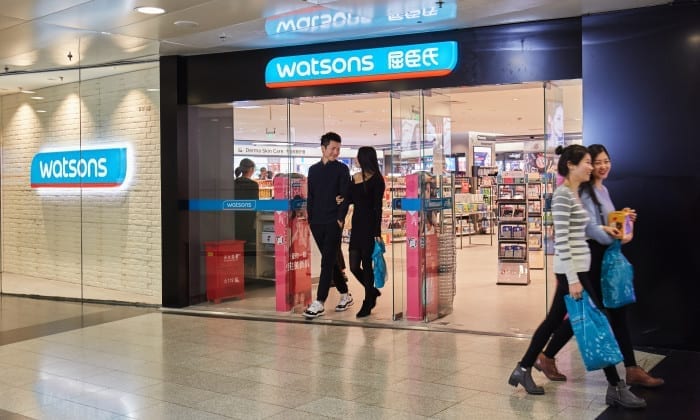
    Health and beauty retailer AS Watson (ASW) has launched a Technology Partnership Programme as part of a move to speed up its digital transformation globally.

    The program brings together a wide range of international technology providers and recognises them as strategic partners rather than suppliers, explained Malina Ngai, group COO of ASW.

    “We believe every technology partner whom we have chosen to work with is more than just a vendor. Traditional client-vendor relationship is short-term. There is lack of transparency and continuity in the way we work with each other. Besides, project base contract makes it difficult for their resource planning.

    “The partnership program is designed to transform the short term contractual relationship to a longer term strategic relationship to create a win-win for both parties. Our tech partners will have access to senior management, visibility on our growth strategy and technology roadmap, as well as a longer term financial commitment from us. We can benefit from their commitment in providing consistent resources, expert advice and services, as well as first hand access to innovation they develop,” said Ngai.

    ASW, which has more than 15,000 stores globally, embarked on its digital transformation journey in 2011 when it introduces its Customer Strategy initiative. The company invested US$70 million initially, dedicated to CRM, eCommerce and mobile experience.

    It subsequently established eLab in 2015, an in-house digital agency focusing on supporting all operating businesses to develop e-commerce and digital marketing.  This year, ASW kicked off a further $70 million investment in big data to build new capabilities in analytics and machine learning.

    “The goal of our digital transformation is to enable AS Watson Group to build on our solid retail foundation to fuel further growth through a smarter and more efficient organisation,” said Ngai.

    “Our purpose of putting customer first and putting a smile on their faces continues. We recognise that our customers are changing rapidly and technology has become an ever more critical ingredient to deliver our purpose.”

    The first batch of tech partners comprises expertise in the areas of e-commerce, store systems, data science, AI, data visualisation, technology ecosystem and services.

    The partners include Microsoft, Epam, Ovolab, Rubikloud, Mtel, Infosys, NCR, Zebra Technologies, SAP and Oracle.

  • This bot-powered Christmas, your gift might have been selected by a non-human

    This bot-powered Christmas, your gift might have been selected by a non-human

    Bot-powered commerce is on a tipping point in Singapore according to the new SAP Hybris Singapore Christmas Shopper Survey 2017. This Christmas, more than half (53%) of Singaporean shoppers are enlisting the help of chatbots for holiday shopping. In fact, majority of shoppers who asked chatbots for gift recommendations have actually acted on the recommendation (74%). Businesses and brands however, should not neglect incorporating the human touch.

    This is because Singaporeans expect assistance from chatbots to be rudimentary, with 58% viewing chatbots as useful only for basic information search, anticipating that more complex enquiries will need to be handled by a human being. Others feel that talking to chatbots have so far been a frustrating experience and they would rather speak to a human being (21%) and close to a fifth expressed an outright dislike for chatbots (17%).

    More than 1,000 consumers in Singapore were surveyed on their use of and attitudes towards chatbots, with the results reflecting that while Singaporeans are open towards engaging with chatbots, they still have reservations. One of the top concerns that Singaporeans have towards chatbots is that their requests might not be understood (61%). A third (35%) are worried that their personal information might be leaked if they divulge too much to chatbots, and 13% say that chatbots are too creepy if they know too much about them.

    Commenting on Singaporeans’ attitudes towards chatbots, Nicholas Kontopoulos, Global Vice President of Fast Growth Markets for SAP Hybris said, “The customer experience can make or break a brand. In view of this, businesses need to stay attuned to these concerns and optimise the use of chatbots as one component in a wider omnichannel strategy. While chatbots can proactively offer answers for initial queries on pricing, product features, or book and make reservations, they cannot fully replace the value of human interaction when it comes to building customer relationships. Any hint of customer dissatisfaction needs to be solved immediately, by a human services officer.”

    To win Singaporeans over, chatbots need to become more understanding and intuitive – almost half of Singaporeans (48%) say that they will engage with chatbots more often if they are able to make more personalised recommendations on what to buy. Other motivating drivers that will encourage shoppers to use chatbots more often is to offer comparison of prices and products from other brands (47%), assure that personal information will be kept private (38%), provide recommendations on similar and complimentary products (34%) or simply becoming more human-like (18%).

    “Singaporean shoppers have an appetite for deeper engagement with chatbots, but what the results really tell us is that they want a more personalised ecommerce experience. Today’s consumer have higher expectations and businesses need to keep a close pulse on the ever-evolving customer journey in order to react to not just changing consumer preferences but context at point of purchase or even consideration. To this end, businesses should view chatbots as more than just an answering machine – they are also a valuable mine of data that offer fresh perspectives into the underlying reasons for sales trends and help brands better understand what their customers are looking for. Armed with these insights, they can then take action to cultivate sales and entrench customer loyalty”, added Kontopoulos.

  • SAP uses machine learning to optimize shop experience

    SAP uses machine learning to optimize shop experience

    SAP this week introduced new technologies ranging from facial recognition, machine learning and IoT to enable targeted marketing campaigns and help consumers optimize their shopping experience.

    Offered through SAP Hybris Marketing Cloud, the new capabilities encompass an array of solutions to help companies ensure they use the right messages to target key customers, while ensuring that customers’ data and privacy are protected.

    One notable component would be the SAP Leonardo digital innovation system which offers facial recognition technology to help retailers engage in-store shoppers. Using facial analysis, the software connects shoppers’ genders and ages to a company or store’s available inventory and stock, enabling personalized product recommendations presented on large displays.

    The SAP Hybris Customer Attribution meanwhile provides marketers with accurate measurements of marketing campaigns and activities that lead to a customer purchase. Data is collected across all touch points of the customer journey, giving insight into what’s driving customer conversions and where to reallocate activities and budget in real time.

    With a nod towards the growing influence of the Chinese social media application WeChat, SAP also announced WeChat integration for SAP Hybris to help marketers expand their global footprint to more than 889 million users across China.

    The need for ensuring customers’ data and privacy is not an unimportant capability too. According to the 2017 SAP Hybris Consumer Insights Report, SAP found that the fastest way to lose customers is to share their data without their knowledge.

    On the other hand, the survey of 20,000 shoppers worldwide found that the easiest way to keep customers happy is to be responsive; nine out of 10 customers (89%) expect an answer to their query within 24 hours.

    On the most part, brands should not shy away from seeking more information about their customers: Four out of five shoppers (80%) are willing to share some of their customer data with brands, with Colombia and India being the most inclined (92%) and with Japan being the least inclined (52%).

    Respondents from all countries, except Russia, are willing to share their e-mail addresses, but only half of Middle East-based consumers want to share their mobile phone numbers.

  • Zalora embarks on company-wide project to deliver operational speed to employees

    Zalora embarks on company-wide project to deliver operational speed to employees

    SAP announced that ZALORA has selected SAP S/4HANA to enhance its operational capabilities and streamline processes for real-time business decisions.

    Founded in 2012, ZALORA is Asia’s online fashion destination, serving markets across Southeast Asia, Hong Kong and Taiwan. With more than 30,000 products online from over 500 international and local labels, ZALORA provides fashionistas access to the latest fashion goods from across the world. To meet the growing needs of its expanding online business, ZALORA looked to SAP for a reliable, scalable and industry-grade enterprise resource planning (ERP) system.

    Before adopting SAP S/4HANA, ZALORA’s accounting processes required manual input for details such as revenue and product costs, which were computed outside of its accounting system. This posed a challenge for the business due to the reliance on human input rather than processes for data integrity and reporting. Without an integrated solution, business information was often presented in silos with no flow between other key systems, presenting a lack of real-time data that were crucial to operations and planning.

    “To support our continued growth as a leading online fashion retailer, we needed a platform capable of automating and streamlining existing processes and the capacity for large scale expansion,” said Parker Gundersen, ZALORA Group CEO. “SAP’s S/4HANA solution fulfilled our objectives of visibility, compliance, automation, productivity and sustainability. We’re very excited that SAP’s real-time insights allows us to better meet the needs of our digital business.”

    SAP S/4HANA® is a business suite that helps organizations to run their core business processes digitally and live. Characterized by simplifications and high effectiveness, SAP S/4HANA is a system of intelligence which automates processes and provides end users with active decision support in real-time based on data from both internal and external sources. With SAP S/4HANA, ZALORA will be equipped to handle extremely high volume orders per day during peak sales periods and promotions and gain real-time customer and business insights.

    At the core, ZALORA also foresees that it will become more productive from enhanced real-time oversight of critical financial data that will grant insight and address issues in merchandising, sales, supply chain, finance and control, and compliance, through a single platform.

    ZALORA will also be leveraging the expertise of IBM for the implementation across its business. IBM will support ZALORA by working closely with its project teams to migrate ZALORA systems to the SAP S/4HANA platform.

    “Online businesses are increasingly driven to innovate and discover new ways to deliver values to their customers along the entire purchase journey,” said Khor Chern Chuen, Managing Director of SAP Singapore. “ZALORA has transformed the way people shop and interact with their favourite brands, and this project highlights how the company is blazing the trail in digital transformation. We are excited to work with ZALORA, one of the fastest growing online fashion retailer in Asia, to accelerate their business and provide a better experience for their customers and increase business value as an e-retailer.”

  • SAP China teams up with Alibaba Cloud

    SAP China teams up with Alibaba Cloud

    SAP China and Alibaba Cloud have teamed up to launch three cloud-based SAP services to Chinese customers by the end of the year.

    The companies have revealed plans to launch in-memory computing platform SAP HANA Cloud Platform and two other services in 2016.

    The two other services are the cloud-based SaaS CRM solution Hybris Cloud for Customer, as well as SAP Business ByDesign, integrated cloud suite tailored for mid-sized businesses.

    Alibaba Cloud president Simon Hu said the partnership is aimed at addressing the growing ubiquity of cloud services.

    “Cloud computing has become the new infrastructure for businesses around the world,” he said. “Through in-depth collaboration, Alibaba Cloud and SAP will join hands to bring more world-class cloud products with highly reliable and strong capabilities to companies in different industries.”

    SAP Greater China president Mark Gibbs said the company achieved triple-digit growth in the region from its cloud business in the first half of 2016.

    “The cloud business is a key part of SAP’s digital framework and one of the driving forces behind our rapid business growth in China.” he said.

    “The three cloud-based solutions that we are about to launch with Alibaba Cloud will further expand SAP’s cloud footprint in China, and meet the needs of more Chinese enterprises. It will help Chinese companies to effectively embrace the opportunities brought by digital transformation.”

  • Apple, SAP enter cloud apps partnership

    Apple, SAP enter cloud apps partnership

    Apple and SAP have teamed up to combine native apps for iPhone and iPad with the capabilities of the SAP HANA platform.

    This joint effort will also focus on developing a new iOS software development kit (SDK) and training academy.

    According to the companies, the SAP HANA Cloud Platform SDK will provide businesses, designers and developers the tools to quickly and efficiently build their own iOS apps for iPhone and iPad, based on SAP HANA Cloud Platform, SAP’s open platform as a service.

    These native apps will provide access to core data and business processes on SAP S/4HANA, while taking full advantage of iPhone and iPad features like Touch ID, Location Services and Notifications.

    A new SAP Fiori for iOS design language will advance the SAP Fiori user experience by combining it with a consumer-grade iOS experience to deliver on the robust user needs in the enterprise and enable developers to build next-generation apps.

    SAP will also develop native iOS apps for critical business operations. These apps for iPhone and iPad will be built with Swift, Apple’s modern, secure and interactive programming language, and will offer a familiar user experience with the SAP Fiori for iOS design language.

    “This partnership will transform how iPhone and iPad are used in enterprise by bringing together the innovation and security of iOS with SAP’s deep expertise in business software,” said Tim Cook, Apple’s CEO.

    “Through the new SDK, we’re empowering SAP’s more than 2.5 million developers to build powerful native apps that fully leverage SAP HANA Cloud Platform and tap into the incredible capabilities that only iOS devices can deliver.”