
Retail News CRM

Tag: Secures

  • Fast-Fashion Leader Shein Secures Approval for High-Profile Hong Kong IPO after Setbacks

    Fast-Fashion Leader Shein Secures Approval for High-Profile Hong Kong IPO after Setbacks

    Fast-fashion retail giant Shein has received authorization for its much-anticipated Initial Public Offering (IPO) process in Hong Kong, bringing it one step closer to a listing after unsuccessful runs in both New York and London. This news came from the China Securities Regulatory Commission (CSRC) on Friday, offering Shein the endorsement it has been seeking for over a year.

    Shein’s journey to the IPO stage has been hindered by a variety of factors, including weak investor sentiment and conservative spending habits among lower to middle-income consumers. The retailer’s journey to the stock market is therefore noteworthy, with many other consumer brands opting to postpone their IPOs in the current financial climate.

    Shein’s Journey to the IPO

    Shein was established by Sky Xu, a Chinese-born entrepreneur, in 2012. The IPO approval was contingent upon approval from the highest echelons of the ruling Communist Party in China, due to various controversies surrounding the brand. The controversies included a scandal involving a sex doll in France and allegations of poor labor standards in its supplier factories in China.

    Despite these scandals, Shein has shown resilience. The IPO’s confidential nature and the company’s decision not to make the filing documents public suggests that the retail giant is embracing its Chinese origins, rather than distancing itself. This is contrary to the strategies of many Western fashion companies, which have sought to reduce their Chinese exposure.

    Shein’s Current Financial Status

    Shein was valued at a staggering US$100 billion in 2022. However, as the online shopping boom brought on by the pandemic began to wane and a customs duty loophole for e-commerce parcels in the US was closed, the brand’s value decreased. In the latest fundraising round in May 2023, Shein was valued at just $66 billion.

    Shein’s IPO goal is speculated to be between $40 billion to $50 billion. The company plans to sell up to 8 percent of its shares, but the final stake sold is expected to be lower, thus generating low single-digit billions of dollars.

    Shein’s unsuccessful attempts to list in New York and London indicate the challenges faced by Chinese-linked companies due to geopolitical tensions. Despite moving its headquarters to Singapore in 2022, Shein is still subject to Chinese IPO rules as its products are largely manufactured by third-party suppliers in China.

    Questions & Answers

    What controversies has Shein faced?
    Shein has been involved in several controversies, including a scandal involving a sex doll in France and allegations of substandard labor practices in its supplier factories in China.

    What is the projected worth of Shein’s IPO?
    Shein is targeting an IPO valuation of between $40 billion and $50 billion.

    Why has Shein’s valuation decreased since 2022?
    Shein’s valuation has decreased due to the diminishing online shopping boom brought on by the pandemic and the closure of a customs duty loophole for e-commerce parcels in the US.

  • Unlocking New Markets: Vietnam Secures Green Light for Pomelo and Lemon Exports to China

    Unlocking New Markets: Vietnam Secures Green Light for Pomelo and Lemon Exports to China

    A recent agreement has paved the way for Vietnamese pomelos and lemons to be exported to China. This phytosanitary requirements protocol was formalized between Vietnam’s Ministry of Agriculture and Environment and the General Administration of Customs of China. The agreement unfolded during a state visit to China by To Lam, who is the Party General Secretary and State President of Vietnam.

    Phytosanitary Requirements and Protocols

    The newly agreed protocol stipulates that all areas cultivating and facilities packaging pomelos and lemons for export to China have to be registered with the Ministry of Agriculture. Furthermore, they must gain approval from both the Ministry and China’s customs. These facilities are mandated to enforce stringent pest control measures to ensure the quality of the produce.

    The cultivation areas are required to adhere to Good Agricultural Practices (GAP) and Integrated Pest Management (IPM) requirements. These requirements demand fruit to be bagged at least 60 days prior to harvest and the use of traps to combat fruit flies.

    The packaging facilities must maintain sanitary conditions and appropriate functional zoning. Fruits are required to be sorted, classified, and cleaned to remove any diseased or pest-infected fruits, as well as any plant debris and soil residues.

    The Impact of the Agreement

    The Ministry has cited this agreement as the result of structured technical negotiations between plant protection and quarantine agencies of both nations. These discussions have been ongoing since 2019.

    The agreement signifies an important shift towards transparent, standards-compliant official export channels and a more sophisticated bilateral cooperation framework, amidst growing Vietnam–China agricultural trade.

    China continues to be a crucial market with strong demand and potential for Vietnamese fruit exports. Building on the success of other exports, pomelos and lemons are expected to increase their market share, consolidate their position, and boost overall export growth.

    The ministry has expressed its commitment to working closely with localities, associations, businesses, and producers to effectively put the protocol into practice. This will include guidelines on regulations, standardizing cultivation areas and packaging facilities, and strengthening inspections to guarantee full compliance with Chinese requirements.

    Vietnam’s Agricultural Advantage

    Pomelos and lemons are among Vietnam’s most successful agricultural products. Vietnam currently cultivates pomelos on approximately 106,000 hectares, positioning itself as a major global producer of the fruit.

    Questions & Answers

    What does the new protocol between Vietnam and China involve?
    The protocol involves the export of Vietnamese pomelos and lemons to China. It stipulates that all cultivation areas and packaging facilities for these fruits must be registered with the Ministry of Agriculture and approved by both the Ministry and China’s customs.

    What requirements must the Vietnamese farms and packaging facilities meet under the new protocol?
    The farms must adhere to Good Agricultural Practices (GAP) and Integrated Pest Management (IPM) requirements, which includes bagging fruit 60 days before harvest and using traps for fruit flies. The packaging facilities must maintain cleanliness and appropriate functional zoning.

    How will this protocol impact the Vietnam-China agricultural trade?
    The protocol signifies a shift towards transparent, standards-compliant official export channels and provides a more sophisticated bilateral cooperation framework. It is expected to boost the market share of Vietnamese pomelos and lemons in China and strengthen the overall growth of fruit exports from Vietnam to China.

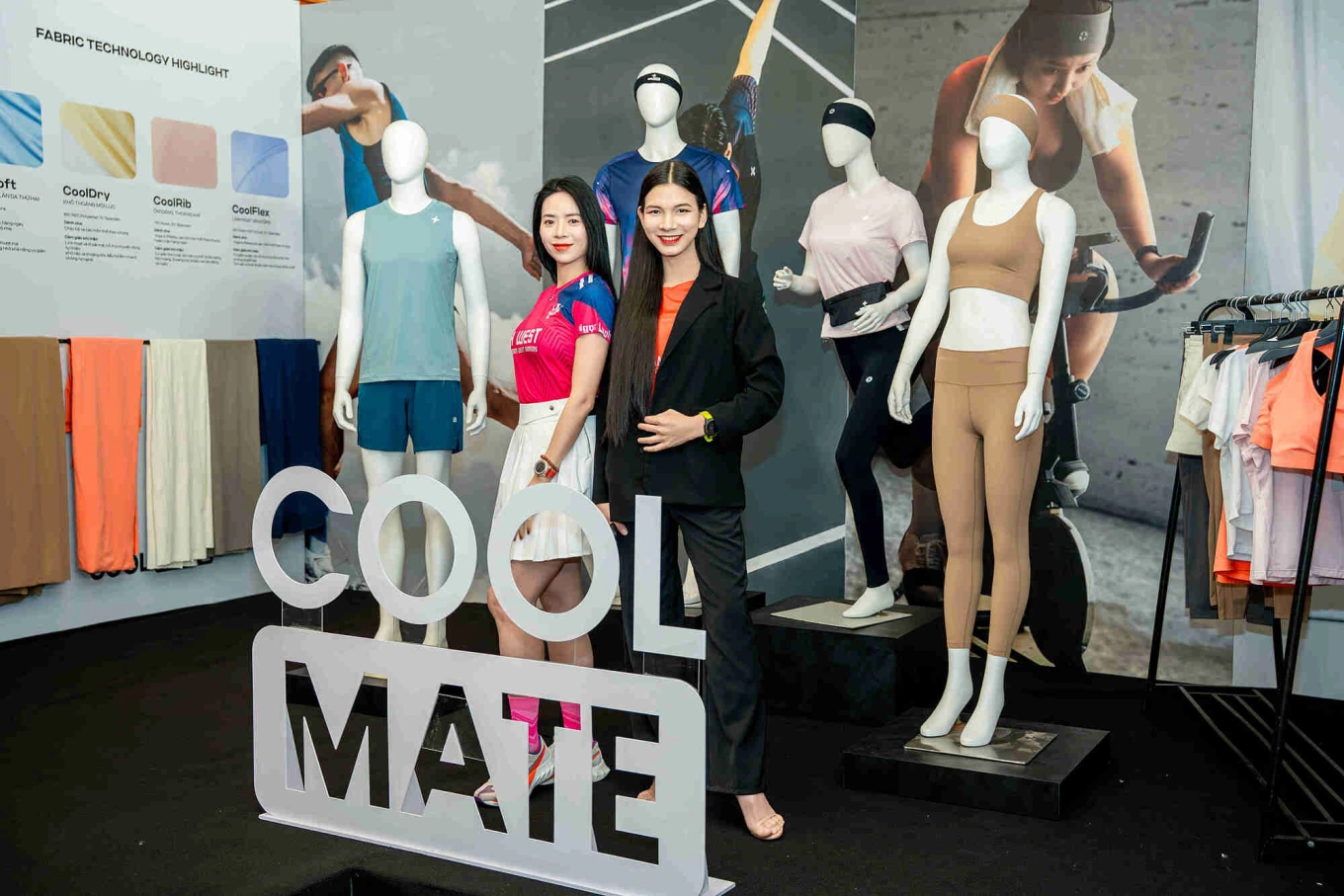
  • Coolmate, Vietnam’s Digital Fashion Powerhouse, Secures Series C Funding for Global Expansion and Women’s Line Launch

    Coolmate, Vietnam’s Digital Fashion Powerhouse, Secures Series C Funding for Global Expansion and Women’s Line Launch

    Coolmate, a Vietnamese brand known for its digital-first approach in fashion, has successfully completed its latest Series C financing. The specific details of the funding have been kept under wraps, but it is understood that the funds will be used to fuel both global expansion and the brand’s entrance into women’s fashion.

    The fundraising effort was spearheaded by Vertex Growth Fund and saw contributions from Cool Japan Fund, YoungOne CVC, and other pre-existing investors such as Vertex Ventures SEA & India and Kairous Capital.

    Nhu Chi Pham, the CEO and founder of Coolmate, expressed her gratitude for the investment. She asserted, “This financial boost enables us to further endorse our vision, break into new markets, and continue to cultivate a brand that is a true symbol of Vietnamese ingenuity.”

    A Look at Coolmate’s Journey

    Established in 2019, Coolmate has quickly made its mark on the industry, having already fulfilled over 5 million orders across the nation. It operates using a technology-aided local supply chain, allowing for efficient and effective business transactions.

    This latest influx of capital will be strategically funneled into three main areas: Women’s fashion, global market penetration, and the establishment of physical retail outlets.

    Detailed Expansion Plans

    Coolmate launched its “Go Women” initiative in March, introducing a new line of activewear for women. The company has a 2030 target of generating 40% of its total revenue from women’s products.

    The “Go Global” strategy has been initiated with Coolmate’s debut on Amazon US where it has quickly gained a “Best Seller” status and now processes over 25,000 orders monthly. The next phase of this strategy involves expanding throughout Southeast Asia in an effort to reach 30% international revenue by the year 2030.

    Finally, with the “Go Offline” strategy, Coolmate plans to open brick-and-mortar stores, aiming to enhance customer experience, and projecting to obtain 40% of its revenue from offline sales by 2030.

    It’s worth noting that Coolmate secured a $6 million investment in a Series B fundraising round last year, led by Vertex Venture Southeast Asia and India.

    Questions & Answers

    What is Coolmate’s business model?
    Coolmate operates with a digital-first approach in fashion, utilizing a technology-enabled local supply chain to conduct business transactions efficiently.

    What are the future expansion plans of Coolmate?
    Coolmate plans to venture into women’s fashion, expand its brand globally, and establish physical retail outlets to enhance customer experience.

    What are the goals set for 2030 by Coolmate?
    Coolmate aims to achieve 40% of its total revenue from women’s products, 30% international revenue, and 40% of its revenue from offline sales by 2030.

  • Korea Secures $9 Billion in Cloud and AI Investments from Global Tech Giants at APEC Summit

    Korea Secures $9 Billion in Cloud and AI Investments from Global Tech Giants at APEC Summit

    During the APEC Global Investment Partnership event, which was held in conjunction with the APEC CEO Summit in Gyeongju, an announcement was made that underscores the determination of Seoul to lure high-value investment into the areas of digital infrastructure and advanced manufacturing. This is part of Seoul’s drive to expedite its aspirations in the field of artificial intelligence (AI).

    Investments in South Korean Digital Infrastructure

    Matt Garman, the CEO of Amazon Web Services (AWS), disclosed a plan to invest $5 billion by 2031 in order to expand the company’s cloud data centers and enhance its AI competencies in South Korea. He pointed out that South Korea is swiftly becoming a hub of AI innovation in Asia, and the continuous investments by AWS reveal their faith in South Korea’s technological ecosystem. He also believes that these investments will bolster South Korea’s place in the global AI economy.

    President Lee Jae Myung of South Korea, who met with Garman during the event, expressed his approval of AWS’s investment, deeming it a crucial aspect of Seoul’s AI strategy. His endorsement comes on the heels of AWS’s announcement of their $4 billion AI data center project in Ulsan earlier this year. President Lee is confident that this collaboration with AWS will stimulate Korea’s AI ecosystem and solidify their mutual path to prosperity.

    Investments from Other Multinational Corporations

    Additionally, six other multinational companies, namely Renault, Amkor Technology, Corning, Air Liquide, Siemens Healthineers, and Umicore, also communicated their new investment commitments. Renault Korea is set to transform existing production lines for the manufacture of electric vehicles, designating Korea as one of its five global strategic hubs. Siemens Healthineers has plans to construct a new 9,917-square-meter facility in Pohang for the production of components for cardiovascular ultrasound systems. Amkor Technology is preparing to extend its semiconductor packaging operations, while Umicore has intentions to build a cathode materials plant to cater to Korea’s rapidly expanding battery supply chain.

    As per the Ministry of Trade, Industry, and Energy of Korea, approximately $660 million of the declared amount is to be immediately registered as foreign direct investment.

    Korea’s Leadership in AI Development

    President Lee, during his keynote speech at the APEC CEO Summit, expressed Korea’s intention to propose an AI Initiative at the upcoming APEC leaders’ meeting, advocating for inclusive and cooperative AI development in the Asia-Pacific region. He envisions a future where AI is accessible to all, hopeful that this vision will become the new standard for APEC. This places Korea in a leadership position in the Asia-Pacific region in terms of digital transformation and ethical AI governance.

    The APEC CEO Summit, organized by the Korea Chamber of Commerce and Industry (KCCI), saw a record turnout of 1,700 business and political leaders, the largest in the summit’s 30-year history. The summit boasted the attendance of top executives and heads of state, including U.S. President Donald Trump, NVIDIA CEO, Jensen Huang, and several Asia-Pacific leaders.

    The summit was represented by the chairmen of Korea’s biggest conglomerates, including Samsung, Hyundai, LG, SK Group, and POSCO, reinforcing the country’s pivotal role in shaping the region’s technological future. The summit’s sessions over the three days centered around AI, digital currencies, supply chain resilience, green transition, and economic cooperation.

    Questions & Answers

    What was the primary focus of the APEC Global Investment Partnership event?
    The event was centered around Seoul’s efforts to attract high-value investments in digital infrastructure and advanced manufacturing to accelerate its AI ambitions.

    What is AWS’s planned investment in South Korea?
    AWS announced a plan to invest $5 billion by 2031 to expand its cloud data centers and boost its AI capabilities in South Korea.

    How are other multinational corporations contributing to South Korea’s AI strategy?
    Six multinational corporations have committed to new investments in South Korea. These include Renault’s conversion of production lines to electric vehicle manufacturing, Siemens Healthineers’ construction of a new facility for cardiovascular ultrasound systems, and Amkor Technology’s expansion of semiconductor packaging operations.