Retail News CRM

Tag: semiconductor

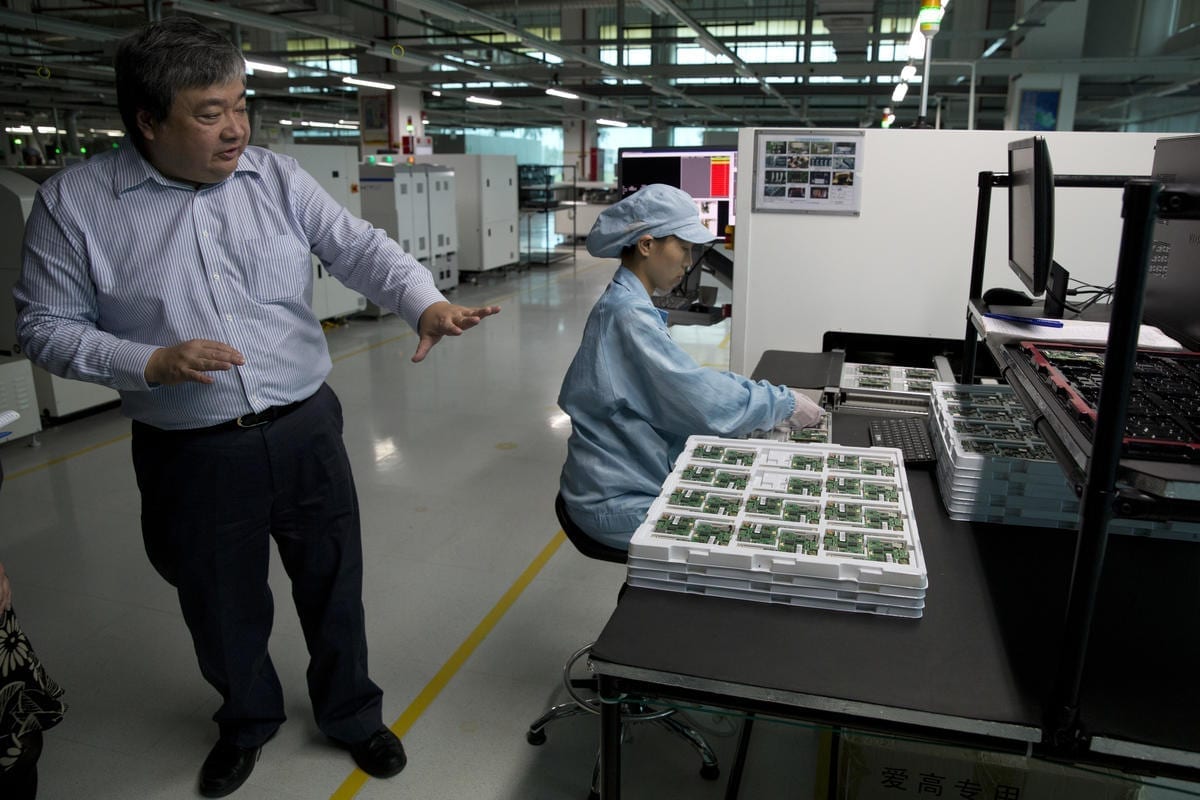
  • Malaysia Soars to 15th Spot in Global Economic Competitiveness, Credits Boom in AI and Semiconductor Industry

    Malaysia Soars to 15th Spot in Global Economic Competitiveness, Credits Boom in AI and Semiconductor Industry

    In the most recent 2026 IMD World Competitiveness Ranking, Malaysia’s standing significantly improved, moving up eight spots to claim the 15th place. This notable advancement represents the country’s greatest leap in recent years. The International Institute for Management Development, the authority that published the ranking, attributed Malaysia’s enhanced position to advancements across all four pillars of competitiveness.

    The four pillars considered in the ranking include economic performance, government efficiency, business efficiency, and infrastructure. Malaysia demonstrated remarkable progress in all these areas. The country obtained 4th place worldwide for economic performance, while government efficiency ascended 11 places, reaching the 14th position. Business efficiency moved up 16 spots to the 16th position, and infrastructure experienced a slight boost, improving two spots to rank 33rd.

    An Examination of Sub-factors

    Looking deeper into the sub-factors, Malaysia’s domestic economy ranking ascended four places, achieving the 11th position, and the international trade ranking rose one spot to the 5th position. One significant leap was observed in the international investment sector, which climbed seven places to reach the 19th position.

    The IMD ranking evaluates 70 economies based on the aforementioned four fundamental pillars. Malaysia’s consistent improvement is evidenced by its steady ascent over the years. In the previous year, the nation jumped 11 places to secure the 23rd position among 69 economies. This was a marked improvement from the 34th position it held among 67 economies in 2024.

    According to economists, the critical factors contributing to Malaysia’s elevated ranking include a robust economic foundation, heightened trade competitiveness, improved public and business sector performance, and expanding opportunities within the technology sector.

    Stephen Innes, Managing Partner at SPI Asset Management, believes that Malaysia’s substantial boost in competitiveness is not merely indicative of a short-term recovery. Instead, he points to the rapid growth of artificial intelligence and the semiconductor industry as key drivers of this progress. Innes notes that Malaysia’s advantageous positioning across the electrical and electronics supply chain, coupled with its appeal in attracting investment in advanced packaging and data centers, makes it a natural beneficiary of global supply chain diversification.

    Questions & Answers

    What factors led to Malaysia’s improved ranking in the 2026 IMD World Competitiveness Ranking?
    Malaysia’s improvement is attributed to advancements in economic performance, government efficiency, business efficiency, and infrastructure. The rapid growth in artificial intelligence and the semiconductor industry were also highlighted as key contributors.

    How has Malaysia’s ranking evolved over the years?
    Malaysia has shown steady improvement in its standing, moving from 34th out of 67 economies in 2024, to 23rd out of 69 in 2025, and finally to 15th out of 70 economies in 2026.

    What sub-factors saw notable improvement in Malaysia’s ranking?
    Significant improvements were observed in the country’s domestic economy, international trade, and international investment rankings.

  • Unprecedented Semiconductor Cargo Movement: Kitakyushu Airport and DHL Global Forwarding Set New Standards in Air Transport

    Unprecedented Semiconductor Cargo Movement: Kitakyushu Airport and DHL Global Forwarding Set New Standards in Air Transport

    In a noteworthy collaboration between Kitakyushu Airport and DHL Global Forwarding, a division of DHL Group that specializes in air and ocean freight, the airport successfully facilitated the transportation of semiconductor manufacturing equipment towards the end of the preceding year. This operation is considered to be the airport’s largest and most technically complex cargo operation to date, necessitating an exceptional level of transportation expertise.

    Details of the Unprecedented Semiconductor Equipment Transport

    The equipment in question, semiconductor manufacturing equipment, weighed nearly 180 tons. The transport route commenced from Amsterdam Schiphol Airport, located in the Netherlands, and culminated at Kitakyushu Airport. The dedicated cargo aircraft, a sizable freighter, was used for this purpose.

    Development of a Robust Handling System for Semiconductor Equipment

    Commencing in 2023, Kitakyushu Airport, spearheaded primarily by DHL Global Forwarding Japan Co., Ltd. (DGF) and Korean Air, planned to import semiconductor manufacturing equipment to satisfy regional transport requirements. By working in close association with companies in charge of regular cargo flights’ ground handling, the airport was able to develop a strong handling system.

    Staff members from each entity joined forces to devise and implement comprehensive strategies, ensuring the safe and efficient transport of the equipment from Amsterdam Schiphol Airport to Kitakyushu Airport. Every aspect, ranging from risk management to temperature, humidity control, and vibration reduction, was meticulously taken care of. These collective endeavors have contributed to establishing a steady operational structure for managing similar consignments in the future.

    Joint Effort for Sophisticated Semiconductor Logistics

    Karsten Michaelis, the CEO of North Asia, DHL Global Forwarding, and the President and Representative Director of DHL Global Forwarding Japan, acknowledged the vital role of semiconductors in contemporary technology. He emphasized that DHL had constructed a solid framework to facilitate this significant supply chain operation with precision and expertise. The establishment of a dedicated office at Kitakyushu Airport, coupled with the collaborative efforts of the Semiconductor Specialist Team, Kitakyushu Airport authorities, and Korean Air, led to the creation of an integrated setup. This amalgamation of infrastructure development and seamless operational collaboration extends beyond this project. DHL’s global CapX Qualification Program and standardized processes across multiple locations ensure consistency, safety, and operational excellence.

    Kitakyushu Airport Promotion Council’s Semiconductor-Related Cargo Consolidation Efforts

    The Kitakyushu Airport Promotion Council, comprising Fukuoka Prefecture, Kitakyushu City, and other members, provides subsidies to businesses for international air cargo transport. They also offer subsidies for the transportation of semiconductor manufacturing equipment and related items.

    Questions & Answers

    What was the weight of the semiconductor manufacturing equipment transported?
    The semiconductor manufacturing equipment weighed approximately 180 tons.

    Who were the key entities involved in the transportation project?
    The key entities involved were Kitakyushu Airport, DHL Global Forwarding Japan Co., Ltd. (DGF), and Korean Air.

    What steps have been taken by the Kitakyushu Airport Promotion Council regarding semiconductor-related cargo?
    The Kitakyushu Airport Promotion Council provides subsidies to businesses for international air cargo transport, including the transportation of semiconductor manufacturing equipment and related items.

  • Viettel Spearheads Vietnam’s Tech Revolution with Groundbreaking Semiconductor Chip Fabrication Plant

    Viettel Spearheads Vietnam’s Tech Revolution with Groundbreaking Semiconductor Chip Fabrication Plant

    Viettel Group, a Vietnamese multinational telecommunications corporation, has recently launched the initialization phase of building the country’s first semiconductor chip fabrication plant. This ambitious venture, endorsed by the Ministry of National Defense, is a part of a governmental initiative to indigenize chip production capabilities. The project is aimed at developing a comprehensive domestic ecosystem for semiconductor technologies.

    Plant Details and Its Impact

    The prospective plant will be based in Hanoi, within the Hoa Lac Hi-Tech Park, spread across an area of approximately 27 hectares. Its intended purpose is to serve as a national hub for a variety of processes including research, design, testing, and the actual production of semiconductor chips.

    Upon becoming operational, the plant is expected to bolster several national industries, including aerospace, telecommunications, the Internet of Things (IoT), automotive manufacturing, medical devices, and automation, among others.

    Filling the Gap in the Production Process

    The process of creating a fully functional semiconductor chip necessitates six primary stages: product definition, system design, detailed design, chip fabrication, packaging and testing, and integration and testing. To date, Vietnam has engaged in five of these steps, with chip fabrication—the most intricate and crucial stage—remaining unattained domestically. The establishment of the proposed semiconductor chip fabrication plant will enable Vietnam to close this gap, allowing it to complete the full spectrum of the semiconductor chip production process.

    The Prime Minister of Vietnam, Pham Minh Chinh, emphasized the significance of the project, stating that the groundbreaking of the country’s first high-tech semiconductor chip fabrication plant is a momentous event. It signifies a step towards achieving the national strategy for the development of the semiconductor industry and sets the foundation for Vietnam to integrate more deeply into the global value chain through advancements in science, technology, and innovation.

    Training and Workforce Development

    In addition, the plant is expected to function as a practical training center for the semiconductor workforce, merging training with an authentic production environment. As a part of the National Semiconductor Strategy, Vietnam is planning to train 50,000 chip design engineers by 2030, with an aim to cultivate a workforce of over 100,000 individuals in the semiconductor industry by 2040.

    The CEO of Viettel Group, Lieutenant General Tao Duc Thang, emphasized that the plant’s construction would be completed, technology transfer received, and pilot production initiated all by the end of 2027.

    Future Aspirations

    The fabrication plant project will unfold between 2026 and 2030, incorporating plant construction, technology transfer, process perfection, and improved operational efficiency. The project’s long-term vision includes the expansion of the Hoa Lac plant, which would provide a platform for Vietnam to gradually access more advanced semiconductor technologies.

    The launch of this high-tech semiconductor chip fabrication plant is a significant step in Vietnam’s journey towards building technological capabilities, contributing to the country’s objective of technological self-reliance and lasting sustainability.

    Questions & Answers

    What is the purpose of the semiconductor chip fabrication plant?
    The plant will serve as a national hub for research, design, testing, and production of semiconductor chips, supporting numerous national industries.

    What is the timeline for the plant’s construction and operation?
    The plant is expected to be constructed, receive technology transfer, and begin pilot production by the end of 2027. The period from 2028 to 2030 will focus on process optimization and efficiency improvements.

    How will the plant contribute to workforce development in Vietnam?
    The plant will also serve as a practical training center for the semiconductor workforce, attempting to train 50,000 chip design engineers by 2030, and aim for a workforce of over 100,000 in the industry by 2040.

  • China slashes import tax to boost semiconductor sector

    China slashes import tax to boost semiconductor sector

    China announced new import cuts this week to boost the nation’s semiconductor industry. This follows after US sanctions on some Chinese companies including tech giant Huawei and chipmaker SMIC to ease the impact on the industry.

    According to China’s finance ministry, chipmakers producing high-end 65-nanometer technology or smaller chips can import raw materials and machinery tax-free through 2030.

    Totaling more than $300 billion annually, China’s processor chips and other semiconductors form the country’s largest single import. Despite the country’s strong chip industry, China still relies on Taiwan, the US and Europe for certain parts. In China’s fourth session of the 13th National People’s Congress (NPC) held in early March, the party pledged to build up self-reliance in science and technology.