Retail News CRM

Tag: Shopping Mall

  • Ikea to open its first shopping mall in India

    Ikea to open its first shopping mall in India

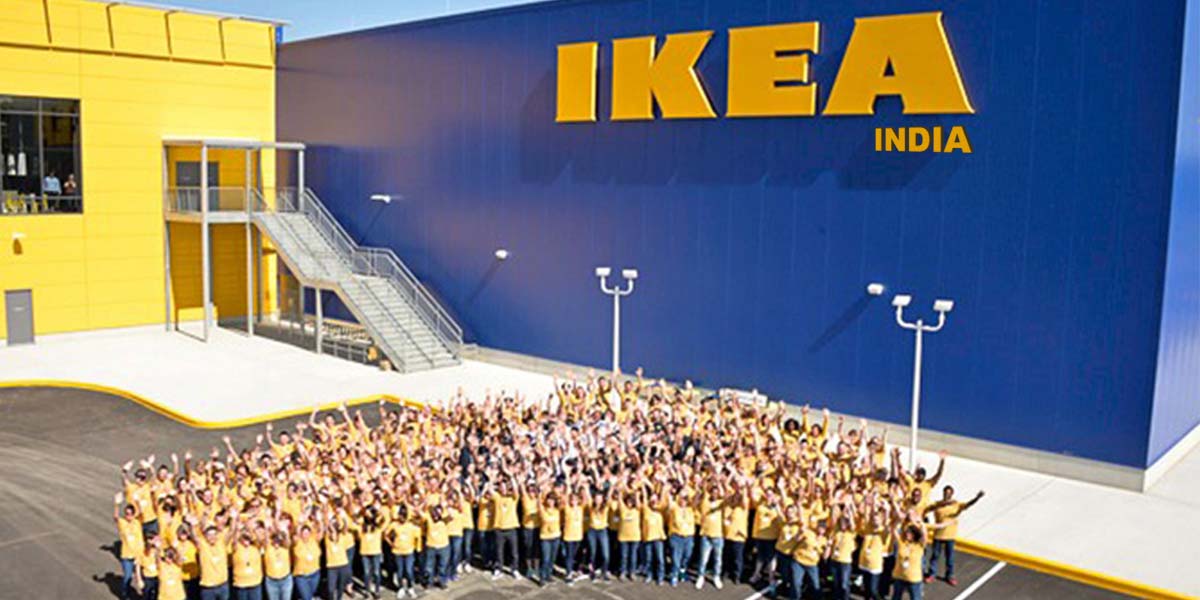
    Ingka Centres, part of Ingka Group, is set to open a mixed-use development in Gurugram, Southwest of New Delhi, marking Ikea’s first shopping mall in the country.

    Construction is set to start early next year, with an investment of US$448 million. The project, with a gross building area of around 130,000sqm, is expected to generate more than 2500 jobs for the community.

    Dubbed ‘Livat’, a Swedish word that means ‘a lively happening’, the mixed-use development will house a mix of hospitality, food, and beverage, ‘edutainment’ learning spaces, alongside a wide retail offer anchored by an Ikea store.

    “We know that when it comes to retail and leisure, change is the only constant,” said Cindy Andersen, MD of Ingka Centres. “This is why our first Livat meeting place in India will be adaptable, with multiple offerings to match consumer lifestyles long into the future.”

    “India is an exciting opportunity for us and our partners to bring new experiences to customers and to develop meeting places that bring value to communities and the planet.

    “We want to create destinations that make it easier for people to live even happier, healthier, and more sustainable lifestyles – this will be our goal at Gurugram.”

    The mall’s concept will be focused on health, sport, nature, and sustainability. It is expected to welcome more than 20 million visitors annually. The company said Livat Gurugram will reflect best practices in energy and water efficiency while delivering a seamless omnichannel experience for customers.

    “Delhi NCR will be one of our biggest and most important markets in India,” said Peter Betzel, CEO, and CSO, Ikea India.
  • Ikea starts building shopping mall in India

    Ikea starts building shopping mall in India

    Ikea’s arm Ingka Centers is to launch India’s first Ikea mixed-use destination in the outskirts of Delhi, Noida.

    The plan was announced after the retailer secured a 47,833sqm plot of land in Noida, Uttar Pradesh. The project will cost about US$760 million and take seven years to complete. The Ikea mega mall will feature two multi-storied buildings of more than 20 floors with separate blocks for retail, office, and hospitality.

    The project will provide more job opportunities, support infrastructure development, and the growth of the organized retail and home furnishings sector in the region.

    “Delhi NCR is one of our most important markets in India and we will reach the many people with our beautiful, affordable, well designed, and sustainable home furnishing products,” said Peter Betzel, CEO at Ikea India.

    “This next step in our expansion is in line with Ikea’s ambition to [reach] 100 million people in India in the coming years.”

    Entering India in 2018 with its first outlet in Hyderabad, Ikea opened its second store in the country last December in Navi Mumbai.

  • Shopping malls in the Philippines popularity on the rise

    Shopping malls in the Philippines popularity on the rise

    Shopping malls in the Philippines are bucking international trends and are trading stronger than ever, says retail technology expert Nikki Baird.

    Their secret, she says, is that they offer a wider range of experiences to customers.

    “Shopping malls in the Philippines are all-in-one destinations that not only provide shopping, dining, and entertainment but also offer community events, access to government and utility services, and even places of worship,” Baird told the recent National Retail Conference and Expo in Manila.

    But, she warned, neither mall operators or their retail tenants in the Philippines can afford to be complacent because the industry is constantly changing.

    “The rise of e-commerce, evolving consumer tastes, dynamic competition, and other developments in the global retail landscape challenge Philippine retailers to pursue innovations in both brick-and-mortar and digital stores.”

    Baird, VP of retail innovation at Aptos, a retail technology solutions provider, said global store-innovation trends are showing how retailers are responding to consumers’ emerging needs and demands.

    “The global shift in consumer behavior puts pressure on retailers around the world to rethink their customers’ journey and experience in their online and offline stores,” said Baird. “In response to this, brands are embracing digital and behavioral innovations to deepen customer relationships, provide in-store services, use stores as fulfillment centers, harness rich customer data, host in-store events, and offer store-only exclusives.”

    With retail sales forecast to almost double in Southeast Asia to US$1.38 trillion in 2025 from $720 billion last year, the importance of connecting digital — where consumer shopping begins — to the retail store will only increase in the Philippines. To prepare for this growth, retailers are investing in in-store innovations and technologies to ensure each store offers optimal customer service and the right inventory to meet the personalized tastes and needs of every shopper.

    “Filipino retailers need to increasingly merge their brick-and-mortar and digital touchpoints to ensure the most seamless experience for the consumer and the most productive and profitable use of inventory across their network,” added Zaki Hassan, regional VP for Asia Pacific at Aptos.

    Aptos works with more than 1000 retail brands across 65 countries.

  • GIC Partnering to build India’s largest shopping mall

    GIC Partnering to build India’s largest shopping mall

    Singapore’s sovereign wealth fund GIC is partnering with Indian property developer DLF, to construct India’s largest shopping mall.

    Down Town will be a mixed-use development of more than 2.5 million sqft, featuring retail and commercial space. It will be built on a 23-acre parcel of land owned by DLF in Gurugram.

    “The retail mall will be part of this 8 million sq ft project that will also have a component of serviced apartments, a five-star hotel, and commercial development,” an unnamed person with knowledge of the matter told an Indian news channel.

    “The project will be developed in two-three phases in more than five years.”

    The joint venture between DLF and GIC was formed in late 2017. The two companies are already working on a high-rise residential project of about 7 million sqft near Central Delhi.

  • Hong Kong’s Link REIT Buys Shenzhen Mall for RMB 6.6B

    Hong Kong’s Link REIT Buys Shenzhen Mall for RMB 6.6B

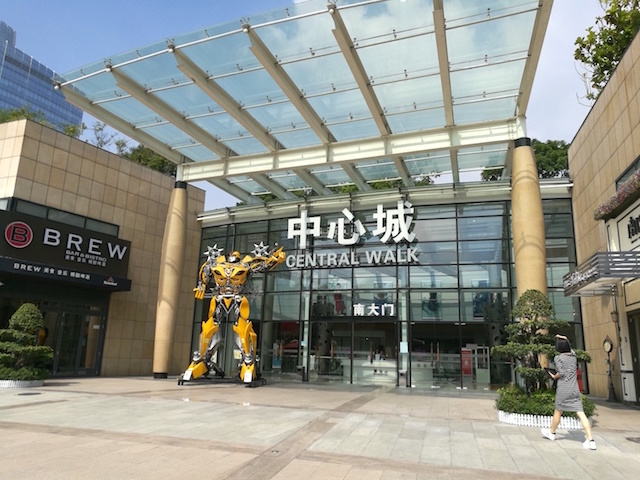
    Link Asset Management has bought the Centralwalk shopping mall in Shenzhen’s CBD via its real estate investment trust. The RMB6.6 billion (US$981.9 million) transaction marks Link REIT’s first acquisition in Shenzhen, the second in the Greater Bay Area and its fifth in Mainland China, all in tier-one cities. Centralwalk is a five-storey retail centre in Shenzhen’s Futian District, home to the South China head offices of Fortune 500 companies, multinational corporations and leading domestic firms. The property sits atop two subway lines, providing a 14-minute link to Hong Kong and less than an hour to most parts of the Pearl River Delta region.

    “The acquisition marks another milestone in our expansion in China,” said Link CEO George Hongchoy.

    “Centralwalk is seated in the heart of the city’s booming commercial hub. It is strategically located at the juncture of two popular subway lines in Shenzhen and within a five-minute walk from the Futian high speed rail station. We see enormous upside potential in this asset as we will apply our expertise in asset enhancement and placemaking to attract footfall to this mall, unleashing its potential as a leisure and entertainment landmark in Shenzhen.”

    Upon settlement of the transaction next month, Link REIT will control approximately 5 million sqft of retail and office space in four tier-one cities on the Mainland: Beijing, Shanghai, Guangzhou and Shenzhen, with Mainland Chinese assets representing about 13.1 per cent of Link’s total asset value.

    “The acquisition will enable us to capture the exponential growth spurred by the high speed rail link and the Greater Bay Area development,” Hongchoy added. “With diversification of markets, we continue to play to our strengths to offer investors steady income and long-term growth opportunities.”

    Centralwalk has a retail floor area of about 903,100sqft, and its retail occupancy currently stands at around 100 per cent. It has a gross monthly passing income of RMB 23.8 million as at December last year.

    The property houses a wide variety of familiar brands and a dynamic mix of retailers, covering food and beverage, fashion, accessories, education, lifestyle, health and beauty, a supermarket and a cinema.

    Link is anticipating the opportunity to enhance the property’s rental reversion and performance through trade-mix and tenant-mix upgrade, given that retail tenancies expiring in 2019, 2020 and 2021 represent approximately 25.5 per cent, 24.8 per cent and 18.0 per cent respectively.

  • Thailand readies for shopping mall boom in 2017

    Thailand readies for shopping mall boom in 2017

    Thailand can expect a slew of shopping mall openings in 2017, according to retail experts, as more international fashion brands and retailers look to take advantage of the evident mall culture in the Southeast Asian market.

    Japanese bank and consulting group Nomura said in a new research report that Thailand, and Southeast Asia as a whole, is experiencing rapid retail growth and increased store openings, which analysts expect will continue over the next twelve months.

    Moreover, demand for shopfronts in malls and retail spaces will outstrip retail supply in Thailand, according to report author Peerawat Dentananan.

    “We anticipate a rise in shopping mall-related investments driving near-term growth, and environmental improvements set in motion to boost longer-term growth,” said Dentananan in a note.

    The report estimates that Bangkok’s retail occupancy rate will stay above 97%, This follows the evidence that the supply of retail space in Bangkok has registered 6% compound annual growth between 2007 and 2015.

    Meanwhile, Nomura said Southeast Asian country’s bricks and mortar store are more secure to withstand current online shopping threat other markets are experiencing, because the consumers in these markets have embraced a mall culture.

    “Despite rapid growth, we believe e-commerce in Thailand is unlikely to overtake malls as reversing the trend in China, the [U.S.] and Singapore, given that malls in Bangkok are better developed and are usually located close to home,” Dentananan wrote.

    “We see shopping malls as a choice for [socializing] and/or taking care of personal lifestyle needs for Thai people, due to year-round hot weather (driving the demand for air conditioning) and the lack of nature parks.”

  • 9 upcoming retail mall projects in Singapore

    9 upcoming retail mall projects in Singapore

    According to a Savills report, there are at least nine major mall projects in the pipeline from Q4 2016 to 2020, totalling around 6.2 million sq ft of retail supply.

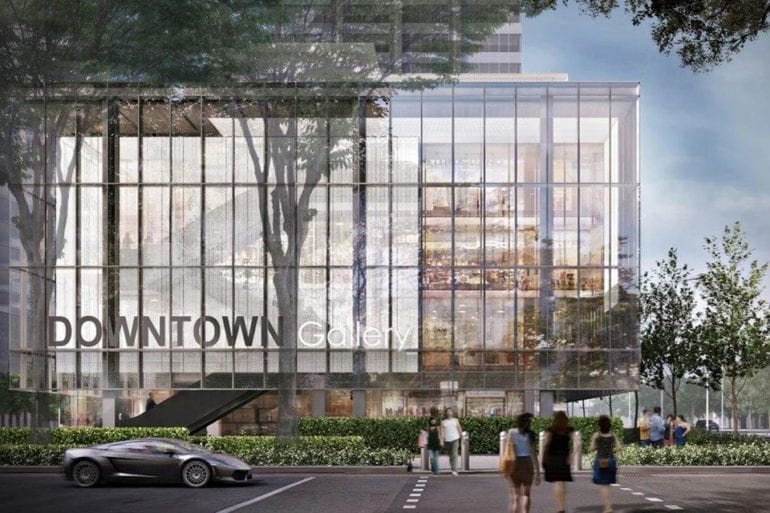
    The upcoming retail supply for 2016 is mainly from the new mixed-use developments in the Central planning region, mainly from two new integrated projects: Downtown Gallery and Tanjong Pagar Centre.

    From 2017 to 2020, approximately 6.2 million sq ft of new retail space is expected to enter the physical stock. Major developments consist of the new retail mall at Singapore Post Centre and The Heart at Marina One.

    Hillion Mall in the Bukit Panjang planning area is the only significant development in 2017 that is not located within the Central planning region.

    9 upcoming mall projects in Singapore

    1. Downtown Gallery
    Location: Shenton Way
    Estimated NLA (sq ft): 160,000
    Estimated completion: 2016

    2. Singapore Post Centre AEI
    Location: Eunos Road 8
    Estimated NLA (sq ft): 269,100
    Estimated completion: 2017

    3. Hillion Mall
    Location; Jelebu Road
    Estimated NLA (sq ft): 152,500
    Estimated completion: 2017

    4. Marina One (The Heart)
    Location: Marina Way/Straits View
    Estimated NLA (sq ft): 140,000
    Estimated completion: 2017

    5. Paya Lear Quarter
    Location: Paya Lear Road/Sims Avenue
    Estimated NLA (sq ft): 340,000
    Estimated completion: 2018

    6. Northpoint City
    Location: Yishun Central 1
    Estimated NLA (sq ft): 315,250
    Estimated completion: 2018

    7. TripleOne Somerset Podium AEI
    Location: Somerset Road
    Estimated NLA (sq ft): 88,500
    Estimated completion: 2018/9

    8. Jewel Changi Airport
    Location: Airport Boulevard
    Estimated NLA (sq ft): 576,000
    Estimated completion: 2019

    9. Funan
    Location: North Bridge Road
    Estimated NLA (sq ft): 324,000
    Estimated completion: 2019

  • Malaysia’s ‘gain’ and Singapore’s ‘loss’

    Malaysia’s ‘gain’ and Singapore’s ‘loss’

    An extensive study by the National University of Singapore’s Business School between 2010 and 2012 showed a significant difference in the spending habits of Singaporeans, between those who lived closer to the Malaysian border and those further away, The New Paper reported today.

    With Singapore’s GDP growth falling below original estimates this year and cut backs in forecast for 2017, two academics in the island republic believe there will be even more Singaporeans crossing the border for their day-to-day shopping needs, The New Paper reported today.

    They supported this theory with data that showed the trend among Singaporeans making day to day purchases from Johor compared with other high-end products.

    NUS visiting professor Sumit Agarwal and associate professor of finance Qian Wenlan reported some of their findings in the Singapore daily, stating that for the period of the survey, 48,000 Singapore nationals participated, half living in the north, near the Malaysian border, and the other half much further away.

    “First, we studied credit card transactions. We ensured that both sets of individuals were comparable in income and demographics.

    “We found those living near the border had significantly lower credit card spending (32% less) within Singapore than those living further from the border, for products that were substitutable, like supermarket purchases, apparel and dining.

    “In contrast, credit card expenditure on non-substitutable products like utilities, government services, medical services and education was the same.”

    The two academics added that other indicators, such as usage of debit cards, ATM withdrawal levels and online banking transactions were also on par between those near and far from the border.

    They naturally concluded that the main attraction to shopping in Malaysia was the “continuously weakening ringgit”.

    “However,for the period of the survey, the push factor in driving Singaporeans to Johor was also the fact that Singapore had a 7% GST in place.

    “The Malaysian government only introduced a similar GST in April last year at a rate of 6%. Until then, Singaporeans enjoyed a 7% tax advantage when shopping in Johor,” the academics said.

    They, however, did not believe that the implementation of the 6% GST by Malaysia would make much of a difference to the result of their study.

    The concern, however, should be for retailers in Singapore, the professors said.

    “A separate study involving retail outlets in Singapore was carried out. Data was collected on sales of snacks, soft drinks and detergent.

    “Across all three product categories, shops in areas that were close to JB had much lower sales per capita, corroborating our earlier findings,” Sumit and Qian said, adding that cigarettes were also popular among Singapore shoppers in Johor.

    The study concluded that with the ringgit’s ever-weakening value and Singapore’s slowing economy, more and more Singaporeans will be happy for the savings they will make across the causeway.

  • Saigon underground mall planned

    Saigon underground mall planned

    Ho Chi Minh City can expect its first underground shopping mall by 2020.

    According to local news sources, the city’s government has sought central government approval to build a four-level Saigon underground mall beneath a station in its first metro route, from Ben Thanh market to Suoi Tien theme park.

    The underground complex will include a shopping mall, walking streets, a square, and other infrastructure.

    The mall is said to cover 40 per cent of the 45,000sqm area, starting from/under Ben Thanh market, going along Le Loi St and ending at the city center’s iconic Opera House.

    The US$303 million project will be constructed jointly by Toshin Development and other consortiums, including Nikken Sekkei Civil Engineering, Osaka Chikagai, and Join.

  • Two more Kuala Lumpur malls opening

    Two more Kuala Lumpur malls opening

    Two Kuala Lumpur malls, collectively offering more than 2 million sqft (185,806 sqm) in net lettable area, will open in Cheras, Klang Valley, by the end of the year.

    Moreover, the MyTown Shopping Centre (below picture) and Sunway Velocity Mall (above picture) will be just 800m away from each other.

    Cheras already has the Aeon Maluri shopping centre and Cheras Leisure Mall, with The Tun Razak Exchange also on the horizon, reports The Star.

    MyTown is being developed by Boustead Ikano while Sunway Velocity Mall is a Sunway Groupproperty. MyTown will be structurally linked to Ikea Cheras, the largest outlet mall in Malaysia.
    With a population of 800,000 people, Cheras is an “ample market”, says Sunway Shopping Malls & Theme Parks CEO HC Chan.

    myTown mall Malaysia

    “Fundamentally, the real issue is the absence of lifestyle and experiential malls in Cheras – Sunway Velocity Mall fills this void. I am looking from a quality rather than a quantity perspective… we are addressing this from multiple angles.”

    Boustead Ikano GM Jo Hogsander agrees there is demand for more retail space, especially in Cheras. He says that when the MRT line opens it will ease traffic congestion and boost accessibility to the mall.

    “Game changer”

    Chan also sees the MRT as a “game changer”. “Two out of six MRT stations in Cheras will serve Sunway Velocity, which translates to a capacity of about 400,000 passengers a day.”
    He says Sunway Velocity Mall would not only compete, but also complement the MyTown Shopping Centre.

    “Competition is healthy, but in the longer term we will complement each other. Just look at the Bukit Bintang area and the number of malls there. It’s thriving because it gives consumers a choice.”
    Despite the number of malls in the Klang Valley, Hogsander says they are still crowded, even on a weekday afternoon.

    “I went to our competitors on a Thursday afternoon and couldn’t find a parking space. I then went to another competitor and had to do laps to find parking – and these are big shopping centres with more than 6000 parking bays.”

    Sunway Velocity Mall and MyTown Shopping Centre will open on October 28 and November 15 respectively, 18 days apart. Both malls boast 6500 parking bays.

    Sunway will have a NLA of 1 million sqft and accommodate 500 shops, while MyTown will have 460 stores on 1.1 million sqft of space.

    Sunway Velocity Mall’s anchor tenants include Harvey Norman, Parkson, TGV Cinemas and Toys’R’Us, while MyTown has secured such brands as Golden Screen Cinema, Mango, Uniqlo and Village Grocer.

  • MBK plans second community mall

    MBK plans second community mall

    Thai developer MBK plans to spend 500 to 800 million baht (US$14 to 23 million) building a community mall in Pathum Thani province next year.

    President/chief executive Suvait Theeravachirakul says the mall will be opposite Bangkradi Industrial Estate in Pathum Thani.

    It is the company’s second community mall following The Nine Center in Bangkok. The new property will occupy a corner of an MBK site where it is developing the Riverdale Golf & Country Club and the Park Riverdale townhouse project.

    It is envisaged the mall will serve residential projects inside an eight to 10 km radius, and MBK is also looking at the feasibility of developing a mix-used complex.

    Meanwhile, The Nine Center has proven successful through its differentiation from other community malls nearby, says MBK shopping centre department MD Somphol Tripopnart. Its revenue last year was 225 million baht. About 12,000 shoppers visit the centre each day and the company plans to spend 10 million baht to improve its landscaping this year.

  • Shopping malls in Jakarta to remain open on Eid

    Shopping malls in Jakarta to remain open on Eid

    A number of shopping malls in Jakarta will remain open on the Eid al-Fitr holiday or Lebaran on Wednesday to serve visitors.

    The malls that will open that day include Atrium and Lotus. “We will open late,” an employee of the Lotus shopping mall, Doni, said here on Tuesday.

    He informed that ahead of Lebaran, the shopping center closed 30 minutes later than the usual time of 22.00 hours.

    “Since June 27, we have been closing at 2230 hours, and opening at 0900 hours,” he added.

    Doni disclosed that for the past three days, just ahead of Lebaran, his shopping center has been closing at 2300 hours.

    “On Lebaran day, we will open at 13.00 hours,” he noted.

    The Atrium Mall in Pasar Senen, Central Jakarta, will also remain open on Lebaran.

    A shop attendant at the mall, Agus, rued that he could not return to his home town in Solo, Central Java, because he had to work.

    Several shops in the shopping centers in Jakarta will remain closed during Lebaran, including those at Mal ITC Cempaka Mas.

  • Punggol shopping mall Waterway Point to open on Jan 18

    Punggol shopping mall Waterway Point to open on Jan 18

    Punggol shopping mall Waterway Point will open on Jan 18 next year, it announced on its Facebook page.

    In replies to comments on a post on the page, which has more than 30,000 fans, it said: “We are pleased to share with you that Waterway Point will be opening on 18 January 2016. Stay tuned to our page for interesting updates.”

    The mall, located in Punggol Central near Punggol MRT station, offers the usual mix of food and beverage, and retail outlets, including apparel chain Uniqlo, book store Times and electronics retailer Best Denki. Its anchor tenants are a Shaw Theatres cinema and supermarket FairPrice Finest.

    In August, Frasers Centrepoint Malls announced that the shopping centre had a 90 per cent committed occupancy, months ahead of its expected opening.

    It is part of Watertown, an integrated waterfront residential and retail development.

  • China’s shopping mall operators struggle against e-commerce

    China’s shopping mall operators struggle against e-commerce

    “The supply of mall space in China is outpacing demand, as growth in retail sales slows because of the country’s lower GDP growth, and in cities where mall space is abundant, vacancy rates have risen substantially,” Marie Lam, an associate managing director with ratings agency Moody’s, said in a report.

    A raft of figures pointed to waning demand at home. China’s retail sales for the first half of the year grew by just 10.4 per cent from a year earlier, the lowest rate since 2004, data released by the National Bureau of Statistics showed.

    Although acknowledging that the outlook will continue to be murky for China’s traditional retailers, Bank of China International analysts led by Tang Jiarui noted consolidation may sweep across some of the major players in the sector, discarding the weak players and leaving the stronger ones as the survivors. “The distress, on the other hand, may give birth to a mergers-and-acquisitions boom. We see some of the leading regional shopping mall operators, including Wuhan-based Zhongbai Holdings, the potential buying targets of industrial powerhouses eyeing expansion,” she said.

    Unfazed by a flagging economy, Chinese developers’ headlong rush to branch out and build more shopping malls show no signs of dying down.

    China made up of 44 per cent of total global shopping mall completions in 2014, data from real estate consultancy CBRE said. The amount of mall-space in the pipeline is even more massive, representing 60 per cent of the total worldwide.

    In 2014, the retail space under construction in China soared by more than 50 per cent year-on-year, compared with a 21.8 per cent rise of the global total for the same period.

    “Demand for mall space from retailers in China is not catching up with supply,” Lam said.

    Adding to the burden on those brick and mortar retailers are their e-commerce rivals that managed to post robust results even as the economy grew at its slowest pace in a quarter century. Online retail sales registered a 48.7 per cent jump in the first six months of 2015 from a year earlier, according to the China e-Business Research Centre.

    A study by Fung Business Intelligence Centre found department stores in China were the worst performers among all retail formats last year with many forced to close shop.

    “Fragile global and domestic economies …competition from speciality stores and online retailers were major reasons for stores’ weak performances,” the Fung report said.

    Many of traditional retailers have been shifting to asset-light business models or exploring the online-to-offline business mode to get by.

    But a transformation can be painful for any company with more uncertainty the rule going forward.

    “Success also depends on whether the changed mall can differentiate itself from other malls that have also undergone facelifts,” said Lam, who saw rising difficulty for some shopping mall property developers in refinancing the loans they took out to shift gears.

  • India’s Big Bazaar opens 100th store

    India’s Big Bazaar opens 100th store

    India’s Big Bazaar is now present in more than 100 cities in India. The last store to be opened by the retail chain last December was the Rourkelo store in Orissa.

    In the last three months prior to the opening of its newest store, Big Bazaar also opened 17 new stores across the country, in cities like Jharsugda, Bhopal, Varanasi, and Bokaro.

    To celebrate its 100th city milestone, Big Bazaar held the “100 cities Celebration” last month in all Big Bazaar outlets, offering as much as 50 percent discounts in various product categories like kitchenware, home furnishings, fashion apparels, and electronics.

    “Our strategy has been to understand the art of doing business in India, while putting in the best practices in Science of retailing. This has helped us customize a complete experience for our customers,” Sadashiv Nayak, CEO Big Bazaar, said in a news release.

    Big Bazaar said it has a loyal customer base of over 2.5 crore (25 million). These customers are part of its various loyalty programs like, Payback, T24 Mobile and Big Bazaar.

    The retail chain is the flagship hypermarket retail chain from Future Group, with  has over 184 stores across the country.