Retail News CRM

Tag: shuts

  • End of an Era: Iconic Japanese Retailer Isetan Shuts its Doors at Singapore’s NEX Mall After 15 Years

    End of an Era: Iconic Japanese Retailer Isetan Shuts its Doors at Singapore’s NEX Mall After 15 Years

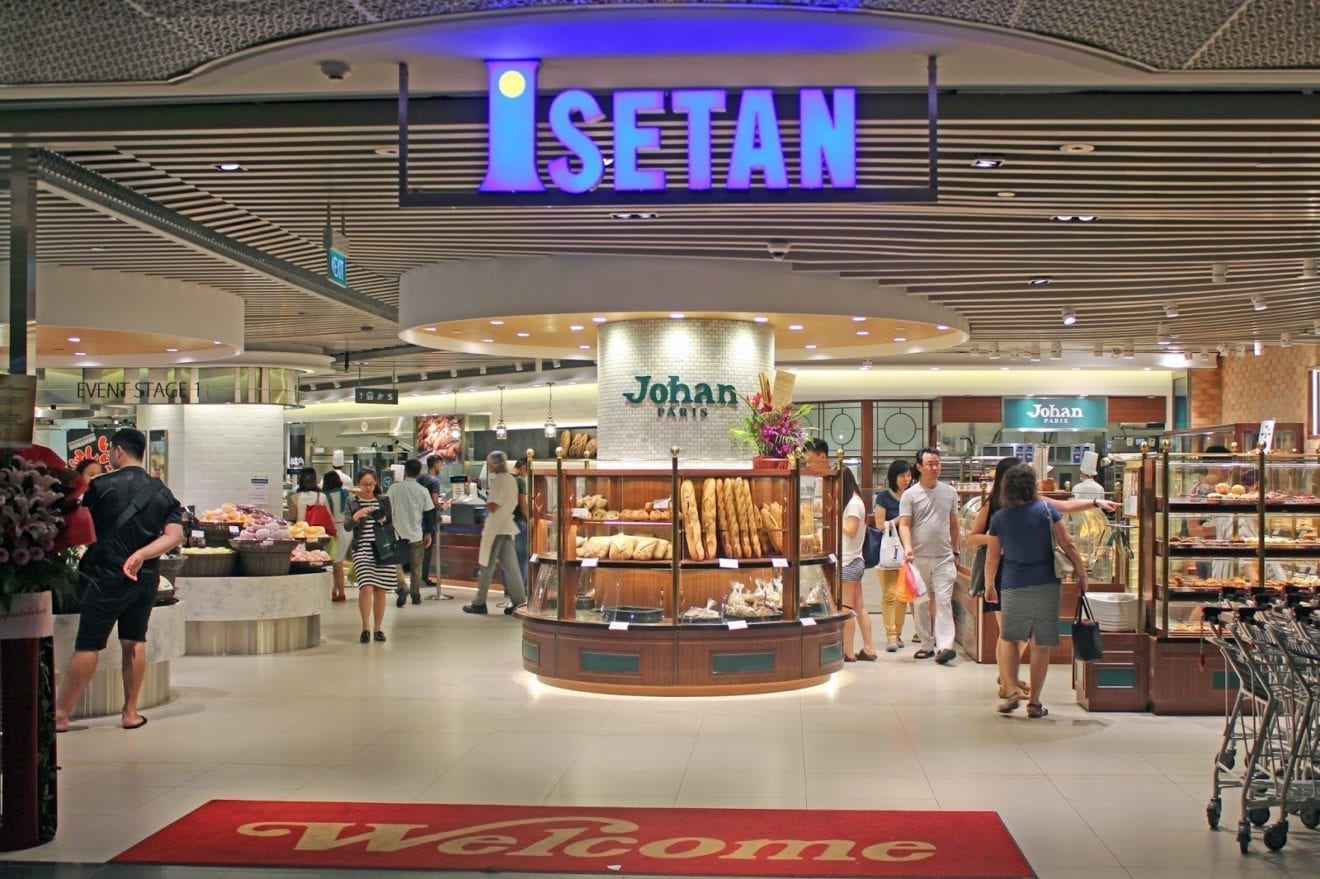
    Isetan, a Japanese department store chain offering a variety of products ranging from home goods to fashion and beauty items, has recently shuttered its outlet located in NEX shopping mall, Singapore. This closure comes to fruition after a successful 15-year long business operation.

    End of an Era

    The termination of this business venture was formally announced on April 26 following the expiration of its lease. This announcement, made via a Facebook post, expressed the company’s profound gratitude to its customers and stakeholders for their steadfast support throughout these fruitful years.

    Footage that circulated online showed the store’s staff bidding their final farewells to their loyal customers on the day of the store’s closure. A notable gathering of people was observed at the store’s entrance during which the store manager expressed heartfelt gratitude towards the customers for their continuous support and goodwill over the years.

    As the manager announced the end of their business operations, he extended well wishes of good health and happiness to all.

    Pioneer of Japanese Retail in Singapore

    Isetan has held a strong presence in the Singaporean market since its inception in 1972. The opening of its Havelock outlet marked the first instance of a Japanese retail store in the city-state. At the height of its success in 2013, the company operated a total of six outlets across Singapore.

    However, the recent years have seen a gradual decrease in the number of operational stores. The retail giant closed its Tampines Mall outlet in November after 30 years of operation. This decision was taken after careful assessment of local conditions and future profitability prospects.

    Earlier store closures include the Isetan Katong outlet at Parkway Parade shopping center in March 2022 and the Isetan Jurong outlet at Westgate Mall in March 2020.

    Questions & Answers

    When did the Isetan outlet at NEX shopping mall in Singapore close?
    It closed on April 26, following the expiration of its lease.

    When did Isetan first establish its presence in Singapore?
    Isetan first established its presence in Singapore in 1972 with the opening of its Havelock outlet.

    How many Isetan outlets were operational in Singapore at the company’s peak?
    At its peak in 2013, Isetan operated a total of six outlets in Singapore.

  • AliExpress Shuts Down Controversial Doll Vendor Amid Legal Scrutiny: A Deep Dive into the Intricate Web of Online Marketplace Regulations

    AliExpress Shuts Down Controversial Doll Vendor Amid Legal Scrutiny: A Deep Dive into the Intricate Web of Online Marketplace Regulations

    AliExpress, the online marketplace under the Alibaba Group, has expelled a China-based merchant who was selling dolls with childlike features intended for sexual use. This move followed a Reuters inquiry into whether the sale of these products adhered to the laws of the United States and European Union.

    The Case at Hand

    AliExpress was first alerted to these controversial listings in mid-November. The company initially claimed that there was no violation of their policies, arguing that the dolls were rigid and lacked any sexual functionality. However, they later shifted their stance, banning the seller for dishonest conduct on this grave issue.

    The seller, Guava Dolls, was found to be marketing four dolls that bore a striking resemblance to minors. These dolls were available for purchase in the US and Europe. Lawyers examining the case pointed out that the images of the dolls on AliExpress bore hallmarks of child sexualization, such as infantile expressions and school uniforms.

    Despite several attempts to reach Guava Dolls through email and social media, the seller remained unresponsive. AliExpress stated that the seller repeatedly denied selling sex toys on any platform, but eventually admitted to accepting custom orders on different platforms. This admission led to their permanent ban from the marketplace.

    European Regulations and the DSA

    AliExpress, along with Shein and Temu, falls under the purview of Europe’s Digital Services Act (DSA) due to their classification as Very Large Online Platforms (VLOPs). The European Commission is closely supervising AliExpress’s compliance with the DSA.

    The DSA mandates that online consumer marketplaces carry out due diligence on the products being sold on their platforms. They must also block or remove any illegal content once they become aware of its presence. These platforms now face stiffer regulatory obligations.

    AliExpress has indicated that it plans to employ third parties to aid in monitoring its platform in the future.

    Response to the Investigation

    The investigation was instigated by a consumer watchdog that spotted the childlike sex dolls on Shein’s marketplace. The European Commission has since asked Shein to provide information on their protective measures against age-inappropriate content and illegal products.

    AliExpress announced after the investigation that it had removed similar listings. It further stated that sellers who violated its policies would face penalties.

    According to the rules of AliExpress, content must neither be sexually explicit nor harmful to minors. Listings that insinuate or depict sex involving minors are prohibited. The company had originally claimed that the dolls in question were anime dolls created for fans of Japanese animation.

    Legal Implications

    In certain European countries, including France, Germany, and the UK, selling or facilitating access to dolls suggestive of children is illegal, regardless of their function. Consumer protection bodies in these nations often categorize such items as analogous to images of sexual abuse under child protection laws. Lawyers consulted by Reuters argued that the listings on AliExpress violated both national and EU guidelines.

    European Union lawmakers voted in favor of a resolution to protect EU consumers from non-compliant e-commerce platforms. This resolution underscores the issue of childlike sex dolls, among others. It is anticipated that the resolution will implore the Commission and EU member states to intensify checks on products entering the bloc.

    In the US, the regulation of childlike sex dolls is determined by state laws. Several states, including Arizona, Utah, Kentucky, Florida, Tennessee, Texas, Hawaii, Louisiana, and Wisconsin have enacted legislation targeting the sale, import, or possession of such dolls.

    Questions & Answers

    What triggered the investigation into AliExpress and Shein?
    The investigation was triggered by a consumer watchdog that discovered childlike sex dolls on Shein’s marketplace.

    What are the obligations of online marketplaces under Europe’s Digital Services Act (DSA)?
    The DSA mandates that online consumer marketplaces carry out due diligence on the products being sold on their platforms. They must also block or remove any illegal content once they become aware of its presence.

    What actions have been taken by AliExpress in response to the investigation?
    AliExpress has removed similar listings from its platform and announced that sellers who violated its policies would face penalties.

  • End of Sweet Saga: Twelve Cupcakes in Singapore Declares Liquidation, Shuts Down 20 Stores Unexpectedly

    End of Sweet Saga: Twelve Cupcakes in Singapore Declares Liquidation, Shuts Down 20 Stores Unexpectedly

    Once a beloved destination for dessert lovers, Singapore’s bakery cafe chain, Twelve Cupcakes, has entered a temporary state of liquidation. This unfortunate circumstance has led to the immediate closure of all its 20 establishments and the termination of approximately 80 employees.

    The announcement, made on October 29, marks the end of a 14-year-long chapter in Singapore’s thriving food and beverage industry. The company expressed regret over the current predicament and offered a sincere apology. “We are deeply sorry for any inconvenience this may cause. We appreciate the unwavering support and partnership we have received over the years,” the brand conveyed in its statement.

    Twelve Cupcakes’ employees, many of whom are represented by the Food, Drinks, and Allied Workers Union (FDAWU), were taken by surprise by the abrupt closure. The company had been unionised since 2021, so the sudden shutdown without prior notice was met with shock and disappointment.

    The union criticized the company’s decision, describing it as “irresponsible and unacceptable.” Currently, it is extending support to the affected staff in dealing with wage and retrenchment claims.

    Twelve Cupcakes was founded in 2011 by popular celebrities Daniel Ong and Jaime Teo. The bakery cafe chain experienced a period of swift growth and was acquired in 2016 by the Dhunseri Group, an Indian conglomerate. The acquisition, which was worth S$2.5 million (US$1.9 million), was a strategic move aimed at expanding the brand’s presence across Asia.

    Questions & Answers

    **What led to the closure of Twelve Cupcakes?**
    Twelve Cupcakes has entered a temporary state of liquidation, which forced the company to close all its 20 locations and terminate about 80 employees.

    **How did the staff react to the sudden closure?**
    The staff, most of whom are represented by the Food, Drinks, and Allied Workers Union (FDAWU), were shocked and disappointed by the abrupt closure, as there was no prior warning.

    **What does the Dhunseri Group’s acquisition of Twelve Cupcakes signify?**
    The Dhunseri Group, an Indian conglomerate, acquired Twelve Cupcakes in 2016 for S$2.5 million (US$1.9 million). This was a strategic move aimed at expanding the bakery cafe chain’s presence across Asia.

  • Cyberattack Paralyzes Production At Asahi Group: Operations And Timeline In Question

    Cyberattack Paralyzes Production At Asahi Group: Operations And Timeline In Question

    Asahi Group Holdings, a prominent Japanese beer and beverage corporation, has been unable to restart production at its domestic factories following a cyberattack, according to a company spokesperson. The timeline for resuming operations remains uncertain.

    Production Halted

    The company has a network of 30 manufacturing facilities throughout Japan, all engaged in the production of beer, beverages, and food products. Currently, the company is conducting a thorough investigation to determine if all of its plants have ceased production, the spokesperson revealed.

    Operations Suspended

    Asahi Group Holdings, the company behind popular brands such as Asahi Super Dry Beer, Nikka Whisky, and Mitsuya Cider, announced that due to a system outage caused by a cyberattack, its Japanese group companies have temporarily suspended operations. This includes tasks like order processing, shipping, and call centre functions. Fortunately, the company has confirmed that there has been no leakage of personal information as a result of the cyberattack.

    Questions & Answers

    What impact has the cyberattack had on Asahi Group?
    The cyberattack has forced Asahi Group to halt production at its domestic factories, suspend order processing, shipping, and call centre operations. The company is currently unable to predict when normal operations can be resumed.

    Has all production been stopped at Asahi Group’s plants?
    The company is investigating to establish whether all its 30 factories in Japan have suspended production in the aftermath of the cyberattack.

    Was any personal information leaked as a result of the attack?
    According to the company’s spokesperson, no personal information has been leaked due to the cyberattack.