Retail News CRM

Tag: Smart City

  • Hong Kong Rises To Second In Asia’s Smart City Rankings: A Look At Its Success

    Hong Kong Rises To Second In Asia’s Smart City Rankings: A Look At Its Success

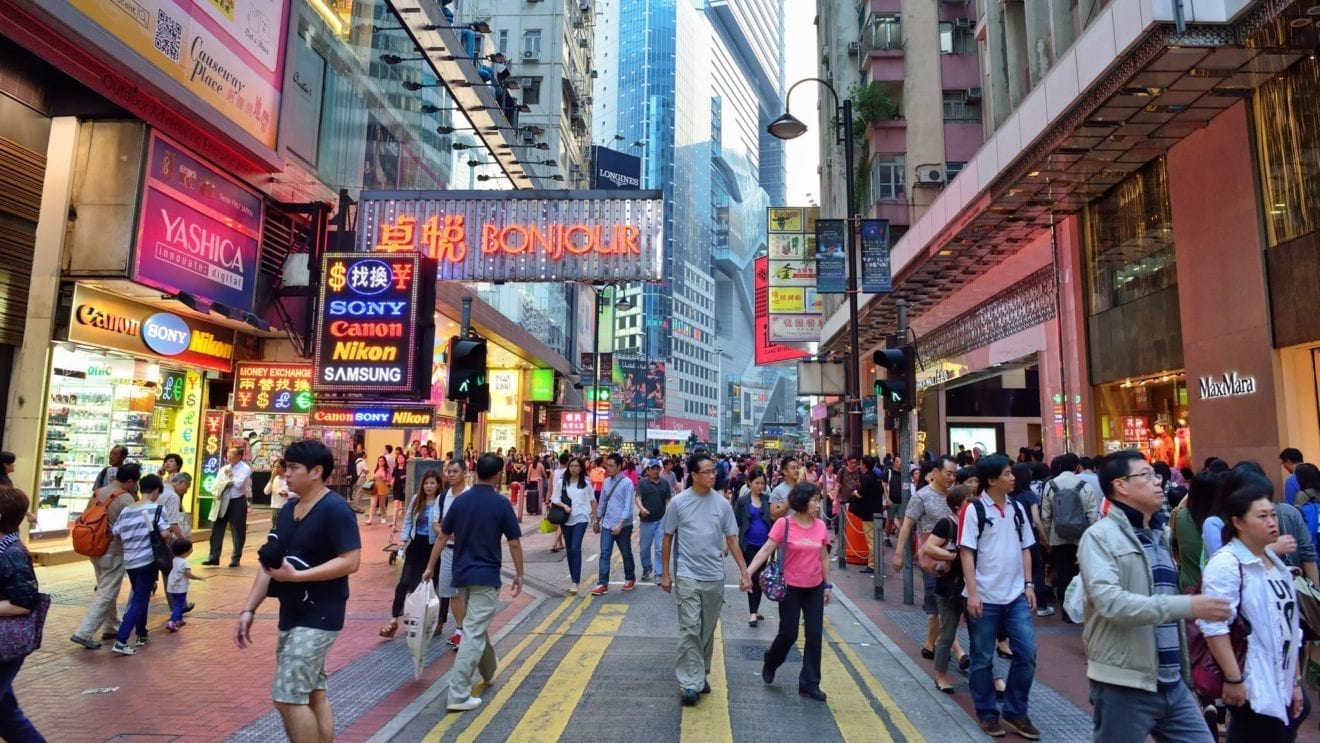
    In a recent evaluation of global urban centers, Hong Kong has emerged as a standout performer within Asia, claiming the second spot in the region, just behind Tokyo, which secures the fifth position worldwide. This assessment comes from the ISUI Smart City Index 2025, prepared by the Hong Kong Polytechnic University in collaboration with the International Society for Urban Informatics (ISUI).

    Smart City Development Takes Center Stage

    Released on Wednesday, the index scrutinizes the impact of smart city advancements on residents’ quality of life across 73 cities worldwide, including 25 in Asia. The evaluation rests on six essential dimensions: citizens, environment, social landscape, economy, infrastructure, and governance. An impressive 97 specific indicators, derived from publicly available data like the ratio of facilities to residents, contributed to this comprehensive analysis.

    Hong Kong’s Sustainable Edge

    Hong Kong’s remarkable standing can be attributed to its commitment to environmental sustainability, robust digital economic growth, and effective governance structures, as reported by The Standard. The index underscored the city’s strides toward carbon neutrality, bolstered by a sophisticated digital infrastructure and an open-access spatial data sharing platform that now offers over 1,000 datasets from various municipal departments for public access.

    Improving and Inspiring

    Professor John Shi, president of ISUI and the study’s lead academic, remarked on Hong Kong’s leap from ninth place in 2023 to its current rank. “It’s very strong, very encouraging. The city is excelling in its smart city development,” he stated, as quoted by Hong Kong broadcaster RTHK. He also stressed that the findings could play a pivotal role in shaping future policies, particularly in expanding active transportation infrastructure, such as cycling paths and electric vehicle charging stations.

    Global Competitors in the Mix

    Other notable Asian cities also shone in the index with South Korea’s Seoul at 13th, China’s Beijing at 15th, and Singapore at 21st. On the global stage, Stockholm, Sweden, took the top honors, succeeded by Washington, D.C., Barcelona, and London.

    Questions & Answers

    How does Hong Kong’s smart city ranking compare to previous years?
    Hong Kong climbed from ninth place in 2023 to secure second place in Asia this year, highlighting significant improvements in its smart city initiatives.

    What factors contributed to Hong Kong’s high ranking?
    The city’s achievements in environmental sustainability, digital economic development, and effective governance were crucial to its high ranking in the ISUI Smart City Index.

    How do other Asian cities rank in the smart city index?
    In addition to Hong Kong and Tokyo, Seoul ranked 13th, Beijing 15th, and Singapore 21st, showcasing a competitive landscape among leading Asian urban centers.

  • SK Telecom signs series of MoUs for greater smart city solutions

    SK Telecom signs series of MoUs for greater smart city solutions

    The South Korean Telecommunications operator announced the signing of the Memorandums of understanding (MoUs) with the Incheon Free Economic Zone (IFEZ) Authority and some others who are planning to build smart infrastructure with 5G and self-driving elements.

    The deals are meant to strengthen the country’s position in smart city development with regards to 5G network deployment, autonomous vehicles, and connected hospitals.

    “We will work closely with the IFEZ Authority to accelerate the IFEZ’s transition to a smart city powered by SK Telecom’s 5G network and mobility technologies,” said Park Jin-hyo, the operator’s CTO.

    As part of the deal, SK Telecom is expected to create a machine-readable HD map of the IFEZ area (which is comprised of Yeongjong, Cheongna, and Songdo) with information to help support autonomous vehicles. This information includes road conditions, lanes, and speed limits.

    “The HD map will b built with Dynamic Data Platform, a 5G-based real-time update solution for HD maps. Dynamic Data Platform automatically updates HD maps upon receiving road observation data from Advanced Driver Assistance Systems (ADAS) over 5G network,” said Jin-hyo.

    He added, “SK Telecom plans to install ADAS and 5G communication modules to public transport vehicles and official government cars in the IFEZ area to detect all changes in the road environment.”

    Both parties aim to work together to achieve smarter and safer transportation by taking into account the policies that will be put in place. In order to do this, they aim to build a data hub that will enable them to oversee the floating population.

    Another deal that was devised, was between SK Telecom and Yonsei University Health System which will provide 5G network solutions and smart technology to hospitals. The smart hospital that is in the making is forecasted to be opened by the beginning of 2020.

    “The 5G-powered digital hospital will be equipped with SK Telecom’s Ai speaker- NUGU- to enable patients with physical difficulties to easily control their beds, lighting, and TV with their voice. They can even use NUGU Call service to get medical assistance in case of emergencies,” SK Telecom stated.

    The hospital is also expected to have AR-powered indoor navigated which will use 3D mapping technologies to “enhance the convenience of patients and visitors”.

    This will allow patients in isolation wards to receive visitors through holographic projections. Additionally, facial recognition will be used on medical worker to ensure greater safety and security for the patients. “Unlike other access control systems that require some kind of contact – fingerprint, pass, etc- the face recognition system allows contact-free entry to help reduce the risk of infection”.

    They also plan to create an incubator for startups called Venturepolis which will be based in Songdo. Venturepolis will support startups that work with smart office solutions.

  • China hosts 50% of smart cities in Asia

    China hosts 50% of smart cities in Asia

    Smart city projects in China are expected to generate $320 billion for the nation’s economy by 2025, according to Frost & Sullivan.

    China is expected to account for 50% of the smart cities in Asia, the research firm said in a new report. The global smart city market is expected to grow to over $2 trillion by 2025.

    Asia-Pacific is also expected to be the fastest growing region in the smart energy – or distributed energy generation – space over this time.

    Smart energy will be one of a number of key technologies that will be the technological cornerstones of smart cities in the future, with others including AI, robotics, advanced driver assistance systems and personalized healthcare.

    AI will play a key role in smart cities in areas such as smart parking, smart mobility, smart energy grids, adaptive signal control and waste management, Frost & Sullivan said. Major corporations such as Google, IBM and Microsoft remain the primary drivers of AI adoption.

    Smart city projects will meanwhile take on a more urgent imperative due to the projection that by 2050, over 80% of the population in developed countries and 60% in the developing world will live in cities.

    Another key enabling technology for smart cities is the internet of things (IoT).

    “Currently most smart city models provide solutions in silos and are not interconnected. The future is moving toward integrated solutions that connect all verticals within a single platform. IoT is already paving the way to allow for such solutions,” Frost & Sullivan visionary innovation senior research analyst Vijay Narayanan said.

  • IDC names Smart City APAC Award winners

    IDC names Smart City APAC Award winners

    Hong Kong has been recognized in IDC’s third annual Smart City Asia Pacific Awards, scoring awards in two of the 14 categories.

    Hong Kong won in the transportation category for its Next Generation Intelligent Transport System, and in the smart building category for its Zero Carbon Building project.

    China meanwhile won in the smart meter category for its Shenzhen Smart Water project, and in the education category for its Hubei Public Services Platform of Education Resources.

    But the biggest winner was New Zealand, which picked up four awards in the smart grid, tourism/arts/culture, connected health and public works categories, followed by Singapore, which secured three awards in the administration, economic development and social services category.

    In total 18 smart city projects were represented across the 14 categories, due to ties in four categories – administration, education, land use/environmental management and smart buildings.

    “Asia-Pacific smart city projects in the past year have exhibited strong national development focus with an increasing citizen-centric personalization combined with ‘low investment-high impact’ agendas – all in hopes of attracting the right mix of manpower talents and lucrative foreign-direct investments,” commented Gerald Wang, head of IDC Government and Education Insights Asia Pacific.

    “This socioeconomic shift towards creating more localized and quality smart city ecosystems are notably influenced by new international and regional trade dynamics. The failure of the Trans-Pacific Partnership agreement and China’s increased efforts to boost its global leadership with endeavors such as the Belt and Road Initiative will continue to shape commerce and innovation drive in the region.”

    According to IDC, the key trends shaping the future of smart city programs in APAC include efforts to improve city economics and risk management, cybersecurity and compliance, socioeconomic growth and infrastructure as well as foreign investment and manpower development.

  • PanaHome, Sojitz to develop ‘smart town’ in Indonesia

    PanaHome, Sojitz to develop ‘smart town’ in Indonesia

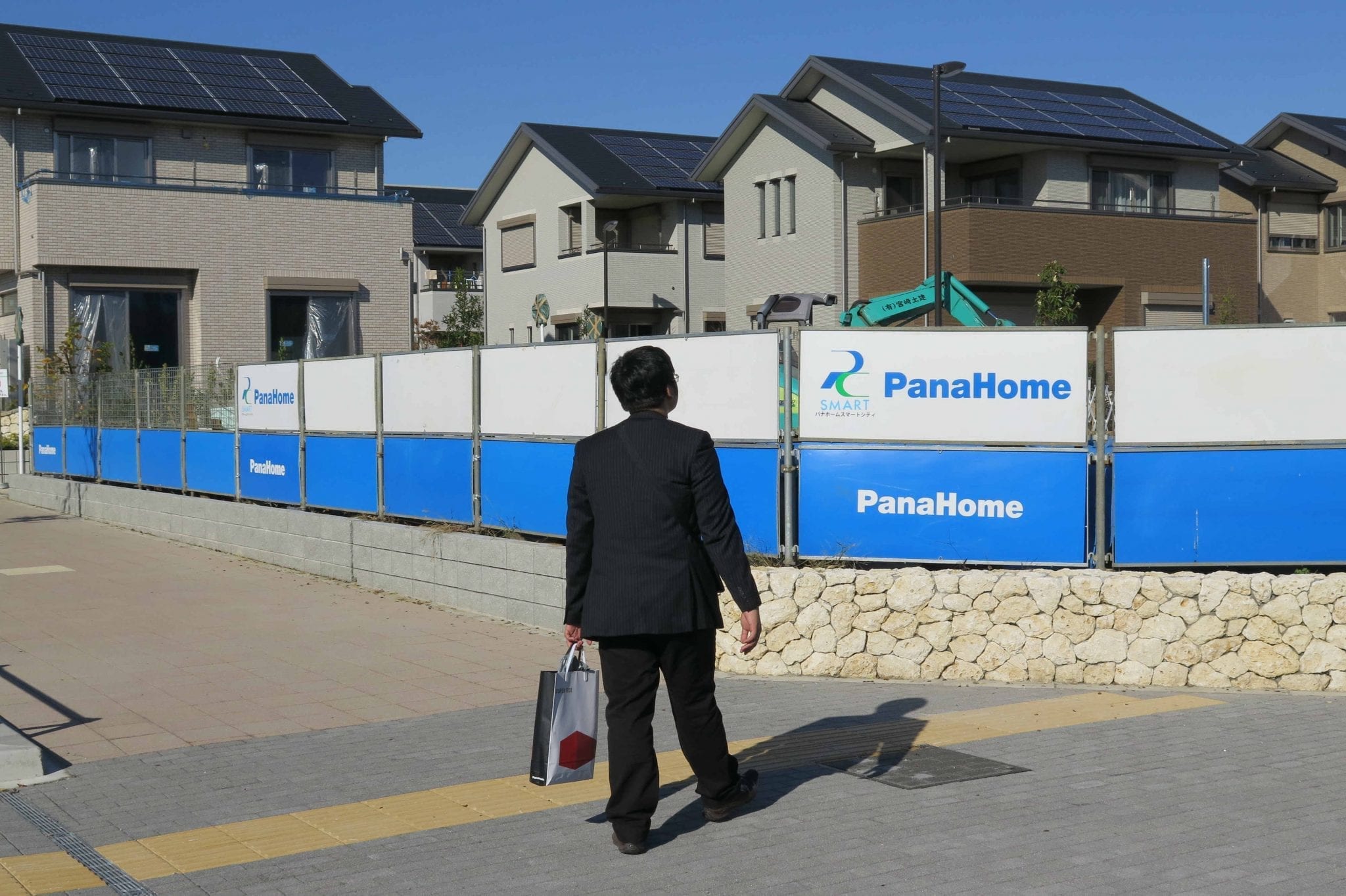
    PanaHome, a housing company under the Panasonic group, has teamed up with trading company Sojitz Corp. to build a sustainable “smart town” in the city of Deltamas outside Jakarta.

    The two companies’ Indonesian subsidiaries will establish a joint venture, PT PanaHome Deltamas Indonesia, in October to construct residential and commercial complexes as part of the Deltamas smart town plan, a comprehensive urban development project that includes commercial facilities, residential neighborhoods and an industrial park.

    The joint venture combine PanaHome’s expertise in building sustainable smart towns with the Sojitz group’s concept of a residential neighborhood proximal to business districts in the area of Deltamas.

    “The first phase of this project will involve construction of 520 housing units with costs up to ¥10 billion ($91 million). And we will continue other phases with 1,000 housing units,” said Kazuhiko Tanaka, managing director of PanaHome Asia Pacific Pte. Ltd., who is based in Singapore.

    The first phase will start in the beginning of 2018 and finish in 2019, followed by a final phase to be completed around 2026, Tanaka said. “We will start selling units in the middle of 2018.”

    “We will not only adopt Japanese quality, such as construction and after-sales service, but also adjust to Indonesia’s situation,” said Tanaka.

    “Nowadays, the development of Deltamas city has already reached 70 percent of its total 3,200-hectare area. In the near future, there will be schools and hospitals as well,” said Masahiro Koizumi, vice president of Sojitz’s local property developer, PT Puradelta Lestari Tbk.

  • Smart city development now a global phenomenon

    Smart city development now a global phenomenon

    There are more than 250 smart city projects underway across 178 cities around the world, according to a new report from market research firm Navigant Research.

    The report, Smart City Tracker 1Q17, finds that of the 252 smart city projects tracked, the majority of projects are smart government-led (40%), with smart energy coming a relatively close second (27%), while smart transportation (18%), smart buildings (11%), and smart water (4%) projects made up the rest.

    Geographically, the majority of projects tracked were in Europe, with Asia Pacific in second and North America third.

    “The development of smart cities is now a truly global phenomenon, with considerable activity and notable projects across all regions,” Navigant Research says.

    “Working in partnership with technology and service suppliers, city leaders and central governments are realizing the benefits smart city projects can provide to increase and improve economic opportunity, sustainability, and quality of life.”

    Thanks to the widespread interest in smart city programs, the global market for smart city solutions and services is expected to grow from $40.1 billion in 2017 to $97.9 billion in 2026, representing a compound annual growth rate (CAGR) of 10.4%.

    This includes investments in areas such as open data platforms, smart grids, networked LED street lights, urban mobility, energy-efficient buildings, water management, and government service applications.

    In addition, as sensor technology improves and costs decrease, smart city technologies are becoming more efficient, higher performing, and cheaper than ever before, the report adds.

  • NEC pushes interoperability of smart city tech

    NEC pushes interoperability of smart city tech

    NEC Laboratories Europe has teamed up with four other ETSI members to initiate a new ETSI Industry Specification Group on Context Information Management (ISG CIM), together with the Open & Agile Smart Cities (OASC) organization.

    The ISG CIM will specify open standards for the context information management layer, running “on top” of IoT platforms, enabling implementation of context-aware behavior in smart applications.

    This context information management layer accesses and updates information coming from different sources (IoT networks and information systems) that comprise the semantics of information, including data source, time of validity, ownership and many more.

    This will extend the interoperability of applications, helping smart cities to integrate their existing services and enable new third-party services.

    Cities are striving to use digital services to advance the quality of life of their residents, the efficiency of their operations, the growth of their economies and to increase their sustainability.

    At the moment, telecommunication systems, city infrastructure databases, car traffic management systems, and new Internet of Things (IoT) solutions all have their own specifications, and smart cities are held back by lack of interoperability for exchange of information between these platforms — which the new ISG CIM aims to overcome.

    A focus of the group will be collaboration with other standardization activities in related areas, including ETSI TC SmartM2M and ETSI PP oneM2M. Groups such as EIP-SCC, W3C or ITU-T, and open source IoT software platforms such as FIWARE and OM2M will be closely consulted.

    The goal is to interoperate and to re-use existing work as much as possible. The ISG CIM work is intended to align with the EU’s standardization policies for the Digital Single Market.

    The five ETSI members of the new ISG CIM are Easy Global Market, imec, NEC, Orange and Telefonica. Beyond the initial focus of smart cities, the approach will be transferable to other applications, such as smart agriculture and smart industry.

    Organizations from all areas are welcome to join the ISG CIM initiative — non-ETSI as well as ETSI members, including research organizations, software houses and system integrators, SMEs, industrial partners, city groups and other stakeholders.

  • Cashless society push will speed smart city development in Malaysia

    Cashless society push will speed smart city development in Malaysia

    Malaysia’s Malaysian Global Innovation & Creativity Centre (MaGIC), smart city enabler Cyberview and Mastercard have signed an agreement to support the Malaysian government’s push towards a cashless society.

    During the recent signing of the memorandum of agreement at the Smart City Expo World Congress in Barcelona, Cyberview’s managing director Dato’ Faris Yahaya said that a cashless society drive would help to strengthen smart city development in Cyberjaya.

    Faris said the agreement is the latest in a series of milestones achieved by Cyberjaya in its continued evolution as a Smart City.

    Recent achievements include the deployment of a city-wide long range (LoRA) network to offer an IoT lab and the establishment of its City Innovation Council (CIC) to allow startups to test out prototypes.

    “Cyberview has spearheaded the continued development of the city under its Smart City and Living Lab initiatives – development pillars designed to increase its operational efficiency, improve the quality of life for the people of Cyberjaya and contribute to growing the local economy,” added Faris.

    “We continue to do this by incorporating technology into every facet of the township through collaboration with our many partners, and this is eminent from our push in transforming Cyberjaya into a cashless city by working hand in hand with MaGIC and Mastercard,” he said.

    Cyberview, MaGIC, Mastercard
    (From left) Carlos J. Menendez, President Enterprise Partnership, MasterCard; Dato’ Faris Yahaya, Managing Director, Cyberview Sdn Bhd; Tan Sri Dr. Mohd Irwan Serigar, Secretary General of Treasury, Ministry of Finance Malaysia; Perry Ong, Country Manager for Malaysia and Brunei, MasterCard and Mr. Ashran bin Dato’ Ghazi, Chief Executive Officer, Malaysian Global Innovation & Creativity Centre (MaGIC) during the Memorandum of Understanding Ceremony at the Smart City Expo World Congress in Barcelona.


    “The reason why we’re doing this is because we understand that payments are the heart of a city’s economic activity – forming the core of every economic flow including salaries, consumer spending, business procurement, and taxes,” said Faris.

    Cashless ecosystem

    This latest agreement lists several initiatives to be rolled out by the partners to develop a cashless ecosystem in Cyberjaya.

    He said some of these include integrating Mastercard’s digital payments service Masterpass to make everyday transactions for consumers faster, simpler and more secure as well as providing city authorities and urban planners actionable data-driven insights into the retail industry and to better inform their marketing campaigns for visitors.

    These activities are in line with the government’s Economic Transformation Programme and Bank Negara Malaysia’s (BNM) vision to transform Malaysia into a cashless society.

    Ashran Dato’ Ghazi, chief executive officer of MaGIC said: “MaGIC will support the Cyberview Smart City initiative in a collaboration with both Cyberview and Mastercard. Through the Corporate Entrepreneurship Responsibility (CER) platform, MaGIC will play a key role to facilitate the partnership between players in the corporate sector like Mastercard and local entrepreneurs to design and build smart city infrastructure, services and solutions in Cyberjaya.”

    Perry Ong, country manager for Malaysia and Brunei of Mastercard, said, “Through the Economic Transformation Program, an electronic payments agenda is embedded through a structural reform known as the Payment Card Reform framework where the payment industry is working together in efforts to broaden market access and to dampen cash transactions. It is imperative that we recognise the great control, transparency and efficiency electronic payments offers to society.”

    Ong added that Mastercard will be providing the horizontal payment construct across all the vertical clusters in the Smart City including urban mobility, lifestyle, finance, health, supply chain and education among others.

    He said this will  ensure an integrated payment ecosystem for a better commerce experience with digital solutions such as “Masterpass,  which helps Malaysians to enjoy simpler, safer and smarter digital payments across any device and channel anywhere  – be it online, in app and in-store with contactless.”

    “By embedding digital payments into our core infrastructure and harnessing the data that electronic payments generate, cities can deliver on their promise to create smarter, more welcoming spaces, and empower their citizens to lead greater, more rewarding lives,” said Cyberview’s Faris.

    He said an AllianceDBS Research report earlier this year projected that the ‘cashless’ system in Malaysia will grow by 15 per cent, five-year compounded annual growth rate (CAGR), as Bank Negara Malaysia (BNM) pushes for reform in the country’s payment system.

    “We will continue to collaboratively work with our numerous ecosystem partners, including MaGIC and Mastercard to enhance the liveability of the city and provide the people of Cyberjaya with everything they will need to improve their lives,” Faris said.

  • Singapore’s EDB, MasterCard enter smart city alliance

    Singapore’s EDB, MasterCard enter smart city alliance

    The Singapore Economic Development Board has entered an agreement with MasterCard to help Singaporean companies build innovative solutions in urban mobility, tourism and trade.

    The announcement was made at the World Cities Summit 2016 being held this week at the Sands Expo & Convention Centre, Marina Bay Sands in Singapore.

    The two parties said they will focus on tackling some of the biggest urban challenges of our time in the next two years: how to promote mobility, tourism and trade while enabling seamless experiences and sustainable growth.

    MasterCard and the EDB in partnership with other Singapore-based companies plan to work together to design and build technology platforms in the three mentioned.

    In tourism, the goal is to help Singapore residents and visitors navigate the city state’s attractions easier and in a more connected way. In urban mobility, the platform will strive to ensure that residents and visitors have an easy time using the local transit system. In trade, the goal is to digitize and automate how companies buy, sell and pay each other.

    For each of these three areas, solutions will be designed and developed out of Singapore, further enhancing Singapore’s ability to create innovative products and services which are exportable and can be globally deployed.

    “We are happy to work with MasterCard to enable the creation of new solutions in the identified themes. This is in line with EDB’s drive for Singapore to be a hotbed for innovation and creation of new businesses, which in turn will contribute to economic growth and the creation of good jobs,” said Kelvin Wong, assistant managing director at EDB.

    In major cities around the world including London, Athens and Bogota, MasterCard is already working with local authorities and other technology companies to make public transport more accessible and more efficient.

    Ari Sarker, co-President MasterCard Asia-Pacific: “For many years, Singapore has been setting the benchmark for what it means to become a smart city and a smart nation.

    Since 2012, Singapore has been one of MasterCard’s global R&D Centers (MasterCard Labs) – which most recently launched the first commerce application for SoftBank Robotics’ humanoid robot Pepper.

    Earlier this year, MasterCard also teamed up with IBM to offer smaller merchants in Singapore and across the Asia-Pacific region market insights that integrate IBM Watson Analytics with insights based on aggregated and anonymized transaction data through MasterCard Advisors Local Market Intelligence (LMI).