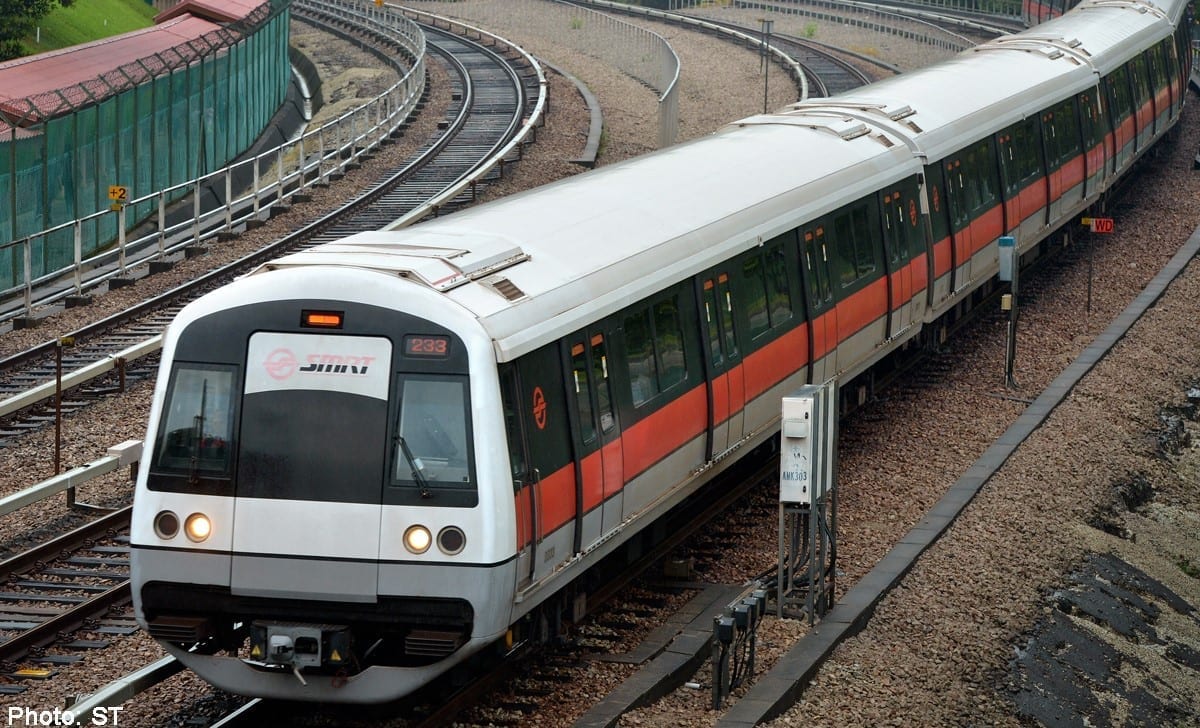
Transport operator SMRT has been awarded the tender for the construction of a public rail project in Bandung, the Mayor of Indonesia’s third-largest city said, a development that has elicited a thumbs-up from analysts.
Local media in Indonesia had reported in recent days that SMRT will be the project operator for the Light Rail Transport (LRT) in Bandung. Bandung Mayor Ridwan Kamil was quoted in the reports as saying that in the initial stage, SMRT will build the LRT Corridor 1, a 10.2km route from Babakan Siliwangi to Leuwipanjang.
In a Facebook post last Monday (Sept 19), Mr Kamil wrote SMRT had been awarded the tender for Corridor 1 and that construction would begin by next year if everything went well.
In the wake of those reports, SMRT on Monday (Sept 26) said in a regulatory filing with the Singapore Exchange (SGX) that its wholly-owned subsidiary, SMRT International, had on Sept 9 submitted together with T-Files Indonesia a formal bid to participate in a tender for the construction of a public rail project in Bandung, about 180km from Jakarta.
SMRT said in its filing that it had not received official notification of the tender award and that no agreement had been reached on any of the terms with regard to the construction and implementation of the project. It declined to comment beyond the SGX filing.
Assistant Professor Yang Nan, Department of Strategy & Policy at NUS Business School, said: “Obviously this is an interesting project. Even if it doesn’t promise immediate high returns, SMRT is eyeing the future. As the largest economy in Asean, Indonesia has very underdeveloped transport infrastructure but is ready to catch up quickly.”
He added: “Getting an early and strong foothold in these new markets is crucial for rail expansions and SMRT’s move is in this direction. I’m optimistic about SMRT’s perspective in winning this and future tenders, for its specialties and experiences operating in the Asean market.”
CMC Markets Singapore analyst Margaret Yang said: “Indonesia is a fast-growing emerging economy, with a large population and high demand for infrastructure upgrading. This would be a good opportunity for SMRT to explore new business in Asean’s largest economy.”
The latest development comes two years after SMRT International joined a consortium to provide consultancy services and secured first rights to operate and maintain the Jakarta Eco Transport monorail, due to commence operations next year.
At home, SMRT has come under heavy criticism in recent years as frequent train disruptions and delays on its various lines held up passengers on their daily commutes.
In March, two employees carrying out routine maintenance work on a track near Pasir Ris MRT Station were killed after they were hit by a train approaching the platform. In July, SMRT said it had sent back 26 China-made trains to the manufacturer for repairs after cracks were found in them.
Earlier this month, SMRT said it had not been able to determine the source that caused the intermittent loss of signalling communications on the Circle Line last month, which led to days of train service delays.
Transport analyst Park Byung Joon, who lectures at SIM University, said that any operator with a long-enough history in operations will have its own record of mishaps. “As a train operator, it has a responsibility to the public, of course, but as a commercial entity there is nothing wrong for a business expansion opportunity,” he said.
“Despite some recent operational hiccups suffered by SMRT, it is still a very strong operator of trains. As an operator of trains, it can bring in its knowledge on how to oversee the construction project and what kind of considerations you have to have for safety concerns. This kind of knowledge can be very useful for the consortium.”
This Thursday, SMRT shareholders will vote on state-owned investment fund Temasek Holdings’ proposed buyout of the public transport company and experts have mixed views on how news of the Indonesian tender will affect the vote.
Temasek’s wholly-owned subsidiary Belford has proposed to buy the 46 per cent of SMRT shares that the state-owned fund does not already hold, by way of a scheme of arrangement at S$1.68 per share.
More than 50 per cent of shareholders present in person or by proxy must vote to approve, and they have to hold at least 75 per cent of the value of SMRT shares among those present. This excludes shares held by Temasek, which is not eligible to vote.
SMRT said in Monday’s filing that the company does not expect the Indonesian bid to have a material impact on its net tangible assets per share or earnings per share (EPS) for the current financial year.
“There shouldn’t be a material impact on shareholder’s decision due to the uncertainty surrounding the bid, and no material impact on its tangible assets or EPS in the near term,” said Ms Yang.
However, Mr Yang disagreed.
“The shareholders may vote for SMRT to remain publicly-listed as they see this announcement as something that can boost the future stock value of SMRT, and an opportunity to receive higher future dividends,” he said.