Retail News CRM

Tag: Stablecoins

  • HSBC Breaks New Ground with Hong Kong’s First Bank-Issued Stablecoin

    HSBC Breaks New Ground with Hong Kong’s First Bank-Issued Stablecoin

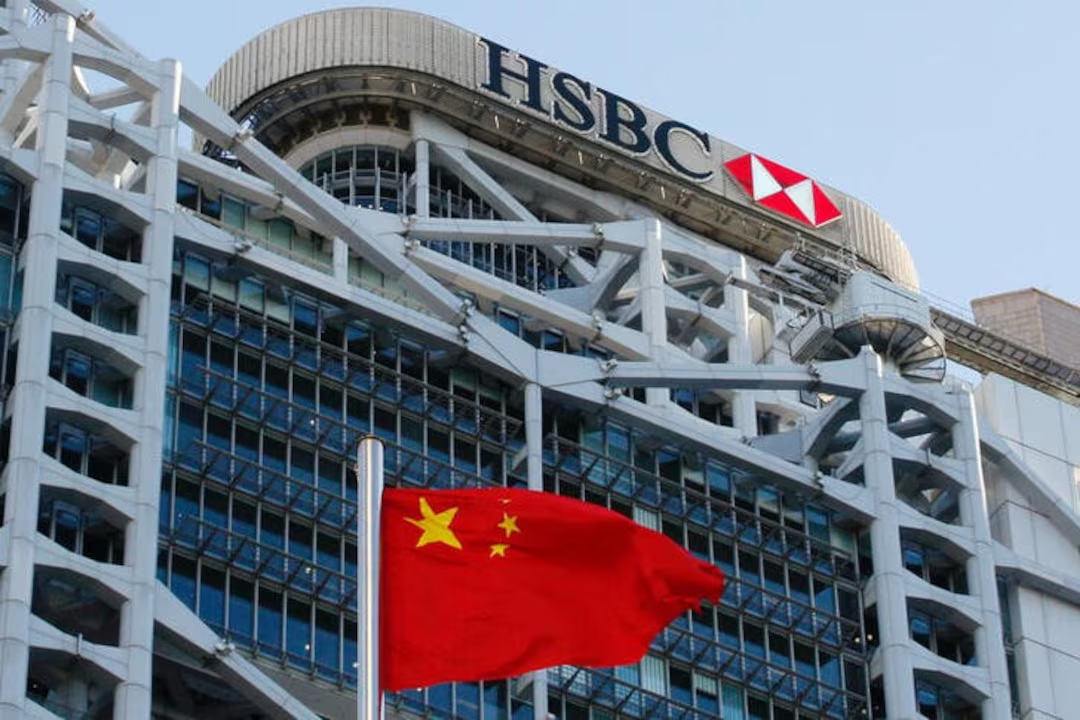
    The Hongkong and Shanghai Banking Corporation Limited, a subsidiary of HSBC, has been granted a license to issue stablecoins by the Hong Kong Monetary Authority (HKMA), marking a significant foray into the regulated digital asset space. The bank intends to introduce a Hong Kong dollar-denominated stablecoin by the latter half of 2026, becoming one of the first major global lenders to issue a regulated digital currency for retail use within the city.

    Fully Backed, Regulated Digital Currency

    HSBC has revealed that each unit of the upcoming stablecoin will be fully backed by high-quality liquid assets stored in segregated accounts. This structure is designed to preserve price stability and guarantee redemption at par value. Notably, the bank has emphasized its commitment to rigorous financial crime compliance standards, in line with regulators’ increased focus on security and transparency in digital assets. This development comes amidst Hong Kong’s efforts to fast-track its position as a premier hub for digital finance. This is apparent in the HKMA’s regulatory framework, geared towards legitimizing stablecoins while simultaneously mitigating systemic risks.

    Integration Into Everyday Banking

    HSBC’s stablecoin will be directly incorporated into two of their most popular platforms: PayMe, the bank’s widely-used peer-to-peer payment application, and the HSBC Hong Kong mobile banking application. This move indicates a strategic push towards integrating digital assets into mainstream financial activities, opposed to treating them as niche investment products. PayMe currently boasts over 3.3 million users, while active users on the HSBC HK App have risen by 20% year-on-year, following a recent redesign.

    Questions & Answers

    What is the purpose of the stablecoin that HSBC plans to issue?
    The objective of the stablecoin is to integrate digital assets into mainstream financial activities. This will be achieved by incorporating the stablecoin into HSBC’s most popular platforms, PayMe and the HSBC Hong Kong mobile banking application.

    How will the HSBC stablecoin maintain its value?
    Each unit of the stablecoin will be fully backed by high-quality liquid assets held in segregated accounts. This structure is designed to maintain price stability and ensure redemption at par value.

    How is HSBC’s move to issue a stablecoin significant?
    HSBC’s move to issue a stablecoin marks a significant step into the regulated digital asset space. It positions the bank as one of the first major global lenders to issue a regulated digital currency for retail use, signifying a strategic shift in the financial industry towards digital finance.


  • Forrester Predicts Imminent Bust for Majority of APAC Stablecoin Ventures in 2026

    Forrester Predicts Imminent Bust for Majority of APAC Stablecoin Ventures in 2026

    In the coming year, the majority of stablecoin launches in Asia are predicted to fail, according to recent projections from research and advisory firm Forrester. In their 2026 Payments Predictions report, they estimate that 80% of local stablecoin launches in Asia Pacific will not succeed. The report cites several reasons for this projected failure, including a lack of practical uses, high compliance costs, and competition from Central Bank Digital Currencies (CBDCs) and tokenized deposits.

    The Future of Stablecoins in Asia

    Forrester’s predictions suggest that stablecoins pegged to the US dollar will continue to dominate the global supply. This is anticipated to occur as regional banks and regulatory authorities prioritize the development of scalable alternatives such as mBridge, ISO 20022, and CBDCs.

    However, stablecoins as a whole are not expected to find scalable use cases within the retail payments sector during 2026. This is due to several factors, including a poor user experience, complex infrastructure requirements, trust issues, and competition from existing digital payment options. The firm proposes that there may be more practical applications for stablecoins in the realms of B2B cross-border payments and the crypto-native economy.

    Predictions on AI Agents

    In addition to their projections on stablecoins, Forrester has also predicted trends for artificial intelligence (AI) agents. They anticipate that “true agentic payment” – transactions executed autonomously by AI – will make its debut in the B2C space in 2026. However, this technology is expected to remain experimental due to technical challenges and issues around consumer trust. Widespread implementation is predicted to start in 2027.

    In the B2B sector, AI agents are forecasted to execute one-third of all payments, as the technology can effectively address complexities in associated processes like invoicing and accounts payable.

    Senior Analyst at Forrester, Meng Liu, remarked, “Agentic and stablecoin payments are set to reshape global payment ecosystems by 2026, introducing diverse standards, protocols, business models, and blockchains that will drive significant fragmentation.”

    Questions & Answers

    Why are most stablecoin launches in Asia projected to fail in 2026?
    Forrester cites reasons such as lack of utility, high compliance costs, and competition from Central Bank Digital Currencies and tokenized deposits.

    What is the future outlook for stablecoins in retail payments?
    Forrester predicts that stablecoins will not find scalable use cases for retail payments in 2026 due to a range of challenges including poor user experience and trust issues.

    What are the predictions around AI agents in the B2B sector?
    In the B2B sector, AI agents are expected to handle one-third of all payments by resolving complexities in adjoining processes like invoicing and accounts payable.

  • Hong Kong Banks Urged to Dive into the Future with Tokenized Deposits and Assets Exploration

    Hong Kong Banks Urged to Dive into the Future with Tokenized Deposits and Assets Exploration

    Authorities in Hong Kong are gearing up to regulate the burgeoning sector of tokenized finance. The Hong Kong Monetary Authority (HKMA) is set to advance Project Ensemble, an initiative aimed at urging local commercial banks to embrace tokenized deposits and facilitate real-time transactions of tokenized assets. This bold step signals a significant shift in the city’s financial landscape.

    In his Policy Address on September 17, Chief Executive John Lee announced, “We are implementing a regime for stablecoin issuers and formulating legislative proposals regarding licensing regimes for digital asset dealing and custodian service providers.” This proactive approach not only addresses regulatory needs but also positions Hong Kong as a competitive player in the global digital asset arena.

    The HKMA is expected to play a crucial role in overseeing the issuance of tokenized bonds while encouraging banks to enhance their risk management practices through a supervisory sandbox environment. This innovative framework allows for the experimentation of new financial products in a controlled setting before a full-scale launch.

    Meanwhile, the Securities & Futures Commission (SFC) is exploring the introduction of a broader array of digital asset products for professional investors, prioritizing adequate investor protection measures. Lee remarked that “the SFC will also introduce automated reporting and data surveillance tools” to mitigate risks tied to digital assets, further reinforcing Hong Kong’s commitment to creating a secure investment ecosystem.

    In a relevant twist for sustainability enthusiasts, Lee also highlighted plans to strengthen collaboration with the Greater Bay Area (GBA) carbon market. The government intends to work closely with mainland regulatory bodies to address the intricacies of participating in the international carbon market. This includes developing voluntary carbon credit standards, as well as streamlining registration, trading, and settlement processes associated with carbon emission reductions, reminiscent of a high-stakes dance between finance and environmental stewardship.

    Questions & Answers

    What is Project Ensemble?
    Project Ensemble is an initiative by the Hong Kong Monetary Authority aimed at encouraging local banks to adopt tokenized deposits and facilitate real-time transactions of tokenized assets, thereby modernizing the financial infrastructure in Hong Kong.

    What measures is the SFC planning to enhance investor protection?
    The Securities & Futures Commission plans to introduce automated reporting and data surveillance tools as part of its strategy to protect professional investors from the inherent risks associated with digital assets.

    How will Hong Kong’s collaboration with the GBA carbon market evolve?
    Hong Kong will deepen its cooperation with the Greater Bay Area’s carbon market, focusing on developing voluntary carbon credit standards and improving processes for registration, trading, and settlement of carbon emissions, showcasing a commitment to sustainability in finance.

  • Japan’s First Stablecoin: What It Means for Government Bond Demand and the Future of Finance

    Japan’s First Stablecoin: What It Means for Government Bond Demand and the Future of Finance

    Japan is gearing up for a significant financial innovation with plans to introduce its first stablecoin by late 2025. This move, while groundbreaking, is not predicted to shake up the dynamics of Japanese government bonds significantly. According to Bank of America (BofA) Global Research, the Financial Services Agency (FSA) is preparing to greenlight this JPY-denominated stablecoin in the autumn, which will be pegged to the country’s legal tender.

    JPYC’s Financial Strategy

    The fintech company expected to spearhead this initiative, JPYC, aims to maintain the stability of the new digital currency at JPY1 by holding a mix of highly liquid assets, including deposits and government bonds. While the launch is certainly a pivotal moment for Japan’s financial landscape, BofA’s analysis suggests that the immediate effect on the supply and demand for Japanese government bonds will be minimal.

    Stablecoins and Japanese Government Bonds

    BofA Global Research notes that the upcoming stablecoin launch is projected to result in a modest increase in annual issuances of Japanese government bonds — estimated at around $1.88 billion (JPY 277.7 billion). This forecast is based on JPYC’s ambitious target of issuing JPY1 trillion in stablecoins over the next three years, with approximately 20% of this amount reportedly backed by cash and deposits, and a substantial 80% by JGBs. However, this increase pales in comparison to the monthly JGB issuance from the Ministry of Finance, which ranges between JPY11 trillion and JPY12 trillion.

    Outlook for Japanese Stablecoins

    Despite several other Japanese companies reportedly eyeing the stablecoin market, the current sentiment remains cautiously optimistic. BofA Global Research emphasizes that, at least for now, the emergence of stablecoins in Japan is not forecasted to spur any significant demand for JGBs. As the financial sector watches closely, the stablecoin landscape could open new avenues for digital finance in Japan — a realm where innovation often dances cheek to cheek with tradition.

    Questions & Answers

    What is the expected launch date for Japan’s first stablecoin?
    Japan’s first stablecoin is set to launch in late 2025, pending authorization from the Financial Services Agency.

    How does JPYC plan to ensure the stability of its stablecoin?
    JPYC intends to maintain the stablecoin’s value at JPY1 by backing it with a mix of liquid assets, including cash, deposits, and government bonds.

    Will the introduction of stablecoins significantly impact Japanese government bond demand?
    According to Bank of America, while the launch may slightly increase annual JGB issuances, it is not expected to significantly affect supply and demand dynamics for Japanese government bonds.

  • Hong Kong’s Stablecoin Legislation: A New Era for Wealth Management and Payment Innovations!

    Hong Kong’s Stablecoin Legislation: A New Era for Wealth Management and Payment Innovations!

    Hong Kong’s recently enacted stablecoins ordinance is poised to shake up the local banking landscape, particularly in the realm of digital payments. As these digital currencies emerge, they may create fresh competition for banks while simultaneously providing new opportunities in wealth management. “Stablecoins issued in Hong Kong could increase competition for banks, particularly in wholesale payments, due to potential advantages in cost and speed,” stated Phyllis Liu, a credit analyst at S&P Global Ratings.

    Facing this evolving environment, local banks are expected to proactively participate in the market to mitigate the risk of disintermediation. Liu notes, “Hong Kong banks will seek to participate in the market to avoid disintermediation threats.” The new landscape could also bolster their wealth management services, drawing in more clients from mainland China and beyond.

    Michael Huang, another credit analyst for S&P, elaborates on this potential shift, suggesting that by offering stablecoin-linked products or digital assets, Hong Kong banks may appeal to both local and international customers eager for offshore crypto investments. It’s like a retail revival for the financial sector, where traditional banking meets the digital frontier.

    The interest in Hong Kong’s stablecoin market is described as “very strong,” with the Hong Kong Monetary Authority indicating that it plans to issue a limited number of stablecoin licenses. “We anticipate first movers will likely be big tech companies and large banks that have deep resources and technological skills,” remarked S&P, hinting at an exciting intersection of technology and finance in the city’s future.

    Questions & Answers

    How might stablecoins affect traditional banking in Hong Kong?
    Stablecoins could introduce significant competition for banks, particularly in wholesale payments, by offering advantages in cost and speed, prompting banks to adapt to avoid losing their market share.

    What opportunities do stablecoins present for Hong Kong banks?
    Aside from facing competition, banks could enhance their wealth management services and attract mainland Chinese customers by offering stablecoin-linked products and digital assets.

    Who are likely to be the first movers in the stablecoin market?
    Big tech companies and well-established banks with extensive resources and technological prowess are expected to be the early adopters in Hong Kong’s stablecoin landscape.

  • Hong Kong’s Stablecoins Bill: A Path to Stricter Oversight and New Opportunities in Digital Finance

    Hong Kong’s Stablecoins Bill: A Path to Stricter Oversight and New Opportunities in Digital Finance

    Hong Kong’s newly enacted Stablecoins bill is reshaping the landscape for digital currencies, enhancing transparency and compliance while unlocking avenues for innovation in the digital asset market. This pivotal legislation is drawing considerable attention from industry experts who see it as a catalyst for a more structured approach to stablecoin issuance.

    Transforming Transparency in Digital Assets

    As analysts delve into the implications of the bill, one key takeaway is the necessity for issuers to significantly enhance their treasury transparency. “Issuers will need to overhaul treasury transparency, implement robust real-time reserve attestations, and establish clear redemption mechanisms,” explained Elena Tzvetinova, Chief Operating Officer at Reasoon Ltd., which operates as the AI fintech firm Eunice. Many current stablecoin issuers may struggle to meet these new standards, particularly in regard to internal controls and risk frameworks, according to Tzvetinova. “It’s a bit like asking a toddler to walk before they can even crawl,” she quipped, highlighting the challenges ahead for smaller players in this space.

    A New Era of Licensing and Regulation

    Passed in May 2025, the Stablecoins bill mandates that any entity issuing fiat-referenced stablecoins—digital currencies pegged to traditional currencies such as the US dollar or the Hong Kong dollar—must secure a license from the Hong Kong Monetary Authority. As a result, only licensed issuers are permitted to market stablecoins to retail investors in Hong Kong, enhancing investor protection and fostering public confidence in the digital asset sector.

    Bank Response: A Shift in Strategy

    Local banks are already responding to the regulatory changes. ZA Bank Ltd., recognized as Hong Kong’s first virtual bank, has been providing stablecoin reserve banking services since 2024 and is currently negotiating with various potential issuers. “We are prepared to meet diverse development needs as the market evolves,” stated Calvin Ng, CEO of ZA Bank, reinforcing the institution’s commitment to adapting alongside regulatory shifts.

    Strategic Collaborations and Innovations Ahead

    In a notable move, Standard Chartered Hong Kong has announced plans to introduce a Hong Kong dollar-backed stablecoin in collaboration with Animoca Brands Corp. Ltd. and Hong Kong Telecommunications Ltd. This development signals a strong intention to innovate within the regulatory framework.

    Tzvetinova believes this new law not only positions Hong Kong as a potential springboard for bank-grade, interoperable stablecoins but could also serve as a gateway for regional digital currency initiatives. The synergistic growth of digital services could lead to a broad array of products, from integrating stablecoins into existing banking offerings to collaborative issuance and platform development.

    Potential and Challenges in the Stablecoin Landscape

    Expressing enthusiasm for the future, Cyrus Tong, Chief Compliance Officer at DCS Card Centre Pte. Ltd., emphasized the versatile applications of stablecoins, which could streamline cross-border payments and enhance programmable wallets, smart escrow, and loyalty programs. “This could not only reduce foreign currency friction but also attract institutional investors in search of regulated digital alternatives,” he noted.

    Despite the optimism, Tong also addressed significant challenges, warning that interoperability with different regimes is essential to prevent market fragmentation. He pointed out that emerging risks, particularly around cybersecurity and liquidity mismatches, warrant regulatory consideration. While some existing firms might exit the market, Tzvetinova predicts that those who remain committed will invest in infrastructure and compliance, ultimately fostering a healthier ecosystem.

    Questions & Answers

    What changes does the Stablecoins bill introduce for issuers in Hong Kong?
    The bill requires stablecoin issuers to obtain a license from the Hong Kong Monetary Authority and ensure robust treasury transparency, reserve attestations, and clear redemption mechanisms.

    How are banks responding to the new regulations regarding stablecoins?
    Banks like ZA Bank Ltd. are already adapting by offering stablecoin reserve banking services and engaging with potential issuers to align their strategies with the evolving regulatory landscape.

    What are the potential benefits of stablecoins mentioned in the article?
    Stablecoins could facilitate cross-border payments, programmable wallets, smart escrow, and loyalty programs, potentially attracting institutional investors looking for regulated digital currency options.

  • Australian Banks Join Forces to Explore Tokenised Asset Settlement Innovations

    Australian Banks Join Forces to Explore Tokenised Asset Settlement Innovations

    The Reserve Bank of Australia (RBA) and the Digital Finance Cooperative Research Centre (DFCC) have officially unveiled the industry participants for their tokenised asset settlement research initiative, marking a significant step towards modernizing Australia’s financial landscape.

    Leading Banks Join Forces for Project Acacia

    Among the key players in this ambitious endeavor are the ANZ, Commonwealth Bank of Australia (CBA), and Westpac, who will spearhead various use cases as part of Project Acacia. This groundbreaking project is designed to examine how innovative forms of digital money and supportive infrastructure can facilitate the growth of Australia’s wholesale tokenised asset markets, according to a joint statement from the RBA and DFCC.

    A Closer Look at the Use Cases

    The research project is set to explore a total of 24 use cases. Out of these, 19 will pilot real monetary and asset transactions, while the remaining 5 will focus on proof-of-concept scenarios involving simulated transactions. The testing phase is scheduled for the latter half of 2025, leading up to an anticipated report detailing the project’s findings in the first quarter of 2026.

    Innovators on Board

    The initiative will also feature a diverse lineup of other lead participants, including the Australian Bond Exchange, Australian Payments Plus, Canvas, Catena Digital, Fireblocks, Forte, Imperium Markets, Northern Trust, NotCentralized, ProspEx, and Zerocap. With such a medley of innovators, one is left wondering if the future of finance will soon resemble a high-tech chess game, where every move is calculated with precision.

    Regulatory Support Accelerates Progress

    In a move to enhance the feasibility of this project, the Australian Securities and Investments Commission (ASIC) has granted regulatory relief to participating entities. This support aims to streamline the testing of tokenised asset transactions, including those utilizing Central Bank Digital Currencies (CBDCs), among select financial institutions over the coming months.

    Embracing a Digital Future

    As Australia stands on the cusp of a transformative era in its financial markets, the outcomes of Project Acacia could have lasting implications for how assets are traded and settled in the digital age, heralding an exciting new chapter for the retail sector.

    Questions & Answers

    What is the primary goal of Project Acacia?
    The main aim of Project Acacia is to explore how different forms of digital money and infrastructure can enhance Australia’s wholesale tokenised asset markets.

    When will the testing of use cases take place?
    Testing is scheduled for the latter half of 2025, with project findings expected in the first quarter of 2026.

    Which regulatory body is supporting the project?
    The Australian Securities and Investments Commission (ASIC) is providing regulatory relief to facilitate responsible testing of tokenised asset transactions among participants.

  • More Central Banks Mulling Digital Currencies

    More Central Banks Mulling Digital Currencies

    Many central banks have or plan to launch digital central bank money. A PwC study looks at the winners and losers.

    A study from PwC released Monday analyzing central banks’ level of maturity and development of their digital currencies (CBDCs), shows that Nigeria’s eNaira scores high in retail models, with Thailand the frontrunner among wholesale customers.

    According to PwC’s Global CBDC Index report, over 80 percent of central banks have issued CBDCs or are in the process of doing so.

    This year’s PwC report looks at two separate models, retail and wholesale, ranking CBDCs on a scale of 100.

    Thailand came out atop the wholesale rankings, followed by Hong Kong and Singapore. Switzerland jumped up two spots from 12th to move into the top 10 globally and to second place in Europe.

    The Swiss National Bank (SNB) completed Phase II of the CBDC’s Helvetia project in January 2022. Together with five commercial banks, the SNB examined the settlement of interbank, monetary policy, and cross-border transactions on SIX Digital Exchange’s (SDX) test systems, the Swiss real-time gross settlement system SIX Interbank Clearing (SIC), and the core banking systems.

    Retail CBDCs reached a higher level of maturity than their wholesale counterparts, according to PwC, with the Nigerian eNaira receiving a score of 95, making it the most developed in the retail category.

    Also notable in the retail category was the Bahamas, which became the first country ever to introduce a digital central bank currency – the Sand Dollar. Jamaica’s Jam-Dex is scheduled to launch later this year. Thailand and Hong Kong top the large customer category for their joint mBridge project for cross-border payments.

    PwC found that stablecoins, which are private virtual digital currencies that peg their market value to an external reference, have become an integral part of the crypto ecosystem. It is impossible for any crypto fund or institution to be active in the crypto world without using stablecoins, the report said.

  • Swissquote To Launch Crypto Exchange

    Swissquote To Launch Crypto Exchange

    Switzerland’s largest online bank is riding the crypto wave. Swissquote’s ambitions include setting up its own trading platform for digital currencies, sales manager Jan De Schepper said.

    Swissquote plans to open its own crypto exchange before the end of the first half of 2022. We want to enable more trading in various cryptocurrencies on the platform, Jan De Schepper said.

    Other ambitions in the crypto space include becoming the leading Swiss provider of digital assets. To achieve this the broker aims to add more cryptocurrencies to its offering, in addition to stablecoins and staking services, which are currently in high demand.

    Swissquote’s crypto exchange starts its operations as planned, there will be a sudden surge in trading platforms for digital assets in Switzerland.

    In recent weeks, Swiss Stock Exchange SIX launched a fully licensed digital exchange, SDX. Just days later, Berner Kantonalbank launched SMEIX, a platform that lists tokenized small caps.

    In September 2020, crypto bank Sygnum got the green light from regulators to launch its new trading system, which also acts as an exchange for crypto assets.

    Last June, Deutsche Boerse bought Swiss fintech Crypto Finance; the acquisition gives Germany’s exchange a direct entry point for digital asset investments, including post-trade services.

    Swissquote has already bulked up its workforce in response to the surging demand for digital tokens and coins last spring and will continue hiring to fuel further expansion. Our compliance and customer service teams were almost overrun by the crypto rush, recalls De Schepper.

    The hiring spree has paid off in reducing waiting times for clients calling in. Now, we regularly manage to open a trading account on the same day, De Schepper says. In exceptional cases when special clarification is needed, account opening can take up to a week, he says.

    Net income from crypto investments increased by over 1000 percent to 63.2 million Swiss francs in the first half of 2021. At the end of 2021, Swissquote expects to double its pre-tax profit.  However, expenses will also rise: Swissquote is investing heavily in infrastructure.

    The online brokers have a clear head start over other institutions as many Swiss institutions remained cautious about cryptocurrencies for a long time, mainly for compliance reasons.

    However, with recent record prices, the mood has changed as Swissquote CEO Marc Buerki recently said in an interview: Traditional banks have at times gone into panic mode, trying to catch up with developments in the space.

    Setting up a brand new crypto offering from scratch is costly and requires a lot of time and expertise, De Schepper points out while spotting a sales opportunity: In the current market phase, banks would be better off partnering with an established bank like Swissquote, he says.

  • China Warns Against Stablecoins

    China Warns Against Stablecoins

    Beijing continues to express negative sentiments about cryptocurrencies, in the midst of a nationwide crackdown, this time with the central bank calling out stablecoins as a source of instability.

    Fan Yifei, deputy governor of the People Bank of China, said stablecoins – a cryptocurrency usually pegged to a reserve asset like the U.S. dollar or gold – posed serious risks to the global financial system.

    Speculation of stable coins have threatened financial security and social stability while also being used as a payment for illegal activities and money laundering, Fan said at a press briefing yesterday.

    He added that the government had already taken some action to limit stablecoin growth in the country.

    In contrast, Fan underlined that the digital yuan did not have the same problems as stablecoins.

    He also highlighted that those interested can apply to join a «white list» at state-owned banks that distribute the digital currency with 10 million such users on the list.

    We have the confidence to continue increasing the scope of the trials,» said Fan, naming the Beijing Winter Olympics in 2022 as the location for the next key trial.

    While the promise of stablecoins is to act as a replication of fiat currencies, it is currently being largely used as a medium to park money on crypto exchanges for relative ease compared to cash.

    Alongside the broader crypto market, stablecoins have experience tremendous growth with the two largest coins – Tether and USDC – boasting a total market capitalization of over $100 billion, as of the end of May.

  • Stablecoins Boost Capital Flight From China

    Stablecoins Boost Capital Flight From China

    Amid an escalating trade war with the U.S., Chinese citizens moved $50 billion worth of cryptocurrency out of the country over the past 12 months, with stablecoin Tether mainly used to facilitate the outflows.

    Over the last twelve months, with China’s economy suffering due to trade wars and devaluation of the yuan at different points, we’ve seen over $50 billion worth of cryptocurrency move from China-based addresses to overseas addresses, blockchain analysis company Chainalysis said in a report.

    In comparison, Western Europe, the next largest cryptocurrency market, saw $38 billion of outflows. We believe that at least some of this activity represents capital flight from China, the report, published Thursday, said.

    The Chinese government allows its citizens to move up to $50,000 out of the country each year. Foreign investments in real estate and other assets have allowed wealthy individuals to skirt these rules, but cryptocurrency assets may be picking up the slack amid a crackdown by authorities on these practices.

    The use of stablecoins, which are digital currencies backed by other assets like cryptocurrency, exchange-traded commodities or fiat money to reduce volatility, is particularly high in East Asia, making up 33 percent of all value transacted on-chain, due to China’s ban of direct exchanges of yuan for cryptocurrency, the report noted.

    Stablecoins are particularly useful for capital flight, as their fiat currency-pegged value means users selling off large amounts in exchange for their fiat currency of choice can rest assured that it’s unlikely to lose its value as they seek a buyer,» the report said, noting that Tether, which is pegged to the U.S. dollar, is disproportionately popular in East Asia – accounting for 93 percent of transactions – compared to other regions.

    In total, over $18 billion worth of Tether moved from East Asia addresses to those based in other regions over the last 12 month, Chainalysis said.