Retail News CRM

Tag: Steady

  • Miniso Initiates $255M Share Buyback Plan Aiming for Steady Returns Amid Rapid Growth: Founders Stake Boost Imminent

    Miniso Initiates $255M Share Buyback Plan Aiming for Steady Returns Amid Rapid Growth: Founders Stake Boost Imminent

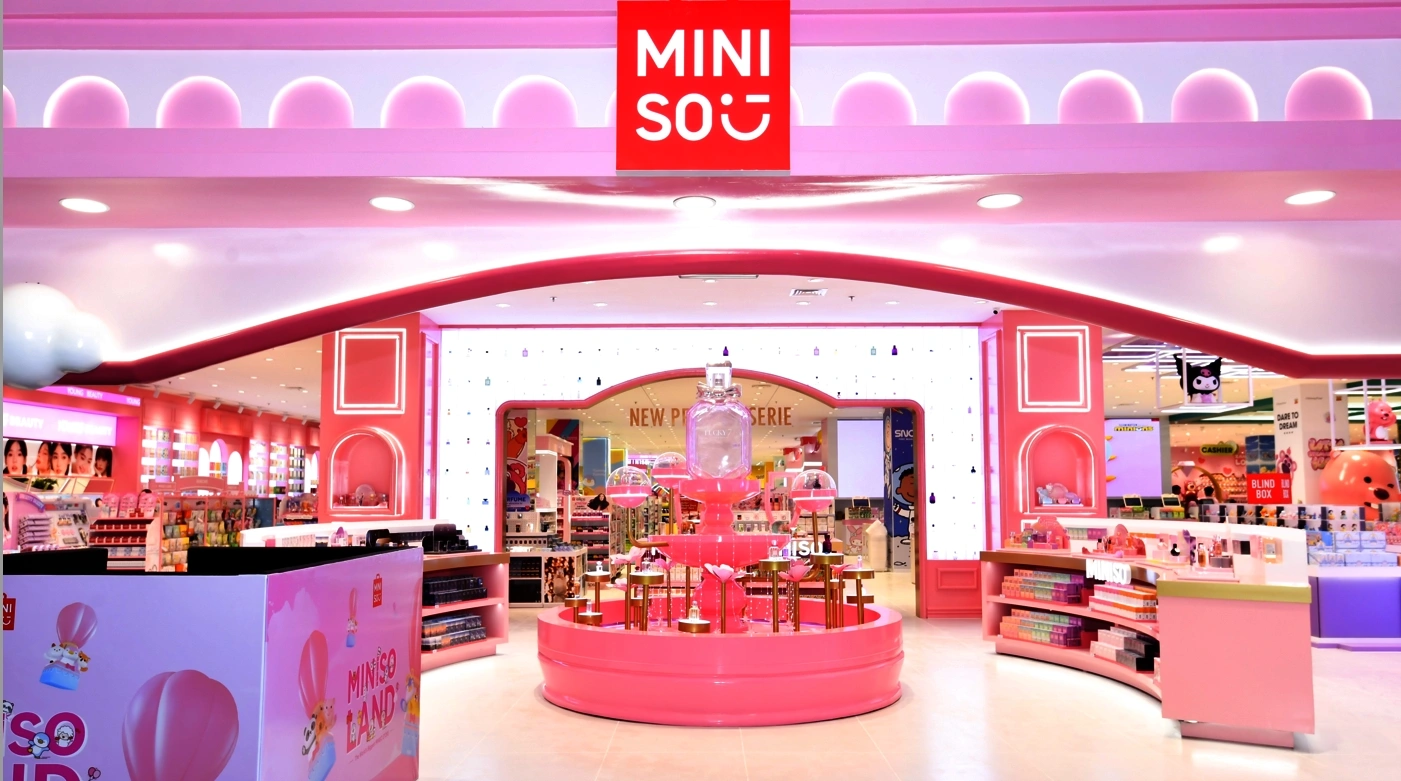
    Retail giant Miniso has unveiled a HK$2 billion (approximately US$255 million) share buyback initiative. This strategic move comes several months after Guofu Ye, Miniso’s founder, chairman and CEO, vowed to augment his personal stake in the company. The 12-month scheme, which became effective as of June 30, allows the company to buy up to HK$2 billion worth of its standard shares and American depositary shares (ADSs).

    Funding and Confidence in Growth

    The funding for this repurchase program will come from the company’s surplus cash reserves. The company’s board believes this decision mirrors their confidence in Miniso’s long-term growth. They also believe that the current share price does not adequately represent the company’s true worth.

    This new buyback scheme follows a previous one in which approximately HK$1.37 billion worth of shares and ADSs were reacquired by the company. The main objective of this most recent initiative is to balance the group’s quick expansion with consistent and reliable returns for shareholders.

    CEO’s Confidence in Continued Growth

    This new repurchase program closely follows Ye’s April pledge to increase his shareholding by purchasing at least HK$50 million worth of Miniso shares over a one-year period using his personal finances. At that point, Ye had ownership of approximately 63.7% of the company’s shares. He stated that his planned purchase was an indication of his faith in the ongoing growth of the retailer.

    Questions & Answers

    What is the main goal of Miniso’s new share repurchase program?
    The program aims to balance the company’s rapid growth with stable, predictable returns for its shareholders.

    How is Miniso funding its share buyback program?
    The funds for the repurchase program will come from the company’s surplus cash on its balance sheet.

    What led to the launch of this new share repurchase program?
    This decision followed a pledge made in April by Miniso’s CEO, Guofu Ye, to increase his personal shareholding in the company. This new initiative reflects the company’s confidence in its long-term growth and its belief that the current share price does not fully represent its intrinsic value.


  • Global Gold Prices Hold Steady Amid Vietnam’s Market Dip: Awaiting Federal Impact

    Global Gold Prices Hold Steady Amid Vietnam’s Market Dip: Awaiting Federal Impact

    On Wednesday, gold prices in Vietnam experienced a slight downturn, while globally, gold rates maintained relative stability. Saigon Jewelry Company observed a 0.9% decrement in its gold bar prices, settling at VND166 million, or approximately US$6,298.97, per tael. Similarly, the cost per tael for gold rings decreased, dropping to VND165.5 million. To contextualize this, a tael of gold weighs either 37.5 grams or 1.2 ounces.

    Global Gold Market Movement

    Internationally, the gold market displayed a largely static trend during fluctuating trade on Wednesday. Investors keenly awaited comments from Jerome Powell, Chair of the U.S. Federal Reserve, to understand the potential economic impact of the ongoing conflict in Iran, especially given the current stalemate in peace negotiations.

    Spot gold experienced a minor increase of 0.1%, reaching $4,597.07 per ounce, despite hitting its lowest point since April 2 in the preceding trading session. Meanwhile, U.S. gold futures set for June delivery held steady at $4,610.20.

    Fuel Market Influences

    In the fuel market, Brent crude oil maintained a price point above $110 a barrel, following reports predicting the U.S. would continue its blockade of Iranian ports. This elevation in crude prices may contribute to inflationary pressures, thereby potentially leading to increased interest rates.

    Traditionally, gold is viewed as a safeguard against inflation. However, high interest rates can decrease its attractiveness as a non-yielding asset.

    Market Speculations

    Ilya Spivak, leader of global macro at Tastylive, stated that the gold market is currently stable as traders anticipate the upcoming Federal Open Market Committee (FOMC) meeting. He explained that the market’s resilience since the tariff-induced panic in April has relied largely on the belief that the Federal Reserve is prepared to intervene should conditions worsen. If the Fed indicates a high threshold for such action, gold prices could potentially drop further.

    Questions & Answers

    What caused the drop in gold prices in Vietnam?
    The article does not specify a reason, however, gold prices can fluctuate due to a variety of factors, including changes in supply and demand, market speculation, or shifts in currency values.

    How do crude oil prices affect gold rates?
    Higher crude prices can lead to inflationary pressures, making gold an attractive investment as a traditional hedge against inflation. However, if crude prices cause interest rates to rise, gold may lose its appeal as a non-yielding asset.

    What are the potential implications of the U.S. Federal Reserve’s actions on the gold market?
    If the Federal Reserve signals its readiness to intervene in worsening market conditions, this could bolster gold’s position. However, if the Fed indicates hesitancy to act, gold prices may see a downward trend.

  • Vietnam’s Gold Market Rises Slightly Amidst Steady Global Rates: A Look at 2022’s Gold Price Trends

    Vietnam’s Gold Market Rises Slightly Amidst Steady Global Rates: A Look at 2022’s Gold Price Trends

    On Monday afternoon, there was a marginal increase in Vietnam’s gold prices, while international rates remained virtually unchanged. Gold bars offered by Saigon Jewelry Company witnessed a 0.27% rise, settling at VND183.1 million (US$6,964.49) per tael. Simultaneously, the cost of gold rings also saw a slight hike of 0.27%, reaching VND182.8 million per tael. So far this year, the gold prices in Vietnam have experienced an escalation of 19.8%.

    Global Gold Rates

    Internationally, gold prices maintained a steady position on Monday. After experiencing a nearly 1% drop earlier in the session, the rates recouped due to a softer dollar and the appeal of safe-haven investments. These factors effectively balanced the declining hope of immediate U.S. interest rate cuts, which was triggered by high energy prices.

    Spot gold saw a minor rise of 0.2%, standing at $5,027.98 per ounce. This marked a recovery from a more than three-week low experienced earlier in the session. On the other hand, U.S. gold futures for April delivery experienced a 0.6% decline, arriving at $5,031.60.

    A small decrease in the U.S. dollar paved the way for commodities priced in greenback, such as bullion, to become cheaper for holders of other currencies.

    Analyst’s Take

    “Gold prices are maintaining a broad stability as the market navigates through conflicting macro forces. The continuous geopolitical tensions are driving the safe-haven demand, thereby providing support. However, the surge in oil prices has rekindled concerns about inflation,” explained Christopher Wong, a strategist at OCBC.

    Questions & Answers

    What was the percentage increase in Vietnam’s gold prices?
    The gold prices in Vietnam saw a marginal increase of 0.27%.

    What factors contributed to the steady state of global gold prices?
    A softer dollar and the demand for safe-haven investments helped keep the global gold prices steady.

    What impact did the decline of the U.S. dollar have on commodities?
    The drop in the U.S. dollar made commodities priced in greenback, such as bullion, cheaper for holders of other currencies.

  • Singapore retail vacancies rise despite steady demand for prime space

    Singapore retail vacancies rise despite steady demand for prime space

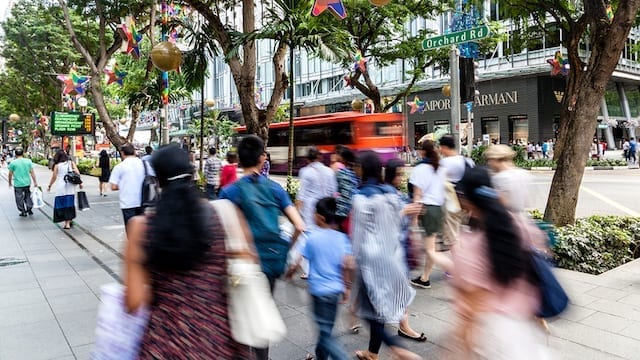
    In the first quarter of this year, Singapore experienced a rise in retail vacancy rates, a phenomenon attributed to the healthy demand for prime locations and steady rental growth, as reported by real estate specialists Savills.

    Increased Retail Vacancy Rate

    The retail vacancy rate across the island escalated to 6.8% during the first quarter due to the introduction of 323,000 square feet of new retail space, exhibiting an increase from the previous quarter’s 6.2%.

    Following five quarters of an upward trend in net take-up, the first quarter saw a net demand of -129,000 square feet, a result of a decrease in occupied space across most regions.

    The recent inauguration of Punggol Coast Mall and the refurbishment of The Cathay have further contributed to the rising vacancy rates, owing to the time that these establishments require to be fully occupied.

    Prime Mall Demand and Rental Rates

    On the other hand, landlords of prime malls situated along Orchard have reported a robust demand for lease renewals. This trend is particularly noticeable among luxury retailers, a scenario that has empowered landlords to negotiate higher rents due to a limited supply.

    The exiting of current tenants is balanced by the immediate occupation by new retailers entering the Singaporean market. An example of this is the Japanese thrift shop brand 2nd Street, which recently replaced Pomelo at a location in Somerset.

    Rental Pressure and Future Predictions

    The report identified early indications of rental rates coming under pressure in the Central Region, highlighted by a 0.2% quarter-on-quarter decline in the Central Area and a 1.1% decrease in the Fringe Area. The average monthly rent in the Orchard Area and Suburban Area remained static at SG$23.2 (US$18) per sqft and $14.7 per sqft respectively.

    In terms of future supply, the report anticipates a fairly consistent pipeline of about 597,000 square feet of retail space this year, compared to 679,000 square feet last year.

    For the entirety of the year, Savills predicts that rents in Orchard will touch the upper limit of the 1-2% forecast range, while suburban rents will lean toward the lower end of this range.

    According to Savills, the escalating global trade tensions could potentially cast a negative shadow on Singapore’s export-dependent economy, particularly in the latter half of the year. This could adversely affect business recruitment and wage growth, subsequently leading to a slump in retail sales. The report concludes that the retail sector is set to witness more churn this year as underperforming tenants either endure their leases before relocating or terminate their agreements prematurely if they find their business unsustainable.

    Questions & Answers

    What led to the rise in retail vacancy rates in Singapore?
    A surge in new retail space, coupled with the time required for new establishments to be fully occupied, resulted in an increase in retail vacancy rates.

    What trend was observed among landlords of prime malls in Orchard?
    Landlords of prime malls in Orchard observed a strong demand for lease renewals, especially from luxury retailers, enabling them to negotiate higher rental rates owing to limited supply.

    What is the effect of escalating global trade tensions on Singapore’s retail market?
    Escalating global trade tensions can negatively impact Singapore’s export-dependent economy, potentially affecting business hiring and wage growth, and leading to weakened retail sales.

  • Steady consumer demand helps JD beat quarterly revenue estimates

    Steady consumer demand helps JD beat quarterly revenue estimates

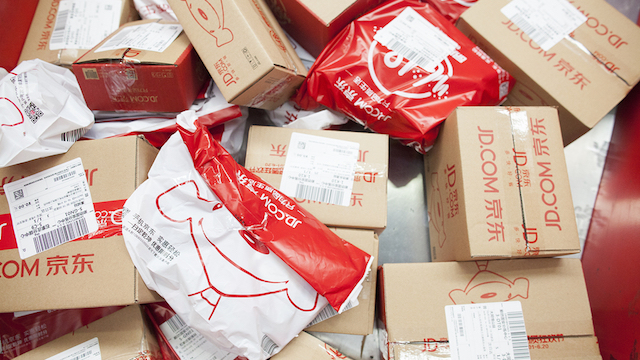
    Chinese e-commerce giant JD exceeded market expectations for its quarterly earnings this Tuesday, reflecting resilient demand despite deteriorating conditions domestically and abroad. This feat indicates steady consumption patterns even amidst the imposition of U.S. tariffs, lingering economic fragility, and a dampened consumer sentiment.

    Over the past few years, consumer demand in China has encountered numerous obstacles. The ongoing crisis in the property sector and high unemployment rates have hindered the country’s full recovery from the Covid-19 pandemic’s impact.

    Nevertheless, e-commerce companies like JD and Alibaba, which is set to report its quarterly results this Thursday, have adopted a proactive approach. They have implemented significant discounts and price reductions on products to attract customers, simultaneously relying on government subsidies to stimulate consumption.

    This strategy has proven beneficial for JD, a leading retailer of home appliances in China, even as consumer sentiment was dented by the trade tensions between the U.S. and China. Additionally, retail sales growth in China accelerated in January and February.

    For the quarter ending on March 31, JD reported a total revenue of 301.08 billion yuan (US$41.82 billion), marking an increase of 15.8% compared to the same period last year. This figure surpassed analysts’ estimate of 289.22 billion yuan.

    Shares of JD listed in the U.S. experienced an approximate 3% upswing in early trading.

    The forthcoming 618 shopping festival, due to take place on June 18, is expected to provide insights into the extent of the country’s consumer demand recovery. This online shopping event, introduced by JD, has been extending in duration over the years. This year, Taobao commenced the 618 pre-sale on Tuesday. Simultaneously, JD, whose official start date for 618 is May 31, launched an event known as the “Heartbeat Shopping Festival.”

    Jacob Cooke, CEO of e-commerce consultancy WPIC Marketing + Technologies, expressed optimism about sales growth during this year’s 618 festival. He cited burgeoning consumer confidence in China, robust retail growth in recent months, and high travel numbers during the May Day and Qingming Festival.

    On Tuesday, the State Administration for Market Regulation, the country’s top market regulator, announced that it has summoned various e-commerce platforms, including JD, Meituan, and Alibaba’s Ele.me. The regulator has urged these platforms to comply with laws and regulations and to maintain fair and orderly competition.

    Although Meituan and Ele.me dominate food delivery services in China, JD’s prominent entry into the sector in February has heightened competition in the industry.

    Questions & Answers

    **What is the significance of JD’s recent quarterly earnings?**
    JD’s recent earnings surpassed market expectations, indicating resilient consumer demand despite various economic challenges. This performance suggests that JD’s strategies to attract customers and stimulate consumption are effective.

    **What is the 618 shopping festival?**
    The 618 shopping festival is an online shopping event in China, initiated by JD. The festival, which takes place on June 18, has increasingly extended in duration over the years. It serves as a barometer to evaluate the recovery of consumer demand in the country.

    **What is the current state of competition in China’s food delivery market?**
    The food delivery market in China is primarily dominated by Meituan and Alibaba’s Ele.me. However, JD’s recent entry into this sector has intensified competition.