Retail News CRM

Tag: Strikes

  • Sudden Shutdown Strikes Hollin Bubble Tea: Singapore Outlets Abruptly Close

    Sudden Shutdown Strikes Hollin Bubble Tea: Singapore Outlets Abruptly Close

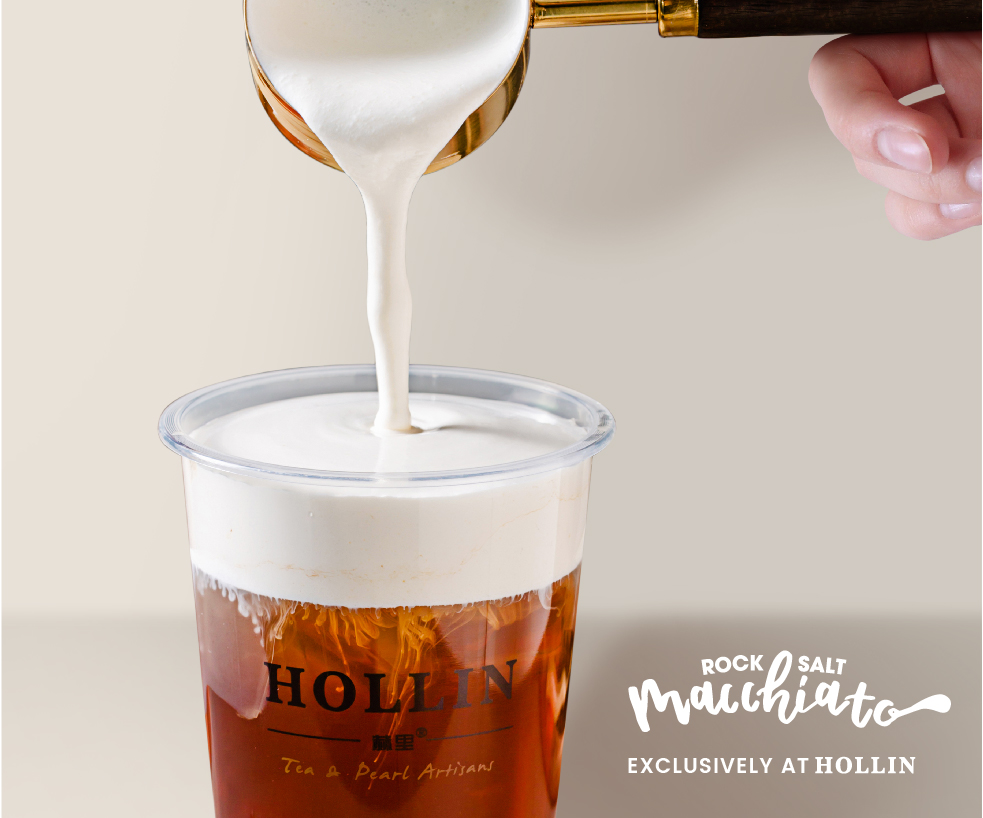
    In a sudden move that caught consumers by surprise, Hollin Bubble Tea has ceased its operations in Singapore.

    Unexpected Closure

    Hollin Singapore’s social media profiles, including Instagram and Facebook, have been deactivated, and its website is now set to private. Victoria Lim, a 28-year-old marketing executive and a regular customer, noticed the closure after she found her local stores repeatedly shut. Initially, she assumed the closure of the branch at One Holland Village was a temporary measure. However, after several unsuccessful attempts at visiting the store, Lim began to suspect a permanent shutdown.

    Despite these closures, Hollin still appears as an active entity on the Accounting and Corporate Regulatory Authority’s Bizfile portal as of January 12.

    Confirmation from Landlords

    The landlords of the properties Hollin occupied have confirmed the closures. The Far East Organisation, which manages One Holland Village, confirmed that the Hollin outlet there had indeed shut down, despite having opened just a year ago in January. A spokesperson for SingPost Centre has also confirmed that Hollin ceased operations at the mall on January 1.

    Upon checking Google and various mall directories, it appears that Hollin has closed all but one of its Singapore locations.

    Remaining Outlets

    As of January 12, only the Punggol Plaza branch appeared to still be operational. Hollin’s directory listings at SingPost Centre, Suntec City, The Woodleigh Mall, and One Holland Village have been removed from mall websites. Additionally, Grab’s delivery platform shows several Hollin outlets marked as closed.

    Hollin established its presence in Singapore in 2018 with its inaugural store in Toa Payoh. The company then expanded to at least six locations, including Suntec City, Plaza Singapura, and The Woodleigh Mall.

    As of now, Hollin has not issued any official statement regarding the status of its Singapore operations.

    Questions & Answers

    When did Hollin Bubble Tea start its operations in Singapore?
    Hollin Bubble Tea started its operations in Singapore in 2018 with its first store in Toa Payoh.

    Which was the last operational Hollin outlet in Singapore?
    The last operational Hollin outlet in Singapore, as of January 12, was the Punggol Plaza store.

    Has Hollin issued an official statement regarding its closure in Singapore?
    As of now, Hollin has not released any official statement regarding the status of its Singapore operations.


  • China Strikes Gold: Largest Undersea Gold Deposit in Asia Discovered

    China Strikes Gold: Largest Undersea Gold Deposit in Asia Discovered

    China recently announced the discovery of an undersea gold deposit, touted as the largest in Asia. This remarkable find further augments the existing troves of the precious metal, following other significant discoveries earlier this year.

    New Gold Reserves Discovered

    The newly discovered gold deposit is situated off the coast of Laizhou in Yantai, Shandong Province. This addition has notably increased Laizhou’s confirmed gold reserves to over 3,900 tonnes (137.57 million ounces), making up approximately 26% of China’s total reserves. However, the exact size of this undersea deposit has not been disclosed by officials.

    Recent Discoveries

    In the past month, the nation revealed the discovery of its first super-large, low-grade gold deposit in Liaoning province. The confirmed reserves of this find amount to 1,444.49 tonnes (50.95 million ounces). The Ministry of Natural Resources has stated that this is the largest single gold deposit found since the establishment of the People’s Republic of China in 1949.

    Adding to this, officials also announced the discovery of a gold deposit in the Kunlun Mountains, near the western border of the Xinjiang Uygur autonomous region in November. This deposit is estimated to have reserves of more than 1,000 tonnes (35.27 million ounces).

    In 2023, Shandong Province reported identifying approximately a quarter of the nation’s gold reserves, including over 3,500 tonnes (123.46 million ounces) on the Jiaodong Peninsula, which is recognized as the world’s third-largest gold mining belt.

    China’s Gold Production Status

    Despite being the world’s largest producer of gold ore, producing 377 tonnes (13.3 million ounces) last year according to the China Gold Association, China trails behind South Africa, Australia, and Russia in terms of proven reserves.

    China invested CNY115.99 billion (US$16.47 billion) in geological exploration last year. Since the initiation of its current five-year plan in 2021, the total investment in mineral exploration is nearing CNY450 billion. This has led to the discovery of 150 mineral deposits, as reported by the Ministry of Natural Resources.

    Impact on Gold Prices

    These discoveries are expected to influence global gold prices which continue to rise, driven by currency fluctuations, geopolitical tensions, and hefty purchases by central banks, particularly in emerging markets looking to diversify their reserves.

    Spot gold was trading at US$4,407 per ounce at the time of reporting, marking a 68% increase since the start of the year.

    Questions & Answers

    Where is the newly discovered undersea gold deposit located?
    The undersea gold deposit has been discovered off the coast of Laizhou in Yantai, Shandong Province, China.

    What is the significance of the recent gold discoveries in China?
    These discoveries have considerably increased China’s total gold reserves and position it as one of the leading global producers of the precious metal.

    How are these gold discoveries expected to influence global gold prices?
    The recent discoveries are likely to impact global gold prices, which are already rising due to factors like currency volatility, geopolitical tensions, and heavy purchases by central banks.

  • Russia Strikes Gold: Historic Peak of $310.72 Billion Shakes Up Global Rankings

    Russia Strikes Gold: Historic Peak of $310.72 Billion Shakes Up Global Rankings

    Russia’s gold reserves have reached a record-breaking value of US$310.72 billion, a significant increase of 57% from the previous year. According to data released by the Central Bank of Russia as of November 30th, this marks the fourth consecutive month of growth.

    Gold’s Role in Russia’s International Reserves

    Gold now represents over 42% of Russia’s international reserves, a percentage that has not been seen in the past 30 years. The total reserves, which include gold and foreign exchange, have seen a 19% year-on-year increase to $734.59 billion.

    Russia’s Position in Global Gold Investing

    According to the World Gold Council, Russia stands as the fifth-largest gold investor globally in the third quarter, with 2,329 tonnes in its reserves. The only nations that are ahead of Russia in terms of gold investment are the United States, Germany, Italy, and France.

    Meanwhile, China, holding the sixth position, has 2,303 tonnes of gold. However, interestingly, the value of gold only represents 7.68% of its total reserves.

    On the other hand, the United States continues to maintain the most significant gold reserves globally. Its 8,133 tonnes of gold account for a whopping 80% of the country’s reserves.

    Questions & Answers

    What is the current value of Russia’s gold reserves?
    The current value of Russia’s gold reserves is a record-breaking US$310.72 billion.

    What percentage of Russia’s international reserves is made up by gold?
    Gold now represents over 42% of Russia’s international reserves.

    Where does Russia rank worldwide in terms of gold investment?
    According to the World Gold Council, Russia is the fifth-largest gold investor in the world.

  • Starbucks Strikes Success: Turnaround Strategy Brews Positive Sales Growth After Two Years

    Starbucks Strikes Success: Turnaround Strategy Brews Positive Sales Growth After Two Years

    Starbucks has finally shown a surge in comparable sales growth, marking the first increase in nearly two years. This promising development suggests the early success of the renowned coffee company’s turnaround strategy.

    Turnaround Indicators

    The fourth quarter, which ended on September 28, witnessed a 1 per cent increase in global comparable store sales. This significant growth, the first in seven quarters, was mainly due to an increase in comparable transactions.

    In North America, and particularly in the US, comparable store sales remained steady. There was a 1 per cent rise in the average ticket, which was counterbalanced by a 1 per cent drop in comparable transactions. This is a notable improvement from a 2 per cent dip in the third quarter, a change credited to the positive momentum generated by the ‘Back to Starbucks’ initiative. Moreover, the company pointed out that comparable sales in the market began to show positive growth as of September.

    International Growth

    International comparable store sales saw a 3 per cent increase, with China’s comparable store sales experiencing a 2 per cent hike.

    The consolidated net revenues for the quarter grew by 5 per cent, amounting to US$9.6 billion, thus extending the 4 per cent rise witnessed in Q3.

    Brian Niccol, the chairman and CEO, expressed his optimism regarding the progress of the ‘Back to Starbucks’ strategy. He stated, “It’s clear that our turnaround is taking hold. Our return to global comp growth and the momentum we are building give me confidence that we are on the right path to deliver the very best of Starbucks for our customers, partners and shareholders.”

    However, for the entire year, comparable store sales witnessed a 2 per cent fall, with a 2 per cent decline in North America and the US, a flat growth in international markets, and a 1 per cent decrease in China.

    Financial Summary

    On the financial front, net earnings plummeted by 85 per cent to $133 million in the fourth quarter and fell by 50 per cent to $1.8 billion for the entire year.

    Starbucks closed 107 net stores in Q4, including 627 stores, with a majority (90 per cent) being in North America. This aligns with the restructuring plan announced earlier, where Starbucks unveiled its plans to cut its North American store network by approximately 1 per cent and eliminate around 900 non-retail partner roles.

    At the quarter’s end, Starbucks’ global portfolio consisted of 61 per cent of stores located in the US and China, including 16,864 stores in the US and 8,011 outlets in China.

    Questions & Answers

    What is the ‘Back to Starbucks’ strategy?
    The ‘Back to Starbucks’ strategy is a turnaround plan designed to boost the company’s sales growth and profitability.

    How has this strategy impacted Starbucks’ performance?
    The ‘Back to Starbucks’ strategy has positively impacted the company, resulting in a 1 per cent increase in global comparable store sales and a 5 per cent rise in consolidated net revenues in Q4.

    What is the future plan of Starbucks in light of the recent restructuring?
    Starbucks plans to focus more on the US and Chinese markets, which currently comprise 61 per cent of the company’s global portfolio. The company also intends to reduce its North American store network by about 1 per cent and cut 900 non-retail partner roles as a part of its restructuring plan.