Retail News CRM

Tag: surge

  • Global Expansion Fuels 41% Profit Surge for Korean Beauty Mogul, Amorepacific

    Global Expansion Fuels 41% Profit Surge for Korean Beauty Mogul, Amorepacific

    Amorepacific, a renowned South Korean health and beauty conglomerate, has reported robust results for the third quarter. The company attributes this success to the global expansion of its primary beauty brands.

    For the quarter that concluded in September, the consolidated revenue witnessed a 4% increase year on year, reaching US$752 million, whereas the operating profit experienced a significant surge of 41%, amounting to $71 million.

    Domestic Market Performance

    The domestic market also performed well, presenting a 4% increase in revenue and a 24% rise in operating profit. The company credits this rise to increased sales across various channels such as online platforms, department stores, multi-brand shops, and duty-free and cross-border platforms.

    International Market Performance

    Internationally, the company saw a 3% growth in revenue and an impressive 73% leap in operating profit. This growth is seen as a result of the company’s consistent expansion efforts in global markets.

    Brand Performances

    In terms of individual brands, Innisfree topped with a revenue of $338.6 million. This was closely followed by Etude with a revenue of $192.4 million, Amos Professional at $138.7 million, Osulloc at $185.6 million, and Espoir at $129.2 million.

    The company stated, “The robust performance of our flagship brands, coupled with continued efficiency measures, has allowed us to bolster both growth and profitability across markets.”

    Questions & Answers

    What is the key factor behind Amorepacific’s robust Q3 results?
    The company attributes its solid Q3 performance to the global expansion of its main beauty brands.

    Which brand performed the best in terms of revenue?
    Innisfree topped the chart with a revenue of $338.6 million.

    How did the company perform in the domestic and international markets?
    Amorepacific saw a 4% increase in domestic revenue and a 3% growth in international revenue. The operating profit rose 24% domestically and jumped 73% internationally.

  • Vietnam’s Gold Prices Skyrocket to 3-Week High Amid Global Rate Surge and U.S. Government Resumption

    Vietnam’s Gold Prices Skyrocket to 3-Week High Amid Global Rate Surge and U.S. Government Resumption

    The price of gold in Vietnam saw a significant increase on Tuesday, reaching its peak since October 21st. This uptick was reflective of a global surge in gold prices, spurred by the anticipation of the U.S. government’s resumption.

    Saigon Jewelry Company reported a 1.20% increase in their gold prices, now standing at VND152 million (US$5,777.28) per tael. A tael, a common unit of measurement used in East Asia, equates to 37.5 grams or 1.2 ounces.

    Rise in Gold Jewelry Prices

    In line with the increase in gold prices, the cost of gold rings also saw a rise of 1.35%, now costing VND149.8 million per tael. So far this year, the price of gold in Vietnam has surged by a substantial 80.5%.

    Global Gold Rates

    Internationally, gold prices have been on a steady upward trend, reaching near three-week highs on Tuesday. These gains are believed to be influenced by expectations of another U.S. Federal Reserve interest rate cut in December, as well as indications of an end to the U.S. government shutdown.

    The price of spot gold also increased by 0.7%, reaching $4,142.83 per ounce, its highest since October 24th.

    Impact of U.S. Government Shutdown

    The U.S. Senate recently passed a deal to restore U.S. federal funding, marking an end to the longest government shutdown in history. This shutdown led to delays in key economic indicators, such as the U.S. non-farm payrolls report.

    The end of the shutdown is expected to provide more clarity on the U.S. economic outlook as well as the Federal Reserve’s interest rate trajectory. It is believed that the resolution of the shutdown has lifted a level of uncertainty, allowing markets to refocus on major speculative narratives for the year.

    According to Ilya Spivak, head of global macro at Tastylive, the upside is still favored for the rest of the year. With the path of least resistance for gold trending back to October’s high, it is anticipated that prices may continue to rise thereafter.

    Questions & Answers

    What caused the recent surge in gold prices in Vietnam and globally?
    Anticipation of the resumption of the U.S. government and expectations of another U.S. Federal Reserve interest rate cut in December are believed to have spurred the recent surge in gold prices.

    How has the U.S. government shutdown impacted the gold market?
    The U.S. government shutdown led to delays in key economic indicators, creating a level of uncertainty in the market. With the resolution of the shutdown, this uncertainty has been lifted, allowing markets to refocus and consequently affecting gold prices.

    What is the outlook for gold prices for the rest of the year?
    According to experts, the upside is still favored for the rest of the year, with potential for prices to continue rising.

  • Vietnam Stocks Celebrate Largest Leap in a Month: Key Players and Factors in the Remarkable 2.16% Surge

    Vietnam Stocks Celebrate Largest Leap in a Month: Key Players and Factors in the Remarkable 2.16% Surge

    On Tuesday, Vietnam’s leading VN-Index experienced a significant increase, soaring by 2.16% to reach 1,654.98 points, marking the largest surge since October 6. This remarkable growth allowed the index to close approximately 35 points higher, a notable recovery from the 69-point decline it experienced over the previous three sessions.

    The trading value also increased significantly, rising by 16% to reach VND34.25 trillion, equivalent to US$1.3 billion.

    Dominant Performers

    The VN30 basket, which consists of the 30 highest capped stocks, saw impressive growth in 24 tickers. The rise was spearheaded by SSI Securities Corporation, VPBank, and Vincom Retail, each experiencing a gain of 6.9%. Other strong performers included Techcombank, which closed 4.2% higher, and MB, which rose by 3.9%.

    Despite the general upward trend, there were a few stocks that did not follow suit. The most notable of these were the tech heavyweight FPT Corporation and the state-owned Petrovietnam Gas, both of which saw a 1.6% decrease.

    Foreign Investment

    Foreign investors demonstrated significant activity, making net purchases worth VND1.22 trillion. Notably, the majority of this investment was directed towards HDBank and Masan Consumer.

    Lastly, the HNX-Index, which hosts mid-cap and small-cap stocks on the Hanoi Stock Exchange, rose by 2.6%. Simultaneously, the UPCoM-Index for the Unlisted Public Companies Market closed 0.57% higher.

    Questions & Answers

    What was the percentage increase of the VN-Index?
    The VN-Index increased by 2.16%.

    Which companies led the rise in the VN30 basket?
    The rise was led by SSI Securities Corporation, VPBank, and Vincom Retail, each with a 6.9% gain.

    What was the trend among foreign investors?
    Foreign investors were net buyers, mainly investing in HDBank and Masan Consumer.

  • Singapore’s Retail Sector Sustains Growth in September, Led by Watch and Jewellery Sales Surge

    Singapore’s Retail Sector Sustains Growth in September, Led by Watch and Jewellery Sales Surge

    In September, retail sales in Singapore continued their upward trajectory, albeit at a slower pace than in August.

    Overview of Retail Sales

    Singapore’s retail sales, excluding motor vehicles, witnessed a 2% growth in September. This figure is slightly lower than the revised 4.7% increase recorded in August. The total retail sales value for the month was estimated at SG$3.5 billion (US$2.67 billion), with online sales accounting for 17.6% of this value.

    However, when adjusted for seasonal factors, there was a 2.3% decrease in retail sales in September compared to August.

    Sector-wise Breakdown

    The growth in retail sales was majorly driven by the watches and jewellery sector, which saw a year-on-year increase of 16.6%, largely due to increased jewellery sales.

    Next in line was the recreational goods sector, which exhibited an 11% rise in sales, followed by supermarkets and hypermarkets with a 5.1% increment.

    In stark contrast, both petrol service stations and retailers of apparel and footwear experienced a decline in sales by 8% and 3.6% respectively.

    Food and Beverage Services Sales

    Sales in the food and beverage services sector also declined, registering a 1.6% drop, a more significant decrease compared to the 0.2% drop in the previous month. This downturn was primarily attributed to the underperformance of the restaurant sector. The total sales value for the F&B services sector was estimated at SG$966 million, with online sales constituting 26.3% of this value.

    Questions & Answers

    What was the percentage increase in Singapore’s retail sales for September?
    The retail sales in Singapore saw a 2% increase in September.

    Which sector led the sales growth in September?
    The watches and jewellery sector led the sales growth in September with a 16.6% increase year-on-year.

    Did all sectors see an increase in sales?
    No, the sales of petrol service stations and retailers of apparel and footwear saw a decline, as did the food and beverage services sector.

  • Shopify Projects Robust Quarterly Revenue Amidst Resilient Merchant Base And Steady Consumer Demand

    Shopify Projects Robust Quarterly Revenue Amidst Resilient Merchant Base And Steady Consumer Demand

    Shopify, the renowned Canadian e-commerce platform, has projected a positive outlook for its quarterly revenue. This forecast comes amidst no apparent reduction in consumer demand and the impressive resilience of merchants on the platform despite prevailing tariff pressures. This uplifting news resulted in a significant 20% increase in the company’s share values.

    Throughout early August, Shopify’s merchant base demonstrated remarkable fortitude, maintaining the steady growth observed in the April-June period. This resilience contributed to a 31% boost in the second quarter’s revenue.

    These results help to alleviate some of the anxieties investors have due to the fluctuating trade policies of the current US administration. These policies have left many retailers uncertain about several aspects of their business, including demand, production, sourcing, and operating costs.

    Addressing these concerns, Jeff Hoffmeister, Shopify’s CFO, reassured investors during a post-earnings call. He affirmed that demand from the US, both inbound and outbound, has remained steady. Furthermore, he noted that the platform had experienced growth across all merchant segments during the second quarter.

    Hoffmeister also highlighted the strong performance of sellers with an annual gross merchandise volume (GMV) exceeding US$50 million and those below the $2 million mark. In terms of pricing strategy, Shopify reported that many merchants have increased their prices, although no specific details regarding the extent of these hikes were provided.

    Despite the ongoing disruptive tariff situation, Shopify’s resilience and adaptation seems to be the current narrative. As noted by Third Bridge analyst Charlie Miner, greater clarity is emerging regarding consumer reactions, and Shopify is unlikely to be adversely affected.

    Shopify’s projections for the third quarter anticipate a revenue increase in the mid to high twenties percentage range. This estimate exceeds analyst predictions of a 21.54% rise, as compiled by LSEG.

    Additionally, Shopify’s ongoing investments in artificial intelligence-powered features are proving advantageous. These features aid retailers in various tasks, such as developing store websites, generating images, and collating sales data.

    Questions & Answers

    What is the projected revenue increase for Shopify in the third quarter?
    Shopify projects a mid to high twenties percentage increase in revenue for the third quarter.

    How are Shopify’s merchants responding to the ongoing tariff situation?
    Despite tariff pressures, merchants on Shopify’s platform have shown resilience, with many even increasing their prices.

    What investments has Shopify made to support retailers?
    Shopify has invested in artificial intelligence-powered features that assist retailers with tasks such as creating store websites, producing images, and gathering sales data.

  • Hershey Sales Surge Amidst Slumping Profits: Navigating Rising Cocoa Costs And Supply Chain Challenges

    Hershey Sales Surge Amidst Slumping Profits: Navigating Rising Cocoa Costs And Supply Chain Challenges

    Hershey, the confectionery giant, has registered a significant increase in sales for the second quarter despite a drastic fall in profits. This arises from the escalating costs of cocoa, supply chain, and adverse effects from commodity hedging.

    In the most recent quarter, Hershey reported net sales of US$2.61 billion, a 26 per cent surge compared to the same quarter the previous year. The growth was a result of robust demand for seasonal products, which included popular items tied to the Easter season and early Halloween shipments.

    However, despite the impressive rise in revenue, net income experienced a 65 per cent decrease, landing at $62.7 million.

    Hershey attributed the sharp decline in net income to a significant drop in gross margins, spurred by the rise in input costs and losses from mark-to-market on commodity derivatives. This was despite the strong volume growth, especially in its North American confectionery division.

    Michele Buck, President and CEO of Hershey, commented on the situation. “Our investments in brands and impactful innovation, along with effective execution, have led to solid sales and share gains in both our US confection and salty snacking businesses,” she said.

    She further added, “In the future, we are committed to delivering balanced growth and have already initiated critical steps to offset cocoa inflation through strategic pricing, improved productivity, and the use of technology for efficiency and speed.”

    In other news, Hershey recently announced the appointment of Kirk Tanner as the new President and CEO, effective from August 18, succeeding Buck.

    Questions & Answers

    What led to the growth in Hershey’s net sales?
    The increase in Hershey’s net sales was a result of strong demand for seasonal products, such as those tied to the Easter season and early Halloween shipments.

    Why did Hershey’s net income decrease despite the growth in sales?
    The decrease in net income was due to a significant drop in gross margins, which was caused by the rising input costs and mark-to-market losses on commodity derivatives.

    What measures is Hershey taking to combat cocoa inflation?
    To mitigate cocoa inflation, Hershey is implementing strategic pricing, enhancing productivity, and leveraging technology for increased efficiency and speed.

  • Coca-Cola Beats Earnings Expectations Despite Sales Dip; Unveils Cane Sugar Product For Us Market

    Coca-Cola Beats Earnings Expectations Despite Sales Dip; Unveils Cane Sugar Product For Us Market

    Coca-Cola’s quarterly earnings have surpassed expectations, the company reported on Tuesday, due to increased pricing. This comes despite a decrease in sales volumes in significant markets, and the announcement of a new Coca-Cola product made with cane sugar for the U.S. market.

    Higher Prices and Lower Volumes

    The boost in prices compensated for a 1 per cent decline in sales volumes, which had increased by 2 per cent in the previous two quarters. The decline was primarily due to a decrease in sales in essential markets, including Mexico and India, and within the Coca-Cola brand in the United States. After adjusting for certain items, the company made a profit of 87 cents per share, surpassing the expected 83 cents.

    Sales of higher-priced sodas have fluctuated in recent times, especially in wealthier nations, as consumers with lower incomes become more price-sensitive.

    Healthier Substitutes

    In response to demands for healthier alternatives, food companies are looking to diversify their offerings. Recently, President Donald Trump announced that Coca-Cola had agreed to use real cane sugar in the United States. Coca-Cola’s CEO, James Quincey, stated during a post-earnings call that the company is exploring different sweetening options to meet consumer demand. This new cane sugar product will “complement” the company’s existing range, he added.

    Competing brand PepsiCo, which also exceeded quarterly earnings estimates recently, stated it would use natural ingredients if consumers expressed a preference for them.

    International Success and Domestic Challenges

    Coca-Cola already sells Coke made with cane sugar in various markets, including Mexico. Some U.S. grocery stores also offer glass bottles of Coke made with cane sugar, labelled as “Mexican” Coke.

    However, the transition to cane sugar will increase costs, including significant changes to supply chains, according to industry analysts. Higher-priced products could also put pressure on consumer budgets, as Quincey acknowledged that sales volumes in North America decreased due to continuing uncertainty and pressure affecting certain socioeconomic consumer segments.

    Coca-Cola maintains that the cost implications due to “global trade dynamics” are manageable. Approximately 61 per cent of the company’s revenue is derived from overseas markets.

    Higher Pricing and Volume Recovery

    Coca-Cola’s comparable revenue for the three months ending June 27 rose 2.5 per cent to $12.62 billion, outperforming the forecasted $12.54 billion. Quincey stated that a boycott-related drop in demand in the U.S. and Mexico has largely been resolved.

    Annual comparable earnings per share are expected to be near the upper limit of the company’s target increase range of 2 to 3 per cent, aided by a weaker dollar.

    Sales volumes of Coca-Cola Zero Sugar soared, with a 14 per cent increase recorded across all geographies.

    Questions & Answers

    What was the cause of the decrease in Coca-Cola’s sales volumes?
    The decrease in sales volumes was primarily due to a decline in sales in key markets such as Mexico and India, and within the Coca-Cola brand in the U.S.

    Is Coca-Cola planning to introduce new products to the market?
    Yes, Coca-Cola has announced it will introduce a new product made with cane sugar to the U.S. market as part of their commitment to meet consumer demand for healthier alternatives.

    What is the outlook for Coca-Cola’s annual comparable earnings per share?
    The annual comparable earnings per share are expected to be near the upper limit of Coca-Cola’s target increase range of 2 to 3 per cent, aided by a weaker dollar.

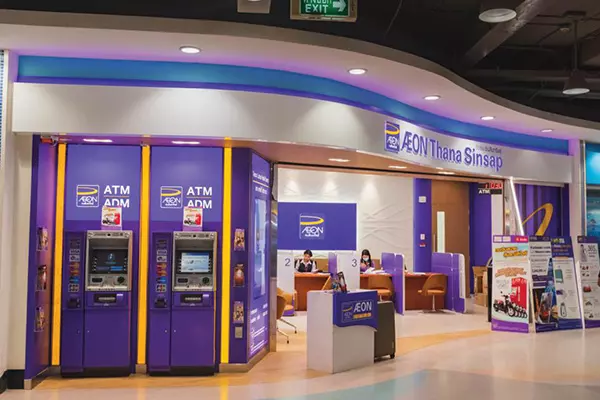
  • AEON Credit Service Reports Impressive 31.3% Profit Surge to US$13.9 Million in Q1!

    AEON Credit Service Reports Impressive 31.3% Profit Surge to US$13.9 Million in Q1!

    AEON Credit Service (Asia) Company Limited has announced promising financial results for the three-month period ending May 31, 2025, showcasing its resilience and strategic focus in a competitive market. The company recorded a revenue of HK$442.2 million (approximately US$56.33 million), reflecting a 3.7% increase year-on-year. This growth was primarily fueled by enhanced interest income and a steady rise in revolving credit card and personal loan receivables, underscoring the firm’s robust lending framework.

    Moreover, AEON Credit’s after-tax profit reached HK$109.3 million (US$13.92 million), marking a 31.3% surge compared to the same period last year. With earnings per share climbing to 26.11 HK cents, up from 19.88 HK cents, the company is clearly on a bullish trajectory, toasting to a fruitful quarter.

    Operational Profits and Strategic Enhancements

    Operating profit before impairment losses saw an impressive increase of 8.7%, rising to HK$229.7 million. Concurrently, the company’s cost-to-income ratio improved, dropping to 44.6% from 47.3% the previous year, signaling efficient management and cost control.

    To navigate the intricacies of credit exposure, AEON Credit has bolstered its credit assessment model. This strategic move allows the company to better manage higher-risk advances and receivables, ensuring that growth is sustainable and backed by robust risk management.

    Marketing Innovation and Customer Engagement

    The financial institution is also reaping the rewards of its focused marketing efforts. By employing targeted marketing and innovative digital advertising campaigns, AEON Credit has stimulated spending and maintained momentum in its credit card segment, even as personal loan sales faced a decline.

    Looking towards the future, AEON Credit is betting on its “AEON HK” mobile app as a cornerstone for acquiring new customers for both credit card and personal loan services. Moreover, the company is in the process of developing a new rewards platform tailored to its customers in Hong Kong, promising a more convenient way to redeem premium points and e-coupons. It seems the customer experience is set to take flight, with rewards that will surely keep clients engaged and coming back for more — because who doesn’t love a little extra something on their shopping spree?

    Questions & Answers

    How did AEON Credit perform financially in Q1 FY2024/25?
    AEON Credit reported a revenue of HK$442.2 million, a 3.7% YoY increase, while profit after tax surged by 31.3% to HK$109.3 million.

    What factors contributed to AEON Credit’s revenue growth?
    The growth was primarily driven by higher interest income and an increase in revolving credit card and personal loan receivables.

    What future initiatives is AEON Credit undertaking to enhance customer engagement?
    AEON Credit plans to leverage its “AEON HK” mobile app for new customer acquisitions and is developing a rewards platform for easier premium point and e-coupon redemptions.

  • Gold Prices Climb as Global Markets Experience a Surge

    Gold Prices Climb as Global Markets Experience a Surge

    Gold prices in Vietnam experienced a modest uptick on Friday morning, buoyed by a positive trend in global bullion markets. The Saigon Jewelry Company reported a 0.25% increase in gold bar prices, bringing them to VND 118 million (approximately US$4,526.46) per tael. Meanwhile, gold ring prices rose by 0.26%, reaching VND 114.3 million per tael. For those not in the know, a tael is equivalent to 37.5 grams or 1.2 ounces.

    As we look beyond Vietnam’s borders, global gold prices rose on the same day and were poised for a weekly gain. Investors were reacting to a slew of underwhelming economic data from the U.S., which overshadowed initial optimism stemming from a recent call between U.S. President Donald Trump and his Chinese counterpart, Xi Jinping. All eyes are now on the upcoming U.S. payroll data, as reported by Reuters.

    Spot gold saw an increase of 0.5%, landing at $3,368.49 an ounce, and has enjoyed a 2.5% gain for the week. Similarly, U.S. gold futures also picked up 0.5%, reaching $3,391.40. Tim Waterer, chief market analyst at KCM Trade, noted that the initial enthusiasm for risk-taking triggered by the Trump-Xi call has begun to wane, allowing gold to edge higher. He pointed out that the excitement over Trump’s remarks masked recent weak U.S. economic indicators.

    In fact, the number of Americans filing new applications for unemployment benefits has surged to a seven-month high. Waterer hinted that the forthcoming Non-Farm Payroll (NFP) report could serve as a game-changer, especially if the data significantly deviates from expectations.

    Federal Reserve policymakers have communicated that inflation remains a bigger worry than a cooling labor market, suggesting that adjustments to monetary policy may be on hold for some time. Historically, gold is regarded as a safe-haven asset, thriving amidst economic uncertainty and low-interest-rate climates—a fact that has undoubtedly punctuated its recent upward trend.

    As the gold market continues to shimmer, it seems like investors are tuning in to the allure of safe havens. After all, you never know when you might want to turn a little anxiety into a thriving fortune!

    Questions & Answers

    What caused the rise in gold prices?
    The increase in gold prices was primarily driven by a surge in global bullion rates, as soft U.S. economic data overshadowed initial optimism stemming from a significant diplomatic call between the U.S. and China.

    How are gold prices in Vietnam comparing to global trends?
    Gold prices in Vietnam are mirroring the positive momentum seen internationally, with local gold bar and ring prices rising in tandem with their global counterparts.

    Why is gold considered a safe-haven asset?
    Gold is often viewed as a safe-haven asset due to its historical stability during times of economic uncertainty and its tendency to perform well in low-interest-rate environments.

  • Hanoi’s Mid-Priced Serviced Apartment Rents Surge as Demand Outpaces Supply

    Hanoi’s Mid-Priced Serviced Apartment Rents Surge as Demand Outpaces Supply

    According to property consultancy Avison Young, the occupancy rate for serviced apartments has hit a solid 77%. Yet, the high-end segment is outshining the rest, maintaining rental prices at $35 with occupancy peaking at 82%. Meanwhile, Savills has reported a year-on-year climb of 5% in overall serviced apartment rents, now averaging $23 before VAT, with occupancy rates enjoying an uptick to 86%—a 2-percentage-point increase from the final quarter of 2024.

    Matthew Powell, director of Savills Hanoi, attributes this surge in demand to burgeoning industrial zones and a significant influx in foreign direct investment (FDI), which has soared to nearly $1.5 billion this year—up 31% compared to the same time last year. The clientele primarily consists of experts from Japan and South Korea employed at various enterprises, embassies, international banks, and industrial zones, who are increasingly keen on serviced apartments.

    With limited options available in nearby industrial hubs like Hai Phong, Bac Ninh, and Hai Duong, Hanoi continues to reign supreme for foreigners in search of high-quality accommodations. Adding fuel to the fire, analysts from Avison Young note that a recovering tourism industry is also providing a boost to the serviced apartment market. In the first quarter alone, Hanoi welcomed an estimated 7.3 million tourists, marking an 8.7% increase year-on-year.

    The growing preference for flexible accommodation among international visitors has placed properties with enticing amenities—such as swimming pools, gyms, and 24/7 security—at the top of the list. Furthermore, enhanced infrastructure, including new ring roads and expressways, is making travel between the city and industrial zones smoother than ever.

    However, the market is not devoid of hurdles. The looming prospect of U.S. tariffs poses a potential threat to foreign capital inflows, which could indirectly dampen demand in industrial zones and commercial services. David Jackson, general director of Avison Young Vietnam, warns that if tariffs take effect, foreign enterprises may hesitate, opting to delay investments while keeping a wary eye on the situation. Still, optimism persists; Jackson believes that foreign investors are likely to have contingency plans and long-term strategies in place.

    Lessons learned from the pandemic have prompted businesses to be more cautious in managing inventory and production, so they are better prepared to respond to rising logistics costs. Savills experts maintain that Vietnam continues to offer long-term strategic advantages for foreign investors, thanks in part to government initiatives aimed at streamlining administrative processes and simplifying investment procedures. Notably, significant projects like the North-South Expressway and the Hai Phong-Hanoi-Lao Cai railroad further enhance Vietnam’s attractiveness as a destination for investment.

    With this growing momentum, the supply of serviced apartments is expected to increase as well. Savills reports that seven new apartment projects are set for completion in Hanoi this year, adding over 1,000 units, primarily concentrated in the inner city.

    Questions & Answers

    What is the current occupancy rate for serviced apartments in Hanoi?
    The occupancy rate currently stands at 77%, though high-end apartments boast an impressive 82%.

    How much has foreign direct investment (FDI) increased this year?
    FDI has surged to nearly $1.5 billion, reflecting a 31% increase from the same period last year.

    What amenities are becoming increasingly popular among serviced apartments?
    International visitors are gravitating towards serviced apartments that offer amenities such as swimming pools, gyms, reception services, and 24/7 security.

  • Thai Billionaire’s Frasers Property Sees Profit Surge and Eyes Expansion into China

    Thai Billionaire’s Frasers Property Sees Profit Surge and Eyes Expansion into China

    Charoen Sirivadhanabhakdi, the chairman of TCC Group and Thailand’s second-richest individual, is making waves in the real estate market. Frasers Property Ltd., the company under his stewardship, has reported a staggering surge in profit in Singapore while also setting its sights on expansion in China.

    The Singapore-based developer announced a remarkable net income of SGD135.6 million (approximately US$104 million) for the six months ending March 31, marking a 3.7-fold increase compared to the same period last year. Revenue saw a milder rise of 2.7%, reaching SGD1.59 billion, as disclosed during a briefing on Friday.

    Singularly, Singapore’s recovering housing market has significantly boosted Frasers’ fortunes. Profit from residential developments increased by 12% over the six-month span. Conversely, the company faced a more than 40% decline in profits from its China operations. Nevertheless, Frasers is cautiously re-entering the Chinese market after acquiring a residential plot in Shanghai in collaboration with local partners back in February.

    CEO Panote Sirivadhanabhakdi, who has been leading the company since 2016, expressed optimism about the Shanghai venture but underlined a cautious approach regarding the broader Chinese market. “Land auctions in Shanghai’s center have heated up, and we’re actively seeking opportunities in key cities,” noted Lim Hua Tiong, the company’s chief executive for emerging markets in Asia, during Friday’s earnings briefing. He added, “I understand there are many questions about China, but I always assert that Shanghai is uniquely different from the rest of China.”

    Frasers’ ownership landscape remains heavily influenced by Charoen’s Thailand-based TCC Group, which holds nearly 90% of the company’s shares. On Friday, the stock experienced a dip of as much as 1.2% but later clawed back some losses. This year, the stock has seen a decline of approximately 13%, in stark contrast to a modest gain of about 1% in Singapore’s real estate index.

    As of Friday, Charoen’s net worth sits at $11.7 billion, positioning him third in Thailand behind Dhanin Chearavanont, senior chairman of Charoen Pokphand Group, and Sarath Ratanavadi, CEO of Gulf Energy Development, according to Forbes. In the high-stakes world of real estate, it seems Charoen is firmly in the game, not just playing but reshaping the landscape.

    Questions & Answers

    What is Frasers Property’s net income for the first half of the year?
    The company reported a net income of SGD135.6 million (US$104 million) for the six months ending March 31.

    How has the Singapore housing market affected Frasers Property?
    The recovering Singapore housing market has been a crucial driver for the company, with profit from residential developments increasing by 12%.

    What are Frasers Property’s plans regarding the Chinese market?
    Frasers is cautiously looking to expand its presence in China, having made a joint acquisition of a residential plot in Shanghai while closely monitoring opportunities in key cities.

  • Korea’s Retail Sales Surge 9.2% in March: Strong Consumer Demand Boosts Growth

    Korea’s Retail Sales Surge 9.2% in March: Strong Consumer Demand Boosts Growth

    South Korea’s Retail Sector Sees 9.2% Growth Amid Rising Online Sales

    In a marked turnaround, South Korea’s retail industry experienced a remarkable 9.2% year-on-year growth in March 2025, driven by a surge in online shopping. While brick-and-mortar stores faced challenges, the digital marketplace thrived, particularly in food and essential services.

    Digital Sales Propel Retail Growth

    According to the latest data from the Ministry of Trade, Industry, and Energy (MOTIE), online sales soared by an impressive 19.0%. This shift highlights changing consumer patterns, as shoppers increasingly turn to e-commerce for their purchasing needs. In contrast, traditional offline sales reported a slight decline of 0.2%.

    Despite the overall positive growth, not all retail segments fared well. Both hypermarkets and department stores recorded declines, with drops of 0.2% and 2.1%, respectively. Categories like fashion and home appliances were particularly hard-hit.

    Growth in Convenience and Supermarkets

    Amid the fluctuating landscape, convenience stores and supermarkets bucked the trend with notable gains. Convenience store sales increased by 1.4%, while super supermarkets enjoyed a robust growth of 3.6%, driven by local shopping preferences that continue to dominate the market.

    Strong Demand for Food and Services

    Online sales significantly benefited from the rising demand for food products, which climbed by 19.4%. Additionally, services experienced a staggering 78.3% boost, largely due to an increased reliance on food delivery and online orders. However, fashion and sports categories struggled, witnessing declines of 4.7% and 10.1%, respectively.

    Notably, back-to-school shopping stimulated demand for home appliances and consumer electronics, which rose by 7.8%. The cosmetics sector also saw a growth of 7.5%, thanks to ongoing online sales momentum.

    Implications for Consumer Trends

    The retail landscape in South Korea is evolving rapidly, with online sales playing a pivotal role in shaping consumer trends. As digital shopping continues to expand, it presents significant opportunities and challenges for retailers, necessitating adaptations to meet the shifting preferences of consumers.

    As the retail sector navigates these changes, the potential for sustained growth remains promising, particularly for brands that embrace innovation and enhance their online presence.

  • Connected things on pace for 31% surge in 2017

    Connected things on pace for 31% surge in 2017

    Globally, 8.4 billion connected things will be in use in 2017, up 31% from 2016, and will reach 20.4 billion by 2020, according to projections from Gartner.

    Total spending on endpoints and services will meanwhile reach almost $2 trillion in 2017, the research firm predicts.

    Regionally, Greater China, North America and Western Europe are driving the use of connected things and the three regions together will represent 67% of the overall Internet of Things (IoT) installed base in 2017.

    The consumer segment is the largest user of connected things with 5.2 billion units in 2017, which represents 63% of the overall number of applications in use. Businesses are on pace to employ 3.1 billion connected things in 2017.

    “Aside from automotive systems, the applications that will be most in use by consumers will be smart TVs and digital set-top boxes, while smart electric meters and commercial security cameras will be most in use by businesses,” said Peter Middleton, research director at Gartner.

    In addition to smart meters, applications tailored to specific industry verticals — including manufacturing field devices, process sensors for electrical generating plants and real-time location devices for healthcare — will drive the use of connected things among businesses through 2017, with 1.6 billion units deployed.

    However, from 2018 onwards, cross-industry devices, such as those targeted at smart buildings — including LED lighting, HVAC and physical security systems — will take the lead as connectivity is driven into higher-volume, lower cost devices.

    In 2020, cross-industry devices will reach 4.4 billion units, while vertical-specific devices will amount to 3.2 billion units.

    While consumers purchase more devices, businesses spend more. In 2017, in terms of hardware spending, the use of connected things among businesses will drive $964 billion.

    Consumer applications will amount to $725 billion in 2017. By 2020, hardware spending from both segments will reach almost $3 trillion.

    Total IoT services spending (professional, consumer and connectivity services) is on pace to reach $273 billion in 2017.