Retail News CRM

Tag: tax free

  • Explore More: China Boosts Tax-Free Shopping with 41 New Duty-Free Stores for Global Travellers

    Explore More: China Boosts Tax-Free Shopping with 41 New Duty-Free Stores for Global Travellers

    China is set to increase its appeal to international tourists by opening 41 new duty-free stores, as part of a broader initiative to stimulate tax-free shopping upon arrival. This new development was unveiled in a joint statement by five Chinese government departments, including the Ministry of Finance.

    This enhancement comes in the wake of China Tourism Group Duty Free purchasing the travel retail business of DFS Greater China from luxury goods conglomerate LVMH for a sum of US$400 million.

    The statement outlined that the primary goal of establishing and refining these duty-free stores at entry ports is to provide a more straightforward and seamless duty-free shopping experience for arriving passengers. Furthermore, the intention is to fully utilize the potential of duty-free stores to reinforce and stimulate consumption, thereby fostering the growth and systematic progression of the duty-free retail sector.

    The announcement also highlighted that provisions are being made for the creation of duty-free stores in an additional 11 locations. However, the establishment of such outlets at Qingdao Liuting International Airport, Guangzhou East Railway Station, and Jiangmen Port will be discontinued.

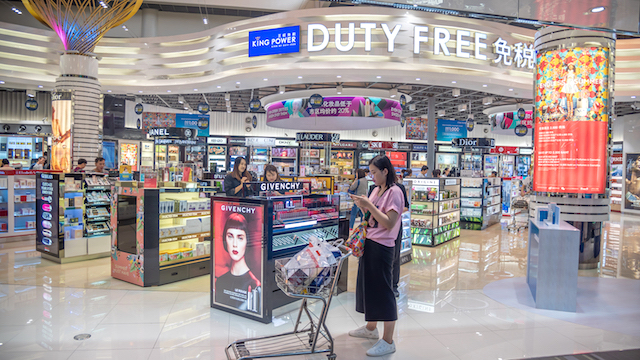
    The authorities also pointed out the increasing significance of shopping for tourists in China, stating that it has become an “increasingly integral” aspect of travel itineraries.

    Questions & Answers

    Why is China planning to increase the number of its duty-free stores?
    China aims to stimulate tax-free shopping for international tourists upon arrival and sees this as a way to boost consumption and foster systematic progression of the duty-free retail sector.

    What recent significant purchase might have influenced this decision?
    China Tourism Group Duty Free recently purchased the travel retail business of DFS Greater China from LVMH for US$400 million, which may have triggered this decision.

    What changes will occur at current duty-free locations?
    Although the creation of duty-free stores in an additional 11 locations is planned, the establishment of such outlets at Qingdao Liuting International Airport, Guangzhou East Railway Station, and Jiangmen Port will be discontinued.
  • Tourist Tax-Free Spending Plummets, Raising Concerns for Japan’s Retail Future

    Tourist Tax-Free Spending Plummets, Raising Concerns for Japan’s Retail Future

    The vibrant world of Japanese department stores is currently facing a challenging downturn, with recent reports indicating a slowdown in consumer spending among a wealthy demographic. This shift appears to be part of a broader trend influenced by international economic factors, including U.S. President Donald Trump’s aggressive tariff policies, which have begun to bite.

    The Numbers Tell a Story

    Statistics from June reveal a sobering 7.8% decline in department store sales compared to the previous year, landing at 461.5 billion yen (approximately $3.1 billion). A significant contributor to this downturn is the staggering 40.6% drop in tax-free shopping by foreign tourists, which plummeted to just 39.2 billion yen, as reported by the Japan Department Stores Association on Friday.

    The Impact of Shifting Consumer Habits

    This slowdown in retail activity can be attributed to several factors, including changing consumer preferences and market volatility. The once-gilded shopping spree that characterized luxury spending appears to be giving way to a more cautious approach, raising eyebrows in the industry. As one analyst whimsically noted, “Even the most extravagant spenders can feel the pinch when the global economy plays hardball.”

    Looking Forward

    As Japanese retailers navigate this challenging landscape, the focus will inevitably shift to strategies that can rekindle consumer enthusiasm and entice foreign visitors back into their stores. Flexibility and innovation may be key players in this ongoing narrative as the industry adapts to the evolving economic tides.

    Questions & Answers

    What is contributing to the slowdown in Japanese department store sales?
    The slowdown is primarily attributed to a decrease in spending among wealthy consumers, influenced by external economic pressures, particularly U.S. tariff policies, along with a significant drop in tax-free shopping by foreign tourists.

    How much did department store sales decline in June?
    In June, department store sales in Japan fell by 7.8% year-on-year, amounting to 461.5 billion yen (about $3.1 billion).

    What specific segment of shopping saw the most significant decline?
    Tax-free shopping by foreign visitors saw a dramatic 40.6% decline, falling to 39.2 billion yen, highlighting the challenges in attracting international consumers.

  • King Power To Close Key Branches In Cost-cutting Strategy Amid Pandemic Downturn

    King Power To Close Key Branches In Cost-cutting Strategy Amid Pandemic Downturn

    King Power, a leading duty-free company in Thailand, has made the announcement that it will be closing its branches in Srivaree, Pattaya, and Mahanakhon by September. This move forms part of a broader cost-cutting strategy that involves a voluntary redundancy program for employees across all branches.

    The Reason for the Closure

    Initially, the three stores slated for closure played a significant role in the company’s earnings, catering largely to tour groups. However, the business model has since been deemed unsustainable, according to CEO Nitinai Sirismatthakarn. He highlights the unfavorable business structure of these branches and the need to streamline the company’s workforce to maintain a competitive edge in a shifting market.

    The COVID-19 pandemic has also had a notable impact on sales. While airport duty-free stores have been less severely affected, sales at the downtown outlets have dipped considerably.

    Employee Compensation and Store Operations

    King Power’s staff, who choose to take part in the redundancy program, will receive compensation in line with labor law. Additional payments will be made based on the length of service. Employees will also have the option to transfer to other branches.

    After the closure of the three branches, the company will continue its operations at three other downtown locations – Rangnam, One Bangkok, and Phuket.

    Renegotiations and Downturns

    Simultaneously, King Power is renegotiating its concession contracts with Airports of Thailand (AOT) for five airports. Despite earlier intentions to terminate these contracts, revised payment terms have now been agreed upon. This is happening against the backdrop of a wider downturn in Thailand’s tourism sector, with a significant decrease in visitor numbers this year.

    Investor concerns have been raised due to a 35.6% fall in AOT shares since the beginning of the year, which could indicate potential revenue losses for King Power. To review the concession agreements, two state universities have been commissioned by the airports. Sirismatthakarn supports this as a “check and balance” mechanism.

    Questions & Answers

    What is the reason for King Power’s closure of three branches?
    King Power will be closing three of its branches as part of a cost-cutting initiative. The business model of these branches is no longer sustainable due to their unviable business structure and the need to streamline operations in response to a changing market landscape.

    What will happen to the employees affected by the closures?
    Employees who opt for the voluntary redundancy program will receive compensation as per labor law, with additional payments based on their length of service. They also have the option to transfer to other branches.

    What is the current state of King Power’s concession contracts with Airports of Thailand (AOT)?
    King Power is presently renegotiating its concession contracts with AOT for five airports. While initial plans were to terminate these contracts, revised payment terms have now been reached.

  • Duty Zero by CDF off to strong start in Hong Kong

    Duty Zero by CDF off to strong start in Hong Kong

    CDF-Lagardère (CDFL), the joint-venture from China Duty Free Group (CDFG) and Lagardère Travel Retail, which won the contract to operate the duty-free liquor and tobacco stores at Hong Kong International airport (HKIA) has revealed initial performance of its Duty Zero by CDF-branded stores has been better than expected.

    As reported, the six Duty Zero by CDF stores, spanning 1,631sq m were launched by CDFL on November 18. According to the joint-venture, business performance in the first 10 days has been booming with sales revenue higher than expected.

    Purchasing strengths

    The succssful opening is believed to be due to the purchasing strengths of China Duty Free Group (CDFG) and Lagardère Travel Retail, which have been fully exploited in the commodity procurement process. This has led to a wider range of Chinese liquor and tobacco and imported liquor and wine collection being offered to consumers.

    CDFL also suggested the implementation of the most “competitive pricing strategy” in the Asia/Pacific airport market contributed to its early success; liquor and tobacco products are now 15%-30% lower in price.

    Another key factor was the decision of CDFL to equip HKIA with an international management and operation team. This has ensured the smooth and successful operation of the newly opened stores.

    CDFG and Lagardère Travel Retail are also understood to have provided support and assurance to HKIA in relation to commodity mix, supply of goods, pricing strategy and personnel support. This was after CDFG adopted a similar strategy in terms of commodity procurement and pricing following its triumph in the recent Beijing Capital International airport tender.

    In addition, support from parent company China National Travel Service Group, the largest travel service provider in China, on elements such as passenger flow and integrated marketing also helped, according to the retailers.

    “Injected new confidence and expectation”

    When interviewed by Chinese media, China National Travel Service Group vice general manager Li Gang said: “The operation of HKIA represents a milestone and touchstone for the development of China’s duty-free industry.”

    Following its triumph in the HKIA tender, CDFG president Chen Guoqiant vowed to do everything possible to deliver a “satisfactory result” for HKIA and its customers.

    Hong Kong Airport Authority is understood to be please with pleased with the initial performance of the liquor and tobacco stores, which have “injected new confidence and expectation in the international development of China’s duty-free companies”, according to CDFL.

    Over 3,000sq m

    Meanwhile, two Duty Zero by CDF stores, have opened in the East and West lobbies targeting domestic passengers from airlines such as Air China and Hong Kong, European and American passengers respectively.

    Ultimately, eight duty-free liquor and tobacco stores covering 3,400sq m will be introduced, including the “most complete single malt whiskey mix among Asia Pacific airports” and “most complete Asian alcohol and beverage product mix among global airports,” according to CDFL.

    A Hennessy counter and store featuring Hong Kong afternoon tea and local food will also open, with all stores set to be operational by June 2018 and present a “more beautiful” image to consumers.

  • Fintrax and Lotte form JV to boost tax-free shopping in Korea

    Fintrax and Lotte form JV to boost tax-free shopping in Korea

    Eurazeo Capital portfolio company Fintrax Group has formed a joint-venture (JV) with The Lotte Group subsidiary Lotte Data Communications Corporation (LDCC).

    Fintrax will join Lotte as shareholding partners in CubeRefund, an existing refund operator in Korea and will drive the business forward together.

    Fintrax Group is the second largest tax-free operator in the world with over 150,000 retail outlets including leading luxury and retail brands such as Dior, Gucci, Dolce and Gabbana. The JV will firmly establish CubeRefund, which will use the Fintrax Group’s tax-free subsidiary Premier Tax Free’s name and logo, as the leading VAT refund company in Korea.

    The JV project will contribute to the expansion of Lotte Group’s sales as well as the economy by increasing visits to overseas tourists through duty-free shops, department stores, and outlets in the mid to long-term.

    CubeRefund is recognised for its innovative technology, which aligns with Fintrax Group values. Through this agreement, CubeRefund (t/a Premier Tax Free) will provide high-quality tax refund services to foreign tourists visiting Korea. In addition, the company plans to become more active in expanding its business by promoting international joint marketing, increasing the luxury goods tax refund business, and establishing a bridgehead for overseas market entry.

    Fintrax CEO Patrick Waldron commented: “We are delighted to invest in this joint venture with CubeRefund. We have a great partner in the Lotte group, who is one of Asia’s leading companies. This latest investment underpins our commitment to Asia as a growth strategy for our Group.”

    Waldron will be joined on the board of the JV operation by Gary Byrne, head of New Markets at Fintrax, who leads the Asian strategy and led the deal on behalf of Fintrax. Byrne added, “We are pleased to begin our operations in Korea, this is increasingly an important market for our international brands.”

    “CubeRefund is the first successful case to attract foreign investment as an excellent venture company discovered by LDCC,” said LDCC CEO Yong-deuk. “We will continue to explore various win-wins. I will take the lead in spreading the culture of mutual growth.”

    The tax refund market in Korea has grown almost 10 times since 2010 from circa W41.7bn to  circa W413bn in 2017 and is expected to grow in the future in line with the continued growth of overseas tourists. Tax-free shopping is a fundamental part of the country’s Government strategy to attract Chinese and other international tourists.

    Fintrax were advised by Natixis and LDCC were Advised by PWC Korea.

  • World-class duty-free coming to Myanmar airports

    World-class duty-free coming to Myanmar airports

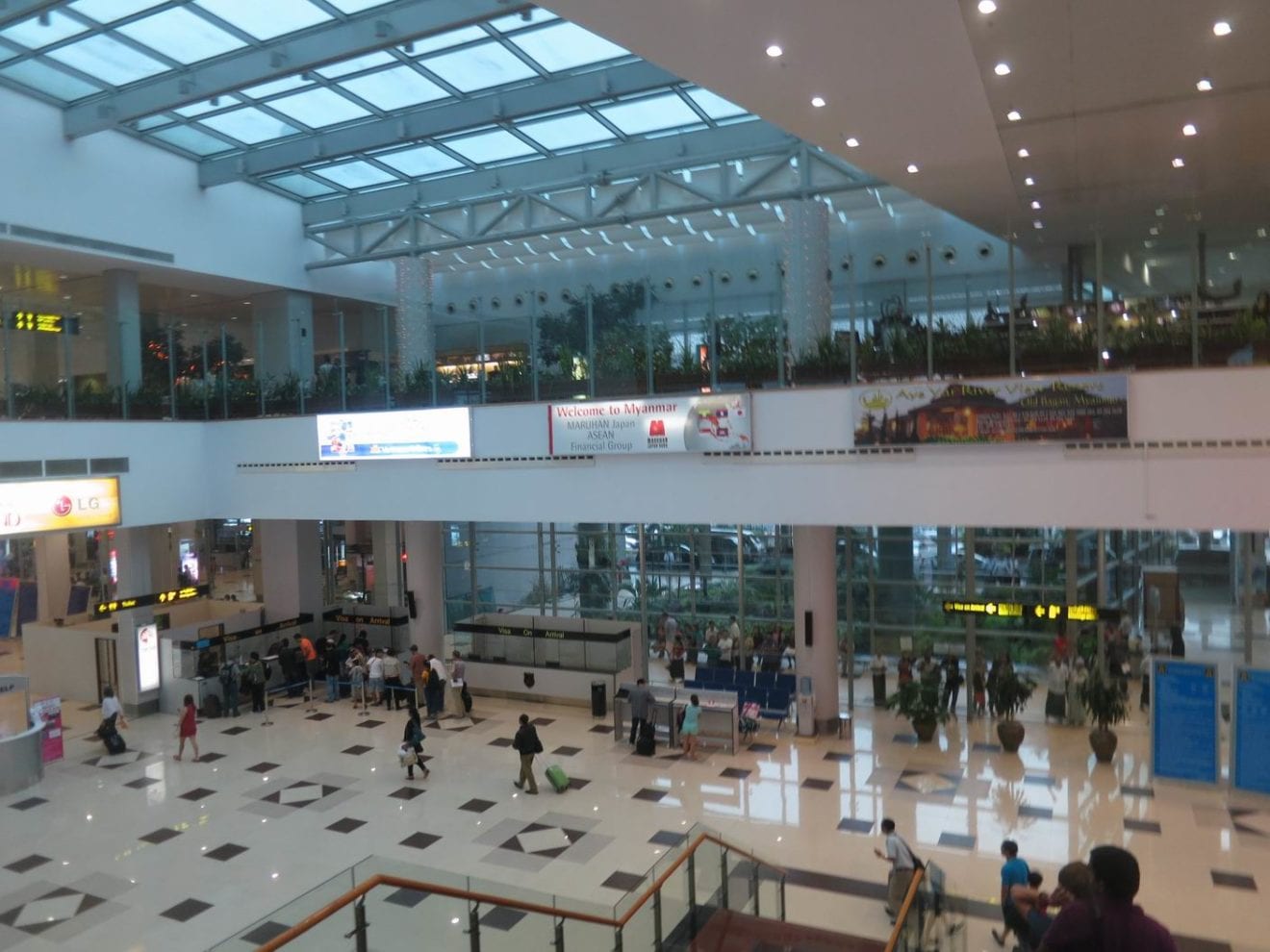
    Singapore Windsor Holdings has signed a 10-year agreement with DFS Group to develop and operate duty-free retail outlets at Yangon International Airport and Nay Pyi Taw International Airport.

    DFS Group is a Hong Kong-based luxury travel retailer, majority-owned by conglomerate Moët Hennessy Louis Vuitton (LVMH).

    “In addition to a duty-free store at Nay Pyi Taw International Airport, we will open duty-free outlets at the existing departure and arrival terminal of Yangon International Airport, followed by a much larger duty-free retail space when the new terminal at Yangon International Airport is completed towards the end of this year,” said a notice on the Singapore Exchange (SGX).

    By the end of 2015, Singapore Windsor will operate almost 2000 square metres of duty free retail space at the two airports. The notice did not mention plans to introduce duty-free services to Mandalay International Airport.

    The new international terminal in Yangon airport is expected to handle three times the current passenger traffic volume. Myanmar’s airports already offer duty-free alcohol and tobacco, but not yet to an international standard, according to the notice.

    DFS is headquartered in Hong Kong and has offices in Hawaii, Los Angeles, Shanghai, Singapore and Tokyo. Singapore Windsor is a Singapore-listed, Myanmar-focused company, with interests in telecom infrastructure construction, trading, distribution and retail, serviced offices, and car hire and rental services.

    Last week, the group’s wholly owned subsidiary SMI Auto Services signed a five-year franchise agreement with Europcar, to provide vehicle rental and limousine services throughout Myanmar. The deal is renewable for another five years, if both parties agree to it.