Retail News CRM

Tag: taxes

  • Thailand to Levy Taxes on All Foreign Online Purchases in Boost to Local Businesses

    Thailand to Levy Taxes on All Foreign Online Purchases in Boost to Local Businesses

    Beginning January next year, Thailand will impose taxes on all foreign goods sold through online platforms, thereby ending the current exemption on low-value imports priced under 1500 baht (US$46.30).

    Creating a Fair Market

    According to Panthong Loikulnan, the Director-General of the Customs Department, the objective of this move is to level the competition for local businesses and increase government revenue. The current situation gives foreign goods an edge over Thai businesses, putting Small and Medium-sized Enterprises (SMEs) at a disadvantage.

    New Tax System for Imports

    The newly instated system will subject all imported goods, regardless of their value, to customs duties and Value-Added Tax (VAT) as required by the law. This change supersedes the existing tariff exemption, which will be phased out by the end of this year.

    Goods priced below 1500 baht currently represent over 30 billion baht ($927 million) in annual imports. Loikulnan estimates that imposing an average 10 per cent duty could generate at least an additional 3 billion baht ($92.7 million) in government revenue each year.

    The proposed system will primarily rely on data verification from online platforms and random inspections to ensure compliance. Furthermore, Thailand’s customs department is currently in discussions with major e-commerce operators to directly link their sales and import data.

    Protecting Domestic Retailers

    Loikulnan believes that this reform will help establish a fair market for domestic retailers who are already paying taxes and are particularly impacted by the wave of low-cost imported products.

    In his opinion, delaying the implementation of such a system would put Thailand at a disadvantage since many other countries are grappling with the same issue: domestic sellers pay taxes, while foreign goods are imported tax-free.

    Lump-sum Tax Proposal

    For the long term, Loikulnan suggests introducing a “lump-sum tax”, which implies a flat rate of 20 to 30 per cent per imported package. This would simplify the system and increase efficiency. However, he acknowledges that such a change would necessitate legislative amendments and would take time to implement.

    Questions & Answers

    What is the objective of Thailand’s new tax system?
    The aim is to level the playing field for local businesses and increase government revenue.

    How will the new system work?
    All imported goods, regardless of their value, will be subject to customs duties and VAT. The system will rely on data verification from online platforms and random inspections to ensure compliance.

    What is the proposed “lump-sum tax”?
    The “lump-sum tax” refers to a flat rate of 20 to 30 per cent per imported package, suggested as a long-term solution to simplify the system and increase efficiency.

  • Vietnam And U.S. To Advance Trade Agreement Talks In Upcoming 2025 Meetings

    Vietnam And U.S. To Advance Trade Agreement Talks In Upcoming 2025 Meetings

    Vietnamese representatives are set to visit the United States in October and November 2025, with the goal of progressing discussions and finalizing a balanced trade agreement. Deputy Minister of Industry and Trade, Nguyen Sinh Nhat Tan, revealed this during a recent press conference, pointing out that Vietnam has been diligently working to expedite negotiation proceedings.

    Negotiation Principles and Goals

    The ongoing negotiations are being guided by principles of openness, constructiveness, equality, mutual respect, independence, self-reliance, and shared benefits. These principles consider the level of development of both nations. The ultimate aim is to foster stable and harmonious economic, trade, and investment relationships, in accordance with the Comprehensive Strategic Partnership between Vietnam and the U.S.

    End-of-Year Plans and Measures

    Bui Huy Son, Director of the Department of Planning, Finance and Enterprise Management at the Ministry of Industry and Trade (MoIT), stated the department is committed to meeting set targets and making new strides in the remaining months of the year. The MoIT is set to enforce a resolution from the Politburo that was issued on January 24, 2025, regarding international integration in a new context.

    Simultaneously, the MoIT is carefully observing changes in the U.S. tariff policy and is actively working with relevant authorities from both countries to identify and resolve emerging issues. This is in an effort to limit the risk of unfavorable trade measures being imposed on Vietnamese exports.

    Future Trade Negotiations

    The MoIT is prioritizing the commencement of Free Trade Agreement (FTA) discussions with the Southern Common Market (Mercosur) and the Gulf Cooperation Council (GCC) in the fourth quarter of 2025. It is also planning to initiate talks with Pakistan to broaden export opportunities, and aims to conclude FTA negotiations with the European Free Trade Association (EFTA) by the end of the year.

    Supporting Domestic Enterprises

    The MoIT is committed to addressing issues within domestic enterprises to decrease dependence on the FDI sector. It plans to continue working closely with businesses through regular consultations with industry associations and local authorities, thus providing timely policy advice to the Government and ensuring appropriate support.

    The department will also step up efforts around trade promotion, supply-demand connection, and product marketing to assist Vietnamese companies in reaching new customers and maintaining robust relations with traditional partners, especially in the U.S. market.

    The MoIT reiterated its commitment to enforcing origin-related regulations through inspections, licensing, and violation settlements, while also reinforcing supervision to combat trade remedy evasion and origin fraud.

    Questions & Answers

    What is the purpose of the Vietnamese delegation’s visit to the U.S. in late 2025?
    The delegation aims to progress discussions and finalize a reciprocal trade agreement with the United States.

    What principles guide the ongoing trade negotiations between Vietnam and the U.S.?
    The principles of openness, constructiveness, equality, mutual respect, independence, self-reliance, and shared benefits guide the negotiations, with the development levels of both nations taken into consideration.

    What are the MoIT’s plans for supporting domestic enterprises in Vietnam?
    The MoIT plans to address limitations within domestic enterprises, reduce reliance on the FDI sector, and work closely with businesses for regular consultations. The department also plans to intensify efforts around trade promotion, supply-demand connection, and product marketing.

  • New Tax Measures Trigger 300% Price Surge On Chinese E-commerce Platform In Pakistan

    New Tax Measures Trigger 300% Price Surge On Chinese E-commerce Platform In Pakistan

    Prices on the Chinese e-commerce platform, Temu, have dramatically surged in Pakistan, with increases reaching up to 300% in some cases. This substantial escalation has been reported by customers over the past week, marking a significant shift in the online shopping landscape.

    New Taxes Imposed

    These price spikes appear to be occurring in the wake of new tax measures instituted by the government. The administration last month implemented new taxes specifically targeting online sellers. These levies extend to platforms such as Temu and AliExpress, among others.

    While the companies haven’t issued an official statement providing the reasons behind the price alterations, a spokesperson for Temu pointed to external policy shifts and escalating operational costs across numerous sectors as the primary catalysts for the increases. The spokesperson stated, “We remain committed to providing access to quality products at affordable prices, while fully complying with local requirements.”

    Digital Presence Proceeds Tax Act

    The government disclosed last month that a 5% tax would be put on all goods sold in Pakistan by foreign digital platforms that lack a physical presence in the country. This initiative is part of the Digital Presence Proceeds Tax Act. The goal of this tax is ostensibly to create a more equitable commercial environment. It is said to target online platforms such as Facebook, Google, Spotify and Netflix, in addition to select local online sellers.

    Further, online retail platforms are now also responsible for paying the standard 18% sales tax applicable to local businesses in Pakistan. The government’s rationale for these tax hikes is to equalize conditions for Pakistani businesses that are already subject to both the 18% sales tax and an income tax of up to 35%.

    Concerns Over Impact

    While the government’s intent might be to create a fairer marketplace, experts have voiced concerns over the potential harm the digital tax could inflict on Pakistan’s burgeoning e-commerce market.

    Questions & Answers

    What are the new tax measures impacting e-commerce in Pakistan?
    Last month, the government introduced a 5% tax on all goods sold in Pakistan by foreign digital platforms. These platforms are also expected to pay the 18% sales tax applicable to local businesses.

    What is the rationale for these new taxes?
    The government’s intent with these tax hikes is to create a level playing field for local Pakistani businesses already paying an 18% sales tax and an income tax of up to 35%.

    What are the potential consequences of the new digital tax?
    While the intention is to foster a more equitable commercial environment, experts have raised concerns that the digital tax could harm Pakistan’s rapidly growing e-commerce market.

  • Ray-Ban Smart Glasses: Everything You Need to Know after the US raises import taxes

    Ray-Ban Smart Glasses: Everything You Need to Know after the US raises import taxes

    The world of smart glasses is about to change significantly due to new US import taxes that are affecting the market for Ray-Ban’s innovative smart glasses. These tax increases will directly impact the pricing of Ray-Ban’s technologically advanced eyewear, forcing both manufacturers and consumers to adapt to the new market conditions.

    EssilorLuxottica, the parent company of Ray-Ban, is now facing a complex situation where their flagship smart glasses – a combination of style and advanced technology – are facing new economic challenges. The US market, which accounts for 43% of the company’s revenue, is at the center of these changes.

    Key impacts for consumers:

    • Potential price adjustments across Ray-Ban’s smart glasses lineup
    • Shifts in availability and distribution channels
    • New manufacturing strategies affecting product delivery timelines

    Understanding these changes is crucial for current owners and potential buyers of Ray-Ban smart glasses. The decisions made now by both the company and consumers will shape the future of smart eyewear accessibility in the US market.

    Understanding Ray-Ban Smart Glasses: A New Era in Eyewear Technology

    Ray-Ban smart glasses are a groundbreaking combination of classic eyewear design and state-of-the-art technology. These innovative frames retain the iconic look of traditional Ray-Ban styles while adding advanced features that turn them into wearable tech devices.

    Key Features of Ray-Ban Smart Glasses:

    • Built-in 12MP camera for hands-free photo and video capture
    • Open-ear audio system for music and calls
    • Touch controls integrated into the temple arms
    • Voice command capabilities
    • LED recording indicator for privacy awareness
    • Compatibility with iOS and Android devices
    • 5-hour battery life with portable charging case

    The technology embedded in these smart glasses sets them apart from conventional Ray-Ban models like the Wayfarer or Clubmaster. A discrete micro-processor powers the smart features while maintaining the glasses’ sleek profile and signature style.

    Smart Capabilities:

    • Live streaming directly from your perspective
    • AI-powered photo enhancement
    • Real-time translation features
    • Social media integration
    • Navigation assistance
    • Weather updates at a glance

    The frames house sophisticated components within their lightweight structure, including speakers, microphones, and connectivity modules. This technical integration creates an immersive experience without compromising the classic Ray-Ban aesthetic that has defined the brand for generations.

    These smart glasses serve as a bridge between fashion and functionality, allowing users to stay connected while maintaining their personal style. The seamless integration of technology creates a natural extension of your smartphone, bringing digital convenience directly to your field of vision.

    The Price Factor: How US Import Taxes Are Affecting Ray-Ban Products

    The recent surge in US import taxes has created significant ripples across Ray-Ban’s pricing landscape. The new tariffs directly impact EssilorLuxottica’s production facilities, particularly affecting products manufactured in China and Italy.

    Current Tariff Impact on Production Regions:

    • Chinese manufacturing facilities: 25% increase in import duties
    • Italian production units: 15% additional tariff burden
    • Thailand and Mexico facilities: Minimal impact due to existing trade agreements

    These tax adjustments have triggered a chain reaction in Ray-Ban’s pricing strategy. The iconic Ray-Ban Wayfarer, previously retailing at $163, now sees a price point of $179. The classic Aviator collection has experienced similar increases, with prices rising from $161 to $175.

    Smart Glasses Price Adjustments:

    • Meta Ray-Ban Collection: $299 to $349
    • Premium Smart Models: $399 to $459
    • Limited Edition Variants: $449 to $519

    The company’s strategic response includes implementing selective price increases across different product categories:

    • Classic SunglassesEntry-level models: 5-7% increase
    • Premium collections: 8-10% increase
    • Limited editions: 10-12% increase
    • Smart EyewearBase models: 12-15% increase
    • Advanced features: 15-18% increase

    EssilorLuxottica’s US market, representing 43% of global revenue, faces particular pressure from these tariff changes. The company’s production facilities in Thailand and Mexico have become increasingly vital, helping maintain competitive pricing in certain product categories.

    Ray-Ban’s pricing strategy now reflects a delicate balance between maintaining market share and absorbing increased costs. The company’s data shows that despite price adjustments, demand for signature models like the Wayfarer and Aviator remains strong, particularly in the men’s sunglasses segment.

    EssilorLuxottica’s Strategic Response to Tariff Challenges

    EssilorLuxottica has implemented a multi-faceted approach to combat the rising U.S. import duties. The company’s strategic response includes:

    1. Supply Chain Diversification

    • Expansion of manufacturing facilities in Thailand
    • New production centers in Mexico
    • Enhanced operations in France
    • Reduced dependency on single-region manufacturing

    2. Price Management Strategy

    • Strategic single-digit price increases across product lines
    • Targeted adjustments in specific distribution channels
    • Cost absorption mechanisms to minimize consumer impact
    • Selective premium positioning for high-end smart glasses

    The company’s manufacturing footprint now spans three continents, creating a resilient supply network that shields against regional economic fluctuations. This geographical spread allows EssilorLuxottica to maintain production flexibility while optimizing logistics costs.

    3. Risk Mitigation Measures

    • Advanced inventory management systems
    • Local partnerships in key markets
    • Enhanced digital supply chain tracking
    • Streamlined distribution networks

    You’ll find these adaptations particularly evident in the company’s handling of their Meta smart glasses production. By leveraging their diverse manufacturing locations, EssilorLuxottica maintains quality control while balancing production costs against tariff impacts.

    The company’s robust financial position, with a 7.3% revenue growth in Q1 2025, supports these strategic initiatives. Their supply chain transformation represents a significant investment in long-term sustainability, ensuring continued market leadership in both traditional and smart eyewear segments.

    Consumer Perspective: Is It Still Worth Investing in Ray-Ban Smart Glasses?

    The value of Ray-Ban smart glasses is still strong even with the price changes. These innovative devices offer a unique blend of style and technology that sets them apart from standard eyewear options.

    Key Benefits That Justify the Investment:

    • Seamless Integration: The glasses connect effortlessly with your smartphone, allowing hands-free access to essential functions
    • Premium Audio Experience: Built-in open-ear speakers deliver high-quality sound without blocking ambient noise
    • Professional Photography: The 12MP camera captures photos and videos from your perspective, ideal for content creators
    • AI-Powered Features: Advanced voice commands and Meta AI integration enhance productivity and daily tasks
    • Classic Ray-Ban Design: The smart technology doesn’t compromise the iconic aesthetics Ray-Ban is known for

    The price increase might give potential buyers pause, but the technological advantages provide substantial value. Users report significant benefits in their daily routines:

    “I use my Ray-Ban smart glasses for work calls, navigation, and capturing moments with my family. The convenience factor alone makes them worth the investment.” – Tech reviewer Sarah Chen

    Real-World Applications:

    • Live streaming for social media influencers
    • Hands-free navigation for cyclists and travelers
    • Quick photo capture for real estate agents
    • Discrete message checking during meetings
    • Music streaming during outdoor activities

    The combination of Ray-Ban’s renowned quality and cutting-edge technology creates a product that maintains its value proposition. While the price point has increased, the functionality and style offered by these smart glasses continue to attract consumers who prioritize innovation and convenience in their everyday eyewear.

    The Future Outlook for Ray-Ban Smart Glasses Amid Tariffs

    EssilorLuxottica projects steady growth through 2026, targeting mid-single-digit annual revenue expansion despite current tariff pressures. The company’s financial forecasts indicate an adjusted operating margin between 19% and 20%, demonstrating resilience in challenging market conditions.

    Ray-Ban’s smart glasses roadmap includes:

    • Enhanced AI Integration: Advanced voice commands and contextual awareness features
    • Improved Battery Life: Next-generation power management systems
    • Expanded App Ecosystem: New partnerships with third-party developers
    • Sleeker Design: Reduced form factor while maintaining functionality

    The partnership with Meta Platforms continues to drive innovation, with planned releases featuring:

    • Multi-modal interaction capabilities
    • Advanced camera systems
    • Improved audio quality
    • Expanded color options and style variations

    Market analysts predict the smart glasses segment will experience significant growth, with Ray-Ban positioned as a key player. The company’s investment in research and development remains strong, focusing on:

    • Augmented reality capabilities
    • Health monitoring features
    • Enhanced connectivity options
    • Customization possibilities

    EssilorLuxottica’s diversified manufacturing strategy across Thailand, Mexico, and France positions them to maintain competitive pricing while introducing new technologies. This strategic approach supports their ambitious growth targets and ensures continued innovation in the smart eyewear category.

    Conclusion

    EssilorLuxottica’s ability to adapt to U.S. import tariffs shows their strength as a market leader. The company’s strategic price adjustments and supply chain diversification demonstrate their commitment to maintaining product quality while managing costs.

    Ray-Ban smart glasses remain an attractive option for tech-savvy consumers. The combination of style, functionality, and advanced features offers a unique value that goes beyond price.

    Key takeaways for consumers:

    • Expect modest price increases across Ray-Ban’s product range
    • Watch for enhanced features and technological improvements
    • Consider the long-term value of investing in smart eyewear technology

    The future looks promising for the smart glasses industry, with ongoing innovation and growth expected. EssilorLuxottica’s strong market position, along with their strategic partnerships and global manufacturing capabilities, puts them in a good position to overcome challenges and provide value to consumers.

  • Vietnamese unscathed by U.S. tech meltdown

    Vietnamese unscathed by U.S. tech meltdown

    The recent layoffs by tech firms in the U.S.’s Silicon Valley have not significantly affected Vietnamese there, and things will return to normal soon, Le Chan, chief engineer at AI startup TruEra, tells VnExpress.

    Layoffs.fyi, the layoff statistics site, shows that more than 100,000 technology employees have been laid off in Silicon Valley this year, including by giants like Meta, Twitter and Amazon. As chief engineer at TruEra, a startup in the field of artificial intelligence in the U.S., and founder of the Viet Tech community, what do you think about this?

    Actually, I’m not too surprised because I think the number should have been much higher. If the economic situation does not improve next year, other problems will arise. The next layoff will be worse than the first one.

    I think the number released by Layoffs.fyi is quite accurate because each of the big companies such as Amazon and Meta contributed tens of thousands. I even think the actual number could be 150,000.

    My own company is a much smaller startup, so we don’t have layoffs. Normally, we face an employee shortage. During the recent Covid outbreak, big tech firms hired on a large scale because they thought after the pandemic there would be an economic boom with everything going up and never down.

    But in reality there isn’t. They’re public companies with shares issued and listed, so they face pressure to sack people to improve their financial situation. Normally, it is difficult for common startups to recruit staff. Now, when large companies lay off employees, smaller firms can recruit them. For small companies, it is actually a good time to hire people now.

    In your opinion, which group is most affected by the tech layoffs?

    The group most affected and I feel the most sorry for is probably young people who have just graduated or are about to graduate. When companies don’t recruit staff, they don’t hire anyone. First of all, they don’t recruit new graduates. Most startups just want to hire people with work experience who can do the job right away. Big companies, too. If a big company stops hiring, it often prioritizes stopping recruitment of new graduates first. New graduates need to be trained; it will take time for them to start working effectively.

    The second group most affected is those who work here on H-1B visas. Most tech people working here are on that kind of visa. Once the visa holders are laid off, they have only 60 days to find a new job. Failing this, they are required to leave the U.S. for their home countries. After returning to Vietnam, it is very difficult to return, right? Normally it takes about 1-2 months to prepare for interviews, and then it takes the same period of time to go for an interview.

    The founder of the Vietnam Tech Society estimated that some 1,000 Vietnamese engineers were affected by this layoff. What do you think about the figure? How have Vietnamese been affected?

    I see many Vietnamese in this tech industry being affected, but I don’t know the exact number because there are no precise numbers. The founder estimated that 1,000 people were affected, but I think it must be much higher.

    There are many Vietnamese people in the U.S., and many Vietnamese work in the tech industry. But I think this layoff is just in line with the economic cycle. When the economy goes down, these things will inevitably happen, not because you are bad or anything but just because the economy is bad and companies have to make difficult decisions.

    Vietnamese engineers are the same as engineers in other countries. In fact, whoever can do the job is recruited and respected. I don’t see much difference between Vietnamese and foreign engineers. Laid off engineers in fields other than technology will find it much harder to get a new job. So, in fact, tech workers still have a huge advantage compared to those in other fields. Now the tech industry is facing a little difficulty because it went up strongly in the past. Now it is going down.

    I found that Asian engineers in general are very hardworking and work quite well. I think it’s going to be okay. There will be layoffs; there will be ups and downs; and there will be times when companies have to decide to lay off. But eventually everything will be back to normal, especially when most people are working pretty well. I don’t think it’s a big deal.

    Many experts believe that famous foreign tech talent in Silicon Valley have houses and cars but their cash is limited. When there are no jobs, they still have to make ends meet. So what’s the situation like?

    This is not correct. In Silicon Valley, a fresh graduate can easily get a job with an income of more than $100,000 per year. It is not too difficult to get $200,000 a year from big tech companies like Google, Facebook and Amazon.

    With such a salary, minus taxes of 30%, they still have some $70,000, completely enough to live on. Anyone who says that laid off tech people have no money or have to live from hand to mouth has never worked as a tech person or has stood outside looking in. I don’t see any tech guys complaining about not having money to live by.

    Fresh graduates can earn $100,000-200,000 a year, or maybe less if they work for smaller companies. After about two years of experience, their income is around $300,000, and with two more years of experience, it is $400,000-450,000. With more years of experience, it is up to $600,000-700,000. With such an amount of money, it is very hard for them to have any problem unless they have done something very, very wrong.

    But it is obvious that, if you are earning some $600,000 and your firm suddenly fires you, it will be hard for you for a while, but not to the extent and not as miserable as some people in Vietnam think.

    Being fired is a bad thing, right? But actually, the compensation you get when you get fired in the first layoff is usually better than later ones.

    Some companies like Meta offer four months’ salary. I know that some other companies like Snapchat offer two or four months’ salary. So that’s a really good deal for sacked people.

    Engineers in tech companies not only get salaries, but also bonuses. And what is more important is the shares the companies give them like in Vietnam. I used to work in Vietnam where employees are paid a 13th month’s salary and Tet bonus.

    But it is a little different here. In the tech industry, in addition to monthly salary, you have the company’s stock. Usually its market value is equal to the salary, so the sum of money is good.

    Obviously, it is very difficult to find a new job. People have to prepare for job interviews, but I think they will find a new job, because the market is not short of jobs. It is just difficult for people who do not want to prepare for interviews or want to work only for certain companies. There is no shortage of jobs in general.

    It is not easy to find a new job within 60 days, but if you have experience, it is completely doable. If you have no experience, it will be fairly easy during this period of time.

    I think there are always ways to overcome all difficulties in life. Always.

    Tech companies in Silicon Valley mostly recruit foreign talent through the H-1B visa policy. The visa was once considered Silicon Valley’s tech talent reserve. Do you think that this round of layoffs poses a risk of drowning tech talent?

    Small groups will be affected, right? As I said earlier, undergraduates and new graduates are affected for a short period of time. In reality, they have their own directions. For H-1B visa holders, they will have other ways to continue to stay in the U.S., or continue to get the visa. There will always be a way out. It may be much more difficult than in the previous period, but there will always be a road to keep walking if you want to stay in the U.S. and to continue to work. They include accepting new jobs with lower pay and going back to school.

    I don’t think tech talent will get drowned. It is not so bad.

    What consequences will the layoffs have for Silicon Valley and the U.S.?

    Every year the U.S. issues 65,000 H-1B visas. The latest layoff affected about 150,000 people, but not all of them have H1-B visas. So that number is not big enough to affect the future of Silicon Valley. There are a lot of tech people in Silicon Valley in particular and many more in the U.S. in general. America has always been a very big tech hub of the world. Silicon Valley has always been a hub that attracts tech talent.

    With the 150,000 laid-off people, assuming that some 10% of them, or 15,000-20,000, have to go back to their native countries, it will not have a big impact.

    Labor shortages have happened in the past, are happening now, and will possibly happen in future, but 20,000 people is just a drop in the bucket. A company like Meta last year seemingly hired such a number of people. So if they have to return to their home countries, it does not matter too much.

    There are some other contributing factors, like venture capital funds. I see that some big venture capital funds pumped less money into startups over the past six months, but then started pumping again when there was a wave of generative artificial intelligence. Silicon Valley will have new technologies. Then there will also be new inventions, then everything will return to the old trajectory, money will still be pumped in, people will be recruited, assets of companies in Silicon Valley will increase as before…

    I do not know about the distant future, but I think in the near future, after this period when the economy bounces back, the stock market goes up again, and companies no longer face the pressure to lay off, the tech industry will be back to normal.

    I strongly believe that in the next 2-5 years, everything will return to the way it was, everything will go up again.

    Given the current situation, what will you advise new graduates or those who are applying for tech firms?

    This is the worst time for them to graduate now, so options are very simple. You do not have to graduate, right? You can continue to study for a master’s degree, or a PhD degree. Obviously, if you have a job, just go to work, do not wait. Take many interviews at many companies. You should accept many different offers. Do not just take one offer and then stop. Nowadays, many companies make an offer and then withdraw it.

    I think you should choose a company with good financial potential, which is performing well, making a lot of money, having no pressure from shareholders to sack people or cut costs.

    The second direction is choosing startups that have full funding. The simplest option is choosing startups which have just raised funds. Such companies will not have much pressure to lay off employees.

    There are a lot of ways. You have to open your mind a bit more. Do not think the U.S. is the only destination. Do not think it is obligatory to work in Silicon Valley. It is a very good place to work, and to develop your tech career. But if that option is not good right now, there are other options that are ok. They are not so bad.

    Singapore, Canada and Europe are all very good options for career development, personal development, family and other issues. Then you can go back to the U.S. later. It is not a big deal. It will be much more difficult but not impossible to achieve.

  • Taxes on securities up 320 pct

    Taxes on securities up 320 pct

    Capital gains taxes on securities surged 320 percent year-on-year in the first five months as new investors flocked to the stock market.

    They were one of the major contributors to personal income tax collection in the first five months, which rose by nearly 13 percent, Cao Anh Tuan, head of the General Department of Taxation, said.

    Vietnam imposes a flat 0.1 percent capital tax on every stock sale.

    Other contributors were real estate (up 183 percent) and personal investment (up 169 percent), Tuan added.

    In May, an average of 3,600 individual stock trading accounts was opened each day, the highest ever. The number of accounts now has risen 11-fold since January 2020 to 3.2 million, or one each for 3.26 percent of the population.

    In the first five months of this year, 480,000 accounts were opened.

    In the period, the benchmark VN-Index gained over 20 percent, the highest in Asia.

  • Vietnam exempts import tax for Emirates Airline

    Vietnam exempts import tax for Emirates Airline

    Deputy Prime Minister Vuong Dinh Hue has agreed with the Ministry of Finance’s proposal to exempt tax on imported goods of Emirates Airline.

    Hue assigned the Ministry of Finance to implement the proposal and has instructed the customs forces to supervise and closely control the import and use of duty-free goods of the airline to ensure that they are used for right purposes and in line with the law.

    Under the direction of the Deputy PM, the import and use of duty-free goods by Emirates must be for the right purposes as described in Article 6 of the Agreement on Air Transport, signed between the Governments of Vietnam and the United Arab Emirates.

    It is the fifth airline to receive exemption from import tax. Previously, the Deputy PM had agree to exempt the tax for imported goods of Hong Kong Dragon, Cathay Pacific Airways, Federal Express Corporation and Japan Airlines.

  • Government Push Google to Pay Tax

    Government Push Google to Pay Tax

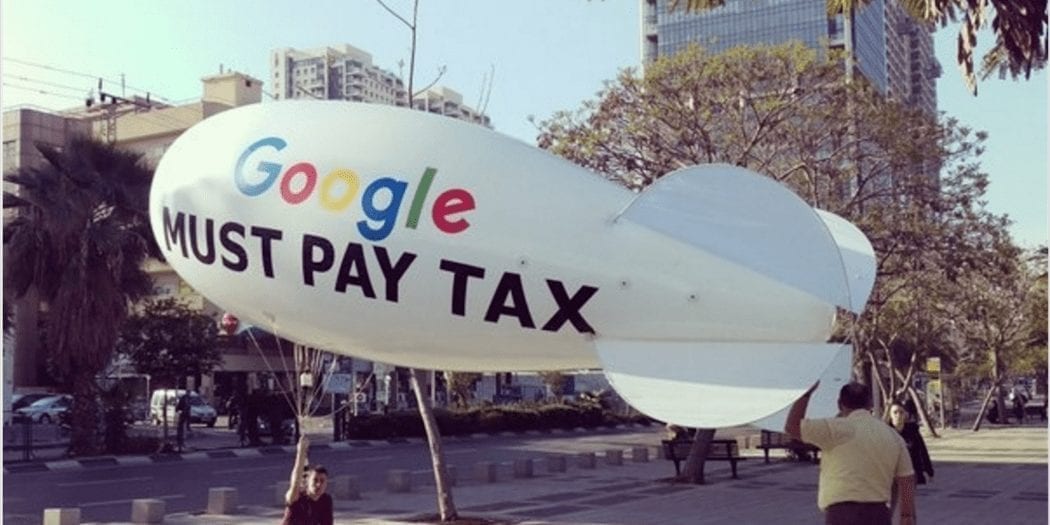
    Director General of Tax Ken Dwijugiasteadi confirmed that Google Asia Pasific Pte Ltd will settle their tax debts by the end of 2016. The government has decided to negotiate with the company instead of filing a report to the police. “Google must pay their tax debts this year, the company and the government will release a statement after the investigation,” Ken said on Monday.

    Ken had met with Google representatives last week. According to the Director General, Google has the right to file their objection towards the tax investigation results as long as an agreement has not been made. The company however, will be required to pay off their debts based on the investigation’s closing conference.

    In response to the issue, Google spokesman Jason Tedjakusuma refused to provide any comment. Jason also refused to respond to questions related to the results on last week’s meeting. “No comment,” Jason said briefly.

    The government estimated that Google Asia Pacific’s revenue, based on service and product sales in Indonesia, had reached Rp 5.5 trillion. On the other hand, Google representative office in Indonesia only generates revenues from advertising services.

    Google Indonesia had been registered at the Tanah Abang Tax Office as a foreign investment company since September 15, 2011. However, state officials cannot collect the company’s taxes because Google is not registered as an Indonesian legal entity.

    Yustinus Prastowo, Executive Director of Center for Indonesia Taxation Analysis doubted the government’s ability to force Google to pay their taxes by the end of 2016. “Even if there is a payment, it wouldn’t be as large as it was expected,” Yustinus said.