Retail News CRM

Tag: ties

  • Indonesia, Netherlands to strengthen economic ties

    Indonesia, Netherlands to strengthen economic ties

    Indonesia and the Netherlands have pledged to strengthen economic cooperation in the future, boosted by a number of new business deals inked by the two governments and businesses.

    The partnership will involve various areas including agriculture and infrastructure development as stated during the three-day visit by Dutch Prime Minister Mark Rutte, which concluded on Wednesday.

    Rutte underlined Indonesia’s role as Netherlands’ strategic partner, saying that both countries had a lot to offer in the economic field, especially owing to the former’s status as Southeast Asia’s biggest economy.

    “Indonesia plays a big role in the region. It is one of the central players in ASEAN and Indonesia’s leadership in this region is highly valued,” Rutte said in a limited press briefing. “The country will contribute to maintaining stability in the world, particularly in this region.”

    The importance of the two countries’ economic ties is highlighted by an already robust bilateral trade, which amounted to €3.2 billion (US$3.4 billion) last year, according to figures released by the prime minister. Netherlands is now the main market for Indonesian exports to Europe.

    Dutch businesses invested a total of $1.3 billion in 2015, down 24.4 percent from 2014, in 421 projects, according to data from the Investment Coordinating Board (BKPM).

    During his visit, Rutte led a Dutch delegation comprising ministers, including Infrastructure and Environment Minister Melanie Schultz van Haegen, business leaders from 110 companies, educational institutions and NGOs.

    Rutte’s second state visit to the former Dutch colony in three years followed a similar visit by President Joko “Jokowi” Widodo to the Netherlands in April.

    The delegates signed 38 memorandums of understanding (MoUs) and letters of intent (LoIs) covering economic and non-economic issues, such as water management, flood protection, climate change and health care, with their Indonesian counterparts, further intensifying ties between the two countries.

    On the occasion, Rutte also said the Netherlands was keen to enhance its bilateral relationship as business prospects in Indonesia had improved due to extensive reforms, particularly on the ease of doing business.

    “[Dutch] businesspeople find it is increasingly easier to do business here. But still, there is more room for improvement,” he said, adding that the 14 economic reform packages issued by Jokowi’s administration would boost the business climate, although they still depended on implementation.

    Indonesia climbed 15 places to 91st on the World Bank’s Ease of Doing Business Index for 2017 as its deregulation moves have attracted the attention of global investors.

    The Netherlands has reasserted its commitment to helping Indonesia develop its infrastructure, particularly in port construction and the National Capital Integrated Coastal Development (NCICD), popularly known as the Giant Seawall.

    Another major interest for the Dutch delegation is seaport management, according to Rutte. This follows an agreement signed last year by Indonesia’s state-owned port operator Pelindo I and the Port of Rotterdam Authority to develop a nationally strategic port at Kuala Tanjung, North Sumatra.
  • Japan still deeply tied to Indonesia

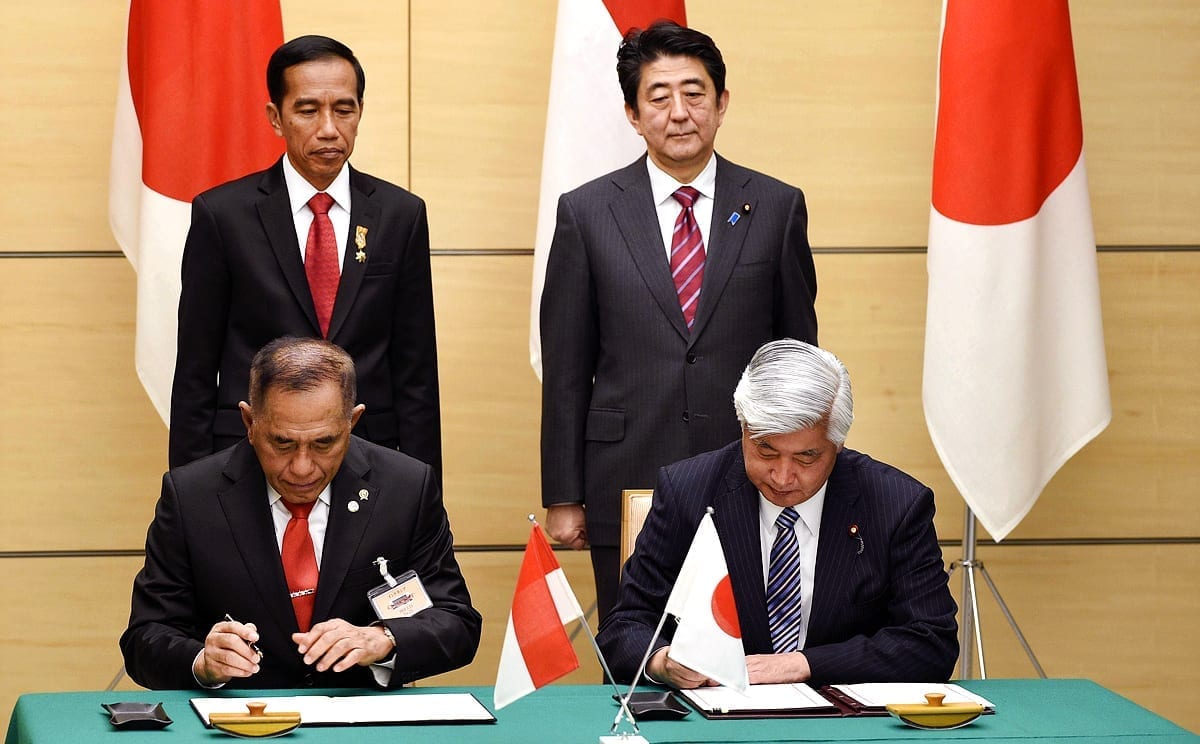
    Japan still deeply tied to Indonesia

    Despite the seemingly robust investment coming from China, the government claims it has not forgotten Japan and stresses that its foreign investment and trade policies are not all about China.

    China beat Japan to secure the contract for Indonesia’s first high-speed railway project connecting Jakarta and Bandung in West Java. Furthermore, President Joko “Jokowi” Widodo has met with Chinese President Xi Jinping five times since the former was elected president in late 2014.

    Meanwhile, Jack Ma, founder and chairman of Chinese e-commerce giant Alibaba Group, previously agreed to become Indonesia’s e-commerce advisor and may continue to do so.

    This series of events, and several others, may suggest that Indonesia has shifted its economic orientation more toward China, the world’s second largest economy, from its “traditional” partners, including Japan.

    The government, however, strongly dismisses this notion. “There is a perception that we have only made deals with China recently,” Coordinating Maritime Affairs Minister Luhut Binsar Pandjaitan said after a meeting at his office recently.

    “But investments from Japan are still larger than those from China,” he added, trying to reassure those concerned that Japan remained Indonesia’s priority partner.

    Japanese investments are indeed larger than China’s and the amount of foreign direct investment (FDI) from Japan to Indonesia is set to reach between US$3.5 billion to $4 billion by the end of the year, according to the Japan International Cooperation Agency (JICA).

    Nonetheless, data from the Investment Coordinating Board (BKPM) show that Japan and China do appear to be locked in a tight race.

    While Japan has consistently put itself on the list of top three foreign investors and places in second position as of September, China has crept up over the past two years and has entered the big league as well.

    China even trailed behind Japan at number three in terms of realized foreign investment in the first nine months of 2016.

    The government, however, is inching closer to signing major agreements with Japan, a move that will strengthen the latter’s investment dominance.

    The agreements will see Indonesia reach financial closure from Japan for the deep-sea port development project in Patimban, West Java, in early 2017.

    The project is among various national strategic projects that will generate more ease in the distribution of goods shipped into the country.

    As much as US$1.7 billion in foreign loans are expected to be channeled into the project and the Indonesian government will also provide an additional $595 million to finance it.

    The Patimban Port will be located about 70 kilometers from the Karawang Industrial Estate in West Java.

    It will have a container capacity of 1.5 million 20-foot equivalent units (TEUs) once it is partly completed by 2019 and then 7.5 million TEUs by 2027, which is half the capacity of Tanjung Priok Port in Jakarta.

    Luhut said Japan would be involved in managing Patimban once it was completed, which is a plus in the government’s view as the Japanese are expected to transfer their knowledge in port management to their Indonesian counterparts.

    Luhut said the government would expedite the settlement for all administrative problems in the project, including ones related to spatial planning (RTRW) within the next two weeks.

    During that two-week period, the government will also formulate a financing scheme for another strategic project, a railway line connecting Jakarta to Surabaya in East Java.

    The government recently offered Japan the opportunity to take part in the railway project, estimated to cost Rp 102 trillion (US$7.64 billion). However, other countries will participate as well in the bidding process, including rival China, thus opening up the possibility of another round of heated competition.

    “There’s a preference for Japan to be chosen for the railway project,” Transportation Minister Budi Karya Sumadi said. Budi added, however, that Japan would still have to meet all the requirements set by the government.

    The new railway line will enable trains to run at 165 kilometers per hour and will shorten the travel time between Jakarta and Surabaya to around six hours from the current time of 13 hours. The project is slated to begin construction by the end of 2017 and is expected to be completed by late 2019.

  • Indonesia, Romania strengthen economic ties

    Indonesia, Romania strengthen economic ties

    Indonesia and Romania have agreed to boost economic ties through the signing of a cooperation agreement between the chambers of commerce and industry of the two countries during the visit of Romanian Foreign Minister Lazăr Comănescu to Jakarta.

    “The fact is, last night, upon my arrival to Indonesia, the chambers of commerce and industry from both Indonesia and Romania have signed a memorandum of understanding on their cooperation. The agreement has opened up the path for both chambers to diversify contact between business players from both countries,” Comănescu said following a bilateral meeting with his Indonesian counterpart, Foreign Minister Retno LP Marsudi, in Jakarta on Wednesday.

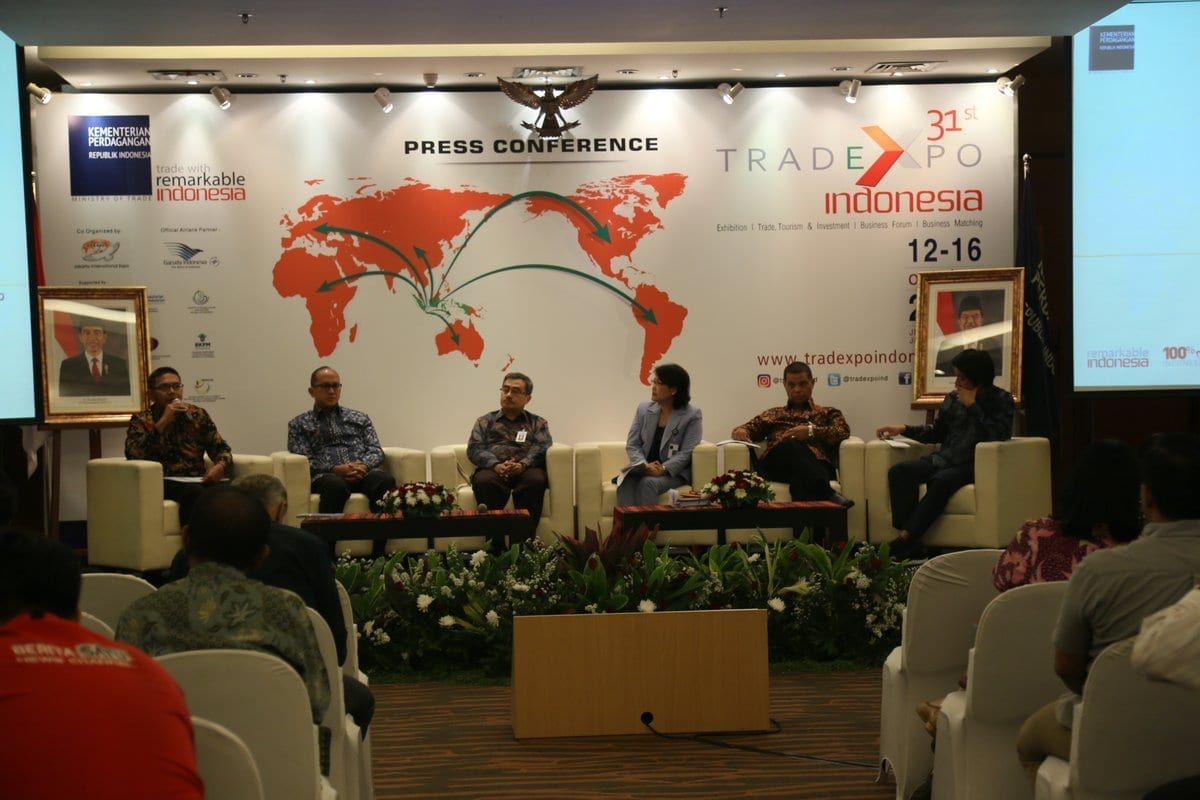
    Comănescu brought a team of business delegates from various industries, including energy, construction, customer goods and agriculture. While in Indonesia he is also participating in the Trade Expo Indonesia 2016. Trade between Indonesia and Romania reached US$117.64 million in 2015.

    Comănescu’s visit to Indonesia is the first from a Romanian foreign minister since relations between the two countries were established 66 years ago.

    Both Retno and Comănescu highlighted the potential for strengthening cooperation in infrastructure development.

    “There is a possibility for our two countries to strengthen bilateral relations in infrastructure because it is one of the priorities of the Indonesian government,” Retno said.

    Comănescu is set to meet with Transportation Minister Budi Karya Sumadi to discuss possible forms of cooperation.

    The two countries have expressed mutual support for a non-permanent seat on the UN Security Council. Indonesia hopes to secure a seat for the 2019-2020 term, while Romania is eyeing a seat for the 2020-2021 term.

  • Indonesia-US economic ties to strongly develop in next five years

    Indonesia-US economic ties to strongly develop in next five years

    The US-Indonesia trade may increase by 46 percent in the next five years, according to the latest report from the US Chamber of Commerce in Indonesia, source from Vietnam News in Jakarta.

    The report appreciates efforts by President Jokowi’s government in carrying out economic reforms and improving the business environment, saying that the reform needs to be stepped up.

    It also urges the Indonesian government to boost the law enforcement and create a more solid and fair legal foundation, especially in respecting commercial contracts, which is very important in creating confidence for businesses who intend to do business in Indonesia.

    The report recommended the Indonesian government continue reforming administrative procedures and investment policy and cut investment licensing time.

    In 2014, two-way trade between the US and Indonesia surpassed 90 billion USD.-

  • Bahrain-Indonesia trade ties discussed

    Bahrain-Indonesia trade ties discussed

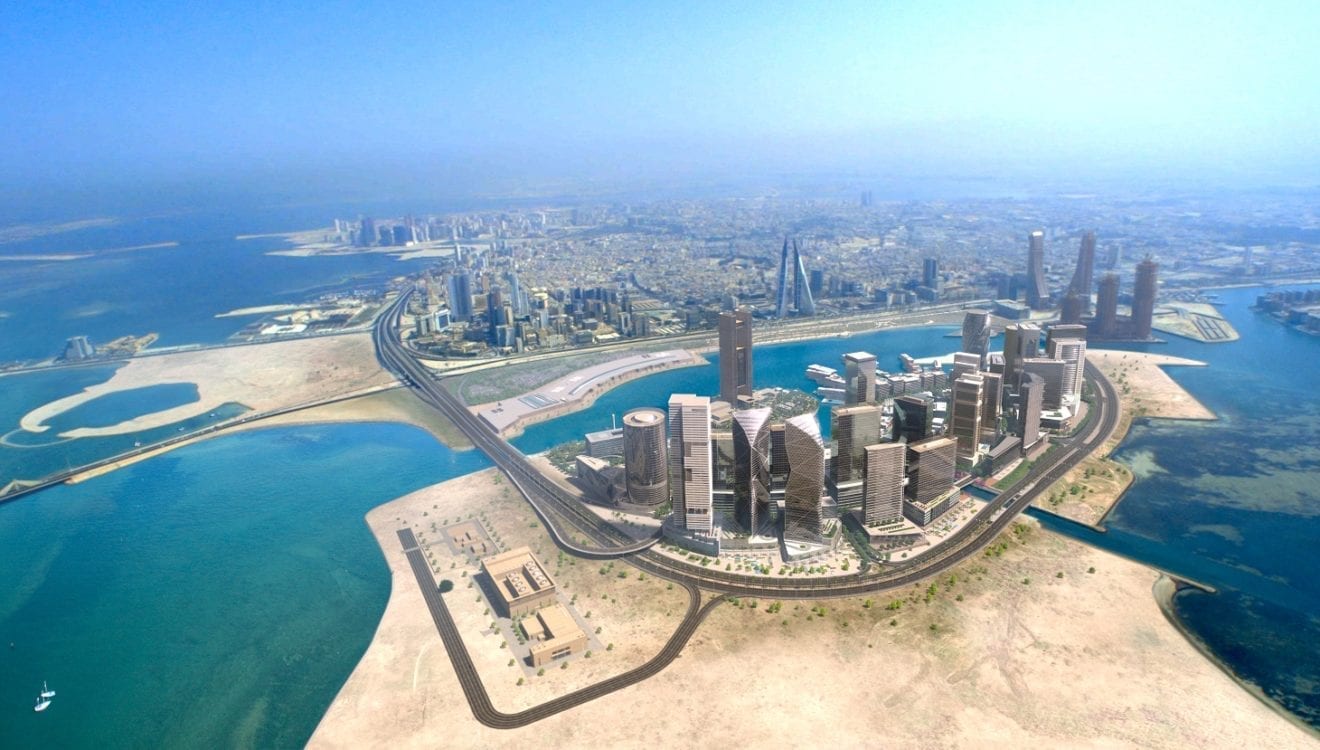
    Bahrain Chamber of Commerce and Industry (BCCI)’s chairman Khalid Almoayed alongside a number of board members and Acting CEO have met the Indonesian ambassador to Bahrain, Chilman Arisman.

    The meeting hailed the deep-rooted relation between the Kingdom of Bahrain and the Republic of Indonesia and discussed the promising sectors and incentives offered to investors.

    Almoayed underlined the importance of reinforcing the exchange of business delegations and holding business events to bridge the knowledge gap between Bahraini and Indonesian business owners and stimulate trade, partnership, and investments.

  • Australia Strengthens Presence in Indonesia

    Australia Strengthens Presence in Indonesia

    Australian Foreign Minister Julie Bishop, as part of her busy schedule, visited Jakarta, Makassar in South Sulawesi Province, and Bali during a working visit on March 20-23, 2016.

    Bishop started her agenda by holding meetings with her Indonesian counterpart Foreign Minister Retno Marsudi and Vice President M. Jusuf Kalla in Jakarta to discuss efforts to boost bilateral, political, trade, and investment cooperation.

    Foreign Minister Bishop then formally inaugurated Australias newly constructed embassy in the Patra Kuningan area, South Jakarta, which includes a five-storey Chancery, accommodation for some Embassy staff, and a recreation and medical center covering an area of more than 50 thousand square meters.

    “The state-of-the-art building and joint project between Australian and Indonesian companies symbolizes our commitment to strong and enduring ties with Indonesia. The new embassy facility will accommodate Australias increased presence in Indonesia and will provide a secure working environment for our personnel,” she stated.

    The new embassy complex was built by Indonesian company Total Bangun Persada in partnership with Leighton (Asia) and continues to make a positive contribution to the local economy.

    Some 2.5 thousand local workers were employed at the site during the construction process. The Australian government is also upgrading infrastructure in the embassys neighborhood.

    “The embassy showcases the best in Australian innovative design and cutting-edge technology to make the most out of Indonesias environment while minimizing the impact on local water and energy sources,” Australian Ambassador to Indonesia Paul Grigson noted.

    The new embassy is the largest ever to be constructed by an Australian government in the world and reflects the depth of the relationship between Australia and Indonesia, he remarked.

    The embassy complex uses low-resource technologies such as rainwater harvesting and solar water heating systems.

    Extensive landscaping was carried out during construction. Four mature Banyan trees were also relocated. This relocation is the biggest of its kind to be ever undertaken and has been recognized by the Indonesian Guinness Book of Records. The effort also won a Museum Rekor Indonesia Award.

    The distinctive colors chosen for the Chancery are designed to represent Australias wealth in minerals and metals such as copper, zinc, brass, steel, and aluminum.

    “The new Australian Embassy complex is not only a tribute to the countrys creative design and innovation but is also a tangible example of a very successful Australian-Indonesian construction partnership,” Grigson emphasized.

    Bishop expressed hope that more number of Indonesian tourists would visit her country.

    “Every year, a million Australians visit Indonesia. We wish to push for an increase in the number of Indonesian tourists visiting Australia,” Bishop stated here on Monday after inaugurating the new Australian embassy.

    She said Australia applies a universal visa system across the world. Currently, Australian tourists do not require a visa to visit Indonesia.

    From January to November 2015, the number of Australian visitors to Bali was the highest, reaching 876,748 out of the total of 3,631,195 foreign tourists arriving on the island.

    Australia is a potential market for Bali, or even Indonesia as a whole, largely due to its proximity. It has always been one of the three biggest sources of tourists to Bali.

    On March 22, Bishop opened the new Australian Consulate General in Makassar, Australias third diplomatic post in Indonesia.

    “Australia is committed to building trade and investment partnership with Indonesia and expanding our people-to-people contacts. The Consulate General will deepen our business, education, and cultural links with the provinces of eastern Indonesia,” the minister noted.

    On the occasion, Bishop announced the appointment of Richard Mathews as Australias first Consul General in Makassar, which is Indonesias fifth-largest city and a key commercial hub for Australians doing business in eastern Indonesia.

    Eastern Indonesia is an increasingly popular destination for Australian trade and investment, particularly in the resources, agribusiness, and food processing sectors.

    Mathews is a career officer with the Department of Foreign Affairs and Trade and was most recently the director of the Nuclear Policy Section. He had earlier served overseas as deputy representative in the Australian Commerce and Industry Office, Taipei; deputy head of Mission in Athens; and as second secretary in Bandar Seri Begawan.

    In Canberra, Mathews has worked in the India, Sri Lanka, Bangladesh, and Europe sections.

    He has also worked as director at the Centre for Defence and Strategic Studies; Indonesia director in the Northern Territory Government; and as a visiting fellow and Indonesia Merdeka fellow at the ANU.

    Mathews claimed that the new diplomatic facility will help to reinforce and strengthen trade and investment ties with eastern Indonesia.

    “I want to build a network of business, educational facilities, and Australian alumni in eastern Indonesia,” Mathews emphasized.

    He promised to promote sound relations between the two sides.

    Meanwhile, South Sulawesi Deputy Governor Agus Arifin Numang stated that the consulate general would help strengthen trade relations between his administration and Australia.

    “We hope that trade relations with Australia would be improved,” he noted.

    Earlier, Vice President Kalla had expressed hope to lure more Australian investments in Makassar.

    “Australia is relatively closer to the eastern part of Indonesia,” the vice president pointed out.

    Grigson listed trade, education, and culture as the three priority sectors that the consulate general in Makassar would pursue.