Retail News CRM

Tag: tmall.com

  • Real Madrid Partners with Alibaba Group to Launch its Official Online Store on Tmall Global in China

    Real Madrid Partners with Alibaba Group to Launch its Official Online Store on Tmall Global in China

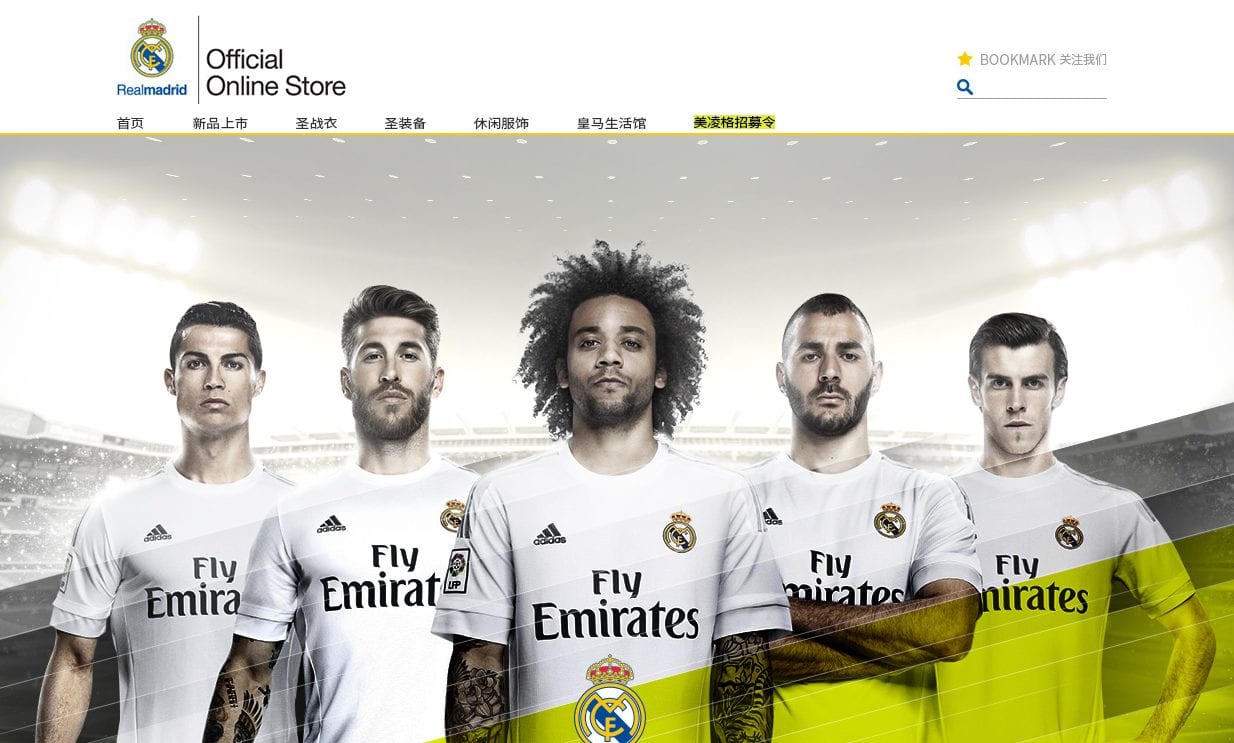
    Real Madrid, the world’s leading sports club and Tmall Global, an overseas platform and an extension of Alibaba Group’s B2C Tmall.com business in China, jointly announced today the launch of the official online Real Madrid store (https://realmadrid.tmall.hk) for consumers in China. This strategic partnership will allow consumers in China to enjoy a selection of the sports club merchandise including official player jerseys, club apparel for men, women, and children, and club memorabilia.

    The Real Madrid online store is another example of Alibaba Group’s strategy to bring premium foreign brands and products directly to Chinese consumers. Fans of Real Madrid can now directly purchase their favourite and genuine Real Madrid merchandise on the club’s Tmall Global online store.

    The partnership launch ceremony held in Guangzhou today was attended by Jeff Zhang, President of Alibaba Group’s China retail marketplaces, Florentino Perez, President of Real Madrid, and the team’s first string players. Widely known as the most valuable sports club in the world, Real Madrid will work together with Tmall Global to develop their business within China targeted at Chinese consumers.

    Jeff Zhang said: “As one of the world’s most recognizable and popular football brands, Real Madrid is the second football club that has reached a strategic cooperation with Tmall Global, closely following our collaboration with FC Bayern Munich in May this year. Real Madrid and Tmall Global will work together to promote the exciting world of international sport to the Chinese market. As part of our Tmall Global strategy, Alibaba is committed to bringing new cultural experiences and brands on to our China retail marketplaces and we will continue to work with European brands and municipalities to bring the world to Chinese consumers.”

    Florentino Perez said: “Today, we continue to reach out to this incredible country. Today we start a partnership that will strengthen our ties. The best club in the world, Real Madrid, is establishing a strategic alliance with Alibaba’s Tmall Global platform. Initiating this new path is an honour for us, and without a doubt, teams us up with the global player and absolute leader in global ecommerce. This strategic alliance allows us to launch the official Real Madrid store in China for more than 600 million consumers online.”

    The official Real Madrid store on Tmall Global offers a unique player fitting room interactive function so fans can choose outfits and products from their favourite players. In addition, the sports club also has a broad range of lifestyle merchandise from mouse pad and lunch box packs to embrace a complete lifestyle selection for fans to choose from. In the future, Tmall Global and Real Madrid will have special edition or exclusive products targeted for Chinese consumers.

    Real Madrid is the first club in the world to have opened offices in China, headquartered in the Beijing capital. With millions of Real Madrid fans in China, the club aims to reach new fans through Alibaba Group’s China retail platforms.

    About Tmall Global

    Launched in February 2014, Tmall Global (www.tmall.hk) is an overseas platform and an extension of Alibaba Group’s B2C Tmall business, which enables overseas merchants to enter China’s online retail market. By joining Tmall Global, merchants can conduct business from overseas without the need for physical operations within mainland China. International brands on Tmall Global benefit from the exposure to the hundreds of millions of visitors on Taobao Marketplace and Tmall.com. Through Tmall Global, Chinese consumers have access to a variety of branded products sourced and fulfilled from outside mainland China.
  • SMCP Group sales up 16 per cent

    SMCP Group sales up 16 per cent

    SMCP Group sales soared last year, reflecting the strength of the affordable luxury category and successful expansion in Asia.

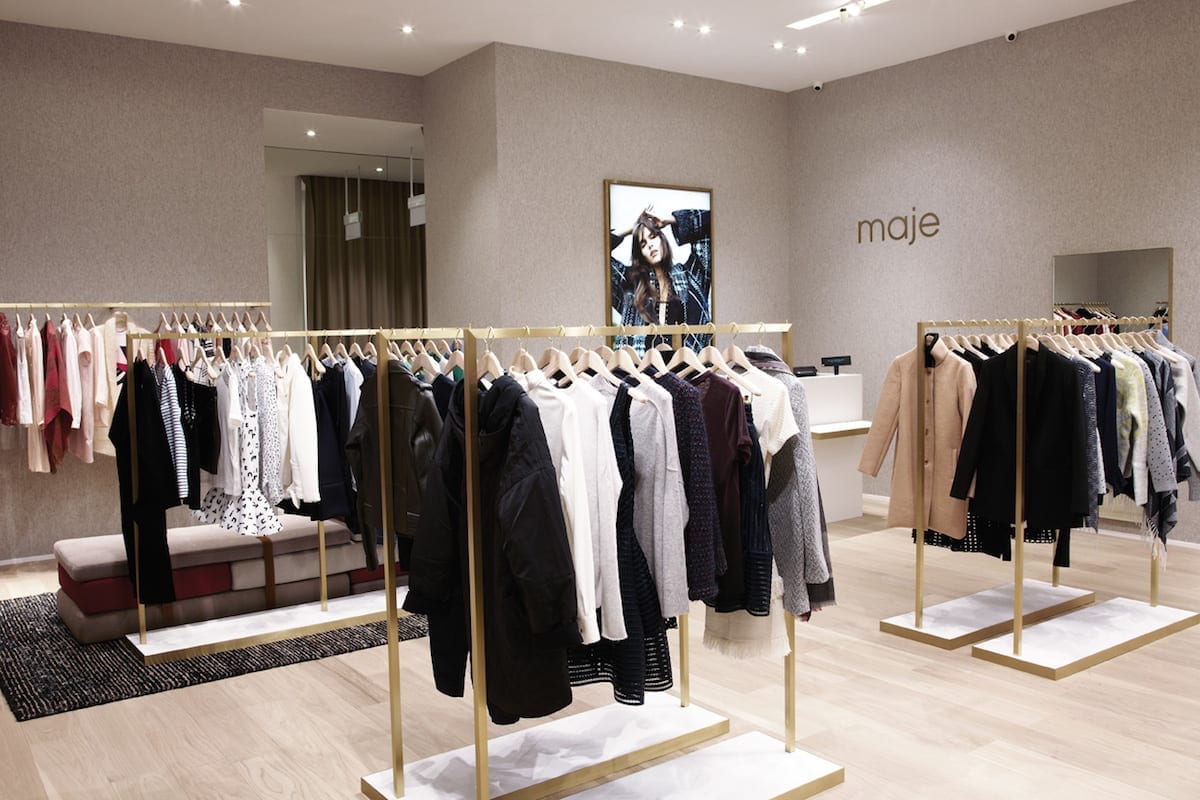
    The French fashion retailer achieved 16.4 per cent growth in sales to €786 million (US$844 million) last year. SMCP stands for its three fashion brands: Sandro, Maje and Claudie Pierlot.

    Like-for-like sales were up 7.1 per cent, which SMCP says was a reflection of market share gains as it outperformed rivals in the affordable luxury sector. Profit increased by 22 per cent to reach €130 million.

    SMCP’s e-commerce sales grew by nearly 80 per cent to represent about a tenth of group revenues. During the year the group launched two dedicated websites in China, Maje and Sandro on Tmall.com.

    The development of the accessories range is part of the group’s objective to make Claudie Pierlot, Maje and Sandro global lifestyle brands. Maje’s “M” bag was a hit last year, says the company, and sales of accessories rose by 42 per cent over the 12 months.

    Meanwhile, the group has formed a partnership this year with Mondottica to develop eyewear collections for the Maje and Sandro brands, completing the range of accessories after shoes and leather goods.

    A new concept for Sandro Homme stores was deployed in Greater China last year as part of the company’s international targeted expansion. There were 90 openings internationally during the year, including one on Fashion Walk in Hong Kong.

    Altogether, the company opened 105 stores over the year, ending with 1223 points of sale with its brands in 36 countries. SMCP says that consistent with previous years, it will introduce new points of sale at the pace of 100 to 125 a year.

  • Hard half-year for Luk Fook Holdings

    Hard half-year for Luk Fook Holdings

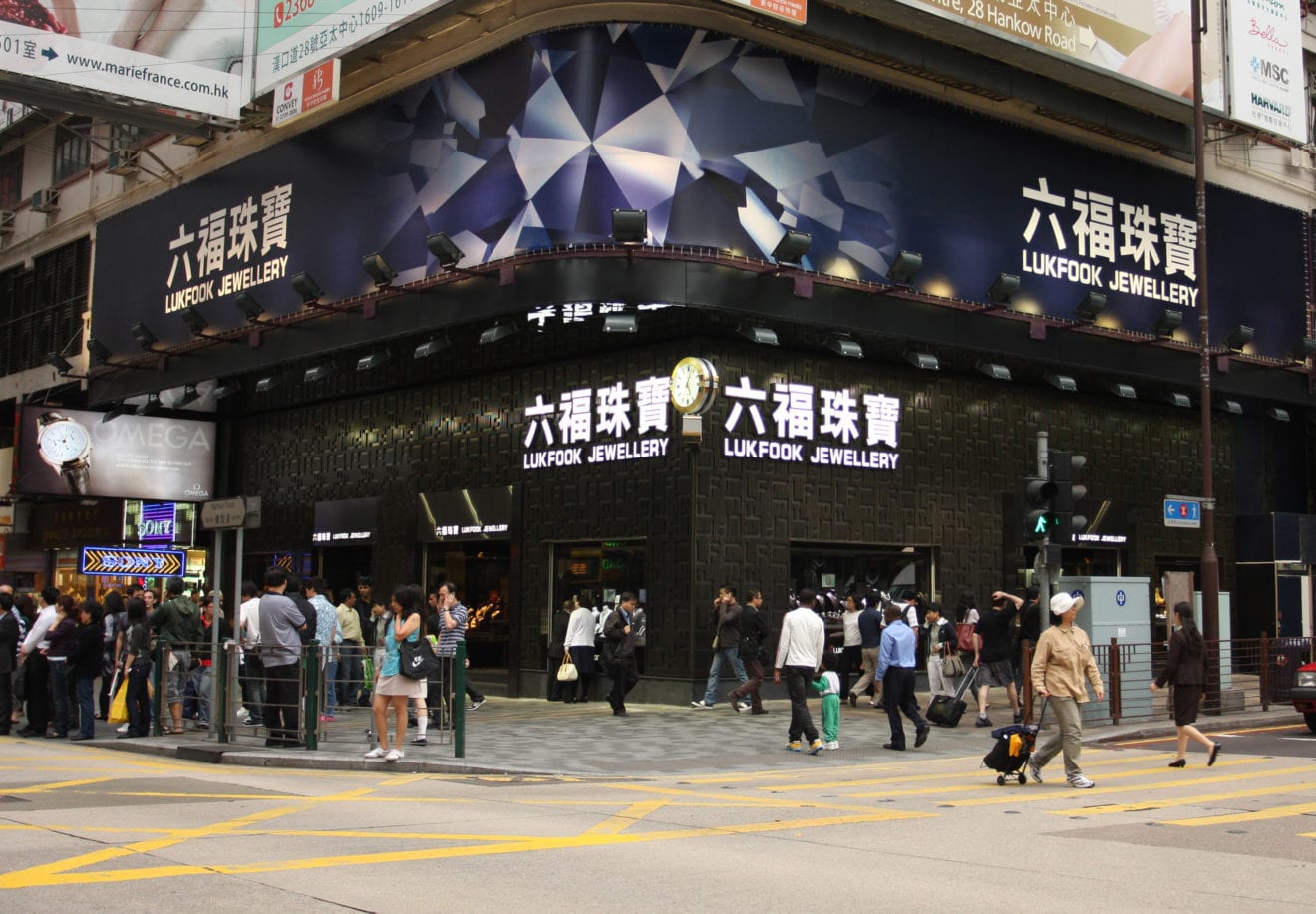
    Revenue plunged by 21.5 per cent for jeweller Luk Fook Holdings (International) to reach HK$5.5 billion (US$709 million) for the six months to September 30.

    Its interim results also show a drop of 31.5 per cent in overall same-store sales for the period.

    However, its overall gross margin improved by 5.3 points to 28 per cent as a result of a relatively high gold price and higher gemset jewellery sales mix. Because of this, the gross profit decreased by only 3 per cent to HK$1.5 billion.

    Mainland China accounted for 54.6 per cent of total profits, an increase of 12.8 points.
    With a lacklustre market, retail revenue in Hong Kong plunged by 33.4 per cent to $2.642 billion, while the wholesale business shot up by 51.1 per cent to $361.6 million because of an increase in scrap gold sales as well as wholesale rough diamonds.

    Luk Fook says a relatively high gold price saw gold sales fall more than expected.

    During the six months, the group added 27 Lukfook shops worldwide, including 24 in China (nine of them licensed shops), a self-run shop in both Macau’s casino district and New York,and  a licensed shop in Seoul. This brought its total to 1455 Lukfook shops (up from 1412 at the same time last year), spanning Australia, Canada, China, Hong Kong, Korea, Macau, Singapore and the US, as well as nine 3D-Gold shops (up from four) on the mainland.

    The group says it has been striving to diversify its product mix, and since 2010 has been trying to expand its mid- to high-end watch business. At the end of September is was the authorised dealer of 34 watch brands including Audemars Piguet, Bulova, Burberry, Bulgari, Emporio Armani, Eterna, Frederique Constant, Longines, Omega, Oris, Rado, Tag Heuer, and Victorinox Swiss Army.

    For the six months, the watch business contributed revenue of HK$104.49 million down from HK$119.39 million for the same period last year, representing 1.9 per cent of the group’s total revenue, a 12.5 per cent decrease.

    Looking ahead, the group aims to continue to develop its eCommerce business and to further strengthen cooperation with eCommerce platforms in China. At the end of September, the group had 15 online sales platforms in China, including JD.com, Suning.com, Tmall.com and VIP.com.

  • Tmall flagship store for Cosmax

    Tmall flagship store for Cosmax

    South Korean cosmetics developer/manufacturer Cosmax Inc is to run an online flagship store on China’s Tmall.com.

    It has signed an agreement with online retail giant Alibaba Group Holding to establish the eCommerce platform to distribute Korean beauty products across China.

    cosmax-tmall

    Under the contract, Cosmax will be Korea’s first multi-shop dealer for various cosmetics brands on Tmall.com, China’s largest third-party platform for brands and retailers.

    The launch of the Cosmax platform is expected to help expedite the China Food and Drug Administration (CFDA) hygiene approval process for Korean cosmetics companies.

    Cosmax, which entered China in 2003, has cosmetics factories in Guangzhou and Shanghai. It earned more than 200 billion won (US$181.1 million) in China alone last year.

  • Alibaba Wine & Spirits Festival planned

    Alibaba Wine & Spirits Festival planned

    An inaugural 9.9 Alibaba Global Wine & Spirits Festival will be held next week through Tmall.com.

    Alibaba Group will bring 100,000 international wines, cognacs, whiskeys and other beverages from 50 countries to Chinese consumers through Tmall.com.

    Brands such as Gallo Family Vineyards and Robert Mondavi Winery of the US, France’s Lafite and Japan’s Suntory Yamazaki will join winemakers from Australia, Italy, New Zealand and Spain in the first of what is expected to be annual shopping event on Tmall.

    Alibaba says hundreds of brands will make their China debut during the festival.

    Once a trend among China’s wealthy elite, wine has since caught on with the country’s estimated 152 million middle-class consumers. Growth is being driven by consumers in first-tier cities such as Beijing and Shanghai, as well as Chinese in their 20s, according to market researcher Wine Intelligence. The UK firm estimates that 48 million people in China bought imported wine last year, up 26 per cent from 38 million in 2014.

    Greater choice

    Wine Intelligence says eCommerce is bringing greater choice for wine buyers in a country where wine shops and other outlets are not common. Online distribution channels, as well as tariff-reducing trade deals with countries like Australia and Chile, have helped boost imported wine sales to 43.7 million nine-litre cases last year, a jump of 37 per cent over the previous year.

    Consumers are also drinking wine more frequently, says Wine Intelligence, with 35 per cent partaking on a weekly basis last year versus 23 per cent in 2014.
    Alibaba says Tmall saw the number of active buyers in the wines and spirits category climb five times to 10 million consumers between 2013 and 2015.

    Italian winemaker Gruppo Mezzacorona launched a flagship store on Tmall in June, five years after establishing brick-and-mortar sales channels in China including restaurants, hotels and supermarkets. Its country manager Nick He says that selling online via Alibaba marketplaces allows the company to reach parts of China otherwise not possible.

    Live video

    “We believe Tmall will really help us to reach every corner of China,” he says, Also, consumers who would typically have a smaller selection of wines at physical stores have access to most of the company’s wine inventories when shopping online.

    Gruppo Mezzacorona is planning to live-stream video from its wineries in Italy in the run-up to the sale, showing Chinese consumers how grapes are picked and the wine is made. There will also be tips on wine drinking as an interactive component allowing consumers to ask questions.

    Tmall has already launched marketing campaigns to generate buzz around the festival, including live auctions of rare and limited labels and live-streamed broadcasts with experts such as Château Valandraud founder Jean-Luc Thunevin and American wine critic James Suckling.

    Offline, about 5000 bars and pubs in China will support the festival with free tastings and distribution services.

  • Jewelry.com Selects VoyageOne to Expand and Sell Products in China’s B2C Online Marketplaces

    Jewelry.com Selects VoyageOne to Expand and Sell Products in China’s B2C Online Marketplaces

    Jewelry.com announced that is has chosen VoyageOne, a pioneer in B2C “cross-border” ecommerce solutions and services, to help launch its direct-to-consumer online expansion plans for China.

    With over 14 years in the industry, Jewelry.com is one of the foremost online retailers in North America. VoyageOne provides localized branding, online marketing, merchandising campaigns, operational support, a local entity with inventory in China and local customer service support.

    “We are very proud to have reached a strategic partnership agreement for the online presence of our products leveraging VoyageOne’s turnkey solutions and services,” said Ofer Azrielant, President of Jewelry.com. “One of the great untapped opportunities for us is China’s online marketplaces including worldwide leader, Alibaba’s Tmall Global. Now we are able to provide our jewelry assortment to online shoppers in China while empowering them to express their individuality and taste in an entirely new way.”

    “We quickly learned that VoyageOne has the technology, domain expertise and proven track record of helping U.S.-based retailers to quickly and efficiently deploy an online presence in China, enabling brands to sell products directly to consumers while preserving brand values. We are also excited to be part of the largest Tmall Global Single’s Day aka 11/11 which is the one the largest online events in the world” said Jon Azrielant, Director of Marketing for Jewelry.com.

    “Jewelry.com recognized the importance of leveraging an integrated turnkey B2C cross-border ecommerce platform, localized business practices and operational methodologies right from the beginning to pave the way for success in China.” said Dennis Zhang, Founder and CEO of VoyageOne.

    VoyageOne’s Ecom360™ is a proprietary solution that provides U.S.-based retailers and brands with cost-effective and streamlined access to China’s Direct-to-Consumer “cross-border” ecommerce and online marketplaces, enabling them to ship directly from their U.S. warehouse to consumers in China.

    “We’re extremely excited to partner with Jewelry.com to deliver memorable online shopping and customer service experiences for their new customers in China.” said Patrick Hoss, Sr. Vice President of VoyageOne. “Today, online shoppers in China can easily purchase their favorite jewelry from https://Jewelry.tmall.hk and receive their packages shipped directly from the U.S. to their doorsteps in a matter of few days!” added Hoss.


  • 11.11.2015: A new twist to Asian retailing’s biggest day

    11.11.2015: A new twist to Asian retailing’s biggest day

    China’s Singles Day – 11.11.2015 –  the biggest shopping festival in the world, will no doubt once again break international eCommerce records this Wednesday.

    But while watching numbers tick astronomically higher is exciting, retailers should be paying attention to what Alibaba is doing differently this year: omnichannel.

    For the first time, Alibaba is bringing part of Singles Day (also known as Double 11, or Guangun Jie) offline. It has promised that more than 1000 retail brands encompassing over 180,000 stores across 330 cities in China will join the 11.11 Festival.

    Customers will be able to price match in-store goods with TMall discounts. Some areas will be able to deliver products within two hours, essentially turning stores into distribution centres.

    Much like Alibaba’s 2014 mobile shopping push made mCommerce a “new normal,” you can expect 2015 to begin a boom in omnichannel. Retailers will do well to begin strategising through a smart integration of their physical stores and digital commerce now.

    Here are two guidelines to consider when reassessing how your physical and digital presences can complement each other in this new omnichannel world:

    Make the store a customer solution

    The consumer does not make a distinction between a brand offline and online – and neither should retailers. Physical stores create interesting opportunities to reduce customer friction points or quickly resolve customer problems. Extend in-store services to add incremental customer value or create a good atmosphere.

    We recently helped GrandVision, the world’s largest eyewear conglomerate, create a retail experience centered around eye care. They wanted to emphasize their medical-grade professionalism and commitment to demystifying eye care for consumers.

    Design points such as having an eye-testing facility placed in the middle of each store emphasises their dedication to this cause, and informational content placed across all digital channels means customers could empower and inform themselves across desktop, mobile or in-store digital panels.

    By consolidating all consumer interactions with GrandVision into one platform, everything from booking an eye exam to buying lenses have been made seamless both offline and on. The one view of consumers helps give store associates the tools they need to better understand customer motivations, provide support and make the store an integral part of customer interactions with the brand.

    Make your store experiential

    Retail used to be rooted in the transaction, but now that technology has decoupled transactions from physical spaces, retailers have tremendous freedom to build a memorable experience in stores.

    We helped Audi design an interactive experience for its flagship showroom in Beijing, using screens and responsive content to let customers cycle through endless customisations of their ideal Audi cars. The Audi City showroom cut down on costly retail rents while allowing Audi to showcase all inventory and imprint its brand message of “Vorsprung durch Technik (advancement through technology).”

    Physical store experiences properly integrated with digital are part of the equation for brand differentiation and continued relevance. Consumers go seamlessly from online to offline and back. Retailers need to learn to do the same.

  • 11.11.2015: Here’s what to expect on Wednesday

    11.11.2015: Here’s what to expect on Wednesday

    There are just days to go before Alibaba Group holds its 11.11 Global Shopping Festival. Merchants are laying on stock and pre-packing popular products to ready them for shipment. Delivery companies are training hundreds of thousands of temporary workers hired to help deliver the massive volume of parcels generated during the November 11 online sale, held on China’s Singles Day holiday.

    Consumers are gathering digital discount coupons for use during the 24-hour shopping frenzy, locking in deals in pre-sales events, and limbering up their clicking fingers. For members of China’s young and tech-savvy spending class, the 11.11 sale is a race against time as they log on at midnight to vie to complete web purchases for limited stocks of coveted products while millions of others are jamming the Internet trying to do the same. Last year, the total value of purchases on Alibaba’s websites blew past RMB 1 billion (US$157 million) in GMV just three minutes after the sale began. Twenty-four hours later, the total was $9.3 billion – enough to set a Guinness World Record.

    Will this feat be surpassed this year? China Post, the PRC’s postal service, estimates that 760 million packages will be generated by Singles Day sales held by all Chinese online-shopping websites on Nov. 11. That’s up significantly from 540 million packages produced last year, according to the post office.

    For its part, Alibaba Group – which started the sale in 2009 are runs China’s largest online marketplaces – isn’t making predictions. If past is prologue, though, then last year’s results might be indicative. Check out the infographic at the end of this story to see the 2014 sale highlights.

    This year, Alibaba is pushing its 11.11 festival in new directions by involving more international merchants and shoppers. The event will feature more than 6 million products from over 40,000 merchants and more than 30,000 brands from 25 countries, including the US, China, Japan, South Korea and European nations. Participating international brands include P&G, Unilever, Burberry, Estee Lauder, Zara, Huggies, Macy’s, Costco, Apple, Nike, Friso, Topshop, and Uniqlo, to name a few.

    Through Alibaba’s China and international marketplaces including AliExpress, its global B2C website, merchants will be selling directly to consumers in more than 200 countries and regions, according to Alibaba. Still, the company expects the majority of transactions to occur In China, where key product categories for the sale include baby and maternity, fashion and apparel, cosmetics, electronics and home appliances, health and nutrition, grocery, and fresh foods.

    Alibaba is also pushing several other initiatives for 11.11.

    The company has lined up brick-and-mortar retailers to participate through mobile and omnichannel commerce. More than 1,000 retail brands, with 180,000 brick-and-mortar stores in 330 cities across China, have joined the event. They’ll be offering smartphone-enabled shoppers a more integrated and interactive shopping experience whether shopping online or in participating stores. Omnichannel will also give merchants greater insights into customer demographics and shopping habits, according to Alibaba.

    Underscoring the trend in China toward shopping by smartphone instead of PC, nearly 43 per cent of sales took place on mobile phones during the 11.11 sale last year. mCommerce is expected to play an even bigger part this year. The sale will feature marketing campaigns for mobile shoppers, such as rewards of discount e-coupons to consumers who shake their phones while using the Taobao or Tmall mobile applications during promotional periods.

    Ordering the goods is one thing. Delivering them quickly is another. Alibaba’s logistics affiliate, Cainiao Logistics, is bolstering domestic and international shipping capabilities for the sale to ensure faster deliveries to consumers.

    Cainiao, the backbone of a network of 3000 logistics companies linked by centralised information platform, estimates that its partners will deploy more than 1.7 million delivery personnel, 400,000 vehicles, 5000 warehouses and 200 airplanes to handle deliveries for the sale. Cainiao has also launched a “Hassle-Free Logistics Service” consisting of 49 international delivery partners and 74 warehouses that can support 4 million cross-border package deliveries per day, the company says.

    This formidable infrastructure will soon be tested. The countdown to 11.11 has begun.

  • Tmall.com fresh food offer expanded for 11.11

    Tmall.com fresh food offer expanded for 11.11

    As Chinese consumers continue to upgrade their diets with food ordered online directly from international outlets, Tmall.com is gearing up for this year’s 11.11 Global Shopping Festival by offering a wider assortment of international food and beverages for the giant 24-hour e-sale.

    On offer at the Tmall.com fresh foods subsite (miao.tmall.com) is beef from Australia, apples from the U.S., pineapples from the Philippines, lobsters from Canada, avocados from Mexico, kiwi fruit from New Zealand, and crabs from Russia, along with a host of other overseas delicacies.

    Tmall has added wine to the mix: Overseas wineries that have recently opened Tmall virtual stores include California’s Robert Mondavi and Penfolds from Australia. Currently Tmall’s fresh food vertical has listings for more than 100,000 products from more than 70 countries and regions.

    For food and beverage companies participating in the 11.11 festival this year, the sale is less about discounts and more about opening Chinese consumers’ eyes to the high-quality foreign products that, thanks to cross-border e-commerce, they can buy direct from overseas by shopping on Tmall. It’s also a chance to raise brand awareness and introduce new products and trends to millions of Chinese consumers.

    “Our goal for 11.11 is to get Chinese customers to be more discerning,” said Pete Yu, business development manager for Dole (Shanghai) Fruits and Vegetables Trading Co, the international fruit brand’s branch in China. “While good at discovering delicacies, we hope they can also tell the quality of fruit and understand the significance of quality.”

    Dole launched its Tmall shop in September, 2014, offering a variety of fresh-fruit imports such as pineapples and bananas from the Philippines, pears from Belgium, oranges from Australia and longans from Thailand. During the Nov. 11 sale last year, the company completed 17,000 orders.

    Yu said that this year, Dole aims to offer consumers quality fruits at affordable prices, rather than try to shift huge volume at deep discounts.

    “We believe Chinese customers will gradually accept idea of being healthy, and will be willing to pay a slightly higher price for fruits that meet international standards” such as Dole’s non-GMO papayas, he said. He added that the company is satisfied with the progress Dole’s eCommerce business has achieved so far.

    “Like many other international brands in the fresh food industry, our growth is strong and steady.”

    Yu’s insights were echoed by Li En, deputy director of eCommerce at Ocean Family, which has been selling high-end fresh seafood including shrimps from Argentina and king crabs from Chile on Tmall since 2011.

    Ocean Family has a strong offline wholesale network reaching tables of many luxury restaurants and supermarkets, Li said. Selling direct to online shoppers through Tmall provides direct exposure to potentially millions of new customers around the country.

    “By offering the best products and services at reasonable prices on Nov.11, we want to attract more customers to try new products, building a virtuous circle,” he said.

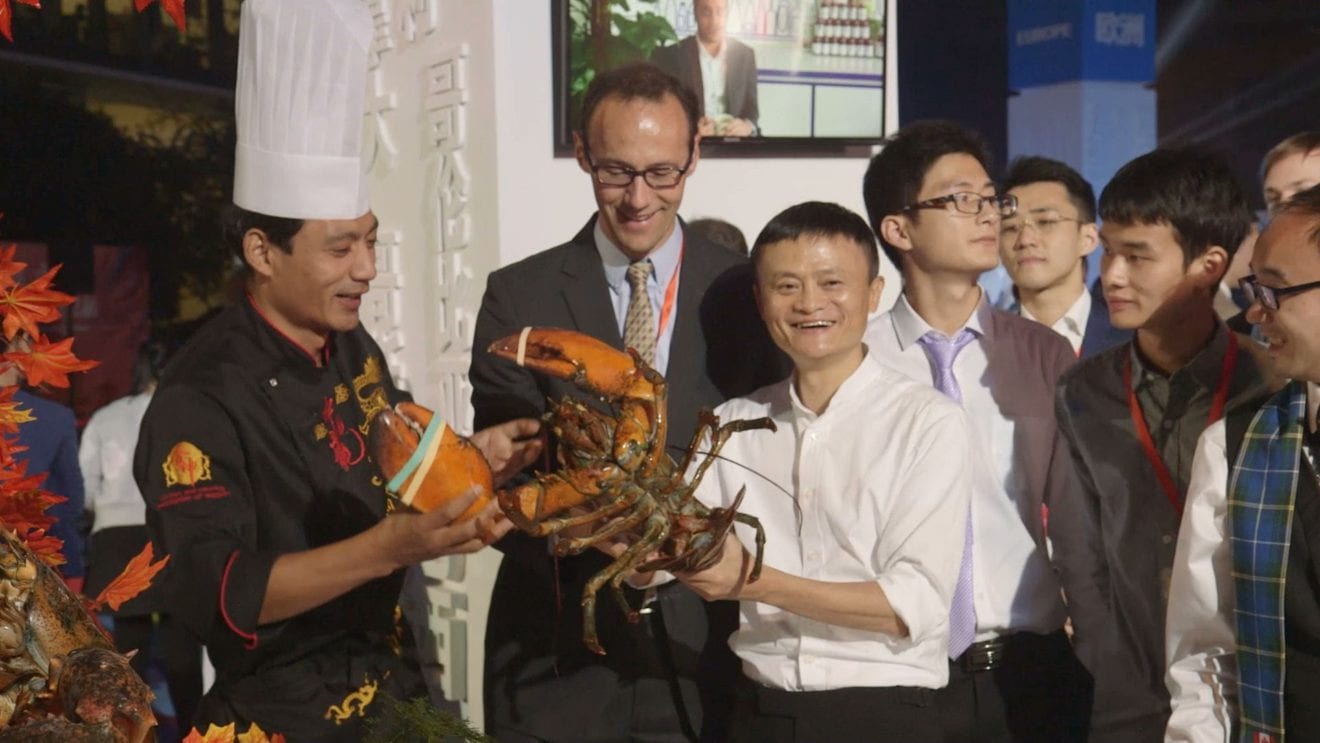
    Some food sellers join the 11.11 festival – the largest online sale in the world – to launch new products during a period of peak Tmall traffic. During a special 11.11 promotion last year, Tmall said it sold more than 90,000 live lobsters from Canada, which subsequently became a popular fresh food item sold on the site throughout the year.

    This year, crawfish from the US states of Washington and Louisiana are slated to make their China market debut.

    “Chinese people have the tradition of eating crawfish, but the water and habitat of crawfish have been polluted in China,” said Yu Zhongyan, CEO of Aichen (Shanghai) Trading Co, which runs a fresh food store on Tmall. Shoppers who order crawfish online during the 11.11 festival can expect to have the live crustaceans shipped by air and delivered directly to their homes within 48 hours.

    “We are confident that wild crawfish from the US will be welcomed by Chinese consumers,” Yu said.

    At this year’s 11.11 Global Shopping Festival kick-off ceremony, Tmall signed strategic collaboration agreements with fresh food associations and government bodies from 25 countries to facilitate fresh food imports. Cainiao, Alibaba’s logistics arm, and its partners can deliver fresh food to homes in more than 246 Chinese cities within 24 hours.

  • Alibaba launches sports company

    Alibaba Group’s expansion into non-eCommerce businesses such as movies and music took another step today as the group announced the establishment of a sports company, aiming to “transform China’s sports industry through Internet-enabled technologies.”

    The company, named Alibaba Sports Group, will be majority owned by Alibaba Group but has backing from Sina Corp., owner of China’s popular microblogging site Sina Weibo, and Yunfeng Capital, a private equity company founded by Alibaba Executive Chairman Jack Ma.

    Alibaba Sports Group will engage in sports media, events, ticketing and other aspects of the industry, leveraging Alibaba Group’s extensive e-commerce, digital entertainment, marketing, cloud computing and other Internet properties, according to an Alibaba press release.

    Alibaba’s Group CEO Daniel Zhang was named chairman of Alibaba Sports. Zhang Dazhong, a veteran of China’s new media and sports industry and a former vice president of Shanghai Media Group, will serve as CEO.

    “Sports has the enduring ability to create shared happiness and encourage healthy lifestyles,” said Zhang in the release. “Alibaba Sports Group aims to transform the China sports industry through the use of Internet-based technologies to bring greater and better products and services to consumers, sports participants and sports fans alike.”

    Alibaba Group’s online shopping site Tmall.com already hosts storefronts for merchandise sold by European football clubs Bayern Munich and Real Madrid. Last month, a documentary of NBA superstar Kobe Bryant was released through Alibaba’s Tmall Set-top Box. Alibaba also has a stake in China’s leading football club Guangzhou Evergrande.

  • Macy’s coming to China via Alibaba

    Macy’s coming to China via Alibaba

    One of America’s most iconic fashion retailers is coming to China.

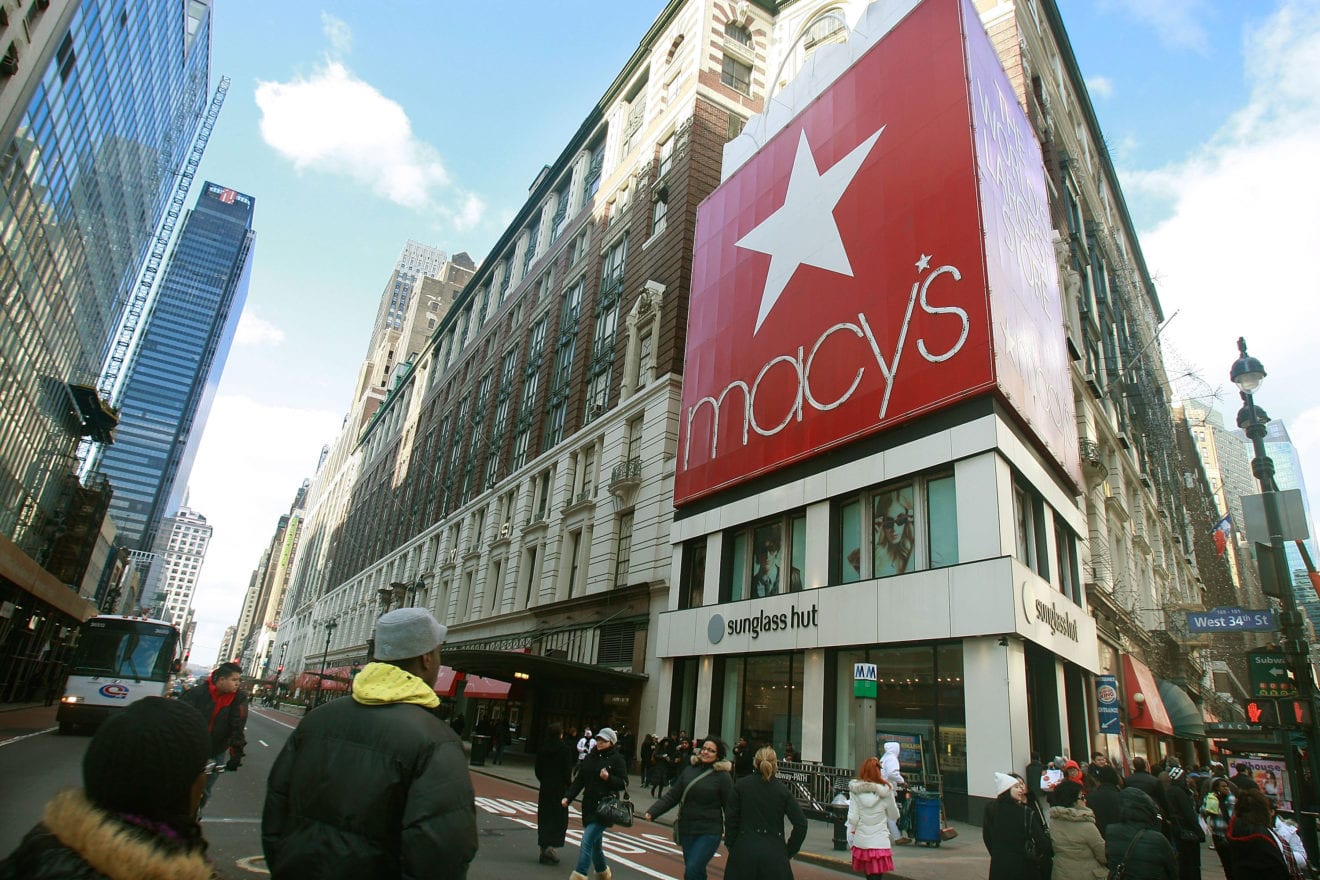
    A new joint venture agreement between Macy’s Inc. and Hong Kong-based Fung Retailing Limited was signed on Tuesday in Hangzhou to form Macy’s China Limited.

    The new company will launch an exclusive online flagship store on Alibaba’s Tmall Global in late 2015., providing authentic, high-quality Macy’s merchandise to shoppers in China. It will be the first US department store to join Alibaba’s Tmall Global.

    Tmall Global, on the other hand, will be the first and only third-party e-commerce platform in China providing apparel, fashion accessories and home products directly from Macy’s to consumers across China.

    “Millions of Chinese tourists have come to know and love Macy’s when they travel to New York, San Francisco, Chicago and other American destinations,” said Terry J. Lundgren, chairman and chief executive officer of Macy’s Inc. “By making Macy’s accessible in China through Alibaba’s Tmall Global, we have an opportunity to deepen our relationship with international customers and to grow sales.”

    Fung Retailing’s chairman, Dr. Victor K. Fung, said that with its affiliates, including LF Logistics, the company will fully support the activities of the Macy’s-Fung Retailing joint venture.

  • Alibaba counterfeit guide launched

    Alibaba counterfeit guide launched

    Alibaba Group has launched an English-language version of its online system for reporting intellectual property (IP) infringements that occur on its giant Chinese e-shopping marketplaces Taobao.com and Tmall.com.

    The system, called TaoProtect, is designed to make it easier for companies to report merchants who are selling counterfeit products on the Taobao and Tmall platforms, facilitating the efficient removal of infringing product listings. Through TaoProtect, companies can also file complaints for other IP violations such as copyright infringement, patent infringement and unfair use of trademarks.

    TaoProtect is similar to another IP-complaint system operated by Alibaba called AliProtect that covers global wholesale marketplace Alibaba.com, global shopping website AliExpress and China wholesale marketplace 1688.com.

    The debut of the English version of TaoProtect will make the system more accessible to Western companies, said Xinghao Wang, Alibaba Group’s U.S.-based senior intellectual property protection manager. “Because the success and integrity of our marketplaces depend on consumer trust, we have comprehensive policies and practices in place to fight IP infringement,” Wang said, including the use of data-analysis technology to monitor the sites for counterfeit-product listings.

    Due to the sheer size of Taobao and Tmall – Alibaba’s China retail platforms host some 10 million active sellers – the company also works with rights holders to make its efforts more effective. That’s where TaoProtect comes in, Wang said. By providing an online system for alerting Alibaba to infringement on Taobao and Tmall, Alibaba is better able to identify suspicious listings that may be missed by the company’s internal countermeasures, he said.

    Wang noted that filing a complaint does not automatically result in takedowns. To safeguard the rights of all parties, the TaoProtect process is set up to determine whether complaints are legitimate, and to ensure that Taobao and Tmall merchants who abide by the platforms’ established rules are not unfairly penalised.

    The reporting system helps serve a larger purpose, too, he said: “Information received through TaoProtect and AliProtect is an essential part of the rule-making effort, and the data in the reporting system may also be used in the monitoring system.”

    In the video, the founder of a US maker of innovative cutting tools explains how he uses AliProtect to keep copycats at bay.

    “The more popular your products are, the higher the likelihood that someone is going to be copying you at some point, that form of flattery that no one really wants,” says TJ Scimone of Slice. By using AliProtect, he says he successfully got knock-offs of his products “shut down (and) off the site.”

  • China’s Too Large for Retailers to Ignore

    When it comes to online retail markets, China is in a class by itself. The country is already home to the world’s largest e-commerce market, and there’s room for more growth.Chinese consumers are attaining middle class spending power at a historically unprecedented rate and using it to treat themselves to personal luxuries.

    That spending has made the country the world’s fastest growing “vanity goods” market—increasing by 15% year over year—for such purchases as high-end fashion and beauty goods, jewelry, and personal care items.China presents a vast growth opportunity for international retailers, and like any business expansion, requires a considered approach.

    It’s important to understand the market, its nuances and challenges in order to succeed.In 2013, online purchases accounted for 8% of the country’s total retail sales. E-commerce transactions totaled USD $305 billion that year, and Singles Day, the popular online shopping holiday in November, accounted for USD $5.7 billion of that total.

    E-commerce in China already outpaces that in the US, and within 5 years it’s expected to dwarf the combined online retail markets of the US plus the UK, France, Germany, and Japan.That booming growth is due in part to the rise in mobile phone usage among Chinese consumers, which helps them bypass brick-and-mortar shopping obstacles such as distance and traffic.

    It also owes something to Chinese internet-use habits. According to a McKinsey & Company report, Chinese internet users are online for as many as 6 hours more per week than the average US user, giving them more time to search for and purchase products.China is a huge nation with a middle class that will soon top 630 million people—more than 8 times larger than the US “Baby Boomer” generation that was once the world’s leading middle-class consumer demographic.

    According to McKinsey, only 4% of China’s urban residents were middle class as recently as 2000. By 2020, 75% of Chinese urbanites will have middle class status and newfound spending power.In general, Chinese shoppers like international brands and upscale goods, so offshore retailers have a certain cachet. French wines, American electronics, and Italian designer clothing are popular prestige purchases among Chinese shoppers.

    In a competitive market, your company’s “outsider” status can be an asset, especially if it’s backed up by excellent quality control and responsive customer service.Beyond that, experts recommend getting to know particular regions, rather than treating such a populous and diverse nation as a monolithic market. For example, McKinsey reports that certain cities are stronger markets for particular luxury items. By 2025, the firm expects Shanghai and Beijing to be among the top 20 global cities for upscale spirits consumption, while Hong Kong will rank first for luxury beauty goods, with Shenzen, Shanghai, and Beijing also in the top 20 for that category.

    Determine which cities and regions are a good match for your product line, and give serious thought to how you will market to those areas, as the most popular channels may be ones your company is not currently using.

    The McKinsey report on Chinese consumer internet habits makes the point that online video and instant messaging are more popular with Chinese online shoppers than email and search, which are prevalent in the US. Mobile sales accounted for 12% of all Chinese online sales in 2014, so all online efforts should be designed to display well on mobile devices.Promote sales timed to major in-country shopping holidays, such as Singles Day in the fall and the Lunar New Year in the spring.

    Shoppers expect deals at these times and will go elsewhere if your shop doesn’t provide them.As an online merchant, your customers can reach you from anywhere, but as the Australia China Quarterly points out, Chinese shoppers tend to prefer familiar outlets such as Tmall, Alibaba’s B2C platform. (For perspective, US e-tail giant Amazon recently opened a Tmall shop of its own.) If you sell from outside the country or use Tmall, you won’t need a Chinese business license, and that can save you time and money. The potential drawback for small merchants is the fee schedule. For Tmall Global, the fees include a USD $25,000 security deposit, in addition to annual fees and transaction fees.

    In order to save on fees and avoid tying up cash in a security deposit, offshore merchants always have the option to sell independently. To do so successfully, Daria said, “such merchants must seek out a payment services provider that supports multicurrency transactions and has established relationships with in-country banks and with UnionPay, which is the government-backed bankcard and interbank network for all of mainland China.”

    Globally, there are more than 3 billion UnionPay cards in use across 141 countries. A reliable and efficient shipping carrier is a must as well; look for one that can streamline the customs paperwork for your shipments into China.No matter what size your online business is, China is a market worth exploring. Capturing even a small percentage of this large and robust market can yield rewards now and in the future as China’s economy and purchasing power continue to grow.

  • Tmall.com promotes same-day grocery delivery in China

    Tmall.com promotes same-day grocery delivery in China

    Tmall.com, China’s largest business-to-consume platform and a unit of Alibaba Group, said on Friday that it has launched a CNY1 billion (USD161 million) online grocery promotional campaign targeted at Beijing users, and teamed up with Cainiao, the logistics affiliate of Alibaba Group, to offer same-day delivery services to Beijing city residents.

    Online grocery shopping is a rapidly growing e-commerce segment and a strategic area of interest for Alibaba Group. The convenience of online grocery shopping has already drawn in millions of users. According to Kantar Worldpanel, China’s FMCG (fast moving consumer goods) e-commerce penetration rate was 36 percent in 2014, while McKinsey states that 40 percent of Chinese consumers have bought food online.

    Tmall Supermarket will run its promotion three times a day, allowing Beijing-based internet users a chance to win “red packets” that subsidize their grocery purchases. The promotion will end by the end of this month.

    Beijing residents who order from Tmall’s supermarket before 11 am will be eligible for same-day delivery service. In the future, Tmall Supermarket and Cainiao plan to roll-out same-day delivery services to Shanghai and other Chinese cities.

    Jeff Zhang, President of Alibaba Group’s China Retail Marketplaces said Tmall Supermarket will draw on Alibaba Group’s complete e-commerce ecosystem – including Alibaba’s advantage in logistics, strength in online payments, big data and cloud computing, to bring consumers the most convenient and secure online shopping experience for quality products.

    Tmall Supermarket was established in 2012 and provides a one-stop shopping solution for Chinese users looking to purchase authentic food products, cosmetics, beverages, snacks, imported items, etc. In the past year, Tmall Supermarket’s Beijing area GMV soared more than 700 percent with 90 percent of consumers shopping on their mobile phones.

  • Tmall.com launches massive grocery campaign

    Tmall.com launches massive grocery campaign

    Tmall.com has launched a RMB 1 billion (US$161 million) online grocery promotional campaign targeted at Beijing users.

    The Alibaba eCommerce subsidiary has teamed up with Cainiao, the logistics affiliate of Alibaba Group, to offer same-day delivery services to Beijing city residents.

    Online grocery shopping is a rapidly growing eCommerce segment and a strategic area of interest for Alibaba Group. The convenience of online grocery shopping has already drawn in millions of users. According to Kantar Worldpanel, China’s FMCG (fast moving consumer goods) eCommerce penetration rate was 36 per cent in 2014, while McKinsey says 40 percent of Chinese consumers have bought food online.

    Tmall Supermarket will run its promotion three times a day, allowing Beijing-based Internet users a chance to win ‘red packets’ that subsidise their grocery purchases. The promotion will end on July 31.

    Beijing residents who order from Tmall’s supermarket before 11 am will be eligible for same-day delivery service. In the future, Tmall Supermarket and Cainiao plan to roll-out same-day delivery services to Shanghai and other Chinese cities.

    Jeff Zhang, president of Alibaba Group’s China Retail Marketplaces, said Tmall Supermarket will draw on Alibaba Group’s complete eCommerce ecosystem – including Alibaba’s advantage in logistics, strength in online payments, big data and cloud computing, to bring consumers the most convenient and secure online shopping experience for quality products.

    Tmall Supermarket was established in 2012 and provides a one-stop shopping solution for Chinese users looking to purchase authentic food products, cosmetics, beverages, snacks and imported items. In the past year, Tmall Supermarket’s Beijing area GMV soared more than 700 per cent with 90 per cent of consumers shopping on their mobile phones.