Retail News CRM

Tag: trust

  • Trust Bank: US Fractional Trading Comes to Singapore

    Trust Bank: US Fractional Trading Comes to Singapore

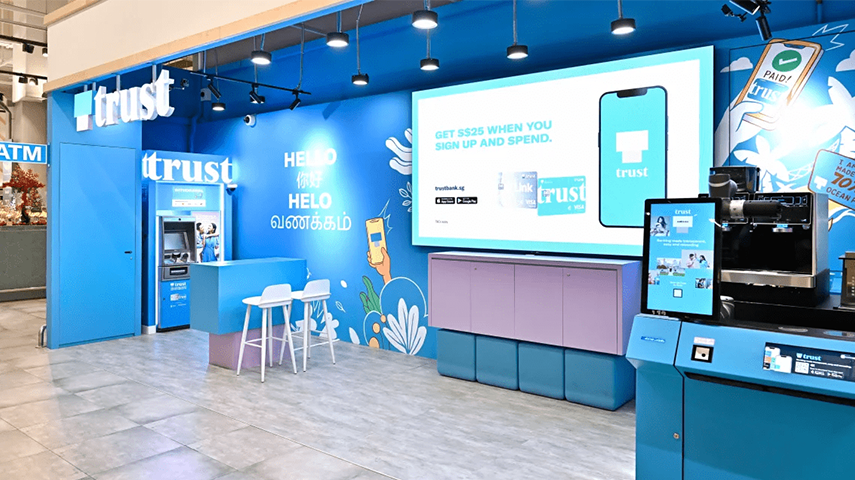
    Trust Bank is stepping into a new territory with the introduction of a trading platform for US stocks and exchange-traded funds (ETFs). This development makes Trust Bank the first in Singapore to offer fractional trading, thus offering everyday investors an easier gateway to the global marketplace.

    TrustInvest and Beyond

    In the early part of this year, Trust Bank rolled out TrustInvest, a tool aimed at simplifying the investing process and making it universally accessible. The digital banking institution is taking this promise a step further by launching a trading platform for US-listed stocks and ETFs within the Trust App.

    This innovative feature enables users to purchase and sell global equities directly within the app, creating an effortless path to investment, tracking, and increasing wealth all in one location.

    Leveraging Fractional Shares

    Trust Bank’s latest offering includes an outstanding feature: fractional trading. This facility allows customers to invest in fractions of high-priced stocks, thereby eliminating the need to invest large sums of money to own shares in their preferred companies.

    Trust Bank observes that some popular stocks and ETFs are priced over S$500 per share, but with fractional trading, even small investments can lead to building a diversified portfolio. This provision broadens the chance to access big-league entities like Netflix, Meta, or Apple for a wider range of investors.

    Diversification with ETFs and Sector Plays

    In addition to individual stocks, investors will have the opportunity to trade ETFs, offering a simple route to diversify their holdings. These funds amalgamate multiple assets – ranging from index trackers to sector-focused or digital asset portfolios – into a single investment. This strategy allows users to distribute risk while targeting specific themes or markets.

    All transactions take place within the Trust App, eliminating the need to transfer funds between different platforms. The entire experience is built to be straightforward, smooth, and secure.

    Open for Waitlist

    The waitlist for the new TrustInvest trading platform is now open for interested investors. Current Trust Bank customers can register directly within the app, while prospective users can open a Trust Savings account within a few minutes to start the process.

    Those on the waitlist will receive invitations to open trading accounts in the next few weeks.

    Empowering Every Investor

    Reflecting on the success of the initial TrustInvest launch, Dwaipayan Sadhu, CEO of Trust Bank, expressed enthusiasm about expanding the offering to allow customers to trade US stocks and ETFs. He emphasized that offering fractional trading will enable all customers to access a wide range of investments via a user-friendly and seamless banking app.

    This initiative positions Trust Bank as a pioneer in Singapore’s digital banking scene, drawing Wall Street closer to the everyday investor.

    Questions & Answers

    What is the new feature introduced by Trust Bank?
    Trust Bank has launched a trading platform for US stocks and ETFs within its app, making it the first in Singapore to offer fractional trading.

    How does the fractional trading feature benefit investors?
    Fractional trading allows investors to buy fractions of high-priced stocks, thus eliminating the need for large investments, and making the process accessible to a wider range of investors.

    How can investors join the waitlist for the new TrustInvest trading platform?
    Current Trust Bank customers can join the waitlist directly within the app, while new users can open a Trust Savings account to get started.

  • Apple faces a fineof $26.6 billion in antitrust probe

    Apple faces a fineof $26.6 billion in antitrust probe

    The Financial Times reports today that complaints made by music streamer Spotify against Apple will be investigated by the EU competition commission. The issue is the 30% cut of revenue that Apple charges apps in the App Store for using its payment system. Spotify calls this the “Apple Tax” and complains that it gives rival streamer Apple Music an unfair advantage. The complaint was originally lodged in March. While Apple takes 30% from Spotify and other music subscription services, it doesn’t charge other apps like Uber.

    If the EU rules in favor of Spotify, it can force Apple to change its business practices on the continent and fine Apple up to 10% of the company’s global revenue. In Apple’s case, the fine could total as much as $26.6 billion. Most likely, Apple and the EU competition committee will work out a settlement with the company promising to lower or end the so-called “Apple Tax.”

    Both Apple Music and Spotify have similar monthly subscription rates, with both charging $9.99 a month for an individual subscription, $14.99 a month for families with up to six members, and $4.99 a month for verified students. However, because of Apple’s 30% cut, in the App Store Spotify charges $12.99 a month for individuals, $16.99 a month for families and $7.99 a month for verified students. Unlike Apple, Spotify does have a free tier of service that is ad-supported, although it doesn’t allow users to download music or select individual songs.

    Just last week, Spotify announced that it grew the number of its paying Premium tier subscribers by 32% year-over-year during the first quarter. The company now has 100 million paying subscribers and 117 million who use the free ad-supported service. At last count, Apple Music had 56 million paying subscribers worldwide. However, in the states, it is Apple Music on top-barely. Just recently, the Wall Street Journal said that in the U.S., Apple Music has 28 million paying subscribers compared to 26 million for Spotify.

    A lawyer at Clifford Chance that helped Spotify file its complaint, Thomas Vinje, said that there are other music streamers that agree with Spotify’s position. However, Vinje says that these other companies are “too afraid to take on Apple.” Back in March, Apple responded to the charges by pointing out that Spotify used the App Store to grow its business over the years without making any contributions to it in return.

    “After using the App Store for years to dramatically grow their business, Spotify seeks to keep all the benefits of the App Store ecosystem — including the substantial revenue that they draw from the App Store’s customers — without making any contributions to that marketplace. At the same time, they distribute the music you love while making ever-smaller contributions to the artists, musicians, and songwriters who create it — even going so far as to take these creators to court.
    Spotify has every right to determine their own business model, but we feel an obligation to respond when Spotify wraps its financial motivations in misleading rhetoric about who we are, what we’ve built and what we do to support independent developers, musicians, songwriters and creators of all stripes.”-Apple

    Apple has been fined before by the EU’s competition commission. In 2017, commissioner Margrethe Vestager ruled that Apple had to pay 13 billion Euros ($14.6 billion USD) in back taxes. The commission found that a tax deal Apple had with Ireland was actually considered to be illegal state-aid from the country.

  • CRCT and CapitaLand to divest their interests in CapitaMall Wuhu

    CRCT and CapitaLand to divest their interests in CapitaMall Wuhu

    CapitaLand Retail China Trust (CRCT) and CapitaLand today announced that their respective subsidiary and associate have entered into an agreement to divest their combined 100% interests in a company, which owns CapitaMall Wuhu, to an unrelated third party.  The transaction is based on the company’s adjusted net asset value, including but not limited to its interest in CapitaMall Wuhu of RMB210 million (about S$41.5 million).

    Mr Tan Tze Wooi, CEO of CapitaLand Retail China Trust Management Limited, said: “The divestment of CapitaMall Wuhu is in line with our proactive asset management strategy to optimise CRCT’s portfolio and enhance returns.  As our 51% stake in CapitaMall Wuhu accounts for less than 1% of CRCT’s asset size, its sale is expected to have minimal impact on CRCT’s core business.  The sale proceeds will provide CRCT with greater financial flexibility to take advantage of market opportunities.  We remain on the lookout for strategic opportunities to reconstitute and strengthen our portfolio.”

    Mr Lucas Loh, President (China & Investment Management), CapitaLand Group, said: “The sale of CapitaMall Wuhu will unlock capital that can be redeployed to core assets in cities where CapitaLand enjoys scale and competitive advantage.  We will stay disciplined in our capital recycling efforts and continually review opportunities to optimise CapitaLand’s portfolio, which include divestment of assets that are non-core or have limited growth.”

  • Employers are more trusted than government,

    Employers are more trusted than government,

    New Zealanders trust their employers significantly more than they trust the government, NGOs, business or the media, according to the 2019 Acumen Edelman Trust Barometer.

    According to the report, “my employer” was more trusted (74 per cent) than government (50 per cent), NGOs (48 per cent), business (47 per cent) and the media (34 per cent).

    This is the result of trust in other institutions remaining flat, while trust in employers is on the rise. The finding aligns with the trend of employees seeking out purpose in the their jobs and organisations shifting away from being ‘customer-first’ to being ‘employee-first’.

    Acumen Republic’s chief executive Adelle Keely said organisations should see this finding as an opportunity to play a more critical role in the lives of their employees, and reap the benefits of loyalty and productivity.

    “Employees are looking for trusted sources of information in a time of change and disruption and there is an opportunity for employers to provide education and useful insights that help them navigate the new world,” she said.

    Keely noted there is a growing expectation for business leaders to step up as change-makers, with three-quarters of employees wanting CEOs to take the lead on change instead of waiting for government to impose it. This is 15 points higher than last year, she said.

    “Employers need to lead on change, address workers’ concerns, provide information and equip employees for the future. They should demonstrate their relevance and contribute to the communities where they operate. This is particularly important for those not headquartered in New Zealand.”

    Interestingly, there is a gender divide in trust in institutions, with women being less trusting than men. Women trust only government, while men have trust in both business and NGOs.

    “Trust in business shows the biggest gender divide. This is likely the result of lack of female representation and reporting around pay equity and the #metoo movement,” Keely said.

  • Mixed quarter for CapitaLand Malaysia Mall Trust

    Mixed quarter for CapitaLand Malaysia Mall Trust

    In a third quarter of mixed results, CapitaLand Malaysia Mall Trust (CMMT) saw its net property income fall 2.2 per cent year on year to RM60.1 million (US$14.1 million).

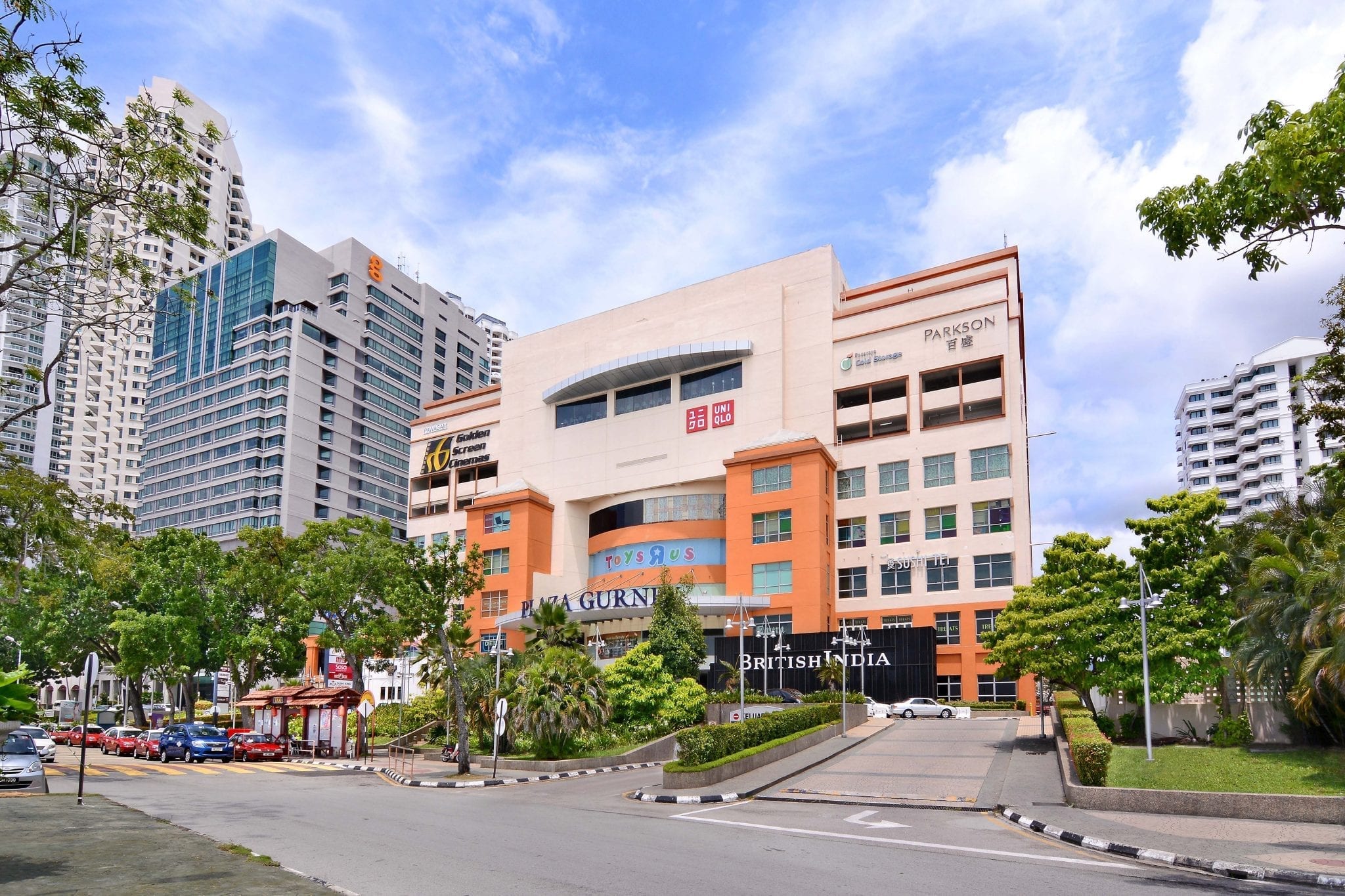
    East Coast Mall and Gurney Plaza turned in stronger performances to partially mitigate lower contributions from the trust’s Klang Valley shopping malls.

    Cautious consumers and growing competition from new malls have affected Malaysia’s retail sector, says chairman David Wong of CapitaLand Malaysia Mall REIT Management (CMRM), which manages the trust.

    “Our Klang Valley malls continued to be affected by the increased supply of retail space in the vicinity,” says CMRM CEO Low Peck Chen.

    She says a reconfiguration of the basement level at Gurney Plaza to increase the F&B offering is expected to contribute to income from the fourth quarter.

    “At Tropicana City Mall, a Japanese restaurant was added to the standalone F&B cluster

    adjoining the office tower. Another restaurant will join the cluster next month to make a total
    of four F&B outlets, all of which have extended hours past midnight to better meet the needs of consumers.

    “Shoppers at The Mines will also find more shopping and entertainment choices on Level 4 following reconfiguration works.”

    Meanwhile, a rejuvenation of the 40-year-old Sungei Wang Plaza is expected to start soon.

    “During the quarter under review, we organised several family-oriented experiential marketing
    activities to enhance the shopping experience, which drew more visitors to our malls.”

  • SGX Welcomes Dasin Retail Trust To Mainboard

    SGX Welcomes Dasin Retail Trust To Mainboard

    Singapore Exchange (SGX) welcomed Dasin Retail Trust to Mainboard under the stock code “CEDU”.  

    Dasin Retail Trust is the first SGX-listed China retail property trust providing direct exposure to the fast-growing Pearl River Delta region.  Dasin Retail Trust’s principal investment mandate is to own, develop or invest in land, uncompleted developments and income-producing real estate in Greater China, used primarily for retail purposes, as well as real estate-related assets initially focused on retail malls. The Trust has an initial portfolio comprising three retail malls strategically located in Zhongshan City in the People’s Republic of China.

    Yang Bin, Chief Executive Officer of Dasin Retail Trust Management Pte. Ltd., the trustee-manager of Dasin Retail Trust, said, “We are pleased to celebrate Dasin Retail Trust’s successful listing on the SGX-ST as the first mainboard listing in 2017. Our defensive asset portfolio offers a mix of stable and growth assets, which offer investors cash flow stability and strong growth potential. Backed by the vast economic growth opportunities in the Pearl River Delta region, strong consumer spending culture, standard of living in the region and the Sponsor’s strong fundamentals, we are confident of the portfolio’s potential to provide unitholders with attractive returns from regular distributions and long-term income growth.”

    Simon Lim, Head of Equity Capital Market (Sectors), SGX, said, “We are delighted to welcome Dasin Retail Trust as the first Mainboard listing in 2017. This listing offers investors a proxy to invest in China’s growing retail market through our robust business trust framework.”

    The listing of Dasin Retail Trust brings the total number of SGX-listed REITs and property trusts to 43, with a combined market capitalisation of about S$70 billion.

    Dasin Retail Trust opened at $0.805 today.

  • E-retailers must offer personalized services to win customer trust

    E-retailers must offer personalized services to win customer trust

    With its uniquely young population, the lack of big-box retail and unmatched digital adoption rates, Southeast Asia’s e-commerce market is growing much faster than the global rate.

    A report by Google and Singapore investment company Temasek forecasts that the e-commerce market in Southeast Asia will grow from $5.5 billion in 2015 (0.8 percent of the total retail market) to US$87.8 billion in 2025 (6.4 percent of the total).

    According to the report, Singapore’s e-commerce market was valued at $1 billion in 2015, with online shopping making up 2.1 percent of retail sales. By 2025, Singapore’s e-commerce market is expected to make up 6.7 percent of all retail sales, at a value of $87.8 billion.

    Unique characteristics, unique challenges

    While digital adoption in Southeast Asia is exceptionally high, the industry has some unique characteristics and faces some unique challenges.

    Southeast Asia’s later uptake of digital technology means that e-commerce ventures in the region have the luxury to learn from others’ mistakes made in mature e-commerce markets like the US and China.

    What we are seeing is a compressed timeframe of e-commerce business model development, with the established evolution from classified sites like Craigslist through C2C (eBay, Taobao), B2C (Amazon, JD.com), B2B2C (Amazon, Tmall, Lazada) to Brand.com (Estee Lauder, Nike) happening faster and in many cases, simultaneously.

    This pattern is very much influenced by consumer preferences and online behavior. The region is a unique e-commerce market. Consumers here are leapfrogging technologies. Outside of tier-one cities, many have bypassed PCs, accessing digital platforms primarily through mobile phones.

    In Thailand for example, 85 percent of consumers not living in major metropolitan hubs use mobile devices for their online purchases.

    While in mature e-commerce markets desktop C2C still plays a pivotal role, Southeast Asia’s leapfrogging towards mobile is disrupting traditional, desktop-first marketplaces. Mobile-only C2C marketplaces like Carousell and Garena-backed Shopee are making aggressive moves against their older desktop counterparts like Tarad in Thailand and Tokopedia in Indonesia.

    Kicking the tyres on social media

    As a result of this fragmentation, shoppers are more likely to head first to search engines when looking for products as opposed to checking company websites. They show little loyalty to retailers and shop via social media. More than 80 percent of Southeast Asia’s digital consumers use social media such as Instagram to research and review products.

    Since sales via social media comprise up to 30 percent of all transactions, companies are rapidly expanding their services to attract consumers. The message to retailers is that the game changer will be the use of data to build real relationships with customers.

    Capture the data – then interpret it

    Beyond ease of purchase and the ability to consult the opinion of other consumers, e-commerce has revolutionized the way information about a retail customer’s journey to purchase is captured.

    Today, such information is captured on a more individual basis. E-commerce enables retailers to know what particular customers looked for, how they reached the site, what they bought, and even associated and abandoned purchases.

    Reconstructing the customer’s journey was difficult when the sole purchasing channel was the physical store and the only traceable element the purchase. At best, the customer was only identified at the checkout, which militated against personalized recommendations.

    Thanks to a better understanding of the journey to purchase, e-commerce has made it possible to better understand customer behaviour and react in real time. Distributors have considered applying these concepts across all sales channels – stores, call centers, etc. So, retailers today are challenged with fully understanding the customer journey across each one, while benefitting from greater accuracy.

    This is not easy. Depending on the channel chosen by the customer, the knowledge obtained by the seller is not the same: as we know, while at the checkout, the customer will only be recognized if they own a loyalty card or have already visited the store. But, in the latter case, it will be extremely complex to make the link with past purchases.

    Similarly, a website may enable the collection of data on the intention to buy but it is extremely difficult to correlate these events with the purchasing transactions if they are not made online and in the same session. The stakes are high, given that 78 percent of consumers now do their research online prior to making a purchase .

    Talend suggests that one solution is to integrate sensors into the elements that constitute a customer’s purchasing journey, then analyze and cross-reference this data to extract information from it.

    Some of our customers are already engaged in this process. It all usually begins with a detailed analysis of the customer’s online journey, to collect information on intent, cross-reference it at an aggregated level with actual purchases, at the catchment area level, for example, to determine correlations and refine segmentations.

    Then, this information is cross-referenced for a second time with transactional data from the physical stores and the website, which enables us to map the customer’s journey from intention to buy to the purchase or beyond. Thirdly, it’s a matter of developing a recommendation system in real time throughout the customer’s journey to drive increased sales and greater loyalty.

    Value-added services

    The main future challenge facing distributors lies in the value-added services that they may be able to provide to customers, to accompany their products or service offering. Consumers have learned to be wary of digital technology. More than ever, they will only be inclined to share information on their intentions and their profiles if their trust has been gained and they can perceive the benefit in it.

    How do you create this trust? Via value-added services: when consumers see that their interests are being considered, they do not feel constrained or trapped by a commercial logic that is beyond them.

    Amazon, with its “1-Click” ordering, has shown the way. In other sectors, such as the taxi industry, newcomers have gone even further, revolutionizing the customer’s journey by utilizing digital technology, from searching for a service to payment through a range of innovative services that make the customer’s life easier, such as the automated capture of expense forms.

    In a world in which advertising and tracking are increasingly present, data analysis carried out with the sole aim of commercial transformation is doomed to failure, as it is based on an imbalance between the benefits offered to the customer and those gained by the supplier. Until now, personalization in retail has tended to limit itself to marketing and measure itself in conversion rates, except for distributors, who have increasingly relied on customer loyalty.

    Multichannel is not the invention of the distributors but a reaction to consumers’ wishes. Think about it, even Amazon is going to start opening physical stores. Why? Because it has fully understood that a key element was missing in its bid to become better acquainted with its customers’ journey, while responding more effectively to their wishes.

  • Can CapitaLand Mall Trust survive 2016’s volatile equity market?

    Can CapitaLand Mall Trust survive 2016’s volatile equity market?

    CapitaLand Mall Trust (CMT) is poised to dominate the retail REIT scene in 2016, with positive rental reversions and increased tourist arrivals playing to its favour.

    According to a report by RHB, CMT is likely to enjoy mid single-digit (about 5%) positive rental reversion in 2016 as encouraging trends are expected in CMT’s tenant sales (psf/month) and traffic flow at its malls.

    “In the recent reported quarter, the retail REIT reported an upward trend in tenant sales, a 5.3% YoY increase for FY15. With this, we think that the retail landlord is in a better position to command higher rental rates this year,” asserts RHB.

    Moreover, an anticipated pick-up in tourist arrivals is seen to spur consumer spending in malls. This bodes well for CMT, as its malls are located near tourist attractions such as Plaza Singapura, Bugis Junction and Clark Quay.

    RHB also thinks that the expected recovery of Singapore tourism could be boosted by positive catalysts like lower airfares, a busier year for events, and an anticipated climb in Chinese tourists visiting Singapore.

    Further, there’s still room for CMT to exercise a capital recycling strategy given that it currently owns non-core assets such as JCube and Sembawang Shopping Centre.

    RHB further notes that on top of this, CMT handles its portfolio favourably. For instance, CMT recently parted ways with its non-core asset Rivervale Mall, which was estimated to be divested at a attractive cap rate of about 3.4%. Compared to the average cap rates for retail assets, independent real estate company CBRE estimated 4Q15 average cap rates to range from 4.75% to 5.25%.

    “In addition, we advise investors to take up CMT as it is highly liquid, which may be especially advantageous in the current volatile equity market,” states RHB.