Retail News CRM

Tag: tycoon

  • Thai Beer Tycoon Dismisses Family Exec Following Brothers Abuse Claims

    Thai Beer Tycoon Dismisses Family Exec Following Brothers Abuse Claims

    A prominent member of Thailand’s Bhirombhakdi family, known for their control of Singha Beer, was dismissed from the family’s business empire due to allegations of sexual abuse. The dismissal followed several days of public controversy ignited by the allegations.

    A Family Rift

    Siranudh Scott, an environmental activist from the Bhirombhakdi family, accused his elder brother of sexually abusing him during his teenage years. Scott announced these allegations in an emotional video posted on his Facebook page. He claimed that his family was aware of the abuse, citing a taped confession as proof, but took no action against it.

    Scott expressed his disillusionment with his family, stating his unwillingness to be identified as a Singha heir and his desire to distance himself from a family that he felt lacked empathy for him. Scott, a marine conservationist known for his work with his group Sea You Strong in southern Thailand, is the son of a Scottish father.

    Company Response

    Following the allegations, the family’s business conglomerate, Boonrawd Brewery Company, announced the dismissal of Sunit, Scott’s brother, from all his positions within the company. In a statement, the company expressed regret for Scott’s experiences and declared their cooperation with authorities in ongoing investigations.

    The statement was given by the company’s CEO, Bhurit Bhirombhakdi, who is also a cousin of the two men. Bhurit additionally shared a letter from Sunit, in which the accused resigned from all his duties until the matter could be thoroughly investigated and resolved. Although Sunit has denied the allegations of sexual abuse, he admitted to instances of rough play between boys.

    The Bhirombhakdi family, who are identified as Thailand’s fifteenth wealthiest family by Forbes, with an estimated net worth of $1.75 billion, have interests extending beyond Singha Beer. They are also engaged in food manufacturing, hotel operations, power, and property.

    Questions & Answers

    What led to the dismissal of a member from the Bhirombhakdi family’s business empire?
    The dismissal occurred following allegations of sexual abuse made by Siranudh Scott against his elder brother, Sunit, which stirred public controversy.

    Who announced the dismissal from the family’s business empire?
    CEO Bhurit Bhirombhakdi, the cousin of the two men, announced the dismissal in a statement.

    What are the other business interests of the Bhirombhakdi family?
    Apart from Singha Beer, the family’s business interests include food manufacturing, hotels, power, and property.
  • Sushi Tycoon ‘Tuna King’ Shells Out Record $3.2M for Massive Bluefin at Tokyo’s Prestigious Auction

    Sushi Tycoon ‘Tuna King’ Shells Out Record $3.2M for Massive Bluefin at Tokyo’s Prestigious Auction

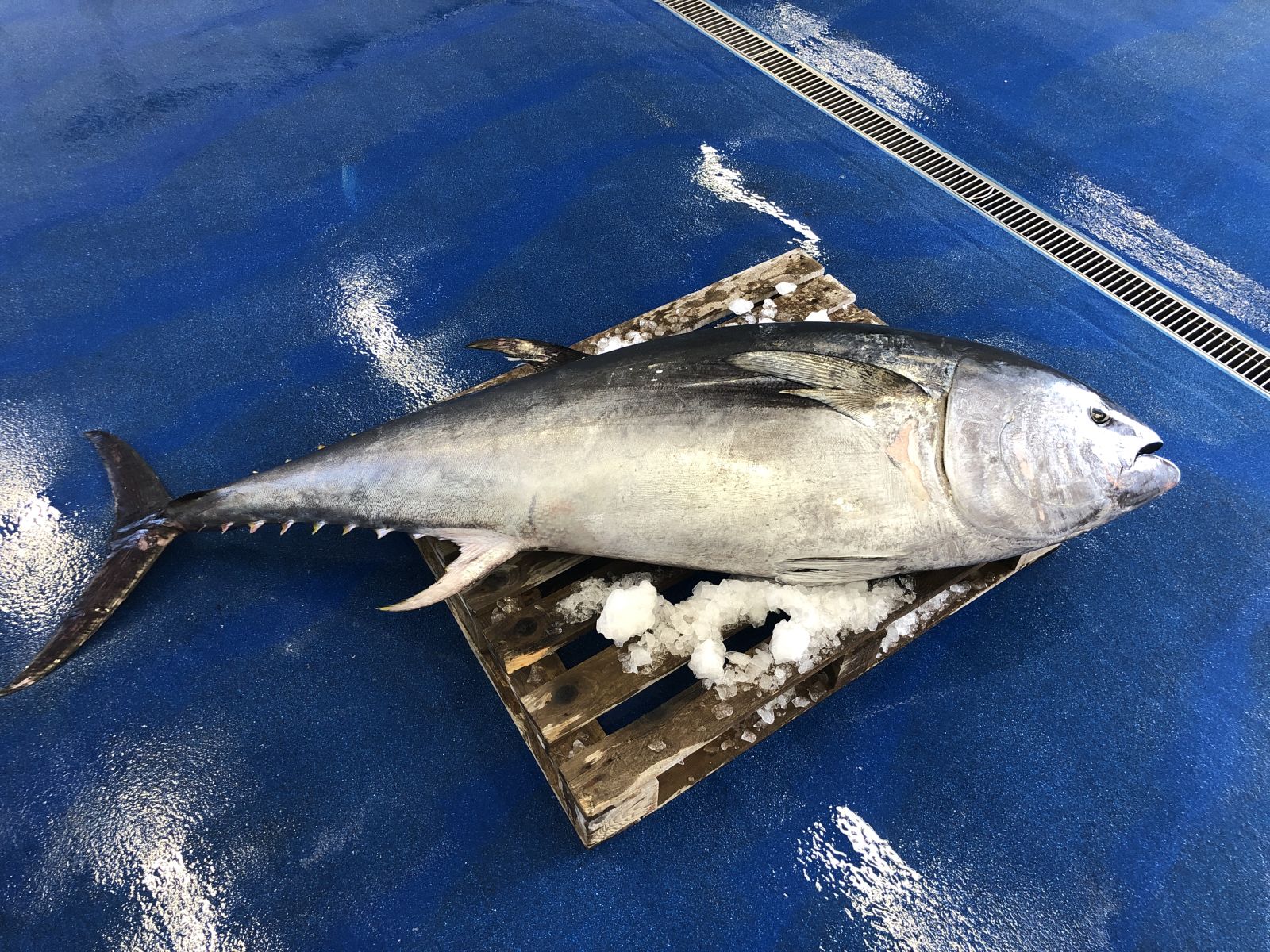
    A sushi entrepreneur from Japan, who goes by the moniker “The Tuna King”, set a new record when he purchased a colossal bluefin tuna for an unprecedented 510.3 million yen (approximately US$3.25 million) at an auction held on Monday.

    Record-Breaking Purchase

    Kiyoshi Kimura, the owner of a chain of sushi restaurants, emerged as the highest bidder at the esteemed annual New Year auction in Tokyo’s primary fish market. The 243-kilogram tuna that fetched this record price was caught off the northern coast of Japan.

    Kimura candidly expressed his surprise at the rocketing price of the fish. “I had hoped we could secure the fish at a somewhat lower cost, but the price escalated rapidly,” Kimura revealed in the wake of the predawn auction at Tokyo’s main fish market.

    Auspicious Tuna to Usher in the New Year

    Despite the staggering cost, Kimura remained optimistic about his purchase. “The price certainly caught me off guard…but I am hopeful that the consumption of this lucky tuna will invigorate as many people as possible,” he asserted to journalists.

    As the president of Kiyomura Corp., the Tokyo-based company operating the Sushizanmai sushi restaurant chain, Kimura showcased the 243-kilogram bluefin tuna at his flagship restaurant in Tokyo on January 5, 2026, following the New Year’s auction at Toyosu fish market.

    Historical Highs of Tuna Prices

    This auction price is the highest on record since data regarding such figures started being compiled in 1999. The previous record was 333.6 million yen, paid for a 278-kilogram bluefin tuna in 2019, after the fish market relocated from its traditional Tsukiji location in central Tokyo to a more modern facility.

    Last year’s highest bid was 207 million yen for a 276-kilogram bluefin. After this year’s auction, the hefty tuna was promptly prepared into sushi and sold for around 500 yen (about US$3) per roll.

    Customer Reactions

    Diners at one of Kimura’s restaurants in Tsukiji were delighted to partake in such an auspicious meal at the start of the year. “Having had the privilege of eating something so fortunate as the year begins, I feel like I’ve started the year on the right note,” shared 19-year-old Minami Sugiyama. Another patron, a 40-year-old Shinto priest named Kiyoshi Nishimura, shared a similar sentiment, praising the taste and texture of the tuna.

    Effects of the COVID-19 Pandemic

    During the COVID-19 pandemic, the New Year tuna prices plummeted to only a fraction of their regular peak prices as restaurants reduced their operations. However, the purchase of the bluefin tuna this year signals a potential recovery and brighter future for the Pacific bluefin industry.

    Questions & Answers

    What is the highest price ever paid for a bluefin tuna?
    The highest price ever paid for a bluefin tuna was 510.3 million yen (approximately US$3.25 million), by entrepreneur Kiyoshi Kimura in 2026.

    Who is Kiyoshi Kimura?
    Kiyoshi Kimura, also known as “The Tuna King”, is the president of Kiyomura Corp. and the owner of the Sushizanmai sushi restaurant chain in Tokyo.

    How has the COVID-19 pandemic affected the tuna industry?
    During the COVID-19 pandemic, prices for New Year tuna decreased significantly because restaurants had to scale back their operations.

  • Vietnam electronics tycoon sets up new investment group

    Vietnam electronics tycoon sets up new investment group

    Pham Van Tam, the founder of electronics firm Asanzo, has set up the Winsan Group, a $43 million enterprise to invest in electronics, dental, and food ventures.

    Tam recently announced a new role as chairman of the Winsan Group Investment Joint Stock Company, which will function as a financial investment company for small and medium enterprises (SMEs).

    Winsan is like a ‘power pump’ for businesses that have great potential for scaling but lack financial resources and management experience, he said.

    Unlike the model launched by Asanzo last year with a focus on electronics and hardware startups, Winsan expands the portfolio to other areas including dentistry, consumables, and food and beverages.

    In addition to funding, the group will also support SMEs to recruit talented employees and leading experts for senior positions, facilitating breakthroughs and reducing the failure rate in a competitive market.

    Tam said that Winsan was a step towards expanding the ecosystem out of household electronics. The name Winsan is inspired by the term win-win concept in modern business, hoping to bring victory for both sides when cooperating, he explained.

    The company’s initial capital is estimated at VND1 trillion ($43 million), 70 percent of which will be invested in technology – electronics businesses.

    In the first phase, we will select SMEs with products serving the majority of average consumers, low-income employees. This tight criterion will help optimize capital investments, Tam said.

    Industrial real estate and logistics are also important investment portfolios that Winsan will promote in the near future, he added.

    E-commerce presents great opportunities amid the ongoing Covid-19 pandemic, creating added momentum for industrial real estate and logistics to meet the need to lease factories and warehouses. The shift by multinationals to produce in Vietnam is another positive sign, he said.

    The Asanzo founder said that he’d been covering the investment group model for about three years as he witnessed the increase in business efficiency when empowering young directors to manage production.

    Many of these people are trained abroad in the corporate governance of developed industries with the capacity to formulate medium and long-term strategies. In addition to capable personnel, market data analysis helps accurately forecast business situations, reduce inventory lines, and cut costs while ensuring a proactive supply of goods corresponding to market demand.

    At first traditional distributors complained about challenging import regulations when applying new quality and processes. But after a while, they found that these adjustments bring positive effects. The goods are shipped quickly and meet customers’ taste, creating satisfaction on both sides, Tam said.

    Tam also appreciated young talents when interacting with them through start-up projects, like the Startup Viet competition organized by VnExpress, which urged him to establish this investment model instead of concentrating on just one enterprise.

    Tam also aims to draw in foreign partners who have worked with Asanzo for several years, thereby creating a large-scale investment fund, accessing and supporting a variety of business models.

    With a strong capital base, we will enhance the search for suitable products with local elements, understanding local consumers, then create new brands that make a real mark on the market.

  • The Powerful Tycoon You Have Never Heard of Before

    The Powerful Tycoon You Have Never Heard of Before

    Many billionaires have no problem flaunting their wealth, whether through naming skyscrapers after themselves, yacht parties on the other side of the world, fancy ostentatious car collections and private jets, fake rehearsed smiles on camera and lots of media coverage.  But a subset prefers the trappings of obscurity, content to preside over their empires away from the public’s gaze.

    Reading the recent Entrepreneur piece on Calvin Lo, the CEO of R.E. Lee International and Founder of R.E. Lee Capital, one theme emerges: he hates fame.  Even though Forbes estimates Lo’s personal networth at $1.7 billion, he manage to elude any wealth rankings and live his life in what seem like secrecy.


    Life insurance tycoon Calvin Lo, CEO of R.E. Lee International. Photograph: Apple Daily Hong Kong

    The intriguing thing about Lo is not that he’s a billionaire, but a billionaire who managed to slip under the radar for so many years.  Like many wealthy people, he is very private, avoiding public scrutiny of any sort. Hong Kong media describes Lo, known as 盧啟賢 in Asia, as “supremely private” because he doesn’t need a glitzy public persona to help impress anyone, and because he loathes self-promoting egomaniacs.

    That is not uncommon among the upper echelon of the world, where it’s better to be anonymous and rich than loved and famous. That is the hierarchy in the finance culture: the more important you are, the less you need to be seen.

    Garden-variety fame? That is a nasty symptom of being very wealthy that unfairly puts you in the same category as reality TV stars. Those who work at the top of their industry are not that, certainly not in their minds.  That sort of fame is like a skin rash that needs to be treated. And as with all things billionaires, that treatment comes by throwing money at the problem. Not only does Lo never allow his picture be taken in public, there are reports that he has attempted to buy up the rights to photographs of himself, limiting their availability.


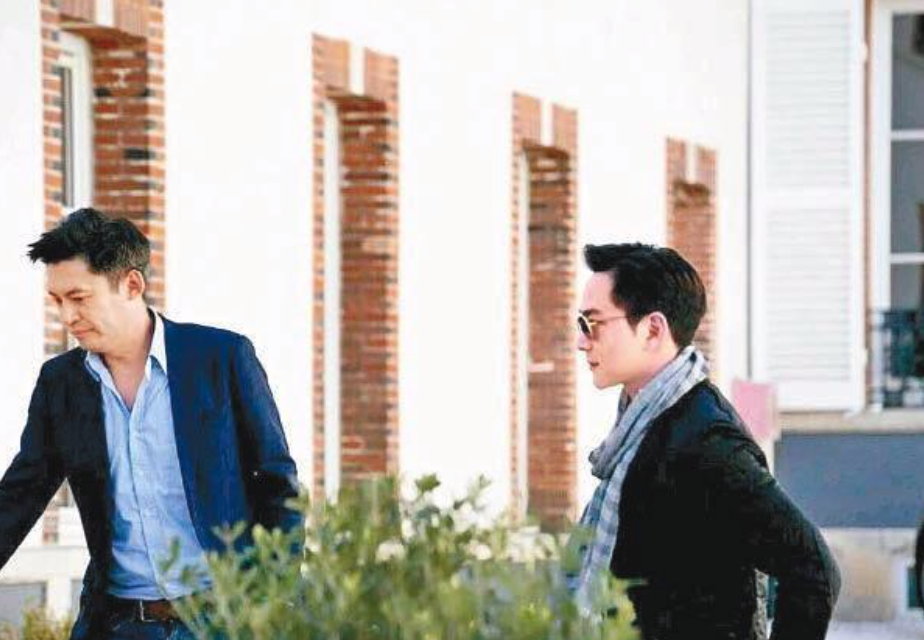
    The rarely seen Lo (right) travels with his own security whenever possible. Photograph: Apple Daily Hong Kong

    Many in the financial sector have a similar policy, especially top CEOs.  They flee from cameras, flee from being interviewed, and certainly flee from ever being on Page Six.  Unflattering news, unflattering photos, are either bought with money, or buried via legal action. But even media-shy billionaires will occasionally surface in the public eye.  Earlier this year, Lo was romantically linked to Hong Kong actress Bernice Liu, better known as 廖碧兒, and it piqued the interest of many people across Asia. After all, everyone loves a fairytale story where an unknown billionaire and a famous former beauty pageant can go hand in hand.  With the combination of extreme wealth, good looks and killer work ethics, it’s safe to say Lo and Liu redefined the meaning of “power couple” making them a perfect match. But true to form, Lo never did any interviews or made any statements regarding the matter.

    Hong Kong actress Bernice Liu (left) romantically linked to media-shy billionaire Calvin Lo (right). Photograph: Oriental Daily

    The distaste of fame often morphs into outright secrecy, especially amongst the mega rich.  If fame is a sign of weakness then secrecy is a sign of success. True masters of the markets don’t need anyone else’s help. They can divine the secrets behind the frenzy of blips on the screen, finding the hidden order in randomness, and turning that into gold. If you think you have that secret it’s nonsensical to tell others about it for free. Much better to charge huge fees to share in the benefits of your special knowledge. People on TV giving investment advice? Either they are fools who don’t know anything and pretend to know it all, or they’re fools who know something and are giving it away for free. Either way, fools.

    Every generation or two produces a mysterious, behind-the-scenes tycoon of enormous power and influence, fundamentally different from even the wealthiest corporate titan. Lo is most certainly one of them who is mastering and reshaping entire economic landscape right under all our noses.

    Editor’s note: This article originally appeared on The London Economic