Retail News CRM

Tag: UnionPay

  • Discovery Japan Mall opens online

    Discovery Japan Mall opens online

    Tokyo-based craft products retailer DigitalStudio has launched Discovery Japan Mall, a cross-border eCommerce venture.

    Specialising in Japanese brands, the mall’s initial catalogue includes mainly toys, fishing gear, cosmetics, food, watches and fashion. About 100 Japanese companies have opened stores on the mall, offering about 15,000 items.

    Shipping is available to more than 120 countries and regions, and as part of the opening campaign free international shipping is offered for orders worth JPY 20,000 (US$190) or more until the end of this month.

    As well as credit cards, the mall supports payment by AliPay, PayPal, UnionPay and WeChat. The website is available in English, simplified and traditional Chinese, Indonesian, Korean and Thai. Purchases can be made by smartphone, and all orders include tracking and shipping insurance, plus delivery from Japan.

    Discovery Japan Mall representative Norio Itabashi says many hidden Japanese products do not reach the overseas market, and the mall is working with craftsmen and manufacturers to sell unique products.

    DigitalStudio was established in 2003 with the aim of “continuing to bring Japan to the world”.

  • Singapore Golden Week targets shoppers

    Singapore Golden Week targets shoppers

    Singapore Retailers Association (SRA) is launching the inaugural Singapore Golden Week (SGW), a lifestyle event to be held over three weekends from September 30  to October 16.

    Its aim is to heighten Singapore’s appeal as a lifestyle destination with a suite a retail privileges, shopping reward and pampering experiences as enticement.

    Global payment network UnionPay is the official card for the event, with special privileges for cardholders across more than participating outlets including retail, F&B, beauty and wellness, and hotels and attractions.

    As well as exclusive discounts, cardholders are offered gifts when making purchases at participating merchants using their cards. The merchants involved include department stores Isetan Scotts, Metro and Robinsons, clothing labels Dockers, Dorothy Perkins, Karen Millen, Levi’s, TM Lewin, Topman, Topshop and Warehouse; and attractions such as the Alive Museum.

    There is also a game in which cardholders can win shopping vouchers and prizes worth more than S$10,000 (US$7388) in all, based at Ion Orchard.

    Visitors – not just cardholders – are also welcome at the UnionPay Golden Pampering Lounge in Ion Orchard’s atrium, which offers gourmet coffee and free-flow gourmet cookies.

    Cardholders can access the VIP area, which has massage chairs plus gourmet coffee sprinkled with edible gold dust.

  • The Great Singapore Sale 2016 Registers 15% Growth in Spend

    The Great Singapore Sale 2016 Registers 15% Growth in Spend

    UnionPay, the Official Card for The Great Singapore Sale (GSS) 2016, has revealed that total spend in Singapore by UnionPay Cardholders grew 15 percent during the 10-week-long event held from 3 June to 14 August 2016. The increase was contributed by the surge in UnionPay card usage by both locals and tourists during the GSS 2016 period, and boosted by the rise in card issuance in Singapore, and around the world.

    Locally, UnionPay registered significant growth in spend among locally-issued cards. Total spend by locally-issued UnionPay cards and transaction count doubled over the same period last year. The growth in spend can be attributed to the rise in acceptance of UnionPay cards by merchants in Singapore, which has improved from over 70 percent merchant coverage last year, to over 80 percent now.

    On the overseas Cardholders’ front, tourists from China, Hong Kong, Macau, Korea and Indonesia contributed to the bulk of the growth, signifying that UnionPay’s expansion across key markets in Asia has helped to boost tourist spending in Singapore during GSS 2016. Comparing performance across retail categories, the Supermarket and F&B categories registered the largest percentage growth.

    “We are delighted to see positive spending momentum among our local and overseas UnionPay Cardholders during GSS 2016. This growth marks the continued appeal of Singapore as a choice shopping destination for locals and visitors, and puts us on the right track to continue the growth momentum in our partnership with the Singapore Retailers Association for GSS. We are committed to further improving our acceptance coverage in Singapore to better serve our Cardholders here,” said Mr. Wenhui Yang, General Manager of UnionPay International Southeast Asia.

    “Singapore Retailers Association is glad that our new partnership with UnionPay International has generated increased spending among its overseas and local cardholders at the Great Singapore Sale 2016. The numbers are indeed encouraging, and show that the collective efforts of SRA, UnionPay and the industry to give UnionPay Cardholders more reasons to spend during the GSS have brought new growth opportunities to participating retailers. Looking ahead to the GSS 2017, we look forward to working with UnionPay and the industry to continue to grow the appeal of the GSS to both tourist and local consumers,” said Mr. Anthony Gan, Executive Director, Singapore Retailers Association. 

    UnionPay International focuses on supporting the growth of UnionPay’s global payments business. With an acceptance footprint covering 160 countries and regions globally, UnionPay serves the world’s largest cardholder base by providing quality, cost-effective and secure payment services to over 5.4 billion Cardholders worldwide.

    In Singapore, UnionPay enables efficient and cost-effective payment services that are tailored to the needs of local businesses and consumers. UnionPay cards are issued by Bank of China (BOC), DBS Bank (DBS), Industrial and Commercial Bank of China (ICBC) and United Overseas Bank (UOB) in Singapore, and are accepted at over 80 percent of retail, lifestyle and food and beverage establishments locally, as well as at almost all automated teller machines (ATMs) across the island. In May 2016, UnionPay announced its partnership with Singapore Retailers Association announced as the new Official Card for the Great Singapore Sale from 2016 to 2018.

  • Public Bank to Launch UnionPay Card in Malaysia

    Public Bank to Launch UnionPay Card in Malaysia

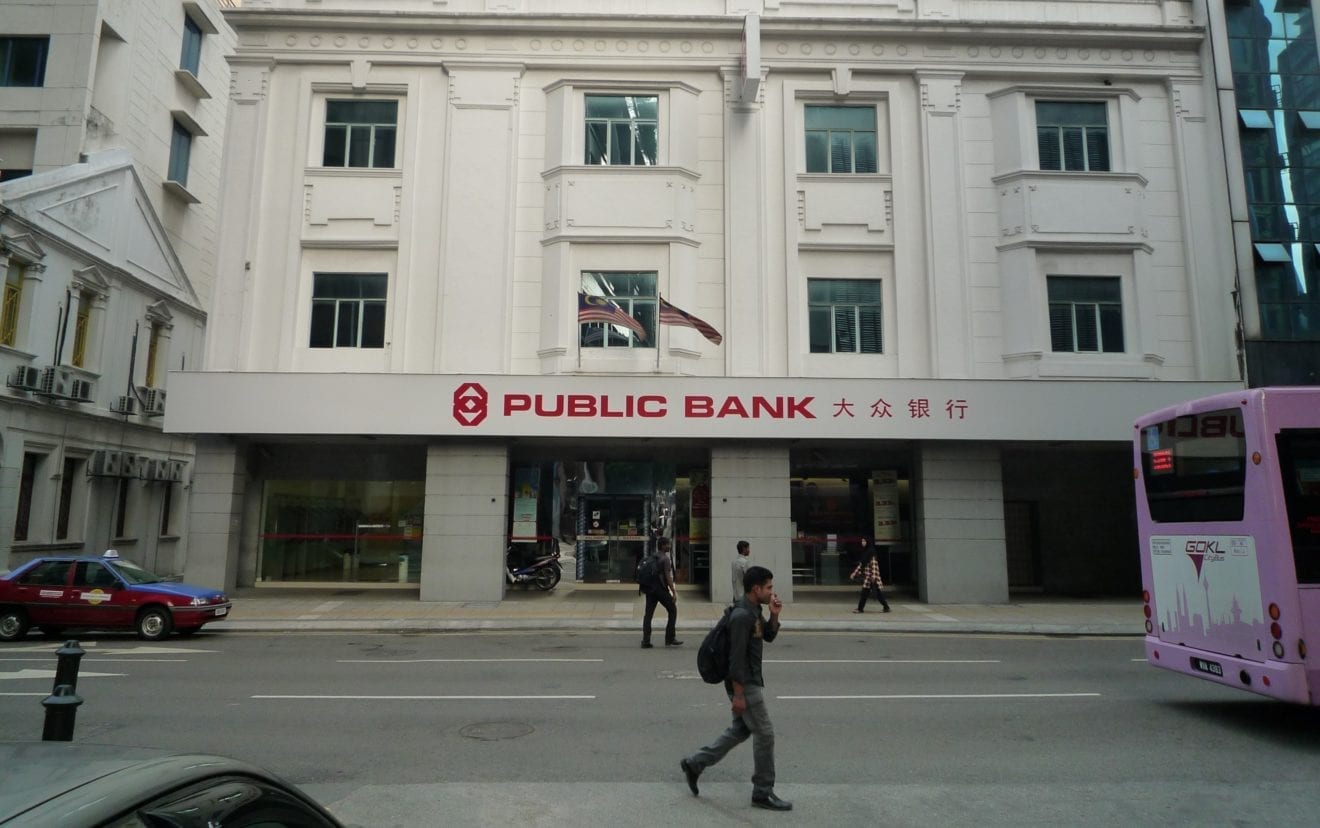
    Public Bank, Malaysia’s third largest bank and UnionPay International, a global payment network signed an agreement for UnionPay Debit Card Issuing Business today. With this partnership, Public Bank will be the first local bank to issue UnionPay card in Malaysia by Quarter 4 of year 2016.

    PB UnionPay Lifestyle Debit Card and PB UnionPay Savings Account will be launched to cater to the needs for customers and businessmen who frequently travel to China with the convenience of cards over carrying large amounts of cash.

    UnionPay’s acceptance across 160 countries and its full acceptance in China encourage Malaysian who travels often, expatriates and inbound students and workers from China to take up these bundled products.

    In Malaysia, UnionPay cards issued locally and overseas are accepted at over 90% of ATMs whilst 60% of merchants accept payments by UnionPay cards.

    The agreement was signed between Public Bank’s Managing Director, Tan Sri Dato’ Sri Tay Ah Lek and UnionPay International’s Chief Executive Officer, Mr Cai Jianbo at Menara Public Bank with the presence of other management staff of Public Bank and officials of UnionPay International.

    Commenting at the launch, Tan Sri Dato’ Sri Tay said, “Being the first local bank in Malaysia to launch UnionPay card once again proves that Public Bank is focused in progressing and improving our core retail business to enhance our customers’ banking experience. It is also a great pleasure in partnering with UnionPay International to offer our customers another new payment option.”

    Concurring on the significance of this partnership, Mr Cai Jianbo said, “Malaysia is one of the most important market for UnionPay, with 90% UnionPay card acceptance on ATM, and 60% at POS. This MOU signing with Public Bank Berhad will serve to provide a strong foundation as we continue to localise our business in Malaysia. UnionPay will enable more merchants and increase UnionPay POS acceptance to 90% by end of 2017. We will also issue more cards with local banks, provide more local privileges to improve services and convenience for Cardholders. For innovative payment, we will expedite the launch of e-wallet payments and build an 020 payment ecosystem.”

  • UnionPay expands card issuance and acceptance in Thailand

    UnionPay expands card issuance and acceptance in Thailand

    UnionPay, an international payment network, continues its expansion in Thailand with the announcement of two new card issuing banks. From June 2016, Kiatnakin Bank and Land and House Bank will join Bangkok Bank, Bank of China (Thai), ICBC Thai, Kasikorn Bank, and Krungthai Bank in issuing UnionPay debit and credit cards.

    Acceptance of UnionPay cards is also on the increase, with near complete nationwide coverage of ATMs and almost 90% of merchants now accepting UnionPay cards. This includes a wide variety of merchants and Thai cardholders can pay using their UnionPay debit or credit card at large department stores, airports and downtown duty-free shops, hotels and tourist attractions, as well as everyday spend merchants like convenience stores, chain supermarkets, cinemas and restaurants.

    “Thailand is a very important market for UnionPay International and we are delighted to see there are increasingly more opportunities for consumers to shop and pay using their UnionPay cards. We are intensifying our efforts to meet growing demand by expanding our acceptance network and enlarging our issuance scale both locally and regionally. In Thailand, we are bolstering card issuance by expanding our debit and credit portfolios rapidly to meet the specific demands of the market, and the addition of new card issuing banks will will offer more choices to Thai consumers and businesses. We are delighted to welcome both Kiatnakin Bank and Land and House Bank as valued partners to our growing network of card issuers,” said Wenhui Yang, General Manager of UnionPay International Southeast Asia.

    “Debit card usage is growing in Thailand and it is important we are able to support our customers’ needs. The introduction of the Kiatnakin Bank UnionPay debit card addresses these needs as well as giving our customers access to a global network, meaning they can use the card when they travel as well as in Thailand. We have worked closely with UnionPay International to introduce this card and we look forward to a long and fruitful relationship,” said Mr. Aphinant Klewpatinond, President and Chairman of Commercial Banking Business, Kiatnakin Bank.

    Mrs.Sasitorn Pongsatorn, President, LH Bank Public Company Limited, commented “LH Bank is committed to continuous development of our products and services. We have joined with Union Pay to launch the LH Bank Debit Chip Card as this will help make financial transactions or bill payment services without cash easier for our customers, who will also be able to benefit from discounts or privileges around the world. We believe the new LH Bank Debit Chip Card with UnionPay will meet our client’s financial lifestyle needs. New cards can be issued free of charge and withdrawing money from any ATM will also be free of charge with unlimited access nationwide.

    For those who are interested, the bank will offer free annual fee for the first year.

    UnionPay cardholders benefit from extensive range of benefits

    UnionPay cardholders can benefit from promotions and offers from a range of businesses in Thailand. Throughout June and July, holders of the recently launched Bangkok Bank Be1st Smart TPN UnionPay card will receive a 50% discount when buying movie tickets for any seat at Major Cineplex branches around Thailand. Travelers can also benefit when using their UnionPay debit or credit card at King Power shops at airports and duty free shops in Thailand. When spending THB 15,000 or more in a single receipt between now and August 31st, Union Pay cardholders can enjoy a THB 500 discount.

    UnionPay cardholders in Thailand can also enjoy special discounts and privileges at their favourite destinations such as Singapore, Tokyo, Osaka, Seoul, Hong Kong, Taipei, Kuala Lumpur, Paris and London as part of the company’s 2016 Global Airport Campaign which features 120 participating duty-free shops at 80 airports, including 16 of the busiest airports across the world.

    In addition to extensive benefits, UnionPay card members benefit from secure and convenient cashless ATM and POS transactions in 160 countries and regions including Thailand that accept the UnionPay card.

  • UnionPay Expansion Plan With Duty-Free Shopping Privileges

    UnionPay Expansion Plan With Duty-Free Shopping Privileges

    UnionPay International (UPI), an international payment network, has launched the 2016 Global Airport Campaign, its third edition since the inaugural annual campaign in 2014. This year’s Global Airport Campaign is the largest to date, featuring 120 participating duty-free shops at 80 airports, including 16 of the busiest airports across the world. Duty-free outlets located at the Heathrow Airport in London, United Kingdom, Haneda International Airport in Tokyo, Japan, and Chicago O’Hare International Airport in the United States of America are some of the notable inclusions in this year’s campaign.

    As part of the 2016 Global Airport Campaign, UnionPay Cardholders with card numbers starting with “62” can enjoy exclusive shopping discounts, complimentary gifts and more at airports located in 28 countries and regions in Asia Pacific, the Middle East, Africa, Europe and America. Top duty-free groups in the world, including Dufry, DFS, Lotte Duty Free, World Duty Free Group, The Shilla Duty Free Group, Everrich Duty Free, King Power, Blue Sky and China Duty Free are also on board the campaign to offer special shopping privileges to UnionPay Cardholders at participating outlets across the world.

    “We are delighted to launch our biggest ever Global Airport Campaign this year, with participation by over 120 duty-free shopping outlets globally. Over the years, the Global Airport Campaign has seen tremendous growth in size and in scale. This year, the number of participating outlets has doubled that of 2014, with new duty-free groups such as Blue Sky and Loop Duty Free coming on board for the first time. This is testament to the effectiveness of the campaign in boosting traveler spending, and we hope that shoppers will continue to benefit from this campaign and enjoy wonderful shopping experiences at all their favorite destinations across the world,” said Wenhui Yang, General Manager of UnionPay International Southeast Asia.

    In Singapore, the participating duty-free outlets are DFS and The Shilla Duty-Free. Starting this month, shoppers can enjoy up to 5 percent in discounts and vouchers, and participate in lucky dips to win additional shopping vouchers when they pay with their UnionPay cards at Shilla Duty-Free and DFS stores.

    UnionPay Cardholders in Singapore can also enjoy special discounts and privileges at their favourite Asia Pacific destinations such as Bangkok, Bali, Hong Kong, Tokyo, Seoul, Taipei, Kuala Lumpur and London, just to name a few.
    Other participating cities offering exclusive duty-free shopping privileges for UnionPay cardholders include Barcelona, Cape Town, Osaka, Los Angeles, Madrid, Moscow, New York, Paris, Rome, San Francisco and Toronto.
    For the full list of participating duty-free outlets and details of the privileges.

    UPI focuses on supporting the growth of UnionPay’s global business. With an acceptance footprint covering 157 countries and regions globally, UnionPay serves the world’s largest cardholder base by providing quality, cost-effective and secure payment services to over five billion cardholders worldwide.

    In Singapore, UnionPay enables efficient and cost-effective payment services that are tailored to the needs of local businesses and consumers. UnionPay cards are accepted at over 80 percent of retail, lifestyle and food and beverage establishments locally, as well as at almost all the automated teller machines (ATMs) across the island.

  • Gemalto launches applet for UnionPay wearables

    Gemalto launches applet for UnionPay wearables

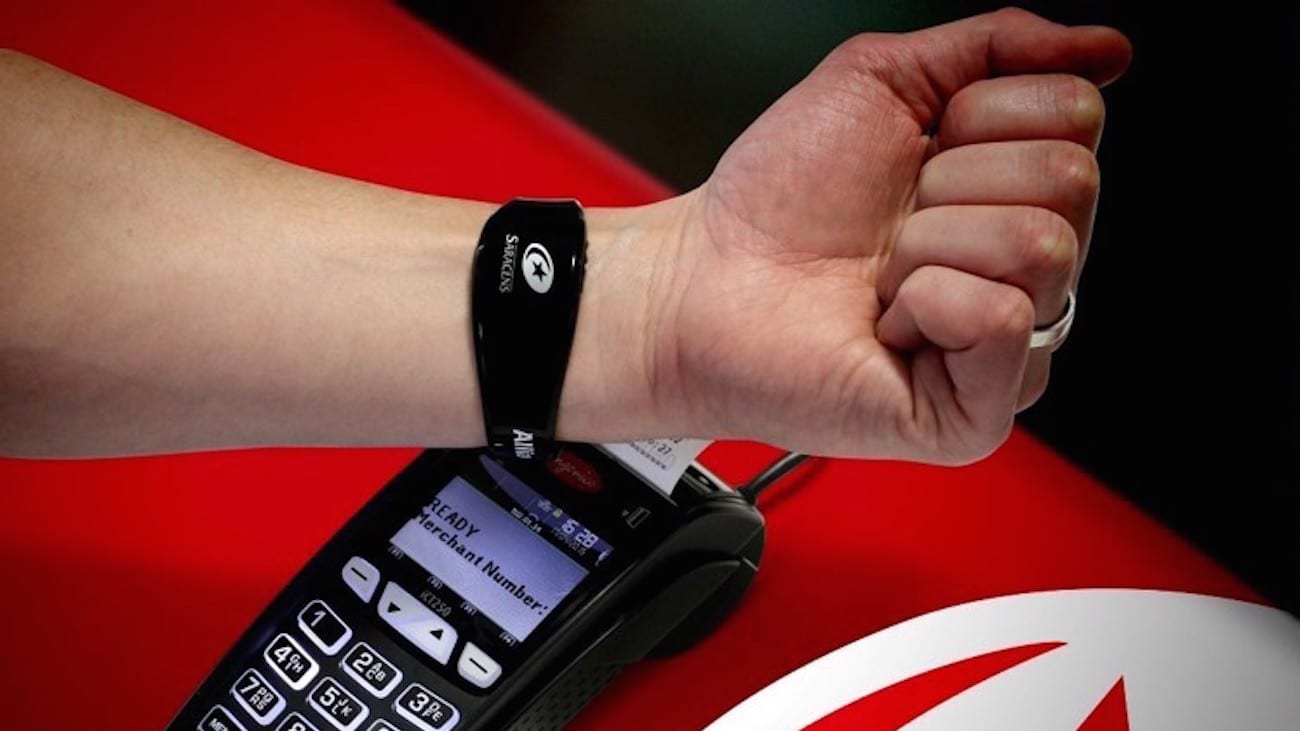
    Gemalto has launched a secure element based applet for smart wearables developed by China UnionPay (CUP).

    CUP had launched smart wearables with embedded secure elements based payment applications last year.

    The payment applet runs on the secure element, to provide online and offline payment capabilities on wearables.

    This is expected to eliminate the need for different card vendors to develop their own versions, simplifying deployment of payment applications on a range of secure elements and improving time to market.

    “Intelligent NFC-based wearable devices are set to disrupt our lives much beyond contactless payments – from user access and authentication to smart homes and cities, the possibilities are simply endless,” said Suzanne Tong-Li, president for Greater China and Korea at Gemalto.

    With extensive experience in NFC ecosystem and end-to-end security, we support CUP to not only simplify and speed up this launch for maximum outreach, but also provide consulting for next-generation solutions.”

  • Samsung Pay China goes live

    Samsung Pay China goes live

    Samsung Pay China is live after being launched by the South Korean smartphone giant this week.

    Samsung Electronics said Tuesday the introduction of the Samsung Pay China mobile payment service will speed its efforts to expand the scope of its flagship mobile payment platform globally.

    The South Korean tech company said Chinese users of high-end Galaxy smartphones can now use Samsung Pay in cooperation with China-based bank card giant UnionPay.

    The mobile platform supports magnetic secure transmission technology that works on traditional credit card machines. Like rivals Apple Pay and Android Pay, it also supports near field communication technology that requires a separate transaction device.

    Users of UnionPay debit and credit cards can now use Samsung Pay-equipped smartphones to make purchases, including the Galaxy S7 and Galaxy S7 Edge just released earlier this month.

    Samsung Pay joined forces with nine major Chinese banks, while six more partners will be added in the near future, Samsung added.

    Samsung said it will also make efforts to roll out more devices that support its mobile payment platform.

    Samsung Pay, first released in South Korea and the US last year, currently boasts around 5 million users. Samsung said last month it is also preparing to launch in Australia, Brazil, Spain and a handful of other countries.

  • Malaysia Airports partners with Union Pay to boost Chinese spend

    Malaysia Airports partners with Union Pay to boost Chinese spend

    The Commercial Division of Malaysia Airports Holdings Berhad is collaborating with UnionPay International to boost Chinese tourist spending at its airports.

    The move is said to be in line with Malaysia Airports’ Commercial Division’s new strategic direction which calls for a targeted passenger focus. According to Malaysia Airports Holding Senior General Manager Commercial Services Berhad Mohammad Nazli Abdul Aziz, the collaboration also fits in with the significant growth of Chinese passenger traffic.

    Air China, Shanghai Airlines and Spring Airlines were the latest to join the fleet of Chinese airlines flying to Kuala Lumpur and Kota Kinabalu in 2015. Together they connect Malaysia to more than 17 key cities located throughout China.


    “According to statistics obtained from Tourism Malaysia, on average, a Chinese tourist spends approximately MYR3,300 (US$847). If Tourism Malaysia achieves its target Chinese tourist arrivals of over 2 million for 2016, this will translate to more than MYR6.7billion (US$1.72 billion) in tourist receipts. Capturing a fraction of that will contribute positively to our revenue. UnionPay is a fast-growing global payment brand.

    Partnering UnionPay International will allow us to tap into the Chinese tourists.”Nazli said: “The Chinese tourists market is a priority for us given their volume and strong spending power. Last year, total passenger movement between Malaysia and China stood at approximately 5.54 million, the second highest for Malaysia Airports. Much of it is boosted by the fact that we currently have 12 airlines connecting Malaysia to over 17 destinations in China. We expect the Chinese tourists market to increase even further with the visa-waiver programme.

    To further boost tourist spending, Malaysia Airports has signed several new brands at its international gateways. Among the local brands are Noodlelicious, Sofia Iman, Killiney Kopitiam, and Upin & Ipin Café. New international brands include Michael Kors, Pedro, Montblanc and Barry Smith.

    The partnership between Malaysia Airports Holdings Berhad and UnionPay includes the ‘Be Rewarded When You Spend Campaign’, of which the launch coincided with the prize presentation ceremony to mark the conclusion of Malaysia Airports’ Indulge & Explore Campaign.

    UnionPay International Southeast Asia General Manager Wenhui Yang said: “We are pleased to partner Malaysia Airports for the “Be Rewarded When You Spend” campaign. Malaysia Airports is one of the biggest players in Malaysia’s tourism and hospitality industry, our collaboration is in line with our efforts to bring greater value and more exciting privileges to our customers, wherever they go.”

    Foo Yit Kin from Kota Bahru, who claimed the Grand Prize in the Indulge & Explore Campaign, won a six-day trip to participate in a Panda Experience Programme in China.According to data recorded by Malaysia Airports’ recently-concluded Indulge & Explore Campaign, Chinese tourists were among the top three airport spenders. For the three-month duration of the campaign, which ran from 7 December 2015 to 6 March 2016, Chinese tourists spent an estimated MYR1.65million (US$425,000) at KLIA/klia2 combined. On the whole, the campaign saw a +7% increase over the previous year’s initiative.

    In addition to the Grand Prize won by Foo, the Indulge & Explore Campaign also awarded 13 weekly prizes, including Lovina Dolphin trips to Bali and New Leaf Detox programmes in Koh Samui, Thailand. The 13 weekly prize winners were selected throughout the campaign period, with each weekly prize winner also entered to win the Grand Prize.

    According to Malaysia Airports, more than 43,500 travellers from 164 countries partook in the Indulge & Explore Campaign, with top participation from Malaysians followed closely by Chinese tourists.


    Malaysia Airports’ Indulge & Explore Campaign, which was supported by MasterCard, provided the opportunity for shoppers to double their entries when they used their MasterCard.Nazli added: “The Indulge Campaign is an important component of our overall commercial strategy. It underscores our drive towards providing passengers and visitors with the total airport experience. 2016 will see us doing even more to drive the message home.”

    MasterCard Group Country Manager Indonesia, Malaysia and Brunei and Group Head Islamic Payments and Southeast Asia Safdar Khan said: “MasterCard understands that Malaysians love to travel and for many of them, shopping is an integral part of their trip. According to our latest Consumer Purchasing Priorities Survey, nine in ten Malaysians intend to travel in the next year and shopping is among their top three activities when travelling.”

    He added: “Together with Malaysia Airports, we are delighted to have delivered unique travel experiences in conjunction with the Indulge & Explore Campaign over the past decade. We look to continue offering exciting benefits and exclusive rewards to MasterCard cardholders at every step of their journey.”

  • UnionPay now in Thailand

    UnionPay now in Thailand

    While the company’s success up to now has relied on the huge domestic home market in China – which accounts for 99 per cent of all UP credit cards issued – this could be about to change. UnionPay is setting its sights on global expansion and intriguingly Thailand is the catalyst which will help make this happen. Over the past few years several landmark decisions about ATM/debit cards have been made by the Bank of Thailand (BOT) and the Thai Bankers’ Association (TBA), and these are beginning to be implemented this year.

    To combat the growing incidence of ATM and debit-card fraud, the BOT decided that all new ATM/debit cards in Thailand must carry secure embedded chips, a mandate which comes into force this May. Significantly, the BOT and TBA adopted UnionPay’s chip technology as the standard for all of Thailand’s debit cards, the first country outside of China to do so.

    This will mean a mass transformation of Thailand’s 50-million strong debit-card market, as currently few debit cards have embedded chips and they are mainly used as ATM cards and not for retail transactions. Most cards will, therefore, need to be replaced and to support this UnionPay has joined with Bangkok Bank to establish the Thai Payment Network (TPN). Other leading Thai banks are also expected to become shareholders in this joint venture company.

    Thai banks and other financial service providers will produce the new cards under the TPN and TPN-UnionPay brands, which will be locally issued and processed in line with BOT policy.

    China UnionPay chairman Ge Huayong said that the launch of TPN in Thailand has great significance and he cited four major reasons for this. It is a new breakthrough in the development of technical standards in China’s financial sector, it represents a model for China’s policy of Going Global, it lays a solid foundation for large-scale acceptance and issuance of UnionPay cards in other local markets, and it will help UnionPay develop a business-expansion model which can be replicated which will accelerate the roll-out of its global business.

    Ge Huayong also added that it ties in with China’s “One Belt, One Road” international expansion strategy as UP plans to develop similar payment infrastructure in other countries along the Belt and Road.

    Meanwhile, in another major development China UnionPay last month signed a memorandum of understanding with Visa to collaborate on payments security, innovation and financial inclusion.

    Visa CEO Charlie Scharf said the two card giants would work together to develop innovations in digital payments and broaden the access of financial services to a wider population.

    All these developments fit well with the Thai government’s digital payments strategy and should ensure that Thailand is at the forefront of using new technology in the payments industry.

    The benefits include helping our businesses keep up-to-date with modern technology while ensuring the public has easy and convenient access to financial services.

  • How UK Retailers Can Embrace The Chinese Ecommerce Opportunity

    How UK Retailers Can Embrace The Chinese Ecommerce Opportunity

    Within the next two years, China’s e-commerce market will top $1 trillion, making it bigger than the e-commerce markets of the US, UK, Japan, Germany, and France combined. Fuelled by greater internet and smartphone penetration, an expanding middle class with higher disposable income, and greater consumer confidence, over half of Chinese internet users having now made a purchase on the web.

    Surely then, UK retailers should be fighting tooth and nail for the loyalty and spend of these Chinese shoppers?

    Surprisingly, this is not the case. While over half of UK retailers (55%) ship to China, our research – into the international shopping experience offered by the UK’s top 150 online retailers – shows a massive variation in the quality of shopping experiences offered to Chinese shoppers.

    UK e-tailers are failing to accommodate a great number of Chinese shopping preferences and reducing the likelihood of conversions. For example, just over a quarter (26%) of retailers that ship to China offer shoppers the ability to pay in Yuan and present prices in local currency.

    The remainder are leaving shoppers in China to estimate for themselves how much products will cost to buy, which means shoppers could be hit by sudden currency exchange fluctuations or fees from their bank.

    Similarly, only 22% of retailers that ship to China offer shoppers the ability to pay using local payment methods, such as e-wallets and bank transfers like Alipay or Tenpay, which account for more than 80% of ecommerce payments, or Chinese payments cards such as UnionPay.

    Of retailers that do accept Chinese payment methods, 42% offer a single option, barring some prospective customers from making a purchase.

    Added to this, just one in ten (10%) retailers that ship to China offer shoppers a Mandarin-language shopping experience. Since the majority of people living in China don’t speak English fluently, shoppers are likely to feel unconfident about making a purchase if they are expected to use an English-language checkout.

    It’s clear from these customer experience shortcomings that the majority of UK retailers are failing to exploit the burgeoning Chinese ecommerce market fully. This puts them on the back foot when it comes to winning long term loyalty and purchasing preference.

    Retailers simply can’t afford to offer shoppers a second rate experience, especially when failing to localise the online store can make shoppers nervous and can quickly sour a great online experience.

    So, how can retailers rectify this and improve the customer experience to grow sales in China?

    Here are our top tips-

    •       Improve the experience for Chinese shoppers. The first rule of international trade is that, in order to be successful, customers must enjoy the same experience regardless of where they are in the world. Retailers should offer shoppers in China the same, high quality experience that shoppers in the UK and elsewhere expect to receive.

    •       Offer multiple shipping options at reasonable rates. To give Chinese shoppers the confidence to buy, retailers must offer greater choice as well as competitive prices. This is especially critical in China where clearance processes can be very lengthy for non-experienced carriers. Moreover, it’s important to have a simple and transparent returns process in place, so if something goes wrong, shoppers will be confident that it will be resolved quickly and easily.

    •       Display prices in Chinese Yuan. There are few things more off-putting than exchange rate uncertainty when buying from a retailer in another country, and this is particularly disconcerting at times of high currency fluctuation. Retailers should present shoppers in China with prices in the local currency, so that shoppers can feel confident about how much they are paying.

    •       Try to put the customer’s mind at ease. Most shoppers in China expect and prefer to pre-pay customs charges or handling fees when shopping online, so retailers should avoid any potential for nasty surprises, by being upfront about these charges and offering pre-payment.

    With e-commerce sales in China set to exceed $1 trillion next year, retailers must pay more attention to China in the years ahead. However, delivering a localised shopping experience doesn’t have to require a dedicated Chinese website or months spent negotiating with the local supply chain.


  • UK retailers fail to capitalise on burgeoning e-commerce in China

    UK retailers fail to capitalise on burgeoning e-commerce in China

    ‘Retailers are falling short in serving both Chinese shoppers and others overseas by not providing the seamless shopping experience they offer here in the UK’

    Although 71% of the UK’s largest online retailers are selling internationally, almost half (45%) are completely ignoring China’s burgeoning e-commerce market, new research has found.

    China’s total e-commerce market is expected to increase by 50% to $6.5 trillion by 2020, with online transactions accounting for nearly half of that growth.

    China’s Centre for International Economic Exchanges predicts the nation’s international online retail will account for 30% to 40% of total world trade by 2025.

    Meanwhile, recent research by Worldpay revealed that 44% of people in China shop on overseas websites.

    But while many UK retailers, such as Selfridges and John Lewis, have taken steps to make the shopping experience in-store more welcoming for high-spending visitors from China, relatively few retailers have made similar improvements online.

    Just 55% offer shipping to China – and among those that do, the shopping experience offered to shoppers varies wildly.

    New research by Global-e, which assessed more than 150 of the UK’s largest online retailers, found that just one in ten (10%) retailers that ship to China offer shoppers a Mandarin language option.

    Across all retailers, just under a fifth (17%) offer non-English language options, with retailers that offer international language options offering 5.7 languages on average.

    And while more than a third (36%) of retailers offer prices in other currencies, just 26% of UK retailers that ship to China present prices in Chinese Yuan, and only 22% accept Chinese local payment methods, such as AliPay, UnionPay and TenPay.

    Of retailers that do accept Chinese payment methods, 42% offer a single option, barring some prospective customers from making a purchase.

    Furthermore, almost all (98%) retailers that ship to China do not provide full duties calculations and prepayment, which means that shoppers may be stung by unexpected charges or taxes.

    Not only does this put the retailer’s reputation at risk, but these companies will also be unlikely to generate brand loyalty in China.

    “Shoppers expect more from the online retail experience but very few retailers can claim to offer ‘global shopping’,” said Nir Debbi, co-founder and CMO at Global-e. “Our research shows that retailers are falling short in serving both Chinese shoppers and others overseas by not providing the seamless shopping experience they offer here in the UK.

    “To boost conversions abroad and harness untapped opportunities, retailers need to remove the frictions in the customer experience by providing effective shipping and returns, localised pricing, local currencies, and payment methods with guaranteed landed cost.”

  • Smartphones outpace tablets in Asian eCommerce

    Smartphones outpace tablets in Asian eCommerce

    For the first time, 34 per cent of browser-based online transactions globally are now made on a mobile device, compared to slightly more than 30 per cent last quarter.

    And smartphones are starting to outpace tablets.

    These were key findings of the fourth quarter edition of the Mobile Payments Index by Global payments technology company Adyen, which tracks mobile payment data from browser-based transactions across its client base and monitors Asian eCommerce shopping patterns.

    It also found that many consumers in Asia are increasingly using mobile devices to shop online. This is being driven particularly by such major payments methods as Alipay, JCB and UnionPay. JCB had the highest share (54 per cent) of mobile payments on the Adjen platform, up from 47 per cent the previous quarter. Alipay increased to 44 per cent (up from 35 per cent) while UnionPay reached 31 per cent (from 23 per cent).

    “The checkout stage of the shopper journey is not the end, but the beginning of an on-going relationship with the consumer,” says Adyen Asia Pacific president Warren Hayashi. “Merchants with a frictionless mobile checkout experience are driving repeat traffic, especially in Asia.”

    For the first time, the index shows that smartphones have overtaken tablets as the preferred device for online shopping – 17.5 per cent on smartphone against 16 per cent on tablet, compared to 14 per cent and 17 per cent respectively the previous quarter.

    When it comes to mobile payments globally, the trend to use smartphones rather than tablets continues for the 10th consecutive quarter. Last quarter this share was up 2 per cent to 68 per cent on smartphone versus 32 per cent on tablet.

    Smartphone use far outweighed tablet in Asia, with 29.5 per cent of online payments on a smartphone compared to 4.5 per cent on a tablet.

    In terms of average transaction value, iPad led the way for the first time at $107, edging out not just smartphones but also desktop/laptop, the traditional leader (at $106). Following were Android tablets at $86, iPhone at $83 then Android smartphones at $73.

    Adyen has been tracking the evolution of mobile payments since June 2013. The index is based on its global browser-based mobile payment transaction data. It does not track in-app mobile payments. With its headquarters in Amsterdam and San Francisco, Adyen serves more than 4500 businesses, customers including Airbnb, Booking.com, Crocs, Dropbox, Facebook, KLM, Mango, Netflix, Spotify and Yelp.

  • 2C2P helps Myanmar revolution

    2C2P helps Myanmar revolution

    Southeast Asia payments company 2C2P of Singapore, with its Burmese founder and CEO Aung Kyaw Moe, has taken a step to modernise Myanmar’s economy with the country’s first co-branded debit card so its citizens can shop with international merchants.

    The new UnionPay and Myanmar Payments Union (MPU) co-branded debit card is being introduced along with the launch of 1-Stop, a cash acceptance network of sellers and buyers, bringing digital commerce to Myanmar, especially helpful for its rural communities. Also a partner of the debit card is Myanmar’s Asia Green Development Bank (AGD Bank).

    Anyone in Myanmar can now set up a microbusiness to sell goods and services online. Domestic transactions are processed by MPU, while international transactions go through UnionPay International, which is recognised by more than 4000 merchants domestically and more than 26 million across 150 countries, as well as at 1.8 million ATMs internationally.

    MPU is Myanmar’s national payment network, authorising the issuance and acceptance of all payment cards within the country, of which there are more than 1.2 million. With UnionPay International, a subsidiary of China UnionPay, cardholders can shop with international merchants for the first time. UnionPay is the largest global payment card company with more than five billion cards issued.

    Myanmar is expected to quadruple the size of its economy from $45 billion in 2014 to $200 billion by 2030 (McKinsey), with a reboot of its cash-based economy seen as the key to growth. This will be driven by Myanmar’s young population (47 per cent of its 51.4 million citizens are 24 years old or younger). The World Bank pegs Myanmar’s annual growth rate as leading Asia at 8.3 per cent annually between 2014 and 2017.

    Myanmar’s millennials are also responsible for the country’s spike in outbound tourism. This sector grew from $29 million in 2002 to $257 million in 2012, a rise of 24 per cent, according to the World Trade Organisation.

    “2C2P is committed to support Myanmar’s financial institutions,” says CEO and founder Aung Kyaw Moe. “We do this by bridging the gap between local and international infrastructure.

    “We bring our robust platform, as well as our experience and knowledge in international payments, making it possible for Myanmar’s banking and financial institutions to innovate – offering new services that leapfrog legacy financial technologies.”

    AGD Bank customers can download an app to manage card transactions in real time with online support. A loyalty program offers discounts and privileges from more than 4000 merchants domestically, across food and beverage, retail, hospitality, and travel and tourism.

    “We are committed to innovate, offering Myanmar’s young, fast-growing and connected population the financial services that meet their evolving needs,” says AGD Bank chairman U Than Ye.

    Meanwhile, 1-Stop’s network has more than 3000 locations through 2C2P’s strategic partnerships with the country’s largest distribution network for the agriculture sector Myanmar AWBA Group, retail and convenience store chains Capital Hyper Mart and Grab & Go, mobile stores eCity, Lu Gyi Min andMr.Fone, as well as independent stores.

    It is aiming to contribute to modernising the economy through its online-to-offline commerce approach in a market with relatively high smartphone penetration but limited e-payment infrastructure.

    Myanmar is the fourth-fastest growing mobile market globally, according to Ericsson. In the third quarter of last year, it accounted for nearly 6 per cent of the world’s 87 million new mobile subscribers. Research firm Ovum estimates mobile subscriptions in Myanmar grew by 87.4 per cent in 2014 to 10.7 million. This is forecast to grow at a 21 per cent compounded annual growth rate to reach 38.5 million by the end of 2019 as networks expand to rural areas.

    Last year, 2C2P also launched easyBills, the country’s first online bill-payment system. Previously, along with Myanmar Citizens Bank, 2C2P launched the Citizen Card, a reloadable prepaid card accepted by MasterCard and merchants globally.

    2C2P has offices across Southeast Asia, including Cambodia, Indonesia, Laos, Malaysia, Myanmar, Singapore, Thailand and The Philippines, as well as in Hong Kong.

  • Apple Pay China launch slated for February

    Apple Pay China launch slated for February

    Tech giant Apple will launch its mobile payment system Apple Pay in China by early February, according to a report in the Wall Street Journal.

    Citing people familiar with the discussions, the newspaper says Apple has reached agreement with China’s four state-run banks to clear the way for the payment system to be used via its iPhone smartphones.

    The move will place it in direct competition with local online payment platform Alipay, run by Alibaba Group, and its affiliated company Ant Financial, and UnionPay, the state run monopoly credit card system.

    But while the banks are on board, the Wall Street Journal claims Apple may yet face more hurdles before it can launch the service, with banking and eCommerce regulations overseen by a number of government agencies.