Retail News CRM

Tag: unlocking

  • Unlocking Retail Growth: How Payment Data Transforms Customer Engagement Strategy

    Unlocking Retail Growth: How Payment Data Transforms Customer Engagement Strategy

    In the evolving retail environment, merchants are faced with an abundance of platforms and technologies to engage with customers. This, according to Mastercard’s SVP of consumer acquisition and engagement, Johann Suchon, has given rise to a new challenge: discerning where to allocate resources for tangible growth.

    The Changing Retail Ecosystem

    With an increasingly fragmented and competitive retail landscape, brands have numerous opportunities to connect with customers through both digital and physical channels. Navigating the optimal combination of platforms, technologies, and marketing tools, however, has become a complex task. The modern retail ecosystem is far more intricate than in the past, and retailers now face the challenge of identifying the most effective tools, along with those that best facilitate the management of their offers.

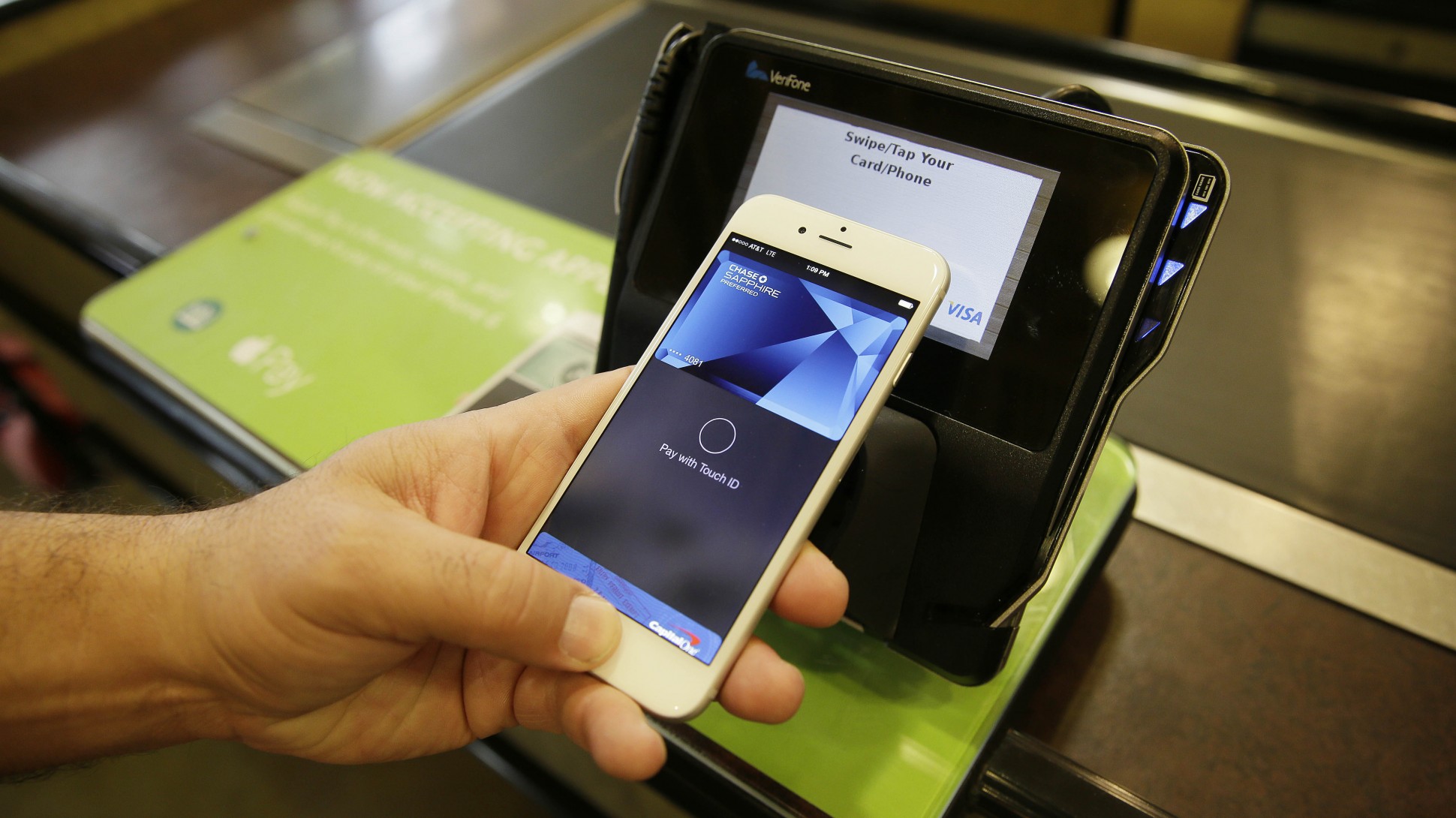
    Suchon asserts that retailers must begin influencing customer purchasing decisions early in the buying journey. Payments are evolving beyond a simple transactional function, morphing into a strategic engagement channel. Through payment data, brands can significantly influence customer behavior – a capacity that far exceeds what could be achieved by leveraging solely their first-party data.

    The Transformation of Loyalty Programs

    According to Suchon, loyalty programs are currently undergoing one of their most significant transformations. The key competitive edge lies not just in acquiring customers, but also in reaching the appropriate consumers with meaningful offers. Traditional loyalty programs, which typically offer uniform benefits to members, are becoming less effective as customers increasingly demand personalized experiences.

    By enriching their data with payment information, retailers can target offers much more accurately. Retailers who have previously invested in loyalty programs are in a strong position to transition, as their first-party data can be used to tailor communications and offers more effectively than brands without loyalty programs.

    The use of payment data also presents a broader view of customer behavior, allowing retailers to gain insights into spending patterns across various industries, thus identifying opportunities that may have otherwise been missed.

    Emerging retail trends also suggest a significant shift in cross-border spending in Asia-Pacific, with approximately 70% of transactions originating from local consumers. For retailers targeting inbound tourism, this offers a substantial opportunity to connect travelers with relevant offers before and during their visit.

    Questions & Answers

    What is the current challenge for retailers in term of customer engagement?
    The current challenge for retailers is discerning where to allocate resources for tangible growth amidst an abundance of platforms and technologies.

    How can payment data be utilized in the retail sector?
    Payment data can significantly influence customer behavior and offers a broader view of customer behavior, allowing retailers to gain insights into spending patterns across various industries, thus identifying opportunities that may have otherwise been missed.

    What is the future trend in loyalty programs in the retail sector?
    Loyalty programs are currently undergoing significant transformations, with a shift towards personalized experiences. By enriching their data with payment information, retailers can target offers much more accurately. This trend is likely to continue and evolve in the future.

  • Unlocking Sustainable Growth in Southeast Asia: The Power of Multi-Channel Logistics for Brands

    Unlocking Sustainable Growth in Southeast Asia: The Power of Multi-Channel Logistics for Brands

    The e-commerce sector in Southeast Asia is witnessing significant growth, with its Gross Merchandise Value (GMV) projected to reach around US$350 billion by 2030 and escalate to US$630 billion by 2035.

    For businesses aiming to tap into this growth, achieving success is no longer merely about attracting customers. It is equally critical to ensure a consistent customer experience, regardless of where the consumers decide to make their purchases. This applies to all sales channels, whether consumers purchase through online marketplaces, direct-to-consumer websites, social commerce platforms, or physical stores. They anticipate a seamless shopping experience, speedy and dependable delivery. This demonstrates that logistics isn’t just a back-end operation anymore; instead, it significantly influences the customer’s buying experience and impacts their perception and interaction with a brand, both online and offline.

    To cater to these expectations, logistics providers are rethinking the traditional fulfillment styles centered around specific platforms. They are investing in more comprehensive solutions that can meet customers’ expectations on a larger scale.

    Challenges in Managing Multi-Channel Operations in a Diverse Region

    In Southeast Asia, brands are broadening their omnichannel presence. The region’s diverse market landscape poses unique operational challenges. Brands need to handle different consumer expectations, various levels of infrastructure maturity, unique regulatory environments, and diverse operational requirements across multiple markets.

    Brands also must manage inventory across various sales channels and logistics providers. Separate warehousing arrangements, fragmented stock pools, and disconnected fulfillment systems can directly impact the customer experience, leading to delayed deliveries, inaccurate stock information, and inconsistent service across channels. These gaps can lead to increased costs, reduced stock visibility, and complicate demand planning.

    A Streamlined Approach to Scaling through a Unified Fulfillment Infrastructure

    Lazada Logistics acknowledged the growing need for more integrated fulfillment solutions and introduced its Multi-Channel Logistics (MCL) offering. The MCL enables brands to streamline fulfillment operations across channels through a single logistics network.

    The MCL is available across several countries in Southeast Asia, including Singapore, Thailand, Vietnam, Indonesia, the Philippines, and Malaysia. It combines Lazada Logistics’ proprietary regional infrastructure with an extensive third-party logistics network to provide comprehensive inventory management, warehousing, and fulfillment services on a larger scale. This allows brands to rapidly respond to fluctuating consumer demand while maintaining consistent service standards across the region.

    Thanks to MCL, brands can optimize logistics costs without compromising service quality, allowing them to concentrate resources on customer acquisition, product development, and market expansion. With a simplified fulfillment structure and more efficient inventory utilization, businesses can strike a balance between cost management and customer experience objectives.

    Questions & Answers

    How is the e-commerce market in Southeast Asia growing?
    The e-commerce sector in Southeast Asia is expanding significantly, with its Gross Merchandise Value (GMV) projected to hit around US$350 billion by 2030 and increase to US$630 billion by 2035.

    What challenges do brands face in managing multi-channel operations?
    Brands must deal with various consumer expectations, different levels of infrastructure maturity, unique regulatory environments, and diverse operational requirements across multiple markets. Additionally, they need to handle inventory across various sales channels and logistics providers.

    How does Lazada Logistics’ Multi-Channel Logistics (MCL) help brands?
    The MCL offering by Lazada Logistics enables brands to consolidate fulfillment operations across channels through a single logistics network. It helps brands optimize logistics costs without compromising service quality, allowing them to concentrate resources on customer acquisition, product development, and market expansion.

  • Unlocking the Future with 5G-A and AI: The Rise of the Mobile AI Era and Telco-Techco Transformation in the Middle East & Central Asia

    Unlocking the Future with 5G-A and AI: The Rise of the Mobile AI Era and Telco-Techco Transformation in the Middle East & Central Asia

    The partnership between 5G-Advanced (5G-A) and AI is crucial for unlocking the intelligent future of the Middle East and Central Asia. This strategic alliance transforms the network, allowing telecommunications operators to shift from selling capacity to offering differentiated, AI-managed services. This shift allows telcos to guarantee a quality that is essential for high-value services. This vital partnership pushes the development of Autonomous Networks (AN), ensures premium experience monetization, and propels the ‘AI-first, inside-out’ transformation for new economic benefits.

    Introduction: Catalyzing the Connected Future

    The Middle East and Central Asia (ME&CA) region has positioned itself as a global front-runner in digital innovation and transformation. From the implementation of 5G to ongoing and ambitious national digital transformation programs, no other region surpasses their pace of change and development. Building on this momentum, telecom operators now stand on the threshold of a significant technological milestone – the fusion of 5G-Advanced and artificial intelligence.

    This transformation goes beyond merely upgrading two separate technologies. It entails merging the ultimate connectivity infrastructure (5G-A) with the ultimate intelligence engine (AI) to herald the dawn of a supreme digital experience. This robust experience forms the foundation for initiating the new ‘Mobile AI Era,’ a paradigm shift that is redefining operational efficiency, unlocking unprecedented business value, and advancing the region’s socio-economic and digital inclusion objectives.

    Moving Towards the ‘Mobile AI Era’: The Essential Partnership of 5G-A & AI

    The integration of AI into mobile communications signals the rapid advent of the mobile AI era. Innovative services such as real-time multi-modal calling with AI assistants, autonomous robots with embodied AI, and real-time cloud rendering for AI-generated content are emerging as the game-changing applications of the 5G-A era.

    In this ‘Mobile AI Era’, networks are evolving beyond their traditional role as mobile data pipelines. They are becoming value platforms that underpin differentiated experiences for people, homes, vehicles, things, and industries. This evolution is where AI becomes indispensable. AI acts as the brain that operates the 5G-A network, infusing intelligence into 5G-A connections, and unlocking a plethora of new scenarios, applications, and business models.

    The shift from 5G to 5G-A is fundamentally about transitioning from best-effort services to delivering guaranteed quality and sticking to service level agreements (SLAs). However, the resulting massive increase in network complexity and data volume generated by these applications cannot be managed manually.

    5G-A Experience Management and Business Innovation: Supported by AI

    One significant change that 5G-A enables is fostering ‘intelligent connectivity,’ which means a transition from selling ‘generic bandwidth’ to selling ‘differentiated, scenario-based connectivity and experience’. This transition is the key to evolving from a ‘dumb-pipe’ to an ‘AI smart-pipe’ revenue model. However, successful monetization of this transition requires sophisticated, intelligent experience management.

    While AI empowers the network, 5G-A also empowers AI-based services and applications. Its high throughput, low latency, and edge computing capabilities allow real-time interaction and decision making. This combination of 5G-A and AI allows carriers to offer differentiated, guaranteed experiences for specific applications, thereby transitioning from a simple supplier to a vital technology partner that commands premium revenue.

    Building New Value with Al-to-X: The AI-First, 5G-A Driven Transformation

    For operators in the ME&CA region, the ultimate vision is to transform from traditional communication service providers into technology companies. This transformation requires an AI-first approach, which rests on the three pillars of ‘Servitization’, ‘Platformization’, and ‘Intelligentization’.

    Carriers are progressively integrating AI into their services to improve efficiency, productivity, and user experience, especially in the 5G-A era. However, to maximize these capabilities and ensure always-on services, carriers now need to implement these three strategies of ‘AI-to-X’, where this ‘X’ signifies one or more of ‘servitization’, ‘platformization’, and ‘intelligentization’.

    Questions & Answers

    What does the convergence of 5G-A and AI mean for the Middle East and Central Asia?
    This convergence represents a significant technological leap forward. It will allow for the provision of differentiated, AI-managed services and pave the way for the ‘Mobile AI Era’ in the region.

    How does the integration of AI into mobile communications contribute to the evolution of networks?
    The integration of AI into mobile communications transforms networks into value platforms that underpin differentiated experiences. AI becomes the brain that operates the 5G-A network, infusing intelligence into connections and unlocking new scenarios, applications, and business models.

    What is the ultimate vision for operators in the ME&CA region?
    The ultimate vision for operators in the region is to transform from traditional communication service providers into technology companies. This transformation requires an AI-first approach and the implementation of the three strategies of ‘AI-to-X’, representing ‘servitization’, ‘platformization’, and ‘intelligentization’.

  • Unlocking Connectivity: The Rising Impact of MVNOs on Malaysia’s Mobile Market

    Unlocking Connectivity: The Rising Impact of MVNOs on Malaysia’s Mobile Market

    The Malaysian mobile connectivity market is thriving with approximately 43.3 million active cellular mobile connections, a figure that represents a remarkable 121% of the country’s total population. Mobile Virtual Network Operators (MVNOs) play a crucial role in this bustling market by offering unique services, unlocking fresh demographics, and ultimately widening the scope of mobile connectivity throughout the country.

    The Growth Prospects of MVNOs in Malaysia

    The Malaysian MVNO market demonstrated significant growth in 2025, reaching a value of USD 0.8 billion, and it is projected to hit USD 1.06 billion by 2030. This estimate is based on a Compound Annual Growth Rate (CAGR) of 5.75% during the forecast period of 2025 to 2030.

    The recent shift towards a dual-wholesale 5G model has helped fuel this growth by eliminating previous pricing ambiguities that hindered the growth of virtual operators. Strategies such as implementing cloud-native OSS/BSS stacks, using eSIM-only distribution, and employing satellite-terrestrial convergence are being utilized by operators to penetrate new markets and reduce operational costs.

    As digitalization increases in the commercial sector, the average revenue per user in the business-to-business (B2B) segment has grown. On the consumer front, the proliferation of ultra-low-cost prepaid plans has led to a spike in subscriptions.

    Government programs like JENDELA bolster the infrastructure expansion and confirm the Malaysian MVNO market’s ability to sustain mid-single-digit compound growth throughout the decade.

    In terms of deployment models, cloud technology contributed to 70.51% of the revenue in 2024 and is predicted to register a CAGR of 10.14% until 2030. On the operations front, reseller and other light MVNO formats held a 62.33% share in 2024. However, full MVNO structures are tipped to expand at a CAGR of 19.19% until 2030.

    MVNOs: A Winning Strategy for Malaysia

    MVNOs offer mobile services to customers by leasing network capacity from an existing Mobile Network Operator (MNO), rather than owning its own infrastructure. This business model has several benefits for the Malaysian market:

    MVNOs enable new service providers to break into the market, fostering competition among established MNOs to innovate and cater to niche markets. As a result, consumers benefit from increased options.

    As 4G connectivity improves and 5G becomes more widespread, MNOs with surplus network capacity can partner with MVNOs to utilize this excess capacity, thereby offsetting some of the costs associated with building and maintaining their networks.

    In August 2025, China Mobile International Limited (CMI) partnered with Maxis to launch CMLink, CMI’s MVNO, in Malaysia. This partnership allowed CMI to offer services such as the “one card, multiple numbers” feature and data sharing between China and Malaysia, catering to students and professionals who frequently travel between the two countries.

    In October 2025, U Mobile entered a five-year wholesale access agreement with a new MVNO, Eastel, enabling Eastel to use U Mobile’s 4G and 5G networks for data, calls, SMS, roaming, and number portability.

    The Impact and Future of MVNOs in the Malaysian Market

    The rise of MVNOs in Malaysia is shaping the wider connectivity ecosystem. By facilitating the entry of new and specialized brands into the market, MVNOs can reach demographics that are often underrepresented.

    Increased competition in the market benefits consumers by offering them more choices and prompting MNOs to provide better prices, unique bundles, and superior customer service.

    For MNOs, collaborating with MVNOs helps maximize returns on their network investments.

    The Malaysian Communications and Multimedia Commission supports network sharing, encouraging the sharing of infrastructure. Under this model, MVNOs can add value by introducing new services to lower-income or hard-to-reach groups using the same networks.

    Looking ahead, the industry needs to ensure wider wholesale access, fair pricing, consistent network experience, sustainable differentiation, focus on underserved regions and regulatory support for MVNOs to thrive in Malaysia.

    Questions & Answers

    What is the projected growth for the Malaysian MVNO market by 2030?
    The Malaysian MVNO market is expected to reach USD 1.06 billion by 2030, growing at a CAGR of 5.75% during the forecast period (2025-2030).

    How are MVNOs contributing to the growth of the mobile connectivity market in Malaysia?
    MVNOs are contributing to the growth of Malaysia’s mobile connectivity market by unlocking new customer segments, introducing unique propositions, and facilitating broader mobile connectivity across the country.

    What are the key areas of focus for the Malaysian MVNO industry to reach its full potential?
    For MVNOs to reach their full potential in Malaysia, the industry needs to focus on wider wholesale access, fair pricing, consistent network experience, sustainable differentiation, targeting underserved regions, and gaining regulatory support.