Retail News CRM

Tag: Vacheron Constantin

  • Vacheron Constantin re-opens Ion Orchard boutique

    Vacheron Constantin re-opens Ion Orchard boutique

    Timepiece brand Vacheron Constantin is reopening its Singapore boutique at Ion Orchard, debuting its new retail concept.

    The boutique’s revamped interior is designed to convey modern elegance and a refined aesthetic, featuring new design codes accented by contemporary Asian elements. It contains lounge areas and an in-house watchmaker to enable interaction with customers. The storehouses the brand’s complete collection in addition to exclusive boutique limited editions.

    “This new boutique experience exemplifies the maison’s constant search for excellence and aesthetic perfection, embodying the ‘One Of Not Many’ spirit,” said Vacheron Constantin Southeast Asia and Australia MD Yassin Tag. “It will not only be a gathering place for customers, enthusiasts and the public, but to also discover the heritage and transmission of know-how that defines Vacheron Constantin.”

    An exhibition titled “Nicknames” is being held to mark the boutique’s opening, featuring a curation of vintage timepieces with unusual designs and evocative nicknames.

  • Yoox Net-A-Porter acquisition boosts Richemont sales

    Yoox Net-A-Porter acquisition boosts Richemont sales

    Richemont sales in Asia Pacific surged 20 per cent in the first half of this year with the region the group’s single-largest market, accounting for 37 per cent of total sales.

    The increase was fuelled by the inclusion of the Yoox Net-A-Porter (YNAP) business into the Swiss-headquartered multibrand luxury retailers figures for the first time. Excluding YNAP and Uk online retailer Watchfinder, sales rose 14 per cent, driven by a net 20 new store openings and “high single-digit growth” in Mainland China and double-digit growth in Hong Kong, Macau and Korea.

    “Both the retail and wholesale channels saw double-digit growth, with strong performances in jewellery and watch sales,” the company said in a statement.

    In Japan, a 14 per cent growth in sales was driven by higher domestic and tourist spending, which benefited from a comparatively weaker yen. Excluding online distributors, sales in the region increased by 8 per cent, led by a double-digit growth in watch sales and the net opening of five directly operated boutiques. Japan represents 8 per cent of overall sales.

    Group-wide global sales rose by 21 per cent at actual exchange rates to €6.808 billion and by 24 per cent at constant exchange rates. Online retail sales, now reported separately following the e-commerce acquisitions, amounted to 14 per cent of group sales.

    Excluding YNAP and Watchfinder, sales rose by 6 per cent at actual exchange rates and by 8 per cent at constant exchange rates.

    Operating profit of €1.130 billion was down €36 million due to acquisition and disposal-related charges of €159 million, the company said. Excluding the impact of first-time consolidation of YNAP and Watchfinder, operating margin improved to 21.1 per cent. Profit for the period rose to €2.253 million primarily due to a post-tax non-cash gain of €1.378 billion on the revaluation of YNAP shares held prior to buy-out.

    Chairman Johann Rupert said offline Richemont sales growth was primarily driven by strong performance of the jewellery maisons and double-digit increases in the maisons’ directly operated boutiques and online stores.

    “Robust retail sales in jewellery and watches more than offset a 2 per cent decline in wholesale sales, which was mainly due to the specialist watchmakers’ ongoing prudent inventory management and upgrade of the wholesale distribution network,” said Rupert.

    “In our jewellery maisons, watch sales grew strongly in Cartier’s stores, benefiting from the successful Panthere and relaunched Santos collections. Jewellery pieces continued to outperform, notably with the iconic Cartier Love and Van Cleef & Arpels Alhambra collections.”

    He said while growth was muted for specialist watchmakers, retail was strong and there was good momentum at Vacheron Constantin, Roger Dubuis and JaegerLeCoultre.

  • DFS Group completes City of Dreams store

    DFS Group completes City of Dreams store

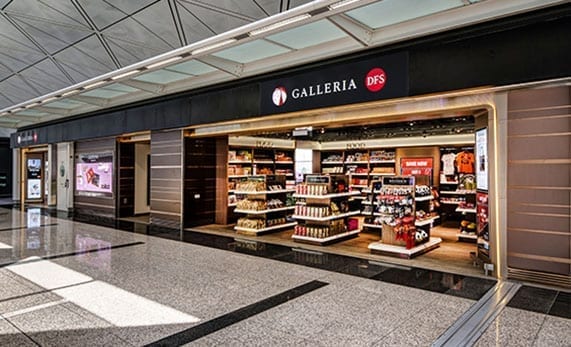
    Luxury travel retailer DFS Group has unveiled the final phase of T Galleria by DFS, City of Dreams store in Macau following a year-long expansion.

    DFS Group chairman/CEO Philippe Schaus says the the store offers travellers the breadth of a luxury shopping mall with the personalised service of a high-end department store.

    An expanded jewelry offering was also unveiled in December, bringing key luxury jewelry brands Tiffany & Co. and Van Cleef & Arpels to T Galleria by DFS, City of Dreams as well as new watches boutiques from Audemars Piguet and Vacheron Const
    An expanded jewelry offering was also unveiled in December, bringing key luxury jewelry brands Tiffany & Co. and Van Cleef & Arpels to T Galleria by DFS, City of Dreams as well as new watches boutiques from Audemars Piguet and Vacheron Constantin

    Opening in 2009, T Galleria by DFS, City of Dreams expanded throughout last year to more than three times its original size. Stretching across 173,000 sqft (16072 sqm), the expanded store includes the group’s debut shoe hall. The largest shoe floor in Hong Kong and Macau, it features more than 50 men’s and women’s shoe brands across two levels, including exclusive-to-Macau brands such as Aquazzura and Rupert Sanderson.

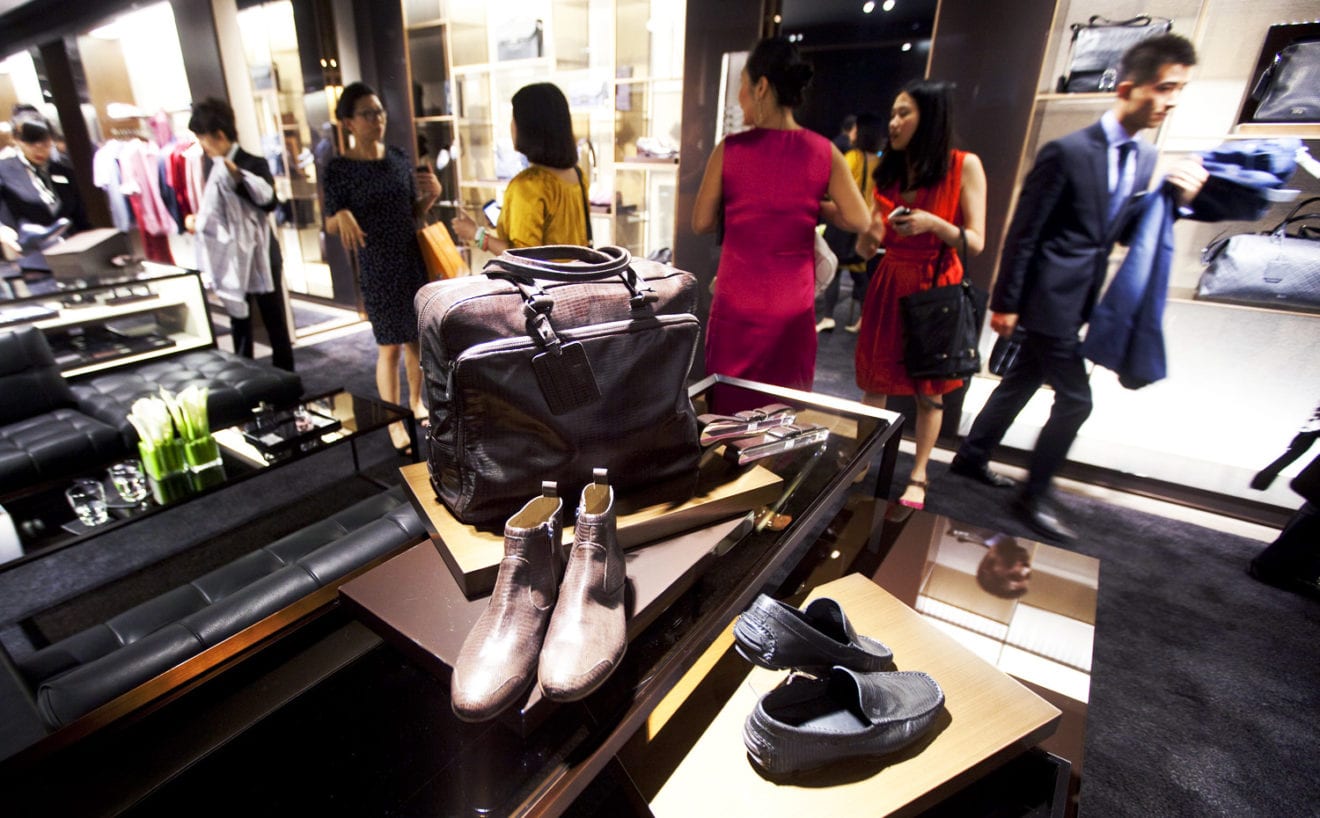
    Men can also enjoy a dedicated multi-branded, lifestyle area that mixes ready-to-wear, accessories, shoes, watches and grooming all in one space to allow shoppers to complete a head-to-toe look with ease
    Men can also enjoy a dedicated multi-branded, lifestyle area that mixes ready-to-wear, accessories, shoes, watches and grooming all in one space to allow shoppers to complete a head-to-toe look with ease


    There are more than 40 fashion and accessories brands in the outlet, including Dior, Fendi, Louis Vuitton, Miu Miu and Prada. The expanded beauty offering comprises two wings across 23,000 sqft and nearly 70 beauty and fragrance brands, making it the largest beauty hall in southern China. Highlights include Korean brands Hera, Laneige and Sulwhasoo.

    DFS Macau, City of Dreams – beauty

    For men there is a multi-branded lifestyle area that mixes ready-to-wear, accessories, shoes, watches and grooming in one space.

    DFS Macau. 1

    DFS Macau. 3

    An expanded jewellery offering was unveiled in December, bringing in such brands as Tiffany & Co and Van Cleef & Arpels. There are also new watch boutiques from Audemars Piguet and Vacheron Constantin.

    DFS Macau, City of Dreams - WJA Event

    T Galleria by DFS, City of Dreams is one of four T Galleria stores in Macau, including T Galleria by DFS, Shoppes at Four Seasons; T Galleria by DFS, Studio City; and the standalone beauty hall T Galleria Beauty by DFS, Galaxy Macau.

  • How to grow for Luxury brands

    How to grow for Luxury brands

    Luxury brands need to use new technologies and offer experiences for their customers, the second Luxury Society keynote event in Shanghai has been told.

    UCO Cosmetics CEO Arthur Zhang told the event that the early-stage eCommerce model of simply providing a platform for selling products online is dead.

    He said key technologies being experimented and improved upon in China include augmented reality, virtual reality and live-streaming.

    “The millennial generation in China, which already numbers about 300 million people, seeks experiences and emotional connection – they are not just bystanders,” DLG China partner/MD Pablo Mauron told the audience of more than 150 luxury-industry brand executives. “As a result, live-streaming has become a medium for them to express themselves.”

    He told how brands such as Maybelline, Montblanc and Swarovski are taking advantage of these new opportunities.

    Underlining the key message of the event that eCommerce is changing, CEO Thibault Villet of luxury fashion eCommerce platform Mei.com told how a live-streamed show in collaboration with TMall resulted in 65 per cent of the products featured quickly selling out.

    Meaningful data

    Social customer-relationship management (CRM) makes highly targeted messaging and engagement possible, the event was told by Four Seasons Hotels Asia Pacific director of marketing communications John Hamilton. He said the luxury hotel chain has been gaining meaningful data about its customers, which in turn has driven growth. In the past year, through trial-and-error and optimisation, the group has defined a CRM-led content strategy on WeChat.

    Celebrity and key-opinion-leader partnerships can make a big impact in China, said East Entertainment commercial director Qing Dai, who spoke of her experience of partnering luxury brands with appropriate celebrities. One of Easy Entertainment’s most successful was in linking up Cartier with singer/actor Lu Han.

    Baidu GM for East China Wan (Grace) Zhang said Cartier was the most-searched luxury watch brand among the generation born between 1990 and 2000, linked to Cartier’s collaboration with Lu Han.

    Other speakers at the event included Four Seasons Hotel Pudong (Shanghai) GM Arthur Ho, writer Casey Hall of Women’s Wear Daily, Digital Luxury Group founder/CEO David Sadigh and MD for China Pablo Mauron, Baidu senior project manager Di Fu and Sephora China digital manager Vanessa Qian.

    Attendees included representatives of Alexandre de Paris, Baume & Mercier, Bottega Veneta, Bulgari, Cartier, Chanel, Chaumet, Conde Nast, De Beers, Dior, Hublot, Loewe, LVMH, Marc Jacobs, Massimo Dutti, Michael Kors, Montblanc, Nars, Net-a-Porter, Nike, Sephora, Shiseido, Swarovski, TAG Heuer, Tiffany & Co and Vacheron Constantin.

    Luxury Society, published by Digital Luxury Group, is an online destination for luxury-brand executives covering digital and technology matters and with more than 40,000 members across 150 countries.

  • Richemont sales woes prompt radical response

    Richemont sales woes prompt radical response

    With Chinese shoppers buying fewer watches, Richemont sales continue to slide, prompting the luxury brand owner to announce uncharacteristically radical moves.

    While continuing to cull its store network, Richemont has axed its CEO role, placing more accountability in the roles of its brand executives.

    Richemont, which counts luxury timepiece brands Vacheron Constantin and IWC in its 35-strong portfolio, says trends are improving in Mainland China, Hong Kong and Macau. But with more of its portfolio in watches than rival corporate fashion groups LVMH and Kering, it is more exposed to current market trends and less resilient. Richemont also owns Cartier, Chloe, Dunhill, Giampiero Bodino, Jaeger-LeCoultre, Lancel, Montblanc, Officine Panerai, Piaget, Peter Millar, Purdey, Roger Dubuis, Shanghai Tang and Van Cleef & Arpels.

    Profits fell 43 per cent (including exchange rate effect) to €798 million for the six months to September, and the company has expressed its concern at overcapacity in the Swiss watchmaking industry. A large factor in the poor result was the €249 million buy-back and destruction of excess products to reduce overcapacity in the distribution chain.

    Sales were down by 13 per cent to €5.1 billion, but significantly this was led by Japan and Europe, rather than Hong Kong and Macau as in past reporting periods. Mainland Chinese buyers still played their part in the decline, however: fewer are visiting Europe due to concerns over terrorism, and the depreciation of the yuan has impacted on spending in Japan.

    The company closed 25 shops globally during the first half and another 25 are scheduled for closure by December 31. It did not reveal the locations of these stores.

    The end of the CEO post coincides with the retirement of outgoing chief Richard Lepeu and finance director Gary Saage. The company’s founder, South African-born Johann Rupert, will remain in the role of executive chairman and will take over supervising a group of division directors.

    Richemont has a reputation for managing for the long-term and resisting the sort of knee-jerk reactions typical among listed companies ever-concerned about satisfying shareholders.  “The significance of such a dramatic break with the past can’t be overstated,” observed an analyst with Bloomberg.

    “They indicate that it doesn’t expect conditions to get any easier any time soon, so it needs a fresh approach. It just might work. And it’s not as radical an idea as it might seem,” wrote columnist Andrea Felsted.

    She suggests the company may need to fix or divest underperforming brands

    “It also needs to control the cost base by addressing headcount, which it has already started to do, and slimming the store estate. The danger is that the new management structure is cumbersome, lacking cohesion, and is ripe for internal power struggles. Rupert will remain the constant, and is likely to take greater control as a result of the radical revamp. He says his role is that of ‘an arbiter of egos, akin to a soccer manager’.”

  • Richemont Asia stores set for cull

    Richemont Asia stores set for cull

    Feeling the pinch from a tough trading environment, luxury goods retailer Richemont has announced restructuring measures, including the closure of stores.

    Richemont Asia sales have declined despite a 26 per cent increase in sales in Mainland China.

    Global sales fell 18 per cent in April, and the company reported a 23 per cent drop in full-year profit.

    Richemont says it is cutting costs in its watch sector and plans to consolidate its global retail presence, particularly in Mainland China, while investing further in jewellery.

    Richemont owns brands including Baume & Mercier, Cartier, Chloe, Dunhill, IWC Schaffhausen, Jaeger-LeCoultre, Lancel, Montblanc, Piaget, Roger Dubuis, Shanghai Tang, Vacheron Constantin and Van Cleef & Arpels.

    “In the near term, we are doubtful that any meaningful improvement in the trading environment is to be expected,” said chairman Johann Rupert, revealing plans for Richemont store closures across its brands.

    Richemont’s operating profit in the year ended March was $2.06 billion, down from $2.67 billion because of the cost of restructuring measures initiated to counter the Asia Pacific downturn. Full-year revenue edged up 6 per cent to $11.08 billion, helped by favourable exchange rates.

    “Our concerns over geopolitical risks and the impact on the behaviour of our clients proved justified,” said the company.

    “Trading conditions in Hong Kong and Macau remained difficult. Only mainland China showed good growth.”

    Richemont’s final quarter was hit by slower tourist spending in Europe after terrorist attacks, while its Hong Kong business continued to bear the brunt of a strong currency which, combined with a slowdown in Chinese growth, deterred mainland tourists.

  • TimeVallee Watch Boutique goes duty free

    TimeVallee Watch Boutique goes duty free

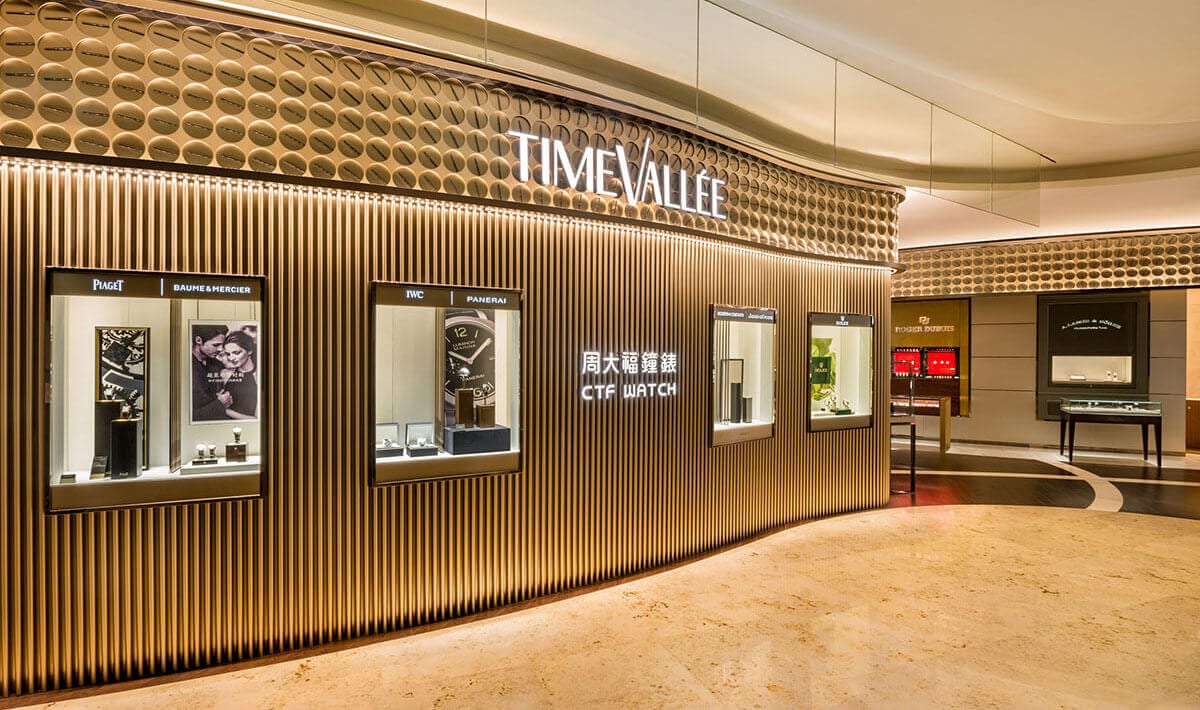
    In a first for the market, a TimeVallee Watch Boutique has opened inside Japan Duty Free Ginza on the eighth floor of Mitsukoshi Ginza Store in Tokyo.

    It is based on the concept of offering multiple international luxury-watch brands, and is the first such boutique within a Japanese duty-free shop.
    With its gold-toned interior, the store features a hands-on area where the latest technology enables shoppers to learn more about the history, traditions and technologies of the brands on display.

    TimeVallee1

    Japan Duty Free Ginza opened in January as Japan’s first airport-style duty-free shop in a city center outside Okinawa. It offers all products exempt from consumption tax, customs duties, and alcohol and tobacco duties.

    TimeVallee Watch Boutique features seven brands – Cartier, IWC, Jaeger-Lecoultre, Piaget, Roger Dubuis, Vacheron Constantin and Zenith.
    Japan Duty Free Ginza is run by Japan Duty Free Fa-So-La Isetan Mitsukoshi, established in 2014 and financed by Isetan Mitsukoshi Holdings, Japan Airport Terminal and NAA Retailing Corporation.

  • Tight market hits Watches & Wonders

    Tight market hits Watches & Wonders

    With sales slipping in the industry’s largest market, the annual Watches & Wonders exhibition in Hong Kong may be cut back to every two years.

    High-end watchmakers are looking at a shift in strategy in Hong Kong in the face of the most severe downturn the industry has faced since the 2008-09 financial crisis, reports Reuters.

    Branching out from the two biggest trade shows in Switzerland, the Salon International de la Haute Horlogerie (SIHH) in Geneva and Baselworld, Watches & Wonders was launched in 2013 by theFondation de la Haute Horlogerie, which is now talking with exhibitors about the show’s future format, according to Richard Mille, CEO of independent watchmaker Richard Mille.

    Watches & Wonders mainly showcases Richemont-owned brands like Cartier, Montblanc and Vacheron Constantin, as well as some independents, reports Bloomberg.

    “Some brands have been fighting to get out, completely out, to stop Watches & Wonders,” Mille said at this week’s SIHH in Geneva, the industry’s first event of the year.

    “Some of the brands want to do it every two years, some say every year. It’s a negotiation.”

    A decision will be made after this week’s show, according to foundation chairwoman Fabienne Lupo.

    The event also competes with the annual Hong Kong Watch & Clock Fair, which had nearly 800 exhibitors last year.

    China’s crackdown on extravagant spending plus currency fluctuations have hit the demand for expensive timepieces in Hong Kong, with Swiss watch exports to the island city plunging 23 per cent in the first 11 months of 2015, and facing the first annual decline since 2009. TAG Heuer closed one of its Hong Kong stores in August.

    Mille, whose watches sell from about 70,000 Swiss francs ($70,000) upward, says the objective of exhibiting in Watches & Wonders is to make contact with clients who are unable to attend the boutique shows. “It’s not cheap, but it’s worthwhile.”

    Meanwhile, high-end watchmakers are considering expanding their range of more affordable products. Executives at the Geneva event say the industry is having to adapt to a market with fewer Chinese, Middle Eastern and Russian buyers than a year ago, an outcome of record low oil prices and signs of economic weakness in China.

    Cartier, Richemont’s leading brand and main source of profit, is presenting more models than ever at more accessible prices at this week’s SIHH. Among them is Cartier’s new Drive model, a steel-cased men’s watch priced at a little more than 5000 euros ($5430). Previously, Cartier would offer only new models in gold and leather, with prices starting at more than 10,000 euros.

    Sister brand Piaget, generally starting no lower than 10,000 euros, has re-launched a women’s line starting at about 7000 euros, while Richemont stablemate Montblanc has introduced a wide range of lower-priced models.

    Montblanc CEO Jerome Lambert says that whatever happens, his company will stay active in Hong Kong with major exhibitions.

    “There is a different price awareness among customers now… and less price elasticity,” Piaget chief executive Philippe Leopold-Metzger told Reuters at the fair. “Times are difficult.”

    Several watchmakers have cut staff numbers in recent months, including Kering‘s newly acquired Ulysse Nardin and privately owned Parimigiani and Christophe Claret. Piaget closed a boutique in Shanghai last month, and Parmigiani plants to cut back its global outlets to about 250 from around 300 by the end of the year.

    Van Cleef & Arpels, one of the fastest-growing brands within the Richemont group, has also seen a slowdown in Hong Kong, Macao and the US. It is looking at new growth opportunities in such markets as Australia, Canada and Thailand, where it has just opened a store.