Retail News CRM

Tag: vdo

  • Netflix executive explains why it can charge premium ad rates for its ad-supported tier

    Netflix executive explains why it can charge premium ad rates for its ad-supported tier

    After a news report back in November said that the new Netflix “Basic with Ads” service tier was off to a slow start, the company denied that the ad-supported service was failing to meet expectations. The streamer’s co-CEO Ted Sarandos said at a conference last month, “Advertising for us is ‘crawl, walk, run.’ We just turned it on, and it works.” But data from Antenna showed that in the first four weeks of availability, the ad-supported tier was responsible for only 9% of U.S. subscriptions.
    Not only was the “Basic with Ads” the least popular service tier for November but only 0.1% of existing Netflix subscribers switched from another plan to the streamer’s ad-supported service. The latest update on how this tier of service is doing came during CES in Las Vegas when Netflix President of Worldwide Advertising, Jeremi Gorman, was being interviewed at Variety’s Entertainment Summit.
    The executive was talking about the quality and the diversity of advertisers when she said, “It’s really across the board. We’re seeing CPG companies, luxury companies, automotive companies…[and] retail. We’re seeing a broad swath. There’s a wide variety of advertising types, and I think we’ll continue to see that.” The breadth of the industries represented in the ads is considered good for subscribers to the “Basic with Ads” service since they won’t see have to sit through several boring car ads in a row.
    Gorman says that the initial ads in Netflix’s mix for “Basic with Ads” includes automotive spots, ads for consumer packaged goods, and commercials for retail and luxury marketers. Because Netflix originally launched without an ad-supported tier of service, many of the deals it made for content to stream didn’t include AVOD rights (advertising video on demand). This gives Netflix limited ad inventory limiting revenue opportunities although the company is working on the licensing situation.
    Some of the complaints about the ads come from advertisers who aren’t happy about what they call “Super Bowl CPMs.” CPMs, or cost per thousand, is the price charged for 1,000 impressions of an ad on a website or app. Calling them Super Bowl CPMs is a way of complaining that Netflix is charging advertisers too much money. Gorman isn’t denying that Netflix charges what she calls “premium” rates. She says that they are justified.
    “From a supply-demand perspective, the premium CPMs are reflective of two things: one is that we just couldn’t take that many advertisers. We certainly didn’t want to disappoint anybody.” She continues, “Then secondarily, the premium content environment in which the ads run I think warrants a high CPM.” She also states, “I think we’re certainly humble enough to very much understand we’re top of market, and in addition to that, the market will more or less dictate to us what are reasonable CPMs.”
    Right now Netflix is running traditional 15-second and 30-second ads but is considering offering other types of sponsorships in the future. For example, eventually a particular show could have a single sponsor. Netflix could also allow advertisers to target the placement of certain ads depending on the content or based on demographics such as age and gender.
    The “Basic with Ads” service is $6.99 per month and video streams in HD (720p) resolution over a single device. The company describes it by writing, “Basic with ads is a great way to enjoy movies and TV shows at a lower price. You can stream your favorites on any device with limited ad breaks. This plan does not allow downloads and a limited number of movies and TV shows are not available due to licensing restrictions. Some location and device restrictions also apply.”
    The ad-supported tier is available in the U.S., the U.K., France, Germany, Spain, Italy, Australia, Japan, Korea, Brazil, Canada, and Mexico.  At the moment, there are no plans to expand the reach of the service. While Gorman’s comments don’t mention how well the tier is doing in terms of subscribers, from the standpoint of attracting different advertisers in various industries, it sounds like a success for the company.
  • Netflix vows to put an end to free password sharing in 2023

    Netflix vows to put an end to free password sharing in 2023

    Netflix has been trying to limit the use of password sharing since 2019 when its researchers informed the higher-ups that this is a major concern for the service’s revenues. However, Netflix’s willingness to stop the problem took a pause when COVID-19 started to spread worldwide.

    Now that the pandemic is over and because Netflix’s market share stalled, the streaming service is actively looking for ways to end password sharing without “alienating” its customers. One of the steps toward achieving this has already been made, as Netflix now offers a much cheaper alternative to those who can’t afford to pay for the basic plan.

    The new $6.99 ad-supported Netflix plan is a solid alternative for those who are currently getting the service for free thanks to password sharing. In the next couple months, however, things will become even more serious.

    According to the report, more than 100 million Netflix viewers currently watch the service via password sharing, which is quite a lot of revenue that the service is not getting. Netflix now revealed plans to end password sharing starting 2023, so those who are now taking advantage of the feature will be asked to pay for the service.

    Since Netflix is able to track down viewers who use password sharing, it will start rolling out changes to the service in the US early this year. One thing that Netflix is worried about is that customers will not like the chances, so it’s probably now trying to find ways to make it worth paying for the service.

    One possible solution would be to gradually pressure customers into dropping password sharing, which should prevent some backlash. However, that would mean offering them something in return for their willingness to start paying for the service.

  • Netflix denies accuracy of report that says its new ad-supported tier is off to a sluggish start

    Netflix denies accuracy of report that says its new ad-supported tier is off to a sluggish start

    According to data released by Antenna, Netflix’s new ad-supported monthly service is not off to such a great start. The lower-priced service launched on November 3rd and for the month, the “Basic with Ads” plan was responsible for only 9% of U.S. sign-ups in November. Last month, 0.1% of existing Netflix subscribers switched from another plan to the streamer’s ad-supported service.
    The data posted by Antenna shows that in the U.S. from May through October of this year, 29% of Netflix subscribers were signed up for the Premium service, 31% were members of the Standard tier, and 40% were subscribers to the Basic plan. At the end of last month, when the “Basic with Ads” service had been around for about four weeks, the plan made up 9% of Netflix’s total subscriber count in the states.
    The new ad-supported plan reduced the percentage of Premium subscribers to the platform by 14% to 25%. The Standard plan was hit the hardest as the percentage of U.S. Netflix subscribers signed up to that plan declined by 23% to 24% from 31%. The Basic tier actually added 3% to 41%. Antenna computes its numbers from millions of raw transaction records including online purchases, and credit and banking data.
    According to LightReading, Antenna “cleans and models” the raw data to compute the numbers you see in this article. But the Journal says that Netflix doesn’t believe that the data presented by Antenna is accurate. A Netflix official stated, “[it’s] still very early days for our ad-supported tier and we’re pleased with its launch and engagement, as well as the eagerness of advertisers to partner with Netflix.”
    Still, Netflix reportedly had to return some ad revenue back to advertisers after failing to meet viewing estimates for its “Basic with ads” service. This was the subject of a report published earlier this month by Digiday. According to unnamed agency executives, in some cases, Netflix delivered approximately 80% of the expected audience. “They can’t deliver. They don’t have enough inventory to deliver. So they’re literally giving the money back,” said one agency executive.
    Ted Sarandos, Netflix’s co-CEO, said at the UBS Global Technology, Media & Telecom Conference earlier this month, “Advertising for us is ‘crawl, walk, run.’ We just turned it on, and it works.” Calling advertising a “long-term initiative” for the streamer, the executive hinted that there will “likely” be more than one ad-supported tier of service available to Netflix customers in the future.
    The “Basic with ads” service is $6.99 per month. Netflix describes it this way: “Basic with ads is a great way to enjoy movies and TV shows at a lower price. You can stream your favorites on any device with limited ad breaks. This plan does not allow downloads and a limited number of movies and TV shows are not available due to licensing restrictions. Some location and device restrictions also apply.” Video streams in HD resolution with this plan.
    The Basic service is priced at $9.99 per month and while content is also available on just one supported device at a time, with Basic you can download content. Subscribers to the Basic tier see Unlimited movies, TV shows, and mobile games in HD resolution.
    There is a big jump between the $9.99 monthly cost for the Basic plan and the next tier up, Standard. The latter is priced at $15.49 per month and delivers content to two supported devices at a time in Full HD resolution. Subscribers can view Unlimited movies, TV shows, and mobile games and download them.
    For $19.99 per month, Netflix offers its top-tier service called Premium which allows content to be viewed by four supported devices at a time. The content, which includes Unlimited movies, TV shows, and mobile games, is streamed in Ultra HD resolution.
  • YouTube introduces a new feature to battle abusive comments

    YouTube introduces a new feature to battle abusive comments

    While browsing YouTube’s comment section, you might find some offensive comments. And to battle spammers and users using abusive language, the platform has improved its spam detection and bot detection in live chats and added a new feature

    In a new blog post, YouTube announced that its new feature notifies users when the platform has detected and removed some of their comments for violating its Community Guidelines. Furthermore, if a user doesn’t stop their offensive behavior, they may receive a “timeout,” which makes them unable to post comments for up to 24 hours. YouTube shared that its tests have shown that these warnings and temporal restrictions reduce the possibility of users writing abusive comments again.

    At the moment, the notification is only available for comments written in English, but YouTube hopes to expand it to more languages in the coming months. As the platform stated, its goal is to protect creators from users with ill intent and to offer more transparency to people whose comments have been removed for violating the platform’s Community Guidelines. Of course, since algorithms could also make a mistake, YouTube’s team encourages users who receive such warnings to give feedback. This will help it further improve its systems.

    Meanwhile, it looks like YouTube is working on another new feature, but this time with the intent to make the watching experience more pleasant. The platform is currently testing an Add to queue function for its Android and iOS apps.

    If you watch YouTube on your computer, you are probably familiar with the Add to queue option. This enables you to create a temporary playlist (known as a queue) that will play the added videos one after another. This is great if you are browsing YouTube and find something you want to watch after you finish the video you are watching right now.

    On Android and iOS, we don’t have this option. We only have “Save to Watch Later” and “Save to Playlist.” Both create queues, yes, but save them as permanent playlists in our libraries.

    When YouTube launches the Add to queue feature on Android and iOS, you will be able to add a video to your queue by just tapping the clip’s three-dot menu and selecting “Play last in queue.” After you choose the option, the app will create a watchlist at the bottom. In the newly created panel, you will be able to rearrange the viewing order by dragging the videos, and by swiping left, you will be able to remove them from the temporary playlist. You will also have the ability to repeat and shuffle playback.

    We must note, however, that at the moment, only Premium users have access to the test of the Add to queue option. Furthermore, it appears that YouTube advertises this function as a “Premium feature,” implying that it will most likely be available only to Premium users once the platform launches it.

    If you are a YouTube Premium subscriber and want to test the Add to queue option yourself, you can do that until January 28th. To sign up for the test, tap your profile button in the top-right corner, press Settings, and tap on Try new features. After that, you just need to wait for the app to load the new function.

  • Netflix to charge extra fees for extra users in 2023

    Netflix to charge extra fees for extra users in 2023

    The latest development in Netflix’s plans to dissuade account sharing has surfaced via a quarterly earnings letter. It reveals extra charges for each separate user on the account of the owner, that isn’t from the same household, starting 2023.

    While the final rates have not been officially announced, what we can infer from the document is that the charge will be up to a quarter of the initial basic rate. That would result in about a $3-4 charge per user outside of the household.

    Netflix began its crackdown on unauthorized account sharing earlier this year. What started with tests of account verification in the style of 2FA (2-factor authentication) and device count limitations ended with the creative workarounds as provided by the Internet.

    The tests had caught the attention of many users online, some of whom even shared their plans on how to circumvent the possible limitations via tricks as simple as “I’ll just text them the verification code”, while others provided their own take on solutions that Netflix should adopt.

    We can’t say if the Internet’s reaction had an impact on the decision, it was clear that a change of plans was needed. After all, Netflix’s estimated loss from account sharing is around the $6 billion mark, as per Citi analyst Jason Bazinet. From Netflix’s point of view, that is a sum that should flow in naturally from actual user subscriptions.

    While that does seem fair, let’s check in with Netflix’s competition:

    • HBO Max doesn’t have any limitations
    • Disney Plus limits the amount of devices connected to the account
    • Amazon Prime Video requires users of shared accounts to be within the same country or region

    How these will measure up against Netflix’s decision will become clear once we truly find out how the term “household” is defined and when the penalty is live.

    Netflix is still the major player on the market with over 220 million active users. Now, imagine if account sharing would cease? Those numbers would jump significantly, with a doubtless positive business effect, given Netflix’s recent financial troubles.

    It’s worth pointing out that the company is also making it easier to detach your profile from a shared account. Earlier this month, Netflix announced a profile migration tool, which allows users to keep their settings when creating their own subscription.

    Also, set to release in November, is a cheaper, ad-supported plan for $6.99. All of these announcements point to Netflix trying to gently nudge users into creating separate accounts, instead of sharing.

    Regardless of financial reports or planned actions, at the end of the day, Netflix are the trendmakers of the video streaming scene. Their actions are sure to stir up the market and it would be interesting to see how competitors react to Netflix’s decision.

  • Netflix announces that it’s working on a cloud gaming service and 55 new games

    Netflix announces that it’s working on a cloud gaming service and 55 new games

    After losing its dominance over the video streaming space, it appears that Netflix is ready to embark on a new venture and try to succeed where Google failed. Simply put, Netflix will try to enter the cloud gaming space as well.

    As Netflix VP of Gaming Mike Verdu revealed at TechCrunch Disrupt, the streaming giant is “seriously exploring a cloud gaming offering.”

    This comes after Netflix already launched a Games tab in its stock Netflix app, which holds some 25 mobile games. But apparently — this was only a first step.

    Verdu also stated that Netflix’s answer to Luna and GeForce Now won’t be a subscription service that will play as a console replacement. He said that it will be a “value add” and will work in a “completely different business model” than the recently-failed Stadia.

    According to Verdu, Stadia’s struggles to gain traction with customers wasn’t the technology it utilized, it was precisely the business model Google used. But Netflix hopes that, over time, its way of implementing its cloud gaming service will become the “very natural way to play games wherever you are.”

    Verdu didn’t say when we could expect Netflix to launch its cloud gaming service, but he shared that the streaming company is currently working on 55 new games, and it’s opening a gaming studio in Southern California. The games are based on original properties like “Stranger Things,” as well as licensed ones like “Spongebob Squarepants.”

    As for the new gaming studio, Verdu said that the former executive producer of “Overwatch,” Chacko Sonny, will get behind the wheel and lead it. According to Verdu, Sonny joining Netflix shows that the streaming giant is in the gaming industry for “the long haul” and “for the right reasons.”

  • Netflix announces new ad-supported plan

    Netflix announces new ad-supported plan

    Brace yourselves – ads are coming…to Netflix. The streaming platform has formally bid farewell to its ‘no ads’ policy and announced today its first ad-supported plan in an official blogpost.

    The ‘Basic with Ads’ (as if Netflix could have devised a more unappealing name) plan will cost US users just $6.99 per month, a full $3 less than the current entry-level option, and will be available in the beginning of November.

    According to Netflix, the ‘Basic with Ads’ plan will bring the best of what Netflix has to offer, at a much lower price tag. Naturally, however, there are a number of caveats.

    As indicated by the name, users will have to stomach a barrage of ads both before and during their favorite Netflix titles. The ads are going to be between 15 and 30 seconds in length, with an average total ad time of about 4-5 minutes per hour.

    For reference, this means that users could be forced to watch up to 20 ads in the span of a single episode of a TV show.

    However, this is not the only downside of Netflix’s new subscription plan. Because of legal reasons, a number of titles will not be available at launch and users will not have the option to watch any content offline.

    In a nutshell, you will be getting a decidedly less pleasant viewing experience, a smaller library to choose from and the detriment of always having to rely on a stable network connection. Quite a steep price to pay in order to save $3.

    At the very least, the video quality will remain in line with what users would find on the standard Netflix ‘Basic’ plan (i.e. up to 720p or HD). Lastly, the new subscription tier will not affect existing plans.

    The ‘Basic with Ads’ plan will launch on November 3 at 9 am PT and will be available in 12 countries.

  • Foreign video-on-demand service providers must register in Vietnam

    Foreign video-on-demand service providers must register in Vietnam

    Video-on-demand service providers, like Netflix or Apple TV, will need to seek licenses from the Vietnamese government to operate in the country, a new decree says.

    They will need to fill out a form for the Ministry of Information and Communications just like their local counterparts, said the decree, which will enter effect Jan. 1 next year.

    The decree also relaxes the content allowed on video-on-demand services by allowing the provider to categorize and edit movies, sports and entertainment content. In previous regulations all video-on-demand had to be edited by a licensed news agency before publishing. News content, however, must be edited by a licensed news agency.

    Video-on-demand services have become popular in Vietnam in recent years thanks to a surge in smartphone usage and internet access.

    The worldwide streamer of movies and TV shows Netflix has been including more Vietnamese movies and series onto its platform, seeking to attract the young local audience.

  • 25% of Netflix subscribers in the U.S. plan to leave the service this year

    25% of Netflix subscribers in the U.S. plan to leave the service this year

    Reviews.org surveyed 1,000 Americans to get a handle on their streaming plans for this year and 25% of Netflix subscribers responding said that they plan on dropping the service in 2022. This isn’t good news for Netflix which has been overtaken by Disney+; the latter now has 221.1 million global subscribers among its streaming units (Disney+ Hotstar, ESPN+, and Hulu) vs. 220.67 million for Netflix.

    During the first two quarters of this year, Netflix lost 1.2 million subscribers including a record 970,000 during the second quarter alone. So what is driving Netflix subscribers to quit the service? Two-thirds of the survey respondents who said they were planning on leaving the service blamed the rising subscription prices for their responses.

    In January, for example, Netflix’s Basic one-screen plan went up by 11%, the first hike in three years. During the same time period, Standard and Premium plan pricing rose 20% and 25% respectively. This is not helping with Netflix’s attempts to stop password sharing. Of the eight most popular streaming services in the U.S., Netflix has the highest average plan cost. And that is leading 30% of users to share their Netflix passwords outside of the family.
    To stop the bleeding, Netflix is expected to launch a lower-priced ad-supported tier of service later this year. But the excitement seems to have moved to Disney+ thanks to the continued popularity of the Marvel Cinematic Universe (MCU).

    Lack of content was cited by one in three survey respondents who said that Netflix no longer has the shows they want to watch. 30% of those answering the survey said that they use other streaming services more than Netflix.

    Reviews.org says that the average American subscribes to four streaming services in 2022. Of the 1,000 survey respondents, 78% subscribe to Netflix, 46% subscribe to Disney+, 42% have signed up with HBO Max, 33% are subscribers to Peacock, with 26% subscribed to Hulu. 22% signed up for Apple TV+.
    Here is the interesting thing. Subscribing to a service and using it are two different things. Still, while 78% of the survey respondents subscribe to Netflix, a healthy 70% use the streamer. On the other hand, while Disney+ was in second place with 42% of survey respondents subscribed to it, only 6% actually watch it which is only good enough for third place. HBO Max is second at 10%.
    Will Netflix recover and take back its streaming subscription crown from Disney+? This battle might be more interesting than any of the programming that either service has to offer.
  • Netflix’s ad-supported plan expected to arrive at a $7-$9 price tag

    Netflix’s ad-supported plan expected to arrive at a $7-$9 price tag

    New details on Netflix’s controversial upcoming ad-supported plan have emerged. The information was first brought forward in a recent article by Bloomberg.

    The biggest questions on potential users’ minds – i.e. how much the ad-supported option is going to cost every month – has not received a definitive answer. Nevertheless, according to Bloomberg’s sources, we might be eying a figure of around $7-$9 a month.

    For reference, Netflix currently offers three subscription plans – at $9.99, $15.49, and $19.99, respectively. Currently, it seems that the midrange offering is the most popular one. With an ad-supported plan on the horizon (whose price will potentially be up to 30% less than that of the current entry-level option), we could see the figures shake up a bit.

    It should be noted that Netflix has historically opposed any form of ads on its platform. However, after the company reported a loss of monthly subscribers back in April, the streaming giant seems to have experienced a change of heart.

    With COVID-19 regulations easing up throughout the world, people are spending less and less time indoors and in front of their TVs. Hence, all streaming platforms are now doing everything they can to sway the remaining users their way. Perhaps the best tactic is offering a sweet subscription deal.

    Netflix’s ad-supported plan is nothing new per se as it replicates the approach of other streaming platforms like Hulu. Netflix, however, will reportedly be more reasonable with advertising time capping it at about 4 minutes per hour. The streaming service will also refrain from rolling ads after the end of a show.

    According to Bloomberg, the ad-supported plan is set to debut by the end of 2022, in the final quarter of the year. A more wide-scale release will reportedly take place in 2023.

  • HBO Max is set to become cheaper

    HBO Max is set to become cheaper

    The battle of the subscription services is on. This time around, it is time for HBO Max to shine with an exclusive offer of its own. HBO Max, the television giant’s take on a video streaming service, is set to become even more accessible. The company announced that it would be offering a 30% discount on its yearly subscription price to new and returning users.

    This translates to $104.99 for the ad-free plan, or just $69.99 for the ad-supported one. For reference, this means that HBO Max would cost either $8.75 a month (for the more expensive plan), or $5.85 (for the cheaper option).

    HBO Max’s main appeal lies in its plethora of original titles that tend to enjoy immense critical and commercial success. Through the platform, users can watch (in)famous series like Game of Thrones, Succession, The Undoing, alongside all-time classics like Sex and the City and The Sopranos.

    Admittedly, the roster of HBO Max is set to become somewhat more limited in the aftermath of the messy merger with Warner Bros. Discovery. As a result of the business decision, a number of HBO Max series have already been canceled and some are rumored to be on the chopping block.

    It should be noted that HBO Max will continue to coexist with Discovery Plus for the time being. However, there are plans for the two platforms to eventually become one. But even on its own, HBO Max is worth checking out especially given the current prices.

    The service is now cheaper than all of Netflix’s current subscription options. On the other hand, the ad-supported HBO Max plan now comes in at the same price as the Hulu equivalent. And we still haven’t mentioned the best part – the discount comes just in time for the premiere of House of the Dragon.

  • 50 free TV channels are coming to Google TV

    50 free TV channels are coming to Google TV

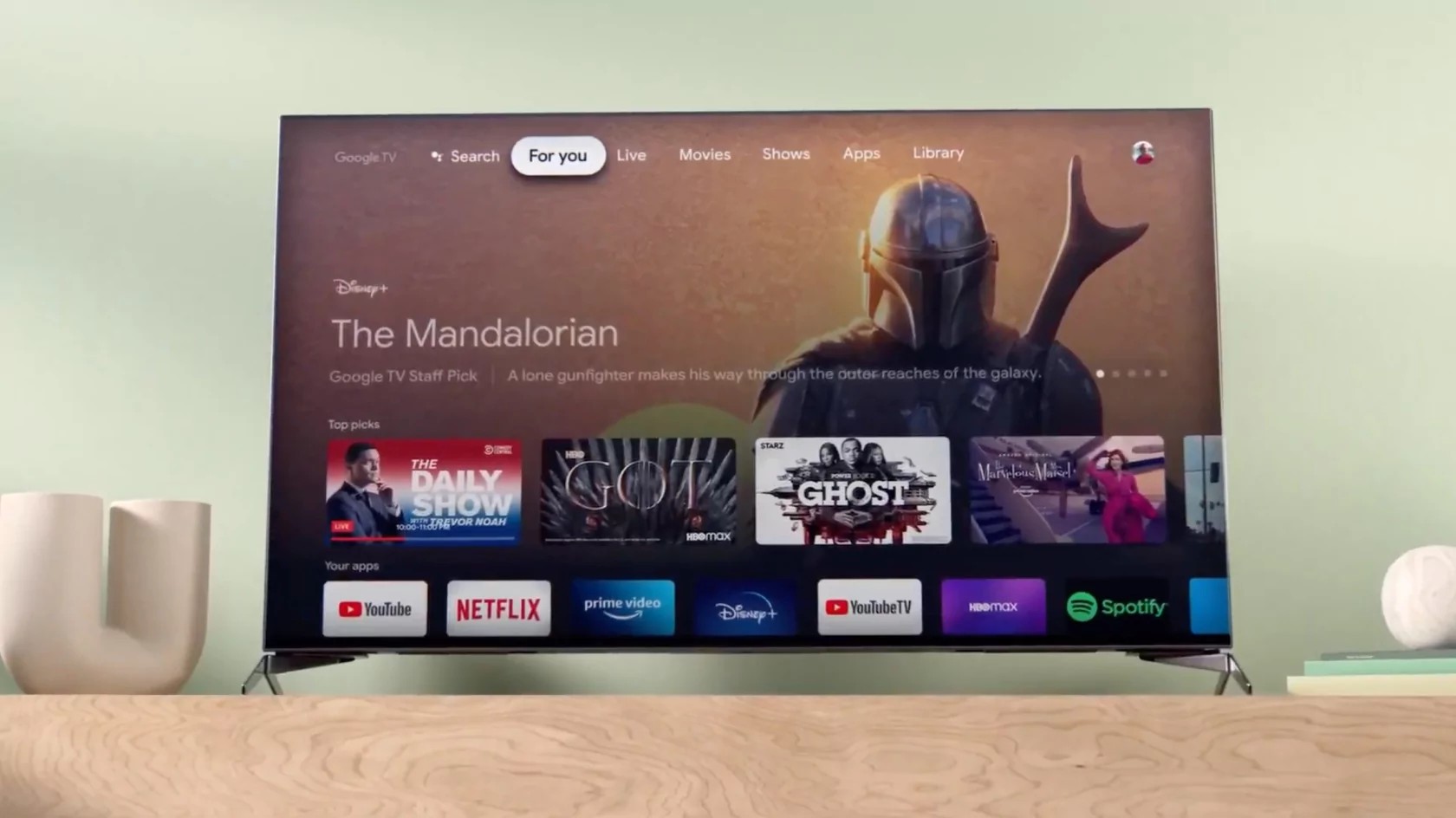
    Google TV is an app available for both Android and iOS devices. The app allows you to find movies and television shows that you can watch on demand from several platforms including Pluto TV, Tubi TV, Plex, Prime Video, Peacock, YouTube, and more. 9to5Google found code hidden in the latest version of an app that Google listed in the Play Store. One bit of code said, “Enjoy 50 channels of live TV without the need to subscribe, sign-up, or download.”
    That sure sounds good. The live television channels, unlike the platforms that Google TV offers today, do not require you to download a third-party app. The code reveals that there should be a variety of live programming including “news, sports, movies, and shows.” Even more interesting, 9to5Google unearthed a graphic showing 34 of the 50 live television channels.
    That list includes:
    • ABC News Live
    • America’s Test Kitchen
    • American Classics
    • The Asylum
    • Battery Pop
    • CBC News
    • ChiveTV
    • Deal or No Deal
    • Divorce Court
    • Dry Bar Comedy
    • FailArmy
    • Filmrise Free Movies
    • Hallmark Movies & More
    • It’s Showtime at the Apollo!
    • Kevin Hart’s LOL! Network
    • Love Nature
    • Maverick Black Cinema
    • MooviMex
    • Nature Vision
    • NBC News Now
    • Newsmax TV
    • Nosey
    • The Pet Collective
    • Power Nation
    • Reelz
    • Teletubbies
    • Today All Day
    • Toon Goggles
    • USA Today
    • World Poker Tour
    • Wu-Tang Collection TV
    • Xumo Crime TV
    • Xumo Movies
    • Xumo Westerns
    Again, these are just some of the 50 channels that will be offered to Google TV users. When this will roll out-if it does-is unclear. The app still has a long way to go to match the quantity of the content available on Samsung TV Plus which supports over 200 channels.
    Android users can download the app from the Google Play Store. Apple iPhone users can download the app from the App Store. Keep in mind that until the “Google TV channels” appear, the Google TV app is a way to manage those streaming third-party apps that you use to watch movies and television shows. The app also helps you find where your favorite movies and television shows are streaming, and by looking at the content that you give thumbs up or thumbs down to, Google’s algorithm will help recommend shows and movies for you to watch.
  • HBO Max, Discovery+ to be merged into a single streaming platform

    HBO Max, Discovery+ to be merged into a single streaming platform

    It looks like Warner Bros. Discovery is determined to put the nail in the coffin for HBO Max. The giant announced plans to merge both services in the summer of 2023, but that comes with some massive budget cuts and layoffs.

    The recent news that Batgirl has been scrapped after the movie was (almost) finished, pretty much sums up the changes Warner Bros. Discovery has in store for HBO Max. As many of you probably know already, HBO Max is heavily focused on movies and TV series, while Discovery is now mostly known for its reality shows from HGTV, Food Network and Discovery Channel.

    Earlier this week, Warner Bros. Discovery announced that HBO Max and Discovery+ will be launched in the United States as a single service next year. According to JB Perrette, CEO and president of global streaming and games for Warner Bros. Discovery, the new streaming platform will combine the best elements of both services.

    According to the company’s Q2 2022 earnings report, Discovery+ will be the core of the new platform, while HBO Max’s portfolio will be limited to Originals. Although the current catalog will be carried over, no new movies or TV shows will be made outside of the Originals offering. HBO Max had major performance issues during big releases, which convinced Warner Bros. Discovery to cut deep into the streaming service’s budget.

    Warner Bros. Discovery reported a huge $3.4 billion net loss in Q2 2022, so the company is now trying to push Discovery+, its more successful service, to more customers, while cutting back on HBO Max productions or distribution deals. The new HBO Max + Discovery Plus changes will only affect customers in the United States.

    In related news, AT&T announced it has reached a new agreement with Warner Bros. Discovery for the distribution of HBO Max, after the carrier removed the offering from its wireless plans back in June.
  • YouTube might soon let you zoom in on videos

    YouTube might soon let you zoom in on videos

    A new useful feature might soon come to YouTube. Apparently, the video platform is working on a new option called “Pinch to zoom,” which will let you zoom in on the videos you watch by pinching the video player with two fingers.

    At the moment, Pinch to zoom is only an experimental feature, but YouTube Premium subscribers can freely enroll in the testing through YouTube’s experimental features site and try it themselves. However, they can only do so until September 1st. After that, the Pinch to zoom test won’t be available.

    Most likely, after September 1st, based on Premium subscribers’ feedback, YouTube will decide if it will officially release Pinch to zoom on its platform or just scrap the project entirely.

    If you regularly watch YouTube videos, you know there could be many instances where you would like to zoom in on a portion of the video. For example, tutorial clips often arrange information in small tables, and a zoom-in option would really help you read the displayed data more easily. Or maybe there is a small detail in the latest video of your favorite YouTuber that you would like to zoom in on in order to pay more attention to. Whatever the reason, a zoom-in option on YouTube will most likely be a very useful feature. We really hope YouTube decides to release it to all its users after the testing is finished.

  • Netflix partners with Microsoft for upcoming ad-supported plan

    Netflix partners with Microsoft for upcoming ad-supported plan

    After it teased the upcoming launch of an ad-supported subscription plan, Netflix has now revealed that it picked Microsoft to help make that happen. Under the agreement, all ads served on Netflix will be exclusively available through the Microsoft platform.

    “It’s very early days and we have much to work through. But our long-term goal is clear. More choice for consumers and a premium, better-than-linear TV brand experience for advertisers. We’re excited to work with Microsoft as we bring this new service to life,” said Netflix COO Greg Peters.

    Netflix has been making headlines lately with announcement involving layoffs, after the streaming giant reported losses in the previous quarter. Early this year, Netflix reported a loss of 200,000 subscribers, but that feels extremely negligible compared to the service’s subscriber base of over 221 million.

    The recent subscriber base decline doesn’t really justify so many layoffs, but perhaps Netflix is afraid that will become a trend. That said, the launch of a new ad-supported plan will certainly increase its customer base.

    However, it remains to be seen if the company will manage to turn those casual consumers into paying customers following the launch of the ad-supported plan later this year.