Retail News CRM

Category: E-Tailing

Retail News Asia is committed to providing both local and global retailers with the latest E-Commerce & Etail news throughout the Asian market. This on a daily base.

  • Australia’s Coles Supermarkets enters Malaysia via Jaya Grocer

    Australia’s Coles Supermarkets enters Malaysia via Jaya Grocer

    Australia’s leading retailer Coles Supermarkets has entered the Malaysian market, bringing in 200 products through an exclusive collaboration with Malaysian supermarket Jaya Grocer.

    The deal allows Jaya Grocer to expand their Australian product offerings with over 1,000 products from Australian-based brands, including Coles, available at all 43 stores and for GrabMart delivery nationwide.

    The well-known Australian home-grown supermarket chain is renowned for its diverse range of quality fresh ingredients and imported goods.

    “Coles has been exporting high-quality Australian food for over 20 years to more than 30 countries.

    “We think Malaysia is a great country and with Jaya Grocer and GrabMart supporting our brand, we hope growth will continue into the future,” said Coles’ general manager for exports Will Mulholland at a ceremony here, today.

    He said Coles would broaden its offerings to include Australian dairy products and ice creams.

    At the moment, most of its products are predominantly placed in the grocery aisle.

    “We are here for the long term. Jaya Grocer’s great offerings and presentation fit very well with our stores in Australia,” said Mulholland.

    Shoppers enjoy up to a 15 per cent off some of Coles’s top-selling products such as Coles Rice Crackers Seaweed, Coles Chocolate Finger Biscuits, Coles Drinking Chocolate and Coles Hot Chocolate Sachets until July 9, 2023.

    There will be more value deals and discounts every month via Jaya Grocer’s membership programme powered by Grab. Access to the membership programme is directly via the Grab mobile app.

  • Coupang launches luxury beauty shopping service Rocket Luxury

    Coupang launches luxury beauty shopping service Rocket Luxury

    South Korea’s top e-commerce retailer Coupang said Monday it has launched a new service allowing customers to buy luxury beauty brands’ products at its platform.

    At Rocket Luxury, customers will be able to purchase products of 16 high-end beauty brands from home and abroad, including Estee Lauder, MAC, Bobby Brown, and Hera, directly bought by Coupang.

    The products will be delivered through the “rocket delivery” service, which offers delivery service within 24 hours upon order.

    For members of Coupang’s paid subscription service, Wow, the company will provide free delivery and free return service.

    “Customers who use luxury beauty brands will be able to buy at Rocket Luxury with trust as it only provides genuine products certified by Coupang,” Lee Byeong-hee, the head of Coupang’s retail division, said.

  • Pattern Identifies Key Shopping Categories to Watch This Amazon Prime Day

    Pattern Identifies Key Shopping Categories to Watch This Amazon Prime Day

    Home & Kitchen, Electronics, Books, Sports and Fitness Predicted to be Popular

    Amazon Prime Day, the two-day members-only sales event being held from 11-12 July, is expected to reach new heights in 2023. New research within Pattern’s fifth annual ‘Marketplace Consumer Trends Report – 2023’, shows 43% of Australians now have access to Amazon this year, presenting local brands with significant opportunities for revenue.

    “In spite of ongoing cost of living pressures impacting household budgets, it’s not expected that Amazon Prime Day will feel the force of reduced consumer spending. Our research shows 84% of consumers expect to spend more or the same amount shopping on the marketplace, and only 16% of consumers are planning to reduce their spend. This bodes well for local brands participating in Prime Day, as it is expected there will be strong consumer participation and opportunity for sales,” said Merline McGregor, General Manager of Pattern Australia.

    To assist local brands in planning their Prime Day activities, the shopping categories Australian consumers indicated they would most likely consider purchasing on Amazon are:

    • 58% would consider buying Home & Kitchen products
    • 57% would consider buying Electronics & Computer Equipment
    • 55% would consider buying Books or eBooks
    • 47% would consider buying Sports, Fitness and Outdoor Products
    • 44% would consider buying Toys, Kids and Baby Products
    • 44% would consider buying Luggage and Travel Gear
    • 37% would consider buying Skin Care and Make-up.

    “The popularity of these product categories across the Amazon Australia marketplace can (in part) be linked to the fact that there are a large and growing number of sellers within these categories, leading to wider ranges of products for consumers to choose from and competitive pricing,” McGregor explained.

    While shoppers participating in Prime Day sales will be eager for bargains, high value goods will also attract interest due to Amazon’s shopper demographic. High income earners are most likely to shop on Amazon compared with any other online marketplace – 36% of Amazon shoppers are high income earners, versus 21% for marketplaces overall.

    Australian businesses have significant opportunities for brand exposure and growth through Prime Day, with 30% of consumers stating they are open to buying from new brands on Amazon if they can’t find the brand they are looking for. This also presents a risk for brands not present on Amazon or participating in Prime Day, who may lose customers if they aren’t providing consumers the products they are looking for on the platform, at the right time.

    Importantly for brands considering listing on Amazon, consumers are becoming increasingly loyal to shopping on the marketplace, with 91% of shoppers indicating they had purchased multiple times from Amazon over the last 12 months, up from 82% in the previous year. Research also indicates those purchasing at least monthly had doubled in the past twelve months, and Prime deliveries are up 60% over the past year.

    “Prime membership is growing strongly in Australia. As Prime members rise, so too will the number of shoppers taking part in Prime Day and businesses looking to sell on the Amazon marketplace. Brands should proactively and strategically prepare for Prime Day by aligning their offerings with key categories for the opportunity to attract the most attention,” concluded McGregor.

    Download the full ‘Australian Marketplace Consumer Trends  Report – 2023’ report HERE


  • Casetify unveils its first flagship store in Japan

    Casetify unveils its first flagship store in Japan

    Casetify is embarking on a massive retail expansion as it works towards its goal of becoming a $1 billion company.

    Casetify, which is known for its customizable tech accessories like phone and laptop cases, is on track to open 100 stores by 2025. This is a significant step up from Casetify’s existing 28 locations, all of which are located in the Asia-Pacific region. Twenty stores will be in the U.S., with the remaining 80 in other markets.

    At the same time, Casetify is launching a new store concept in Osaka, Japan, this week. Unlike Casetify’s other stores — which are known as Studios, and operate as customization stations — Casetify’s Osaka store will be under its new Flagship banner. The Flagship stores are more focused on the interests and designs of their home countries and cities and include more local artist collaborations and in-person events. The Osaka Flagship store, for instance, features floor-to-ceiling Japanese lanterns and cylindrical shoji screens, under the direction of architect André Fu.

    These developments come at a time of significant growth for Casetify. The company was initially founded in 2011 as a way to turn people’s Instagram photos into phone cases. Since then, the business has expanded into other categories such as laptops, AirPods and Apple Watches, inked collaborations with major properties such as the NBA, “Harry Potter” and “Star Wars” and become popular with celebrities including Kylie Jenner and Gigi Hadid. Casetify has sold more than 15 million phone cases to date, and from 2020 to 2022, it increased its revenue by 140%. While Casetify ended last year with $300 million in revenue, it aims to become a $1 billion company by 2025.

    Part of that effort involves moving more towards omnichannel — a strategy that involves physical retail. While Casetify is a large player in e-commerce, it has added 10 stores since last December. Casetify recently hosted pop-ups in New York City and Santa Clara, California.

    The company sees a lot of value in physical locations, Wesley Ng, co-founder and CEO of Casetify, told Modern Retail. “Our brick-and-mortar program is a huge component of our relationship with consumers — not just how they discover us, but also how they feel about Casetify as a brand,” Ng explained.

    At Casetify Studios, shoppers can custom-produce products on site by picking different designs and color swatches. They can touch and feel products they might only know from social media, and they can bring in their old Casetify products to recycle under the Re/Casetify program.

    Casetify is considering opening more Flagship locations, but likely not within the year, according to Ng. Casetify is planning, however, to grow its Studio footprint in America and Europe and will have more locations by the end of 2023. As far as building 100 stores by 2025, “We are on a good track, but we are not obsessed over a number,” Ng said.

    “It’s more like a horizon we’re constantly walking to,” he explained. “It is okay if it takes a bit longer than that. We focus a lot on profitability per outlet location in order to ensure we keep remaining strong and healthy as a private company. So as long as we are achieving that and growing steadily, I’m satisfied.”

    Any company looking to build more stores around the world needs to be aware of how brick-and-mortar is viewed in different markets, Michael Felice, associate partner at Kearney, told Modern Retail. “You can’t just lift and shift a product,” he said.

    Felice said that Japan, where Casetify is launching its first Flagship store, is unique because its consumers are digitally savvy, but that the country’s businesses rely more on brick-and-mortar than direct-to-consumer. With that in mind, “you need to be offering a different level of service and quality and innovation in your store,” he said. Felice added that consumers in Japan tend to value quality and connection, and that retailers need to cater to those preferences.

    Overall, retailers “need to ensure that you’re matching the levels of service and innovation that are expected to win in the market better,” Felice added. “I think [a good idea is] customizing each market entry. And that may mean curating with local creatives, that may mean changing your levels of service, that likely means changing your packaging.”

    Casetify’s Flagship stores, which vary based on location, can help accomplish these goals. But there’s a bonus in personalizing a business: Attracting highly-coveted young audiences, Barry Thomas, senior global thought leader at Kantar, told Modern Retail. “Localizing stores is so paramount for consumers, especially Gen Z and Millennial consumers,” he said. And the success of those stores are crucial, as Kantar expects 75% of sales to be offline or in stores by 2027.

    When it comes to Gen Z and millennials, “Their preferences, their interactions, their experiences are all customized,” Felice added. “I think the idea of allowing them to express that with local creative into a product is one that we haven’t seen much of and likely [has] an experiential aspect that ties closely to brick-and-mortar.”

  • Daniel Zhang steps down from top Alibaba Group

    Daniel Zhang steps down from top Alibaba Group

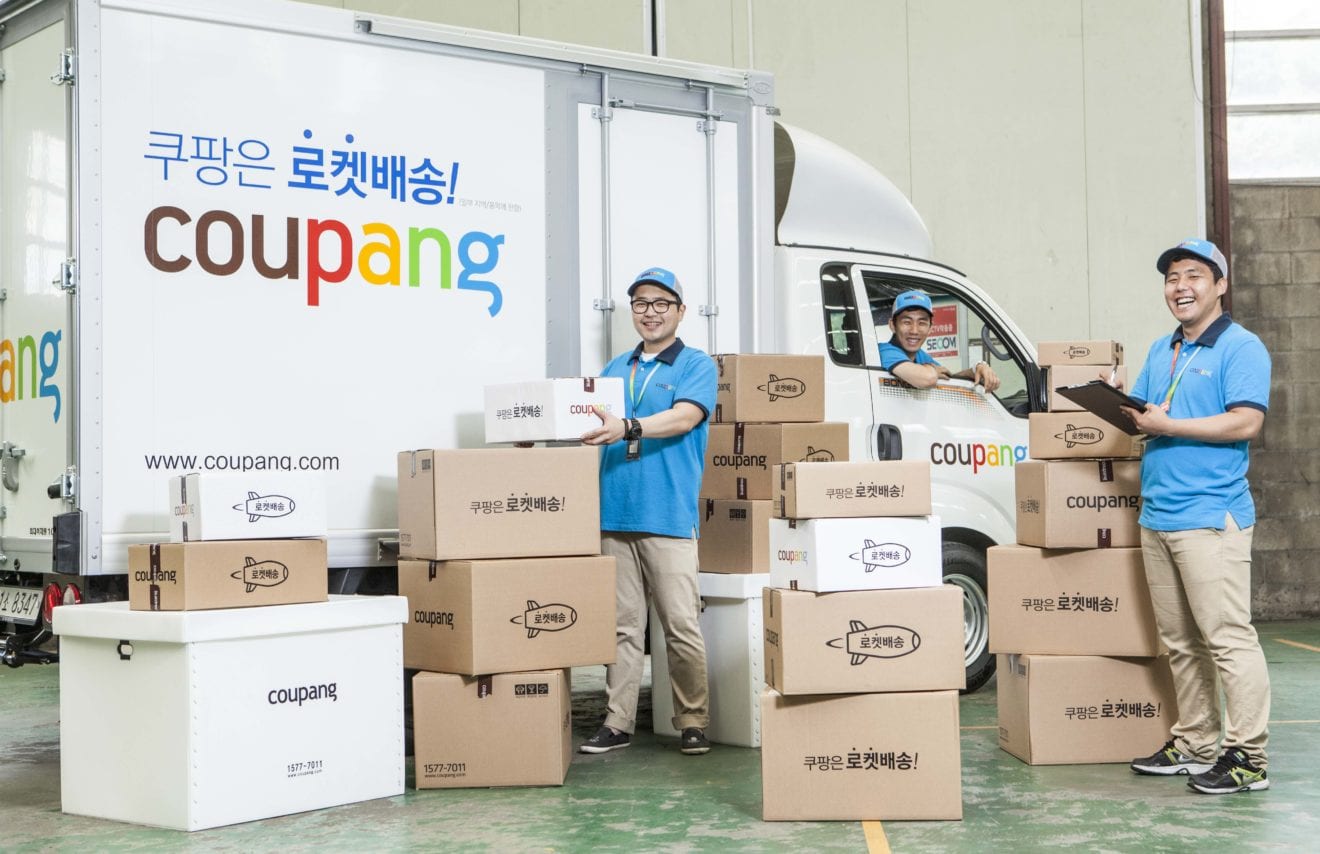
    Alibaba Group has appointed Joseph C Tsai and Eddie Yongming Wu as the company’s new chairman and CEO respectively, marking the group’s one of the most significant organisational changes.

    The appointments will take effect on September 10. Tsai and Wu will succeed Daniel Zhang, who will continue to lead Alibaba Cloud Intelligence Group as chairman and CEO.

    “This is the right time for me to make a transition, given the importance of Alibaba Cloud Intelligence Group as it progresses towards a full spin-off,” said Daniel Zhang, chairman and CEO of Alibaba Group. “The emergence of generative AI has also opened up exciting new opportunities that Alibaba Cloud Intelligence Group is well-positioned to capture.”

    “Daniel has made exceptional contributions to the development of Alibaba Group since joining the company in 2007,” said Tsai, executive vice chairman of Alibaba Group. “He demonstrated extraordinary leadership in navigating unprecedented uncertainties affecting our business over the past few years.”

    Alibaba Group’s newly appointed CEO Yongming Wu, one of the group’s co-founders aside from Jack Ma and Tsai, will continue to concurrently serve as chairman of Taobao and Tmall Group. Wu was the technology director of Alibaba at the company’s inception in 1999. He founded Vision Plus Capital, a venture capital firm focused on investing in advanced technologies, enterprise services and digital healthcare in 2015.

    “Eddie was instrumental in architecting our technology platforms and guiding our strategic direction,” Tsai said. “He led the creation of our proprietary monetization platform on Taobao and Tmall, and drove the launch of the Mobile Taobao App to propel our company to the mobile-first era.”

    The group said last Thursday it is shifting its focus to building local businesses and online platforms outside of China with Europe as the top priority.

  • Alibaba aims to expand local business in Europe

    Alibaba aims to expand local business in Europe

    Alibaba Group will make Europe top priority as it focuses on building local businesses and online platforms outside China, the president of the e-commerce giant said on Thursday.

    “What we will focus more for the future is to build local businesses, so you will see something called TMall which we have in China become TMall in Europe, which means we will serve local brands and local customers in local markets,” J. Michael Evans told a technology conference in Paris.

    “We have started with a pilot project in Spain which we will expand across Europe,” he said.

    Alibaba announced in March it would split into six units and explore fundraising or listings for most of them, following a two-year regulatory crackdown on China’s tech sector.

    Its e-commerce business is to be split, with one side covering Alibaba’s domestic-facing e-commerce marketplaces and the other its overseas e-commerce marketplaces such as Lazada, which serves Southeast Asia, and AliExpress.

    Taobao and TMall are China’s dominant e-commerce marketplaces in China.

    Asked about Alibaba founder Jack Ma, China’s best known entrepreneur who withdrew from public view in late 2020 after giving a speech criticising China’s regulatory system, he said Ma remained Alibaba’s biggest shareholder and still cared very much about the company.

    Ma left mainland China in late 2021 for stints in Japan, Spain, Australia and Thailand, according to photographs, but returned in March a day before Alibaba announced its restructuring. He has not made any public comments during that period.

    “Jack is alive, he is well, he is happy. He is teaching at a university in Tokyo and spending more time in China,” Evans said.

    “He is the largest shareholder at Alibaba. This is his company, he cares as much about this company today as he did when he started it and I expect this to continue for as long as Alibaba and Jack Ma are here.”

  • Online exports expected to be economic growth driver

    Online exports expected to be economic growth driver

    Online exports are seen as a “launchpad” that helps businesses maintain sustainable revenue and increase exports in the context of rising inflation and consumers tightening their spending, according to insiders.

    Tran Thi Yen Phi, CEO of DSW Services and Trading Company Ltd, said the operation of online stores on cross-border e-commerce platforms has helped the firm improve its revenue.

    Vice Director of Proline Vietnam Production and Trading Co., Ltd Nguyen Xuan Hai Yen said online export is the most efficient and cost-effective way for small- and medium-sized enterprises (SMEs) to quickly reach customers.

    Meanwhile, Roger Lou, National Director of Alibaba.com in Vietnam, said despite significant challenges and obstacles, a number of sectors of Vietnam such as agriculture and food and beverage have achieved record-breaking export figures.

    The official expressed the belief that global e-commerce can help Vietnamese SMEs increase their production scale, and effectively exploit international markets towards further expanding their exports.

    Amazon Global Selling’s report in 2022 showed that Vietnam’s retail revenue from cross-border goods reached VND80 trillion ($3.4 billion) in 2022, and can hit VND250 trillion by 2026.

    Amazon Head of Global Selling Vietnam Gijae Seong said Vietnam boasts advantages to promote exports through online platforms.

    Last year, nearly 10 million Vietnamese items were offered on this e-commerce platform, up 35% compared to the same period of 2021.

    In its latest survey, Access Partnership stated that Vietnam’s export revenue through e-commerce platforms is likely to reach nearly VND300 trillion by 2027 if domestic firms are supported to promote online exports.

    Addressing a recent workshop, Lai Viet Anh, Vietnam e-Commerce and Digital Economy Agency under the Ministry of Industry and Trade, said with an annual retail e-commerce growth rate of over 20%, Vietnam is being classified among the countries with the sharpest e-commerce growth rate in the world.

    This is a potential industry and coming in line with the Government’s digital economic policy, she stressed, adding that the MoIT has been deploying programs to support SMEs in enhancing cross-border selling skills, and exploiting features of global e-commerce platforms.

    According to a report on the Vietnam E-Business Index (EBI) 2023 conducted by the Vietnam E-commerce Association (Vecom), Vietnam’s e-commerce market is expected to grow by 25% by the end of 2023.

    The booming e-commerce sector in 2023 and development in the subsequent years is aided by a series of growth drivers such as the wave of digital transformation, consumers’ trust, technological infrastructure, and favorable mechanisms and policies issued by the Vietnamese Government, the report said.

  • Walmart refuses to admit it might be better off accepting Apple Pay

    Walmart refuses to admit it might be better off accepting Apple Pay

    If you use Apple Pay or Google Pay when you checkout at the supermarket. the pharmacy, or other retail stores, you see how convenient the whole thing is even if you have to use your fingerprint or face to verify your identity. Apple and Google take such a small slice of your purchase that the big money is made on volume. For example, Apple is believed to earn .15% (not 15% but .15%) of the value of a transaction paid for with Apple Pay. So a $10 purchase gives a penny and a half to Apple while a $100 purchase puts 15 cents in its pocket.
    When you think about how many times a day an iPhone is whipped out to cover a purchase, you can see that even while getting crumbs from your transaction cake, it adds up to plenty of money for the company over a single 24-hour day. Apple would probably be collecting more money from Apple Pay if the nation’s largest retailer was onboard. Yes, that’s right. You cannot use Apple Pay at Walmart.
    Considering that every day the discount retailer brings in almost $1.6 billion in revenue, certainly a small percentage of that money would have ended up in Apple’s coffers thanks to Apple Pay. Walmart does have its own Walmart Pay system that works with QR codes. We first told you about Walmart Pay when the retailer was expanding it back in 2016 and it just has not caught on the way Walmart thought it would.
    Walmart’s former Senior VP Daniel Eckert told Bloomberg in 2017 that Walmart Pay would soon surpass Apple Pay in the number of shoppers who use the service in eligible stores. At the time, Eckert said, “If daily enrollments don’t slow down, I think that’s pretty well in the cards shortly. I would have to imagine we are getting pretty close.” Those words go right up there with former Microsoft CEO Steve Ballmer’s initial response to the iPhone when he said about Windows Mobile, “I like our strategy. I like it a lot…right now we’re selling millions and millions and millions of phones a year. Apple is selling zero phones a year.”
    Looking at Walmart, it’s hard to believe that giving up .15% of the value of a transaction is going to do damage to the company’s profit margin dramatically. And it could more than make up the difference by getting back some of the business that has gone to Target and other retailers that support Apple Pay. Perhaps the company is too invested in Walmart Pay to admit it has made a mistake.
    With that in mind, kudos to Kroger for realizing that not allowing the use of Apple Pay at the cash register was not a good strategy. Now we’ll see whether Walmart can make its own admission. We should also point out that Walmart does not accept Google Pay or any other mobile or digital wallet.
  • Startup e-commerce platform Temu expands to Europe

    Startup e-commerce platform Temu expands to Europe

    Ultra low-cost e-commerce platform Temu, owned by PDD Holdings has started selling to European markets including France, Germany, Italy, The Netherlands, Spain and the United Kingdom.

    The Temu.com website now shows all of these markets on its location drop down menu in addition to the United States, Canada, Australia and New Zealand, where it had previously already been available.

    PDD Holdings did not immediately respond to Reuters request for comment on the expansion.

    Temu, the sister site of Chinese discount e-commerce platform Pinduoduo, has made a big splash since launching in the United States last September, selling shoes, jewelry, beauty accessories and home goods directly from Chinese merchants for very low prices.

    It’s a similar cross-border model to the one that has propelled Shein, which ships to more than 150 countries, to become the world’s biggest fast-fashion brand with annual sales of more than $58.5 billion.

    Temu, which is headquarted in Boston, saw 19 million US downloads in the first quarter of this year, according to mobile intelligence firm Sensor Tower, which also ranks Temu as the most downloaded app on Apple and Google Play stores in the United States.

    The platform’s gross merchandise value – total sales before expenses – grew from $3 million in September to $192 million in January, according to data firm YipitData.

  • Amazon launches program to identify and track counterfeiters

    Amazon launches program to identify and track counterfeiters

    The company announced that Amazon launched its Anti-Counterfeiting Exchange (ACX), an initiative to help retail stores label and track marketplace counterfeits as part of the e-commerce giant’s efforts to crack down on organized crime on its platform on Thursday.

    Online marketplaces in the United States, including Amazon face hurdles in keeping counterfeiters off their platforms and fake merchandise from entering their warehouses. The new program mimics data exchange programs by the credit card industry to find scammers and identify their tactics.

    Stores and Amazon marketplace sellers can anonymously contribute information and records flagging counterfeiters to a third-party database or use the database to avoid doing business with the bad actors.

    “We think it is critical to share information about confirmed counterfeiters to help the entire industry stop these criminals earlier,” Dharmesh Mehta, Amazon’s vice president of selling partner services, said in a statement.

    The Seattle-based retail giant piloted the anti-counterfeiting initiative in 2021 with an undisclosed number of apparel, home goods and cosmetics stores, where counterfeiting is most common.

    As part of other anti-counterfeiting efforts, Amazon is also working with the U.S. Customs and Border Protection on a data pilot that helps the company identify and target low-value e-commerce shipments that may be counterfeit goods or break other regulations.

  • Amazon launches program to identify and track counterfeiters

    Amazon launches program to identify and track counterfeiters

    The company announced that Amazon launched its Anti-Counterfeiting Exchange (ACX), an initiative to help retail stores label and track marketplace counterfeits as part of the e-commerce giant’s efforts to crack down on organized crime on its platform on Thursday.

    Online marketplaces in the United States including Amazon face hurdles in keeping counterfeiters off their platforms and fake merchandise from entering their warehouses. The new program mimics data exchange programs by the credit card industry to find scammers and identify their tactics.

    Stores and Amazon marketplace sellers can anonymously contribute information and records flagging counterfeiters to a third-party database or use the database to avoid doing business with the bad actors.

    “We think it is critical to share information about confirmed counterfeiters to help the entire industry stop these criminals earlier,” Dharmesh Mehta, Amazon’s vice president of selling partner services, said in a statement.

    The Seattle-based retail giant piloted the anti-counterfeiting initiative in 2021 with an undisclosed number of apparel, home goods and cosmetics stores, where counterfeiting is most common.

    As part of other anti-counterfeiting efforts, Amazon is also working with the U.S. Customs and Border Protection on a data pilot that helps the company identify and target low-value e-commerce shipments that may be counterfeit goods or break other regulations.

  • Buy2Sell Vietnam opens two new showrooms in Hanoi, HCMC

    Buy2Sell Vietnam opens two new showrooms in Hanoi, HCMC

    Buy2Sell Vietnam established two new showrooms in Vincom Mega Mall in Hanoi and SC Vivo City in Ho Chi Minh City last month.

    The Hanoi showroom is on the 1st floor of Vincom Mega Mall Times City and the HCMC showroom on the 3rd floor of SC VivoCity.

    Buy2Sell Vietnam plans to expand its new showroom chain to more than 100 stores in shopping centers in Southeast Asia during 2024-2030.

    Thousands of cosmetics, F&B, houseware, and appliances products… are exclusively distributed and displayed at these stores.

    All products are directly imported from over 60 countries, including the U.K., France, the U.S., Italy, Switzerland, Australia, Korea, and Japan.

    Vang Online is a high-end imported beverage distribution brand under Buy2Sell, specializing in wine and spirits, introducing numerous international premium beverage brands to the Vietnam market.

    In Vietnam, Buy2Sell is renowned as one of the first B2B e-commerce platforms focused on distributing imported goods since 2015, especially from brands yet to enter the market.

    Besides Vincom Mega Mall and SC ViVo City, Buy2Sell has invested in establishing its store chains at other top-tier shopping centers, including Lotte Mart (part of Lotte Korea Group).

    Buy2Sell has also invested in its online e-commerce platform, playing its role as a bridge for international brands to access the Vietnamese market more easily.

    Vincom Mega Mall Times City covers more than 230,000 m2 of various spaces including retail, food courts, supermarket and other entertainment venues, which is developed by Vingroup.

    SC VivoCity covering an area of around 62,000 m2 is developed by Mapletree, a major real estate investment, development, and fund management company in Asia.

  • Coupang to exit Japan to focus on Korea, Taiwan

    Coupang to exit Japan to focus on Korea, Taiwan

    Coupang has decided to withdraw its e-commerce business from Japan, 21 months after it began offering its online delivery service there, a company official said Sunday.

    “After testing our service as a pilot version, we have decided to withdraw our business from Japan,” a Coupang Japan official said.

    The Japanese daily, Nikkei, reported Saturday that Korea’s largest e-commerce firm will terminate its delivery service for fresh food and daily necessities in Meguro and Setagaya, Tokyo, on March 21.

    The company has been operating a quick commerce service that delivers online customer purchases within 10 minutes in the two cities.

    It has been selling nearly 5,000 grocery items on its shopping platform in partnership with local department store, Takashimaya and the dollar-store, Daiso.

    However, local consumers find Coupang’s service less attractive because Japan already has a strong convenience store business culture.

    Also, Japan has, by far, the highest senior population in the world and many of them are not used to shopping for groceries online. About 29.1 percent of its people are over 65 years old, according to Japan’s Ministry of Internal Affairs and Communications’ data, which was released in September 2022.

    Instead, Coupang said it will focus its businesses on Korea and Taiwan.

    The e-commerce firm introduced its Rocket Delivery service for Taiwanese customers last October. It provides local consumers the choice of buying hundreds of Korean items online through the direct-purchase service.

    Taiwan has a high population density and is an ideal environment to run an e-commerce business. Taiwanese consumers are also very interested in Korean products due to the influence of Korean popular culture.

    Coupang headquarters in Seoul confirmed the withdrawal of its business from Japan, but declined to comment further on the issue.

    Meanwhile, Coupang achieved record-high sales of 26 trillion won ($19.6 billion) last year. In the third quarter of 2022, the company turned out a surplus for the first time in eight years with its Rocket Delivery service.

  • Apple’s 5G modem will be built by TSMC using its 3nm process node

    Apple’s 5G modem will be built by TSMC using its 3nm process node

    Apple has scooped up all of TSMC’s 3nm production capacity for this year. This will be the first shipment of 3nm chips made by the world’s largest foundry. To explain in simple terms what this is all about, a lower process node means smaller transistors are used. This allows more transistors to fit inside a chip and this transistor count is important. The more transistors in a chip, the more powerful and energy efficient it is.

    For example, the A13 Bionic used in the iPhone 11 line back in 2019 was produced using the 7nm node and contained 8.5 billion transistors. The 5nm A14 Bionic used in the 2020 iPhone 12 series was equipped with 11.8 billion transistors. The following year, the A15 Bionic, made using the second-gen 5nm process node, was used on the iPhone 13 line and carried 15 billion transistors. And last year’s iPhone 14 Pro models feature the A16 Bionic. The latter was manufactured using a 4nm process node and the transistor count is close to 16 billion.

    Since Apple has wrapped up all of TSMC’s 3nm production for 2023, it makes sense to expect Apple’s in-house 5G modem to be produced using the 3nm node. According to the Commercial Times, supply chain sources state that risk production of the modem will start in the second half of this year. This is when the foundry builds chips while still working out any issues. Yields are low. That is followed by volume production. Wafer output is expected to increase slowly in the first half of next year.

    Based on this timeline, it appears that Apple will continue using Qualcomm’s Snapdragon 5G mobile chips this year. The iPhone 14 line uses the Snapdragon X65 5G modem chip while the iPhone 15 series will most likely be equipped with the Snapdragon X70 5G modem chip. This would dovetail with reports from reliable analyst Ming-Chi Kuo, Qualcomm CEO Cristiano Amon, and reliable tipster Ross Young, all of whom expect Apple to debut its in-house 5G modem chip with the iPhone 16 series in 2024.
    Apple was hoping to use its in-house 5G modem chips with the iPhone 15 series but patent issues and other problems have forced Apple to delay the launch of the component. In the summer of 2019, Apple spent $1 billion to buy most of Intel’s smartphone modem business and has been developing the component ever since.
    While Apple executives reportedly had a high opinion of the quality of Qualcomm’s modem chips, it wasn’t happy with how Qualcomm sells these chips to smartphone manufacturers. First, Qualcomm demands that customers pay for a license (no license-no chips is Qualcomm’s mantra) and Qualcomm also charges for the chips themselves.
    The Nothing Speaker’s design has leaked, showcasing a unique new product
  • E-commerce leverage in-app games to drive consumer spending

    E-commerce leverage in-app games to drive consumer spending

    Three in 10 people visited e-commerce platforms even if they had nothing to buy.

    Digital commerce platforms like Shopee used in-app games to allow users to win coins that increase their time on the app, which will ultimately raise consumer spending, a recent Euromonitor International study said.

    The study showed that 33% of consumers liked to look in stores even if they had nothing to purchase whilst more than half of consumers said they played mobile video games weekly.

    “Gamifying commerce experiences can improve loyalty schemes and enrich long-term engagement,” said Euromonitor.

    Aside from gaming programs, Gucci is also tapping metaverse to connect with the younger audience.