Retail News CRM

Category: E-Tailing

Retail News Asia is committed to providing both local and global retailers with the latest E-Commerce & Etail news throughout the Asian market. This on a daily base.

  • Alibaba quarterly revenue misses expectations as spending slows

    Alibaba quarterly revenue misses expectations as spending slows

    Chinese e-commerce giant Alibaba Group Holding Ltd 9988.HK posted a smaller-than-expected rise in quarterly revenue on Thursday as COVID-19 curbs and a worsening economic outlook stifled consumer spending.

    Retail spending in China has sagged this year with consumers frustrated by the government’s strict zero-COVID policies that have led to frequent snap lockdowns and hurt economic activity.

    Alibaba has also had to contend with stiff competition from the likes of Pinduoduo PDD.O and ByteDance’s Douyin – the Chinese version of Tiktok – which have expanded their e-commerce offerings and taken more market share.

    The company has also yet to fully recover from a regulatory crackdown on the tech sector that has curtailed growth opportunities.

    Revenue grew 3% to 207.18 billion yuan ($28.96 billion) in the three months ended Sept. 30, compared with a Refinitiv consensus estimate of 208.62 billion yuan drawn from 25 analysts.

    Alibaba, which runs China’s largest online marketplaces Tmall and Taobao and owns a wide range of businesses from logistics to cloud services, reported net loss attributable to shareholders of 20.56 billion yuan in the quarter.

    Excluding one-off items, Alibaba earned 12.92 yuan per American Depository Share.

  • Double Day e-commerce sales likely to be muted this quarter

    Double Day e-commerce sales likely to be muted this quarter

    Double Day sales this quarter will not match those of past years since inflation remains a worry for consumers, businesses have said.

    Sales on days such as November 11 and December 12 are the year’s highest as many firms and e-commerce companies run massive promotion programs.

    According to data from French online display advertisements provider Criteo, online retail sales on November 11, December 12 and Black Friday last year were 128%, 143% and 92% higher than on normal days.

    However, on October 10 sales in Vietnam increased by only 48% compared with 125% last year.

    Sales on November 11 and December 12 would not rise by as big rates as before, Mark Gubbels, Criteo’s commercial head for Southeast Asia, said, noting that consumers would be more cautious in spending.

    Retail sales increased only 17.1% year-on-year in October compared with more than 36% the previous month.

    Inflation accelerated after the end of the third quarter, surging by 4.3% year-on-year in October.

    Nguyen Chanh Chung, owner of cosmetics brand Lagivado, said demand would not be as strong this year as in the past, while e-commerce platforms would not offer as big promotions in the last quarter as they normally do.

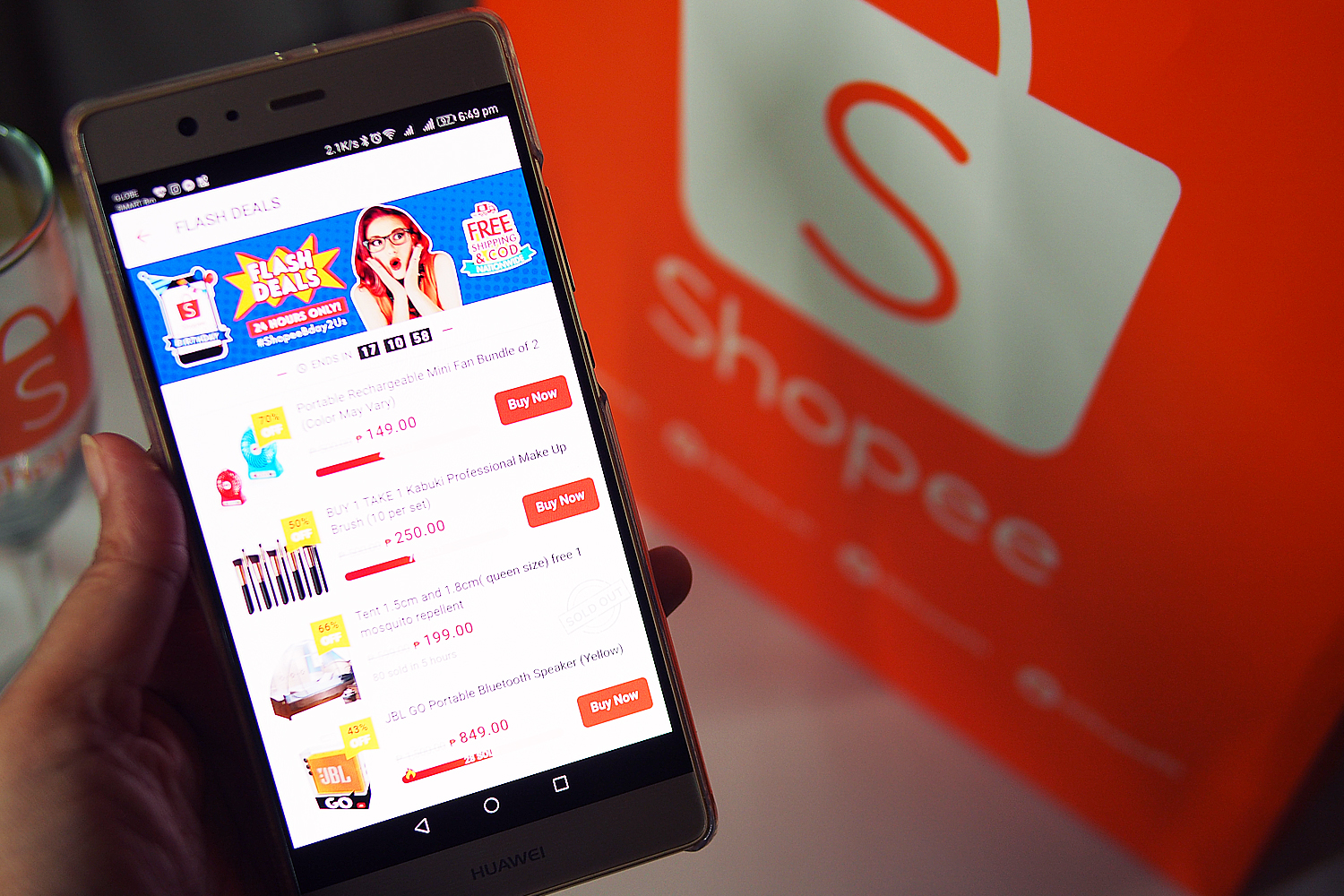
    To attract customers, Shopee and Lazada are organizing live online music shows, while the former is also offering vouchers and discounts.

    Nguyen Manh Tan, marketing director of Haravan Technology Corporation, said consumers currently like omnichannel (combining online and offline sales), the direct-to-consumer model, conversational commerce, and livestreams on social networks.

    “E-commerce businesses should apply these four business models to approach and attract customers, increase revenues and cut costs and build their brand reputation.”

    There are around 100 e-commerce platforms in Vietnam with hundreds of thousands of vendors.

    In 2020 Shopee had 210,000 vendors and Tiki had 8,800, according to tax authorities.

    The e-Conomy Southeast Asia 2021 report by Google, Temasek and Bain & Co. forecast Vietnam to surpass Thailand by 2025 to become the second biggest Internet economy in Southeast Asia at US$57 billion after Indonesia ($146 billion).

  • MacBook Air M1 prices up by over $40 in Vietnam

    MacBook Air M1 prices up by over $40 in Vietnam

    Apple authorized resellers in Vietnam have increased the prices of MacBook Air M1 by over VND1 million (more than $40) against late July when promotion campaigns were on.

    In late July, the laptop’s selling prices were VND21.7-23 million, lower than the list price in the U.S. market.

    Now, the selling prices are VND23-24 million, with VND22.8 million the lowest price offered by some resellers.

    An unnamed manager with a reseller told local media that demand for electronic devices, including laptops and tablets had decreased several months ago, so Apple, distributors and resellers launched big promotion campaigns. Prices of MacBook Air M1 in July fell to the lowest.

    Retailers including CellphoneS and Di Dong Viet said MacBook Air M1 prices have climbed up now because of the dollar value rising against the dong and the promotion campaigns coming to an end. However, purchasing power remains high in the market, they said.

    “Among our total sales of MacBook models, MacBook Air M1 accounts for some 40%,” said the manager of a The Gioi Di Dong store who did not want to be named. CellphoneS has reported the corresponding figure at 30-35%.

    At ShopDunk, MacBook Air M1 sales over the past month rose 20% against July. “It is the cheapest among Mac models, while its M1 chip’s performance and efficiency is still very good,” said manager Pham Tuan Anh.

  • Coupang Swings to Profit in Q3, the First Since 2014

    Coupang Swings to Profit in Q3, the First Since 2014

    E-commerce giant Coupang said Thursday it swung to the black in the third quarter for the first time since 2014, when it introduced its ultra-fast delivery service, Rocket Delivery.

    Net income came to $90.7 million in the July-September period, compared with a net loss of $324 million during the same period of last year, the New York-listed e-commerce titan said in a regulatory filing.

    Coupang’s operating profit came to $77.4 million, marking the first positive figure since 2014. The e-commerce giant logged an operating loss of $67.14 million in the previous quarter.

    Sales grew 10 percent on-year to $5.1 billion in the third quarter.

    Coupang said sales of its product commerce division, which includes its Rocket Delivery service, also advanced 10 percent from a year earlier to $49.5 billion.

    The number of active customers inched up on-year by 7 percent, though the increase in spending per customer was slightly lower at 3 percent.

    The top line of its new business areas, including the food delivery service Coupang Eats and video streaming service Coupang Play, inched down 6 percent from a year earlier to $154.2 million.

    The company attributed its first net profit and operating income since 2014 to improved profitability, stemming from its continued investments in tech and efforts to optimize supply chain and business processes.

    The e-commerce behemoth said its adjusted earnings before interest, tax, depreciation and amortization (EBITDA) came to $195 million, compared with a deficit of $207.4 million last year.

    Coupang made its landmark debut on the New York stock market last year in an effort to expand its global presence.

  • Chinese luxury resale platform Plum bags $100 million in funding

    Chinese luxury resale platform Plum bags $100 million in funding

    Plum, a used luxury fashion e-commerce platform, announced on November 1 that it had completed a C round of financing worth $100 million. In this round, Zhuanzhuan, a Tencent-backed leading used goods trading marketplace in China, made the strategic investment. Xu Wei, founder and CEO of Plum, said that the funds will be mainly for upgrades in service, user experience, product R&D and database construction.

    Plum was established in 2017. The platform focuses on second-hand luxury goods trading, and its products cover all categories of fashion trends such as bags, shoes, clothing, jewelry and watches. According to statistics published by Aurora Mobile, in the fourth quarter of 2021, the number of monthly active users of Plum exceeded that of Secoo, a famous luxury e-commerce platform in China, ranking first among the luxury e-commerce platforms. In addition, Plum’s business has achieved rapid growth this year, and its business income has doubled since 2022 compared with the same period of last year.

    Apart from Xu Wei, Plum was jointly founded by Pang Bo. CEO Xu Wei is the co-founder of Blink and served as the investment director at Sinovation Ventures. She is said to be a serial entrepreneur. Pang Bo is currently the CTO of Plum, who is a former senior engineer of Baidu, and has more than 10 years of technical management experience.

    In recent years, Plum is investing in improving its standardized service capabilities, focusing on building key modules in the performance operating system such as commodity identification, commodity information and price database. It aims to build the largest second-hand fashion transaction database in China.

    The cooperation between Plum and Zhuanzhuan, two second-hand trading platforms, is not only reflected in the capital level. Before this financing, Plum’s products had been available through Zhuanzhuan and other “exclusive” channels such as bags, accessories, designer shoes, watches and clothing. Plum’s products complement the other’s core 3C (Computer, Communication and Consumer Electronics) category. In addition, Plum will also do commodity recycling in Zhuanzhuan’s channel.

    The rational and low-carbon consumption concept is gaining traction and second-hand trading such as used cars, 3C items and books continue to prosper. According to an industry research report by Frost & Sullivan, the transaction scale of second-hand idle goods in China has increased from about 300 billion yuan ($41.2 billion) in 2015 to over one trillion yuan in 2020, and it is estimated that this figure will reach nearly 3 trillion yuan by 2025.

  • E-commerce platforms free from filing tax on vendor behalf

    E-commerce platforms free from filing tax on vendor behalf

    E-commerce platforms like Shopee, Tiki or Lazada will not have to file tax on vendors’ behalf and instead only provide authorities with their revenue and other details.

    Every quarter the platforms will need to submit vendor details including name, tax ID, personal ID, address, phone number and revenue, according to a new decree.

    This means a previous proposal by tax authorities to make these platforms pay tax on behalf of their vendors was not approved, with vendors instead responsible for their own tax payments.

    Insiders since last year have voiced concern over the proposal, saying that taxing vendors’ behalf will increase costs, and that they do not have enough resources to fulfill this task.

    Around 100 e-commerce platforms are operating in Vietnam with hundreds of thousands of vendors. In 2020, Shopee had 210,000 vendors and Tiki 8,800, according to tax authorities.

  • Amazon shares tumble after weak Christmas trading outlook

    Amazon shares tumble after weak Christmas trading outlook

    Amazon on Thursday forecast a slowdown in sales growth for the holiday season, disappointing Wall Street and warning that inflation-wary consumers and businesses had less money to spend.

    Amazon’s 12 per cent extended-trade stock drop erased about $140 billion in its market capitalisation, greater than the entire value of companies such as Morgan Stanley, Netflix and Lockheed Martin.

    For months, the world’s biggest online retailer has fought against troubling macroeconomic tides. It hosted not one, but two cornerstone sales events in a year: Prime Day in July, and the Prime Early Access Sale this month.

    For the summer event, it sold more items than ever before to its Prime loyalty shoppers, and, meanwhile, the company sought revenue from higher Prime subscription fees and a surcharge on some merchants.

    Net sales were $127.1 billion in the third quarter that ended Sept. 30, still a little lower than the $127.5 billion analysts expected, according to IBES data from Refinitiv.

    But the macro outlook has not brightened. In a call with reporters, Amazon Chief Financial Officer Brian Olsavsky said the company was bracing for slower economic growth.

    “We are seeing signs all around that, again, people’s budgets are tight, inflation is still high, energy costs are an additional layer on top of that caused by other issues,” he said. “We are preparing for what could be a slower growth period, like most companies.”

    European consumers in particular have spent less than their American counterparts, pinched by the war in Ukraine and higher fuel costs, which likewise increased Amazon’s expenses, he told reporters and analysts. The company’s international-segment operation loss widened to $2.5 billion in the third quarter from $0.9 billion a year prior.

    While Amazon would continue to fund earlier-stage businesses like its lucrative cloud-computing and advertising divisions, it would question costs elsewhere and proceed carefully on hiring, Olsavsky said.

    Wedbush Securities analyst Michael Pachter said, “It’s possible that retail sales will decline year-over-year. I don’t actually believe that will happen, but the market definitely doesn’t like it.”

    Amazon forecast net sales of between $140 billion and $148 billion, or growth as little as 2 per cent from a year earlier. Analysts were expecting $155.2 billion.

    Prior holiday quarter sales growth was 9 per cent in 2021 and 38 per cent in 2020.

    Across the retail sector, US online sales are expected to rise at their slowest pace in years this holiday season. Consumer goods company Unilever PLC likewise believes “sentiment in Europe is at an all-time low,” its chief financial officer said earlier.

    Results in the tech industry were just as poor this week for cloud-computing rivals Microsoft Corp and Alphabet Inc’s Google, adding to recession fears. US consumer confidence did a U-turn in October.

    “Big tech companies are not impervious to slowdowns in the economy, particularly if they are consumer driven,” said Rick Meckler, partner at Cherry Lane Investments in New Jersey.

    Amazon Web Services (AWS), the company’s lucrative data-storage and computing division serving enterprises, only helped so much. While it provided much-needed operating income, just like rival Microsoft’s Azure cloud, Amazon fell short of estimates.

    Amazon’s cloud sales growth has ticked down consistently in the past year. Net sales there grew 28 per cent in the July-September period versus 39 per cent a year earlier, when adjusted for changes in foreign exchange.

    Paolo Pescatore, analyst at PP Foresight, said, “With so much unpredictability there is huge concern, which is impacting confidence among enterprises to invest. In turn, it is hitting the broader cloud sector and companies such as AWS and Azure.

    Facing high inflation and receding consumer demand, Amazon’s Chief Executive Officer Andy Jassy has raced to control costs across the company’s vast array of businesses.

    Amazon has slowed warehouse openings and refrained from filling some open positions. It announced it would shut down its virtual healthcare service by year-end, and it is scaling back a long-touted effort to deliver goods via small autonomous sidewalk cars

    Still, worldwide shipping costs grew 10 per cent in the third quarter to $19.9 billion. Amazon’s net income also decreased to $2.9 billion in the third quarter, while beating analysts’ average estimate of a $2.2 billion profit, according to IBES data from Refinitiv.

    In a statement, Jassy said, “There is obviously a lot happening in the macroeconomic environment, and we’ll balance our investments to be more streamlined without compromising our key long-term, strategic bets.”

  • Vietnam digital economy growth expected to be highest in Southeast Asia

    Vietnam digital economy growth expected to be highest in Southeast Asia

    Vietnam will achieve the highest growth in the digital economy in Southeast Asia between 2022 and 2025, a report by Google, Temasek and Bain & Company has forecast.

    It will grow at 31% followed by the Philippines with 20% and Indonesia with 19%, according to e-Conomy SEA 2022.

    Vietnam’s digital gross merchandise volume is likely to reach US$23 billion this year, third highest in the region behind Indonesia’s $77 billion and Thailand’s $33 billion.

    But with the rapid growth projected, it is expected to double by 2025 to $49 billion.

    The main contributors to Vietnam’s digital economy this year are e-commerce ($14 billion) online media ($4.3 billion) and transport and food ($3 billion).

    Vietnam’s high-quality workforce in the technology sector and the increasing penetration of digital services in urban and rural areas promise a strong foundation for the digital growth of the country, Stephanie Davis, vice president of Google Southeast Asia, said.

    billion USDVietnam’s digital economy size1313181823234949Gross merchandise value2019202120222025102030405060

    Vietnam is likely to attract the most investors in the 2025-30 period, according to a survey of venture capital investors in the third quarter by Bain & Company, with 83% of them expecting an increase in deal activity compared to now.

    In a report earlier Meta said eight out of 10 of Vietnamese are digital consumers.

    Vietnam is also among the top countries in future technology adoption such as fintech and metaverse.

    Virtual reality adoption in Vietnam is 29%, the highest in Southeast Asia, it said.

  • Malaysian e-commerce market to grow by 19.9 per cent this year

    Malaysian e-commerce market to grow by 19.9 per cent this year

    Analytics company GlobalData predicts the Malaysian e-commerce market will expand by 19.9 per cent this year, reaching US$9.2 billion in value.

    GlobalData further projects that e-commerce sales in Malaysia will increase at a compound annual growth rate (CAGR) of 16.1 percent between this year and 2026 to reach $16.6 billion by then, supported by the fast-expanding shift from offline to online purchasing.

    “Malaysia is among the fastest-growing e-commerce markets in Southeast Asia,” said Ravi Sharma, lead banking and payments analyst at GlobalData.

    “The growth is supported by the rapid adoption of smartphones, growing internet penetration, and the availability of secure online payment systems.”

    Despite the reopening of physical establishments after the epidemic, many Malaysian customers still favor online shopping. Less than 6 percent of Malaysian customers claimed they had never purchased online, while nearly 90 percent said they had done so within the previous six months.

    “The pandemic has brought a shift in consumer buying behavior, pushing them towards online, a trend that is expected to continue,” added Sharma.

    Alternative payment methods, including ShopeePay, GrabPay, and Boost are gaining in popularity and collectively account for 41 percent of payments.

  • Indonesia’s e-commerce platform Blibli plans $528 million IPO

    Indonesia’s e-commerce platform Blibli plans $528 million IPO

    Indonesia’s e-commerce firm Blibli is looking to raise US$528 million during its IPO debut next month, the company said in its prospectus.

    The company said it plans to sell 17.7 billion shares through the listing at a price range between $0.027 and $0.03, which is expected to bring the company’s value to as much as $3.5 billion.

    The company said the fund raised will be used to pay its debt to banks before allocating the remains to working capital.

    Operated by PT Global Digital Niaga, the e-commerce company will be Indonesia’s third unicorn going public on the local stock market after GoTo Group and Bukapak, which raised $1 billion and $1.5 billion respectively.

    Blibli was founded in 2010 and is backed by the regional conglomerate Djarum Group.

  • Thai beauty e-commerce platform Konvy bags $10 million in series A

    Thai beauty e-commerce platform Konvy bags $10 million in series A

    Founded 10 years ago, Konvy is now Thailand’s top beauty e-commerce platform. It plans to accelerate its omnichannel and international distribution with a new Series A of $10 million from Insignia Ventures Partners.

    Konvy was launched in 2012 by Chinese entrepreneur QingGui Huang, who previously managed fashion e-commerce platforms in China. It now works with more than 1,000 brands, representing SKUs of more than 20,000. Its brand portfolio includes L’Oréal, Shiseido, Sulwhasoo, Eucerin and La Roche-Posay.

    “Konvy had the advantage of starting in Thailand when there were no really significant e-commerce players there at the time,” Huang told TechCrunch. “We’ve since leveraged our first mover advantage in Thailand to become a leading e-commerce player in the market.”

    Konvy founders Leon Huang, Pornsuda Vangvidhayakul and QingHui Huang

    Konvy’s goal is to help local and international beauty brands take advantage of two major trends. The first is that health and beauty purchases are a priority spending category for Thai consumers and the second is that Thailand sees high rates of e-commerce purchases and social media usage, meaning that young people in Thailand spend an average of about two hours and 55 minutes on social media each day.

    Huang said he confirmed his assumptions about Thai spending on beauty products through conversations with brands, which drove his desire to start Konvy.

    “This opportunity of health and beauty being a priority spending category for Thai consumers is a function of both demand and supply circumstances favoring this consumer behavior over the past decades,” he said. “On the supply side, Thailand has been a manufacturing hub for a lot of international brands for more than 40 years. This has spawned as well a thriving local industry. On the demand side, we see that Thai consumers are plugged into this mindset of ‘upgrades’ when it comes to health and beauty, that is to say, it’s not just about accessing such products but actually looking for the best products and high willingness to spend on the latest trends.”

    Konvy taps into the high rate of social media usage by developing a feedback loop, where engagements on its partner brands’ not only helps Konvy’s existing portfolio, but also helps more brands in the future. For example, as more Gen Z consumers bought products they saw on TikTok during the pandemic, Konvy made itself more present on that channel.

    In a statement, Insignia Ventures Partners founding managing partner Yinglan Tan said, “While there may be stronger competitors from horizontal marketplaces in the future, we believe Konvy is best positioned to be the market leader in the online beauty segment given its long-standing brand equity, brand-centric and community-led approach.”

  • Walmart now lets you try clothes on a virtual model of you by using only your iPhone

    Walmart now lets you try clothes on a virtual model of you by using only your iPhone

    It’s very convenient to buy clothes online. However, there’s always the risk of not liking how the apparel looks on you when you try it at home. And when this happens, then the whole online shopping thing becomes a hassle. But what if you could see how the new t-shirt you are so eager to buy will look on you before ordering it?

    Well, it appears that Walmart now offers a way for you to try your potential purchases online and then decide whether you will add them to your cart. As the company announced in a new press release, the Walmart app on iOS now offers a “Be Your Own Model” feature, allowing you to try clothes on a virtual model of you created from a photo of yours.

    To do this, tap the “Try It On” button and then choose the “Be Your Own Model” option. The first time, you will be prompted to take a picture of yourself within the Walmart app and input your height. After that, you will see an image of you wearing the item.

    You could argue that the system just slaps images of clothes on your picture and that there is nothing special about it, but according to Walmart, its technology uses algorithms and AI, which was originally created for designing highly accurate topographic maps. The company stated that, with Be Your Own Model, you see an “ultra-realistic simulation” with shadows and fabric draping, including where your desired clothing falls on your virtual body.

    Walmart also shared that more than 270,000 items across the retailer’s portfolio now support the virtual try-on feature. The company also stated that Be Your Own Model will soon be available on Android and Desktop as well.

    In 2021, Walmart acquired Zeekit, a company developing a virtual fitting room platform. And earlier this year, it introduced the try-on feature, but up until now, you could use it only with a virtual model that resembled you the most.

  • Tech workers left hanging as Shopee rescinds job offers

    Tech workers left hanging as Shopee rescinds job offers

    Southeast Asia’s largest e-commerce firm Shopee has rescinded dozens of job offers in the past two weeks, sources said, a move that began shortly after parent company Sea Ltd reported widening losses and sharply slower revenue growth.

    Four people interviewed by Reuters who have participated in a WeChat group of some 60 people that was set up to discuss Shopee’s withdrawal of offers said their offers were pulled just days before they were due to begin work.

    One 27-year-old engineer who asked that only his first name Wang be used said his call came a week after arriving in Singapore, having quit a job in Shanghai with TikTok owner Bytedance.

    “I thought it was a scam call … until I realised it was a widespread rescinding of offers by Shopee,” said Wang, who had by then paid an advance to rent a house.

    Singapore-based Sea said it had recently cancelled some offers at Shopee but declined to say how many.

    “Due to adjustments to hiring plans on some tech teams, a number of roles at Shopee are no longer available. We are working closely to support those affected,” a company representative said.

    The move follows other recent job cuts at Sea. Staff at Booyah!, a gaming livestream app, which is part of Sea’s gaming unit Garena, were told they would be let go and the app would no longer be updated, separate sources have told Reuters, adding that projects at Sea’s development unit were also shut down.

    Earlier this year, media reports also said Shopee had shed headcount in Southeast Asia, Mexico and Latin America. Shopee declined to comment on those reports.

    Pessimistic Tone

    As recently as March, Sea said it would continue to invest in Shopee, which competes with Alibaba Group Holding’s Southeast Asian arm Lazada, and that growth for the unit remained at the top of its mind.

    But last month, Sea withdrew its e-commerce forecast for the year. Founder and CEO Forrest Li noted an increasingly uncertain market environment and stressed the need to prioritise profitability and efficiency. Sea reported a net loss of $931 million in the second quarter, more than double the loss it made in the same period a year earlier.

    “Their tone has never been more pessimistic,” said Ke Yan, lead analyst at Singapore-based DZT Research, who added that Sea’s strategy of using Garena’s cash flow to compensate for Shopee’s cash burn was unsustainable.

    Sea’s handling of the layoffs was “ugly and embarrassing” and likely to hurt its reputation, he said.

    Sea saw its market value soar to more than $200 billion last October as its Garena unit surged in popularity during the pandemic but its shares have tumbled since then and are now worth just $27 billion.

    Singapore’s Ministry of Manpower said relevant authorities were aware of complaints about Shopee and it was in touch with the company to find out more, but it also said in such situations the parties should work out an amicable solution in good faith.

    The four people interviewed by Reuters said that as compensation Shopee has offered a month’s salary and in cases where people have flown from abroad, it will reimburse the cost of flight tickets and temporary accommodation.

    While the potential for legal action has been discussed in the WeChat Group, those left hanging by Shopee are most concerned with finding new work.

    “The cost of taking legal action is too high. I just want to move on and find a new job,” said one of the four people interviewed by Reuters who declined to be identified.

    For his part, Wang wants to continue his job search in Singapore.

    “The cost of returning to China is too huge, it is very hard to find a new job given the economic situation there,” he said.

  • Invest Hong Kong highlights e-commerce advantages for growing businesses

    Invest Hong Kong highlights e-commerce advantages for growing businesses

    Hong Kong has been great place to set up an eCommerce business long before the demand for online shopping increased due to the pandemic.

    E-Commerce sales in Hong Kong are expected to grow at an annual growth rate of 8.3% between 2021 and 2024.

    The Hong Kong e-Commerce market has been rapidly growing in the past five years and is expected to grow even more.

    This growth is attributable to the favourable economic environment and advanced technological infrastructure, increasing consumer confidence in online transactions.

    This article outlines the many reasons Hong Kong is a great palace for e-Commerce businesses and why the business-friendly environment in Hong Kong makes such businesses thrive.

    What is an e-Commerce Business?

    E-commerce businesses are those that operate completely online.

    The business model operates by trading goods online through the internet.

    There is no physical store that customers can visit, so there is a huge focus on digital marketing to gain an edge over your competitors.

    You can sell almost anything through an e-Commerce business, such as books, clothes, groceries, furniture or even provide professional services such as legal and accountancy advice.

    Through e-Commerce, business owners no longer have to worry about the costs of maintaining a physical store and simply focus on managing orders and shipping the products to the customer.

    1. Leading eCommerce Market & Business Growth Potential

    Hong Kong has a thriving online market where the market volume for eCommerce businesses stands at nearly US 11 million by 2025.

    This highlights the level of potential growth in eCommerce businesses in Hong Kong. Compared to other countries, Hong Kong is one of the best markets to run an eCommerce business.

    Moreover, if you open up an e-Commerce business in Hong Kong, there is significant potential for your business to rapidly grow as you are not just limited to trading in Hong Kong.

    You can easily carry out your business activities in Mainland China and beyond.

    This is a huge opportunity to grow your business as China currently represents almost X% of the entire global eCommerce market.

    2. Technology Driven / Advanced Technology Infrastructure 

    Hong Kong is one of the world’s leading digital cities where computers, smartphones, and internet usage are consistently higher than anywhere else in the world.

    Hong Kong has been facing a rapid increase in internet usage as nearly 5.9 million people aged ten and above had smartphones in 2019.

    Alongside personal use of technology, businesses are also heavily dependent on technology.

    nother government study highlighted that nearly 38% of companies in Hong Kong had their websites.

    As most businesses and consumers are familiar with technology and use the internet to complete their day to day activities, they are more reliant on doing things online, especially shopping.

    This can be by ordering groceries, clothing, office equipment, school supplies and home furniture.

    This increased demand and reliance on using technology provides a great market for e-Commerce businesses.

    3. Favourable Tax System

    If you are running an offshore eCommerce business, Hong Kong is the best option for you as you can relieve a huge financial burden in terms of taxes.

    Being a highly popular low-tax jurisdiction, Hong Kong has been interesting for many entrepreneurs looking to set up an eCommerce company.

    Incorporating your eCommerce as a company in Hong Kong will allow you to benefit from the following tax requirements:

    • Corporate income tax of only 8.25% for the first HKD 2 million
    • No capital gains tax
    • No tax on dividends
    • No sales tax or value-added tax
    • No tax on any profits derived from outside Hong Kong

    According to the international tax standard set by the Organisation for Economic Co-operation and Development, Hong Kong is a ‘’white list’ country.

    All white list countries have implemented the internationally agreed tax standard, which ensures transparency and security when running your eCommerce business.

    4. Innovative Digital Banking

    Hong Kong is one of the world’s financial hubs, has more than 70 of the world’s leading international banks present in the country.

    Moreover, Hong Kong banks can easily approve applications relating to e-Commerce businesses.

    While you can always open a local bank account, there are more convenient alternative fintech platforms in Hong Kong which you can use as a business bank account.

    Consumers are also increasingly opting for more innovative digital banking means when shopping online such as paying through digital wallets and mobile banking applications.

    Merchant Solutions highlights that more and more consumers prefer to shop on their mobile phones due to the ease that comes with online banking.

    This trend is expected to grow, and e-Commerce businesses that take advantage of this and offer digital wallets that their customers use will gain popularity and continue to grow.

    This is a huge benefit as it is expected that nearly one-third of all e-Commerce purchases in Hong Kong will be digital wallet transactions within the next five years.

    Hong Kong is a country that is already taking the lead with digital banking and offering innovative alternative banking solutions which increase the demand and preference for online transactions and purchasing from e-Commerce businesses.

    5. Strong Logistic Infrastructure

    Hong Kong has a strong logistic infrastructure set up to meet the increasing demand for online transactions.

    The surge in e-Commerce businesses can only be successful if logistics support such businesses.

    Hong Kong can meet such demands as it currently ranks high in the World Bank’s global ranking of logistics capabilities and quality.

    Moreover, Hong Kong has a well-developed transportation system and infrastructure, ensuring that shipments can be easily made when orders are made from an e-Commerce business.

    These seamless supply chains have allowed Hong Kong to develop a great reputation within the eCommerce industry.

    6. Easy Company Formation

    The process of incorporating a company for your e-Commerce business in Hong Kong is extremely simple, easy and affordable.

    All you need to do is gather the necessary documents and make an online application.

    As long as you complete your application correctly, you should be able to incorporate your company in no time!

    7. Easy Investment Opportunities 

    Due to Hong Kong’s strong business reputation due to its transparent regulations and tax system, investors are more confident to invest in e-Commerce businesses incorporated within the country.

    Having easy access to such investment opportunities is a major reason why e-Commerce businesses thrive in Hong Kong.

    Funding your business, especially in its early stages, is one of the hardest struggles for businesses.

    Hong Kong provides a great business-friendly environment that gives investors the confidence that they will get a return on their investment.


  • Shopify opens funding stream for Aussie online retailers

    Shopify opens funding stream for Aussie online retailers

    eCommerce platform Shopify has launched a new financing service for Australian businesses called Shopify Capital.

    Merchants who run their stores on the platform can receive offers of up to $2.5 million within two business days – once their applications are analyzed by Shopify Capital’s team using data-informed and machine learning models.

    The company says 67 percent of Australian merchants are deterred by high-interest rates and 53 percent are turned off by lengthy application processes and timeframes. Almost 40 percent of home-grown merchants sell internationally through Shopify Markets generating up to $39 million in economic activity.

    “Australian businesses are concerned about the increasing cost of capital, inflationary pressures impacting margins, and declining consumer confidence impacting sales,” Shaun Broughton, Apac MD at Shopify, said.

    “Shopify Capital is remitted only when a sale is made, so Australian merchants can be confident that they can afford to invest in their businesses.”

    Merchants repay funding based on an ‘agreed’ fixed percentage of daily sales helping reduce cashflow risks and uncertainty around compounding interest rates and hidden costs.

    Shopify Capital was first introduced in US, UK, and Canada in 2016. It has provided $5.51 billion in funding to thousands of businesses so far.