Retail News CRM

Tag: 11.11

  • Alibaba to thank New Retail for Its record sales

    Alibaba to thank New Retail for Its record sales

    Continuing momentum in Alibaba Group’s New Retail business helped drive a 56 per cent year-on-year growth in sales for the quarter to December 31.

    The performance of the New Retail category – which combines its online (non-marketplace) and fast-growing offline retail businesses, including investments in Sun Art Retail and other established businesses – was a core highlight of the quarter, according to CEO Daniel Zhang.

    “Alibaba had another great quarter driven by the continued strength of the Chinese consumer and the wide and innovative range of services we provide for merchants and consumers,” he said.

    “We are excited by the continued momentum in New Retail, which came to life during another record-breaking 11.11 Global Shopping Festival. We expanded the scale and footprint of our New Retail initiatives with the vision of delivering true convergence of the online and offline consumer experience through mobile and enterprise technology.”

    Maggie Wu, CFO, said the group’s core business generated significant free cash flow of US$7.1 billion during the quarter, “enabling us to invest in New Retail, cloud computing, digital entertainment and globalisation”.

    Revenue from core online commerce (marketplace) activities rose 57 per cent to US$11.257 billion and from cloud computing by 104 per cent to $553 million. Digital media and entertainment sales rose 33 per cent to $832 million.

    The number of annual active consumers on Alibaba Group’s China retail marketplaces reached 515 million, an increase of 27 million from the year to September 30.

    Net income was $3.586 billion with operating margin was 31 per cent and adjusted EBITA margin for the core e-commerce business 53 per cent.

    Group highlights

    Alibaba summarised group highlights in its earnings statement, including:

    Taobao: Artificial Intelligence (AI) drove user engagement, with the Taobao app’s intelligent personal recommendations and innovative content formats continuing to drive strong growth in user engagement, conversion and annual active consumers. “We continue to invest in machine learning technologies which we apply to use cases that match consumer intent and product selection to deliver the best consumer experience.”

    Tmall: Tmall recorded 43 per cent year-on-year growth in physical goods GMV during the quarter, reflecting robust growth across all major categories including apparel and accessories, consumer electronics (mobile phones) and FMCG. “Tmall continues to be the platform of choice for the world’s top brands, with Givenchy, Giorgio Armani Beauty and Volvo establishing Tmall flagship stores and Longines, Hennessy, Dom Perignon and Baccarat joining our Luxury Pavilion in this quarter.”

    11.11: Last year’s annual November 11 Global Shopping Festival exceeded the previous year’s records, with GMV settled through Alipay on Alibaba’s marketplaces up 39 per cent year-on-year to $25.9 billion. “The continuous success of this record-breaking event is enabled by our resilient and scalable technology, as well as payments and logistics infrastructure that is capable of operating at massive scale.”

    New Retail: Rapid expansion through partnerships and innovative technologies included the opening of five new Hema fresh grocery stores in Shanghai, Beijing, Ningbo and Suzhou, taking the network to 25 at year end. “Hema exemplifies the convergence of online and offline retail by leveraging our in-store proprietary technology, digitised supply chain system, consumer insights and mobile ecosystem to provide a seamless experience for consumers.”

    In November, Alibaba formed a strategic alliance with Sun Art Group, the leading hypermarket and supermarket chain by revenue in China with over 440 stores nationwide. “Through this partnership, we aim to equip traditional retailers with our proprietary technology and know-how in online offline convergence to implement their digital transformation. In addition, the partnership with Sun Art will also enable us to accelerate the expansion of our New Retail offerings with national scale.

    International:  Alibaba’s cross-border and international retail businesses continue to show strong growth. Revenue from international commerce retail business reached $727 million in the, representing 93 per cent year-on-year growth, driven by its Southeast Asian platform Lazada and its global retail marketplace AliExpress. “While the markets for Southeast Asia and cross-border commerce remain very competitive, they are in the early innings of the game. We are optimistic about the long-term secular growth prospects of our international markets and will therefore continue to make significant investments for market share growth and focusing on the best customer experience.”

    Cainiao Network: Alibaba’s logistics division, Cainiao Network, processed 812 million orders during the 11.11 event. Cainiao Network operates an electronic shipping label system that standardises shipping data into structured formats, which enables efficient pick-and-pack operations for merchants and sorting and routing operations for delivery partners. “The advantages of this system have resulted in broad adoption by merchants and logistics service providers, both on and off our platforms, putting us in position to serve the growing consumption economy in China and roll out our New Retail strategy.”

    Cloud Computing:  Cloud computing revenue grew 104 per cent year-over-year to $553 million, driven by both robust growth in paying customers and revenue mix toward higher value-add product.  “In the December quarter, Alibaba Cloud launched 396 new products and features and continued to introduce proprietary AI technologies to tackle real-world challenges, such as traffic planning and optimising efficiency in manufacturing and airport operations. Alibaba Cloud continues to expand its customer base across a variety of industries.”

    Alibaba Cloud customers include Watsons China, carmaker Geely, and Beijing Capital International Airport.

    Digital Media and Entertainment: During the quarter, Youku video’s daily average subscribers more than doubled year-on-year, driven by several original drama series and shows that became popular hits with users.

    AI and innovation: Alibaba says its AI-powered voice assistant, Tmall Genie, surpassed 1 million unit sales since its official launch in July and the end of the year. “Tmall Genie is supported by a growing collection of sales and services and is an effective vehicle for offering a comprehensive set of every-day living applications within the Alibaba ecosystem,” the company said.

    In January, Alibaba’s Institute of Data Science Technologies (iDST), its AI research arm, developed a deep-learning neural network for natural language processing that scored higher than humans on a Stanford reading-comprehension test, the first time a machine has outperformed humans on such a test. “This development underscores Alibaba’s commitment to technology research which we believe builds the foundation for our growth in the long run.”

    Ant Financial: Alibaba Group agreed to take a 33 per cent equity stake in Ant Financial that will strengthen its strategic relationship pursuant to the series of agreements reached with Ant Financial in 2014. “We believe deepening our relationship through an equity stake in Ant Financial will bring key strategic benefits to us, including advancing our New Retail strategy with mobile payments, increasing user acquisition and retention through collaboration with the Alipay digital wallet (Alipay Wallet), and enhancing the execution of our international expansion.”

    The number of Alipay Wallet’s daily active users more than doubled during the quarter on a year-on-year basis.
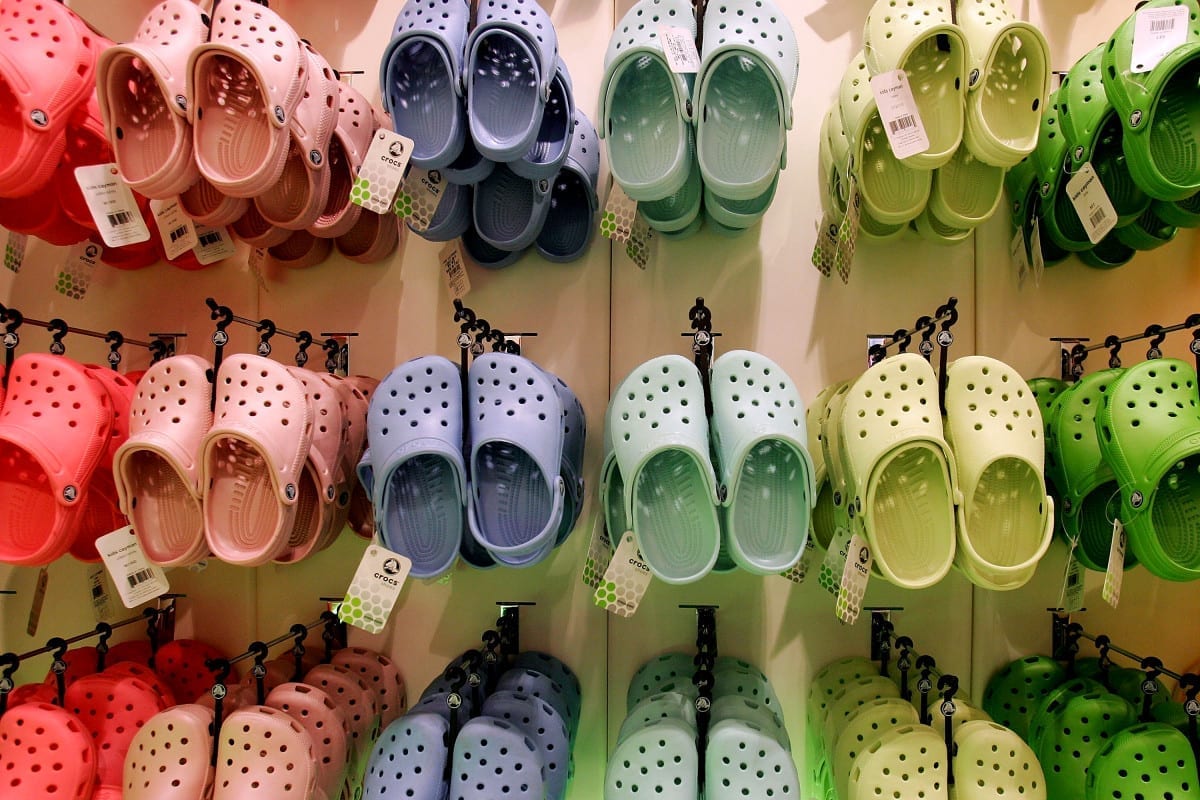

  • Crocs store is closing door

    Crocs store is closing door

    One in four Crocs stores will be closed globally as the maker of the world’s ugliest shoes plots a survival plan.

    The store cull was announced along with another quarterly loss: the shoemaker finished its last three months US$44.4 million in the red, albeit a better performance than the same period a year earlier when it lost $73.9 million.

    Global sales were down 10.2 per cent to $187.4 million but in Asia the company says its retail sales declined by a whopping 16.6 per cent.

    Total Asian revenue was $68.8 million, down 9.8 per cent year-on-year, with wholesale revenues down 5.3 per cent (explained as a result of the sale of the South African business in April 2016). Retail sales in Asia declined 16.6 percent, despite the opening of nine stores since 2015. Online sales declined 7 per cent in Asia, which Crocs says was the result of weak sales in China on Singles’ Day.

    In Europe, revenue was down 14.2 per cent.

    As it restructures to ensure its survival, Crocs CEO Gregg Ribatt will step down on June 1, to be replaced by Andrew Rees who has for the past two years been president. The two roles will now be combined and Ribatt will remain on the company’s board.

    Rees told an analysts’ briefing that customers are responding favorably to new colors and prints added to the core Crocs molded product line.

    “We’ve also confirmed the importance of any newness to our iconic molded footwear through new color and graphic introductions, and through the expanded use of licensed characters,” he said.

    “Our spring/summer 2017 collection rolled out to warm-weather doors in November and early reads are encouraging. Going forward, our innovation and newness will be most heavily concentrated on core clogs and sandal, slips and slides where we see the greatest opportunity for growth.”

    Crocs is also banking on the endorsement of the product by celebrities Drew Barrymore, John Cena, Yoona Lim and Henry Lau who will feature in the brand’s latest Come As You Are marketing campaign launching in April.

    Full year figures

    Crocs’ full-year picture was nowhere near as bad as the last quarter’s. Total sales were $1.04 billion, down only a little from the $1.09 billion of a year earlier. On a constant currency basis, revenues declined 4.7 per cent.

    The company recorded a full-year net loss of $16.5 million, far better than the $83.2 million of 2015. Excluding non-recurring charges, the adjusted loss was $26.9 million.

    Rabat says Crocs has been reshaped into a company that :”functions more efficiently and effectively” and is in “a far better place now than two years ago”.

    “And while the operational work is critical, it is not yet, and I emphasise yet, translating into the financial gains we continue to believe are achievable.”

    Since 2014, Crocs has halved its SKU count, boosted the appeal of core sellers and added new collections.

    Once the store cull is complete in 2018, Crocs will operate about 400 outlets, adding $35 million to its bottom line in 2019. At the end of 2016 it had 558 stores.

    Carrie Teffner, Crocs EVP and CFO, says that given volatile market conditions, the company is not setting mid-term revenue and margin targets.

    “That said, we continue to believe that… longer term, the business can deliver EBIT margins in the 10 per cent range.”

  • Alarm for ‘fake’ Singles’ Day discounts

    Alarm for ‘fake’ Singles’ Day discounts

    About 17 per cent of discounts offered during China’s multi-billion-dollar Singles’ Day online sale event were not real, claims a state-backed consumer group.

    It is calling on the government to intervene and punish platforms and merchants for promoting fake Singles’ Day discounts.

    Alibaba and Amazon are among companies the Chinese Consumers Association (CCA) alleges are guilty of hiking prices before the annual November 11 shopping festival in an effort to lure customers with sharp “discounts”.

    “There is a large number of false discounts and other misleading behaviour about prices,” says the CCA, which has referred the cases to relevant government departments, recommending “severe punishment for price violations and price dishonesty”.

    Ahead of the shopping event, China’s top business regulator last month warned firms including Alibaba, Amazon and JD.com against falsifying figures and selling counterfeit goods.

    Alibaba recorded 120.7 billion yuan ($US17.4 billion) in Singles’ Day sales this year, and is being investigated by the US Securities and Exchange Commission over accounting practices related to its figures for the event last year. The US-listed firm has denied any wrongdoing.

    “We have strict measures in place to crack down on false sales discounting,” says an Alibaba spokeswoman. She claims the company penalises merchants, depending on the severity of the falsified discount.

    The CCA study recorded price changes on 12 platforms between October 20 and November 25. Of all the “discounted” products surveyed, 35 per cent of them on Amazon still cost more than regular retail prices, the highest of any platform. JD.com followed at 26.8 per cent, then Alibaba’s Tmall at nearly 19 per cent.

  • How to generate brand love on Singles Day

    How to generate brand love on Singles Day

    Singles Day is no longer just about Alibaba. It’s more like Black Monday or Christmas, a nation-wide shopping event, covering everybody looking for great deals, not just the singletons, as it was originally conceived.

    Alibaba founder Jack Ma said last year that his dream was to extend this shopping extravaganza beyond China, and establish a carnival for the world stage. Alibaba’s data shows 235 countries participated this year, while 224 used Alipay – a 60 per cent rise year-on-year, and significant step towards this dream.

    Similarly, international brands played better this year, taking better advantage of the spending power on offer. Tmall data shows us that international brand sales grew by 47 per cent (vs 2015).  The likes of Nike, Uniqlo, Adidas, New Balance and Gap headed to Tmall’s Top 20 Sales Store this year, compared to just three brands last year – testimony to the importance placed on brands and the tangible rewards being reaped for our international players.

    There is no doubt that Singles Day has become one of the most important consumption periods for a variety of categories in China, and beyond. No one wants to miss it.

    So, what was new this year?

    Technology and entertainment played crucial roles in this year’s Singles Day, with brands eager to gain public attention via the very latest technology.  A great example of this is Tmall’s partnership with the likes of KFC and Starbucks to execute the ‘Catch Crazy Cat’ VR game.

    Reaching 17 billion plays, the Pokemon-Go inspired VR game allowed consumers to catch the Tmall mascot cat via their mobiles in KFC, Starbucks and even Shanghai Disneyland.

    The number of cats caught translated into ‘Hong Bao’ (luck pocket money) to be used for discounts in a variety of stores. Overall, the game connected people online to offline, while engaging those physical stores that are usually less involved in the shopping festival.

    Tmall also launched its VR virtual shopping product Buy+ on November 1, aiming to add a fancy dress element to the shopping mania and further appeal to the Chinese consumer.

    While many critics cited this experience to be less immersive, data shows 8 million engagements, among which 76 per cent were post-millennial.

    A significant trend throughout 2016, it’s no surprise to see so many brands, celebrities and shops execute live-streaming tactics to further promote product. It’s estimated that close to 60,000 different live streams took place on Singles Day. The biggest live streaming event, the Tmall Party, saw attendees span a collection of top A-list celebrities, both international and local; including the likes of David and Victoria Beckham, and Scarlett Johansson. The move to secure former Super Bowl Director, David Hill, only helped to further propel this year’s Singles Day onto the global stage.

    China has coined this year’s model as ‘Double E’ – Entertainment meets eCommerce, unleashing consumer purchase potential via the simple act of entertainment. Brand advertising potential is now enormous, and will only continue to grow year-on-year.

    How can brands leverage Singles Day?

    Singles Day is not everything. While everyone is impressed by this year’s 120.7 billion RMB sales figure, many ignore the fact that this is less than 5 per cent of Alibaba’s annual sales.

    For brands to sell, it’s important to remember that the remaining 364 days of the year count. Ogilvy believes that annual content that can be weaved naturally into omni-channel planning will ultimately connect brand with consumer and drive sales.

    As Jack Ma said in 2013, Singles Day has reached a certain momentum – it’s not only about the sales numbers anymore. This year is testament to this thinking. Increasingly, big brands have started to dominate the top sales ranking. Given the attention and hype of the day, this is a great opportunity for brand building if done well.

    Marketers should ruminate on how their brand can cut through and develop content that drives attention, and also builds the brand for engagement longevity. Singles Day is not only a selling extravagance but also a unique platform for creative brand building.

    There are also proven successes of launching a less well-known brand or promoting a less-penetrated category during this period. We also helped clients successfully orchestrate limited edition launches. For example, this year’s partnership between Budweiser and celebrity Chen Weiting saw an exclusively designed Tmall pack, live-streaming, and an invite for the highest purchasing group to attend Chen’s upcoming concert – placing Budweiser as the best selling beer brand on the day.

    Similarly, Tmall was able to demonstrate how international players can reach more remote areas of China – where spending power is rising and physical product distribution proves difficult. Brands entering China tend to believe that consumers in larger cities have the biggest spending, however, Tmall data shows us that provinces such as Qinghai and Shanxi are not to be ignored. Here, low-price is not a factor that determines spending; it’s brand value and quality that counts.

    These were all put into the wider context of making a brand matter to consumers, so as to generate long-term and loyal customers. This year’s overall sales ranking of many categories shows us that when the promotion level went down, the stronger brands play better. So, what ensured top ranking sales for Suning, Xiaomi, Haier, Uniqlo and Nike is not only a result of promotional discounting, but the current sentiment and value of the brand to consumers.

    What main e-Commerce trends do we see in China?

    China is not only the biggest eCommerce country in the world, it’s also arguably the fastest moving one. Tmall remains one of the major eCommerce channels for many brands.

    However, it only provides limited customer data to brands. We see more and more brands start to develop their own eCommerce websites in order to provide an immersive brand experience. And, more importantly, to attain better customer data that allows them to drive loyalty via CRM.

    Personalised eCommerce shopping experiences are another mega-trend. Tmall first called this out as ‘Thousand People, Thousand Faces’, and many other platforms followed suit.

    Tmall’s enormous big data capability enables brands to profile a customer and design unique shopping experiences based on their preferences. Some brands have also started to pilot this. For example, last year saw us help Nestlé tailor a unique shopping experience on its Tmall shop based on customer profiles. The results were phenomenal – engagement rates and sales close to doubled.

    It’s no secret that mobile has become the main device for consumers to purchase products.

    This year, 82 per cent of the 120.7 billion came from mobile, a big leap vs 2015’s 68.7 per cent. The trend sees brand content link seamlessly to eCommerce on mobile, enabling consumers to purchase items while absorbing brand content. A great example of this is the Tommy Hilfiger Shanghai show on October 24. Tommy Hilfiger broadcast the event live stream in high-definition and, most importantly, drove the audience to instantly purchase items on stage via a simple click.

    It’s clear that the slow-down of economics in China has not discouraged an enthusiasm to buy. Yet Chinese consumers are now more brand conscious, more design conscious, and more quality conscious. Brands clearly play a crucial role in eCommerce, now more than ever, therefore making brands matter is essential.

  • US$1 billion in first five minutes of 11.11

    US$1 billion in first five minutes of 11.11

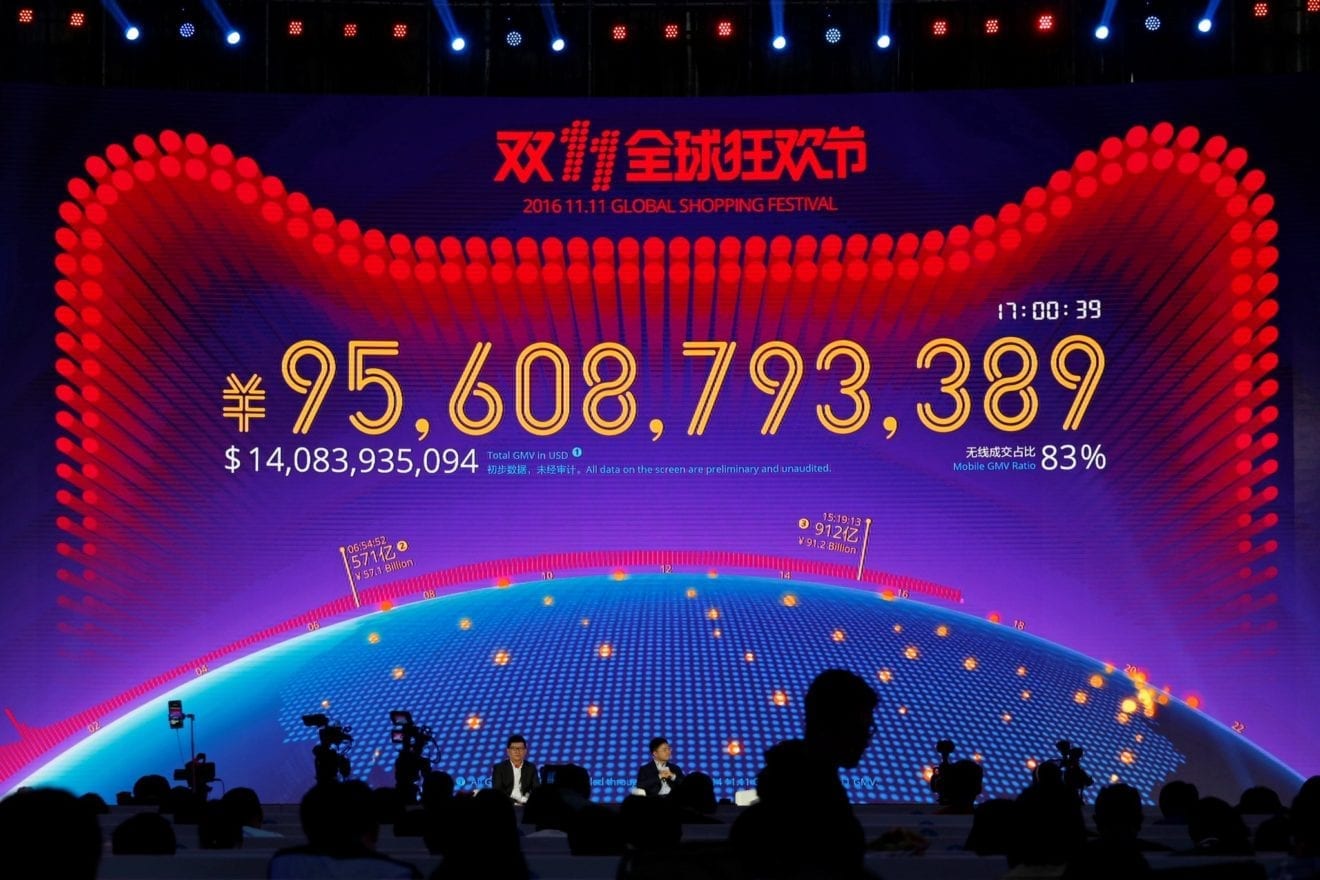
    Alibaba Group says more than US$7 billion (RMB 47.5 billion) of gross merchandise volume (GMV) was settled through Alipay on Alibaba’s China and international retail marketplaces within the first two hours of the 2016 11.11 Global Shopping Festival.

    And more than $1 billion was transacted in the first five minutes – from 12 midnight.

    “Chinese consumers purchased more in the first hour of 11.11 this year than the entire 24 hours in 2013, reflecting the incredible evolution of our global shopping festival,” said Daniel Zhang, Alibaba Group CEO. “This unprecedented level of engagement demonstrates both the consumption power of Chinese consumers and their embrace of online shopping as a lifestyle.”

    In the hours leading up to the official midnight start of November 11, millions of viewers watched the Alibaba Group 11.11 Global Shopping Festival Countdown Gala live online and on mobile devices via Youku Tudou, and the Tmall and Taobao apps. The gala was televised live across China through Zhejiang Satellite TV, as well as in Hong Kong and Macau for the first time.

    “This year, we innovated new ways for consumers watching the live broadcast of our countdown gala. Viewers were able to influence the production of the show in real-time through their mobile phones,” said Chris Tung, chief marketing officer, Alibaba Group. “Consumers in front of their televisions were shaking, tapping, scanning, chatting, browsing and buying with their mobile devices, creating a seamless and truly immersive entertainment experience.”

    VR drives surge

    International think tank Fung Global Retail & Technology predicts sales of $20 billion during the full 24 hours, up an extraordinary 40 per cent over last year’s total of $14.3 billion, thanks in part to the introduction of Buy+, the world’s first-ever end-to-end virtual reality (VR) shopping experience.

    “Buy+ will enable global retailers (even those without a physical presence in China) to offer an engaging, virtual in-store experience to Chinese consumers,” writes Fung Global Retail & Technology MD Deborah Weinswig in Singles’ Day Online Shopping Festival Could Also Benefit Retailers’ Physical Stores, a new report.

    The platform features eight virtual stores: Macy’s, Target, Costco, P&G, Chemist Warehouse, Freedom Foods, Tokyo Otaku Mode and Matsumoto Kiyoshi. Using cardboard VR headsets distributed in October, consumers can virtually walk around Macy’s Herald Square flagship in New York City to find products and, with just a nod of the head, confirm payment to purchase an item they see.

    “One of Alibaba’s strategies for Singles’ Day is to merge gamification with online shopping. The company will leverage its media and entertainment assets to drive increased online consumption,” says Weinswig.

    These include a televised countdown gala event and fashion show that was held last evening. In addition, the company is promoting products on TV screens, allowing viewers to scan QR codes for a real-time purchase.

    The concept has expanded beyond Alibaba, with chief rival JD.com, Gome and Suning also creating promotions. International retailers will target Chinese shoppers, and Chinese retailers target international shoppers. In 2015, Newegg, OTTE New York and Nasty Gal, all launched Singles’ Day promotions.

    “A year ago, Alibaba promised that Singles’ Day will be a true omni-channel event, and this year the company seems dedicated to continue delivering on the promise, armed with more technological innovations that bridge the gap between the virtual and physical worlds,” Weinswig writes.

  • Forget Black Friday, Singles’ Day is the real retail event to focus on

    Forget Black Friday, Singles’ Day is the real retail event to focus on

    I recently got back from Engine’s Asia offices, where everyone was buzzing with excitement about this shopathon concept.

    This 24-hour shopping day is the Chinese equivalent of Cyber Monday. It started in 2009 by ecommerce giant Alibaba and has evolved into the biggest online shopping day of the year – raking in $14bn in 2015 with mobile purchases accounting for 75% of total sales.

    In the UK, the start of November means that the retail frenzy of Black Friday and Cyber Monday are fast approaching. But as reports this year suggest that Black Friday is no longer the money pit it used to be, it’s time for UK brands to think globally.

    While Black Friday sales are expected to disappoint with just 21% of UK shoppers saying they will be taking advantage of the slashed prices, Singles Day is set to break records with this year’s sales predicted to increase by 50%, with total sales reaching $21bn. That’s almost $1bn per hour.

    With success on these levels, it’s clear that Singles’ Day presents a huge opportunity for UK retailers. Brands like Topshop are already capitalizing on this phenomenon, reporting a sales surge of over 900% on the day in 2015 compared to 2014.

    With over 600 million internet users and 1.3 billion mobile phones nationwide – China’s 468 million digital shoppers equate to 40% of the total global e-commerce spend and a report by OC&C Strategy Consultants shows that in China, over 70% of people are more willing to spend on clothing than before – with a lot of this expected to come through ecommerce.

    Having skipped the PC era, Chinese consumers are savvier, more switched on and demand digital innovations at a level unprecedented in other markets.

    Different apps, such as WeChat, mean that platforms Western marketers might be used to, such as Twitter and Facebook, no longer apply.

    What does this mean for brands looking to tap into the lucrative Chinese market? Investing in ecommerce localisation is key. Adapting and tailoring your digital assets is a base requirement for those looking to appeal to a foreign audience.

    Brands seeking to enter the Chinese market will have to replicate the success of Singles’ Day retailers by understanding and responding to China’s changing demographics namely, its increasing disposable income, emerging middle class and increasingly affluent young population.

    For the event, Alibaba has sponsored a nationally televised gala, which leads to a midnight kick-off. By identifying the right celebrities (David Beckham headlined this year) and a format that fits with Chinese shopping mentality, Alibaba has successfully transformed the shopping event into a media spectacle with an expected viewership of around 200 million (doubling last years’ viewer figures), 10 million of whom will be from outside mainland China.

    This shift underlines a trend identified in a recent report from Cassandra, Engine’s leading provider of youth insights and emerging trends, which illustrates the changing shopping habits of millennials. They increasingly see it as more of an event and communal experience than previous generations ever did.

    This concept from the innovation hothouse of Asia will make brands and retailers eyes water. Agile players will surely be lining up to test and learn from Singles’ Day because discounting during the peak buying season, counter-intuitive though it may seem, is here to stay.

    -Debbie Klein


  • Kobe Bryant joins Katy Perry in 11.11 launch

    Kobe Bryant joins Katy Perry in 11.11 launch

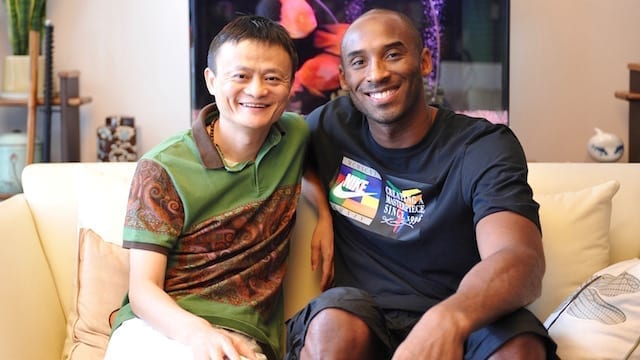
    Legendary Los Angeles Laker Kobe Bryant will join Katy Perry as the headline celebrities in Alibaba’s 11.11 Countdown Gala Celebration on November 10.

    US pop-rock band OneRepublic has also been confirmed, likely to perform its hit song Counting Stars

    11-11

    Alibaba had earlier named Katy Perry as a “global ambassador” for the gala, which is being held in Shenzhen in the hours leading up to the eCommerce giant’s 11.11 Global Shopping Festival’s midnight kickoff. The American singer will perform a number of her chart-topping singles, including her most recent, Rise.

    Mixing sports stars, singers and actors is a variety show formula that has been long dormant in the West as broadcast entertainment, Alibaba’s eclectic event – a way to warm up online shoppers for the world’s largest online sale – drew 100 million Chinese viewers in its debut last year.

    Alibaba Group chief marketing officer Chris Tung called the gala “a global carnival, a world-class performance that involves the audience throughout the event with many touch points and is like nothing else you have experienced”.

    It’s those touch points that Alibaba is focusing on in order to make the four-hour broadcast something viewers can participate in instead of just watch. One interactive feature planned for the show will give the audience a chance to win prizes by shaking their phones with the Mobile Taobao and Tmall apps open during key moments. Alibaba will also offer a sort of “choose your own adventure” feature where viewers can vote to decide how some segments of the gala play out.

    While the Hangzhou, China-based company did not release the full roster of celebrities expected to appear on the live broadcast, choosing instead to tease out names over the coming week, Alibaba did say that Beth Behrs, star of US sitcom 2 Broke Girls, which is wildly popular in China, and German footballer Thomas Muller are on the list.

    Alibaba has recruited Hollywood talent to produce the gala. David Hill, who is known for his work on the Oscars, NFL Super Bowls and reality show American Idol, was brought on board earlier this month to oversee the event. “Combining Alibaba’s technology with my experience at other global events we are going to develop a spectacle like no other,” Hill said in the statement.

    In addition, four one-minute time slots will be awarded to those merchants, consumers and charities who submit the best advertisements or promotions to Alibaba. Those winning videos will be aired during the gala.

  • Tmall driving more than sales for top beauty brands

    Tmall driving more than sales for top beauty brands

    Scores of high-end cosmetics companies are setting up shop on Alibaba Group’s Tmall.com online marketplace as eCommerce continues to gain ground as a critical marketing and sales channel for reaching China’s increasingly sophisticated consumers.

    At the recent Tmall Beauty Awards ceremony in Shanghai, which celebrated the top cosmetics brands operating on the eCommerce platform, Alibaba announced that 29 well-known Western brands and 37 from Japan and Korea had storefronts on Tmall at the end of 2015, including more than 10 joining the platform last year alone such as Lancôme, Bobbi Brown, La Mer, Anessa and Avene. Another 20 cosmetics companies are planning to launch their own presence on Tmall this year.

    Alibaba also announced a cooperation agreement with Korean cosmetics maker AmorePacific Group to expand the latter’s Tmall presence. AmorePacific will add two more storefronts exclusively on Tmall for the Sulwhasoo and IOPE beauty brands in the following months. AmorePacific already operates the Laneige, Innisfree, Mamonde and Etude House e-shops on Tmall, and about 800,000 Chinese consumers have purchased goods from Laneige’s shop over the past three years, according to Alibaba. The brand also sold about 45,000 BB creams, or blemish balms, during Alibaba’s 11.11 Shopping Festival, bringing in US$1.4 million from that product alone.

    Alibaba has similar cooperation agreements with Procter & Gamble, Estée Lauder, L’Oréal and domestic retailer Shanghai Jahwa Corp.

    The eCommerce push by cosmetics companies comes amid strong growth in high-end cosmetics purchases by Chinese consumers. A report from Chinese research firm CBNData, released in conjunction with the awards, noted that total sales of cosmetics products in China climbed nearly 20 per cent to $74.1 billion last year from 2014. Citing independent researchers, CBNData’s report also said that online channels accounted for 36 per cent of that, or $27 billion, with Tmall controlling about a 70 per cent share of the B2C market. Alibaba Group is an investor in CBNData parent China Business Network.

    Tmall Cosmetics GM Mike Hu said total sales generated on all business-to-consumer retail websites in China currently account for 12 to 15 per cent of the entire cosmetics market, and he predicts those channels will grow by another 30 per cent to 50 per cent over the next two to three years.

    Hu stressed that Tmall offers more than just another sales channel to brands. It’s also a platform to promote new products, build a connection with customers and increase business both online and off. According to Hu, over 20 brands have introduced about 160 versions of products that were exclusive to Tmall shoppers, and the brands have launched more than 100 new products via the website in 2015.

    “Two or three years ago, eCommerce played as a sales channel since its significance grew and it helped enhance business,” said Gary Chu, online general manager at Estée Lauder China, said at the awards ceremony. “Now what we are thinking about is how to integrate brand property, content and products into our presence in Alibaba’s ecosystem to meet the needs and demands of the brand.”

    To that end, Estée Lauder has been engaging customers via its so-called Fans communities within the Tmall mobile app. One brand, Bobbi Brown, opened its Fans page last November and now has more than 640,000 followers. It offers make-up tips and sample trials, among other initiatives, to tackle customers’ most common inquiries in order to educate and interact with shoppers, while serving as a bridge to the Bobbi Brown storefront. In addition to the Fans page, the company also used Instagram-like photo sharing on Tmall to generate buzz about Bobbi Brown lipstick ahead of Chinese New Year earlier this month, and Estée Lauder regularly uses the Tmall mobile app to help launch new products.

    Alibaba Group CEO Daniel Zhang said Estée Lauder’s efforts are prime examples of ways brands can engage shoppers with content and convert interactions into business opportunities.

    “All the brands and merchants are the best content producers, and merchants should incorporate products into content that consumers are willing to read and eager to buy,” he said.

    Brands are also using their Tmall storefronts to boost their online-to-offline (O2O) business. So far 54 of them, including Estée Lauder, La Mer and Laneige, have integrated their online and offline membership programs and now allow users to make appointments for skin care treatments in brick-and-mortar stores online.

    Tmall will continue to promote O2O retail to “achieve the goal of same product, same service and same membership” online and offline, Hu said.

    Here are the winners from some of the biggest award categories from last Friday’s ceremony. The winners were chosen based on search popularity, interaction with shoppers, customer reviews, trial reports, sales and services among millions of customers and thousands of brands on Tmall in 2015.

    Most popular brands online: Laneige, Lancôme, Innisfree, Maybelline

    Hot search brands: Bobbi Brown, Avene, Sulwhasoo (which launched on March 1)

    Favorite brands among customers born in the 1990s:Sekkisei, The Face Shop, Hanhoo (Chinese domestic brand)

    Favorite brands among customers holding Alibaba Passport (shoppers spending more than RMB 100,000 ($15,270) annually on Alibaba’s platforms): Shiseido, Whoo, L’Oréal, Clarins, Innisfree

    Favorite brands among male shoppers: JVR (Chinese domestic brand), L’Oréal, NIVEA

    Best-selling brand: Pechoin (Chinese domestic brand)

    Outstanding and popular group: Estée Lauder Group

  • Alibaba Group conquers China slowdown

    Alibaba Group conquers China slowdown

    Going into this quarter the main concern for Alibaba was that a slowdown in Chinese economic growth would damage its performance.

    Fortunately, this has not materialised with very solid uplifts in its Chinese retail marketplace proposition underpinning a respectable 32 per cent rise in overall revenues.

    Some of this uplift was undoubtedly aided by the company’s very strong performance over the Singles Day shopping festival in November. During this time, it attracted over 115 million visitors to its marketplaces and processed some 467 million orders across all of its platforms during a 24-hour period. The fact that its systems and infrastructure coped well with this volume, which is around 10 times more than the usual daily average, is a testament to Alibaba’s technological prowess, especially in areas like cloud computing.

    This focus on technology is also helping Alibaba to understand the habits and preferences of Chinese consumers as they browse and navigate the group’s various sites, news feeds, and entertainment options. This understanding puts Alibaba in a prime position when it comes to helping Western brands expand into China. In many ways Alibaba and its marketplaces are the ideal conduit through which foreign retailers can target and reach appropriate audiences. In our view this remains one of the main sources of commercial advantage for the company.

    Despite its success at home, Alibaba has struggled to gain traction in already established markets like the US. While this was once a stated ambition, and perhaps remains a long term goal, it is clearly not the main agenda for the year ahead. Indeed, over the latest quarter the proportion of revenue from international operations shrunk by 1 percentage point and the growth rate of 17 per cent, while respectable, was well below that of the Chinese operation.

    As much as this will no doubt come as a relief to many Western retailers, it is the right decision. Despite its dominance in the country, Alibaba’s growth potential in China remains enormous – especially as it expands operations into more rural areas. As such, chasing lower margin, profit eroding international gains for the sake of vanity makes little sense.

    That noted, over the longer term Alibaba would like to become more international. The route it will take, however, is likely to be one of investing in, and partnering with, local players in order to grow its share and presence. The company clearly has the financial muscle to undertake such corporate activity and we expect to see more of this in 2016 and the years beyond.

  • Alibaba Lunar New Year retail blitz planned

    Alibaba Lunar New Year retail blitz planned

    Alibaba plans to piggyback on the biggest celebration on the Chinese calendar – Lunar New Year – in the hopes of establishing another e-shopping tradition.

    Set to start in mid-January in the run-up to Chinese New Year, which falls on February 8 this year, theAlibaba Lunar New Year blitz – dubbed Ali Chinese New Year Shopping Festival – will have a different (and arguably less feverish) feel to it compared with the sprawling and competitive 11.11 sale, according to Alibaba.

    The company says its goal for the event is to use eCommerce to encourage two-way trade between China’s urban and rural areas, featuring discounted holiday products for the home, gifts, clothing and particularly food and agricultural products, in keeping with the spirit of a time when family members come together once a year for a celebratory feast.

    “Chinese New Year is the most significant celebration through the year and is a time to maintain traditions,” said Alibaba Group CEO Daniel Zhang at a recent kick-off event.

    By hosting the sale, “we aim to enable rural customers to access an extensive range of New Year goods from home and abroad, while making agriculture products from rural China more available among urban customers.”

    To that end, the event will be promoted heavily by Rural Taobao, an arm of Alibaba Group which focuses on rural eCommerce, as well as main Alibaba shopping marketplaces Taobao Marketplace,Tmall.com and Juhuasuan. During the sale, Alibaba will for the first time bring more than 500 premium overseas brands to China’s hinterlands via Rural Taobao, which facilitates online shopping and home delivery through more than 10,000 rural service centers in villages across China. Rural customers in some villages will be able to buy foods from 25 countries, including American crawfish, Alaska black cod, Russian king crab, Canadian lobster, Australian beefsteak, French wine and British tea.

    Meanwhile, Alibaba’s cross-border shopping channel, Tmall Global, will work with eight country pavilions (online shops offering national specialty products) and eight major supermarkets, department stores and duty-free shops to provide quality goods from around the world. International retailers including Macy’s, Costco, Metro and King Power will join the promotion.

    Alibaba Group executive chairman Jack Ma said the festival is geared not only to offer rural Chinese a chance to buy merchandise that is unavailable in their local shops. It is also meant to boost regional economies by helping farmers generate more income by selling their produce directly to consumers over the Internet.

    “The 11.11 Shopping Festival is designed for netizens,” Ma explained, “while the Chinese New Year Shopping Festival is created for farmers.”

    During the sale, Alibaba will promote local specialties from farmlands and pastures to urban online shoppers looking for healthy foods. Juhuasuan, Alibaba’s flash sales platform, has stored 150 tons of Jinhua ham, 100 tons of beef from Inner Mongolia, four million organic eggs, 10 million packs of Cantonese sausages, 50,000 kilograms of pork from the Dabie Mountains, and 30,000 grain-fed hens from Shuanglian in Hubei province.

    In addition to facilitating rural-urban commerce, Alibaba is using the sale to showcase innovations in O2O eCommerce and financial technology. For example, Rural Taobao developed a mobile app so that migrant workers unable to return home for the holiday can use their smartphones to purchase gifts for faraway parents and loved ones.

    Tmall Global recently partnered with the Tianjin Free-trade Zone to open a brick-and-mortar store near Beijing where customers can check out a wide range of products, from snacks to cosmetics, available from overseas merchants and order them by scanning QR codes using their phones. Built to facilitate cross-border eCommerce, the “Alibaba experience center” will offer special discounts during the CNY sale.

    Alibaba e-payments affiliate Alipay is again putting a high-tech spin on the Chinese New Year practice of giving red envelopes stuffed with cash to friends and family. Alipay this year is the exclusive partner of China’s Spring Festival Gala, an annual TV program hosted by CCTV that is watched by millions. During the show, viewers armed with the Alipay app will be able to receive virtual red packets distributed by Alipay and participating merchants. Alipay said it has landed more than 100 corporate sponsors, including taxi-hailing firm Didi and handset maker Huawei.

    Advance sales for the Ali Chinese New Year Shopping Festival are set to start January 14. The actual shopping festival will begin January 17 and will last for five days.

    Other Festival initiatives include:

    • Alibaba in cooperation with local governments has chartered trains to provide free transportation to migrant workers to return home for the holiday. The trains will run from Guangzhou to Guiyang and from Shanghai to Xi’an.
    • Alibaba will organize free Chinese opera performances in rural communities.
    • The company will provide assistance to 13,000 rural service center managers so they can host 10,000 New Year’s Eve dinners for the elderly, left-behind children and disabled people.
    • Taobao Marketplace is featuring “time-honored brands” that are widely recognized in China for their connection to Chinese New Year and staying power through generations. Mobile Taobao plans to launch related location-based services to help users find nearby stores carrying these brands.
    • Alitrip, Alibaba’s online travel service platform, has designed several tour routes along which tourists can experience folk customs such as floating lotus-shaped lanterns on rivers in the city of Lijiang in Yunnan Province.
  • Alibaba smashes Singles’ Day records, so why did shares dip?

    Alibaba smashes Singles’ Day records, so why did shares dip?

    November 11 is a day of sombre reflection across much of the West, with Commonwealth nations observing Remembrance Day while Veterans’ Day is an official public holiday in the US.

    It’s a world away in China, though, where it’s Singles’ Day – an idea begun in 1993 by four lonely Chinese students who reckoned the 11th day of the 11th month (note the four single ‘one’ digits) would make a great day to celebrate being unattached.

    It became a sort of anti-Valentine event, where those without partners bought themselves gifts and – as you do in China – enjoyed lots of karaoke.

    Enter e-commerce giant Alibaba – owned by Jack Ma, up until February China’s richest man – which swooped on the event to offer discounts on its goods.

    November 11 in China has since morphed into an orgy of online spending. More and more firms have jumped on the bandwagon to make it the world’s biggest day of internet shopping.

    On Wednesday, Singles’ Day smashed sales records by midday. Shoppers were out in droves, racking up $5 billion of sales in the first 90 minutes on Alibaba, roughly double last year’s haul in the same period, reports the Financial Times. Alibaba also netted nearly twice the entire take of last year’s Cyber Monday – the day the US, fresh from feasting on Thanksgiving turkey, feasts on shopping deals – itself a record.

    Alibaba’s sales on the day rose 60% from last year to $14.3 billion. Another online retailer, JD.com, reported record transactions of more than 20 million.

    But despite beating records, Alibaba shares dipped nearly 2%. Why weren’t investors impressed?

    It’s because those concerns about China’s slowing growth still won’t go away – a point that Jack Ma himself highlighted on Thursday. Although he believes the government’s 7% GDP target for this year is achievable, he told CNBC: “I believe the next five to 15 months will be a tough time for China for various reasons, of course, one, the anti-corruption will definitely have some effect.”

    Jasper Lawler, a market analyst at CMC Markets, adds that Alibaba continues to be used as a US proxy for Chinese economic health “so shares dropped alongside industrial production figures”.

    Another batch of mixed data from China on Wednesday did little to allay concerns that the world’s second largest economy is slowing.

    “Industrial production growth matches its weakest since 2008, although retail sales improved,” wrote Mike van Dulken and Augustin Eden at Accendo Markets. Coupled with Alibaba’s new Singles’ Day record “we have further evidence of the nation’s shift from export-led to consumer economy”.

    Michael Hewson, chief market analyst at CMC Markets UK, remains concerned about retail sales in China.

    “The latest October retail sales numbers did improve to 11%, from 10.9% in September, which is still below the levels we were seeing at the end of last year of 11.8%,” he writes.

    “Furthermore this modest improvement doesn’t really chime with the stories circulating out of China at the beginning of October during Golden Week about surging sales in the restaurant, cinema and travel sales sector.

    “According to some reports, turnover at restaurants and retailers totalled more than one trillion yuan during the seven days, which equates to over $156 billion, so for retail sales to only improve 0.1% does seem rather at odds with the early October optimism.”

    Alibaba shares closed on the New York Stock Exchange at $79.85 on Wednesday, down more than 20% in the year to date. However, they’ve recovered from a yearly low on September 28 of $57.39 to trade currently at $80.00.

  • 11.11.2015: A new twist to Asian retailing’s biggest day

    11.11.2015: A new twist to Asian retailing’s biggest day

    China’s Singles Day – 11.11.2015 –  the biggest shopping festival in the world, will no doubt once again break international eCommerce records this Wednesday.

    But while watching numbers tick astronomically higher is exciting, retailers should be paying attention to what Alibaba is doing differently this year: omnichannel.

    For the first time, Alibaba is bringing part of Singles Day (also known as Double 11, or Guangun Jie) offline. It has promised that more than 1000 retail brands encompassing over 180,000 stores across 330 cities in China will join the 11.11 Festival.

    Customers will be able to price match in-store goods with TMall discounts. Some areas will be able to deliver products within two hours, essentially turning stores into distribution centres.

    Much like Alibaba’s 2014 mobile shopping push made mCommerce a “new normal,” you can expect 2015 to begin a boom in omnichannel. Retailers will do well to begin strategising through a smart integration of their physical stores and digital commerce now.

    Here are two guidelines to consider when reassessing how your physical and digital presences can complement each other in this new omnichannel world:

    Make the store a customer solution

    The consumer does not make a distinction between a brand offline and online – and neither should retailers. Physical stores create interesting opportunities to reduce customer friction points or quickly resolve customer problems. Extend in-store services to add incremental customer value or create a good atmosphere.

    We recently helped GrandVision, the world’s largest eyewear conglomerate, create a retail experience centered around eye care. They wanted to emphasize their medical-grade professionalism and commitment to demystifying eye care for consumers.

    Design points such as having an eye-testing facility placed in the middle of each store emphasises their dedication to this cause, and informational content placed across all digital channels means customers could empower and inform themselves across desktop, mobile or in-store digital panels.

    By consolidating all consumer interactions with GrandVision into one platform, everything from booking an eye exam to buying lenses have been made seamless both offline and on. The one view of consumers helps give store associates the tools they need to better understand customer motivations, provide support and make the store an integral part of customer interactions with the brand.

    Make your store experiential

    Retail used to be rooted in the transaction, but now that technology has decoupled transactions from physical spaces, retailers have tremendous freedom to build a memorable experience in stores.

    We helped Audi design an interactive experience for its flagship showroom in Beijing, using screens and responsive content to let customers cycle through endless customisations of their ideal Audi cars. The Audi City showroom cut down on costly retail rents while allowing Audi to showcase all inventory and imprint its brand message of “Vorsprung durch Technik (advancement through technology).”

    Physical store experiences properly integrated with digital are part of the equation for brand differentiation and continued relevance. Consumers go seamlessly from online to offline and back. Retailers need to learn to do the same.

  • 11.11.2015: Here’s what to expect on Wednesday

    11.11.2015: Here’s what to expect on Wednesday

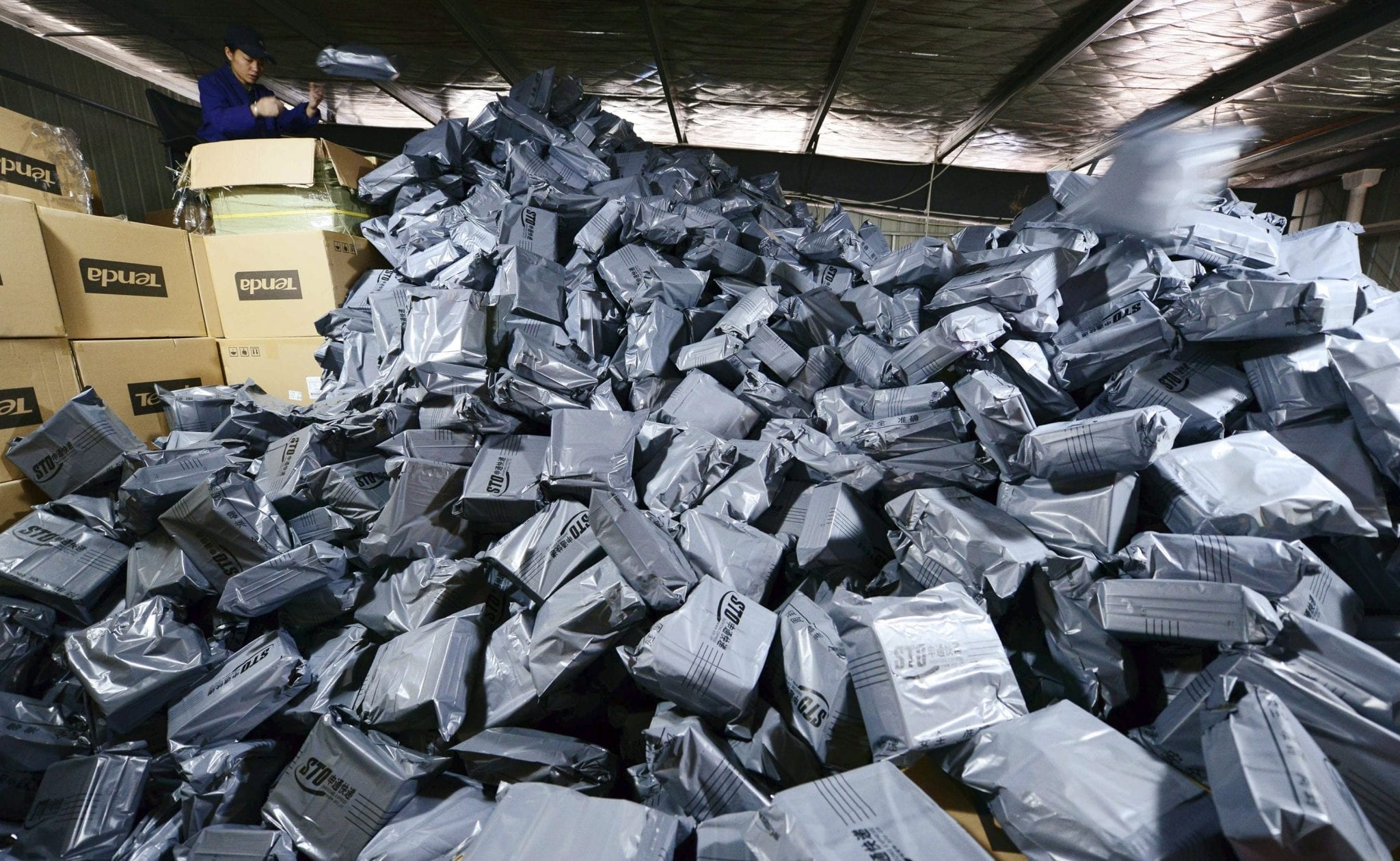
    There are just days to go before Alibaba Group holds its 11.11 Global Shopping Festival. Merchants are laying on stock and pre-packing popular products to ready them for shipment. Delivery companies are training hundreds of thousands of temporary workers hired to help deliver the massive volume of parcels generated during the November 11 online sale, held on China’s Singles Day holiday.

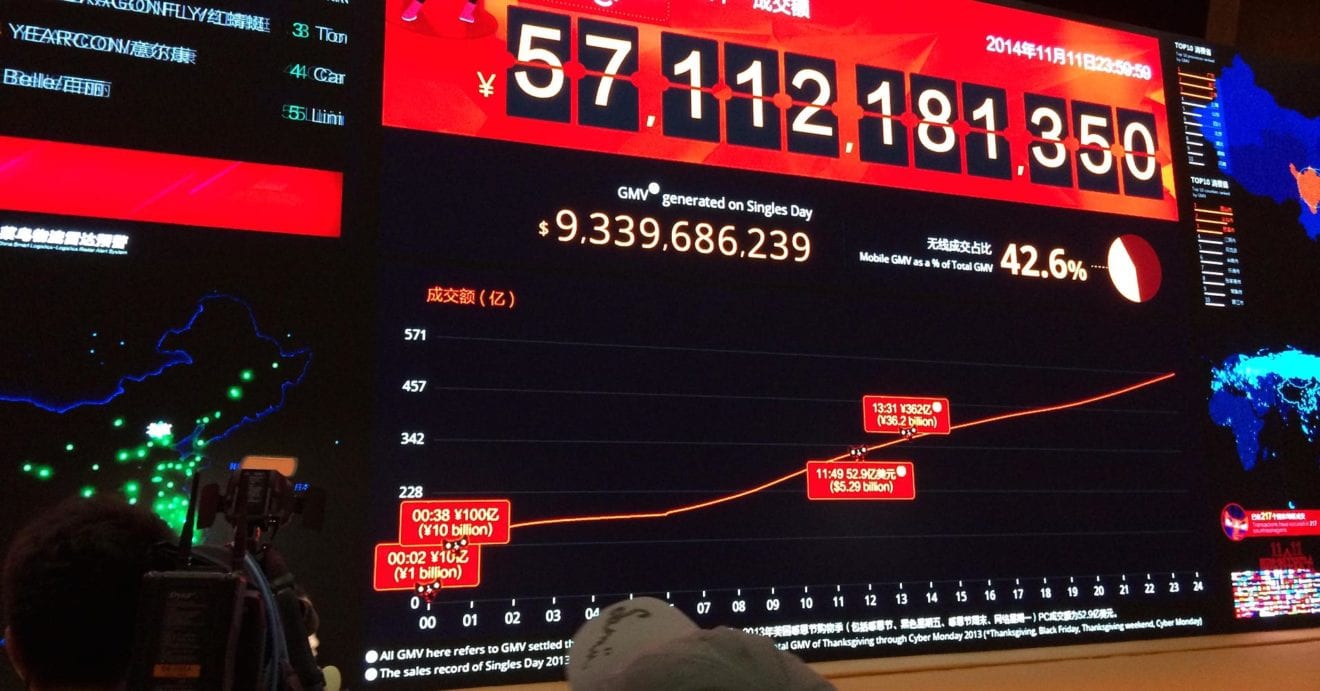
    Consumers are gathering digital discount coupons for use during the 24-hour shopping frenzy, locking in deals in pre-sales events, and limbering up their clicking fingers. For members of China’s young and tech-savvy spending class, the 11.11 sale is a race against time as they log on at midnight to vie to complete web purchases for limited stocks of coveted products while millions of others are jamming the Internet trying to do the same. Last year, the total value of purchases on Alibaba’s websites blew past RMB 1 billion (US$157 million) in GMV just three minutes after the sale began. Twenty-four hours later, the total was $9.3 billion – enough to set a Guinness World Record.

    Will this feat be surpassed this year? China Post, the PRC’s postal service, estimates that 760 million packages will be generated by Singles Day sales held by all Chinese online-shopping websites on Nov. 11. That’s up significantly from 540 million packages produced last year, according to the post office.

    For its part, Alibaba Group – which started the sale in 2009 are runs China’s largest online marketplaces – isn’t making predictions. If past is prologue, though, then last year’s results might be indicative. Check out the infographic at the end of this story to see the 2014 sale highlights.

    This year, Alibaba is pushing its 11.11 festival in new directions by involving more international merchants and shoppers. The event will feature more than 6 million products from over 40,000 merchants and more than 30,000 brands from 25 countries, including the US, China, Japan, South Korea and European nations. Participating international brands include P&G, Unilever, Burberry, Estee Lauder, Zara, Huggies, Macy’s, Costco, Apple, Nike, Friso, Topshop, and Uniqlo, to name a few.

    Through Alibaba’s China and international marketplaces including AliExpress, its global B2C website, merchants will be selling directly to consumers in more than 200 countries and regions, according to Alibaba. Still, the company expects the majority of transactions to occur In China, where key product categories for the sale include baby and maternity, fashion and apparel, cosmetics, electronics and home appliances, health and nutrition, grocery, and fresh foods.

    Alibaba is also pushing several other initiatives for 11.11.

    The company has lined up brick-and-mortar retailers to participate through mobile and omnichannel commerce. More than 1,000 retail brands, with 180,000 brick-and-mortar stores in 330 cities across China, have joined the event. They’ll be offering smartphone-enabled shoppers a more integrated and interactive shopping experience whether shopping online or in participating stores. Omnichannel will also give merchants greater insights into customer demographics and shopping habits, according to Alibaba.

    Underscoring the trend in China toward shopping by smartphone instead of PC, nearly 43 per cent of sales took place on mobile phones during the 11.11 sale last year. mCommerce is expected to play an even bigger part this year. The sale will feature marketing campaigns for mobile shoppers, such as rewards of discount e-coupons to consumers who shake their phones while using the Taobao or Tmall mobile applications during promotional periods.

    Ordering the goods is one thing. Delivering them quickly is another. Alibaba’s logistics affiliate, Cainiao Logistics, is bolstering domestic and international shipping capabilities for the sale to ensure faster deliveries to consumers.

    Cainiao, the backbone of a network of 3000 logistics companies linked by centralised information platform, estimates that its partners will deploy more than 1.7 million delivery personnel, 400,000 vehicles, 5000 warehouses and 200 airplanes to handle deliveries for the sale. Cainiao has also launched a “Hassle-Free Logistics Service” consisting of 49 international delivery partners and 74 warehouses that can support 4 million cross-border package deliveries per day, the company says.

    This formidable infrastructure will soon be tested. The countdown to 11.11 has begun.

  • FedEx prepares for eCommerce boom

    FedEx prepares for eCommerce boom

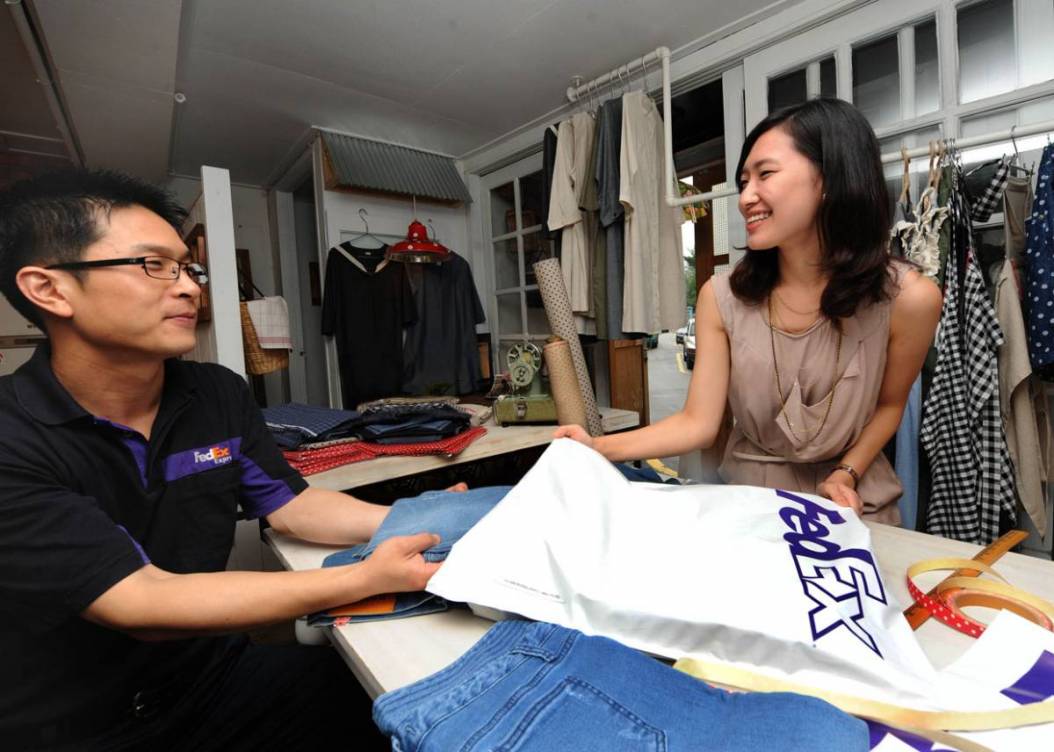
    FedEx Asia Pacific is predicting a record breaking Singles Day in Asia this November 11.

    “Due to the huge popularity of the occasion in recent years, China’s State Post Bureau anticipates that this year will see a maximum of 140 million packages being handled per day on the days immediately following Singles’ Day – an increase of 40 per cent compared to the same period last year,” said FedEx in a statement.

    “The rise of eCommerce is particularly pronounced in our region, and this translates into ever-increasing volumes of shipments at this time of year,” said Karen Reddington, president, FedEx Express Asia Pacific.

    “Our strategic investments, operational strength of our network, and more than 17,000 dedicated team members across the region – backed by more than 300,000 of their colleagues worldwide – are poised to deliver a holiday season to remember.”

    Globally, FedEx is also expecting record volumes on the US’ Cyber Monday (November 30) and the first two Mondays in December, when the company expects to move more than double its average daily volume.

    It expects a record-breaking 317 million shipments between Black Friday (November 27) and Christmas Eve – a 12.4 per cent increase over last year’s peak seasonal volume.

    FedEx says it has added 7000 delivery vehicles to its fleet and added 30 aircraft to its fleet over the last year. Across its network 55,000 package handlers, drivers and other support positions have been added to help meet the peak demand.

    FedEx Express is the world’s largest express transportation company, covering more than 220 countries and territories.a