Retail News CRM

Tag: airways

  • Bamboo Airways signs $2-bln deal with Safran, GE

    Bamboo Airways signs $2-bln deal with Safran, GE

    Bamboo Airways has signed a EUR1.73-billion ($2 billion) deal with France’s Safran and the U.S.’s General Electric for aircraft engines and equipment.

    The Vietnamese carrier on Wednesday signed a memorandum of understanding with Safran and GE to purchase equipment for 50 narrow-bodied Airbus A321neos and 30 wide-bodied Boeing 787-9s.

    Safran makes high-class airplane seats and other cabin equipment.

    Bamboo Airways currently operates seven A320neos and 5 A321neos.

    “We are looking forward to developing a strong relationship with Bamboo and being part of its future growth,” Alexandre Ziegler, Safran’s senior executive vice president of international and public affairs, said in a statement.

    The deals were signed in the presence of Vietnamese Prime Minister Pham Minh Chinh and French Prime Minister Jean Castex during the former’s working visit to France from Nov. 3-5.

    Earlier low-cost Vietnamese carrier Vietjet also signed an agreement with Safran.

    The two parties had an existing $10-billion deal for engines and engine maintenance, and it has been expanded to cover more aircraft engine deals and a number of other aspects such as seats and interiors.

    Vietjet operates a fleet of 90 aircraft.

    Safran is a global technology company with interests also in the defense and space markets, 76,000 employees and annual sales of 16.5 billion euros ($19.15 billion).

  • Bamboo Airways plans US IPO in Q3

    Bamboo Airways plans US IPO in Q3

    Private carrier Bamboo Airways is considering an initial public offering of shares in the U.S. this year to raise $200 million.

    The IPO is expected to take place in the third quarter, with the company likely to offer a 5-7 percent stake to secure a market capitalization of up to $4 billion, quoted its chairman, Trinh Van Quyet, as saying on Wednesday.

    It is preparing for the issuance together with an international auditing firm and plans to list on the New York Stock Exchange.

    Last month, Quyet had announced the airlines’ plans to list 105 million shares on either the Ho Chi Minh Stock Exchange or Hanoi Stock Exchange at an initial price of VND60,000 ($2.61), but on Wednesday he said that has now become “a backup plan.”

    “The US IPO will be part of our efforts to expand our services globally.”

    It expected to operate charter flights to the U.S. from July this year and thrice-weekly commercial flights from HCMC to San Francisco from September.

    The airline has received a permit from the U.S. Department of Transportation to carry passengers and cargo to that country.

    This year it also plans to expand its fleet from 30 aircraft to 40, and launch flights to other new destinations like Australia, Germany, Japan, and the U.K. if the Covid-19 pandemic is under control.

    It currently flies on 60 domestic routes.

    Last year, it carried over seven million passengers to account for a 20 percent market share, and hopes to increase it to 30 percent this year.

  • Bamboo Airways eyes fleet expansion

    Bamboo Airways eyes fleet expansion

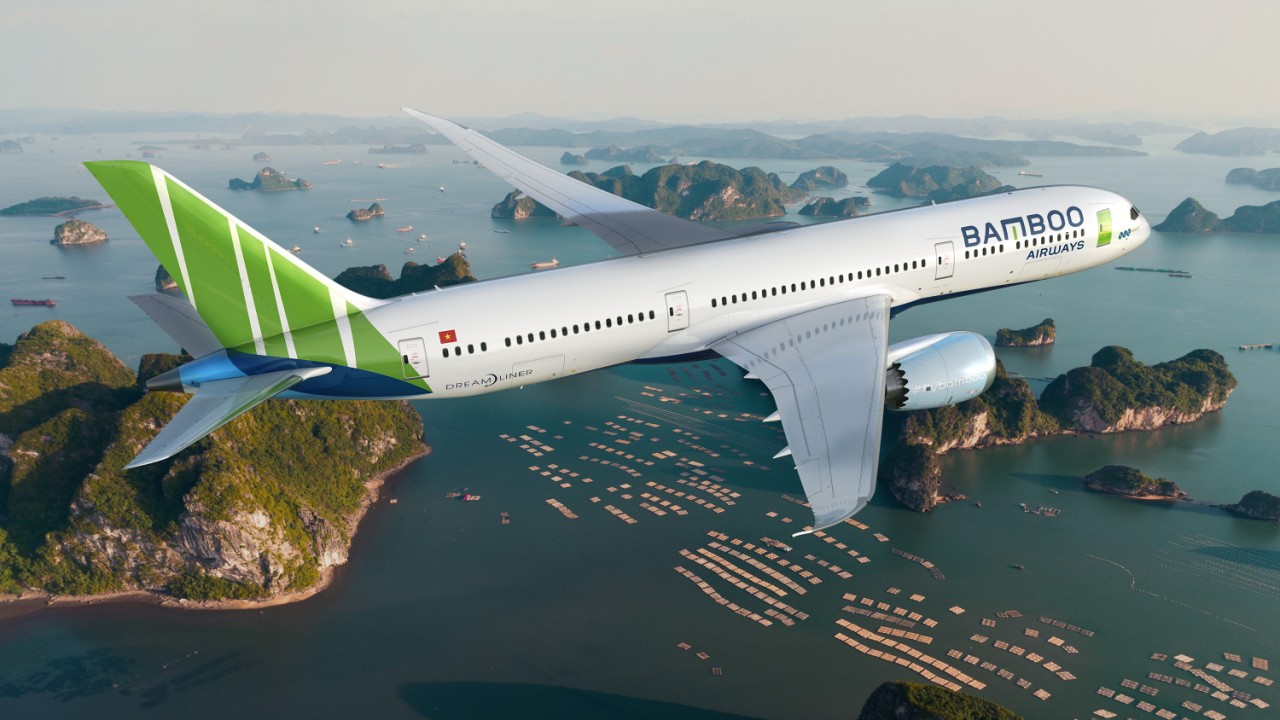
    Bamboo Airways plans to have a fleet of 100 aircraft by 2024 with the majority of them being Boeing 787-9 or Airbus A321.

    The carrier said in a statement Thursday it would lease the first Boeing 787-9 in October since the 10 it has ordered would not be delivered until the fourth quarter of 2020.

    Bamboo has received permission from the Ministry of Transport to operate 30 aircraft, and it plans to achieve this number by the end of the first quarter of 2020. The airline, which began flying in January, has yet to break even.

    Its chairman, Trinh Van Quyet, has said that with 30 aircraft the carrier could get into the black by the first quarter of 2020. The carrier now flies 10 aircraft on 26 domestic routes besides international charter flights.

    Vietnam hopes to grow its aviation market by 16 percent a year in 2015-20 and 8 percent in 2020-30.

    This means there will be a possible 117 million air travelers by 2023, 85 percent by Vietnamese carriers, which will require 340 aircraft, according to the Civil Aviation Authority of Vietnam.

  • Thai Airways celebrates 59 years of operations

    Thai Airways celebrates 59 years of operations

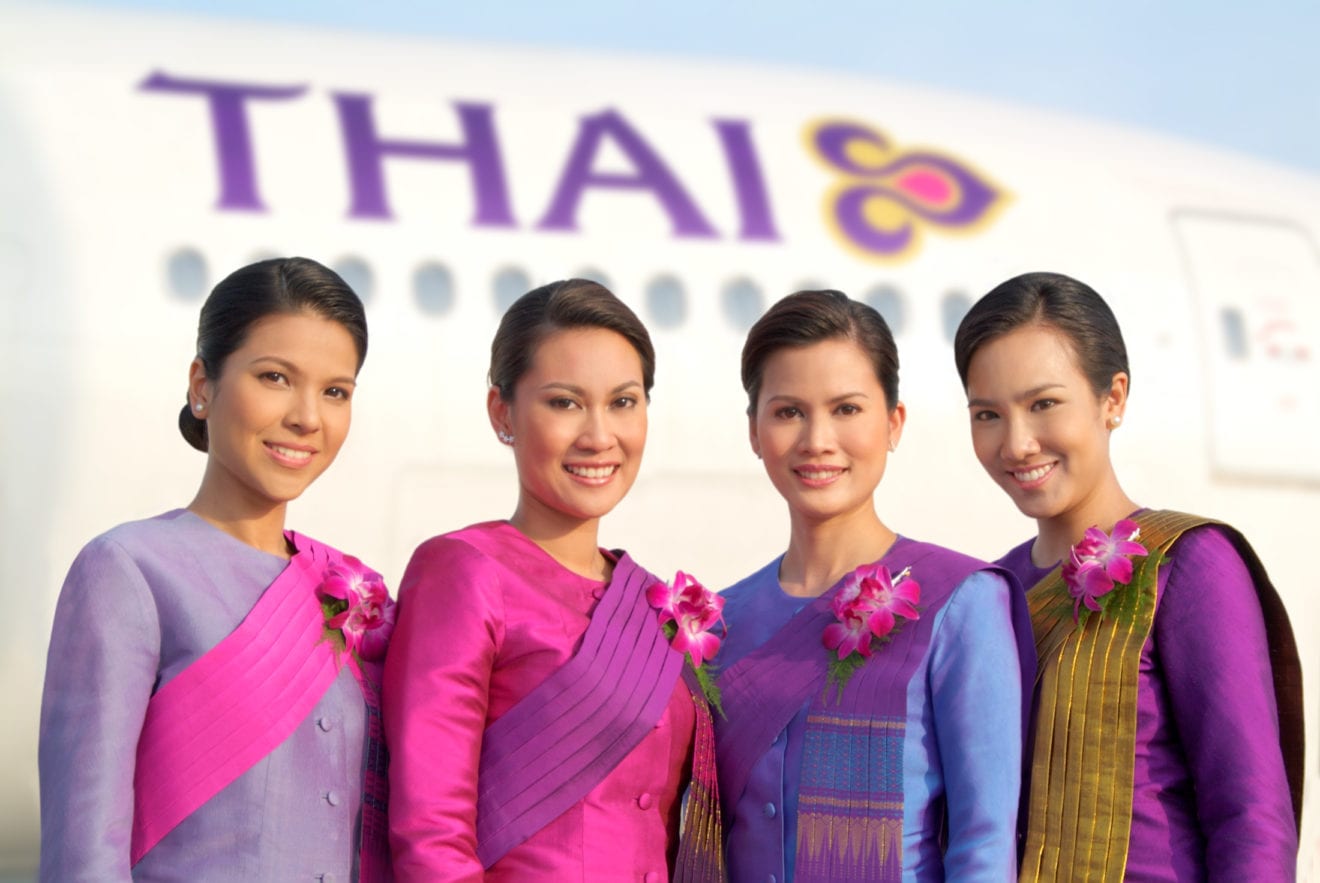
    Thai Airways International has recognized the airlines’ long-serving staff with certificates at a ceremony to mark the 59th anniversary.

    Thai Airways president, Sumeth Damrongchaitham, presided over a ceremony to present certificates and souvenirs to staff who have completed 35 years and 25 years of service with the national airline.

    The certificates were also given to staff who were commended by customers, and staff who made a significant contribution to the airline’s success over the years.

    Thai conducts the ceremony annually to mark the anniversary of its establishment on March 29, 1960.

  • Bamboo Airways cleared to take to the skies

    Bamboo Airways cleared to take to the skies

    Vietnam’s newest airline, Bamboo Airways, has received a certificate that allows it to operate aircraft for commercial purposes. The Vietnam Civil Aviation Authority Tuesday granted the Aircraft Operator Certificate (AOC) to Bamboo Airways. The AOC is a certificate approved by a regulatory authority that allows a carrier to operate aircraft for commercial purposes within a specified scope of activities. As such, the FLC Group’s startup airline has completed all necessary regulatory procedures for commencing commercial operations in Vietnam’s aviation market.

    “This AOC certification is a result of 4 years of effort, I believe it is an important first step for Bamboo Airways to serve passengers and devote themselves to the Vietnam aviation industry,” said Dang Tat Thang, CEO Bamboo Airways.

    After many delays, Bamboo Airways expects to start operating domestic flights with Airbus A321 NEO aircraft by mid-January. Bamboo Airways will prepare 20 planes for flight in the first quarter of 2019 and increase their fleet size to 40-50 aircraft by the end of the year.

    Thang said that at the moment, Bamboo Airways has fully prepared their personnel, technical and material assets and affirmed its fitness for operation through many activities including test runs, maintenance, engineering and other commercial transport activities.

    Bamboo Airways will operate 37 routes connecting all major cities and popular tourist destinations in Vietnam, as well as some international routes in 2019.

    The first routes of the country’s fifth carrier would connect Hanoi and HCMC, and from Hanoi and HCMC to central provinces of Quy Nhon and Quang Binh, and northern Quang Ninh Province.

    The new carrier plans start off with 60 domestic flights a day. Later this year, the company also plans to open international flights to Japan, Korea and Singapore.

    Bamboo Airways was founded in mid-2017 with a charter capital of VND700 billion ($30 million), which it increased to VND1.3 trillion ($55.68 million) recently.

    The airline has signed deals to buy 24 Airbus A320neo and 20 Boeing B787-9 Dreamliner aircraft worth a total of about $8.6 billion.

    The other four carriers in Vietnam currently are Vietnam Airlines, Vietjet Air, Jetstar Pacific and VASCO.

  • Vietjet boosts the business by opening new route

    Vietjet boosts the business by opening new route

    Vietjet continues to solidify its presence in Vietnam this holiday season with the announcement of its newest route connecting Ho Chi Minh City with Van Don (Quang Ninh Province). Bridging the gap between Vietnam’s largest city and the attractive island district in Quang Ninh Province, the new route will serve to meet the growing travel and trade demands of locals and tourists alike.

    Starting 20 January 2019, passengers will be able to travel from Ho Chi Minh City to Van Don (and vice versa) with flights operating every Monday, Wednesday, Friday and Sunday. With a flight time of 2 hours and 15 minutes per leg, the flight will depart from Ho Chi Minh City at 07:00 am and arrive in Van Don at 09:15 am. The return flight takes off from Van Don at 09:50am and lands in Ho Chi Minh City at 12:05 pm.

    In celebration of the new route, Vietjet is currently running a three golden day promotion starting 20 to 22 December 2018. 2.2million tickets priced only from MYR0 (*) will be available for booking during the promotional time between 1.00pm to 3.00pm (Malaysian time) via the website. The promotion is applicable on all domestic flights within Vietnam and the travel period is from 20 January 2019 to 31 December 2019 (excluding public holidays).

    Located in close proximity to Ha Long Bay – a UNESCO World Heritage Site, the Van Don Islands District is an attractive tourist destination comprising of over 600 large and small islands. Van Don has a unique beauty that boasts serenity and wilderness. It is home to many famous destinations such as Bai Tu Long National Park, Dua Islet, Thien Nga Islet, Quan Lan Island, Minh Chau Island, and Ngoc Vung Island.

    Aiming to be a Consumer Airline, Vietjet has continually opened many new routes, added more aircraft, invested in modern technology, while offering more add-on products and services to serve all demands of customers.

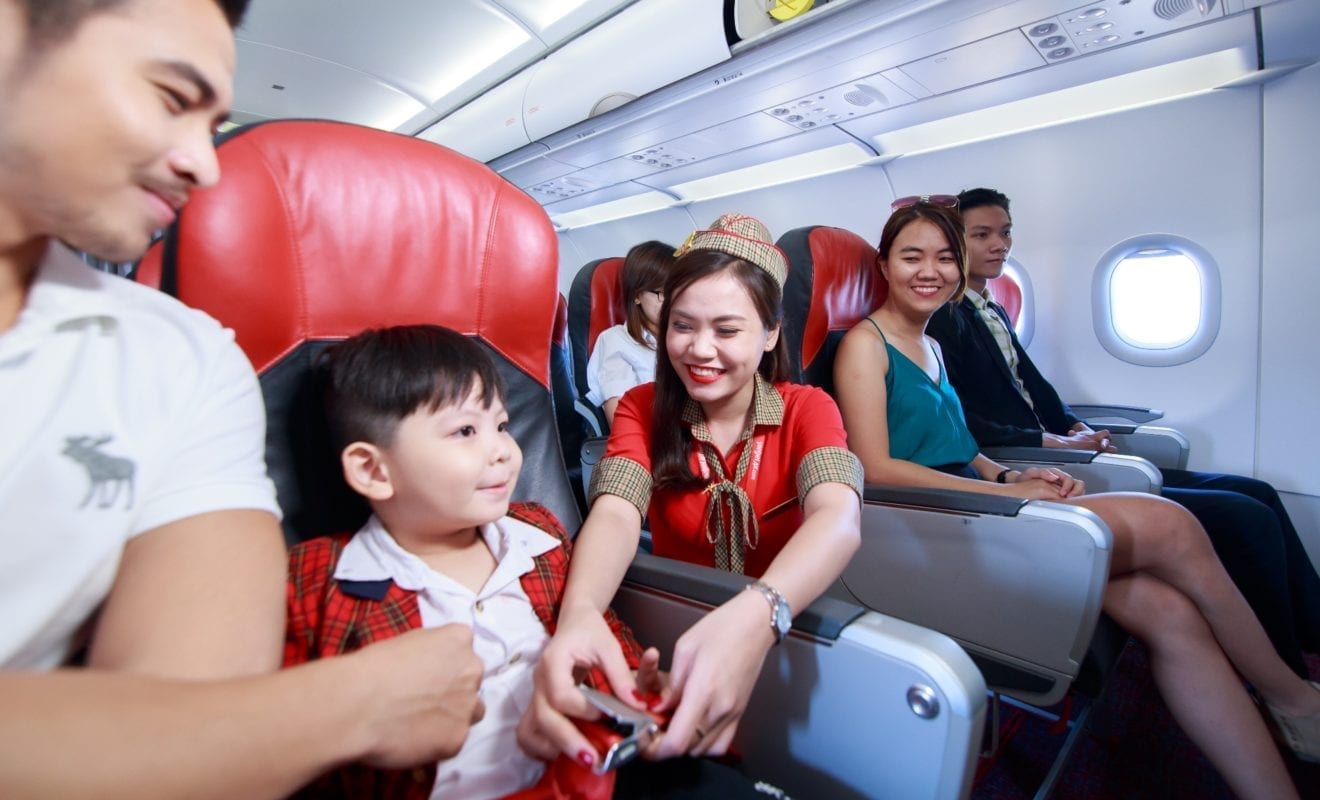
    Vietjet has been a pioneering airline, winning the hearts of millions of passengers thanks to its exciting promotions, entertainments, especially during the festive seasons. With high-quality services, diverse ticket classes and reasonable airfares, Vietjet offers its passengers flying experiences on new aircraft with comfy seats and delicious hot meals served by beautiful, dedicated and friendly cabin crews, and many more enticing add-on services.

  • MAHB’s record profits come at a cost to the Malaysian economy and tourism

    MAHB’s record profits come at a cost to the Malaysian economy and tourism

    Against a backdrop of a challenging economy and falling profitability in corporate Malaysia, Malaysia Airports Holdings Berhad (MAHB) won a major Malaysian award last week, topping billion ringgit companies for giving its shareholders the best three-year returns in its class.

    MAHB’s net profit more than tripled in 2017 to RM237 million from RM73 million in 2016 – itself nearly double from RM40 million in 2015 – and it is set to break yet another record this year.

    In the write-up that accompanied the award, the sharp increase in profits was attributed to two reasons: an increase in Passenger Service Charge (PSC) and growth in passenger numbers coming through its airports.

    The write-up unabashedly stated that MAHB owed its vastly improved performance to its structural dominance and described MAHB as a structural monopoly.

    Kudos to MAHB. But then, it is not difficult to keep showing such numbers when you are a monopoly.

    Nevertheless, unjustified price increases, such as the PSC hike imposed by MAHB, will lead to unintended consequences when its clients, who have no choice but to use its services, are eventually squeezed out of business. Then, everything will collapse – Malaysia’s tourism arrivals, billions in tourism receipts and revenues to MAHB’s own coffers (a fact it has failed to acknowledge).

    MAHB rewards itself with excessive monopoly profits, yet it provides the Malaysian public with embarrassingly low service levels.

    AirAsia X Malaysia CEO Benyamin Ismail said, “In addition to the RM50 PSC it already imposes, MAHB is now demanding an additional RM23 from each passenger travelling through klia2. The millions of passengers departing from klia2, more than 90 percent of whom fly with AirAsia, will attest to the long walks they have had to endure to reach their gates in what is a passenger-unfriendly airport with inferior facilities yet unjustified high charges.

    “Furthermore, since klia2 opened, there have been constant flight disruptions and cancellations due to major apron and runway defects, unscheduled closure of runways, ponding of water on the best of days and fuel pipeline ruptures.

    “We were sued after we refused to collect the extra RM23 that MAHB has imposed for the sole benefit of its shareholders. We will vigorously fight this suit. We will not be part of this scheme to burden the travelling public by making them pay more for below par services.”

    Benyamin added that while the operating results of klia2 itself were not immediately apparent, AirAsia estimates that MAHB’s returns on capital are well in excess of the level of the cost of capital set by regulators.

    AirAsia Malaysia CEO Riad Asmat said, “The overall tourism sector, one of Malaysia’s biggest revenue earners, and the interests of millions of Malaysians who have been able to fly because of the low fares pioneered by AirAsia, are being threatened by MAHB’s price hikes. We urge the regulators and policy makers to rebuff this unfair and unreasonable attempt by MAHB to use its monopoly to enrich itself further by revisiting and rescinding the decision to raise the PSC.

    “MAHB has argued it needs more profits to operate smaller loss-making airports on behalf of the government, but it is obvious from its exponential growth in profits over the last three years – even after taking into account losses in its Turkish operations – that this is not the case.

    “The additional RM23 to be collected will amount to more than RM100 million a year that will go straight to MAHB’s bottom line rather than to the government. MAHB will continue to be among the most profitable Malaysian companies for many years to come. But this will come at a cost to the wider Malaysian economy and at the expense of engines of growth such as AirAsia and AirAsia X.”

    Riad also referred to MAHB’s defence of its decision to charge the extra RM23 in PSC from each travelling passenger, saying it is “bound by Article 15 of the Chicago Convention of 1944.”

    “This would almost be laughable if it were not so serious. MAHB is falling back on a convention ratified in 1944, when Japan still ruled Malaya and when Frank Whittle was testing the jet engine and when only the well-heeled could fly.

    “For all these reasons, we shall not accede to MAHB’s demands and we will take our battle both to the people and to the court of law.”

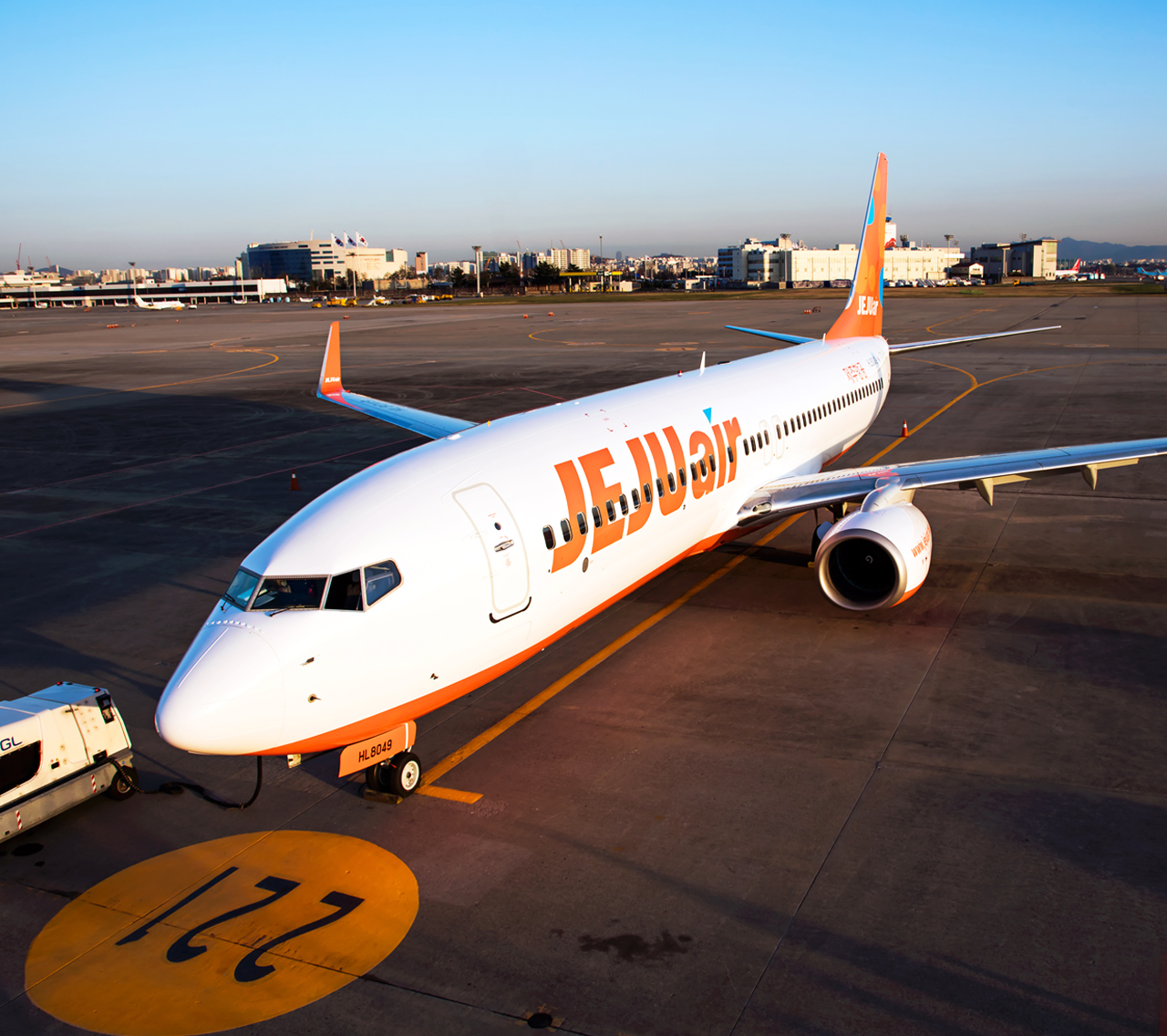
  • Jeju Air co-CEO plans to depart

    Jeju Air co-CEO plans to depart

    Jeju Air said on Wednesday that co-CEO Ahn Yong-chan has expressed his intent to step down from his post, leaving the company to operate under the sole leadership of current co-CEO Lee Seok-ju. Ahn leaves Jeju Air after working under the company’s parent Aekyung Group since 1987.

    The co-CEO served in numerous positions at Jeju Air’s group affiliates such as in Aekyung Petrochemical and Aekyung Industry.

    The company said that Ahn served as CEO at the group’s affiliate companies for 23 years, and that he felt it was right to leave the company at a time when it is performing well, along with his original plan to retire at 61-years-old.

    Jeju Air has become a sizeable contender in the low-cost carrier industry in Korea. It reported 349.5 billion won ($311.6 million) in revenue in the third quarter this year, a 31 percent increase from the previous year.

    Ahn is the son-in-law of Aekyung Group’s Chairwoman, Chang Young-shin.

  • All Nippon Airways’ cargo arm is taking aim at the Asia-US and automotive markets

    All Nippon Airways’ cargo arm is taking aim at the Asia-US and automotive markets

    All Nippon Airways’ cargo arm is taking aim at the Asia-US and automotive markets as a way to differentiate itself and to strengthen its overall competitiveness.

    “The market situation is not so easy right now,” says Toshiaki Toyama, president of ANA Cargo. “In order to maintain profitability or minimize loss, we need to adjust our freighter capacity in accordance with the market situation. As a combination carrier, we handle a lot of transit cargo between Europe or the US and Asia. We’re looking carefully at the role of each freighter flight and we’re planning to reduce some capacity for the winter season.”

    Transit traffic between Asia and the US will increasingly be a major focus of ANA Cargo’s strategy going forward. This was given a large boost in July 2016, when the carrier launched its trans-Pacific joint venture with United Cargo.

    “Frankly, we’ve been a little bit surprised because the response has been even better than we expected,” Toyama says. “In particular, we have a lot of manufacturer customers in Kyushu connecting to United’s San Francisco flight at Haneda and they seem to be very satisfied with the shorter lead times.”

    The first phase of the joint venture began on July 5, covering eastbound cargo from Japan to Canada and the US.

    “From the number of cross bookings between UA and us, we can see that the customers are very supportive of this programme,” says Toyama. “We’re preparing for the next phase for westbound traffic, which is scheduled to be early next year. Phase three will include the rest of Asia.”

    Another opportunity exists in the expanded slot arrangement at Haneda Airport. In February 2016, the Japanese and US authorities agreed to give the two countries five day-time slot pairs and one evening slot pair each at Haneda, as opposed to the four evening slot pairs each country used to have. As a result, ANA has already decided to shift a New York and a Chicago flight from Narita to Haneda from late October 2016.

    “From Japan to New York and Chicago, more than 50% of the total volume is transit cargo,” says Toyama. “The timing of the two flights enables morning connections at Haneda of about four hours from Shanghai, Singapore, Bangkok, Jakarta, Seoul, Taipei and Hong Kong.”

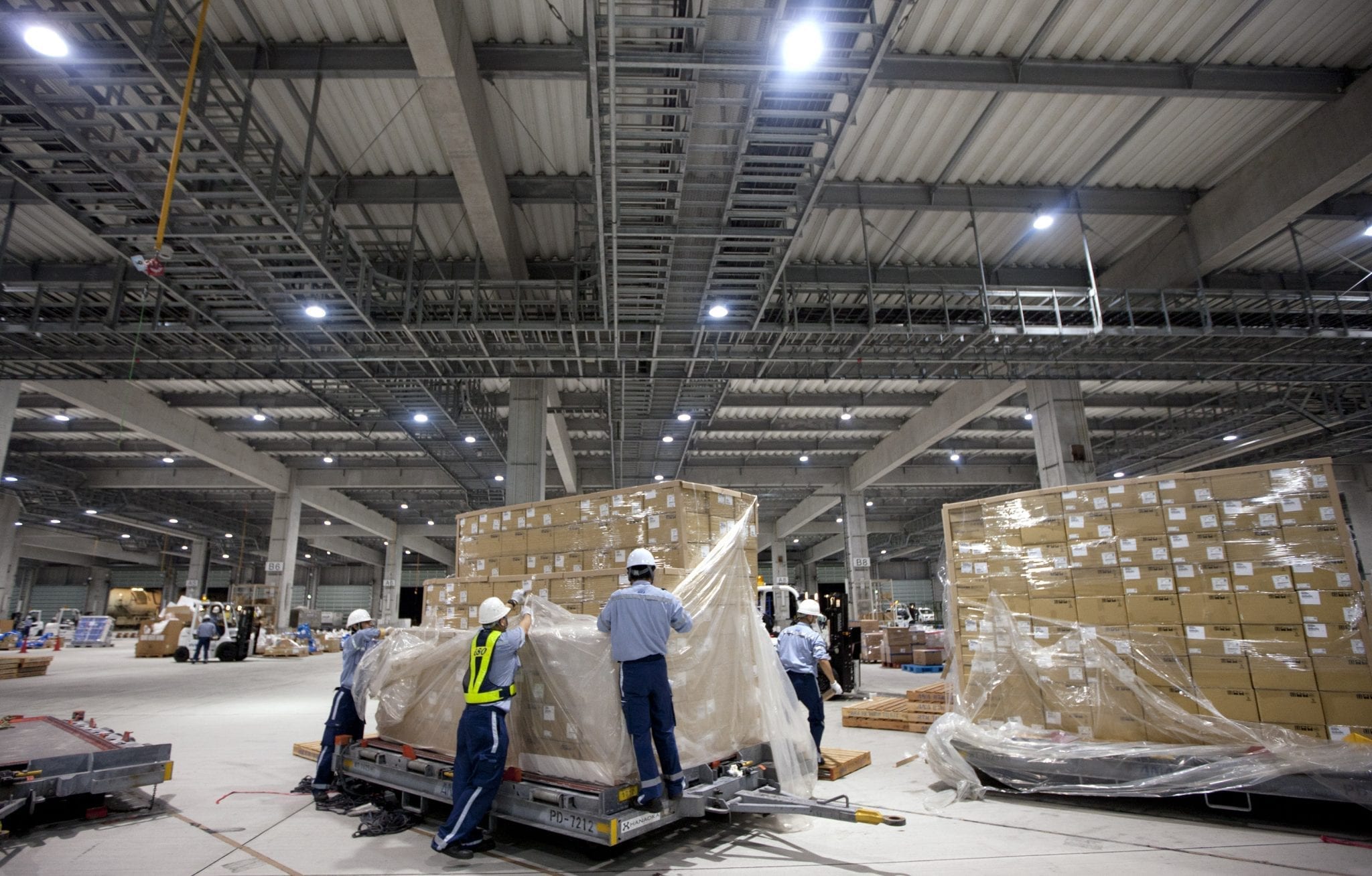
    ANA is the only airline to operate its own cargo facility at Haneda, with an 8,800-square-metre warehouse next to the larger Tokyo International Air Cargo Terminal.

    “We actually use TIACT too,” Toyama says. “I think it’s sufficient for now, because there’s a lot of vacant space at TIACT. We also want to minimize costs – Haneda is incredibly expensive and probably one of the most expensive [airports] in the world.”

    He adds that ANA is in discussions with Japan Airlines and Nippon Cargo Airlines to jointly develop an e-cargo programme, and that he hopes that project to be at 100% by 2020.

    Network expansion on the passenger side will also contribute positively to the cargo business. The airline launched Wuhan in April 2016, Phnom Penh this month, and is due to launch Mexico City in February 2017.

    “These destinations are very attractive for the cargo business too,” says Toyama. “Mexico is an automobile manufacturing centre and Japanese manufacturers like Nissan and Honda have factories there. The supply chain doesn’t just include Japan but also major Asian points such as Tianjin, Guangzhou and Bangkok. We still have a few months until the launch but we’ve already received a lot of enquiries from automobile companies and forwarders.”

    According to Toyama, Wuhan is an important target area for the carrier because of the Chinese government’s decision to shift development from the coast to inland areas.

    “I think it’s a reasonable base but I’m not satisfied yet,” he says. “I expect we’ll be able to gradually increase our load to and from Wuhan. Nissan and a lot of semiconductor companies are there, so we’re talking with them and with forwarders about utilizing our network.”

    Not wanting to lose out on growing e-commerce demand to mainland China, ANA Holdings invested in a young Japanese IT company called ACD in June to provide total logistics solutions including special customs clearance services into China. The service started in September. The first phase of the service is targeted at Japanese retailers and began in September, with plans to expand that to Taiwan, Korea and the US.

    ANA Cargo’s fleet consists of 12 Boeing 767 freighters, which Toyama says is enough for now.

    “In our mid-term strategy, we have plans in place to increase the fleet to 13 or 14 if we need to, depending on the market situation,” he says. “The advantage of the 767 is it allows us to access smaller and medium-sized markets such as Cambodia and Myanmar. Wuhan is also a candidate for the 767F, but it’s not yet at a level that requires a regular freighter. Our 767F network is designed around automobile-related demand. That’s why we’re operating it to Tianjin, Shanghai, Guangzhou, Jakarta and Bangkok.”

    The range of the 767F restricts it predominantly to Asia. According to Toyama, ANA is looking carefully at the possibility of operating larger and longer-range freighters, particularly to the US.

    “The passenger side is planning network expansion but they’re more aggressive on Asian routes,” Toyama says. “In order to achieve network balance in terms of cargo demand, we need more capacity to and from the US. The JV with United is one of the solutions, but if we can’t cover all the demand we will need to think about trans-Pacific freighters.”

    One shouldn’t expect to see ANA Cargo’s blue and white livery on a 747-8F or 777F anytime soon though. And even if the carrier decides to go down the trans-Pacific road, it wouldn’t necessarily have to acquire and operate its own aircraft, with options such as charters or ACMI available.

    “Of course, having a large-sized freighter is a dream for us,” says. “But I think we need to be realistic.”
  • East Nusa Tenggara proposes flights on Kupang-Dili-Darwin route

    East Nusa Tenggara proposes flights on Kupang-Dili-Darwin route

    The Tourism and Creative Economy Office of East Nusa Tenggara Province has suggested to the Ministry of Transportation to start the Kupang-Dili-Darwin flight route.

    “The flight route will increase the number of foreign tourist arrivals in East Nusa Tenggara and other regions in Indonesia,” Head of the Tourism and Creative Economy Office of East Nusa Tenggara Province, Marius Jelamu, stated here on Thursday.

    He noted that the Kupang-Dili-Darwin flight route is, so far, unavailable. Hence, foreign tourists keen on visiting the province have to take a flight via Jakarta or Denpasar to Komodo airport in Labuan Bajo or El Tari airport in Kupang.

    Until mid 80’s there were international commercial route between Kupang and Darwin in Australia.According to Jelamu, the flight route should be considered as the three destinations are located in proximity to each other.

    “East Nusa Tenggara shares its borders with Timor Leste, and it is close to Australia. If there is a flight connecting the three destinations located in three different countries, then the transportation and communication lanes will be smoother,” Jelamu affirmed.

    Starting a transportation lane from one country to East Nusa Tenggara would help the province boost its economic growth, especially in the tourism sector.

    “It will ease travel for the foreign tourists from Timor Leste and Australia planning to visit East Nusa Tenggara and other regions. Moreover, the visa-free policy will facilitate the flow of tourists into the province,” he stated.

    He noted that the Indonesian flight carrier Garuda Indonesia could seize this opportunity as the market will always exist.

    “The flight carrier should not harbor concerns as passengers are always available,” he added.