
Retail News CRM

Tag: apps

  • Travellers and shoppers prefer apps to browsers

    Travellers and shoppers prefer apps to browsers

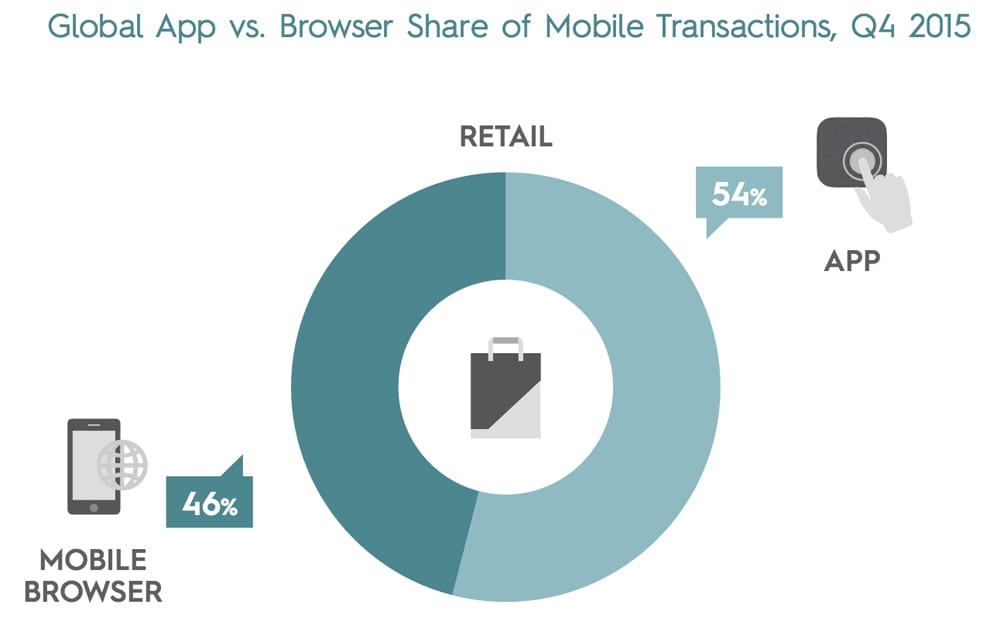
    Criteo’s analysis of shopping data from Q4 2015 demonstrates that mobile is an established channel for retail transactions and that apps have overtaken mobile browsers for the very first time as a vehicle for purchasing.

    Interestingly, the number of mobile transactions carried out on travel apps (58%) outstripped those made via travel mobile browsers in this period (42%). The figure rose from 42% in Q2, to 49% in Q3 and the balance finally tipped in Q4 to 58% of mobile transitions. This should be of interest to travel retailers as it is indicative of how travellers are purchasing.

    Having a fully functioning website may no longer be enough, as travellers increasingly prefer to make transactions via applications instead. Thankfully these are relatively easy to set up in tandem with an existing retail website.
    Criteo-q4-2015-report-1

    Continuing the trend from past quarters, the overall share of app transactions consists of half or more of all transactions.
    “Nearly four-in-ten transactions occurred on multiple devices and were completed on a mobile device almost a third of the time,” says Criteo. “Dedicated shopping apps dwarf the mobile web at all points on the path to purchase, from browsing products to the sale itself.

    “Retailers whose apps focus on providing shoppers relevant and useful products and remove barriers to purchase drive a higher share of transactions than mobile web.”

    Continuing the trend from past quarters, the overall share of app transactions consists of half or more of all transactions.

    Criteo-q4-2015-report-2

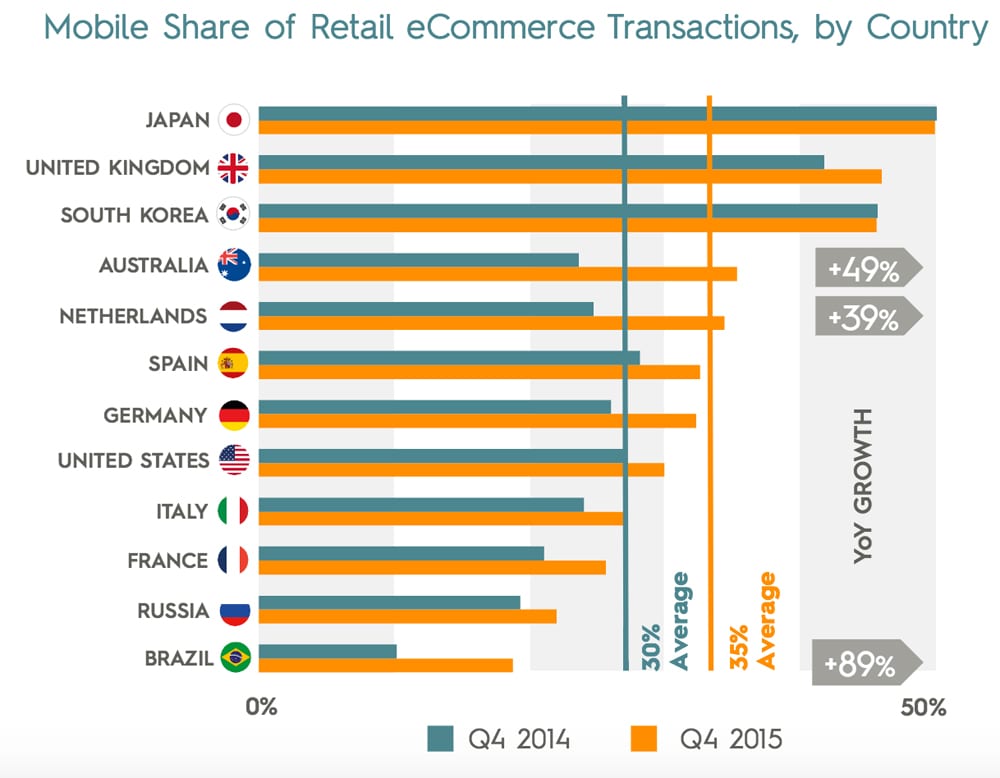
    Japan, UK and South Korea make up the top three countries ranked by mobile share of transactions, globally. Advanced mobile countries remained constant while others are catching up.

    Due to the native environment and additional control of the purchase path, retailers see a higher conversion rate on their apps than both mobile web and desktop.

    “Technologies like deep linking and mobile re-targeting can help retailers drive sustained engagement and transactions in their apps,” says Criteo.

    “Not only do apps convert a higher percentage of your customers, they also bring in more revenue per transaction. Controlling the environment allows retailers to give customers engaging product content (i.e. videos, images, reviews) targeted to things like buying history and browsing behavior. This is more effective than generic targeting signals found on mobile web and desktop sites.”

    In terms of overall transactions made on mobiles – whether through apps or browsers – Japan, UK and South Korea make up the top three countries ranked by mobile share of transactions, globally. Advanced mobile countries remained constant while others are catching up.

    The biggest gainers were UK, which passed South Korea for second, and Australia, which leapfrogged five countries to land in fourth.The US remains in the middle of the pack, but trails the global average along with Germany, France and Spain.

    Criteo-tablet-use-generic

    Tablet transactions were the most likely to have multiple devices in the path to purchase, indicating that tablet buyers are most likely browsing on devices like desktops and smartphones before purchasing.

    “For retailers with a strong mobile shopping experience, mobile transactions neared parity with desktop in 2015. They successfully met consumers on their devices and shifted browsers into buyers.”

    In Q4 2015, mobile hit 30% of transactions versus 27% in 2014. Top quartile retailers, as ranked by percentage of transactions occurring on a mobile device, increased mobile’s share of all transactions even faster – from 35% to 44%
    Criteo-q4-2015-report-4

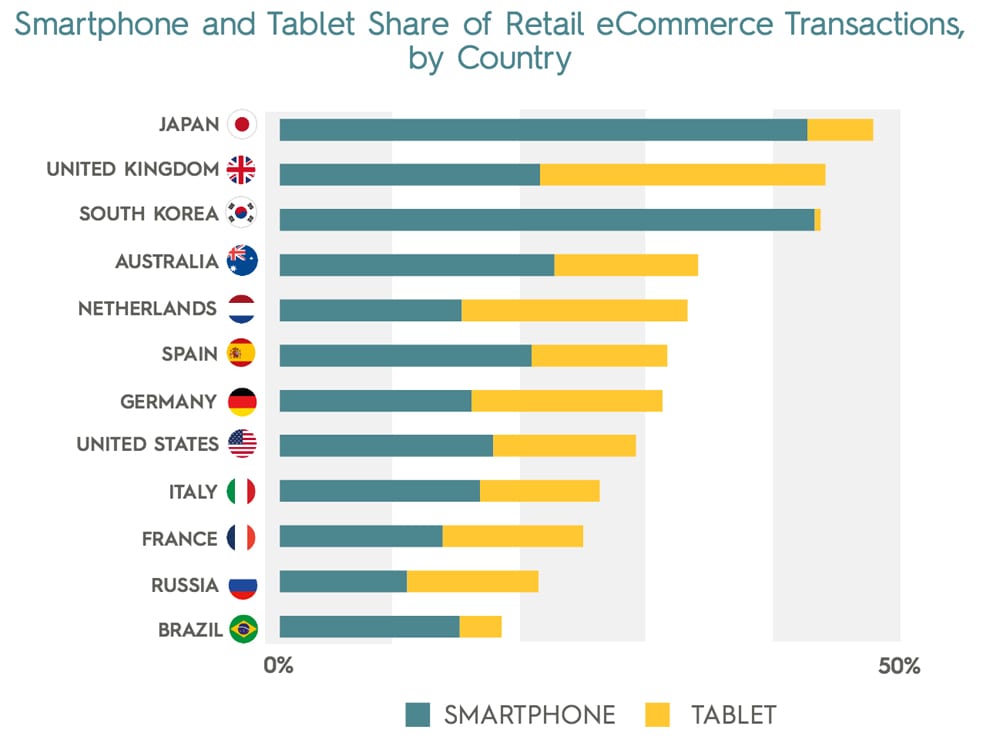
    Japan, UK and South Korea continue to lead the globe in mobile transactions, and smartphones lead tablets in most countries.

    “Mobile is becoming an integral part of the shopping experience, particularly for verticals such as fashion and mass merchants,” adds Criteo. “Health & beauty transactions saw the largest increase in mobile share at 38% year over year, followed by home and mass merchant categories.”

    Smartphone’s share of mobile transactions grew by more than 15% year over year, now accounting for 60% of all mobile transactions in the US. The combination of better transaction channels, ubiquity, more phone models with big bright screens and fast wireless broadband is giving retailers better options for displaying their goods on mobile devices – ultimately leading to more transactions.
  • Indonesia warns messaging apps to drop same-sex emoticons

    Indonesia warns messaging apps to drop same-sex emoticons

    Indonesia’s government has demanded that instant messaging apps remove stickers featuring same-sex couples, in the latest high-profile attempt to discourage visible homosexuality in the socially conservative country.

    The government move comes after a social media backlash against the popular smartphone messaging app Line for having stickers, which are an elaborate type of emoticon, with gay themes in its online store.

    Information and Communication Ministry spokesman Ismail Cawidu said Thursday that social media and messaging platforms should drop stickers expressing support for the LGBT community, a common abbreviation for lesbian, gay, bisexual and transgender.

    “Social media must respect the culture and local wisdom of the country where they have large numbers of users,” he said.

    Homosexuality is not illegal in Indonesia, but is a sensitive issue in the Muslim-majority nation of more than 250 million people. At the same time, most of Indonesian society, which follows a moderate form of Islam, is tolerant, with gay and transsexual entertainers often appearing on television shows.

    Line on Tuesday said it had removed all LGBT-related stickers from its local store after receiving complaints from Indonesian users. Twitter and Facebook had exploded with criticism of Line and its competitor WhatsApp for containing gay content.

    Ismail said the government would tell WhatsApp to do the same as Line.

    Last month, Research, Technology and Higher Education Minister Muhammad Nasir said openly gay students should be banned from the University of Indonesia’s campuses. His statements followed controversy over news a sexuality research center planned to offer counselling services for students.

    Nasir’s statement sparked public controversy in Indonesia for weeks, with objections from human rights groups but support from the Indonesian Ulema Council, an influential board of Muslims clerics.

    Gay rights advocate King Oey urged the government to respect international treaties signed by Indonesia protecting the rights of minorities and women.

    “Gays and lesbians are not illegal in Indonesia,” Oey said. “We urge people who are concerned with human rights to not sit by silently.”

    In 2014, lawmakers in Aceh, a conservative Indonesian province, passed a law that punishes gay sex by public caning and subjects non-Muslims to the region’s strict interpretation of Islamic sharia law.

  • Singtel taps third-party developers for new apps

    Singtel taps third-party developers for new apps

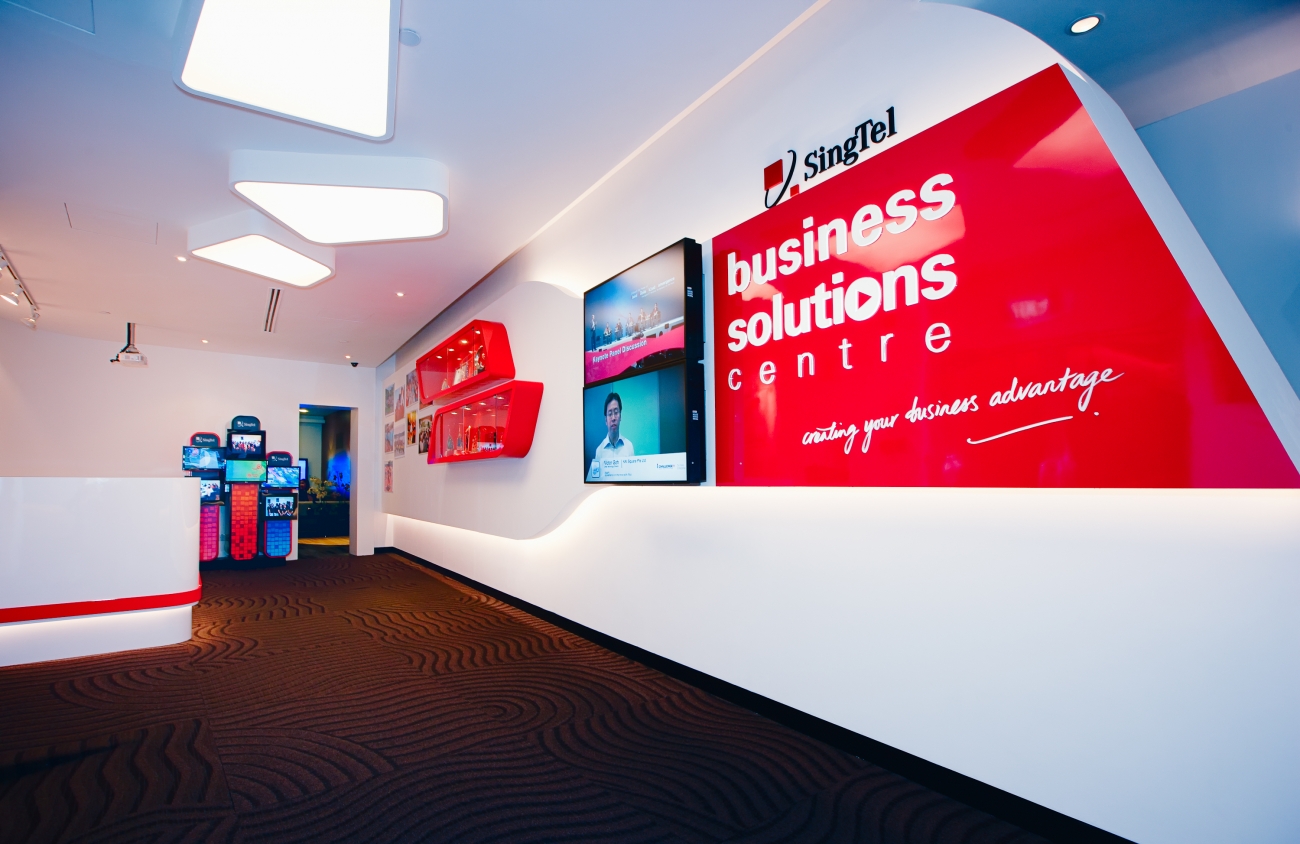
    A Singtel strategy to pick up ideas from independent developers across the region has resulted in affiliates of the telco adopting new revenue-boosting apps and technologies.

    The initiative seems to have helped boost revenue at some of these affiliates while also bolstering Singtel’s role as an incubator of new technology.

    Globe in the Philippines and Telkomsel in Indonesia have lifted turnover in their mobile segments, thanks, in part, to new apps devised by third-party software developers. This came about after Filippino customers downloaded an app called Epic Life, a mobile adventure game, while the photo app Jepret Story proved popular in Indonesia.

    Both apps were developed by outside software firms, which then worked with the telcos to fine-tune the final products.

    Mr Mark Chong, Singtel’s chief executive international, said the telco’s different business units share product ideas among themselves.

    “Our thinking was to shorten the product development cycle. So we decided to combine our own products with apps from external sources to present a more holistic suite of products and services.”

    Singtel’s challenge was to select new content that its customers would find useful, so it held app competitions in different countries for local software developers. This resulted in fresh apps customers in those countries could relate to.

    Take Jepret Story, which won the app challenge in Indonesia. It struck a chord with mobile customers because Indonesians are big social media users. An eMarketer report this year said 63 million people in Indonesia will access Facebook via mobile phones.

    A new round in the process is under way.

    Singtel affiliates will have a chance to work with the 14 apps featured in the Singtel-Samsung mobile app challenge held last Tuesday in Jakarta. The apps cover sectors such as lifestyle, on-demand economy, smart living and health .

    Chief judge Edgar Hardless from Singtel said the affiliates can check out the apps to see if they are suitable for their own markets.

    Among other things, the affiliates must ensure that the apps work seamlessly on their mobile networks and that they would be able to scale up so that millions of customers can use the service.

    Mr Hardless, who is also chief executive of Innov8, Singtel’s venture unit, said investing in start-ups has allowed the telco to innovate as well.

    Since it began in 2010, Innov8 has invested in nearly 40 start-ups here and around the world, giving it an insight into the latest emerging technologies and business solutions.

    “Through these activities, there’re start-ups that we can refer to our business units, leading to commercial arrangements,” he added.

    One of Innov8’s portfolio companies is Jasper Wireless, which has been used by Singtel here and by Optus, its Australian subsidiary.

    Jasper helps companies rapidly and cost-effectively manage and monetise Internet of Things services such as security and analytics.