Retail News CRM

Tag: Australian

  • Australian beef production on the rise amid global decline

    Australian beef production on the rise amid global decline

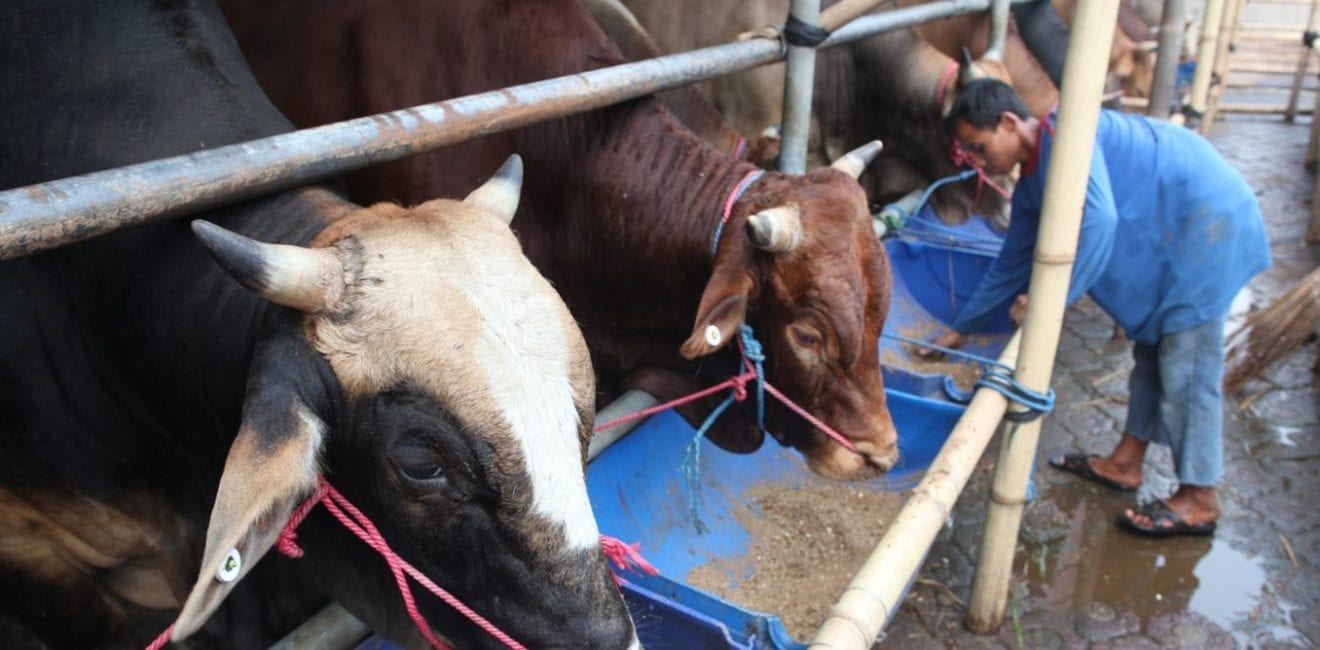
    Despite a global trend of production decline, beef production in the southern hemisphere – including Australia – is on the rise, reports Rabobank in the Global Quarterly Beef Q4 2023.

    However, increases in Australia and Brazil have yet to offset the production declines in Europe and the US.

    The report said Australian cattle prices dropped down 28 percent since June, while New Zealand and Brazil also saw prices fall by smaller amounts.

    Cattle prices in the US were steady, while Canadian prices rose three percent between June and October. The bank expects global beef production across “monitored markets” to decline by one percent year-on-year in 2023, with 2024 following a similar pattern.

    The report also highlights ongoing strong consumer demand in the US, with reduced cattle and beef supplies, while in Asia, weak demand and high inventory levels are putting pressure on the market.

    Moreover, the bank expects North American cattle prices to remain high while Southern Hemisphere prices remain soft.

    Regarding Australia, Rabobank’s senior animal proteins analyst Angus Gidley-Baird believes that the country’s beef sector has reached the bottom of the market.

    “We believe that the producer uncertainty causing prices to drop has eased and, as we head toward summer, producers will be more certain about what stock numbers they will run, returning some stability to the market.”

    However, processing numbers are expected to see some change in the coming months.

    “Abattoirs are believed to have been running strongly for the last seven months, to the extent possible given labor constraints,” says Gidley-Baird.

    “With the holiday season approaching and some cattle still backed up in the system, it is uncertain if plants will shut down at year-end, as is normal, before adding additional shifts in the new year or if they use this period to get through some of the cattle that have built up in the system.”

    Looking ahead, Rabobank expects the ongoing slow global economic recovery to limit consumers’ expenditure and likely curb their spending on beef next year, particularly in Asian countries. Consumers are being more cautious in their purchase decisions, and this trend is expected to continue into next year.

  • Australians open to subscription services, Deliveroo study finds

    Australians open to subscription services, Deliveroo study finds

    Australia has experienced an unprecedented rise in demand for subscription services across the country, according to research by food-delivery company Deliveroo.

    The study found that 62 percent of Australians are currently using more than six subscription services. The most popular type of subscription service is TV streaming services, followed by food subscriptions.

    Growth of subscription services mostly resulted from customers’ need for convenience, variety, and cost savings, the survey concluded.

    To keep up with the trend, Deliveroo has launched its own subscription service ‘Plus’, offering Aussies access to unlimited deliveries for a monthly fee. The launch follows the trial of the service in 2019 where more than 45,000 customers signed up in the first month.

    “This is primarily aimed at supporting families and couples who are ordering larger baskets as a group,” the company said in a statement. “Deliveroo has seen a surge in people ordering for multiple numbers and wants to make delivery more affordable and accessible for them.”

  • Australian dollar back up

    Australian dollar back up

    The Australian dollar rebounded overnight and is buying 67.69 US cents Wednesday, up from 67.25 US cents on Tuesday.

    Yesterday, the local currency neared its decade low before rebounding. The Aussie dollar dipped to close to a recent 10-year low on weak retail sales figures.

    The Aussie dollar dipped as low as 66.88 US cents after the Australian Bureau of Statistics announced that retail spending fell by an unexpected 0.1 percent in July.

    But it later rebounded from that level – not far from a 10 and a half year low set of 66.77 cents set on August 7 – when the Reserve Bank of Australia announced in the afternoon that it would not to cut the cash rate for another month.

    It was buying 67.24 US cents at 1700 AEST, from 67.31 US cents on Monday.

    One Australian dollar buys 71.41 Japanese yen, from 71.46 yen ; 61.45 euro cents, from 61.28 cents ; 56.10 British pence, from 55.32 pence and 106.87 NZ cents, from 106.74 cents.

  • Australian dollar strengthens again

    Australian dollar strengthens again

    The Australian dollar has risen Wednesday, buying 69.62 US cents from 69.55 US cents on Tuesday.

    The local currency was on the back foot yesterday as its US counterpart continued to benefit from the trade truce with Mexico, even as Washington kept up the war of words with China.

    The Aussie was pinned at 69.56 US cents on Tuesday, having lost 0.6 per cent on Monday in the wake of the trade truce with Mexico.

    It had reached as high as 70.25 US cents at one stage before retreating.

    President Donald Trump’s decision not to impose tariffs on Mexico was taken as lessening the risk of recession in the United States and lifted 10-year Treasury yields up to 2.15 per cent from a  two month low of 2.05 per cent.

    It also led investors to trim expectations for interest rates cuts from the Federal Reserve, though futures are still wagering heavily on a move in July.

    Trump did not sound so conciliatory toward China, however, threatening another round of tariffs if no progress was made on trade at a Group of 20 summit later this month.

    China is Australia’s single largest export market and investors use the Aussie as a liquid proxy for positions on its economic outlook.

    The Aussie has troubles of its own as a survey of Australian business showed activity faltered in May even as confidence got a rare boost.

    The Reserve Bank of Australia has already cut interest rates to a record low of 1.25 per cent and markets imply around an 86 per cent probability of a further reduction by August.

    “Today’s survey again suggests increased risk that the unemployment rate will not make the further gains the RBA expects and strongly argues the case for further near-term easing in monetary policy,” said Ivan Colhoun, NAB’s chief economist, markets.

    “A weak outcome for unemployment would likely cement a July cut,” he added, referring to the official jobs report for May which is due on Thursday.

    Median forecasts are that employment rose a solid 17,500 in May, nudging the jobless rate down a tick to 5.1 per cent – an outcome that would likely lessen the urgency for a rate cut as early as July.

    Australian government bond futures were lower on Tuesday as risk appetite globally got a boost from the US-Mexico trade news. The three-year bond contract fell 2.5 ticks to 98.920, while the 10-year contract slipped 3.0 ticks to 98.5100.

  • Australian dollar up Again

    Australian dollar up Again

    The Australian dollar has risen Monday, buying 70.42 US cents from 70.25 US cents on Friday.

    Last Friday, the local currency tumbled to a six-week low and three-year bonds rallied to record highs after surprisingly weak inflation data boosted calls for Reserve Bank rate cuts.

    The Australian dollar slid as low as 70.31 US cents on Wednesday, a level not seen since March 11, after first-quarter inflation slowed to the lowest in three years to 0 per cent when analysts were looking for a 0.2 per cent increase.

    Key measures of underlying inflation favoured by the Reserve Bank of Australia (RBA) averaged 1.4 per cent for the year, marking 13 quarters below the central bank’s target range of 2 to 3 per cent.

    In 2016, the last time inflation was this tepid, the RBA reacted with two rate cuts to the current record low of 1.50 per cent. It has since sat on the fence on policy, awaiting a pick-up in prices and a drop in the unemployment rate.

    Wednesday’s data fuelled more calls for a rate cut, with ING Bank, JP Morgan and Citi becoming the latest to predict an easing as early as next month.

    “Australian inflation shows no signs of coming anywhere near the central point of the RBA’s 2-3 per cent range, and we are biting the bullet and changing our ‘on-hold’ call for the RBA to a cut, possibly as early as the 7 May meeting,” ING economists said in a note.

    “We can’t now see how the RBA can ignore such a bad inflation miss, even with last week’s strong employment gains.”

    Wednesday’s weak inflation report set government bond futures on fire, with the three-year bond contract surging to a record high of 98.750 sending yields below the cash rate to 1.25 per cent.

    Interest rate futures sharply narrowed the odds on an easing. The probability of a May 7 cut doubled to 44 per cent and a quarter-point move was fully priced for July, compared to an October timing earlier this week.

    Across the Tasman Sea, the New Zealand dollar was 0.5 per cent down at $0.6627, languishing near its lowest since early January. The kiwi has fallen or stayed almost flat in nine of the last 10 sessions.

    The currency has been in a downward trend since late March after the country’s central bank abandoned its long-standing neutral bias to say its next move in interest rates was likely down.

    That followed underwhelming inflation data that further boosted the probability of a rate cut in New Zealand.

    New Zealand government bonds were slightly higher with yields down about 5 basis points at the long end of the curve.

  • Upset Hindus urge Australian company to recall Hindu gods’ leggings

    Upset Hindus urge Australian company to recall Hindu gods’ leggings

    Upset Hindus have urged for the immediate withdrawal of leggings carrying images of various Hindu gods and goddesses, sold on a Melbourne headquartered online marketplace Redbubble, calling it highly inappropriate.

    Hindu statesman Rajan Zed, in a statement in Nevada today, said that Hindu deities printed on Redbubble leggings—Shiva, Vishnu, Brahma, Krishna, Ganesha, Durga, Lakshmi, Skanda, Saraswati, Hanuman, Kali, Seshnarayana—were highly revered in Hinduism and was meant to be worshipped in temples or home shrines and not to be worn around one’s legs. Inappropriate usage of Hindu deities or concepts for commercial or other agenda was not okay as it hurt the devotees.

    Zed, who is President of Universal Society of Hinduism, also urged Redbubble CEO Martin Hosking and Board Chair Richard Cawsey to offer a formal apology.

    Hinduism was the oldest and third largest religion of the world with about one billion adherents and a rich philosophical thought and it should not be taken frivolously. Symbols of any faith, larger or smaller, should not be mishandled, Rajan Zed noted.

    Zed further said that such trivialization of Hindu deities was disturbing to the Hindus world over. Hindus were for free artistic expression and speech as much as anybody else if not more. But faith was something sacred and attempts at trivializing it hurt the followers, Zed added.

    Award-winning Redbubble, founded in 2006 and listed on Australian Securities Exchange, which also has offices in San Francisco (USA), claims to be “a global online marketplace powered by artists” and sells “high-quality, everyday products”. “More than 4.2 million Customers from over 196 different countries have shopped on Redbubble”, it states.