Retail News CRM

Tag: auto news

  • Tesla To Build New Plant And Design Centre In Germany

    Tesla To Build New Plant And Design Centre In Germany

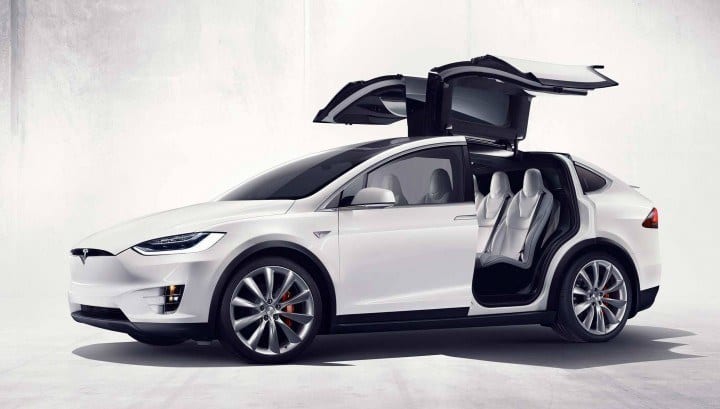
    Tesla will build its first European factory and design center near Berlin, giving the U.S. electric car pioneer the coveted “Made in Germany” label just as local rivals Audi, BMW and Mercedes prepare to launch competing cars.

    Tesla Chief Executive Elon Musk announced the move at a prestigious German car awards ceremony late on Tuesday and said the new plant would make batteries, powertrains and cars – starting with the Model Y sports utility vehicle.

    “Everyone knows German engineering is outstanding for sure. You know that is part of the reason why we are locating Gigafactory Europe in Germany,” Musk said at the ceremony in Berlin.

    The plan is a big boost for Germany as a centre for manufacturing after BMW and Mercedes in recent years chose to build new factories in Hungary, and after its auto industry was hit hard by Volkswagen’s admission in 2015 that it cheated U.S. diesel emissions tests.

    Germany’s powerful manufacturing industry has been slowing, with data on Thursday set to show whether Europe’s biggest economy has slipped into recession for the first time since 2013.

    Tesla is struggling to ramp up production and has yet to prove it can be consistently profitable as rivals including Audi-owner Volkswagen retool plants to mass-produce electric cars.

    Musk said the factory would be near Berlin’s new Brandenburg international airport, diversifying the Silicon Valley firm’s production beyond the United States at a time when global trade tariffs make exports more difficult. Besides Europe, Tesla is opening a factory in Shanghai.

    Tesla’s proposed factory will be within commuting distance of Poland, where labor costs are cheaper, a rival manufacturer – who also looked at the site – told Reuters.

    “Tesla’s decision to build an ultra-modern factory for electric cars in Germany is further proof of the appeal of Germany as an automotive hub,” Economy Minister Peter Altmaier said on Wednesday.

    “We think we now have the chance, in the coming years, to become an important international center in this future-oriented sector,” he said.

    The German government has earmarked financial support for making electric car battery cells locally as a way to secure manufacturing jobs as tougher emissions rules threaten demand for older technologies, like diesel engines.

    Dietmar Woidke, the premier of the Brandenburg state that surrounds Berlin, said any official support given to Tesla would be in accordance with European Union rulesAltmaier said there had been no discussion so far about any subsidies for Tesla’s plans, adding the company would be treated like all other carmakers.

    In a high-profile example of the impact of Brexit, Musk said he picked Germany for his new factory over Britain because of uncertainty over the nation’s exit from the European Union.

    “Brexit made it too risky to put a gigafactory in the UK,” he said in an interview with industry website Auto Express.

    Germany’s biggest labor union, the influential IG Metall, was quick to welcome Tesla’s plan. “This strengthens Berlin as an industrial location and creates jobs. We hope this sets an example,” said Birgit Dietze, IG Metall’s regional head.

    Even Germany’s auto industry association, VDA, welcomed the arrival of a U.S. competitor.

    “Elon Musk’s announcement shows how important Germany is as a location for producing electric vehicles in Europe,” VDA said. “We don’t shy away from competition, quite the opposite.”

    German carmakers and suppliers are preparing to build more than 150 electrified vehicles by 2023, VDA said.

    While Germany’s renowned car industry is mainly based in the south of the country, the capital has become a hub for start-ups and has attracted many creative and technology firms since the fall of the Berlin Wall three decades ago.

    “Tesla is coming to Brandenburg with a big investment,” said state premier Woidke, without giving details “We lobbied for this for a long time in intensive talks and with good arguments.”

    Berlin’s minister in charge of economic affairs, Ramona Pop, told public broadcaster RBB there had been talks about creating 6,000 to 7,000 jobs in production alone, with hundreds or even thousands more in areas such as design, software and research.

    Musk’s appearance at the awards ceremony is another example of Tesla’s efforts to give its cars the German stamp of quality.

    It already has an engineering firm in Pruem that specializes in automated manufacturing systems for battery factories and has tested its cars on the Nordschleife, the notorious
  • VW Ramps Up China Electric Car Factories

    VW Ramps Up China Electric Car Factories

    Volkswagen AG is ramping up production of electric cars to around 1 million vehicles by end of 2022, according to manufacturing plans seen by Reuters, enabling the German carmaker to leapfrog Tesla Inc and making China the key battleground.

    Volkswagen is readying two Chinese factories to build electric cars next year. The Chinese plants will have a production capacity of 600,000 vehicles, according to Volkswagen’s plans, which have not been previously reported – revealing VW’s ability to industrialize production faster than other pioneers in the electric vehicle market.

    Tesla is still trying to reach its goal of making more than 500,000 cars a year by building a new factory in Shanghai, China, while VW can rely on an established workforce in two of its plants in Anting and Foshun to build zero-emission cars.

    The scale and speed of VW’s electrification push marks a shift in favour of established manufacturers that can use existing factories and profit from combustion-engined sport utility vehicles (SUVs) to scale up faster than startups.

    “The truth is barriers to entry in autos remain high,” said Max Warburton, an analyst at Bernstein Research. “Making cars is hard. The move to electric vehicles will be expensive, but will probably be led by traditional manufacturers.”

    VW is leveraging its large infrastructure of suppliers, factories and workers, long a handicap to its profitability, more aggressively than rivals BMW, Renault SA, General Motors Co and Tesla, which were all quicker to sell a custom-designed electric car.

    Rather than adjusting production gradually, and using multi-powertrain platforms, Volkswagen is making a massive bet on a dedicated electric vehicle architecture, known as MEB, in the hope of increasing economies of scale sufficiently to push down the price of electric cars to around 20,000 euros ($22,262). The Wolfsburg, Germany-based carmaker is retooling eight plants across the globe by 2022 to specialise in manufacturing electric cars, and license its electric MEB platform to rivals, senior VW executives told Reuters, putting it on track to become the world’s largest maker of zero-emission vehicles.

    Tesla has emerged as a serious competitor with a credible car, its Model 3, Volkswagen Chief Executive Herbert Diess told Reuters last week. But startups have a hard time entering mass production without sufficient production facilities, he said.

    “The question is, can you expand your production quickly enough? The capital intensity is increasing,” Diess said.

    To fund its own electrification shift, the German carmaker aims to increase sales of VW SUVs, with combustion engines, to 40% of overall sales by 2020 from 23% in 2018.

    The power station that supplies energy for VW’s flagship e-vehicle factory in Zwickau, Germany, marked by two tall chimneys, was built to power production of the combustion-engined Volkswagen Golf.

    Now Zwickau can piggyback off this infrastructure to ramp up production to 330,000 VW ID electric cars by 2021.

    Volkswagen Group will increase economies of scale by rolling out electric vehicle platforms to its Audi, Skoda and Seat and Porsche brands.

    Volkswagen Group will be in a position to build 22 million electric cars by 2028, of which 11.6 million could come out of Chinese factories, VW said.

    PRODUCTION PAIN

    VW’s expansion push comes at a time when investors have started to question businesses delivering growth without real profit, a change in sentiment that is crippling the ability of several electric car pioneers to raise more cash.

    Back in 2016, Tesla said it wanted to build more than 500,000 Model 3 cars by 2018, a goal it has failed to meet. This year it expects to deliver 360,000 to 400,000 cars, a target that includes selling all models.

    Tesla’s struggles have dampened optimism about how easy it is to enter the car business, making it harder for China’s NIO, backed by internet company Tencent Holdings Ltd, as well as others like Faraday Future and Byton Ltd, to fund the next stage of growth: capital-intensive volume production and sales.

    “So much respect for those doing high volume manufacturing, Tesla CEO Elon Musk tweeted earlier this month. “It’s insanely hard, but you make a real thing that people value. My hat is off to you.”

    After starting trial production runs at its factory in Shanghai, Tesla now hopes to reach its 500,000-vehicle target in the 12-month period ending June 30, 2020. Tesla is also looking for a site to start production in Europe.

    Volkswagen is converting two German plants, Hanover and Zwickau, to build electric vehicles and will retool other factories including plants in China: Foshan which VW runs together with its joint-venture partner FAW-Volkswagen, and another in Anting, which VW runs together with SAIC.

    It will retool plants in Emden and Dresden in Germany, Mlada Boleslav in the Czech Republic, and Chattanooga, Tennessee, in United States, as part of a 30 billion-euro ($33.24 billion)investment push into e-mobility by 2023.

    As a result, Volkswagen Group will be the No. 1 electric vehicle producer globally by 2025, while Tesla is likely to remain a niche player, according to UBS autos analyst Patrick Hummel.

    TECHNOLOGY INTERLOPERS

    The cutthroat rivalry between automakers and software companies started when Alphabet Inc’s Google presented a prototype autonomous vehicle in 2012, leading analysts and industry executives to fear a so-called Nokia moment. This occurs when a new player from the tech sector unveils a superior design, in the way that Apple Inc presented the iPhone in 2007, ending Nokia’s dominance of the mobile handset business.

    Today, Tesla’s cars are generally perceived as cutting-edge and potentially more sophisticated than VW’s. Volkswagen’s ID.3, which starts production this year, has an operating range of between 330 and 550 kilometers (205 to 341 miles), below the 560 km long-range Model 3 version offered by Tesla.

    That is because Tesla has a sophisticated software algorithm to control how much electricity goes to the electric motor, air conditioning, seat heaters, in-car infotainment, and cooling system.

    Volkswagen’s edge is more blunt: price and massive economies of scale.

    The ID.3 has a starting price of under 30,000 euros ($33,363) in Germany. By contrast, Tesla’s Model 3 had an average selling price of $50,000 in the second quarter. The long-range version retails for 52,390 euros in Germany.

    The VW vehicle’s lower price comes from the carmaker’s ability to place large orders which, by nature of their size, help drive down the price. Volkswagen is investing 50 billion euros ($55.5 billion) to buy battery cells and will also license its MEB electric car platform to rival carmakers to further increase economies of scale.

    That is, Volkswagen will make that huge investment if suppliers can keep up.

    “There is a lot of investment,” Stefan Sommer, Volkswagen Group’s board member responsible for procurement, told Reuters last month. “But even the big companies like Samsung, CATL, LG Chem, the big guys, SK, they hesitate to take so much money and invest because they are not seeing the market on the other side.”

    “We are now seeing the first battery plants, LG in Poland, CATL in Germany, they don’t have the skilled workforce. That will be the bottleneck,” Sommer said. “It’s a learning curve everybody has to work through. This will cause some lags in supply. We have no other choice.”

    VW plans to license its electric MEB vehicle platform to rival Ford Motor Co, which will give VW $10 billion in revenue over the next six years.

    Thomas Ulbrich, Volkswagen’s member of the board who oversees production of electric vehicles, told Reuters, “Ford and Volkswagen’s agreement will be a blueprint for further licensing deals.”

    In the short term, Volkswagen and its Chinese joint venture partners will invest 15 billion euros to produce 15 different electric cars for China alone by 2025.

    “The first MEB-based vehicle is an SUV model,” Volkswagen said about its China push.

  • Hyundai Motor May Raise Stake In China Joint Venture

    Hyundai Motor May Raise Stake In China Joint Venture

    Hyundai Motor said on Tuesday it was considering raising its stake in its underperforming truck joint venture in China, potentially joining other foreign automakers in boosting ownership in the world’s biggest car market. Sichuan Hyundai Motor is Hyundai’s only commercial car venture in China that makes cargo trucks and buses.

    Beijing relaxed rules last year on foreign firms controlling any Chinese automakers or joint venture, removing caps on those making fully electric and plug-in hybrid vehicles. Limits on commercial vehicle makers ease in 2020, and by 2022 for the wider car market.

    Hyundai is reviewing various plans to strengthen the joint venture’s competitiveness in changing market conditions in China, the firm said in an emailed statement, without elaborating. Volkswagen AG is exploring the prospect of buying a big stake in its Chinese electric vehicle joint venture partner, sources have told Reuters, while BMW has agreed to buy control of its main joint venture in China.

    Sichuan Hyundai Motor is jointly owned by Hyundai and China’s Sichuan Nanjun Automotive Group, with a stake of 50 per cent each. The Sichuan joint venture, which started operations in 2013, produced 12,228 commercial vehicles last year, down by more than half from 28,786.

    That means that their production facilities are heavily underutilised given that they have a capacity of making 160,000 trucks and 10,000 buses a year.

  • More Jobs In Auto Lost, Toyota And Hyundai Cut Production

    More Jobs In Auto Lost, Toyota And Hyundai Cut Production

    With India’s auto sales declining for the ninth straight month in July, more automotive manufacturers are laying off workers and temporarily halting production to keep costs in check, according to sources and documents seen by Reuters.

    Japanese carmaker Toyota Motor and South Korea’s Hyundai Motor are the latest in a string of companies to briefly halt some parts of production at plants to combat slumping sales, according to company memos to employees, reviewed by Reuters.Passenger vehicle sales in July fell at the fastest pace in nearly two decades.

    The sales declines have triggered major job cuts in India’s auto sector, with many companies forced to shut down factories for days and axe shifts.

    Sources have told Reuters that even more companies have now begun to lay off temporary workers as the slowdown worsens.

    Denso Corp’s India unit, which makes powertrain and air-conditioning systems for cars, has cut some temporary workers at its Manesar plant in north India, four sources familiar with the matter told Reuters.

    A spokeswoman for Denso said the information was incorrect and declined to elaborate further.

    In a separate email, another company official disputed that the firm employed temporary workers at its Manesar plant.

    Bellsonica, which is part-owned by India’s biggest carmaker Maruti Suzuki and makes auto framework parts, has also let more than 350 workers go in Manesar, two sources said.In an email, Bellsonica said the workers that had been let go were temporary workers, and most had been let go earlier in the year.Reuters earlier this month reported automakers, component manufacturers and dealers had already cut 350,000 jobs

    In a meeting with India’s finance ministry on Aug 7, industry executives asked for tax cuts, and easier access to finance for dealers and buyers, in an effort to revive sales.Toyota, in a notice dated Aug 13, told its workers the company would halt production at its plants in Bengaluru in southern India on Aug 16 and 17 “due to low market demand of vehicles” and high stock of about 7,000 vehicles. N Raja, deputy managing director, at Toyota’s India unit, told Reuters that while the company had a flexible production system it had to resort to five no-production days in August to prevent the build up of stock.”The industry is deeply concerned with the reality of poor customer sentiment faced by the sector,” said Raja, adding he hoped the government would step in to support the industry

    Hyundai, in a memo on Aug 9, also said it would halt production for several days in August across various departments including the body shop and paint shop as well as its engine and transmission plants. A Hyundai Motor India spokesman said the company expected sales to pick up in the festive season starting next month and added that the company had not laid off any workers.

  • Volvo XC90 To Come In A 3-Seater Excellence Trim In India

    Volvo XC90 To Come In A 3-Seater Excellence Trim In India

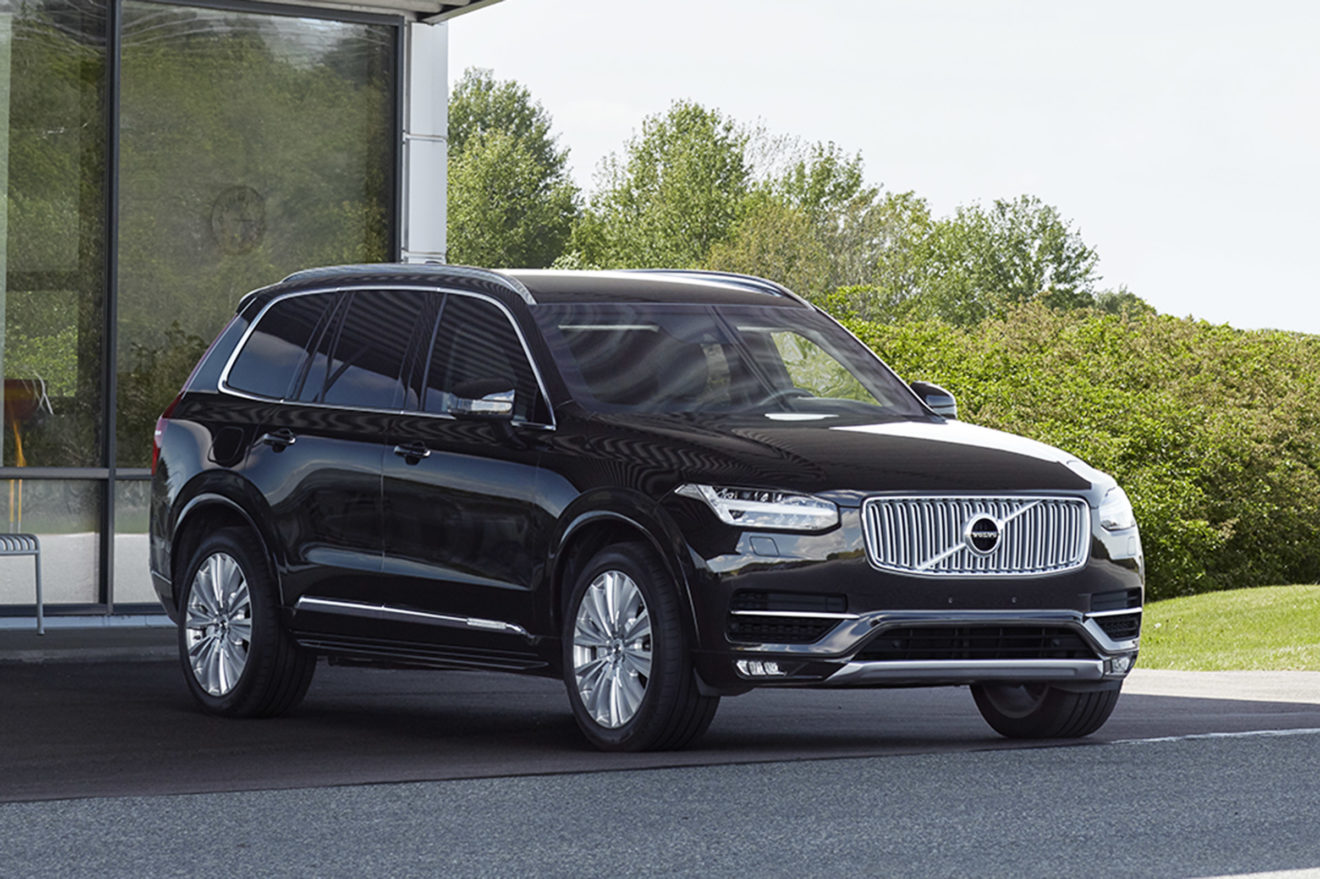
    Volvo Auto India is all set to launch the XC90 Excellence variant in India on September 3, 2019. The Excellence option is only on offer in select markets and India gets to be one of them. The regular XC90 Inscription trim cabin is already pretty upscale, but the Excellence adds to that. So there’s a lot more on offer and yes, you’re quite literally in the lap of luxury. To begin with the XC90 Excellence comes with individual seats at the rear and this makes it a 3-seater which means there’s a lot of space for anyone sitting at the rear. The seats can be reclined and adjusted electrically. There’s a lot provided at the rear to pamper the passengers and this includes features like a massage function – which along with the rest of the seat functions (including ventilated cooling and seat heating) can be operated using a pop-up touchscreen that sits between the two seats.

    Volvo also provides tray tables that can be folded out of the central armrest. The armrest also has a storage bin housed below it which contains charging and USB points. Between the seats is the in-car refrigerator where you can store and cool any beverage of your choice. The Excellence comes with its own exclusive set of crystal glasses and special champagne flute holders, that can be housed inside the fridge to keep them cool. Now, that’s taking exclusivity to a whole new level. There is a holder between the seats to stick the specially designed flutes too.

    Now with all these features at your disposal, you certainly want a bit of peace and quiet so what Volvo has done is put a glass partition between the cabin and the cargo area to make sure that the cabin is quiet and of course cooler. The cabin will be finished in two colors – black or beige. All these luxurious features will certainly cost you. Currently, the XC90 lineup starts at around ₹ 80 lakh and goes up to ₹ 1.31 crore, we expect the XC90 Excellence to be priced at ₹ 1.3 crore.

  • Volkswagen Polo & Vento Facelifts To Be Launched Next Month

    Volkswagen Polo & Vento Facelifts To Be Launched Next Month

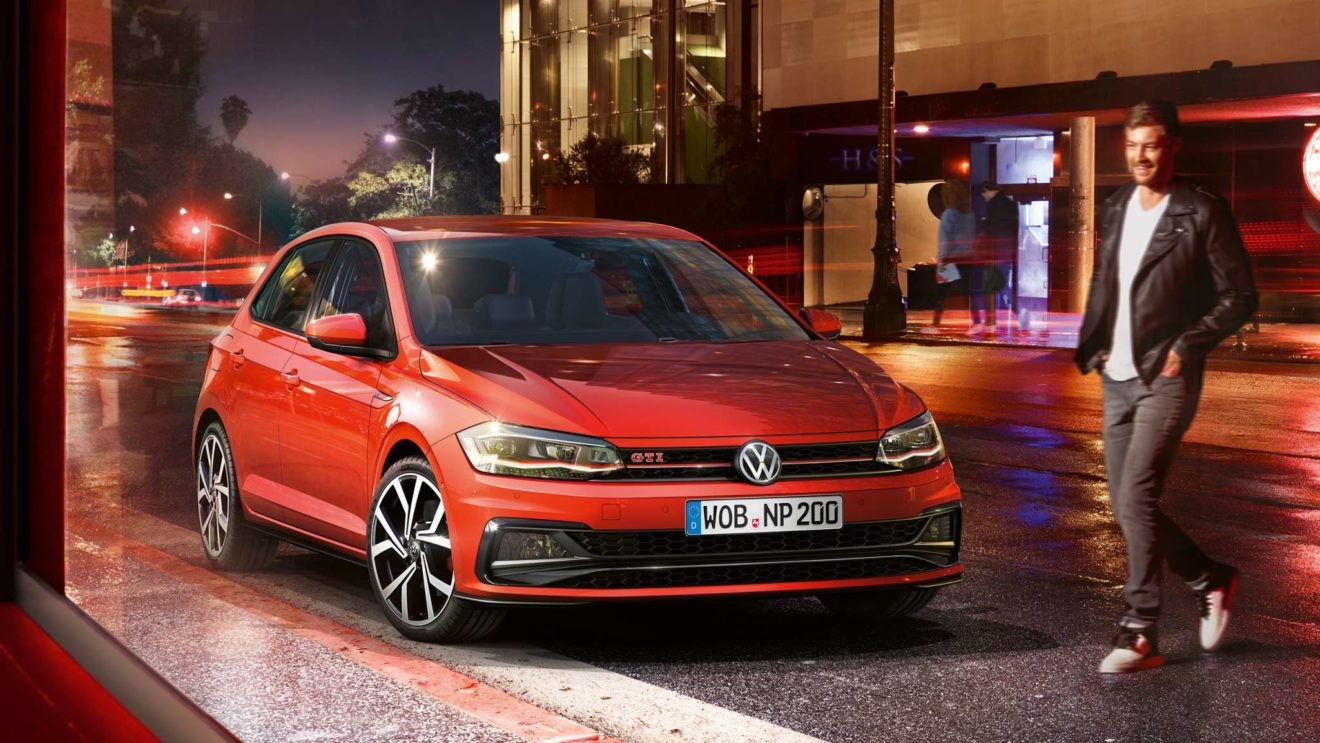
    Volkswagen India will be introducing the facelifted versions of the Polo and the Vento models on September 4, 2019. VW’s most popular models in the country are set to get subtle cosmetic changes for the new model year along with feature upgrades. The updated cars were spotted testing earlier this year too, and the changes will keep the model fresh, with the next generation Polo and Vento for India still some time away from launch. We recently told you that the new generation Polo for India will be based on the MQB A0 platform, which will also spawn the new Vento.

    Based on what we’ve seen on the previous spy shots, the Volkswagen Polo and Vento facelifts will sport a revised front that includes changes to the grille that takes inspiration from the GTI models, while the front and rear bumper have been tweaked as part of the update. The silhouette on both cars remains unchanged. The updated versions will also get new alloy wheels finished in grey. In addition, the Volkswagen Polo and Vento facelifts will get a number of mandatory features as standard including front seatbelt reminders, rear parking sensors, and speed alert system. Dual airbags and ABS are already standard across all variants. It needs to be seen if the infotainment system gets any changes on the cars.

    0Comments

    The Volkswagen Polo completed 10 years in India this year and has largely remained the same barring the cosmetic upgrades and feature additions from time to time. The Vento too has gone through a similar process during its life in the country. With Skoda in charge of the VW Group in India, the company’s focus is on bringing the new range of SUVs first as part of the Volkswagen 2.0 plan, which will be followed by the new Polo and Vento that are likely to arrive by 2021. We do expect to hear a few official announcements at the Auto Expo next year.

  • MG Motor Introduces Waiting Period Benefits For Its Existing Customers

    MG Motor Introduces Waiting Period Benefits For Its Existing Customers

    MG Motor has come out with an interesting and unique approach for those customers who have already booked the Hector but are waiting to get the delivery. It has started a new reward scheme under which it is giving 1000 points per week to its customers till the time they get their SUV delivered. The points can be redeemed to purchase MG’s range of accessories the company is offering on the Hector or can be spent on the prepaid maintenance package it had announced at the time of launch. However, the company has not clarified the value of these points in terms of Rupees which may vary.

    Commenting on the new initiative, Rajeev Chaba, President & Managing Director, MG Motor India said, “As part of our commitment to customer satisfaction, our ‘Worth Waiting For’ programme has been further augmented with a unique rewards initiative. Apart from driving the cause of girl child education, the rewards initiative brings delight to our HECTOR customers as they take deliveries.”

    The latest initiative is in succession to the IIMPACT NGO scheme MG had announced earlier according to which it would educate one girl child for every two weeks’ waiting period. MG Motor had stopped taking bookings for the Hector after it bagged 28,000 bookings. The company has said that it wants to prioritise the deliveries first for its existing customers and then proceed ahead with further bookings. On an average, there is a six month waiting period for MG Hector.

  • Maserati Unveils Limited Edition Quattroporte And Levante At Monterey Car Week

    Maserati Unveils Limited Edition Quattroporte And Levante At Monterey Car Week

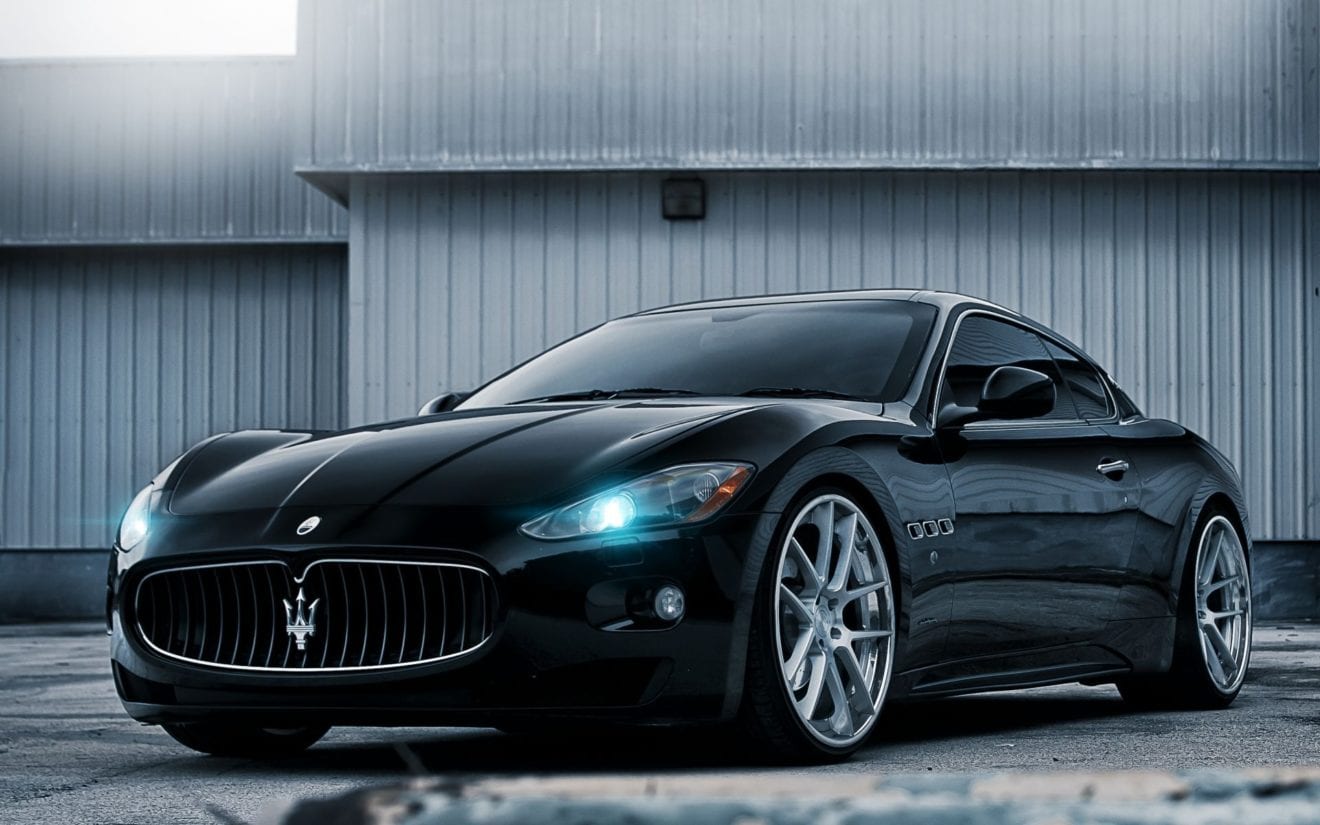
    Monetary car week is one event that sees plenty of limited edition and one-off models and automakers wait for this time to show some of their special cars to the world. Maserati has also seized the opportunity to unveil the limited edition models of the 2020 Quattroporte S Q4 Granlusso sedan and the Levante S GranSport SUV. Both models have been draped in Pelletessuta interior which makes the cabin look as opulent as it can get. They sport thin strips of Nappa leather which is woven together to replicate the traditional hand-woven fabrics. Maserati claims that it’s the only car company to offer such an exclusive interior, thanks to its longstanding partnership with Zegna.

    The cabin of both models sports thin strips of Nappa leather which is woven together to replicate the traditional hand-woven fabrics. The Quattroporte is finished in a custom ‘Blu Sofisticato’ metallic exterior paint and it features blue brake calipers, sport seats and dedicated Zegna Edition interior badge. The cabin of the Quattroporte is finished in Brown Pelletessuta interior trim and Maserati has specifically mentioned that this will be the only time this configuration will be available for purchase.

    The Levante S GranSport SUV is painted in an exclusive ‘Bronzo tri-coat’ color and gets all-black Pelletessuta interior along with Radica wood trim. The limited-edition Levante features black brake calipers and 21-inch polished Helos alloy wheels. Maserati has also said that this combination will be made for a limited time and it has no plans to do it again on any other model.

    The Levante S GranSport SUV is painted in an exclusive ‘Bronzo tri-coat’ color and gets all-black Pelletessuta interiors.

    The Italian carmaker will be making just 50 units of both models and will take orders on first come first serve basis. It has not announced any prices for the limited edition models and will be starting with the deliveries only in 2020.

  • Honda To Recall 222,674 Accord Vehicles In China

    Honda To Recall 222,674 Accord Vehicles In China

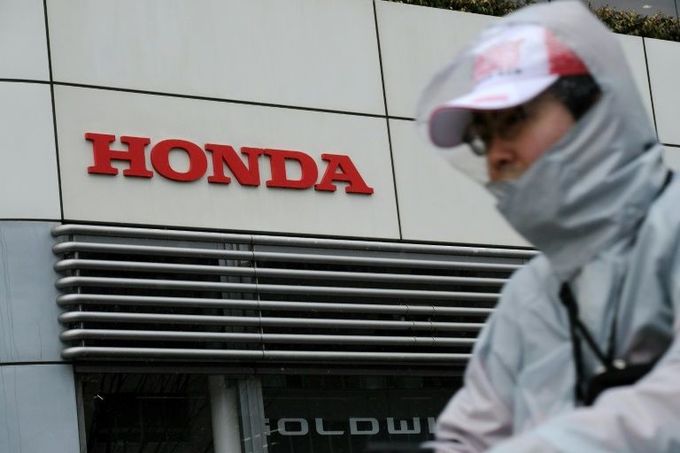
    Honda Motor Co Ltd’s venture with Guangzhou Automobile Group Co Ltd will recall 222,674 Accord sedans in China, market regulators said on Thursday, after recent complaints on social media about the car engine’s quality. The recall is linked to a problem caused by the intercooler of the car’s 1.5T turbocharged engine. In certain situations, the engine lost speed to protect the vehicle, according to a document on China’s State Administration for Market Regulation.

    Some owners of the Japanese carmaker’s iconic model have posted videos that showed their cars losing speed, on social media Weibo over the past weeks. Many of them have demanded for a recall of the model.

    The Guangzhou-based venture will install devices that optimize the air flow rate at the engine intercooler, according to the document.

    Total vehicle sales in China, the world’s largest auto market, fell for a 12th straight month in June, and top industry body has predicted them to fall for the second year running.

    However, Honda’s sales in China outperformed the overall market. In the first seven months of the year, its local ventures reported a 20.5% rise in sales due to newly revamped variants.

    Honda recalled hundreds of thousands of vehicles including popular Civic and CR-V last year, due to a cold-climate engine problem.

  • Mercedes-Benz Offers Subsidies To Retrofit Older Diesel Cars In Germany

    Mercedes-Benz Offers Subsidies To Retrofit Older Diesel Cars In Germany

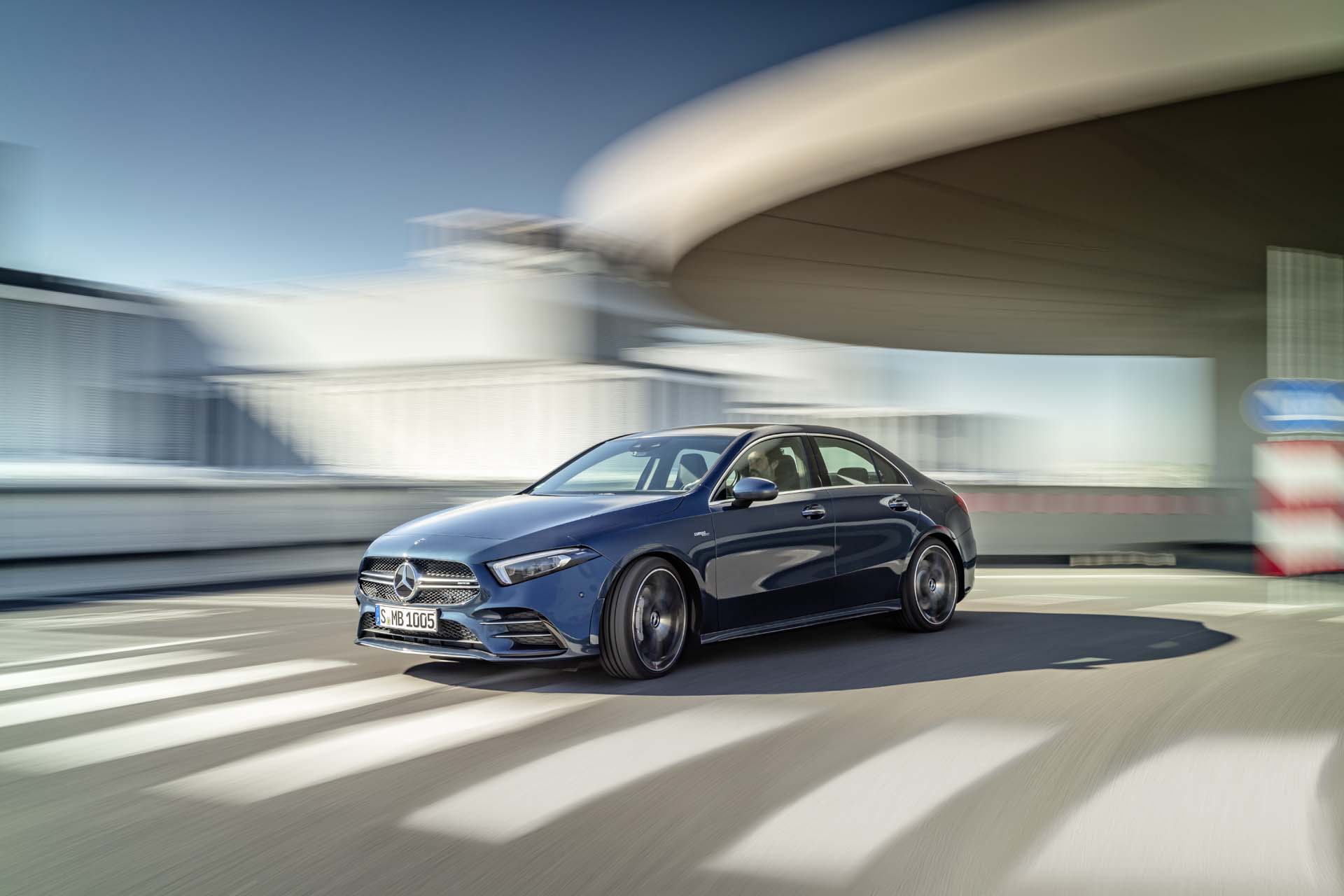
    Daimler said on Tuesday Mercedes-Benz customers in Germany could apply for a 3,000 euro ($3,350) subsidy to upgrade the exhaust filters of older, polluting diesel vehicles, the latest effort among German carmakers to avoid inner-city bans.

    Carmakers have been forced to consider upgrading exhaust treatment systems on older cars after German cities started banning heavily polluting diesel vehicles to cut fine particulate matter and toxic nitrogen oxides.

    Daimler launched a website this week to process applications for financial support, as German motor authority KBA seeks to approve an after-market kit to upgrade the exhaust systems on various Mercedes diesel passenger vehicles.

    The company has offered the subsidy to customers in German regions that face potential driving bans, the carmaker said. For a factbox about possible diesel bans, click:.

    The first retrofit kit for Mercedes cars with “Euro 5” diesel engines, including the best-selling E220 and E250 models, has been developed by Dr Pley SCR Technology, a Bavaria-based, family-owned business.

    German carmakers initially offered software updates and shied away from endorsing hardware retrofits, instead of lobbying for customers to buy new cars with cleaner engines.

    But consumer groups pressured carmakers to endorse retrofits as a more cost-effective measure.

    “We have known right from the start that retrofits are feasible and have now proved this to the carmakers,” said Thomas Steinbrueckner, head of development at Dr Pley SCR Technology.

  • Auto Industry May Further Cut Production

    Auto Industry May Further Cut Production

    After denting the auto sector’s profitability, the consumption slowdown along with the upcoming shift to BS VI standards will further decelerate production, leading to eventual job losses. Industry insiders point out that slowdown, which is a culmination of high GST tax rates, farm distress, stagnant wages, and liquidity constraints, has led to the month-on-month sales de-growth. Besides, inventory pile-up at the dealership level and stock management of the unsold BS IV vehicles has become a problem for the sector.

    According to Grant Thornton India Partner Sridhar V., a further reduction in production due to the continuing de-growth in sales of passenger vehicles can be expected.

    “OEMs are exploring avenues to minimize cost at an operational level by deferring and tightening the spending rate,” Sridhar V. told IANS.

    “They also at times resort to production cuts to tide over this difficult phase.”

    Accordingly, the sales downturn assumes significance as the auto industry contributes to almost half of the manufacturing GDP and 11 percent of the total GST revenue.

    “With prolonged weak consumer demand, the inventories at dealer levels have peaked, necessitating production cuts by OEMs,” Richa Bulani, Senior Analyst, India Ratings & Research (Fitch Group), told IANS.

    “Production cuts may provide some short-term relief to dealers, it negatively affects the entire auto supply chain — OEMs, component suppliers, and dealers. Volume growth of components dependent on OEMs will be affected in the first half.”

    Recently, all major OEMs consisting of passenger, commercial, two and three-wheeler manufacturers have reported a massive decline in domestic sales.

    Figures from the Society of Indian Automobile Manufacturers (SIAM) showed that domestic passenger car sales in June went down by 24.07 percent to 139,628 units. The July figures are awaited.

    In the commercial vehicle segment, domestic sales were down by 12.27 percent to 70,771 units last month.

    The overall sales of two-wheelers, which include scooters, motorcycles and mopeds, edged lower by 11.69 percent to 1,649,477 units.

    In all, the total sales of the Indian automobile sector declined by 12.34 percent during June 2019 to 1,997,952 units across segments and categories.

    Consequently, sales slowdown led to a curtailment of manufacturing with the domestic passenger cars’ production coming down by 22.26 percent to 169,594 units from 218,167 units.

    Similarly, commercial vehicle production was down by 23.39 percent to 69,496 units last month. Overall two-wheelers’ production edged lower by 11.70 percent to 1,915,195 units.

    The total production of the Indian automobile sector declined by 12.98 percent during June 2019 to 2,336,138 units across segments and categories.

    “Tight control on production volumes will continue. Beyond the upcoming festive season when OEMs would expect to have sufficient volume in the channel, they would want to keep production volume output in check,” said Rahul Mishra, Principal, A.T. Kearney.

    “Volume liquidation pressures due to BS VI and the sluggish demand will not revive production output drastically for the next few months.”

  • Nissan’s Q1 Profit Drops By 98.5%

    Nissan’s Q1 Profit Drops By 98.5%

    Nissan Motor Co unveiled its biggest restructuring plan in a decade, axing nearly a tenth of its workforce and flagging possible plant closures to rein in costs that ballooned when Carlos Ghosn was CEO.

    The cuts announced on Thursday followed a collapse in Nissan’s quarterly profit, highlighting how a crisis – brought about by sluggish sales and rising costs – is deepening at Japan’s No. 2 automaker in the wake of a financial misconduct scandal over Ghosn. Ghosn has denied the charges.

    The dismal quarter will pile pressure on Chief Executive Hiroto Saikawa, who has been tasked with shoring up the automaker’s performance at a time when the industry is struggling worldwide.

    China’s slowing economy, further depressed by a trade war with the United States, has hit demand, even as American consumer confidence has faltered.

    Tougher emission regulation has taken a the toll on diesel-car sales in Europe, and an increase in electric vehicle sales and ride-sharing has worsened a drop in sales at the world’s biggest carmakers.

    Ford Motor Co, the second-largest U.S. automaker, is also cutting 12,000 jobs and closing plants, while Daimler, Aston Martin and supplier Continental warned on profits this week.

    Nissan will reduce at least 12,500 positions globally by March 2023 – its deepest job cuts since 2009 – and slash production capacity, mainly of compact cars at underutilized plants abroad. The move will shrink its product line-up by about 10%, Saikawa said,

    The maker of the Rogue SUV crossover and the tiny, low-cost Datsun Redi-Go, had 138,000 employees as of March 2018.

    “We are mainly targeting sites where we made investments to produce compact cars under the Power 88 plan,” Saikawa told reporters at a briefing at Nissan headquarters, referring to an aggressive growth strategy spearheaded by Ghosn in 2011 to grab 8% global market share and an 8% operating margin.

    Nissan’s job cuts expand on redundancies initially announced in May, which affected eight facilities including in Spain – where trucks and vans are made – and Indonesia, where the March subcompact hatchback and Datsun models are manufactured.

    Nissan also produces compact car models at facilities including in Mexico, Russia, France, and Thailand.

    Roughly half the announced job cuts so far have cost the company around 40 billion yen, and further layoffs could cost about the same, chief financial officer Hiroshi Karube said.

    Years of heavy discounting and fleet sales, particularly in the United States, has left Nissan with a cheapened brand image and low vehicle resale values, and also hit profits.

    Nissan’s first-quarter operating profit plunged 98.5% to 1.6 billion yen ($14.80 million), its worst performance since a loss in the March 2008 quarter.

    “Profitability is very poor at the moment,” Saikawa said, but added that the company was pushing to achieve its revenue target of 14.5 trillion yen and operating margin of 6% through the end of fiscal 2022.

    The automaker said global vehicle production will fall 10% through the year to March 2023 while global sales till then will increase modestly to 6.0 million units annually from the current 5.5 million.

    The company maintained its profit forecast of 230 billion yen for the year ending March 2020, a 28% drop from last year and its weakest in more than a decade.

  • Ford Shuts Down Transmission Plant In France

    Ford Shuts Down Transmission Plant In France

    A Ford plant that produced transmissions in southwestern France shut down for good on Wednesday after the carmaker brushed aside efforts save some operations at the facility that had employed up to 3,600 people. The factory in Blanquefort, outside Bordeaux, was scheduled to close on July 31 but “people arrived this morning and were told to go home, and that there was no point in coming back,” union activist Eric Troyas told AFP.

    “People were crying. They were thrown out like trash,” he said, adding that managers of the plant that opened in 1972 and recently employed around 850 people had taken advantage of a thin union presence during the summer months to shut it down early.

    Ford first said it would close the site in February 2018 but until late February this year, there was some hope it could be sold to the Franco-Belgian equipment manufacturer Punch Powerglide, which had floated a plan to save around half the jobs. On Wednesday, “the assembly lines were empty and Ford did not try to keep people occupied, they emptied their lockers and left,” works committee member Gilles Lambersend said.

    A spokesman for Ford France told that the “production is indeed finished,” before noting that the plant had already been operating at a minimum level.

    The French government had tried to come up with a solution for the site and vowed in February to make the US automaker pay for laid-off staff, a clean-up of the plant, and efforts to implant new industrial activity there.

    Ford had received around 15 million euros ($17 million) in state aid in recent years, but the government acknowledged it could not demand it be reimbursed. Ford announced in June it would slash 12,000 jobs across Europe.

  • Niti Aayog Recommends Sale Of Only Electric Cars From 2030

    Niti Aayog Recommends Sale Of Only Electric Cars From 2030

    In another ambitious move, Niti Aayog has proposed that only electric vehicles should be sold in the country after 2030. Government’s think tank had earlier suggested banning all conventional three-wheelers and two-wheelers which are equipped with engines of up to 150 cc. According to Times Of India report, the committee has forward a cabinet note asking to assign roles to different ministries. Ministry of Road Transport And Highways (MoRTH) has been asked to work on a new framework to phase out the sale of diesel and petrol vehicles by 2030.

    That said, the proposal penned down by Niti Aayog is not only limited to vehicles and also talks about the infrastructure to push their sales. It suggests starting an e-Highway program with an overhead electricity network to facilitate operation for long distance trucks and busses. However, it has suggested piloting the project with selected National Highways which is likely to begin with the upcoming Delhi-Mumbai Expressway. Along with the electrification of national highways, Niti Aayaog has also proposed local manufacturing of 50 GWh batteries by 2030.

    In a bid to meet the target, Niti Aayog has also proposed extending financial incentives like cash subsidy on the basis of overall domestic value addition per kilowatt hour (KWh) which will be around Rs 8000 crore. If domestic manufacturing of batteries can be made possible, the maximum cash subsidy will go up to ₹ 2000 crore for up to 20 GWh per firm which will be for just one KWh for total value capture. The think tank is also planning to procure 10 lakh direct and indirect job opportunities if the proposal is implemented.

  • Hyundai And Kia To Invest In Self-Driving Start-Up Aurora

    Hyundai And Kia To Invest In Self-Driving Start-Up Aurora

    Hyundai Motor Co said on Thursday it would invest in self-driving car software startup Aurora along with Kia Motors Corp to speed up development of autonomous vehicle technologies.

    “With the new investment, the companies have agreed to expand research to a wide range of models and to build an optimal platform for Hyundai and Kia’s autonomous vehicles,” Hyundai said

    Aurora said in a blog post that Hyundai and Kia’s investment is part of a series B financing round, which has now raised more than $600 million.

    Aurora, which just announced a partnership with Fiat Chrysler Automobiles, competes with Alphabet’s Waymo and General Motors’ majority-owned Cruise, among others.