Retail News CRM

Tag: Capital

  • Owndays sets big expansion across Asia after capital injection

    Owndays sets big expansion across Asia after capital injection

    LVMH-back private equity fund L Catterton Asia has partnered with Mitsui & Co to take an unspecified stake in fast-growing Japanese eyewear retailer Owndays. The funds will be used to accelerate the retailer’s across the Asia-Pacific region.

    Owndays, which began its Southeast Asia rollout in 2013 opening a store in Singapore, now has 115 stores in Japan and 142 stores in 10 other Asian markets, including Thailand, Vietnam and Hong Kong (where it is operated by Bluebell Group).

    In a statement, L Catterton Asia said the current management team will continue to retain “substantial equity interests” and manage the company.

    “Our ambition is to become Asia’s leading optical retailer and we plan to open more than 500 stores across the Asia Pacific region over the next five years,” said Owndays CEO Shuji Tanaka said.

    L Catterton Asia chairman and managing partner Ravi Thakran said the investment in Owndays marks the private equity company’s first foray into Japan.

    “The Owndays success story has been one of innovation, quality service and boldly exceeding customer expectations,” he said.

    “The company is poised to take advantage of the robust macro trends that are driving the market for private brand eyewear. Together, L Catterton and Mitsui & Co are committed to providing world-class operational and strategic support to propel Owndays to category-leading growth and profitability. With Japanese quality, purity and efficiency increasingly appreciated and desired around the world, we see tremendous market opportunities for Owndays.”

    President and CEO of Mitsui & Co subsidiary MCPI, Naoki Nakata, said Owndays is well placed for continued expansion, both domestically and abroad, while also improving profitability by fully leveraging Mitsui and L Catterton’s combined network, resources and demonstrable expertise in value creation.

    Since 2009, L Catterton Asia has invested in many leading consumer brands, including Gentle Monster and RM Williams and Pepe Jeans, and in lifestyle mall operator Sasseur, among others. L Catterton Asia, formerly called L Capital Asia, was formed through the partnership of Catterton, LVMH and Groupe Arnault.

  • Government committed to relocating Indonesian capital

    Government committed to relocating Indonesian capital

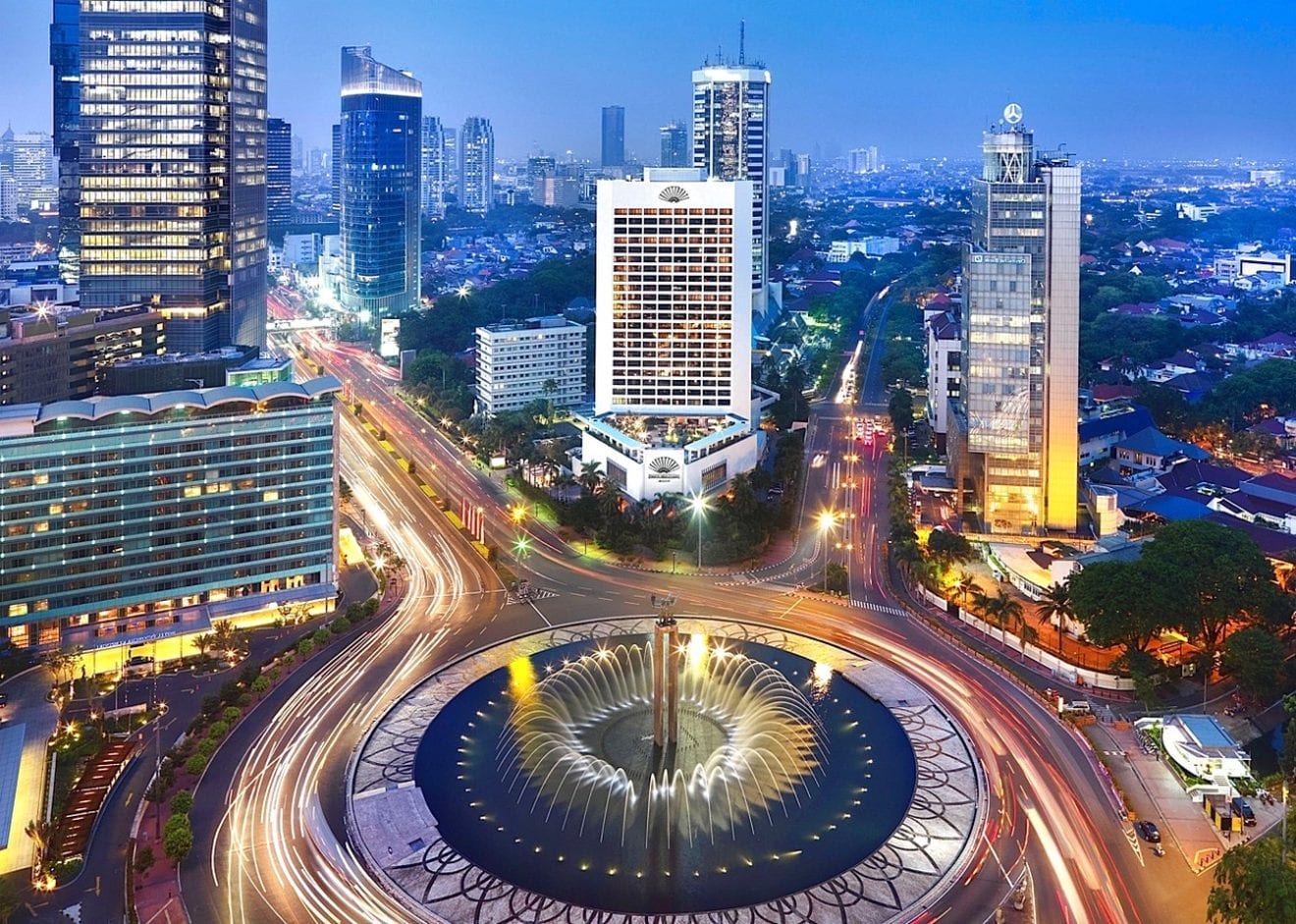
    The Government of Indonesia is determined to relocate the state capital Jakarta out of Java Island to avoid total traffic gridlock by 2020.

    President Joko Widodo, better known as Jokowi, had urged the National Development Planning Board (Bappenas) to conduct a feasibility study on the possible location, and Palangkaraya in Central Kalimantan was one of the options.

    Bappenas Chief Bambang Brodjonegoro has stated that by the end of this year, the agency would have completed assessing potential alternative cities that could become the new capital of Indonesia.

    Brodjonegoro expressed hope that in the next two years, activities related to the transfer of the administrative center of the state capital would be carried out.

    Debates on relocating the capital have frequently resurfaced since it was first mooted by President Sukarno in 1957.

    Sukarno once held a discourse that the state capital could be relocated to Palangkaraya, as he had also visited the city to review its development.

    Problems of the overcrowded Jakarta city have since then become more practical and less ideological, with reports surfacing that areas of north Jakarta are sinking at a rate of 25 centimeters a year.

    In search of a new capital city of Indonesia, Bappenas is looking at aspects, such as the availability of land and natural resources around the potential cities.

    “We have discussed the matter with the president, and essentially, we will soon begin the process of relocating the capital,” the Bappenas chief remarked.

    Brodjonegoro reiterated that the assessment would hopefully be completed this year, including its estimation and funding scheme.

    According to Brodjonegoro, Bappenas will encourage private involvement in the planned relocation of the state capital, particularly in terms of funding.

    For funding, he said Bappenas will push the public-private partnership model.

    Until now, Bappenas is still reviewing the plan to relocate the state capital from Jakarta to a new area outside Java Island.

    The capital city should be relocated to outside of Java Island, given the availability of more adequate land.

    Nevertheless, Brodjonegoro has not revealed details of the specific location of the new capital of the country.

    “Certainly, outside Java, most likely on the island of Kalimantan, but the specific location will be finalized soon,” Brodjonegoro said.

    Java Island is believed to dominate Indonesias economic activities. Moreover, economic activities in Java are more concentrated in the areas of Jakarta, Bogor, Depok, Tangerang, and Bekasi.

    If the plan to relocate the capital city is truly realized, the Bappenas chief said the heavy burden on Jakarta, as the center of government, finance, and business, can be reduced.

    In addition to heavy burden of Jakarta as the center of government, finance, as well as business, annual flooding during the rainy season has repeatedly crippled Jakarta and hindered the smooth functioning of administrative and business activities.

    The flooding has aggravated several existent problems faced by Jakarta, which conventional measures have failed to resolve.

    Public services and government businesses grind to a halt every time floods lash the capital city.

    In a bid to solve Jakartas problems, the idea of relocating the state capital has repeatedly resurfaced.

    But numerous political figures have stated that moving the capital to another island in Indonesia outside of Java would not solve the problems.

    They suggested that it would be better if the city of Jakarta remains Indonesias capital, but it would be beneficial if some government activities are relocated outside Jakarta.

    They said the problems of Jakarta can be solved by relocating some ministries to other islands across the country.

    According to them, shifting some of the ministries can resolve the issues plaguing the capital city. But, the Ministry of Finance, the Ministry of Religious Affairs, the National Police, Defense and Security Ministry, and the Presidential Palace should remain in Jakarta.

    By relocating the capital, the political figures do not want to give the impression that they are shifting Jakartas problems to another city.

    The names of some Indonesian cities in Kalimantan, West Java, and Papua had circulated among the public following the discussions related to relocating the countrys administrative center.

    Some of the proposed cities were Palangkaraya in Central Kalimantan, Jonggol in West Java, and Jayapura in Papua.

    Some years ago, in an address to all provincial governors across the country at a gathering in Palangkaraya, Central Kalimantan, the then President Susilo Bambang Yudhoyono stated that Jakarta Metropolitan City was already too crowded and hence not an ideal location to be the center of the national administration.

    “Around 15 years ago, Jonggol in West Java was under consideration to be the new national administration center,” Yudhoyono stated at the time.

    The idea of relocating the center of administration from Jakarta to another area was shelved as Indonesia was hit by a monetary crisis some years ago.

    Over the years, the Jakarta Metropolitan City has become too crowded, and the idea of relocation should be reconsidered.

  • Save the Date for Volvo Group Capital Market Day 2017

    Save the Date for Volvo Group Capital Market Day 2017

    The Volvo Group invites financial analysts and institutional investors to the Volvo Group Capital Market Day, to be held in Eskilstuna, Sweden on May 23, 2017.

    The Capital Market Day on May 23 will start at 9:00 a.m. at Volvo CE Customer Center in Eskilstuna, Sweden, and finish with a dinner in the evening. The program will include presentations by the CEO and the Executive Management as well as the possibility to test drive products.

    A formal invitation with a complete agenda and registration information will follow in early spring 2017. Further information will also be made available on the Volvo Group website well in advance of the event.

    The Volvo Group is one of the world’s leading manufacturers of trucks, buses, construction equipment and marine and industrial engines. The Group also provides complete solutions for financing and service. The Volvo Group, which employs about 100,000 people, has production facilities in 18 countries and sells its products in more than 190 markets. In 2015 the Volvo Group’s sales amounted to about SEK 313 billion (EUR 33,4 billion). The Volvo Group is a publicly-held company headquartered in Göteborg, Sweden. Volvo shares are listed on Nasdaq Stockholm.

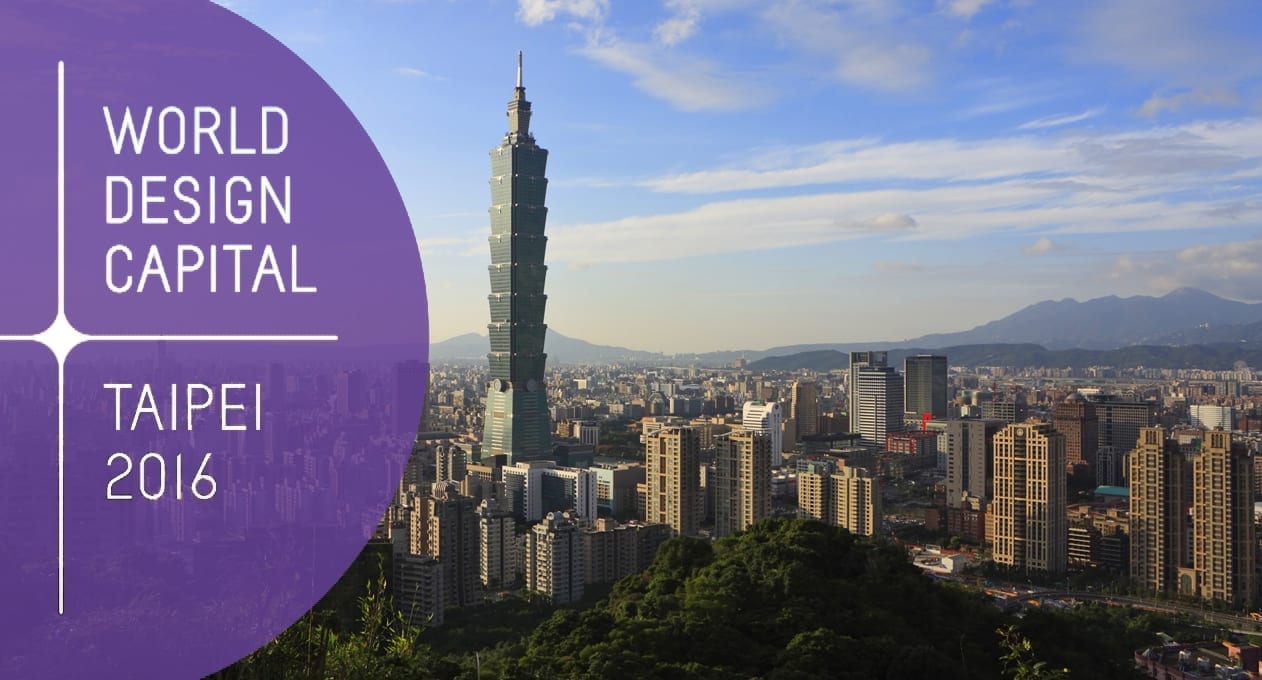
  • World Design Capital Taipei 2016 plans for world’s design devotees and designers

    World Design Capital Taipei 2016 plans for world’s design devotees and designers

    On the agenda for October are four major events in the World Design Capital® (WDC) Taipei 2016 program of International Signature Events: the International Design House Exhibition, International Design Week Forum, International Design Policy Conference, and Network of Cities Meeting. 

    WDC Taipei 2016 extends a warm invitation to participants and visitors from around the world to come and share their ideas and experiences, and bear witness to Taipei’s transformation into a model city that incorporates design thinking into public policy. 

    “October will be a defining month for the World Design Capital Taipei 2016,” says Pei-ni Beatrice Hsieh, Commissioner of the Department of Cultural Affairs of the Taipei City Government. “It is an opportunity both to reflect on the progress we have already made and to ignite international dialogue with other cities; to share experience and expertise. This is a chance to define a legacy for WDC Taipei 2016 that will be felt long into the future.”

    The International Design House Exhibition will be held at Taipei City’s historic Songshan Cultural and Creative Park, once home to a tobacco factory, from Thursday, October 13 to Monday, October 31. The Design House will bring together local and international designers, studios, and organizations to curate a series of thought-provoking exhibitions that will challenge visitors to reconsider their relationship with the urban environment and experience first-hand how design can radically change the world’s cities.

    An exhibition curated by Agua Zhou of Taipei-based studio Agua Design in the historical North Tobacco Factory, will showcase the results of innovative WDC Taipei 2016 projects, including the International Open Call and Designer in Residence Taipei programs, and explore the impact of Taipei City public planning and design policies.

    In Warehouse One, curator Li Wei-Lang, the Creative Director of Afterain Design (Taiwan), will mount an exhibition showcasing breakthroughs and innovation in Taiwanese design, particularly in the fields of science and technology, art and craft, and sustainability. In Warehouse Two, Page Tsou, celebrated visual artist and founder of Taipei-based studio, Auspicious Design, has invited renowned illustrators and visual artists from around the world to exhibit works that reflect on their impressions of Taipei.

    Warehouses Three and Four will be home to an international roster of exhibitors, with some participants hailing from cities that are past or future holders of the World Design Capital designation. The exhibition will explore the WDC Taipei 2016 theme of “Sisheng: Life Quality and Health, Ecological Sustainability, Smart Living, and Urban Regeneration.” In Warehouse Five, renowned Taiwanese contemporary calligraphic artist Tong Yang-Tze will collaborate with up-and-coming Taiwanese fashion designers, and spatial and sound designers to create an interactive exhibition that will breathe new life into traditional Chinese calligraphy.

    The International Design Policy Conference, which will be held on the weekend of October 15 and 16 at the Taipei International Convention Center, aims to explore how design thinking can be integrated into public policy. Policy experts, industry professionals, and academics will be invited to share their insights into and case studies on urban development through design. 

    The International Design Week Forum, which will be held on Monday, October 17 and Tuesday, October 18 at the Creativity Theater in Songshan Cultural and Creative Park, will bring representatives from various design weeks and festivals around the world to contribute their insights into how cities can support and harness the innovation of designers. The second day will be open to the public. Participants will be able to access free entry to both the International Design Week Forum and the International Design Policy Conference in August. Follow WDC Taipei 2016 on Facebook for updates: https://www.facebook.com/taipeidesign/.

    The final International Signature Event in the October series is the invitation-only Network of Cities Meeting. WDC Taipei 2016 organizers will invite mayors and city representatives from around the world to meet in Taipei, where together they will discuss WDC legacy programs, explore opportunities for collaboration, and share design-based solutions to the many civic and environmental challenges faced by cities around the globe.

  • Amazon To March Into Indonesia With $600 Million: Winners And Losers

    Amazon To March Into Indonesia With $600 Million: Winners And Losers

    Amazon.com has said it plans to expand its e-commerce empire to Indonesia, with a $600 million investment for the first year.
    It makes perfect business sense. Indonesia’s e-commerce space is only about $3.2 billion in sales, a tiny fraction of its $150 billion retail market. Indonesia is also the world’s 4th most populous country with 250 million population.

    When Amazon moves in, the market shudders. Who are the movers and shakers in the Indonesian e-commerce space right now?

    It turns out Amazon will be competing with start-ups backed by Alibaba Group and its buddy SoftBank.

    Lazada, a direct-sales marketplace that spans the entire ASEAN, has 75% of its transactions coming from Indonesia. It was founded by Rocket Internet and was recently valued at $1.5 billion through an investment from Alibaba. It generated $1 billion GMV last year and made $275 million in sales.

    Tokopedia is an Indonesian pure play. It is backed by SoftBank and Sequoia Capital.

    Bukalapak is smaller than Tokopedia and is 49% owned by local media conglomerate PT Elang Mahkota Technologi, or Emtek Group.

    Warehouse logistics companies can benefit if Indonesia’s e-commerce picks up. Mega Manunggal Property  is one stock we can look at.

  • Indonesian ride-hailing firm Go-Jek needs more funds in market fight-CEO

    Indonesian ride-hailing firm Go-Jek needs more funds in market fight-CEO

    Indonesian online ride-hailing service Go-Jek is in talks with potential investors to raise fresh funds to expand the business, as the heavy subsidies it gives to drivers to keep rates competitive are unsustainable in the long run, its chief executive said on Friday.

    Go-Jek, a play on the local word for motorbike taxis, has become popular among commuters on the traffic-clogged streets of Jakarta as its phone app removes much of the hassle of finding a driver and negotiating fares.

    Go-Jek, which has a network of more than 200,000 motorbike taxi drivers, is battling aggressively with other ride-hailing apps such as Grab and Uber [UBER.UL], driving rates lower to gain market share in the country of 250 million people.

    But Go-Jek cannot afford to continue relying on subsidies as “you end up where you run out of money”, Go-Jek founder Nadiem Makarim told on the sidelines of an e-commerce industry conference in Jakarta.

    Raising funds from investors to expand the business is part of the solution, the Harvard Business School graduate said, adding that several venture capital and private equity firms have expressed an interest in Go-Jek because of its size and potential.

    Founded in 2010, Go-Jek has since increased its services to food deliveries, cleaning and even massages. The company, which already operates in big Indonesian cities like Bandung and Surabaya, also plans to broaden its reach and add more drivers.

    Its ambition, however, has been met with regulatory obstacles and strong resistance from established taxi operators such as PT Blue Bird Tbk and PT Express Transindo Utama Tbk.

    Taxi drivers’ protests turned violent in the Indonesian capital last month, when they called for ride-hailing apps to be banned. Government ministers had also said the tech firms should be subject to the same regulatory and tax requirements as conventional public transportation companies.

    Yet Go-Jek’s Makarim told a packed conference that regulations and demonstrations were not his “biggest headaches”.

    “For me, the number-one challenge is building something to scale,” he said. “It’s the technology part that I think is the hardest, it’s what keeps me up at night.”

  • Lotte Mart opens 10th supermarket in Vietnam, to have 60 stores by 2020

    Lotte Mart opens 10th supermarket in Vietnam, to have 60 stores by 2020

    The South Korean retailer Lotte Mart on Thursday opened its 10th supermarket in Vietnam in Tan Binh District of HCM City, contributing to its expansion nationwide.

    Located at 20 Cong Hoa Street, Lotte Mart Tan Binh has investment capital of USD9 million and covers an area of over 8,500square metres.

    The supermarket operator, which came to Vietnam in 2008, plans to have 60 stores nationwide by 2020.